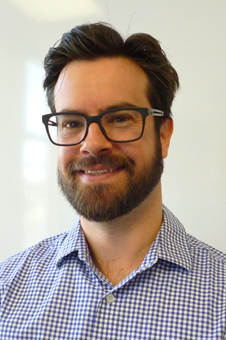
Rob van Beers is an Assistant Professor at the Faculty of Behavioural and Movement Sciences at Vrije Universiteit Amsterdam, with affiliations to Neurocontrol, IBBA, and AMS - Sports. His research focuses on human motor control, spatial perception, and computational modeling using Bayesian approaches to understand sensory-motor integration under uncertainty. He holds ancillary roles as a Researcher at Radboud University (Nijmegen) since 2015 and serves on the Editorial Board of the Journal of Neurophysiology since 2015. His work contributes to UN Sustainable Development Goals related to health and well-being. Key research interests include motor learning dynamics, sensorimotor adaptation, and the neural basis of spatial orientation. Recent studies explore Alzheimer’s impacts on motor adaptation and Bayesian inference in vestibular path integration. Teaching responsibilities include courses on linear systems dynamics, physical measurement techniques, and motor systems regulation. His work spans 42 peer-reviewed articles, with datasets published on platforms like Dryad and Zenodo.
Professor Sarah Bate is an academic at Bournemouth University, currently serving as Interim Associate Pro Vice-Chancellor (Research and Knowledge Exchange). She leads the Centre for Face Processing Disorders and authored the seminal book *Face Recognition and its Disorders*. Her work focuses on face-processing impairments in developmental and acquired prosopagnosia (face blindness), employing eye-movement technology to explore theoretical and remediation strategies. Education: Completed a BSc (2004), MSc (2005), and PhD (2009) in Psychology at the University of Exeter, followed by postdoctoral research before joining Bournemouth in 2010. Research Interests: Prosopagnosia sub-classification, face recognition disorders, neuropsychological assessment tools, and applications in forensic and clinical settings. Her studies span cognitive mechanisms, rehabilitation techniques, and individual differences in face perception. Recent articles emphasize taxometric analysis of prosopagnosia subtypes, familial transmission patterns, and the role of birthweight in face recognition. Collaborations include work on oxytocin’s effects and the development of diagnostic tools like the Oxford Face Matching Test. Grants and Affiliations: Active in grants such as the *Face Blindness Awareness Campaign* and affiliated with the British Psychological Society and Experimental Psychology Society. Supervises PhD students like Anna Bobak, focusing on neuropsychological and developmental aspects of face recognition.
Jan Helgerud is a Professor in the Department of Circulation and Medical Imaging at the Norwegian University of Science and Technology (NTNU), Faculty of Medicine and Health Sciences. His research focuses on exercise physiology, endurance training, and cardiovascular health, with particular emphasis on aerobic capacity, muscle strength, and their clinical applications in chronic diseases and rehabilitation. Research Interests: Exercise physiology and its impact on health and disease High-intensity interval training (HIIT) adaptations in athletes and clinical populations Cardiovascular and metabolic responses to exercise Strength training in patients with rheumatic diseases, Parkinson's disease, and spinal cord injuries Physiological determinants of endurance performance in sports like cycling and cross-country skiing Recent Article Trends: Recent work emphasizes the efficacy of high-intensity training protocols for improving aerobic capacity (VO2max) and functional outcomes in diverse populations, including elite athletes and patients with long-term conditions like long-COVID or rheumatic diseases. Studies also explore mechanisms of muscle adaptation, heat tolerance in occupational settings, and digital health tools for exercise assessment. Advising & Grants: Collaborations with colleagues on randomized controlled trials for strength and endurance interventions Focus on translational research linking physiological insights to clinical outcomes Labs/Teams: Active in NTNU's Department of Circulation and Medical Imaging, contributing to interdisciplinary projects in sports science and rehabilitation medicine.
Mark Hebblewhite is a Professor in Ungulate Ecology at the Wildlife Biology Program, University of Montana. His research integrates ecological theory with applied wildlife management, focusing on species like elk, wolves, and grizzly bears. Institution: University of Montana Academic Rank: Professor Research Interests span: Wildlife-habitat interactions Predator-prey dynamics Conservation of endangered species Remote sensing for forest and wildlife monitoring Climate change impacts on ecosystems Recent Publications emphasize: Multi-scale movement ecology Remote sensing integration for forest inventory Anthropogenic effects on wildlife behavior Fire ecology and post-disturbance recovery LiDAR and satellite-based vegetation mapping Collaborations include researchers from the University of Alberta, University of British Columbia, Colorado State University, and the Wildlife Conservation Society.
Dr. Michael Hiley is a Senior Lecturer in Sports Biomechanics and Motor Control at Loughborough University, part of the School of Sport and Exercise Science. He serves as the Programme Director for Joint Honours programmes involving Sport Science and leads the Centre for Gymnastics Research. His roles include teaching and research in biomechanics and motor control. Michael holds a Joint Honours degree in Sport Science and Mathematics from Loughborough University (1993) and a PhD in the computer simulation of gymnastics skills from the same institution. His research interests are centered around sports biomechanics and motor control , with a focus on optimizing athletic performance and understanding movement strategies. Key areas include: Biomechanical analysis of gymnastics skills and equipment Optimization of techniques in golf, basketball, and badminton Functional variability in whole-body coordinated movements Control strategies under uncertain conditions, such as deceptive actions in sports His publications explore biomechanical analysis across various sports, emphasizing optimal technique optimization, sensor technology comparisons (e.g., IMUs vs optical systems), and the impact of environmental factors like slopes on performance. Recent work highlights strategies for controlling movements under uncertainty and the biomechanics of deceptive actions in sports. Michael is actively involved in the Sports Biomechanics and Motor Control Research Group and directs the Centre for Gymnastics Research , fostering collaborative projects in sports science and technology.
Germain Gauthier is an Assistant Professor at the Department of Social and Political Sciences, Bocconi University. His work bridges economics and political science with a focus on political economy, public economics, and machine learning methods. He develops AI tools for social scientists, particularly for analyzing unstructured data like texts and images. Ph.D. in Economics, Ecole Polytechnique (2018–2023) Postdoctoral Researcher, ETH Zürich (2023) M.Sc. in Analysis and Policy in Economics, Paris School of Economics (2017–2018) M.Sc. in Quantitative Economics, HEC Paris (2013–2017) His research spans two main areas: applied studies on digital technologies' societal consequences (e.g., X's algorithms, #MeToo's impact) and methodological innovations in machine learning for social science data. Recent publications include work on protest dynamics, inequality, and narrative extraction from texts. Key trends in his publications include: Machine learning applications to political and economic analysis Text mining for social science narratives Empirical studies on protest movements and digital governance Algorithmic bias in labor markets Economic policy evaluation using big data He has received significant funding: Swiss National Sciences Foundation Grant (300K CHF, 2023–2026) Swiss National Sciences Foundation Grant (100K CHF, 2020) Laboratoire d’Excellence Ph.D. Grant (2018–2023) He teaches courses on Public Finance (Bocconi) and Text as Data for Social Sciences (LMU München), and has developed open-source software packages like relatio and DeepLatent for text analysis and latent variable modeling.
Ezio Preatoni is a Senior Lecturer in the Department for Health at the University of Bath, where he serves as Director of Internationalisation and Biomechanics Group coordinator. He holds affiliations with the Centre for Health and Injury and Illness Prevention in Sport, Bath Institute for the Augmented Human, and Centre for Bioengineering & Biomedical Technologies. His educational background includes a Master of Engineering in Biomedical Engineering and Doctor of Engineering in Bioengineering from Politecnico di Milano. Dr. Preatoni's research focuses on biomechanical analysis of human movement, motor coordination, and variability in relation to athletic performance and injury prevention. His work integrates neuro-motor assessment, sports biomechanics (rugby, walking, jumping), footwear technology, and health-focused wearable sensors. He employs dynamical systems approaches to understand movement adaptation and injury mechanisms. Recent publications demonstrate strong emphasis on wearable sensor validation (2025), including ear-based inertial measurement units for gait analysis, deep learning applications for joint moment estimation, and fatigue effects on movement coordination. This research advances quantitative methods for sports performance monitoring and clinical movement assessment. Awards & Honors: 2017 Internship Grant, International Society of Biomechanics in Sports Faculty Recognising Excellence Award (2022) Best Student Presentation Award at MobiUK 2025 (co-author) ISBS New Investigator Award finalist (2021) He leads multiple funded projects including FAL-VITAE (falls assessment using video/IMU technology) and Texo-Skeleton (textile-based exoskeletons). Currently accepting PhD students for projects in applied biomechanics, motor control, and sports technology. External roles include Board membership at International Society of Biomechanics in Sports and academic boards at University of Brescia.
Steven Livingstone is an Associate Professor in the Department of Computer Science at Ontario Tech University, Faculty of Science. His research focuses on affective data science, applying machine learning and statistical modeling to understand emotion and its disorders. He leads the Affective Data Science Lab (ADSL), specializing in emotion recognition technologies using physiological data like EEG and motion capture. Livingstone holds a PhD from The University of Queensland (2008) and has published over 70 peer-reviewed papers, with over 2,400 citations. His RAVDESS dataset is widely used in speech emotion recognition research. His research interests span data science, affective computing, and music's role in emotion. Recent work emphasizes data provisioning for deep learning applications. Livingstone teaches courses including Scientific Data Analysis and Information Visualization. He actively mentors undergraduate and graduate students in his lab, focusing on research assistantships in emotion technology development. Key contributions include studies on musical tempo’s physiological effects, Parkinson’s disease facial mimicry deficits, and ensemble performance dynamics. His work has been featured in The Atlantic, NBC Today, and on the cover of Informatik Spektrum. The ADSL lab collaborates on projects combining data analytics with human-computer interaction to advance emotion-aware systems.
Professor Isabel Dziobek is a distinguished academic at Humboldt University of Berlin, holding a W3 Professorship in Clinical Psychology of Social Interaction within the Institute of Psychology, Faculty of Life Sciences. She serves as Head of the University Outpatient Clinic for Psychotherapy and Psychodiagnostics and leads the Special Outpatient Clinic for Social Interaction. As Academic Director of the Center for Psychotherapy at Humboldt University and Principal Investigator at the German Center for Mental Health, she plays a pivotal role in shaping mental health research and clinical practice in Germany. Her educational background includes a Diploma in Psychology from Ruhr University Bochum (2000), a Dr. rer. nat. summa cum laude from University of Bielefeld (2006), and Habilitation in Psychology from Free University of Berlin (2014). She obtained her license to practice as a psychological psychotherapist in 2015. Professor Dziobek's research focuses on bio-psycho-social mechanisms of social interaction disorders across autism spectrum disorders, social anxiety disorders, and personality disorders. Her work integrates neurobiological approaches (fMRI, EEG, psychophysiology, eye-tracking, neuromodulation) with the development of diagnostic and intervention procedures including cognitive behavioral therapy, e-mental health, and social robotics. She has pioneered research on therapeutic mechanisms through focused short-term programs involving movement synchronization, social competence training, and brain stimulation augmentation. Analysis of her recent publications reveals a strong emphasis on empathy assessment in autism and personality disorders, development of innovative assessment tools like the Simulated Interaction Task for Children (Kids-SIT), and exploration of novel therapeutic approaches including psychedelic-assisted therapy. Her work increasingly incorporates participatory research methods and cross-cultural validation of assessment tools, reflecting a commitment to making research clinically relevant and accessible. 2016: Teaching Award of the Faculty of Life Sciences, Humboldt University of Berlin 2016: Antistigma-Preis der Deutschen Gesellschaft für Psychiatrie und Psychotherapie 2014: Charlotte- und Karl-Bühler-Preis, Deutsche Gesellschaft für Psychologie 2011: 2nd Place in Brain-Art Competition 2011 2007: Dissertation Award of University of Bielefeld 2007: 1st Prize at Canadian Film Festival "Picture This" Professor Dziobek serves in numerous leadership roles including Spokesperson for Charité Mental Health, Fellow of the Max Planck School of Cognition, and Board Member of Charité Mental Health. She directs the DZPG-funded research group and participates in the Cluster of Excellence Neurocure III. Her lab, the Dziobek Lab (dziobek-lab.org), focuses on developing and evaluating interventions for social interaction disorders while maintaining strong clinical connections through the University Outpatient Clinic.
Tsun-Ming Tseng is a Professor and principal investigator at the Chair of Electronic Design Automation at the Technical University of Munich (TUM). He leads the Emerging Technology Group and oversees multiple DFG/BMBF-funded research projects in the areas of microfluidic large-scale integration, optical network-on-chip design, and novel microfabrication techniques. Dr. Tseng's research focuses on design automation for emerging technologies, with particular expertise in three main areas: microfluidic large-scale integration, optical network-on-chip systems, and novel microfabrication processes. His work bridges the gap between electronic design automation and cutting-edge applications in bioengineering, photonics, and advanced manufacturing. His research group develops sophisticated algorithms and tools for optimizing design, reliability, and performance in these emerging domains. Analysis of Dr. Tseng's recent publications reveals a strong focus on practical implementation challenges in emerging technologies. His work spans both theoretical algorithm development and practical system implementation, with particular emphasis on reliability, performance optimization, and manufacturing considerations. The research shows increasing integration between different technology domains, particularly the convergence of microfluidics, optical networking, and electronic design automation. Dr. Tseng has been awarded multiple significant research grants including: "DE-TW-CloudWRONoC" (BMBF-NSTC project, PI, 2025-2028, EUR 797.7K) "DE-TW-PI3D" (BMBF-NSTC project, PI, 2024-2027, EUR 391.6K) "Physical Design for Microfluidic Large-Scale Integration" (DFG research grant, PI, 2024-2026, EUR 331.9K) Multiple other DFG and industrial projects totaling over EUR 3 million in funding He has successfully supervised numerous doctoral researchers and postdoctoral fellows, with current group members including Jiahui Peng, Debraj Kundu, Liaoyuan Cheng, and several others. Dr. Tseng leads the Emerging Technology Group at TUM, which focuses on developing design automation methodologies for next-generation technologies. The group maintains strong collaborations with international institutions, including partnerships with researchers in Taiwan and Hong Kong. The team operates state-of-the-art facilities for research in microfluidics, optical networking, and advanced microfabrication techniques.
Ingrid E.J. Heynderickx is a Professor in Applied Visual Perception at the Human-Technology Interaction group within the Faculty of Industrial Engineering and Innovation Sciences at Eindhoven University of Technology (TU/e), where she also serves as Dean of the Department. She holds a part-time Visiting Research Professor role at Southeast University (China) since 2005. Her research focuses on optimizing display and lighting systems through understanding human visual perception, emphasizing both fidelity and preference in design, with attention to age and cultural variability. Academically, she earned her PhD in Physics from the University of Antwerp (1986) and spent 18 years at Philips Research, leading visual perception research. She became a Philips Research Fellow in 2005 before joining TU/e as Full Professor in 2013. She holds Fellow status with the Society for Information Displays (SID) and received the Otto Shade Prize (2015). Her recent work explores lighting solutions for office environments, roadway safety systems, and LED artifact mitigation. Notable projects include the Brainbridge initiative (2015–2016) on spectral lighting effects. Over 236 publications and 4 datasets reflect her contributions to lighting science and human-centric design. She advises on sustainable lighting technologies and collaborates globally, with recent media engagements discussing departmental leadership and smart lighting trends. Key research themes include visual attention modeling, illuminance preferences, and dynamic viewing behavior—issues critical for next-generation human-technology interfaces.
Brian Horsak is a Professor and Head of the Center for Digital Health and Social Innovation at Fachhochschule Steyr. He holds an endowed professorship in Applied Biomechanics and Rehabilitation Research, focusing on integrating advanced technologies like VR/AR, machine learning, and wearable devices into clinical gait analysis and motor rehabilitation. His roles include leading the Institute of Health Sciences and contributing to the Department of Health Sciences and Media and Digital Technologies. Education: Dr. rer. nat. (2012, University of Vienna), Habilitation in Kinesiology (2020, University of Vienna), Master's in Sports Science (2002–2008, University of Vienna). Research interests revolve around improving patient care through biomechanical innovations, including musculoskeletal simulations, gait pattern analysis, and rehabilitation technologies. He leads projects like ReMoCap-Lab (motion capture for motor rehabilitation) and chairs the Applied Biomechanics in Rehabilitation Research initiative. Key achievements include the Lower Austria Innovation Prize (2021), multiple best paper awards, and grants for projects like TRUST AI and VReeze. His work bridges clinical practice with digital health solutions, emphasizing explainable AI (XAI) in gait classification and VR-based balance training. Notable contributions include developing the GaitRec dataset and studies on smartphone-based motion capture reliability. He collaborates internationally, publishing widely in Gait & Posture , Scientific Reports , and IEEE journals. Current projects focus on AI-driven gait analysis, musculoskeletal modeling, and XR applications in healthcare.
Kristian O'Connor is a Professor in the Department of Kinesiology within the College of Health Sciences at the University of Wisconsin-Milwaukee, where he also serves as Associate Vice Provost for Research Education. His academic credentials include a Ph.D. in Exercise Science from the University of Massachusetts (2002), an M.S. in Exercise Science from Arizona State University (1998), and a B.A. in Physics from Colorado College (1994). Dr. O'Connor's research centers on the biomechanics of musculoskeletal injury, with particular emphasis on knee injury mechanisms during sports activities. His work investigates how neuromuscular fatigue contributes to increased injury risk in conditions like anterior cruciate ligament (ACL) tears and anterior knee pain, and explores its role in osteoarthritis progression. A significant innovation in his research involves developing portable single-camera 3D motion capture technology for clinical settings, eliminating the need for specialized laboratory environments. Analysis of his 15 most recent publications reveals consistent focus on age-related movement changes, knee biomechanics during dynamic tasks, and fatigue-induced injury mechanisms. His work spans geriatric mobility, athletic performance, and clinical rehabilitation, with strong methodological emphasis on motion analysis and neuromuscular assessment. Key trends include transition step descent biomechanics, visual-motor integration in aging populations, and foot-joint coupling dynamics in runners. Dean’s Award for Outstanding Service (2016), College of Health Sciences As Associate Vice Provost for Research Education, Dr. O'Connor oversees research training programs while maintaining active NIH-funded research. His recent grants include NIH R44HD068147-02 ($1.5M) and R43HD068147-01 ($215k) for developing clinical gait assessment tools, plus industry funding from Sport Biomechanics, Inc. His research program integrates motion capture technology development with fundamental injury mechanism studies, focusing on translating laboratory findings to clinical applications for injury prevention and rehabilitation. Dr. O'Connor leads a biomechanics research laboratory focused on developing portable motion analysis systems and investigating injury mechanisms across diverse populations including athletes, older adults, and clinical patients. His team's development of single-camera 3D motion tracking represents a significant advancement toward accessible clinical biomechanics assessment.
Phil Pavilionis is an Associate Professor of Kinesiology in the School of Public Health at the University of Nevada, Reno. With over 20 years of clinical experience as a Certified Athletic Trainer (ATC) and Certified Strength and Conditioning Specialist (CSCS), he bridges academic research with practical applications in sports medicine. His roles include teaching undergraduate/graduate courses, conducting research in the Neuromechanics Laboratory, and serving as an adjunct clinical athletic trainer for Nevada Sports Medicine. Education: Ph.D. in Neuroscience, University of Nevada, Reno (2024) M.S. in Exercise Science, California University of Pennsylvania (2007) B.S. in Health Science, University of Nevada, Reno (1995) Dr. Pavilionis specializes in head injury prevention and virtual reality applications for concussion evaluation. His research leverages clinical experience to develop standardized assessment protocols, focusing on vestibular-ocular motor screening (VOMS) using virtual reality to reduce administrator variability. Key investigations include oculomotor deficits following concussion, head impact biomechanics in football using instrumented mouthguards, and minimal detectable change metrics for neurocognitive tests like ImPACT. His work integrates neuroscience, kinesiology, and engineering to improve concussion diagnosis and management. Analysis of his 45 publications (2022-2025) reveals three dominant trends: (1) Virtual reality standardization of concussion assessments, particularly VOMS protocols; (2) Head impact monitoring using instrumented mouthguards to evaluate protective equipment like Guardian Caps; and (3) Machine learning applications for objective concussion detection through eye-tracking and biomechanical data. These studies consistently address the critical need for objective, standardized tools to overcome subjective symptom reporting in sports concussion management. Dr. Pavilionis actively collaborates with the Neuromechanics Laboratory and Nevada Sports Medicine, translating research into clinical practice. While no specific grants are documented in the provided materials, his extensive publication record (including 15 articles in 2023 alone) demonstrates sustained research productivity and interdisciplinary collaboration across neuroscience, engineering, and sports medicine disciplines.
Paul D. Brooks is a Professor in the Department of Geology/Geophysics at the University of Utah, where he has been a faculty member since July 2014. His research focuses on understanding water, energy, and biogeochemical cycling in seasonally snow-covered catchments, with increasing emphasis on predicting how climate and land use changes impact snow accumulation, ablation, and snowmelt-derived surface and ground water resources. His educational background includes a BS in Biology and Chemistry from Florida State University, followed by an MS in Ecohydrology (1991) and PhD in Biogeochemistry (1995), both from the University of Colorado, Boulder. Prior to his position at the University of Utah, Dr. Brooks was a Professor in the Department of Hydrology and Water Resources at the University of Arizona from December 2000 to June 2014. Dr. Brooks' research spans multiple disciplines within earth sciences, focusing primarily on hydrology, ecohydrology, and biogeochemical cycling in mountainous, snow-dominated environments. His work examines how climate change affects snowmelt processes, groundwater-surface water interactions, and water resource availability in the western United States. He employs a combination of field measurements, isotope hydrology, and modeling approaches to understand complex hydrological processes across multiple spatial and temporal scales. His research increasingly involves collaboration with stakeholders to translate scientific findings into practical water resource management applications. Analysis of Dr. Brooks' recent publications reveals a strong focus on groundwater-surface water interactions in snowmelt-dominated systems, with particular attention to how climate change affects streamflow generation processes. His work bridges fundamental hydrological science with practical water resource concerns, examining topics such as runoff efficiency, groundwater storage dynamics, and the impacts of land cover changes on hydrological processes. A significant portion of his recent research investigates the Western United States water resources under changing climate conditions. AGU Fellow (American Geophysical Union) Dr. Brooks actively mentors graduate students through thesis research (both PhD and Master's level) as evidenced by his teaching activities. His lab conducts research supported by various grants focused on understanding water resources in mountainous regions, particularly examining how climate change affects snowmelt hydrology and water availability. He collaborates extensively with researchers across multiple institutions, as demonstrated by his numerous co-authored publications with scientists from various universities and research organizations. Dr. Brooks leads research efforts through his lab at the University of Utah and is involved with the Wasatch Environmental Observatory, a mountain-to-urban research network in the semi-arid Western US. His work integrates field measurements across complex terrain to understand how topography, vegetation, and climate interact to control water, energy, and biogeochemical cycling in seasonally snow-covered environments.