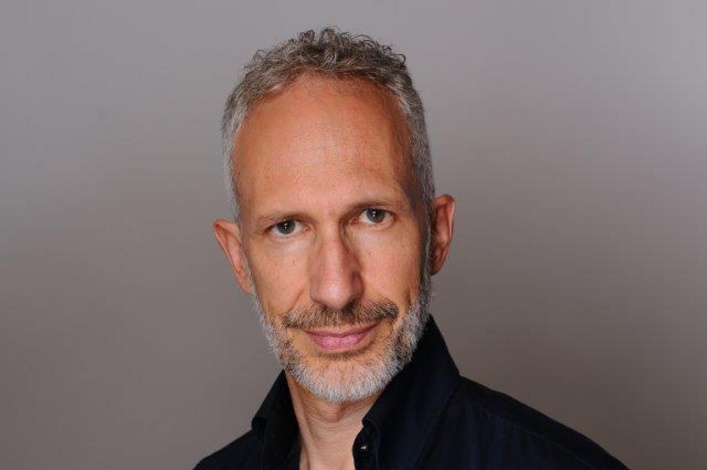
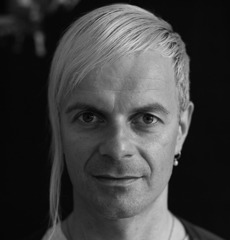
Dr. phil. Andrej Holm is a Researcher at the Institute of Social Sciences , Humboldt University of Berlin, specializing in Urban and Regional Sociology . As a Women's Representative and active academic, he focuses on gentrification, housing policy in international comparison, and European urban policy. His work bridges academia and activism, contributing to housing referendums and social movement analysis. Research Themes : Gentrification dynamics, financialization of housing, socio-ecological housing transformation, and post-socialist urban development. Key Projects : Expert analysis for Berlin housing socialization referendum (2022), comparative studies on Amsterdam/Barcelona/Berlin/Vienna (2022), and social infrastructure reconceptualization (2021). Holm's publications span urban policy critiques and housing justice , with recent 2025 works examining financial investors' impact on Berlin housing and pandemic-era housing conditions. His research integrates political economy with spatial inequality frameworks.
Robert Schumann University of Music DüsseldorfGermany
Enrique Sánchez Lansch is a Professor of Media Dramaturgy at the Institute for Music and Media at Robert Schumann University of Düsseldorf, appointed in 2018. Born in Gijón, northern Spain, and raised in Cologne, he has established himself as a prominent documentary filmmaker with a strong focus on music-related subjects. His educational background includes studies in music with a focus on singing, Romance languages, philosophy, and German studies. He completed his master's thesis on adaptation of literature into music films. After gaining professional experience in fictional series production, he pursued further studies in film and screenwriting at Columbia University and UCLA. Sánchez Lansch's research and creative interests center on the intersection of music and visual media. His work explores how musical experiences can be effectively translated to film, examining the relationship between sound and image. He has particular expertise in documenting musical institutions, historical contexts of music, and the educational aspects of musical performance. His approach combines rigorous historical research with innovative visual storytelling techniques that respect the integrity of musical performance while creating compelling cinematic narratives. His filmography reveals a consistent focus on music documentaries that bridge cultural and historical contexts. Early works focused on major musical institutions and figures, while more recent projects have expanded to examine the relationship between music and broader social, political, and cultural phenomena. His films consistently demonstrate a sophisticated understanding of both musical content and cinematic storytelling. His notable awards include: German Film Award German Documentary Film Award Bavarian Film Award German Critics' Award German Kinogilde Award Franz Hofer Prize Best Documentary Film at Los Angeles Latino International Film Festival Best Documentary Film at SEMINCI Festival de Valladolid Diapason d'Or Emmy nomination for "A Celebration for Gershwin" Sánchez Lansch has served as a mentor to young filmmakers, notably curating and presenting music short films by young talents for the Beethovenfest Bonn from 2006 to 2013. His professional activities extend beyond filmmaking to include teaching at institutions such as the dffb (German Film and Television Academy Berlin) and his current professorship at Robert Schumann University. He is an active member of both the German Film Academy and the European Film Academy, contributing to the broader film community through these organizations. As Professor of Media Dramaturgy, Sánchez Lansch contributes to the academic framework of the Institute for Music and Media, bringing his extensive professional experience to bear on the education of future media creators. His work bridges the gap between academic study and professional practice in the field of music-related visual media.
Prof. Torsten Wolfgang Kuhlen serves as a Universitätsprofessor at RWTH Aachen University, leading the Teaching and Research Area for Virtual Reality and Immersive Visualization within the Department of Computer Science. He is affiliated with Chair of Computer Science 12 (High Performance Computing), the Visual Computing Institute, and remains an integral part of the RWTH IT Center where his research group operates one of the world's largest Virtual Reality laboratories including the 30 sqm aixCAVE visualization chamber. The group maintains strong connections with Computational Science & Engineering Division, National High Performance Computing Center for Computational Engineering Science (NHR4CES), and VR in Science and Industry Network NRW e.V. Prof. Kuhlen's research spans virtual reality, immersive visualization, and multimodal 3D user interfaces with applications across simulation science, production technology, neuroscience, and medicine. His work combines basic research on advanced methods and algorithms with interdisciplinary collaborations involving RWTH Aachen institutes, Forschungszentrum Jülich, and industry partners. Recent publications demonstrate strong focus on audiovisual perception, immersive analytics, collaborative virtual environments, and practical VR applications in education and manufacturing. His research group has produced significant work on listening effort in virtual environments, immersive authoring techniques, and VR applications for scientific visualization. Notable projects include VRScenarioBuilder for automated vehicle testing and applications in monitoring additive manufacturing processes. The group actively participates in major conferences including IEEE VIS and EuroVis, with several award-winning contributions. Prof. Kuhlen has advised PhD students including Martin Bellgardt who recently completed his doctoral degree on "Increasing Immersion in Machine Learning Pipelines for Mechanical Engineering". The research group maintains state-of-the-art VR infrastructure including the aixCAVE facility which is open to all RWTH research groups.
Prof. Dr. Florian Jeltsch leads the Plant Ecology and Nature Conservation research group at the Institute of Biology and Biochemistry, University of Potsdam. His work spans multiple ecological domains with a focus on understanding biodiversity patterns and processes in changing environments. His research group investigates community ecology across various landscapes including grasslands, agricultural systems, and drylands. Dr. Jeltsch's research interests encompass Community Ecology of Grasslands and Agricultural Landscapes, Community Ecology of Drylands, Biodiversity in Heterogeneous Environments, Movement Ecology and Biodiversity Dynamics, and Applied Regional Conservation. His work integrates theoretical and empirical approaches to address pressing ecological questions related to global change. He has been instrumental in developing and applying individual-based models to understand complex ecological systems. Analysis of Dr. Jeltsch's recent publications reveals a strong focus on individual-based ecological modeling, movement ecology, and the impacts of landscape heterogeneity on biodiversity. His work spans from theoretical foundations to practical conservation applications, with particular emphasis on savanna ecosystems, habitat fragmentation effects, and climate change impacts. The research demonstrates integration of multiple scales from individual energetics to community dynamics. Dr. Jeltsch has mentored numerous doctoral students and postdoctoral researchers who have gone on to establish their own research careers. His group has been involved in multiple collaborative projects including BioHet, GrassYear, BioMove, and ORYCS, addressing biodiversity conservation in heterogeneous environments. The Plant Ecology and Nature Conservation group maintains active research stations including the Gülpe Research Station, providing field-based research opportunities. The group's work bridges theoretical ecology with practical conservation applications, particularly in the context of global environmental change.
Dr. Laura Mae Jacqueline Herzog is a postdoctoral researcher at the University of Osnabrück, affiliated with the Institute of Geography and the Research Center Institute of Environmental Systems Research. She serves as representative of mid-level faculty staff in the faculty council of Department 1 Cultural and Social Sciences for the term 2024-2026 and is a member of the working group Resource Management. Dr. Herzog received her PhD from the University of Bern, where she worked as a research assistant at the Chair of Policy Analysis and Environmental Governance. Prior to that, she completed her diploma in political science at the Otto-Suhr-Institut (OSI), Free University of Berlin, focusing on common-pool resource problems and environmental conflicts. Her research focuses on transformation pathways towards sustainable interactions between humans and nature in social-ecological systems, with particular emphasis on aquatic ecosystems. She works predominantly inter- and transdisciplinarily, examining sustainable land, water and open space management, participatory processes and co-creation, transformation processes and capacities, and environmental governance. Her methodological approaches include participatory modeling, interviews & surveys, comparative case study analysis, causal loop diagrams, and Social Network Analysis. Dr. Herzog's publications reveal a consistent focus on water resource management, social-ecological systems, and governance of common-pool resources. Her work spans from micro-pollutant regulation in the Rhine River to transformation processes in peatland use and digitalization in water management. She has developed expertise in analyzing cooperation networks, stakeholder engagement, and the emergence of collaborative governance structures in environmental management contexts. Member of the 3rd cohort of the PostDoc Academy for Transformational Leadership of the Robert Bosch Foundation (2020-2022) Founding member of the Working Group on Governance of Social-Ecological Systems of the Earth System Governance network Dr. Herzog actively engages with stakeholders and the public through her work on the Future Water Laboratory, MOOSland project, and LimnoScenES project. She has served on scientific advisory boards for research projects including BaltAqua and "Participatory visioning for collective action in natural resource management." Her commitment to climate action is evident through her involvement with Scientists4Future in Osnabrück. As part of her research on peatlands, Dr. Herzog works with regional stakeholders to investigate transformation processes toward rewetted peatlands and facilitates knowledge transfer of project findings into teaching materials and exhibition modules. She also conducts research on digital applications for sustainable water use within the Future Water Laboratory.
Alexander Müller-Rakow is a Researcher and PhD Candidate at the Design Research Lab at Berlin University of the Arts. His work explores the interplay between embodied interfaces , digital sovereignty , and social design , focusing on bodily movements as a medium for musical and interactive technologies. Education: Industrial and Interaction Design (University of Applied Science Magdeburg, University of Bergen) Current Roles: Research Scientist (Design Research Lab), Lecturer (Hochschule für Kunste Bremen, others) His research spans haptic technology , textile-integrated sensors , and experimental interfaces , often intersecting with digital justice and material interactions . Early-career publications include collaborations on capacitive sensing and urban design interventions , reflecting his interdisciplinary approach. As part of the Design Research Lab, he contributes to projects addressing inclusive digital futures , smart urban mobility , and collaborative tools , aligning with the lab's mission for ecologically sustainable design .
Prof. Dr. Frederik Tilmann is a leading seismologist at the GFZ German Research Centre for Geosciences (Section 2.4 Seismology) and a professor at the Freie Universität Berlin . His work focuses on seismic waveform analysis to understand geodynamic processes in subduction zones and continental collisions. Current affiliations: Head of Seismology Section, GFZ Potsdam University Professor, Freie Universität Berlin Research interests include: Earthquake source characterization Seismic tomography methods Mantle dynamics and lithospheric deformation Machine learning applications in seismic data analysis Volcano-seismic monitoring Ocean bottom seismology techniques Recent publications highlight advancements in: Full waveform inversion for mantle dynamics Machine learning for seismic phase picking Anisotropy studies in Alpine and Himalayan regions Subduction zone microseismicity analysis Volcano-induced landslide detection Scientific awards include: Feodor-Lynen Fellowship (Humboldt Foundation) Trinity Hall College Staff Fellowship Multiple citations in high-impact journals Collaborative work spans global seismic infrastructure projects like SMART cables, the Collaborative Seismic Earth Model, and the AlpArray network. His methodology innovations in shear wave splitting and depth phase picking have become standards in computational seismology.
Dr. Stephanie Roberta Graf is a Research Fellow at the Institute for Religious Studies (Department of History and Cultural Studies) at the Free University of Berlin since 2025. She previously worked as a Universitätsassistentin at the University of Innsbruck (2021-2025) and participated in the FWF-funded project 'Membership Metaphors as Doorkeepers'. Her research bridges philosophy, critical theory, and religious studies, with a focus on the Frankfurt School's theology and metaphorology. Diploma in International Development (University of Vienna & UNAM, 2005-2011) Master in Latin American Studies (UNAM, 2013-2015) Doctorate in Political and Moral Philosophy (UAM-I & Hebrew University, 2015-2019) Her research explores the theology and metaphysics of the Frankfurt School , German-Jewish thought, coloniality in diaspora religions, and political theology. She has published on topics ranging from Walter Benjamin's natural history concepts to critical analyses of capitalism as religion and heretical mysticism. Her recent work examines ecological crises, cultural appropriation, and interdisciplinary approaches to social critique. Selected publications reveal trends in Frankfurt School philosophy , Jewish mysticism , coloniality , and Benjaminian metaphorology , with subfields including divine violence, nonidentity theory, diaspora cultures, and interdisciplinary hermeneutics. She has presented at international conferences in Argentina, Chile, Peru, Austria, and Israel. She contributes to the academic community through her involvement in projects like the Metaphorology Lecture Series at the University of Innsbruck and the International Colloquium on Heretic Argumentation in Argentina. Her work intersects philosophy, religious studies, and socio-political critique.
Marit Rosol is a Professor of Economic Geography at Julius-Maximilians-Universität Würzburg (since 2022) and an Adjunct Professor at the University of Calgary's Department of Geography (since 2022). She holds a Canada Research Chair (2016-2022) and has earned international recognition for her work on alternative food networks, urban governance, and critical political ecology. Education: Habilitation in Geography (Goethe-Universität Frankfurt, 2012), PhD in Geography (Humboldt-Universität Berlin, 2006), Dipl.-Ing. in Urban & Regional Planning (TU Berlin, 2001) Her research focuses on Critical Food Studies , exploring alternative economies in urban agriculture, post-political urban governance, and transformative food systems. She examines tensions between environmental and social justice in food initiatives, state-led gentrification, and participatory urban planning frameworks. Recent publications analyze: Urban-rural food system transformations Smart city justice frameworks Commons-based land access models Anthropocene food challenges Scientific awards include: Senior Fellow, Freiburg Institute for Advanced Studies (2022) Canada Research Chair Tier II (2016-2022) 2015 RIBA President's Award for Outstanding Urban Agriculture Research She has supervised: PhD students: Hanna Augustin Master students: Natalie Bakko, Abby Landon, Ricardo Barbosa Jr. Postdocs: Dr. Rebecca Laycock Pedersen, Dr. Charlotte Spring, Dr. Lauren Kepkiewicz Major grants from SSHRC, Hans-Böckler Foundation, and DAAD have supported her work on food insecurity linkages, urban food justice, and global comparative studies of food systems. She co-founded the Food Studies Interdisciplinary Research Group at the University of Calgary and serves on editorial boards for Canadian Food Studies and sub\urban .
Wolfgang Mayer is a Professor for Performative Practice at the State Academy of Fine Arts Stuttgart , teaching collaborative artistic processes. He co-founded the art group Discoteca Flaming Star (DFS) in 1998 with Cristina Gómez Barrio, focusing on performative works that challenge memory and institutional frameworks. 1990–1995: Studied at Academy of Fine Arts Munich 1996–1997: DAAD scholarship at School of Visual Arts NYC 2005–2006: Whitney ISP participant Mayer’s research integrates performative practice , body theory , and collaborative art . His works interrogate memory , feminist narratives , and public space dynamics through sculptures , performances , and experimental music . Recent projects like Momentum:synthesize.r (2024) and Love Any Out of (90 Seconds) End (2023) explore temporal structures and emotional labor . Scientific honors include: 2013 Fundacion Estrenos Grant 2006–2007 Pollock-Krasner Scholarship 1993 Salzburg Summer Academy scholarship He emphasizes non-formalized artistic development through Sound & Body modules, public space interventions , and critical response protocols . Mayer’s DFS collective has shown globally at institutions like The Kitchen , Whitney Museum , and Tate Modern , often collaborating with figures like Rita McBride and Jeremiah Day.
Prof. Michael Janoschka is a Professor of Regional Studies at the Karlsruhe Institute of Technology (KIT), leading the Institute of Regional Studies since June 2022. His work focuses on urban transformation, housing market dynamics, and participatory research methods. He holds a doctorate from Goethe University Frankfurt and has taught internationally in institutions including the University of Leeds, Universidad Autónoma de Madrid, and Universidad de Santiago de Chile. Research interests include financialization of housing markets, urban displacement processes, and governance innovations. He has conducted fieldwork across Latin America, Southern Europe, and German urban regions like Leipzig and Karlsruhe. Notable projects include CONTESTED_TERRITORY (EU-funded, 2025), CoprodAction (Ecuador urban co-production study), and the IECO Institute for Eco-Industrial Development (BMBF-funded). Publications span over 20 years, with key works on gentrification dynamics, post-crisis urban landscapes, and transnational real estate investment. His 2016 study Gentrification, displacement, dispossession established frameworks for understanding Latin American urban processes. Current research emphasizes spatial justice and the 'Right to the City' discourse. Education: Humboldt University of Berlin (undergraduate), Goethe University Frankfurt (PhD) Labs/Teams: Institute of Regional Studies research group, IECO eco-industrial development initiative Grants: Over €5M in EU and German federal funding since 2020
Leibniz Institute of Freshwater Ecology and Inland FisheriesGermany
Jens Krause is a Professor and Head of Department at the Leibniz Institute of Freshwater Ecology and Inland Fisheries (IGB) in Berlin, leading the Research Group on Mechanisms and Functions of Group-Living. He holds a full professorship in Fish Ecology at Humboldt-Universität zu Berlin, Faculty of Life Sciences, Thaer-Institute, and since 2018 has been an Adjunct Professor at Technical University Berlin within the Excellence Cluster 'Science of Intelligence'. His research is centered on collective intelligence, social networks, decision-making, and behavioural ecology in fish and other animals. Full Professor in Fish Ecology, Humboldt-Universität zu Berlin Adjunct Professor at Technical University Berlin (since 2018) Head of Department, IGB Berlin PhD, University of Cambridge Diploma, Free University Berlin His work integrates experimental biology, network analysis, and biomimetic robotics to understand how animals make collective decisions. His expertise spans animal behaviour, evolution, and ecological physiology, with a strong focus on group-living dynamics. Recent research explores group hunting, predator evasion, social foraging, and the impact of environmental stressors on collective behaviour. The analysis of his recent publications reveals a strong trend in understanding collective behaviour in fish, including escape waves, social foraging, group hunting in marlins and sailfish, and the use of robotic agents to study social integration. His interdisciplinary approach combines marine biology, physics, robotics, and data science to uncover the mechanisms behind collective intelligence in both animal and human systems. Editorial Board, Behavioral Ecology Editorial Board, Fish and Fisheries Executive Board, Excellence Cluster 'Science of Intelligence' Advisory Board, Bimini Biological Field Station Foundation He advises numerous PhD students and postdoctoral researchers, and leads major research projects, including 'Developing exploration behaviour' funded by the Excellence Cluster. His work has been supported by extensive collaborations across Europe and North America, and he frequently publishes in top-tier journals such as Nature , Science Advances , Proceedings of the Royal Society , and Current Biology . His lab employs cutting-edge methods including automated tracking, social network analysis, and interactive robotics to study animal groups. His research group, 'Mechanisms and Functions of Group-Living', is embedded within the Excellence Cluster 'Science of Intelligence', where they investigate collective cognition, social information use, and the role of individual differences in group performance. The team combines field studies with laboratory experiments and computational modelling to understand the evolution and function of collective behaviour across species.
Christine Gerhardt is a Full Professor of American Literature and Culture at the University of Bamberg, Faculty of Humanities and Cultural Studies, Department of English and American Studies. She has held this position since October 2010 after serving as Director of the German-American Institute / Carl Schurz House in Freiburg (2008-2010) and as Acting Professor for North American Literature at the University of Freiburg (2008). She declined a W3 professorship at the University of Augsburg in 2017. Her research focuses on 19th and 20th/21st-Century American Literature with specializations in Ecocriticism, Literature of Migration and Mobility, Walt Whitman and Emily Dickinson studies, African American Literature, and Literature of the American South. Her recent publications demonstrate a strong engagement with environmental imagination, mobility studies, and the intersection of nature writing with cultural history. She has edited significant works including The American Novel of the Nineteenth Century (2017) and co-edited the special issue Environmental Imagination on the Move (2017). Professor Gerhardt has received numerous honors including the 2015 CHOICE Award for A Place for Humility: Whitman, Dickinson, and the Natural World and the Harris Distinguished Professorship at Dartmouth College (2015). She holds memberships in several professional associations including the Emily Dickinson International Society, Transnational Walt Whitman Association, and American Studies Association. Her teaching portfolio includes courses on American Literature I & II, Baldwin, The American Civil War, Presidential Elections, Walt Whitman, Toni Morrison, Herman Melville's Moby-Dick , Emily Dickinson, and various seminars on nature, environment, and contemporary American literature. She has organized numerous conferences including the International Conference on 'The Environment and Human Migration' (2016) and the Symposium on 'Nature – Mobility – Literature' (2014).
Claudia Lang serves as Associate Professor for Anthropology and Health at both Leipzig University and Maastricht University, with her primary institutional base at Leipzig's Institute of Ethnology. Her academic journey includes a Heisenberg Fellowship at Leipzig University (2019-2024), multiple visiting professorships, and extensive research positions focused on mental health anthropology. Lang's research centers on the interface between mental health and social life, with particular emphasis on India. Her work examines how mental health concepts are localized and transformed within different cultural contexts, especially regarding depression in Kerala. She explores the intersection of traditional medicine (particularly Ayurveda) with biomedical mental health practices, digital innovations in mental healthcare, and the emerging field of ecological grief in climate-changed environments. Her research methodology is primarily ethnographic, involving deep fieldwork with designers, users, and practitioners. Lang's publications reveal consistent themes across medical anthropology, global mental health, and digital health innovations. Her work shows increasing attention to how digital tools are reshaping mental healthcare practices in non-Western contexts, while simultaneously examining how environmental changes affect mental wellbeing through frameworks of ecological grief. This dual focus represents a significant contribution to expanding mental health discourse beyond anthropocentric frameworks. Heisenberg Fellowship (2019-2024) Author of 'Depression in Kerala. Ayurveda and mental health care in the 21st century' (Routledge, 2018) Co-author of 'Global Health for All: Knowledge, Politics, and Practices' (Rutgers, 2022) Co-author of 'The Movement for Global Mental Health: Critical Views from South and Southeast Asia' (Amsterdam University Press, 2021) Lang actively supervises students and has developed courses on medical anthropology of South Asia, research methods, and anthropology of mental health. Her current research projects investigate digital mental health innovations in India and the experience of ecological grief in climate-changed environments, aiming to develop a concept of environmental mental health that moves beyond anthropocentric notions.
Dr. Carsten Nowak serves as Head of Conservation Genetics at the Senckenberg Research Institute and Natural History Museum Frankfurt, where he leads the national reference center for genetic analyses of wolves and lynx. His work bridges cutting-edge molecular methods with practical conservation applications, focusing on wildlife monitoring and species preservation. Since 2010, his laboratory has been responsible for central examination of all samples collected through Germany's nationwide wolf and lynx monitoring programs. Nowak's research interests center on developing highly sensitive molecular marker systems for wildlife monitoring, with particular expertise in environmental DNA (eDNA) methods and SNP chips optimized for genotyping forensic and non-invasively collected environmental samples. His work addresses critical questions in conservation biology, including inbreeding, genetic impoverishment, population origins, and human environmental impacts on genetic population structures of native species. He investigates how genetic methods can clarify previously unanswered questions in nature conservation, where data limitations often hinder efficient and targeted conservation measures. His extensive publication record (2023-2025) reveals a strong focus on wolf population dynamics across Europe, hybridization detection methodologies, and conservation genomics of endangered species like the garden dormouse. Nowak's research demonstrates sophisticated approaches to tracking animal movements across national borders, assessing genetic diversity in recovering populations, and developing practical tools for non-invasive wildlife monitoring. His work on wolf-dog hybridization has particular policy relevance as wolf populations expand across Europe. As a public-facing scientist, Nowak regularly engages with policymakers and the public through presentations, media appearances, and citizen science projects. He has participated in high-profile events including briefings for Federal Environment Minister Svenja Schulze and numerous public lectures on wildlife conservation topics. His leadership extends to coordinating international research collaborations, including the CEwolf Consortium and various transboundary monitoring networks. Nowak directs the Center for Wildlife Genetics in Gelnhausen, where his team conducts DNA-based analyses of predator-prey interactions, livestock depredation incidents, and wildlife population monitoring. His laboratory serves as the national reference center for genetic analyses of wolves and lynx in Germany, processing samples from across the country to distinguish individuals, determine relatedness, and monitor population health. The center also develops molecular methods for detecting wolf-dog hybrids and other conservation genetics applications.