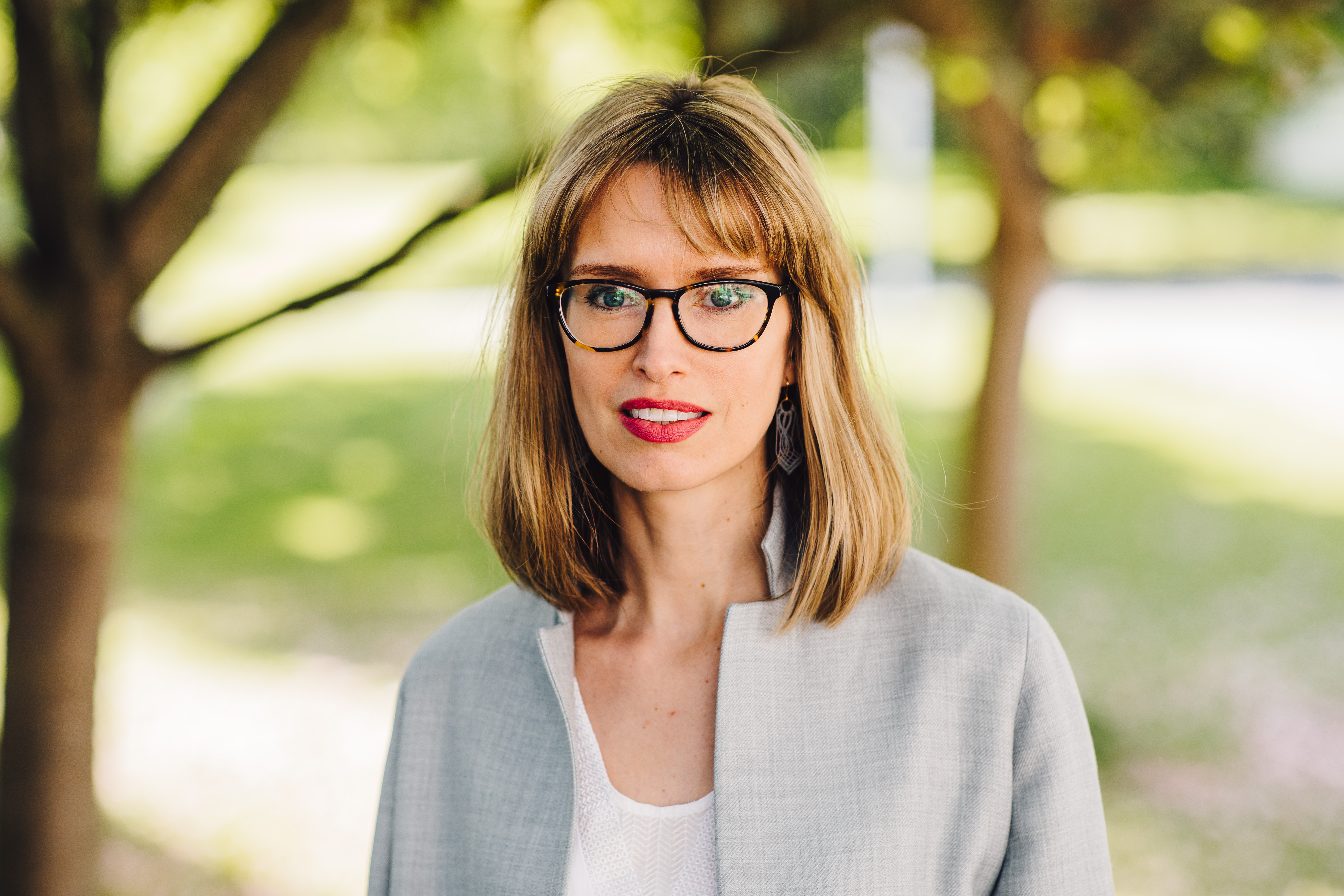
Jennifer Rushworth is an Associate Professor in French and Comparative Literature at University College London (SELCS). She holds a DPhil in Medieval and Modern Languages from the University of Oxford (2010–2013) and previously served as a Junior Research Fellow at St John's College, Oxford (2013–2017). Her research focuses on mourning, medievalism, music, and interdisciplinary studies spanning literary theory, cultural analysis, and philosophy. She has published extensively, including her monograph Proust’s Songbook (Penn Press, 2024). Her work aligns with Sustainable Development Goals 4 (Quality Education), 5 (Gender Equality), and 11 (Sustainable Cities and Communities). Education: DPhil in Medieval and Modern Languages, University of Oxford (2010–2013) Her research integrates musicological, philosophical, and critical-theoretical approaches to modern literature. Recent work explores intersections between memory, aesthetics, and cultural heritage. She teaches courses on comparative literature, medievalism, and French literature. Her academic contributions emphasize interdisciplinary dialogue, with a focus on how literary and musical forms articulate historical and philosophical themes.
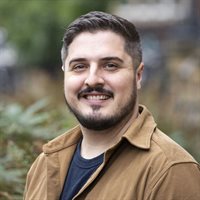
Dr. Thomas Brodie is an Assistant Professor in 20th Century European History at the Department of History, University of Birmingham. His academic career spans prestigious institutions including Oxford University, University of Leeds, and Jesus College, Oxford before joining Birmingham in 2018. Education: DPhil in History (The University of Oxford, 2014) MSt in Modern British and European History (The University of Oxford, 2010) BA in History (The University of Oxford, 2009) Fellowship of the Higher Education Academy (2020) Postgraduate Certificate in Higher Education (University of Birmingham, 2020) Dr. Brodie specializes in Modern European history with particular focus on Germany during the Nazi era and post-war periods. His research examines the intersection of religion, society, and war, with special attention to Catholic communities in Germany during WWII and the subsequent evolution of mourning practices and memory culture. His work combines theological analysis with social and cultural history using previously unused archival materials from church, state, and private collections. His recent publications demonstrate a clear trajectory from examining wartime religious communities to post-war memory practices, showing his evolving scholarly interests in how societies process mass bereavement and construct collective memory. The articles primarily focus on German religious history during and after WWII, with increasing attention to spatial dimensions of mourning and commemoration. Scientific Awards: Runner-up award for the Wiener Library's Fraenkel Prize (2014) AHRC award for doctoral research Hanseatic Scholarship for archival research in Berlin and German cities Dr. Brodie teaches a range of undergraduate and postgraduate courses including 'The Rise and Fall of the Third Reich' and 'Life After Death: Culture, Memory and Power in Postwar Europe.' He supervises BA dissertations and welcomes PhD students working on Modern German history or thematic interests in religion, war, and memory in European contexts since 1800. His current research project examines German society's responses to bereavement during WWII and its aftermaths through personal diaries, letters, artistic representations, and war memorials.
Gayle Letherby is a Visiting Professor of Sociology at the University of Plymouth’s Peninsula Medical School (Faculty of Health), and holds visiting roles at the University of Greenwich and the University of Bath’s Centre for Death and Society (CDAS). She is an Academician of the Academy of Social Sciences (since 2007) and recipient of the 2023 Lifetime Contribution to Autoethnography Award. Her research focuses on feminist methodology, health sociology, grief and bereavement, mobility studies, and criminology. She has supervised over 20 doctoral students across multiple universities, including topics like non-motherhood, occupational therapy, and gang culture in African Caribbean communities. Her teaching spans undergraduate and postgraduate levels, covering crime theory, auto/biographical research, and feminist epistemology. Notable collaborations include participatory studies on homeless individuals’ food experiences and ethnographic explorations of medical decision-making. Her interdisciplinary work bridges sociology, criminology, and health studies, with a strong emphasis on autoethnographic and creative methodologies. Recent research explores themes like grief narratives, gendered travel experiences, and the emotional dimensions of doctoral journeys. She has contributed to policy discussions on family-centred care and has been a guest lecturer globally, including at York University (Canada) and University College Cork (Ireland). Awards: Academy of Social Sciences Academician (2007), Lifetime Contribution to Autoethnography (2023) Teaching Expertise: Feminist research methods, criminology, sociology of health, gender studies Key Research Areas: Auto/biography, non-motherhood, medical sociology, mobility, grief studies
Professor Kendrick Oliver is a faculty member in the Department of History at the University of Southampton, holding the rank of Professor of American History. His research focuses on 20th-century American political, social, and cultural responses to existential questions, with emphasis on scientific cosmology, space history, communication technology, evangelical religious history, and the Vietnam War. He has served as Head of the Department of History from 2018 to 2022 and contributed to founding the Historians of the Twentieth Century United States organization (2000s). Current research examines the social and cultural history of the Big Bang theory, supported by grants from the American Philosophical Society and others. Teaching responsibilities include undergraduate modules on McCarthyism, the Space Age, and America's global role since 1945, alongside a master's-level course on conspiracies and paranoia in American history. He is developing the MA Global Challenges program launching in 2024. Supervision includes four PhD students across history disciplines. Oliver has authored three books, including *The My Lai Massacre in American History and Memory* and *To Touch the Face of God: the Sacred, the Profane and the American Space Program, 1957-75*. His scholarship bridges science and religion, analyzing topics like prison ministry origins, cosmic microwave background discovery narratives, and evangelical globalization. Oliver’s work frequently intersects with broader themes of memory, technology, and Cold War context.
Professor Emma Mason is a leading academic in the Department of English and Comparative Literary Studies at the University of Warwick . Her career spans roles as an educator, editor, and researcher with a focus on poetry, Christianity and literature, Catholic theology, and ecological themes in the long nineteenth-century . Editor of the Bloomsbury monograph series New Directions in Religion and Literature Co-editor of the Year's Work in Critical and Cultural Theory Director of the Comparative Religions and Literatures group at Warwick Her research explores spiritual materialism and ecological transformation , particularly through figures like Christina Rossetti. She is currently working on a study of Catholic mysticism in late 19th- to early 20th-century Europe. Mason's publications include Christina Rossetti: Poetry, Ecology, Faith (OUP, 2018) and co-edited volumes addressing religion in literary contexts. Recent Publications (2025-2027): Analysis of Newman's novels as ecological narratives Contributions to Cambridge and Oxford handbooks on religion and literature Editorial work on William Barnes' dialect poetry Studies on Victorian theological ecology and contemplation Scientific Awards: British Academy Postdoctoral Fellowship Mason supervises postgraduate research in poetry, religion, and affect theory . She is on study leave until Easter 2026 but remains active in editorial and collaborative projects.
Dr Elizabeth Hallam is an Associate Professor in Visual, Material, and Museum Anthropology at the University of Oxford's School of Anthropology & Museum Ethnography. She holds additional roles as a Research Affiliate at the Pitt Rivers Museum, Fellow of St Peter's College, and Director of the Interdisciplinary Studies in Cultural Anthropology (ISCA). Her research focuses on the anthropology of the body, death, material and visual cultures, human anatomy, and three-dimensional models in medical education. She is also the Editor of the Journal of the Royal Anthropological Institute and has curated exhibitions such as 'Designing Bodies: Models of Human Anatomy from 1945 to Now'. Her academic journey includes a BA and PhD from the University of Kent, followed by positions at the University of Sussex and Aberdeen University. She has authored/co-authored influential works like Anatomy Museum: Death and the Body Displayed (2016), which won the Wellcome Medal. Her current projects explore museums of anatomy, 3D modeling in anthropology, and collaborative art practices. Key research themes include death and memorializing processes, the role of material culture in knowledge production, and interdisciplinary studies on creativity and improvisation. She advises four DPhil students and has been involved in ARC-funded projects on cemetery futures and postmortem practices. Awards: Wellcome Medal for Anthropology as Applied to Medical Problems (2016) Grants: Projects funded by the Australian Research Council, Henry Moore Foundation, and Royal College of Surgeons Labs/Teams: Collaborations with University of Melbourne and curatorial networks in Europe/USA
Geoffrey Batchen holds the Professorship of the History of Art at the University of Oxford, situated within the Department of the History of Art in the Faculty of History. He is additionally a Fellow of Trinity College, where he contributes to academic governance and tutorial instruction. His career spans teaching, scholarly writing, and international curatorial practice focused exclusively on photographic history. Education: BA, University of Sydney PhD, University of Sydney Batchen's research interrogates photography's cultural embeddedness across temporal and technological shifts, emphasizing its theoretical frameworks, memorial functions, and ethical complexities. His scholarship bridges art historical analysis with material studies, examining how photographic practices shape human experience from the 19th century to digital eras. Curatorial projects extend this investigation through exhibitions at major institutions worldwide, including the Van Gogh Museum, International Center of Photography, and National Media Museum. His publication trajectory reveals evolving engagement with photography's ontological status, moving from foundational studies like Burning with Desire (1997) to comprehensive historical syntheses in Negative/Positive (2020). Recurring themes include technological materiality, memory construction, and crisis representation, with recent works addressing digital dissemination and cameraless techniques. This body of work establishes photography as both artistic medium and cultural catalyst across diverse sociopolitical contexts. Information regarding doctoral students, research grants, laboratory facilities, or award recognition was not provided in the source material.
Dr. Jonathan Skinner is a Reader (equivalent to Associate Professor) in English and Comparative Literary Studies at the University of Warwick's Faculty of Arts, where he researches and teaches ecocriticism, contemporary poetry, and creative writing. He founded and edits the journal ecopoetics , exploring intersections between writing and ecology. His research examines: Ecopoetic theory and environmental literature Intersections of sound studies and ethnopoetics North American avant-garde poetry (Olson, Kyger, Eigner) Translation and transnational poetics Third Landscape theory and urban wildness He leads a research network facilitating cross-cultural poetry exchanges along avian migration routes. Skinner's publications predominantly explore ecocritical frameworks through poetry analysis, with recent work examining climate change poetics, multispecies communication, and Anthropocene aesthetics. His scholarship connects literary studies with environmental science, acoustics, and landscape theory. He currently supervises five PhD students researching multispecies poetics and environmental literature through AHRC-funded projects, and has successfully supervised two doctoral candidates studying deindustrialization and extractive urbanism. Previously supervised MA theses span modernist poetry, ecocriticism, and creative writing.
Oreet Ashery is Professor of Contemporary Art at the Ruskin School of Art, University of Oxford, where she serves as Director of the MFA programme and Director of Studies in Fine Art at Exeter College. A visual artist whose practice navigates both institutional and grassroots contexts, Ashery's work engages with bodies, worldbuilding, autoethnography, gender and technology through multiplatform projects spanning video, 2D image-making, performance and assemblage. Her research focuses on the intersection of digital culture and mortality, speculative fiction, and gender politics. Characterized by the use of speculative fiction and humor, her work often occupies utopian, discursive and incongruous spaces. She has developed significant projects exploring digital death, grief, and the politics of representation, particularly through her award-winning web-series Revisiting Genesis and her film Dying Under Your Eyes which documents her father's passing. Her practice bridges academic research and public engagement through projects like Death Cafés that bring conversations about mortality into community spaces. Ashery's artistic output shows a consistent trajectory from early performance works exploring identity and cultural politics to more recent projects examining digital legacy and mortality. Her work increasingly engages with medical humanities and the representation of illness, as evidenced by the Wellcome Collection-commissioned Misbehaving Bodies: Jo Spence & Oreet Ashery exhibition (2019-2020) which examined illness representation through collaborative work with the late photographer Jo Spence. Oxford- UdK Berlin Award (2022) Turner Prize Bursary (2020) 10th Jarman Film Award (2017) As a supervisor, Ashery guides doctoral students working at the intersections of performance, visual art, and critical theory. She has secured significant commissions from institutions including KW Institute for Contemporary Art, Wellcome Collection, and Stanley Picker Gallery. Her leadership of the MFA program at the Ruskin School of Art demonstrates her commitment to developing the next generation of artists while maintaining an active studio practice that informs her pedagogical approach.
Professor Steven Eastwood is a Professor of Film Practice at Queen Mary University of London (QMUL), leading Film Practice and directing the BLOC arts complex. He holds a PhD from UCL Slade School of Fine Art (2007). His work bridges film, installation, and co-creation with neurodivergent communities, palliative care professionals, and medical educators. Eastwood's research focuses on neurodiversity representation, end-of-life narratives, and fact-fiction hybrid practices. Key works include The Stimming Pool (2024, co-created with Neurocultures Collective), ISLAND (2017, hospice documentary), and Buried Land (2010, Bosnian archaeology film). His ISLAND educational toolkit is used by NHS Trusts for medical training. Awards include Wellcome Trust grants, BFI London Film Festival premieres, and Grierson Award nominations. Academic Leadership: Head of Film Practice, QMUL Centre for Film & Ethics founder Education: BA/PhD from UCL, prior roles at University of East London and SUNY Buffalo Grants: Wellcome Trust, AHRC, Arts Council England, Paul Hamlyn Foundation Labs: BLOC cinema-lab complex with 4K Dolby Atmos facilities Research explores ethical filmmaking in sensitive domains like palliative care and autism advocacy. Recent projects include Autism Through Cinema (2018-2022) and Death and Dying studies through multiscreen installations. Supervision: 6 current PhD students focusing on documentary ethics, neurodiversity, and prison narratives External Examining: Practice-based film PhDs across UK institutions
Joel Krueger is a Lecturer in Philosophy at the University of Exeter, affiliated with the Department of Sociology and Philosophy and Egenis, the Centre for the Study of Life Sciences. He specializes in phenomenology, philosophy of mind, and cognitive science, with a focus on embodied cognition, emotions, social cognition, psychopathology, and human-AI interactions. His research also encompasses Asian and comparative philosophy, philosophy of music, and pragmatism. Education: PhD in Philosophy from Purdue University (2010), MA in Philosophy from San Francisco State University (2006), and BA in Philosophy from the University of California, Davis (2003). Research Interests: Krueger’s work bridges philosophy and cognitive science, addressing topics such as loneliness, psychiatric disorders, AI ethics, and the role of music in affective scaffolding. He explores how technologies like AI chatbots influence grief and social interactions, and how embodied cognition shapes mental health and sociality. Editorial Roles: Associate Editor of Phenomenology and the Cognitive Sciences and Passion: Journal of the European Philosophical Society for the Study of Emotion . Labs/Teams: Active in Egenis (Mind, Body, and Culture), contributing to interdisciplinary studies on life sciences and their societal implications.
Barry Sheils is Professor in the Department of English Studies at Durham University, specializing in modern and contemporary literature with intersecting interests in affect theory, ecological thinking, and psychoanalysis. His research particularly examines W.B. Yeats, Irish modernism, and transnational poetics. Prior to joining Durham in 2016, he held fellowships at University College Dublin (Irish Research Council) and Warwick University's Institute of Advanced Study, following lectureships at Swansea University. He earned his doctorate from Warwick University and BA from Trinity College Dublin. Sheils' research explores: The interaction of literary style with ecological consciousness and meteorological themes Affective dimensions of modern writing, especially shame and anxiety Transnational exchanges in modernist literature Psychoanalytic approaches to cultural production Contemporary reformulations of modernist legacies in digital culture His publications demonstrate sustained engagement with environmental humanities, Irish studies, and aesthetic theory, frequently employing interdisciplinary frameworks connecting literary analysis with cultural history and philosophy. Honors include: Irish Research Council Fellowship Early Career Fellowship, Warwick Institute of Advanced Study Keynote at Swedish National Forum for English Studies (2017) He currently supervises four doctoral students researching modern literature and serves as Associate Director of Durham's Centre for Culture and Ecology. As Chair of the Undergraduate Board of Examiners since 2019, he oversees modules on post-war fiction, Yeats, literary psychoanalysis, and shame studies.
Professor Karen Coats is a leading scholar in children’s and young adult literature at the University of Cambridge’s Faculty of Education, directing the Centre for Research in Children’s Literature. Her work examines how texts shape worldview through interdisciplinary lenses, integrating psychoanalysis, cognitive poetics, and continental philosophy. Education: PhD (Human Sciences, George Washington University, 1998), MPhil (Human Sciences, George Washington University, 1996), MA (English, Virginia Tech, 1996), BA (English Education, Virginia Tech, 1985) Research Foci: Multimodal discourse analysis, cultural theory, religion in literature, and the intersection of aesthetics and ethics Her research explores how children’s texts reflect and influence societal values, with emphasis on embodied cognition, material culture, and relational ethics. Recent projects include contributions to the Cambridge History of Children's Literature and Routledge Companion to Young Adult Literature . Awards include the 2024 Children’s Literature Association Edited Book Honor, 2022 Mem Fox Visiting Research Fellowship, and 2018 Children’s Literature Association Award. She mentors PhD students in areas like cognitive poetics, psychoanalysis, and YA literature. Teaching includes MPhil courses on critical approaches to children’s literature and postgraduate research methods. She co-edits the Cambridge Journal of Education and serves on advisory boards for Children’s Literature and Culture (Palgrave) and Children’s Literature, Culture and Cognition (John Benjamins).
London School of Economics and Political Science (LSE)United Kingdom
Blake Miller is an Assistant Professor of Computational Social Science in the Department of Methodology at the London School of Economics (LSE), affiliated with the Data Science Institute. Their research focuses on computational methods applied to political communication in authoritarian regimes, particularly China, and the intersection of social media with political violence and identity politics. They hold a PhD from the University of Michigan (2018) and conducted postdoctoral research at Dartmouth College. Key substantive areas include: China's surveillance-driven security state and information control mechanisms Political mobilization through moral outrage and outgroup targeting Technological adaptations in authoritarian governance Methodological expertise spans machine learning, text analysis, and fairness in AI applications. Their book project Platforms and Power examines how authoritarian states delegate censorship to private platforms. Teaching focuses on quantitative text analysis and machine learning in political contexts. Research outputs include influential work on: Censorship patterns during China's zero-COVID protests Moral-emotional triggers for violence support Evaluation of active learning algorithms for text labeling Blake's work has been featured in The Washington Post , China File , and the CSIS Pekingology Podcast. They maintain an active presence in interdisciplinary research communities.
Victoria Rimell is Professor of Latin and Director of Research in the Department of Classics at the University of Warwick, Faculty of Arts. She previously served as Associate Professor at Sapienza University of Rome and held research fellowships at University College Oxford and Cambridge. She joined Warwick in 2016 and was promoted to Professor in 2018. She also holds administrative roles including Deputy Head of Department and Coordinator of the joint degrees in Classics and English. Education: MA, King's College Cambridge MPhil, King's College Cambridge PhD, King’s College London MSc, University of Warwick Her research bridges Latin literature and Roman culture with modern philosophical and political thought, focusing on authors such as Seneca, Ovid, Martial, Petronius, and Horace from the first century BCE to the second century CE. She explores themes of space, enclosure, vulnerability, mourning, and identity, often engaging with critical theory, gender studies, and classical receptions. Her work frequently draws interdisciplinary connections to modern art, literature, and philosophy. The recent publications highlight a strong trajectory in Senecan studies, particularly on consolation, grief, and ethical self-fashioning, alongside continued engagement with Ovid, Martial, and Horace. The works reflect a deep integration of classical texts with contemporary theoretical frameworks, including psychoanalysis, feminist theory, and spatial theory. Topics such as the ‘labour of empire,’ ‘creative self-reproach,’ and ‘care of the other’ underscore her focus on emotional and ethical dimensions in Roman literature. Scientific Awards and Recognition: Member, Academia Europaea (2020) Leverhulme Trust Research Grant for 'Care of the Other: Senecan Consolation and the Work of Mourning' Victoria Rimell actively supervises PhD students on topics ranging from humanitas to adulatio and the disabled body in Martial. She has secured external research funding and serves on editorial boards for Classical Philology , MD , and The Journal of Roman Studies . She also contributes to interdisciplinary research through the Centre for Research in Philosophy, Literature, and the Arts. She teaches undergraduate and postgraduate modules on Latin literary texts, Roman laughter, vulnerable bodies, and ancient literature and thought. She leads a research group and collaborative projects on imperial space, the ancient novel, and Vergil and the Feminine (co-edited with Dr Elena Giusti). Her current Leverhulme-funded project continues to expand the dialogue between classical texts and modern ethical theory.