Dr. Steffen Katzner is an associate faculty member in the Faculty of Biology at Ludwig Maximilian University of Munich, affiliated with the Department of Biology II and the Division of Neurobiology. He co-leads the Vision Circuits research group with Laura Busse, focusing on neural mechanisms underlying visually guided behavior in mice. His research integrates optogenetics with extracellular electrophysiology to analyze how behavioral relevance modulates cortical and sub-cortical neural activity. Key themes include sensory processing, locomotion effects on cognition, and cortical dynamics during attention. Recent publications highlight trends in mouse visual neuroscience , sensory-motor integration , and computational models of behavior . Articles explore corticothalamic feedback, V1 microcircuits, and prior knowledge in neural processing. Responsibilities include research group leadership and collaborative studies with Gregory Born, Laura Busse, and others. Contact: steffen.katzner@lmu.de
Bartolome Jesus Almagro Torres is a University Professor at the University of Huelva's Faculty of Education, Psychology and Sports Sciences, specializing in the Department of Integrated Didactics with research focus on Didactics of Body Expression. His work bridges physical education, sports psychology, and motor skills development within the Research Center on Contemporary Thought and Innovation for Social Development. He earned his PhD from the University of Huelva in 2012 with the thesis "Motivational factors related to adherence to competitive sports practice in adolescents," supervised by Dr. Pedro Sáenz-López Buñuel and Dr. Juan Antonio Moreno Murcia. His academic foundation centers on understanding psychological mechanisms in sports participation and educational contexts. Dr. Almagro Torres' research investigates motivational dynamics in physical education through Self-Determination Theory, examining how psychological needs, emotional climates, and leadership styles influence physical activity adherence. His work emphasizes gender differences in sports psychology, basketball-specific training methodologies , and emotional climate assessment in educational settings. Recent studies focus on change of direction speed metrics, AI-powered performance assessment, and novelty-seeking behavior in student engagement. Analysis of his 2024-2025 publications reveals consistent focus on quantitative assessment of psychological variables in sports education, with methodological emphasis on observational tools, validation studies, and sport-specific interventions. His basketball research examines position-specific requirements while his educational work develops practical frameworks for improving classroom motivation and emotional climates. No scientific awards were documented in the source material Information about academic advising and research grants was not provided He actively contributes to the HUM643 research group "EDUCATION, MOTOR SKILLS AND ONUBENSE RESEARCH," developing tools like the Emotional Climate Observation (OCE) instrument while investigating practical applications for improving physical activity levels in vocational training and school settings.
Assoc. Prof. Dr. Günseli USGU is a full-time academic at Hasan Kalyoncu University's Faculty of Health Sciences, Department of Physical Therapy and Rehabilitation. She earned her PhD in Physiotherapy and Rehabilitation from Hacettepe University in 2016, following a Master's in Sports Physiotherapy (2010) and a Bachelor's in Physiotherapy and Rehabilitation (2005). PhD: Hacettepe University (2016) Master's: Hacettepe University (2010) Bachelor's: Hacettepe University (2005) Her research focuses on musculoskeletal rehabilitation, exercise physiology, and sports medicine, with particular emphasis on patellar taping techniques , kyphosis correction , kinesiophobia , and digital health assessment tools . She has developed innovative approaches to balance disorders and pain management in athletes and clinical populations. Analysis of her publications reveals a trend toward integrating technology in rehabilitation (e.g., smartphone-based kyphosis measurement), exercise-based interventions for chronic conditions, and cross-disciplinary evaluations in sports physiotherapy. Her work spans clinical studies, validation of assessment tools, and sports performance optimization.
Thomas Tienkamp is a researcher at the University of Groningen , affiliated with the Faculty of Arts and Faculty of Medical Sciences (Netherlands). His work bridges clinical phonetics , speech motor control , and computational linguistics , focusing on oral cancer and neurological speech disorders like Parkinson’s disease. His research employs electromagnetic articulography and acoustic analysis to study motor equivalence strategies post-surgery. Key Collaborations: Netherlands Cancer Institute, Erasmus Medical Centre, Boston University Research Tools: SPRAAKLAB mobile laboratory, pupillometry, formant perturbation experiments Research Trends: Recent publications (2024–2025) explore vowel space dynamics in Parkinson’s disease, auditory-motor adaptation in aging, and technology development for speech-impaired patients. His systematic review on post-surgical speech recovery highlights interdisciplinary applications of kinematic methods in clinical settings. Labs & Networks: Co-developer of SPRAAKLAB , a mobile platform for speech data collection, and contributor to international speech production seminars. Supervised by Prof. Martijn Wieling and Dr. Defne Abur as part of his PhD project.
Bo Wahlberg is a Professor of Chair in Automatic Control at KTH Royal Institute of Technology since 1991. He leads the Division of Decision and Control Systems within the School of Electrical Engineering and Computer Science. As a co-founder of the Centre of Autonomous Systems (CAS) and the Linnaeus Center ACCESS on networked systems at KTH, he has been instrumental in establishing key research initiatives. Currently, he serves as the KTH director and member of the program management for the Wallenberg AI, Autonomous Systems and Software Program (WASP). Professor Wahlberg's research spans system identification, automatic control, and signal processing with applications across multiple domains. His expertise in orthonormal basis functions for system modeling has been foundational in the field. Recent work focuses on model predictive control for autonomous vehicles, inverse filtering problems, distributed control strategies, and applications in transportation systems. His research demonstrates consistent evolution from theoretical foundations to practical implementations in autonomous systems and robotics. His publication record shows a clear progression from fundamental system identification techniques to cutting-edge applications in autonomous systems. The recent publications (2020-2024) increasingly focus on multi-agent systems, autonomous vehicle control, inverse problems in estimation, and security applications of control theory. This reflects the broader trend in control systems research toward more complex, networked, and safety-critical applications. IEEE Fellow (2007) for contributions to system identification using orthonormal basis functions Fellow of IFAC (2019) for contributions to system identification and development of orthonormal basis function models Fellow of the Royal Swedish Academy of Engineering Sciences (IVA) (2023) IEEE Transactions on Automation Science and Engineering Best New Application Paper Award (2016) Professor Wahlberg has supervised more than 130 master's students and 25 PhD students throughout his career. His research has been supported by major initiatives including the Wallenberg AI, Autonomous Systems and Software Program (WASP). He has contributed to establishing research arenas like WARA-PS for public safety demonstrations and autonomous rescue robotics experimentation. His leadership extends to program management and directing significant research centers at KTH. Professor Wahlberg leads the Division of Decision and Control Systems at KTH, which is part of the broader ecosystem including the Centre of Autonomous Systems (CAS) and the Linnaeus Center ACCESS. His work connects with multiple research groups focusing on networked systems, autonomous vehicles, and robotics applications. The Wallenberg AI, Autonomous Systems and Software Program (WASP) represents a major collaborative effort he directs, bringing together academic and industry partners for large-scale research in AI and autonomous systems.
Dr. John Thompson is an Associate Professor in the Department of Neurosurgery at the University of Colorado Anschutz Medical Campus School of Medicine . He earned his PhD in 2008 and BS in 2003, both from Florida State University. Fluent in English, he specializes in deep brain stimulation (DBS) for movement disorders, particularly Parkinson's disease, with expertise in neurophysiological signal analysis and sleep disorders. Education PhD, Florida State University (2008) BS, Florida State University (2003) Research Interests DBS programming optimization Basal ganglia neurophysiology Sleep architecture in neurodegenerative diseases Neurotechnology development Epilepsy surgical outcomes Neuromodulation ethics Scientific Contributions 83+ peer-reviewed publications (2013-2024) 2024 studies on sleep spindles in Parkinson's DBS 2023 work on pediatric dystonia programming 2022 technical innovations in DBS targeting 2017 award-winning Boettcher Investigator research Professional Affiliations Society for Neuroscience American Society for Stereotactic and Functional Neurosurgery University of Colorado Movement Disorders Center Neurotechnology Center Practice Locations University of Colorado Hospital
Cristin Welle is a Professor in the Department of Neurosurgery and Physiology & Biophysics at the University of Colorado Anschutz Medical Campus School of Medicine, where she also serves as Vice-Chair for Research in Neurosurgery. Her academic journey includes a PhD from the University of Pennsylvania (2010) and a BS from the College of William and Mary in Virginia (2004). Dr. Welle leads the BIOElectrics Lab which investigates how neurological medical devices interact with the nervous system. Her research focuses on dissecting circuit-level structural and functional implications of neuromodulatory and brain-computer-interface devices using advanced techniques including optogenetics, chronic electrophysiology, and longitudinal in-vivo imaging in animal models. The lab's primary goal is to understand the dynamic interactions between devices and neural circuits in the context of translational neurotechnology. Her recent publications demonstrate a strong focus on neural interfaces, with particular emphasis on vagus nerve stimulation mechanisms, chronic neural implant responses, and advanced imaging techniques for neural structures. The research spans from fundamental neural circuit investigations to practical applications for motor rehabilitation, brain injury assessment, and neural device safety. Dr. Welle is an active member of the Society for Neuroscience and has contributed to multiple high-impact collaborative projects including the Deep Brain Stimulation Think Tank. Her work bridges engineering, neuroscience, and clinical applications, with significant contributions to understanding how neural interface technologies can be optimized for therapeutic use. The BIOElectrics Lab maintains a multidisciplinary approach combining optics, electrophysiology, and neural interface technologies to push the boundaries of neurotechnology. Their research has been featured in prominent media outlets discussing emerging trends in neural stimulation and brain-computer interfaces.
Dr. Nicolás García-Aracil is an Associate Professor at Miguel Hernández University of Elche, Spain, affiliated with the Department of Systems Engineering and Automation. He serves as Deputy Director of the Institute of Bioengineering and Director of the Chair of Advanced Technologies for Rehabilitation. PhD in Robotics (Summa Cum Laude, National Research Prize, 2004) M.Sc. in Control Engineering (1996) M.Sc. in Design, Robotics and Industrial Automation (1997) B.Sc. in Electronics Engineering (1992) His research focuses on medical robotics , rehabilitation robotics , and human-robot interaction , with applications in stroke recovery , prostate cancer visualization , and assistive technologies . Recent publications emphasize dynamic adaptation , neuro-fuzzy systems , and multimodal interfaces for therapeutic optimization. Best Thesis in Robotics, National Research Prize (Spanish Federation of Automatic Control, 2004) Summa Cum Laude PhD Thesis (2004) 1st Accesit for PhD Thesis (2004) Active in European Union Horizon 2020 projects like AIDE and FP7 initiatives (ECHORD, MAAT). Serves as Editorial Board member for BioSystems & Biomechanics and has guest-edited multiple JCR journal special issues.
Sophie Manuela Lindner is a Lecturer for Special Assignments at the Institute of Dance and Movement Culture, German Sport University Cologne, where she concurrently pursues her PhD. Her work bridges academic research and practical application in dance science, particularly focusing on breakdance/breaking's integration into the 2024 Olympic Games as both a researcher and educator. Her educational background includes a BSc and MA in Sports Physiotherapy completed in Austria and Spain, with specialized training in dance medicine. This foundation informs her dual expertise in clinical practice and performance science. Lindner's research centers on performance diagnostics, injury prevention, and health promotion in breaking. She develops evidence-based frameworks for training analysis and mental health support while addressing the unique physiological demands of Olympic-level breakers. Her work emphasizes translating scientific findings into accessible dancer education through workshops and digital tools. Recent publications reveal a pronounced interdisciplinary trend, combining sports science, medicine, and cultural studies to examine breaking's Olympic transition. Key themes include injury epidemiology, performance optimization, and cultural preservation, with methodologies spanning quantitative movement analysis and qualitative community studies. Her scientific recognition includes: Hamilton Symposium Award for Best Abstract (2024) on professional breakers' training patterns Posterpreis (2nd Place, 2023) for self-efficacy research in digital teaching Wissenschaftspreis (1st Place, 2024 IADMS) for Olympic breaker profiling Lindner supervises students through courses like 'Trendsport: Breakdance' and 'Dance', while leading the 'Piecemaker+' project implementing video feedback tools for functional screenings. As executive director of HE4DS - Health Education for Dancers and board member of Urban Dance Health e.V., she connects research with global dancer communities through workshops and lectures. She actively shapes breaking's institutional integration through events like Battle of the Month and NRW Breakingkader-Lehrgang, while co-organizing initiatives such as ITB tanzt and Science Slam Meets Breaking to foster dialogue between street culture and academia.
Tej Lamichhane is currently an Assistant Professor at the University of Central Oklahoma in the Department of Engineering & Physics. His academic career includes postdoctoral research at MIT and Oak Ridge National Lab, as well as a Ph.D. in Condensed Matter Physics (2013–2019) and a Master’s in Physics (2010–2013), both from Iowa State University and University of Texas at Arlington respectively. Ph.D., Condensed Matter Physics, Iowa State University (2019) Master of Science, Physics, University of Texas at Arlington (2013) His research focuses on data-driven design and discovery of quantum materials , rare-earth-free permanent magnets , and magnetocaloric materials , with applications in electrical motors , hydrogen evolution , and biomedical nanomaterials . He integrates materials databases , rational design , and additive manufacturing to develop functional materials like single crystals , thin films , and nanomaterials . His recent publications highlight a strong emphasis on additive manufacturing and magnetic materials , with applications in energy systems , quantum technologies , and environmental sustainability . Collaborative works span institutions like MIT, Oak Ridge National Lab, and industry (Intel Corporation), reflecting interdisciplinary and applied research trends. He teaches Materials Science , Modern Physics , Engineering Optics , and Mathematical Physics II at the University of Central Oklahoma. His research leverages computational methods to study structural-electronic-magnetic correlations in materials like Fe-3Si , Sm-Fe-N , and CaNi2 , aiming to bridge fundamental science and prototype development.
Dr. Đorđe Damnjanović is an Assistant Professor at the Department of Computer and Software Engineering within the Faculty of Technical Sciences in Čačak , part of the University of Kragujevac . He specializes in digital signal processing, wavelet transform applications, and remote laboratory development for engineering education. Born: July 17, 1986, Belgrade Education: B.Sc. (2010), M.Sc. (2011), Ph.D. (2022) in Electrical and Computer Engineering His research focuses on audio signal analysis using wavelets, human-computer interaction , and remote experimentation systems. He has led projects like the NeReLa Tempus Network and contributed to blockchain consensus mechanisms . Publications span biomedical signal processing, noise reduction, and educational technology. Recent work includes 2025 studies on vehicle vibration analysis and 2024 papers on mobile earthquake detection. He teaches Signals and Systems , Digital Signal Processing , and Human-Computer Interaction at graduate and postgraduate levels.
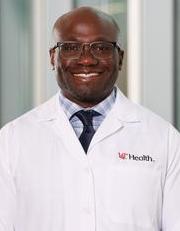
Oluwole Awosika is an Associate Professor at the University of Cincinnati College of Medicine, specializing in Neurology and Rehabilitation Medicine. His research focuses on stroke recovery, spasticity management, and non-invasive neuromodulation techniques. Bachelor of Science in Neuroscience and Physiological Science from University of California, Los Angeles (2003) Medical Degree from University of Illinois-Chicago College of Medicine (2011) Residency in Adult Neurology Research at Massachusetts General/Brigham and Women’s Hospitals/Harvard Medical School (2012) Fellowship in Clinical Neurorehabilitation at MedStar National Rehabilitation Hospital (2015) His work examines locomotor training through backward/forward treadmill exercises and transcranial/spinal stimulation to enhance post-stroke recovery. Key findings include insights into functional connectivity of subcortical locomotor centers and cortical superficial siderosis as a predictor of recurrent hemorrhage. Dr. Awosika has received competitive grants from the National Institute of Child Health and Human Development (R01HD093694, R21HD115776) and private awards from the American Academy of Neurology (2020 Career Development Award, 2024 MSR Scholarship). His scientific contributions span locomotor neuroplasticity, cognitive deficits in stroke survivors, and spinal cord repair strategies. American Academy of Neurology 2020 Career Development Award American Academy of Neurology 2024 MSR Scholarship His clinical expertise includes in-patient/out-patient neurorehabilitation, spasticity management, and neuropathic pain treatment. He is board-certified in Neurology by the American Board of Psychiatry and Neurology since 2012.
Yi-Ning Wu, Ph.D., serves as Associate Professor in the Department of Physical Therapy and Kinesiology within the Zuckerberg College of Health Sciences at the University of Massachusetts Lowell, concurrently holding the position of Scientific Lead in Physiological Measurement at the New England Robotics Validation and Experimentation (NERVE) Center. Her institutional affiliations extend to multiple research centers including HEROES, FDC, and SCORE, reflecting her interdisciplinary approach to rehabilitation science. Bachelor of Science in Physical Therapy (2000), National Cheng Kung University, Taiwan Ph.D. in Biomedical Engineering (2007), National Cheng Kung University, Taiwan (Dissertation: Quantification of Abnormal Muscle Tone in Animal Model and in Clinical Setting) Postdoctoral Research Associate, Rehabilitation Institute of Chicago (now Shirley Ryan Ability Lab) Postdoctoral Research Associate, Neuroscience Department, Brown University Dr. Wu's research program spans neurorehabilitation technology development, with evolving focus from pediatric cerebral palsy interventions to military rehabilitation applications. Her early work pioneered robotic assessment of spasticity mechanisms in children, while recent investigations address human performance limitations during Explosive Ordnance Disposal (EOD) operations with heavy personal protective equipment (PPE). This trajectory demonstrates strategic adaptation from clinical rehabilitation to defense-related human performance optimization, maintaining core expertise in biomechanics and physiological measurement. Current projects integrate exoskeletons, wearable sensors, and AI-driven home rehabilitation systems. Analysis of her publication record reveals three distinct phases: (1) foundational work on spasticity quantification in cerebral palsy (2005-2015), (2) expansion into home-based rehabilitation technologies (2013-2018), and (3) military human performance applications (2018-present). The most recent publications (2021-2024) show strong emphasis on EOD operational ergonomics, exoskeleton integration with PPE, and neurophysiological monitoring for adaptive human-robot collaboration, indicating successful pivot toward Department of Defense funding priorities while maintaining clinical rehabilitation expertise. Faculty Award for Teaching Excellence (2015) Sarah Baskin Award for Excellence in Research (2010) Switzer Fellowship Award (2009) Student Travel Scholarship, American Academy for Cerebral Palsy (2007) Li Foundation Fellow (2005) Podium Paper Award, Biomedical Engineering Society (2003) TiC100 Design Award (2002) Dr. Wu has secured substantial research funding across multiple domains, including $1.2M from the U.S. Army Combat Capabilities Development Command for EOD performance studies, NIH/NIDRR fellowships for cerebral palsy rehabilitation, and industry partnerships with Biogen Idec. Her mentorship includes directing graduate students in the NERVE Center's robotics validation programs, with recent focus on developing AI-driven home rehabilitation systems for children with cerebral palsy. Current projects bridge military and civilian applications through wearable sensor networks and adaptive exoskeleton control systems. As Scientific Lead at the NERVE Center, Dr. Wu directs the Physiological Measurement Core, developing novel methodologies for quantifying human performance under extreme conditions. Her laboratory integrates motion capture, EMG, force sensing, and neuroimaging to evaluate rehabilitation interventions, with recent expansion into EOD operational environments. The HEROES initiative focuses on human-robot teaming for hazardous operations, while SCORE develops sensor-based outcome measures for clinical rehabilitation.
Juha Gogulski serves as a Postdoctoral Researcher in the Department of Neuroscience and Biomedical Engineering at Aalto University's School of Science. His research focuses on advancing transcranial magnetic stimulation (TMS) techniques for clinical neuroscience applications, particularly in depression treatment and cortical excitability mapping. Dr. Gogulski's research centers on non-invasive brain stimulation with expertise in Transcranial Magnetic Stimulation (TMS) , fMRI integration , and cortical excitability assessment . His work targets depression treatment optimization , language mapping , and somatosensory representation , emphasizing individualized therapeutic approaches through multimodal neuroimaging. Key methodologies include real-time TMS parameterization, sensory-entrained stimulation, and network engagement analysis prior to intervention. Analysis of his 15 most recent publications reveals dominant trends in clinical translation of brain stimulation (73%), depression treatment innovation (67%), and multimodal neuroimaging integration (53%). His research consistently bridges fundamental neuroscience with therapeutic applications, particularly in treatment-resistant depression where conventional pharmacotherapy fails. Recent work demonstrates rapid symptom remission within weeks using personalized TMS protocols developed through Helsinki-Stanford collaborations. His media engagements highlight significant clinical impact, with 6 press appearances in 2024-2025 discussing breakthroughs in depression treatment where patients achieved symptom remission within weeks. Finnish media extensively covered his collaborative research with Stanford University on individualized magnetic stimulation for depression management. Dr. Gogulski actively collaborates across international networks, with recent external partnerships spanning 12 similar research profiles focused on transcranial magnetic stimulation (100%), evoked potential studies (67%), and dorsolateral prefrontal cortex research (67%). His work contributes to UN Sustainable Development Goals through neuroscience applications for mental health improvement.
Hanna Johansson is a Lecturer and Postdoctoral Researcher at the Department of Neurobiology, Care Sciences and Society at Karolinska Institutet. She is also affiliated with Karolinska University Hospital and Stockholm Sjukhem, and is a key member of the Balance, gait, exercise and physical activity in neurological diseases – Franzén Group. As a registered physiotherapist with a PhD in medical science, Johansson bridges clinical practice and academic research in neurological rehabilitation. Her educational background includes a PhD in medical science from Karolinska Institutet (2020), where she defended her thesis "Balance and Gait in Parkinson's disease: from Perceptions to Performance." She also holds dual bachelor's degrees from Karolinska Institutet (2006) in Medical Science and Physiotherapy, establishing her foundation in both clinical practice and scientific research. Johansson's research primarily focuses on balance, gait, and exercise interventions for neurological diseases, with particular emphasis on Parkinson's disease. She is a principal investigator in the STEPS (Support for home Training using Ehealth in Parkinson's disease) trial, a collaborative project between Karolinska Institutet and Stockholm Sjukhem that evaluates eHealth-delivered home training for Parkinson's patients. Her work also explores the integration of wearable sensors for optimizing clinical assessment of Parkinson's disease in primary care settings. The Franzén Group's research philosophy, which she embodies, emphasizes translational work spanning from neuronal mechanisms to practical clinical interventions in neurological and geriatric rehabilitation. Analysis of her recent publications reveals a clear progression in her research focus from fundamental understanding of balance perception and gait disorders toward developing and validating technology-enhanced rehabilitation solutions. Her 2025-2024 work shows increased emphasis on dual-task performance, home-based interventions, and the use of advanced technologies like fNIRS for measuring brain activity during movement. Many studies employ coordinated analyses across multiple centers, reflecting her commitment to robust, generalizable findings. The consistent theme across her publications is improving functional outcomes for Parkinson's patients through evidence-based, accessible interventions. Johansson currently holds a significant grant from the Swedish Research Council for Health Working Life and Welfare (2023-2026) for the project "Promoting active ageing and participation using technology among older adults and people with Parkinson´s disease." While specific advisees aren't listed in the available information, her 2025 publication on the Global Bridges program demonstrates her active engagement in mentoring early-career researchers in healthcare sciences. Her grant portfolio reflects a strategic focus on technology-enabled solutions that address real-world challenges in neurological rehabilitation. As a core member of the Franzén Group, Johansson contributes to a dynamic research environment dedicated to understanding and improving balance, gait, and physical activity in neurological conditions. The group's work spans basic neuroscience, clinical research, and implementation science, with a strong emphasis on translating findings into practical rehabilitation approaches. Her leadership in the STEPS trial exemplifies her commitment to developing evidence-based, patient-centered solutions that can be implemented in real-world healthcare settings, ultimately improving quality of life for people with Parkinson's disease.