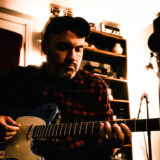
Alexander Brown is a Lecturer in the Department of Mechanical Engineering at Lafayette College, specializing in dynamic systems and controls. His research bridges robotics, vehicle dynamics, and bio-inspired modeling, with a focus on human-robot and animal-robot interactions. B.S., Pennsylvania State University (2008) M.S., Pennsylvania State University (2012) Ph.D., Pennsylvania State University (2013) Research interests include robotics, vehicle dynamics, and mathematical modeling of physical systems. His work explores interactions between robots, vehicles, humans, and animals, with applications in autonomous driving and ethorobotics. Alexander's recent publications highlight trends in fish-robot interaction studies, autonomous vehicle safety, and simulation platforms like Webots. He emphasizes interdisciplinary collaboration and hands-on student engagement in his research and teaching. Outside academia, he builds and restores motorcycles, surfs in Monmouth County, N.J., and plays music with his band 'Imposters In Rome'.
Robert Peharz is an Assistant Professor at Graz University of Technology, where he leads research at the Institute of Machine Learning and Neural Computation. His work focuses on probabilistic machine learning, with particular emphasis on tractable probabilistic models, causality, and neurosymbolic AI. Education and Career PhD from TU Graz (Austria) in 2015 Postdoc at Medical University of Graz Postdoc and Marie-Curie Individual Fellow at University of Cambridge (2017-2019) Assistant Professor at Eindhoven University of Technology (2019-2021) Current: Assistant Professor at Graz University of Technology Research Interests Peharz's research spans multiple areas of artificial intelligence with a focus on making probabilistic reasoning both theoretically sound and practically efficient. His work addresses fundamental challenges in tractable probabilistic inference and learning, probabilistic circuits as a unified framework for deep generative models, Bayesian causal inference, and neurosymbolic AI combining sub-symbolic and symbolic approaches. His research has applications in cybersecurity, healthcare, and energy systems. Research Projects VENTUS (2024-present): Physics-informed, probabilistic and causal machine learning for wind energy systems NEO DNA (2023-present): DNA-based data storage systems using computer vision and probabilistic ML VanillaFlow (2023-present): AI-guided development of novel vanillin-based molecules for redox flow batteries Bilateral AI : Cluster of Excellence focused on Broad AI combining sub-symbolic and symbolic AI approaches Awards and Recognition Finalist for TUG's Excellent Teaching Award (2023) for all 3 of his courses Marie-Curie Individual Fellow at University of Cambridge Academic Service Peharz is actively involved in the academic community through conference organization and reviewing: Area Chair: UAI (2022), ECML/PKDD (2022) Senior Committee Member: UAI (2021), IJCAI (2019, 2020) Reviewer for major conferences including ICML, NeurIPS, AAAI, IJCAI-ECAI Teaching and Mentorship Peharz supervises multiple PhD students working on diverse projects at the intersection of machine learning, causality, and neurosymbolic AI. His current advisees include Sepideh Adamiat, Irina Dobrianski, Johannes Exenberger, Giacomo Di Gobbi, Tim d'Hondt, Christian Toth, and Thomas Wedenig. Previous students include Alvaro Correia, Martin Trapp, and David Montalvan.
Laura Carey is a Lecturer at the School of Health and Life Sciences, specializing in sport science and applied psychology. Her research focuses on perceptual-cognitive expertise in sports, particularly golf, and explores topics such as quiet eye duration, neural activity, and behavior-change interventions in physical activity. Her work integrates empirical methods like Bayesian statistical modeling and observational studies. Recent studies include analyzing coaches’ perceptions of velocity loss in resistance training and evaluating structured support programs for adolescent girls’ physical activity. She has collaborated on projects ranging from golf performance metrics to clinical trials in neurological care. Key research interests span motor control, sport psychology, and neurocognitive mechanisms in sports performance. Her publications reflect interdisciplinary approaches, combining biomechanics, statistical analysis, and real-world applications. Despite no listed awards or grants, her work has been cited in peer-reviewed journals and accessed widely via open-access platforms.
Professor Piyushimita (Vonu) Thakuriah is a Visiting Professor of Urban Studies in the School of Social & Political Sciences and Ch2m Chair of Transport at the University of Glasgow. She directs the UK ESRC Urban Big Data Centre (UBDC), a national initiative fostering innovations in sustainable urban development through Big Data. Her roles include affiliated professorship in the School of Engineering and directorship of the UBDC, leading a 7-university consortium. Her research focuses on smart, socially-just urban transport systems, Urban Informatics, and Big Data applications in city planning. Key interests include transport equity, mobility technologies, and the societal impacts of AI/automation. She has authored over 170 publications, including books on transportation technology and urban data analytics. Thakuriah has secured £25M+ in grants as PI, addressing topics like low-wage worker mobility, disability access, and data-driven urban policies. She co-convenes the MSc in Urban Transport and teaches transport planning. Her international collaborations span Malaysia, China, India, and Europe. She advises governments, including testimony to US Congress and UK Parliament. Awards: European Commission Marie Curie Fellowship, Ch2m Chair, NSF Fellowships. Grants: ESRC UBDC funding, NSF, USDOT, and EU grants totaling £63M+ across roles. Labs/Teams: Leads UBDC with initiatives like iMCD (Integrated Multimedia City Data) and SUDS (Spatial Urban Data System).
Juha Pyrhönen serves as Professor of Electrical Engineering at the School of Energy Systems, Lappeenranta-Lahti University of Technology (LUT University) in Lappeenranta, Finland. His research focuses on advanced electric machine design for high-performance applications, with particular expertise in traction motors, synchronous reluctance machines, and thermal management systems. Contact information includes email Juha.Pyrhonen@lut.fi and phone +358 40 571 1645. Professor Pyrhönen's research spans critical areas in electric machine development including high-speed motor design for aerospace and automotive applications, mitigation of parasitic effects like bearing currents, and innovative cooling techniques such as direct liquid cooling. His work addresses electromagnetic design challenges in drum-winding machines, variable reluctance resolvers for position sensing, and material selection for rotors operating under extreme conditions. Recent investigations examine agricultural tractor electrification and compact energy conversion systems for onboard machinery. Analysis of his 2025 publications reveals strong emphasis on improving power density through multidisciplinary approaches that integrate electromagnetic, thermal, and mechanical considerations. Key trends include advanced bearing current mitigation strategies, optimization of axially-laminated rotors, and precision measurement techniques under magnetic saturation. His research consistently targets sustainable solutions for electric propulsion across transportation sectors. No scientific awards were documented in the provided information. Details regarding student supervision, research grants, or collaborative projects were not specified in the available materials. The absence of such information suggests either non-disclosure in the source materials or potential focus on independent research activities. While specific laboratory facilities weren't mentioned, his research scope implies access to advanced testing infrastructure for high-speed machinery, electromagnetic characterization equipment, and thermal validation systems at LUT University's energy research facilities.
Prof. Dr. Wolfgang Taube is a leading academic at the University of Fribourg , affiliated with the Faculty of Science and Medicine and specializing in Motor Control and Neuroplasticity within the Movement and Sport Sciences department. His work bridges Neuroscience , Physiology , and Rehabilitation through rigorous experimental designs. Role: Professor Location: PER 21 bu. F429, Bd de Pérolles 90, 1700 Fribourg, Switzerland Contact: wolfgang.taube@unifr.ch ORCID: 0000-0002-8802-2065 His research explores neural mechanisms of motor learning , age-related adaptations , and interventions to enhance balance and sensorimotor function . Key areas include: Modulation of GABAergic inhibition through training fNIRS/fMRI studies on cortical activation patterns Biomechanical analysis in sports performance Neurorehabilitation strategies for chronic pain Recent publications demonstrate a focus on age-related neuroplasticity , external focus of attention , and technology-driven training interventions across sports like football and swimming. Methodologically, he integrates randomized trials , meta-analyses , and machine learning applications in motor control studies.
Ildikó Király is a Professor at the Institute of Psychology, Eötvös Loránd University, Budapest, currently serving as Head of the Department of Cognitive Psychology and lecturer. Her research focuses on developmental psychology, particularly social cognition, imitation behavior, and theory of mind in early childhood. Key areas: Social Cognition , Developmental Neuroscience , and Cognitive Development Recent work examines preschoolers' exploration tendencies, joint action observation effects, and linguistic group membership's role in perspective taking. She leads the Social Minds Research Group , investigating how cultural knowledge transmission shapes cognitive development. Her 2021-2025 publications reveal trends in: Imitative behavior's sensitivity to social norms and group identity Memory flexibility in adapting to changing contexts Interactions between semantic processing and mentalization in social situations Comparative studies on human and non-human primate cognition
Professor Andrew Bayliss is a Professor in Psychology at the University of East Anglia's School of Psychology, where he serves as Social Cognition Research Group Lead and UEA UOA4 Psychology REF coordinator. He joined UEA in 2011 after completing his PhD at Bangor University and holding postdoctoral fellowships with the ESRC, Leverhulme Trust, and University of Queensland. Undergraduate Degree: Bangor University PhD: Bangor University Postdoctoral Fellowships: ESRC, Leverhulme Trust, University of Queensland His research spans social cognition, attention-action interactions, and individual differences, with specific focus on face perception, eye gaze processing, and objects in social contexts. Utilizing methodologies including eye tracking, motion capture, EEG, and fMRI, his work examines how social cues guide attention and influence behavior. Current projects investigate gaze understanding development, interpersonal agency, and autism interventions using natural scenes. Analysis of his recent publications reveals a strong emphasis on social attention mechanisms, particularly gaze leading phenomena, interpersonal distance effects, and neural correlates of shared attention. His work increasingly integrates autism research with social cognition paradigms while maintaining core investigations into attentional orienting and agency perception. Bayliss actively contributes to the academic community through editorial roles at Psychological Review and Psychonomic Bulletin and Review, peer review activities, and consultancy work including the Social Neuroscience of Cinema Attendance project. He maintains international collaborations, notably with Paris Nanterre University. As Social Cognition Research Group Lead, he oversees a dynamic team investigating the neural and cognitive mechanisms underlying social interactions. His lab employs multimodal approaches to study real-time social processing, with recent work expanding into human-robot interaction and pandemic-related social adaptations.
Nazım Keven is an Assistant Professor in the Department of Philosophy at Bilkent University since 2016. He holds a PhD from Washington University in St. Louis (2016) and an MA from Simon Fraser University (2009). His research focuses on Philosophy of Cognitive Science, Neurophilosophy, and Moral Psychology, with emphasis on memory, narratives, and human sociality. Keven received the Science Academy, Turkey’s Young Scientist Award (BAGEP) in 2020. Education: PhD (2016): Philosophy-Neuroscience-Psychology Program, Washington University in St. Louis MA (2009): Philosophy, Simon Fraser University Research Interests: Keven explores how episodic memory shapes moral behavior and social cognition. He investigates narrative structures in memory representation, the role of memory in ethical decision-making, and cognitive mechanisms underlying human sociality. His work bridges philosophy with neuroscience and psychology, addressing questions like whether episodic memory deters cheating or promotes altruism. Awards: Science Academy, Turkey’s Young Scientist Award (BAGEP) 2020 Advising/Grants: While specific grant details aren’t listed, Keven’s publications suggest active engagement in interdisciplinary research. He contributes to Bilkent’s philosophy community through initiatives like the Bilkent PhilFest and undergraduate programs like Prokopton. Labs/Teams: Participates in academic events including the annual Bilkent Philosophy Festival and leads reading groups in natural philosophy. Engages in outreach through projects like Lykeion (philosophy for high schoolers).
Grzegorz Juras is a **Professor** and **Head of the Department of Human Motor Skills** at the Jerzy Kukuczka Academy of Physical Education in Katowice, Poland. His academic career spans over two decades, with a strong focus on motor control, postural stability, and biomechanics in clinical and athletic populations. Research Interests: His work explores - Postural control mechanisms in elderly populations and patients with Parkinson’s disease - Biomechanics of athletic movements (e.g., fencing, biathlon) - Rehabilitation strategies for musculoskeletal injuries (e.g., Achilles tendinopathy) - Neurodevelopmental disorders and motor adaptation in children with autism spectrum disorder - Applications of shock wave therapy and mindfulness training in sports performance. Recent Article Trends: Recent publications emphasize: - Objective measurements of postural sway and stability across diverse populations - Clinical trial methodologies evaluating therapeutic interventions - Biomechanical analysis of transitional locomotor tasks (e.g., stepping, lunging) - Interdisciplinary approaches combining neurology, sports science, and rehabilitation. Labs/Teams: Leads research in motor control within the Department of Human Motor Skills, collaborating with clinical and sports science teams at the academy.
Ayusman Sen is the Verne M. Willaman Professor of Chemistry and Distinguished Professor of Chemistry at Pennsylvania State University. He holds a joint appointment in the Department of Chemical Engineering. His research focuses on self-powered nano/micromotors, dynamic materials, and enzyme-driven systems, with applications in smart materials and active matter. Sen’s work integrates chemical synthesis, catalytic energy harvesting, and emergent phenomena to create adaptive systems capable of performing complex tasks. Education: B.Sc. (Honours), University of Calcutta, India (1970) M.Sc., Indian Institute of Technology, Kanpur, India (1973) Ph.D., University of Chicago, USA (1978) Research Interests: Design of self-powered nanomotors and micropumps Chemically controlled assembly and motion of colloidal systems Enzyme cascade systems for programmable behavior Active matter and collective dynamics Key Contributions: Pioneered enzyme-powered micromotors for biomedical and environmental applications Developed theoretical frameworks for chemotactic assembly and non-equilibrium systems Engineered autonomous fluid-pumping systems using multi-enzyme networks Awards and Honors: Langmuir Lecture Award (American Chemical Society) Humboldt Prize (Alexander von Humboldt Foundation) Fellow of the Royal Society of Chemistry Paul J. Flory Award (IBM) Labs and Teams: His research group, the Sen Research Group, focuses on interdisciplinary projects at the interface of chemistry, materials science, and engineering. Current efforts explore light-driven systems, programmable fluidics, and bioinspired materials.
Roni Maimon Mor is a Research Fellow at the Institute of Ophthalmology, University College London. Their work bridges neuroscience, cognitive psychology, and biomedical engineering, focusing on vision science, neural plasticity, and human-technology interaction. They investigate how sensory deprivation (e.g., congenital sight impairment) and interventions (e.g., gene therapy) reshape neural processes and perceptual abilities. Research interests include developmental vision, robotic prosthetics, and the cognitive embodiment of artificial limbs. Their studies explore how early life experiences influence motor learning and how neural systems adapt to sensory loss or technological augmentation. Mor’s interdisciplinary approach integrates neuroimaging (e.g., fMRI, EEG), behavioral experiments, and engineering solutions like gaze-tracking systems for pediatric diagnostics. Publications highlight advancements in gene therapy outcomes for retinal dystrophies, cortical plasticity in sensory-deprived populations, and neural correlates of prosthetic limb use. Their work contributes to clinical tools for vision assessment and theoretical models of body representation. No scientific awards explicitly listed. Research is supported by collaborations in ophthalmology, robotics, and cognitive science. Mor’s lab at UCL focuses on translating neural findings into therapeutic and assistive technologies.
Dr. Regina Lapate serves as an Assistant Professor in the Department of Psychological and Brain Sciences at the University of California, Santa Barbara (UCSB), within the College of Letters & Science. She directs the LEAP Neuro Lab (Lapate Experimental Affective Psychophysiology and Neuroscience Laboratory), where her team investigates neural mechanisms of emotion-cognition interactions using multimodal methodologies including TMS, EEG, fMRI, and psychophysiology. Her educational trajectory includes a PhD from the University of Wisconsin-Madison (2015) under Dr. Richard Davidson, followed by an NIH postdoctoral fellowship at UC Berkeley (2016) with Dr. Mark D'Esposito. She co-edited the 2nd edition of The Nature of Emotion: Fundamental Questions in 2018. Dr. Lapate's research centers on emotional processing, cognitive control, and adaptive emotion regulation, with particular emphasis on temporal memory dynamics and prefrontal cortex function. Her lab employs causal inference approaches to explore how emotional states sculpt sensory processing and behavioral goals, aiming to uncover mechanisms that promote resilience against psychopathology. Recent work demonstrates how emotional context modulates temporal memory and action goal representations, revealing critical prefrontal circuitry involved in emotional adaptation. Her publication trends reveal deep integration of time perception with emotional processing, neurostimulation-based causal testing of prefrontal mechanisms, and translational applications for mood and anxiety disorders. The 2024-2025 publications particularly highlight anorexia nervosa symptomatology, temporal coding in emotion, and open-loop motor circuit dissociations. Scientific recognition includes: Hellman Fellowship (2024) Prestigious NIH grant for prefrontal mechanism research (2023) Regent’s Junior Faculty Award (2023) Dr. Lapate has secured substantial grant funding including an NIH award to elucidate prefrontal mechanisms of emotional processing and regulation. Her LEAP Neuro Lab functions as a collaborative hub where graduate and undergraduate researchers investigate fundamental questions about how emotional experiences dynamically interact with cognitive processes to shape adaptive functioning and psychopathology vulnerability.
Paul Siebert is a Reader in Computing Science at the University of Glasgow, specializing in computer vision and robotics. He leads the Computer Vision and Graphics research group and teaches Digital Image Processing and Computer Systems. His research focuses on 3D vision systems, biologically inspired vision, and cognitive robot vision, with applications in clinical and media domains. He has pioneered commercial 3D surface scanning technology and collaborated with clinical groups such as Glasgow Dental School. Affiliations: University of Glasgow (Computing Science Department) Roles: Reader, Group Leader (Computer Vision and Graphics) Research interests include active binocular robot vision, 2D/3D sensing, and visual perception for robotics. Notable projects include work on driver attention monitoring, virtual character creation, and clinical anatomical imaging. Siebert previously directed the 3D-MATIC Faraday Partnership and served as Chief Executive of the Turing Institute, developing commercial vision systems. Publications span over 140 works, emphasizing applications like rain removal algorithms, continual learning in robotics, and foveated imaging. His work integrates deep learning, biological vision models, and real-world robotics challenges. Awards and recognitions are not explicitly listed, but his contributions to 3D vision commercialization and robotics research highlight significant impact in the field.
Nick Audette is an Assistant Professor in the Department of Psychological Sciences at the University of Connecticut (UConn). He leads the Audette Lab, established in January 2025 at the Storrs campus, where his team investigates how the brain integrates sensory input with environmental context and experience to enable perception. His research employs large-scale neural recordings in mice during acoustically enriched behaviors. Dr. Audette earned his Ph.D. in 2018 from Carnegie Mellon University. His primary research areas include: Flexible sensory processing in thalamocortical circuits Neural mechanisms of learning and memory consolidation Movement-based predictions in auditory cortex Stimulus-specific prediction error encoding His recent publications (2014-2025) demonstrate a consistent focus on predictive processing mechanisms in sensory systems. Key trends include: Thalamocortical plasticity during sensory learning Movement-related neural predictions in auditory cortex Stimulus-specific error detection neurons Translaminar circuit organization High-throughput analysis of neural plasticity Methodologically, his work combines electrophysiology, behavioral paradigms, and advanced imaging techniques. Dr. Audette currently advises two undergraduate researchers, Claudia and Ava, on a project developing high-throughput behavioral assays linking lever-press movements to auditory predictions in mice. The lab has secured space in UConn's Bousfield Psychology Building and plans electrophysiological investigations of sensory prediction encoding.