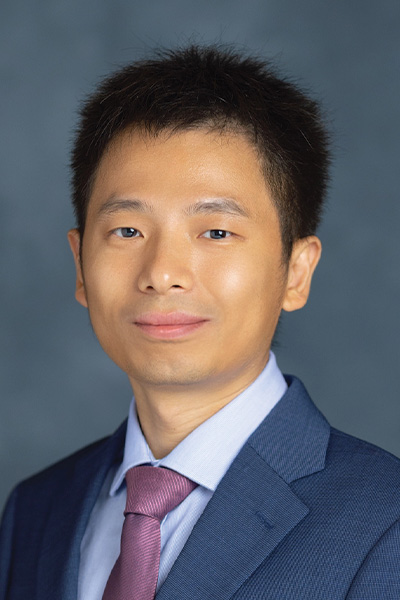
Fei Liu is an Assistant Professor in the Min H. Kao Department of Electrical Engineering and Computer Science at the University of Tennessee, Knoxville. His research focuses on surgical robotics, medical robotics, and control systems. He holds a PhD in Robotics from the University of Lyon (INSA de Lyon), France, an MSc in Control Systems and Automation Engineering from INSA de Lyon, and a BSc in Control Systems and Automation Engineering from Northwestern Polytechnical University, China. Fei's research interests include autonomous robotic systems, deformable object manipulation, and perception frameworks for surgical applications. His work emphasizes bridging real-world and simulation environments through advanced modeling and control techniques. Recent projects involve optimizing robotic actions using multi-modal demonstrations, improving tool-tissue interaction tracking, and developing frameworks for boundary parameter estimation in surgical settings. His articles highlight contributions to surgical robotics, including real-to-sim matching of deformable tissues, autonomous suturing, and trajectory optimization for wound care. He has also explored applications in haptic training systems and medical telerobotics. Fei's work often combines machine learning, physics-based simulation, and real-time control to address challenges in robotic surgery. Fei is affiliated with the Tickle College of Engineering and maintains an active research profile with collaborations in robotics and medical engineering domains. His lab focuses on advancing robotic autonomy in healthcare environments through interdisciplinary approaches.
Dr Ronojoy Adhikari is a Lecturer in the Department of Applied Mathematics and Theoretical Physics (DAMTP) at the University of Cambridge, affiliated with the Faculty of Mathematics. His research focuses on statistical physics, soft matter, stochastic processes, Bayesian inference, and machine learning. He has taught Mathematical Biology (2018–2021) and Electrodynamics (2021–2023). His work bridges theoretical frameworks with experimental insights, addressing phenomena such as active matter dynamics, non-equilibrium thermodynamics, and stochastic modeling of biological systems. Key contributions include studies on autophoretic particles, path probabilities in stochastic systems, and Bayesian approaches to epidemiological modeling. His research group, part of the Soft Matter program at DAMTP, explores interdisciplinary topics like colloidal crystallization and enzymatic network kinetics. Notable publications highlight investigations into fluctuating hydrodynamics, entropy production measurements, and the mechanics of rigid inclusions on curved surfaces. His interdisciplinary approach integrates computational methods (e.g., lattice Boltzmann simulations) with mathematical rigor to understand complex systems. While no awards are explicitly listed, his extensive publication record underscores sustained academic impact. Ongoing research includes projects on path probabilities, active particle dynamics, and the interplay between geometry and material behavior in Cosserat solids. Advising and grants are not explicitly detailed in the provided texts, but his role as a faculty member suggests involvement in student supervision and collaborative projects. His work frequently appears in top journals like Physical Review Letters , Journal of Fluid Mechanics , and Science Advances , reflecting high-quality contributions to theoretical and applied physics.
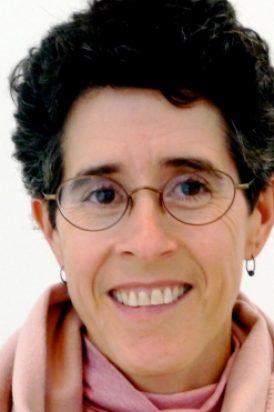
Virginia Young is the Cecil J. and Ethel M. Nesbitt Professor of Actuarial Mathematics at the University of Michigan's Department of Mathematics, within the College of Literature, Science, and the Arts. She holds a Ph.D. from the University of Virginia (1984). Her research focuses on actuarial and financial mathematics, particularly decision-making processes for individuals and insurance companies in financial and insurance contexts. This includes topics like optimal reporting strategies, reinsurance mechanisms, and risk management under uncertainty. Her work addresses modern challenges such as defined contribution pension plans and strategic insurance product design. Key research areas include stochastic control theory, game-theoretic models in insurance markets, and optimization under model ambiguity. She explores how insurers and individuals make decisions under risk, with applications to annuities, reinsurance chains, and lifetime financial planning. Recent studies investigate Stackelberg games in reinsurance, optimal deductible insurance, and minimizing lifetime ruin probabilities through strategic annuitization. Virginia Young has no listed scientific awards in the provided texts. She advises no formally documented students, though her role likely involves mentoring within the Mathematics Department. Her work contributes to both theoretical advancements and practical applications in actuarial science and financial risk management.
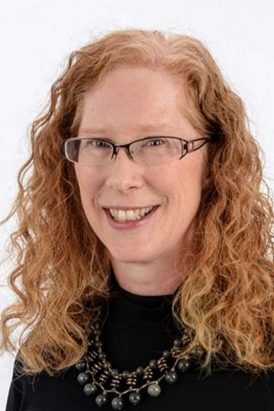
Julie Boland is a Professor at the University of Michigan's College of Literature, Science, and the Arts, affiliated with the Psychology and Linguistics departments. She holds a PhD from the University of Rochester and leads the Psycholinguistics Lab, focusing on interdisciplinary language processing research. Her work explores interfaces between word recognition, syntax, semantics, and sociolinguistic variables, with special attention to bilingual processing and executive function roles. Education: PhD, University of Rochester. She teaches research methods and language psychology, advising numerous PhD candidates. Key research themes include sociolinguistic priming, bilingual ambiguity resolution, and language processing in digital contexts. Her findings highlight how dialect variation, cultural background, and technology impact comprehension and production. Research Interests: Psycholinguistics, sentence processing, lexical access, sociolinguistic influences, bilingualism, and cognitive mechanisms. Labs: Director of the Psycholinguistics Lab, promoting interdisciplinary collaboration across Psychology and Linguistics. Teaching: Courses on language psychology and research methods for Psychology undergraduates/graduates. Recent work addresses conversational dynamics in Zoom interactions, cultural differences in visual attention, and L2 structural priming effects. She emphasizes practical applications of psycholinguistic insights for education and technology design.
Lynn Carol Miller is a Professor of Communication at the University of Southern California’s Annenberg School for Communication and Journalism. Her research focuses on leveraging virtual environments, AI agents, and computational models to address health-related social behaviors, particularly in HIV/AIDS prevention and mental health. Funded by NIH, CDC, and DARPA (over $20M), her work integrates neuroscience, behavioral science, and technology. She pioneered interventions like SOLVE (Socially Optimized Learning in Virtual Environments) and Systematic Representative Design. Education: PhD in Personality Psychology from University of Texas at Austin. Key areas include health communication, gaming for behavior change, and computational modeling of social processes. She has supervised 17 doctoral students and collaborators across universities globally. Research emphasizes scalable interventions using fMRI-compatible tools and virtual reality. Notable contributions include reducing shame in HIV prevention games and analyzing neural correlates of risk-taking behaviors. Awards include the Early Career Award (2003) and ICA’s Outstanding Contribution to Communication Science (2020). Labs/Teams: Active in multidisciplinary teams at USC and collaborating institutions, focusing on virtual environment design, AI-driven interventions, and neurobehavioral studies. Current projects explore AI for public health and inclusive avatar representations in social VR.
Prof. Dr. Florian Knoll is a full professor in Computational Imaging at the Department of Artificial Intelligence in Biomedical Engineering (AIBE) at Friedrich-Alexander-Universität Erlangen-Nürnberg. He leads the Computational Imaging Lab, focusing on machine learning applications in medical imaging, particularly accelerating MRI through innovative reconstruction algorithms and translating them into clinical practice. His research emphasizes improving MRI speed, artifact robustness, and accessibility, alongside developing quantitative biomarkers for disease processes. Knoll's work is funded by NIH grants, including projects on machine learning for musculoskeletal imaging, MR fingerprinting, and deep learning frameworks for MRI reconstruction. He is a key figure in open science initiatives, co-creating the fastMRI dataset with Facebook AI, providing public access to over 1300 knee and 7000 brain MRI scans. He currently serves as deputy editor of Magnetic Resonance in Medicine and chairs the ISMRM Reproducible Research Study Group. His contributions extend to reproducible research, maintaining GitHub repositories with code for image reconstruction techniques (e.g., AGILE, gpuNUFFT) and educational materials. He teaches medical imaging fundamentals at FAU, integrating theoretical and practical insights for students and researchers. Grants: NIH R01EB024532, R21EB027241, P41EB017183, R01EB029957 Labs/Teams: Computational Imaging Lab, fastMRI initiative Software: GitHub repositories for MRI reconstruction (e.g., github.com/FlorianKnoll )
Andrea Rocco is an Associate Professor in Physics and Mathematical Biology and Head of the Quantum Sciences Research Group at the University of Surrey. He holds affiliations with the School of Mathematics and Physics and the Centre for Mathematical and Computational Biology. Rocco earned his PhD in Physics from the University of North Texas (1998) and held postdoctoral positions at the University of Barcelona, University of Rome La Sapienza, CWI (Netherlands), and the University of Oxford. His research bridges theoretical physics (quantum mechanics, open systems, decoherence) and biological physics (stochastic dynamics in living systems, gene networks). Educations: BSc in Physics, University of Pisa (1994) PhD in Physics, University of North Texas (1998) Research Interests: His work explores quantum-classical transitions, quantum thermodynamics, and noise-induced phenomena in biological systems. Recent grants include a US$3M award for studying time and life. He is a Fellow of the Royal Society of Biology and the Higher Education Academy. Awards: Member of the Institute of Physics (MInstP) Fellow of the Higher Education Academy (FHEA) Fellow of the Royal Society of Biology (FRSB) Advising & Grants: Rocco leads the Quantum Sciences Group and has supervised postdoctoral researchers like Thomas Guff. His grants include major funding for interdisciplinary quantum-biological research. Labs/Teams: Head of the Quantum Sciences Research Group at Surrey, integrating theoretical physics and computational biology.
Naratip Santitissadeekorn is a Senior Lecturer in Data Assimilation at the School of Mathematics and Physics, University of Surrey, where he is affiliated with the Mathematics at the Interface Group. His work bridges mathematics, data science, and real-world applications in urban planning, crime analysis, and geophysical fluid dynamics. Dr. Santitissadeekorn received his PhD from Clarkson University in 2008, with a dissertation titled "Transport Analysis and Motion Estimation of Dynamical Systems of Time-Series data." His doctoral research was supervised by Professor Erik Bollt. Following his PhD, he completed two significant postdoctoral positions: from 2008-2011 at the University of New South Wales, Sydney, Australia, working with Professor Gary Froyland on numerical techniques for finite-time Lagrangian coherent set identification, with applications to delimiting the polar vortex and Agulhas rings; and from 2011-2014 at the University of North Carolina-Chapel Hill, working with Professor Chris Jones on data assimilation projects. Dr. Santitissadeekorn's research focuses on inverse problems and data assimilation in geophysical fluid dynamics, the applications of Lagrangian Coherent Structures (LCS), and computational ergodic theory. His work combines theoretical mathematics with practical applications, particularly in urban growth modeling and crime analysis. He has developed innovative methods for identifying coherent structures in fluid flows, estimating transition probabilities from spatiotemporal data, and creating data-driven frameworks for urban expansion scenarios. His research demonstrates how mathematical techniques can be applied to solve real-world problems in environmental science, urban planning, and public safety. An analysis of Dr. Santitissadeekorn's recent publications (2020-2023) reveals a strong focus on urban expansion modeling and network analysis. His work on urban growth has evolved from basic cellular automata models to sophisticated frameworks that manage uncertainty through parameter clustering and growth mode identification. His research on Hawkes processes has advanced ensemble-based filtering techniques for analyzing count data in large networks. These publications demonstrate a consistent pattern of applying mathematical rigor to complex spatiotemporal phenomena, with increasing emphasis on data-driven approaches and practical applications. Dr. Santitissadeekorn has made significant contributions to data assimilation methods, particularly through the development of the extended Poisson-Kalman filter (ExPKF) for urban crime modeling. His teaching includes courses in Algebra and Bayesian Statistics, reflecting his expertise in both theoretical and applied mathematics. While specific awards are not mentioned in the available information, his extensive publication record in high-impact journals demonstrates recognition within his field. Dr. Santitissadeekorn's research has practical implications for urban planning and law enforcement. His work on urban expansion models helps planners understand different growth trajectories, while his crime modeling research contributes to improved police patrolling strategies. His interdisciplinary approach, combining mathematics, computer science, and domain-specific knowledge, positions him at the forefront of applying data science to societal challenges.
Professor Adrian Hilton is a distinguished faculty member at the University of Surrey, serving as Director of the Centre for Vision, Speech and Signal Processing (CVSSP) and Director of the Surrey Institute for People-Centred AI. He is affiliated with the School of Computer Science and Electronic Engineering and leads the Visual Media Research Lab (V-Lab). His research focuses on pioneering next-generation 4D computer vision technologies that enable machines to understand and model dynamic real-world scenes. Key areas include 3D/4D shape capture, computer vision, machine learning, graphics, and animation for applications in sports analysis, film/TV production, virtual reality, and medical imaging. His work bridges the gap between real and computer-generated imagery, with notable contributions in volumetric capture, motion capture, and free-viewpoint video. Hilton's recent publications demonstrate a strong trend toward multimodal integration, particularly combining audio and visual processing for spatial audio applications, while advancing 4D reconstruction techniques for human performance capture. His work increasingly incorporates transformer architectures and neural rendering techniques for improved illumination estimation, shadow modeling, and multi-view consistency. Scientific Awards and Recognition Two EU IST Innovation Prizes Manufacturing Industry Achievement Award Royal Society Industry Fellowship (2008-2011) Royal Society Wolfson Research Merit Award in 4D Vision (2013-2018) Fellow of the Royal Academy of Engineering (FREng) Fellow of the International Association for Pattern Recognition (FIAPR) Fellow of the Institution of Engineering and Technology (FIET) Hilton actively mentors PhD and post-doctoral researchers through his leadership of CVSSP, which has a grant portfolio exceeding £31M and comprises 170 researchers. He has successfully commercialized several technologies, including systems used by the BBC for sports commentary visualization. His research collaborations span major industry partners including BBC, BT, Sony, Framestore, and The Foundry. He co-founded the G3 Games forum and the CVMP Conference on Visual Media Production, demonstrating strong engagement with the creative industries. Current research projects include the S3A Programme Grant in Future Spatial Audio and InnovateUK's ALIVE project for 360 video reconstruction.
Daniela Calvetti is the James Wood Williamson Professor in the Department of Mathematics, Applied Mathematics, and Statistics at Case Western Reserve University. Her research focuses on large-scale scientific computing, computational inverse problems, uncertainty quantification, and predictive modeling in neuroscience, metabolism, and cellular physiology. She holds a PhD from the University of North Carolina-Chapel Hill. Her work integrates advanced mathematical techniques with biomedical applications, including brain energy metabolism modeling, MEG/EEG source reconstruction, and computational methods for medical imaging. Notable contributions include Bayesian hierarchical algorithms for inverse problems and interdisciplinary collaborations bridging mathematics with neuroscience and physiology. Recent research highlights include developing sparsity-promoting Bayesian models for tomography, computational frameworks for neuromuscular control variability, and predictive models of disease dynamics like post-pandemic COVID-19 recurrence. Her methodologies emphasize statistically inspired preconditioning and adaptive meshing techniques to enhance computational efficiency in solving complex inverse problems. Dr. Calvetti has published extensively across computational science, inverse problems, and biomedical applications. She leads a research group advancing interdisciplinary computational methods with applications in neuroscience, virology, and metabolic systems.
Emily Whiting is an Associate Professor of Computer Science at Boston University and Director of the Shape Design & Computation Lab. She also serves as Director of PhD Admissions and Co-Director of the BU Computer Graphics Lab. Her research focuses on computational fabrication, architectural geometry, and computer-aided design, bridging digital geometry processing, engineering mechanics, and rapid prototyping. She holds a PhD from MIT (2012), an SM in Design & Computation from MIT (2006), and a BASc in Engineering Science from the University of Toronto (2004). Previously, she was faculty at Dartmouth and a Marie Curie Postdoctoral Fellow at ETH Zurich. Her research interests include 3D printing optimization, structural design for fabrication, and tools for functionally-valid object creation. Notable projects include work on elastic garments, climbing experience replication, and print-wind instrument design. Her work has been featured on TEDx and PBS NOVA, and she has received awards such as the NSF CAREER Award and Sloan Research Fellowship. Education: PhD (MIT), SM (MIT), BASc (University of Toronto) Labs: Shape Design & Computation Lab, BU Computer Graphics Lab Key Projects: Knitting 4D garments, Environment-Scale Fabrication, Thermal-comfort casts Recent professional activities include program committee roles at SIGGRAPH 2025 and UIST 2024, and serving as Program Co-Chair for Pacific Graphics 2024. She advises a team of PhD and MS students, with alumni now in academia and tech industries.
Dr. Xuhui Fan is a Lecturer in Artificial Intelligence at the School of Computing, Macquarie University. He holds a PhD in Computer Science from the University of Technology Sydney (Australia) and a bachelor's degree in Mathematical Statistics from China. Prior to his current role, he worked as a project engineer at Data61 (formerly NICTA), a postdoc fellow at the University of New South Wales, and a lecturer at the University of Newcastle. His research focuses on Bayesian methods, federated learning, temporal point processes, and neural network architectures. He is affiliated with the Data Horizons Research Centre and the Frontier AI Research Centre at Macquarie University. Key research interests include developing interpretable AI models, advancing federated learning for privacy-sensitive applications, and applying Bayesian techniques to complex data analysis. His work bridges theoretical advancements in machine learning with practical applications in areas such as anomaly detection, generative models, and spatio-temporal data analysis. Dr. Fan’s publications span top-tier conferences like NeurIPS, ICML, and IJCAI, covering topics such as diffusion models, nonstationary processes, and scalable relational models. He has contributed to surveys on Bayesian federated learning and developed novel frameworks for dynamic customer segmentation and network sustainability. His research collaborations span institutions in Australia and internationally, reflecting his expertise in interdisciplinary AI applications. Current projects emphasize ethical AI practices, efficient uncertainty quantification, and scalable inference techniques for large-scale datasets.
Christian Jacob is a Professor in the Department of Computer Science within the Faculty of Science at the University of Calgary . He holds a B.S. in Computer Science and a Doctor of Engineering Science from Erlangen University . His research focuses on nature-inspired algorithms, biocomputing, and agent-based simulations applied to biological systems and education. Key initiatives include the LINDSAY Virtual Human Project , which uses immersive virtual reality to explore human anatomy and physiology. He contributes to the university's strategic priorities in Digital Worlds and Health and Life initiatives. His work integrates evolutionary algorithms, cellular automata, and swarm intelligence into creative and medical applications. Notable achievements include the ASTech Award (2015) from Alberta Science and Technology. His projects emphasize interactive education through tools like LeukemiaSIM , Eukaryo , and the Giant Walkthrough Gut . Jacob also explores visualization techniques, such as evoVision3D and LifeBrush , to enhance scientific understanding. His research bridges computational methods with real-world applications in healthcare, architecture, and game design. Collaborative efforts include developing agent-based models for immune systems, nervous responses, and crowd behavior. Jacob's work spans interdisciplinary fields, blending computer science with biology, engineering, and the arts.
Michael Daniele is an Associate Professor at North Carolina State University, jointly appointed in the Department of Electrical & Computer Engineering and the Joint Department of Biomedical Engineering . His research focuses on bioelectronics engineering, particularly in developing microsystems for monitoring, mimicking, and augmenting biological functions. He leads the @BiointerfaceLab , exploring wearable/implantable biosensors, microphysiological systems, and process analytical technologies for biomanufacturing. Education : Ph.D. in Materials Science & Engineering (Clemson University, 2012) Bachelor's in Materials Science & Engineering (Rutgers University, 2009) Research Highlights : Developing "injury-on-a-chip" models for coagulation studies Pioneering hydrogel microneedles for diagnostic devices Advancing light-controlled peptide ligands for protein purification Collaborating with Novartis on viral vector manufacturing Award Recognition : 2024 William F. Lane Outstanding Teaching Award 2019 NSF CAREER Award 2022 University Faculty Scholar Grants & Initiatives : Co-leader of the NC-Viral Vector Initiative (2023–present) NSF-funded projects in biosensor integration and biomanufacturing His work bridges engineering and medicine, with applications in gene therapy, wearable diagnostics, and precision agriculture.
Thuc-Quyen Nguyen is a Professor in the Department of Chemistry & Biochemistry at the University of California, Santa Barbara (UCSB), affiliated with the College of Letters and Science. She leads the Nguyen Research Group, focusing on organic electronics, including photovoltaics, photodetectors, and bioelectronics. Her work emphasizes understanding charge transport, morphology, and interfaces in organic semiconductors. Dr. Nguyen holds leadership roles, including Director of the Center for Polymers and Organic Solids (CPOS). She earned degrees from UCLA and has held postdoctoral positions at Columbia University and IBM Research. Education: B.S., M.S., Ph.D. in Physical Chemistry, UCLA (1997-2001) AA from Santa Monica College (1995) Research Interests: Her group investigates organic photovoltaics, conjugated polyelectrolytes, and device physics. Key areas include exciton diffusion, green solvent processing, and stable organic electronics. Recent work focuses on high-efficiency photodetectors and self-doped materials for bioelectronics. Awards: 2023 US National Academy of Engineering Member 2023 de Gennes Prize (Royal Society of Chemistry) 2019 AAAS Fellow 2006 NSF CAREER Award Grants & Advising: Dr. Nguyen has mentored numerous students and postdocs. Her lab collaborates on NSF, DOE, and industry-funded projects. She chairs SPIE committees and serves on editorial boards for Advanced Materials and others. Labs & Facilities: Her labs at UCSB include Solar Cell, OLED, and Spectroscopy facilities, shared with CPOS. Research spans materials synthesis, device fabrication, and advanced characterization (e.g., NMR, AFM).