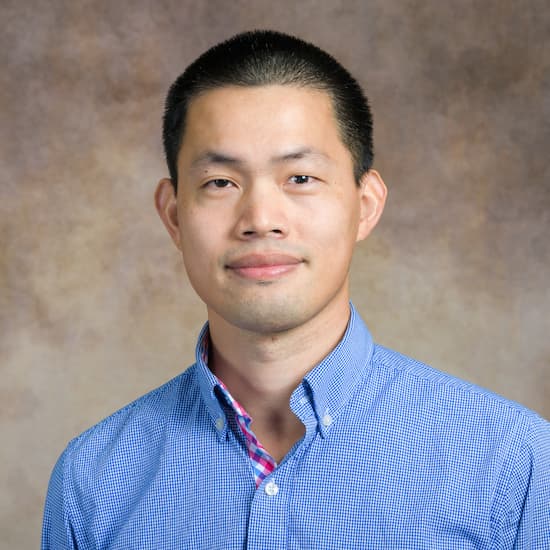
Tina Hernandez-Boussard is an Associate Dean of Research and a Professor at Stanford University, holding appointments in Medicine (Biomedical Informatics), Biomedical Data Science, Surgery, and Epidemiology & Population Health (courtesy). Her research focuses on leveraging AI and big data to improve healthcare equity, mitigate algorithmic bias, and enhance clinical decision-making. She leads projects like optimizing postoperative pain management and prostate cancer care using EHRs. Dr. Hernandez-Boussard has received awards such as the American College of Medical Informatics Fellowship and Stanford's Innovation Award in Population Science. She advises on national healthcare committees and teaches courses on deploying fair AI in healthcare. Education: PhD in Computational Biology (1999), MPH in Epidemiology (1993), and dual BS in Psychology & Biology (1991). Key Projects: Includes AHRQ-funded work on postoperative pain metrics and NCI-funded prostate cancer quality metrics. Research Interests: AI ethics, EHR analysis, healthcare equity, and precision medicine. Awards: Fellow of the American College of Medical Informatics (2020), Stanford Innovation Awards (2011-2012). Labs/Teams: Boussard Lab focuses on responsible AI in healthcare and EHR-driven research.
Dr. Alberto Ciancio is a Lecturer in Applied Economics at the Adam Smith Business School, University of Glasgow. He holds a PhD in Economics from the University of Pennsylvania (2017). His research focuses on development economics, health economics, political economy, and behavioral economics with a regional emphasis on Sub-Saharan Africa, particularly Malawi. He has conducted extensive fieldwork there, including evaluating health interventions via randomized control trials. Research Interests: Development economics, health economics, political economy, behavioral economics, Sub-Saharan Africa studies, public health policy. Grants: 2021-2022: Co-PI, 'Diverse Global Communities and Local Resource Allocation' ($50,000) 2020-2022: Investigator, 'Leveraging Social Networks for Healthy Aging in Low-Income Contexts' (NIH R03 AG069817, $160,584) 2018: Co-PI, 'Social Networks, NCDs and Aging' (PARC Pilot Grant, $19,643) Advising: Current supervisees include Joseph Ugbede Ejima (agricultural cooperatives), Abdisalam Mohamed (Somalia remittances/inequality), and Nuzhat Sharmeen (gender attitudes in labor markets). Recent work emphasizes health interventions in resource-poor settings, pandemic responses, and structural determinants of health behaviors. His Malawi-based studies highlight community leadership roles in public health during crises.
Kurt R. Sweat is an Assistant Professor in the Department of Health Economics, Systems, and Policy at the O'Donnell School of Public Health, University of Texas Southwestern. His research focuses on market design in healthcare, particularly the heart transplant waitlist system in the U.S. He holds a PhD in Economics from Stanford University (2023), and completed a postdoctoral fellowship at Johns Hopkins University's Carey Business School and Hopkins Business of Health Initiative. His work bridges econometric models with policy analysis, emphasizing healthcare outcomes and system efficiency. Education: PhD in Economics (Stanford University, 2023); Postdoctoral Fellow (Johns Hopkins University, 2023-2024); Undergraduate degrees in Mathematics and Economics (University of Nevada, Las Vegas). Research Interests: Market Design in healthcare systems, health economics, econometric modeling, and industrial organization. His recent work evaluates policy changes in heart transplant waitlist prioritization, revealing redistributive effects and incentives influencing patient survival outcomes. Teaching Experience: Taught advanced econometrics courses at Stanford University, including ECON 271, ECON 270, and BIOS 203, with notable student evaluations (4.6/5.0 to 5.0/5.0). Awards: Recognized with the Outstanding Teaching Assistant Award during his PhD.
Gary L. Darmstadt, MD, MS, is a Professor (Teaching) of Pediatrics (Neonatology) at Stanford University School of Medicine and holds a courtesy appointment in Obstetrics & Gynecology. He serves as Associate Dean for Maternal and Child Health and leads the Global Center for Gender Equality at Stanford. His career spans academic medicine, global health leadership at the Bill & Melinda Gates Foundation, and pioneering work in newborn health research. Education & Training: MD from UC San Diego, MS in Agronomy from University of Wisconsin, and residency in Pediatrics at Johns Hopkins. Advanced training includes Dermatology at Stanford and Pediatric Infectious Disease at University of Washington. Research Focus: Advances in maternal and child health, neonatal survival, gender equality in global health, and application of artificial intelligence to health equity challenges. Key projects include The Lancet Series on Gender Equality, Grand Challenges for Women's Health, and interventions to reduce neonatal infections in low-resource settings. Publications & Impact: Over 245 peer-reviewed articles, including landmark studies on neonatal infection mortality, preterm birth biomarkers, and gender norms' impact on health outcomes. Recent work emphasizes machine learning applications in global health diagnostics and policy. Awards & Recognition: Recipient of prestigious honors such as the 2021 Johns Hopkins Outstanding Alumnus Award, 2017 UC San Diego Alumnus of the Year, and multiple Gates Foundation awards for innovative programs. Leads global advisory roles at WHO, UNICEF, and the Global Mental Health Council. Current Roles: Member of Bio-X, Stanford HAI, and Wu Tsai Neurosciences Institute. Oversees interdisciplinary initiatives like the Global Center for Gender Equality and co-directs global pediatric research programs.
Assoc Prof Ya Hui, Michelle See is an Associate Professor in the Department of Psychology at the National University of Singapore (NUS). Her research focuses on attitudes, persuasion, intergroup processes, and the interplay between affective and cognitive components of attitudes. She holds a PhD in Social Psychology from Ohio State University (2007), an MA from the same institution (2003), and a BA (Hons) from the University of Arizona (2001). Her work explores how attitude structure (e.g., ambivalence, knowledge) and meta-attitudinal bases (e.g., preference for emotion vs. cognition) influence persuasion outcomes, particularly in contexts of threat or cultural differences. Notable contributions include studies on message tailoring efficacy across cultures, compensatory thought validation during pandemics, and the role of living arrangements in intergroup attitudes. Research Areas: Attitude change, intergroup relations, cognitive-affective processing systems, health psychology. Awards: No specific awards listed, though her work has garnered citations in high-impact journals like Journal of Communication and Personality and Social Psychology Bulletin . Grants/Advising: No explicit grants listed; advising details for students are omitted due to lack of data. Her lab investigates topics such as multiculturalism’s impact on intergroup contact and the psychological effects of mortality salience. Collaborations include international researchers on projects ranging from pandemic psychology to cross-cultural persuasion strategies.
Yun-Hee Choi is a Professor at the Department of Epidemiology and Biostatistics, Schulich School of Medicine & Dentistry, Western University. Her research focuses on advanced statistical methodologies for complex biomedical data, particularly in genetic and cancer epidemiology contexts. BSc in Statistics MA in Statistics PhD in Biostatistics She specializes in joint modeling , dynamic prediction , correlated survival data analysis , and statistical genetics , with applications to Lynch syndrome and familial colorectal cancer . Her methodological work includes copula models , frailty models , and multistate models for analyzing competing risks and recurrent events. Recent publications demonstrate expertise in genetic risk estimation , cancer progression modeling , and family-based survival analysis . She develops computational tools like the FamEvent R package for time-to-event data in genetic studies. NSERC: Statistical methods for joint modeling (2019-2024) CIHR: Risk prediction models for HBOC (2019-2023, Co-PI) CANSSI: Genetic data analysis (2019-2022, Co-I) NSERC: Competing risks modeling (2014-2019) CIHR: Multistate models for Lynch syndrome (2013-2016) CBCF-Ontario: BRCA1/2 family screening (2014-2017) NSERC: Correlated survival data (2009-2014) Her work bridges biostatistical theory with cancer prevention applications , particularly in hereditary cancer syndromes.
Thomas Byrd, MD, MS, serves as Assistant Professor in the Division of Hospital Medicine within the Department of Medicine at the University of Minnesota School of Medicine. His academic work bridges clinical practice with cutting-edge informatics research, focusing on improving hospital-based care through technological innovation and data-driven approaches. Dr. Byrd's research program centers on artificial intelligence applications in surgical and critical care settings, patient deterioration detection systems, and secure clinical communication technologies. His investigations span validation of deterioration index models, barriers to secure messaging adoption, AI-driven radiology follow-up systems, and earlier work in medical imaging and biomedical engineering. This multidisciplinary focus aims to enhance patient safety through real-time monitoring, workflow optimization, and predictive analytics in hospital environments. Analysis of his 15 most recent publications (2014-2024) reveals an evolving research trajectory from biomedical engineering foundations toward AI-driven clinical solutions. Key thematic clusters include: (1) AI applications in surgery and critical care triage; (2) patient deterioration monitoring systems; (3) secure mobile communication adoption; and (4) earlier biomedical engineering work in medical imaging and drug delivery systems. The publications demonstrate increasing focus on translational informatics with strong emphasis on real-world implementation challenges. Scientific Awards: No scientific awards documented in available source material Advising and Grants: While Dr. Byrd's role as faculty suggests potential advising responsibilities, no student names or grant funding details appear in the provided documentation. His research output indicates active investigation in clinical informatics but specific mentoring activities or funded projects remain unspecified in the source text. Laboratory and Team Affiliations: Dr. Byrd is institutionally anchored in the Division of Hospital Medicine at the University of Minnesota, though specific laboratory facilities or dedicated research teams are not described. His collaborative work appears cross-disciplinary, spanning departments of medicine, surgery, radiology, and biomedical engineering as evidenced by publication topics.
Dr Aled Llion Jones is Professor and Head of School at Bangor University's School of Welsh, Department of Welsh and Celtic Studies. He holds advanced degrees from Harvard University (PhD in Celtic Studies, MA), Cardiff University (MPhil in Welsh), and Leeds University (BA in Philosophy and English). His academic career spans institutions across Wales, Poland, Ireland, and the United States, including positions at Catholic University of Lublin, NUI Galway, and Harvard University where he served as Visiting Professor. PhD, Celtic Studies, Harvard University (2005-2011) MA, Harvard University (2005-2007) MPhil, Welsh, Cardiff University (1997-2000) BA, Philosophy and English, Leeds University (1993-1996) Professor Jones works at the intersection of philosophy and literary theory, bringing these disciplines into dialogue with medieval and modern Welsh and Irish literatures. His research focuses on two primary areas: twentieth-century philosophy (particularly Heidegger, Blanchot, Buber, and Derrida) and medieval Welsh literature. A central thread connecting these interests is Martin Buber's 1914 translation of the Four Branches of the Mabinogi and the conceptual cross-fertilization between Welsh legends and humanist-Hasidic traditions. He is currently examining concepts of time, temporality, and historiography in medieval Welsh and Irish literature, exploring how literary forms express conceptual and aconceptual experiences of time, place, and utopia. He is also preparing an accessible introduction to Philosophy of Literature in Welsh, which will be the first of its kind focusing specifically on Welsh literature. His recent publications demonstrate a consistent trajectory exploring the intersections of philosophy, time, and medieval Welsh literature. The 15 most recent works show particular emphasis on temporal theory in medieval contexts, Welsh poetic structures, Arthurian literature, and the philosophical implications of Welsh literary traditions. These works span multiple languages and publication formats including monographs, edited volumes, and scholarly articles in prestigious journals. Rownd Derfynol Prize (2016) Professor Jones coordinates the 'Celts' MA program and oversees Welsh MA students at Bangor University. He has recently supervised two PhD projects: Philip Davies' comparative study of nationalism discourses in late nineteenth-century Wales and the Basque Country, and Angelika Rüdiger's study of Welsh folklore motifs from medieval to modern periods. He serves as both internal and external examiner for PhD projects across multiple schools including Welsh, History, and Philosophy. His extensive translation work includes Polish poetry for the North Wales International Poetry Festival and Irish to Welsh translations published in academic contexts. He is an active participant in public intellectual life, delivering talks from village halls to national broadcast media including BBC Radio Cymru, and engaging with community language teaching in Welsh, Polish, and Irish.
Jason Poulos is a data scientist and researcher currently working at the intersection of machine learning, causal inference, and health policy. He holds a Ph.D. in Political Science from the University of California, Berkeley, with a designated emphasis in Computational Science and Engineering. His academic journey includes postdoctoral positions at Harvard Medical School's Department of Health Care Policy and Brigham and Women's Hospital. Dr. Poulos's research focuses on developing and applying machine learning methods to address challenges in complex, high-dimensional longitudinal health data. His work spans several interconnected areas including extending causal inference methods for multi-valued treatments, developing frameworks for adversarial machine learning, applying neural networks for health outcome prediction, and evaluating deep learning approaches for missing data imputation in survey data. His recent publications demonstrate expertise in targeted learning methodologies, particularly in observational studies with multi-level treatments, with applications in pharmacoepidemiology. His research output shows a consistent pattern of interdisciplinary work bridging political science, statistics, and health policy. The majority of his recent publications (2021-2024) appear in high-impact journals across biostatistics, political methodology, and machine learning domains, reflecting his ability to contribute to multiple academic communities. His work often employs advanced statistical techniques to address real-world policy questions, particularly in healthcare settings. As evidenced by his publications and research trajectory, Dr. Poulos has established himself as a methodological innovator in causal inference with multi-valued treatments, with particular expertise in applying these methods to evaluate the safety and effectiveness of antipsychotic medications. His work combines deep methodological rigor with practical policy applications.
Xavier Puig is an Assistant Professor at the Universitat Politècnica de Catalunya (UPC) , affiliated with the Department of Statistics and Operations Research and the School of Mathematics and Statistics (FME). He is a member of the ADBD - Analysis of Complex Data for Business Decisions and GRBIO - Biostatistics and Bioinformatics Research Group . His research focuses on Bayesian data analysis , with applications in Epidemiology Ecology Public health Political science Industrial quality control Marketing analytics Recent publications reveal a strong trend in Bayesian spatiotemporal modeling for health data, alcohol-migraine interaction studies, and industrial error rate monitoring . His work combines methodological innovation with real-world applications across diverse sectors. Collaborations include researchers from biostatistics, clinical epidemiology, and industrial engineering. He has contributed to 44 indexed journal articles and participated in 49 congress presentations , with recent projects focusing on competitive research and non-competitive industrial collaborations in statistical modeling.
Jennifer Alonso-García is a tenured Professor of Actuarial Science in the Department of Mathematics at the Faculty of Sciences, Université Libre de Bruxelles (ULB), a position she has held since October 2019. She concurrently serves as an Associate Investigator at CEPAR, a Netspar Fellow, and treasurer of the PBSS board. Previously, she was a tenure-track Assistant Professor at the University of Groningen's Department of Economics, Econometrics and Finance and a Senior Research Associate at CEPAR. Her academic foundation includes mathematics studies completed in Spain and Germany, culminating in a PhD in Actuarial Science from the Université Catholique de Louvain in 2015. She maintains professional certification as an IA|BE Qualified Actuary by the Belgian Institute of Actuaries and brings industry experience as a Risk Advisor specializing in Solvency II and MCEV frameworks. Dr. Alonso-García's research program centers on actuarial science with emphasis on pension systems, retirement income security, longevity risk quantification, and variable annuity product design. Her work addresses critical challenges in demographic risk management, intergenerational equity, and sustainable pension financing through advanced stochastic modeling techniques. She investigates how socio-economic factors impact mortality patterns and retirement outcomes, with particular focus on fairness in pension design. Analysis of her 15 most recent publications (2021-2025) reveals consistent thematic focus on pension economics and actuarial modeling, characterized by three dominant trends: intergenerational risk-sharing mechanisms in public pension schemes, innovative variable annuity contract designs with hybrid guarantees, and socio-demographic mortality analysis incorporating AI techniques. Her work demonstrates strong methodological rigor in applying risk measures to pension sustainability assessments. Her scholarly contributions have been recognized through prestigious awards: ICA 2018 Best Paper Award IAA Section IAAHS Best Paper Award (2018) IAA Section PBSS Best Paper Award (2019) Dr. Alonso-García actively shapes her field through significant service commitments including Associate Editor for Annals of Actuarial Science, Editorial Board membership at ASTIN Bulletin, and Scientific Board position at Anales del Instituto de Actuarios Españoles. She co-organizes the One World Actuarial Research Seminar and frequently participates in international collaborative projects, evidenced by upcoming engagements including a workshop on pension design in Andros, Greece (September 2025), a research visit to UNSW Sydney (October 2025), and the 1st ASTIN Bulletin Conference in Zürich (January 2026).
Professor Arko Lucieer is the Head of the School of Geography, Planning, and Spatial Sciences at the University of Tasmania. He holds a PhD in Remote Sensing from Utrecht University (Netherlands). His research focuses on advancing drone and remote sensing technologies for environmental monitoring, particularly in biodiversity mapping, ecosystem dynamics, and Antarctic ecology. He leads the TerraLuma research group, pioneering ultrahigh-resolution remote sensing applications. Key roles include: Established TERN DroneScape for national ecosystem monitoring Developed protocols for drone-based data collection and AI-driven analysis Recipient of the 2008 National Banksia Environmental Award Research Interests: Integration of drone technology, multispectral/hyperspectral imaging, and AI to quantify plant traits, map ecosystems, and address climate change impacts. Projects span forest health, Antarctic moss communities, and precision agriculture. Grants & Projects: TERN DroneScape: $1.6M for standardized drone-based ecosystem monitoring NatureScan: $1.2M for national biodiversity monitoring using drones and AI Supervision: Mentor to over 20 doctoral students, focusing on remote sensing applications in ecology, forestry, and environmental science. Labs/Teams: TerraLuma research group, specializing in drone remote sensing innovation and environmental data analytics.
Joshua Gottlieb is a Professor at the University of Chicago’s Harris School of Public Policy, where he leads the Becker-Friedman Institute’s Health Economics Initiative and serves as Executive Director of the University’s Research Data Center. He holds a Ph.D. in Economics from Harvard University (2012) and is a Research Associate at the National Bureau of Economic Research (NBER). His research focuses on healthcare economics, including administrative costs, labor markets, and policy design, with an emphasis on linking market forces to healthcare outcomes. Gottlieb has been recognized with prestigious awards such as the ASHEcon Medal (2025) and the Kenneth J. Arrow Award. He advises policymakers, sits on editorial boards (e.g., Journal of Health Economics), and has held prior roles at institutions like the University of British Columbia and Stanford University. His policy work includes roles on Illinois’ Medicaid Managed Care Oversight Commission and contributions to tax and housing policy debates in Canada and the U.S. His research interests span health, labor, urban, and public economics, with a focus on understanding how economic incentives shape healthcare provision, labor supply, and insurance markets. Recent work explores the rise of healthcare employment, administrative inefficiencies in billing, and the impact of Medicare payment policies on private systems. Gottlieb’s awards reflect his contributions to advancing health economics, including the National Tax Association’s Outstanding Dissertation Award and the Arrow Award. His policy essays and op-eds influence public discourse on healthcare capacity, physician incentives, and pandemic labor responses.
Jiabi Du is an Assistant Professor at Texas A&M University at Galveston, specializing in coastal oceanography and environmental modeling. His research focuses on understanding how coastal systems respond to climate change, extreme weather events like hurricanes, and human activities, with particular emphasis on hypoxia, flooding, and habitat loss. He employs advanced numerical models and long-term observations to study processes such as pollutant dispersion and larval transport in estuaries. Dr. Du holds a Ph.D. in Physical Oceanography from the Virginia Institute of Marine Science (2017), an M.S. in Oceanography from Nanjing University (2012), and a B.S. in Physical Geography from Nanjing University (2010). His awards include the 2019 Institutional Postdoc Fellowship and recognition for academic excellence during his undergraduate and graduate studies. His research interests span coastal hydrodynamics, hurricane impacts, and microplastic transport. Notable contributions include studies on Galveston Bay's hydrodynamic responses to Hurricane Harvey and the role of baroclinic processes in estuarine flushing. He teaches courses in Physical Oceanography and computing. Awards: Best Student Paper (2018), Zengxianzi Scholarship (2007-2009), National Inspiration Scholarship (2007-2008). Labs/Teams: Coastal Modeling Group, Galveston Oyster Larvae Tracker Project. Future research directions include expanding microplastic pollution studies and investigating compounding climate-hurricane effects on coastal systems.
Grant L Harley is an Associate Professor in the Department of Earth and Spatial Sciences at the University of Idaho. His research focuses on dendrochronology, paleoclimatology, and climate change impacts on forests, with a particular emphasis on tropical cyclone reconstruction and hydroclimate variability. He is affiliated with the Idaho Tree-Ring Lab and contributes to collaborative research projects across North America and the tropics. Education PhD in Geography (2012), University of Tennessee MA in Geography (2007), University of South Florida BA in Geography (2005), University of South Florida Harley's research explores historical climate patterns through tree-ring analysis, including temperature variability, fire history, and tropical cyclone activity. His work spans diverse ecosystems from the Rocky Mountains to coastal regions, integrating tree rings with geomorphic and hydrological data. Recent publications highlight advancements in blue intensity metrics, imaging techniques, and climate signal interpretation. His publications address climate-growth relationships in temperate and tropical forests, fire-induced mortality proxies, and long-term hydroclimate extremes. Collaborative projects include paleoclimatic reconstructions in the Greater Yellowstone Ecoregion, Gulf Coast cyclone history, and multi-species tree-ring networks for regional climate analysis.