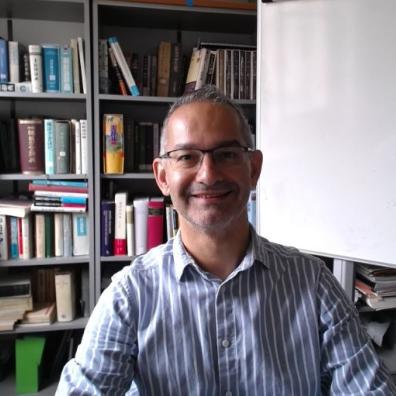
Antonov Anton is a Lecturer at the Institut national des langues et civilisations orientales , specializing in Japanese studies . His research focuses on historical linguistics , descriptive linguistics , and typology across Asia, Eurasia, and North America . His work with the CRLAO (Centre de Recherche Linguistique sur l'Asie Orientale) emphasizes cross-linguistic analysis of morphosyntactic phenomena, including direct/inverse systems , allocutivity markers , and grammaticalization processes . He has contributed to debates on the Transeurasian language hypothesis and loan verb integration in mixed languages. Antonov's teaching covers Grammar , Classical Language , Japanese Linguistics , Lexicology , and Typology at both undergraduate (L3) and graduate (M1/M2) levels. His methodological expertise spans synchronic and diachronic analysis of linguistic structures.
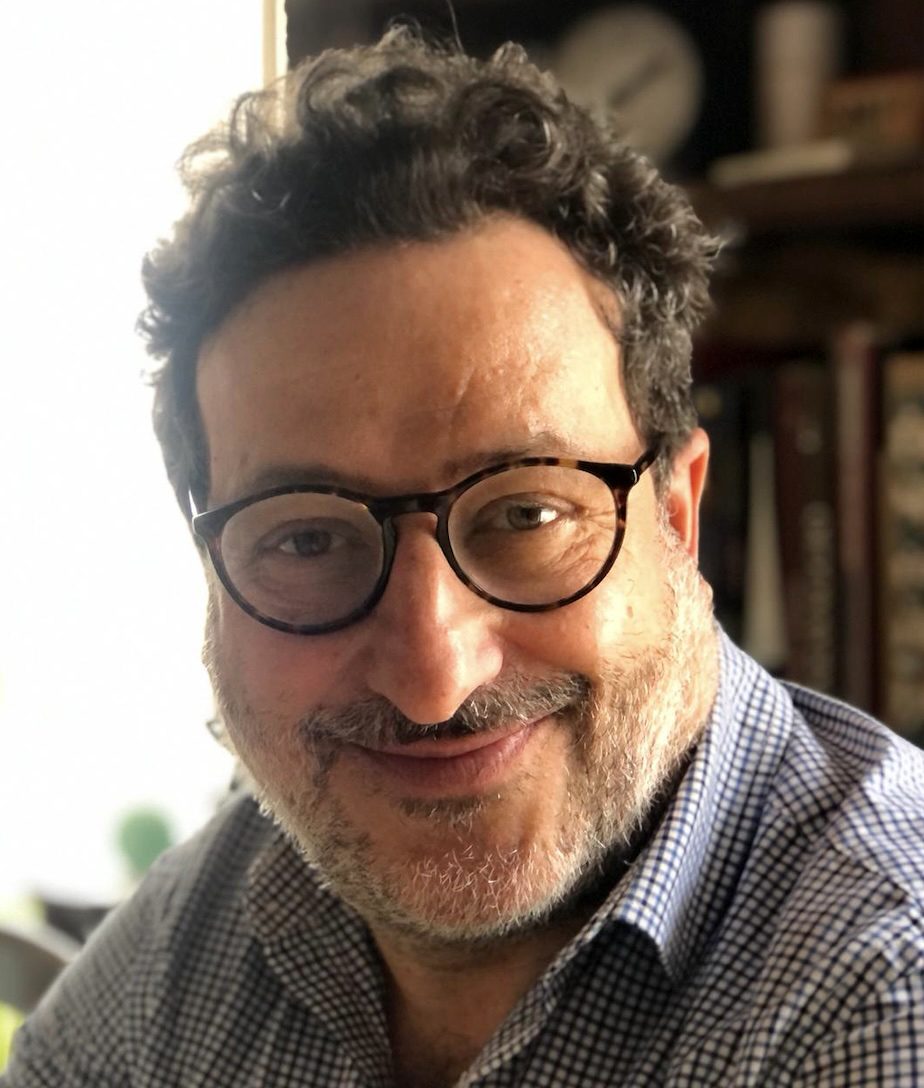
Matthieu Labeau is a Senior Lecturer at Télécom Paris, affiliated with the Department of Image, Data, Signal (IDS). He joined the institution in 2019 after completing his PhD at the University of Paris-Saclay and a postdoctoral position at the University of Edinburgh. His research primarily centers on Natural Language Processing (NLP), with specialized interests in representation learning, language modeling, and conversational AI. His work spans: Core NLP : Contextual word representations, semantic alignment, and polysemy analysis. Machine Learning : Hierarchical classification, graph prediction, and few-shot learning techniques. Applications : Emotion recognition in dialogues, persuasiveness decoding, and educational NLP tools. Labeau leads research in the Signal, Statistics and Learning (S2A) team at the Information Processing and Communication Laboratory (LTCI). His recent publications demonstrate a strong focus on improving language model interpretability and efficiency, with innovations in tokenization effects and multimodal fusion. Though no awards or grants are mentioned, his consistent output in top-tier venues (e.g., NeurIPS, ACL, AAAI) highlights significant scholarly contributions. He actively collaborates on tools like EZCAT for conversation annotation and mentors researchers in NLP projects. Current work explores LLM capabilities in persuasion assessment and optimal transport methods for graph-based learning.
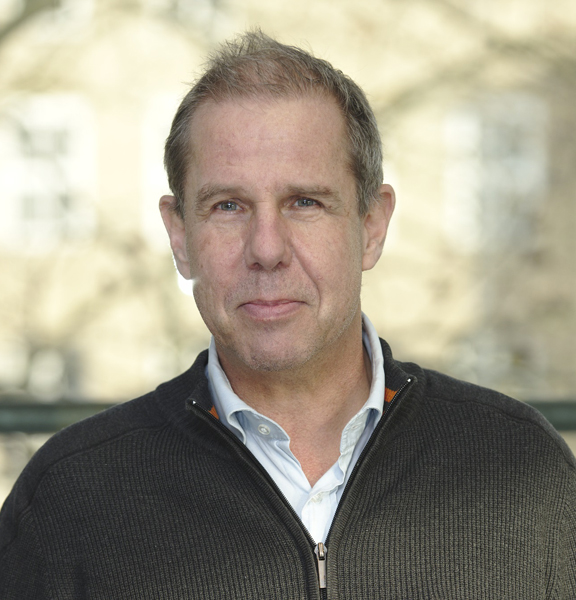
Livio Gaeta is a Full Professor of German Language and Linguistics at the University of Turin, Italy. His academic career includes roles such as Associate Professor (2012–2016) and Visiting Professor at Humboldt-University of Berlin (2009–2010). He specializes in contrastive linguistics, theoretical morphology, and the study of linguistic minorities, particularly Walser German dialects. Gaeta holds a PhD in Linguistics from the University of Rome Three (1998). Educational Background: PhD in Linguistics, University of Rome Three (1998); Guest Researcher at the Center for General Linguistics, Berlin (1998–1999). His research focuses on morphological theory, language contact in Alpine regions, and the documentation of minority languages. Notable projects include CLiMAlp (PRIN 2020–2024) and ArchiWals (PRIN 2017–2020), which digitize and preserve Walser linguistic heritage. Gaeta has authored monographs like Lineamenti di grammatica tedesca (2017) and edited volumes on German linguistics. His awards include the Alexander von Humboldt Research Grant (2009) and Fellowship (2010), and he served as President of the Societas Linguistica Europaea (2025). Key research themes include grammaticalization, derivational paradigms, and the interplay between syntax and morphology.
Nikolaus Himmelmann is a Full Professor (W3) in General Linguistics at the University of Cologne since 2010. Previously, he held professorial positions at Westfälische Wilhelms University Münster (2007-2010), Ruhr-University Bochum (1999-2007), and has been actively involved in linguistic research through funded projects like the DoBeS framework (2004-2005) and SFB 1252 projects (2017-2020). He is a founding member and past president of the German Society for Endangered Languages, and serves on multiple editorial boards including Language Documentation & Conservation and Studies in Language . 2018 Honorary Member, Linguistic Society of America 2017 Leo Spitzer-Preis, University of Cologne 2014 Best Paper in Language Award His research spans typology, grammaticalization, language documentation, and prosody-syntax interfaces. He has secured significant grants from DFG, VW Foundation, and BMBF for collaborative projects on language documentation, articulation speed variation, and prosodic prominence. His administrative roles include chairing linguistics institutes at Münster and Cologne universities.
Nazareth Amlesom Kifle is an Associate Professor at the Department of Languages, Literature and Culture at the University College of Southeast Norway. Their primary research interests span linguistics and language didactics, focusing on syntax, morphology, lexical semantics, and second language acquisition. They hold a PhD from the University of Bergen (2012), an MA in English Language Teaching from Lancaster University (1998), and a BA in Language Studies from the University of Asmara (1996). Key research areas include syntactic functions and semantic roles (e.g., applicative constructions, causative/passive structures) and language didactics topics like learners' language and grammar pedagogy. Courses taught include English grammar, language variation, second language acquisition, and research methodology. Recent publications (2023–2005) explore teacher education in grammar, computational linguistics for language translation, and library information practices. They are affiliated with the 'Language in the individual and society' research group.
Dr. Katherine Walker is a Researcher in the Department of Linguistics at the University of Cologne, working on the DFG-funded project \"Taking spoken language seriously\" since April 2024. Previously, she completed her PhD at the Amsterdam Center for Language and Communication (ACLC), Universiteit van Amsterdam (2020-2024), and held academic assistant and student assistant positions at the University of Cologne. Her educational background includes: PhD in Linguistics, Universiteit van Amsterdam (2020-2024) MA in Linguistics, University of Cologne (2017-2019) BA in Linguistics and French, University of Cologne (2014-2017) Dr. Walker's research focuses on syntax and morphology of understudied languages, particularly Papuan languages like Kamang and Tabaq. She investigates indexing phenomena, viewpoint alternation, differential marking, and lexical constraints on grammatical relations, contributing significantly to linguistic typology and language documentation through fieldwork and theoretical analysis. Her publication trends reveal concentrated expertise in Papuan language structures, with recent works analyzing morphosyntactic patterns in Kamang (2024) and nominal systems in Tabaq (2019). The 2025 chapter \"Iha\" for The Oxford Guide to the Papuan Languages extends this focus to phonological and semantic dimensions across the language family. Dr. Walker currently leads DFG project \"Taking spoken language seriously\" and previously collaborated on \"Exceptions rule! Lexical restrictions on grammatical structure\". Her guest research at LACITO (2022) and co-editorship of Open Linguistics special issues demonstrate active engagement in international linguistic discourse and collaborative grant-funded research.
Gözde Gül Şahin is an Assistant Professor in the Computer Science and Engineering Department at Koç University's College of Engineering, where she leads research at the intersection of natural language processing and machine learning. She is affiliated with KUIS AI (Koç University Artificial Intelligence Research Center) and serves as Principal Investigator for a major Tübitak-funded project on procedural language understanding. Previously, she was a postdoctoral researcher at the Ubiquitous Knowledge Processing Lab (UKP) at Technical University of Darmstadt, working with Prof. Iryna Gurevych, and completed her PhD at Istanbul Technical University under the supervision of Prof. Eşref Adalı. Dr. Şahin's research focuses on pushing the boundaries of natural language processing by building machine learning models and open-access tools for world's languages, with particular emphasis on semantics, procedural language understanding, and the abstraction and reasoning capabilities of large language models. Her work bridges theoretical linguistics with practical NLP applications, especially for low-resource and morphologically complex languages like Turkish. She has made significant contributions to multilingual probing frameworks, grammatical error correction for Turkish, and understanding how machines can learn from small data through projects like PuzzLing Machines. Her recent publications reveal a consistent research trajectory toward understanding procedural language and improving model generalizability across domains. She has developed frameworks for evaluating multilingual representations (LINSPECTOR), created benchmarks for Turkish language understanding (Cetvel), and investigated how language models process step-by-step instructions. Her work often addresses the gap between high performance on standard NLP tasks and real-world applicability, with a strong focus on making NLP more accessible for underrepresented languages. Scientific Awards Tübitak 2232 B-International Fellowship for Outstanding Researchers (2022) Dr. Şahin actively mentors students, having supervised bachelor's students like Max Eichler (now PhD student at UKP/TU Darmstadt) and pre-doctoral researchers like Haritz Puerto. Her current Tübitak-funded project supports 2 Masters students, 2 PhD students, and one postdoctoral researcher working on "Automatic Learning of Procedural Language from Natural Language Instructions for Intelligent Assistance." She has served as Area Chair for COLING 2022 and organized workshops at major NLP conferences including EMNLP. She leads the GGLab at Koç University, which focuses on developing NLP models and datasets for world's languages, with particular attention to Turkish and other low-resource languages. The lab's work spans multiple dimensions of language understanding, from grammatical error correction (GECTurk) to procedural reasoning and multilingual instruction tuning.
Associate Professor Rob Pensalfini holds dual appointments in the School of Communication and Arts and School of Languages and Cultures at the University of Queensland. He is an Affiliate of the Centre for Critical and Creative Writing. His academic career began with a PhD in Theoretical Linguistics from MIT (1997), followed by Visiting Assistant Professorship at the University of Chicago before joining UQ in 1999. Promoted to Senior Lecturer in 2003 and Associate Professor in 2016, his work bridges linguistics and drama, particularly focusing on Indigenous Australian languages (Jingulu/Mudburra) and innovative prison-based Shakespeare performances. Education: PhD in Theoretical Linguistics, MIT, 1997 Fieldwork-based research in Northern Territory's Barkly Tableland Research interests: Documentation of endangered Indigenous languages Language contact phenomena between Jingulu/Mudburra Shakespearean performance in correctional facilities Phonological typology and morphosyntactic theory Interdisciplinary links between linguistics and theatre Leadership roles: Founder of Australia's longest-running Prison Shakespeare program Artistic Director of Queensland Shakespeare Ensemble Co-lead on biocultural knowledge projects with Indigenous communities Labs/Initiatives: Queensland Shakespeare Ensemble Prison Shakespeare Project (since 2008) Collaborations with Batchelor Institute on Indigenous language preservation
Daniel Lefkowitz is an Associate Professor & Interim Chair of the Department of Middle Eastern and South Asian Languages and Cultures at the University of Virginia. He holds a BA in Anthropology from Dartmouth College (1983), an MA in Linguistics from the University of Pennsylvania (1987), and a Ph.D. in Anthropology from the University of Texas (1995). His work bridges linguistic anthropology, sociolinguistics, and media studies, focusing on how language intersects with emotion, identity, and power structures. Lefkowitz has conducted fieldwork in Austria, Israel/Palestine, and the U.S., examining phenomena like 'Gastarbeiterdeutsch' in Vienna, intonation patterns in Israeli Hebrew, and creaky voice in American English. His research explores mediated language use through film analysis, political discourse, and viral communication. Notable projects include analyzing President Trump's lateral gestures, tracing language ideologies in Hollywood films, and studying pandemic media narratives' impact on policy. Lefkowitz teaches courses on language and cinema, sociolinguistics, and Middle Eastern cultural linguistics. His interdisciplinary approach integrates ethnography, discourse analysis, and media critique to reveal how language shapes—and is shaped by—social hierarchies. Recent work examines the rhetorical functions of gesture in political speeches and the role of intonation in expressing emotion across cultures. His 2004 book *Words and Stones* remains a landmark study of language in the Israeli-Palestinian conflict. Collaborations include a 2020 study on pandemic media framing with a student researcher. Lefkowitz's scholarship emphasizes practical applications, such as language policy in schooling, drawing from his experience at the Oneida Tribal School.
Mitch Marcus is a Professor Emeritus in the Department of Computer and Information Science at the University of Pennsylvania's School of Engineering and Applied Science. He earned his Ph.D. from MIT in 1978 and joined Penn in 1987 after working at AT&T Bell Laboratories. His research focuses on statistical natural language processing and cognitively plausible models for automatic acquisition of linguistic structure. Dr. Marcus created and led the Penn Treebank Project, which revolutionized natural language parsing accuracy. He has served as PI on multiple major projects including DARPA LORELEI and GAILA AIX, focusing on unsupervised morphology acquisition and child language acquisition simulations. Awards: Fellow of American Association for Artificial Intelligence (1992) Founding Fellow of Association for Computational Linguistics (2011) Advising: His former PhD students hold positions at institutions including MIT, Johns Hopkins, Google, and Microsoft Research. Research groups: Directed the Penn Treebank Project and co-led the OntoNotes Project. Currently collaborates on natural language understanding for human-robot interaction.
Nina Hagen Kaldhol is a Lecturer at the University of Oslo, specializing in theoretical linguistics with a focus on phonology and morphology. She holds a Ph.D. in Linguistics from the University of California San Diego (2024). Her research emphasizes tone systems, grammatical tone interactions, and morphological complexity across diverse languages including Somali, Norwegian, Rere/Koalib, Tira, and others. Her work explores topics like compounding processes, grammatical gender, loanword adaptation, and bilingualism effects. Key research areas include: Tonal typology and morphological tone systems Grammaticalization processes in African languages Phonological interfaces in Scandinavian languages Sociolinguistic aspects of immigrant dialects Her recent articles (2021–2025) investigate Somali gender agreement patterns, tonal exponence typology, and cross-linguistic processing in L2 Norwegian acquisition. She has contributed to conference volumes on African linguistics and published extensively on Scandinavian tonal accents and loanword phonology. Outside academia, Kaldhol has been a musician, previously playing guitar in the Norwegian progrock band Suburban Savages.
Eleni Karantzola is a Professor in the Department of Mediterranean Studies (Archaeology, Linguistics, International Relations) at the University of the Aegean. She holds expertise in the history of the Greek language, sociolinguistics, language policy, and literacy education. Her academic journey includes studies at Aristotle University of Thessaloniki, Université Paris VII, and École des Hautes Études en Sciences Sociales, where she completed her PhD with Onassis Foundation support. Research interests focus on Early Modern Greek (16th-17th centuries), language contact phenomena, writing systems, and language policy related to adult education and multilingualism. She has directed the Southeast Mediterranean Linguistics Laboratory since 2008, establishing initiatives like the 'Literacy Network' and early modern Greek study groups. Her administrative roles include Department President (2010-2012) and Secretary General of Lifelong Learning (2012-2013). She has contributed to national and EU projects (EPEAEK, NSRF, Reprise) addressing language education and policy. Her publications span monographs, edited volumes, and journals like Journal of Pragmatics and Revista de Estudios Neohellenicos . She co-edited the series 'Language – Education – Society' and authored works on Greek immigrant education, linguistic diversity, and language change. Her work bridges historical linguistics with contemporary educational challenges, emphasizing multilingualism and literacy in sociopolitical contexts.
Amy Rose Deal is an Associate Professor of Linguistics in the Department of Linguistics at the University of California, Berkeley, within the College of Letters and Science. Her research lies at the intersection of syntax, semantics, and linguistic fieldwork, with a strong focus on understudied languages such as Nez Perce, Zapotec, and Tiwa. Her research interests include: Syntax-Semantics Interface Syntactic Ergativity and Case Systems Indexicality and Logophoricity Agreement and Morphosyntactic Variation Definiteness and Countability Linguistic Fieldwork and Language Documentation Her recent publications reveal a sustained engagement with formal theoretical frameworks combined with empirical data from endangered languages. Themes across her work include the nature of syntactic movement, the interpretation of pronouns and indexicals, and cross-linguistic variation in nominal and verbal morphology. She frequently investigates how syntactic structure influences semantic interpretation, especially in non-canonical alignment systems. Her scientific contributions are reflected in numerous high-quality publications in formal linguistics, though specific awards or fellowships are not mentioned in the provided text. Amy Rose Deal advises students in syntax, semantics, and fieldwork, though no specific names are listed. She has collaborated with researchers such as Vera Hohaus, Julia Nee, and Matthew Wolf. There is no mention of grants or lab affiliations in the provided material. She maintains an active research profile, with publications from 2013 through 2020, indicating ongoing scholarly productivity.
Prof. Dr. Ilja A. Seržant is a full Professor of Slavic Linguistics at Potsdam University since 2022, with research focusing on typology, diachronic syntax, and language contact in Baltic-Slavic contexts. He leads the Potsdam Slavic Variation Lab and Potsdam Typology Lab , integrating interdisciplinary approaches with archaeology and anthropology. University of Cologne (Habilitation 2018, MA 2005) University of Bergen (PhD 2012) University of Cologne (Dr. phil. 2011) His research explores differential argument marking , partitive constructions , and morphosyntactic evolution through typological and areal lenses. Recent projects include INHILLDAUGAR for place-name analysis and Modal constructions in Volga-Kama under DFG funding. Publications emphasize efficiency pressures in language change, cyclic patterns, and cross-linguistic universals. Key article trends (2021-2025) examine diachronic typology , argument coding , and areal convergence in Slavic and Baltic languages. Awards include the Anna Siewierska Award 2021 and Heisenberg Programme (DFG 2021-2026). Supervises PhD students Daria Alfimova and Wakweya Olani Gobena , while managing research teams across multiple institutions.
Galina Kurteva is an Associate Professor in the Department of New Bulgarian Studies at New Bulgarian University. She holds a Doctor of Philological Sciences degree from the Russian Academy of Sciences, with additional specializations from Sofia University and Beijing. She directs NBU's Summer School of Bulgarian Language and Culture and leads the Erasmus+ project "Bulgarian Language for Erasmus Students." Research Focus: Her work spans text linguistics, linguoculturology, sociolinguistics, and intercultural communication. She investigates grammatical category acquisition (gender, number, definiteness) in Bulgarian by foreign learners, particularly Russian speakers, and develops pedagogical frameworks aligned with European language standards. Publications: Her 15 most recent works (2016-2009) focus on Bulgarian grammar pedagogy, error analysis in second language acquisition, and CEFR-aligned assessment design. Key themes include morphological challenges for Russian learners, test development for A1-B2 levels, and linguoculturological factors in language teaching. Projects & Leadership: Coordinated China-focused linguistics collaborations (2001-2007) Participated in international seminars (Turin, Vienna, Salzburg, Moscow) Led ALTE membership initiatives for Bulgarian language testing Manages ongoing Erasmus+ program for Bulgarian language education