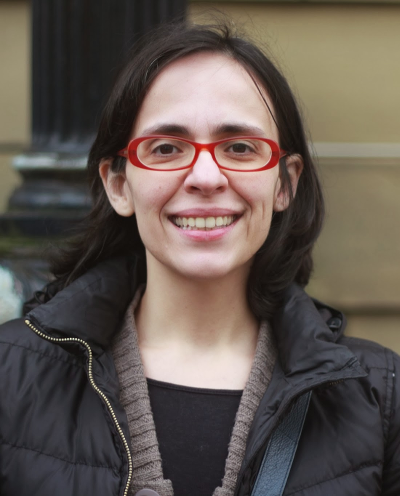
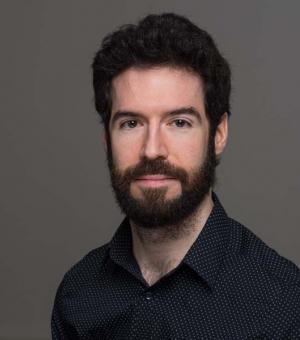
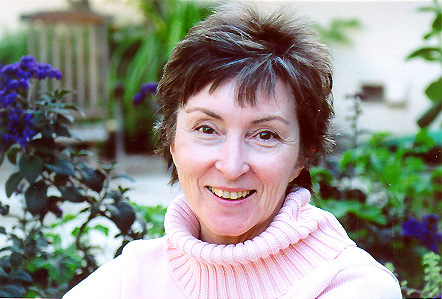
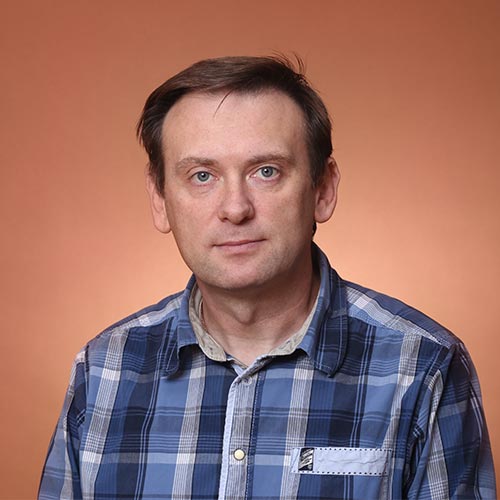
Marine Ciocco is a Researcher and Postdoctoral Fellow at the University of Oslo's Department of Geosciences, affiliated with the Centre for Planetary Habitability. Her work focuses on meteoritics, planetary science, and cosmochemistry with an emphasis on impact processes and Martian sample analysis. Education: PhD in Earth, Universe and Space Sciences - Cosmochemistry (2023), Muséum National d'Histoire Naturelle & Sorbonne Université Masters in Planetary Science and Space Exploration (2019), Paris Saclay University Bachelor in Earth Sciences (2017), Paris Sud University Research Interests: Study of impact cratering dynamics on Earth and Mars Characterization of shock metamorphosed minerals in martian samples Development of analogue samples for Mars Sample Return missions High-pressure geochemistry of extraterrestrial materials Key Projects: Mars Sample Return Analogue Sample Library (MSR ASL) Impact Craters from Earth to Mars Teaching: Courses on meteorites, planetary science, and asteroid studies at both French and English language levels. Grants/Awards: Meteoritical Society Barringer Crater Company Travel Award (2021) Orlaug L. Merkesdals Legat Grantee (2024) Labs/Teams: Active contributor to the Centre for Planetary Habitability's Mars Sample Return research initiatives.
Dr. Mari-Cruz Villa-Uriol is a Senior Lecturer in the Department of Computer Science at the University of Sheffield, UK, and Head of ED&I in the School of Computer Science. She is a member of the Complex Systems Modelling research group and the INSIGNEO Institute for in silico Medicine. Her research focuses on computational imaging, data-driven clinical decision-making, and patient-specific modeling in cardiovascular domains. She holds a Telecommunications Engineering degree from Barcelona and a PhD in Computer Engineering from UC Irvine. Previously, she held postdoctoral and research positions at Universitat Pompeu Fabra and the University of Sheffield. Education: Bachelor's Degree in Telecommunications and Electronics Engineering, Barcelona, Spain PhD in Computer Engineering, University of California, Irvine (USA) Research Interests: Personalization of computational models for clinical translation, integration of heterogeneous data sources (e.g., VPH models, clinical databases, mobile sensors), and development of scientific workflows. Key areas include cardiovascular disease modeling, temporal event sequence analysis, and healthcare decision support systems. Grants and Projects: OptiMUS-HF: MRC-funded study optimizing heart failure treatment strategies (£54,679, Co-PI) SANO: €3.4M EU Horizon 2020 project for computational diagnostics innovation (£2,497,386, Co-PI) Clever-dREAMS: MRC-funded AI for rare skeletal dysplasia diagnosis (£74,668, Co-PI) Teaching: Leads modules in Java programming (COM1003 and COM6102) and supervises undergraduate and master's projects in biomedical computing and software engineering. Affiliations and Activities: IEEE member since 2000, developer of AngioLab clinical software, and organizer of international neuroradiology training courses. Serves on editorial boards and reviews for top journals/conferences (e.g., IEEE Transactions on Medical Imaging, MICCAI).
Silvia Ulrich is a Researcher at the Department of Botany and Biodiversity Research within the Faculty of Life Sciences at the University of Vienna. Her work focuses on palynology, plant systematics, and the application of microscopy techniques to study pollen morphology and fossil records. She has contributed significantly to understanding angiosperm evolution, plant-pollinator interactions, and paleoecological reconstructions through her research on fossil pollen and contemporary plant species. Her research interests include but are not limited to: the morphological and ultrastructural analysis of pollen grains using SEM and LM, the differentiation of plant taxa via pollen characteristics, and the exploration of paleovegetation patterns through fossil records. She has collaborated extensively on projects involving Miocene and Eocene flora, contributing to studies on the biogeography of relict plant genera and the evolution of pollination systems. Ulrich’s publications highlight her expertise in interdisciplinary approaches, combining palynological data with entomological and geological evidence to reconstruct ancient ecosystems. Her work on pollen-feeding tadpoles and carpenter bees underscores her interest in integrating microfossil evidence with broader ecological questions. She is also involved in database initiatives such as PalDat, advancing standardized pollen terminology and identification tools. While no specific scientific awards are listed, her prolific output (over 65 publications) and active participation in international conferences (e.g., EGU25, 2024) reflect her impactful contributions to botany and palynology. Her research aligns with UN Sustainable Development Goals, particularly in biodiversity conservation and climate resilience.
Stephen Fening, PhD, is a Professor of Biomedical Engineering at Case Western Reserve University's Case School of Engineering and serves as Associate Vice President for Research. He holds dual appointments at the Cleveland Clinic Lerner Research Institute and the Louis Stokes Cleveland VA Medical Center. As Managing Director of the Case-Coulter Translational Research Partnership, he leads initiatives to advance medical technologies into clinical practice. His career spans roles including Director of Research at Cleveland Clinic Sports Health and Director of Orthopaedic Devices at the Austen BioInnovation Institute. Dr. Fening holds a PhD in Biomedical Engineering, a postdoctoral fellowship in Orthopaedic Biomechanics, and degrees in Mechanical Engineering. His research focuses on translational research, medical devices, and biomechanics of sports-related injuries. He has secured over $20M in grants, published over 100 peer-reviewed works, and co-founded companies like Apto Orthopaedics, developing non-invasive orthopaedic implant adjustment systems. His scientific contributions include advancements in rotator cuff repair, glenohumeral instability modeling, and implant waste reduction. Awards include the 2017 Crain's Cleveland Business Forty Under 40 recognition. He leads programs like I-Corps@NCATS and the Case Translational Fellows Program, fostering innovation and entrepreneurship in healthcare.
Dr. Öğr. Üyesi Deniz Altay Kaya is an Assistant Professor at Çankaya University's Faculty of Architecture, Department of City and Regional Planning. She earned her Ph.D. in City and Regional Planning (2011) and M.Sc. in Urban Design (2004) from Middle East Technical University. Academic Positions 2013-present: Assistant Professor, Full-Time 2012-2013: Research Assistant (Dr), Full-Time at Çankaya University Administrative Roles 2021-2024: Vice Chairperson of Department 2015-2021: Vice Director of Research Center Her research focuses on urban resilience planning , cultural heritage integration , and migrant spatial practices . She has contributed to publications analyzing Turkey's forced migration experiences, urban transformation impacts on identity, and resilience frameworks for shrinking cities. Her recent work examines how cultural heritage strengthens urban resilience through the 100 Resilient Cities database. Scientific Contributions TÜBİTAK Supported Project (2002-2004): Historical urban transformation in Istanbul YÖK Academic Incentive (2022): Publication support She has supervised 5 master's theses on urban transformation processes and taught courses like Planning Studio , Urban Geography , and Technical Drawing for Planners at both undergraduate and graduate levels between 2012-2024.
проф. др Карло Раић is a full Professor at the Department of Metallurgical Engineering, Faculty of Metallurgy and Materials Engineering (TMF) at the University of Belgrade. He holds a prominent role in metallurgical education and research, specializing in metallic materials for biomedical applications, welding metallurgy, and process optimization. His research focuses on material interfaces, coating technologies, and advanced biomaterials. Key academic contributions include over 60 peer-reviewed articles, 5 authored books on dental materials and metallurgical processes, and leadership in national and international research projects. He has supervised 20+ master's and doctoral students, including notable works on cobalt-chromium alloys and nanocomposite materials. His work bridges fundamental metallurgy with clinical applications, particularly in dental and implant materials. Research highlights include developing nanoscale joining techniques for medical devices and optimizing steelmaking processes. He serves as editor-in-chief of TMF publications and holds professional licenses in metallurgical process design. Research Interests: Metal-ceramic interfaces, biomaterials aging, plasma spraying coatings, transport phenomena in metallurgical systems Grants: Lead researcher on projects like 'Nanofilms for Dental Joining' (EUREKA E!4213) and 'Advanced Biomaterials Analysis' Labs/Teams: Active in TMF's R&D Center for Printing Engineering and Materials Processing groups
Ricardo Pérez-de la Fuente is a Deputy Head of Research at the Oxford University Museum of Natural History (OUMNH) and a Junior Research Fellow at St Edmund Hall, University of Oxford. His work focuses on the paleobiology of fossil arthropods, particularly insects and arachnids from Cretaceous amber, linking their evolution to Mesozoic flora-fauna interactions. He holds a BSc in Biology (University of Barcelona, 2007), MSc in Palaeontology (Barcelona Autonomous University, 2008), and a PhD in Earth Sciences (University of Barcelona, 2012). Previously, he was a NSF-funded postdoctoral fellow at Harvard University's Museum of Comparative Zoology, leading digitization of the F M Carpenter insect collection. Research interests include amber taphonomy, Cretaceous insect adaptations (camouflage, pollination, parasitism), and Triassic-Jurassic arthropod ecology. His studies reveal how ancient ecosystems shaped modern biodiversity through analyses of preserved gut contents, symbiotic relationships, and developmental morphologies. Publications emphasize amber-preserved ecological interactions, such as dinosaur-feather beetle symbiosis and early pollination systems. His work bridges paleontology with biomimetic engineering via fossil earwig fan studies. Ongoing projects explore the Cretaceous Resinous Interval's role in amber formation and Mesozoic forest dynamics. Active in museum digitization efforts, he promotes open-access data sharing for historical collections. Collaborates internationally on amber excavation projects, notably the El Soplao (Spain) site, and advises on fossil curation standards.
Daniela Marić Pfannkuchen is a Senior Research Associate at the Ruđer Bošković Institute's Laboratory for Evolutionary Ecology within the Center for Marine Research. Her research focuses on phytoplankton ecology and taxonomy, particularly in the northern Adriatic Sea. She holds a PhD in Oceanology from the University of Zagreb and a Biology diploma from the University of Trieste. Her work integrates traditional ecological methods with molecular techniques like environmental DNA (eDNA) metabarcoding to assess phytoplankton biodiversity and ecosystem health. Key areas include understanding phytoplankton responses to environmental changes, harmful algal blooms, and the impacts of climate change on marine productivity. Recent studies highlight her contributions to long-term phytoplankton monitoring, revealing disruptions in seasonal patterns due to environmental pressures. She leads projects on genomic resources for Adriatic diatoms and collaborates on coastal observatory initiatives. Her findings emphasize the need for advanced monitoring tools to assess dynamic marine ecosystems. Dr. Marić Pfannkuchen actively participates in international conferences, advancing methodologies for eDNA applications and omics-based approaches in marine research. Her team’s work bridges molecular biology with ecological insights, contributing to both fundamental science and practical environmental management strategies.
Barbara Blankenship is a researcher and faculty member in the Department of Linguistics at the University of California, Los Angeles (UCLA). She holds a Ph.D. in linguistics from UCLA and has conducted extensive research in phonetics, morphology, and historical linguistics. Her work focuses on sound systems of languages, particularly vowel perception in second language acquisition and the analysis of endangered language phonetics. Dr. Blankenship has taught courses including 'History and Structure of English Words' and 'Science of the Singing Voice.' Her teaching philosophy emphasizes student autonomy and the practical relevance of linguistic concepts. Beyond academia, she has co-led a National Science Foundation-funded project to digitize UCLA's phonetics lab recordings, making them accessible for global research through The UCLA Phonetics Lab Archive . Her research interests span phonetics fieldwork, morphological analysis, and language change. Notable contributions include studies on epenthetic segments in English, vocal production in nonmodal phonation, and documentation of endangered languages like Cherokee and Mazatec. She collaborates with institutions such as Tellme Networks for phonetic transcription and contributes to language education via the UCLA Language Materials Project. In her career outside linguistics, she worked as a programmer, systems analyst, and technical writer, with expertise in library systems and database design. A lifelong learner with diverse passions, she also trained as an opera singer and maintains interests in geology, music composition, and fiber arts.
Kai Li is the Paul M. Wythes and Marcia R. Wythes Professor in Computer Science at Princeton University, where he has been since earning his Ph.D. from Yale University in 1986. His research spans computational systems, machine learning, and neuroscience, with notable contributions to privacy-preserving ML, data auditing, and connectomics. He co-founded Data Domain Inc. in 2001, pioneering deduplication storage systems before its 2009 acquisition by EMC Corp. Education: Ph.D. in Computer Science, Yale University (1986). Research focuses on integrating machine learning with systems engineering, computational neuroscience, and proteomics. Key areas include ML-driven data efficiency, neural circuit mapping, and cancer biomarker discovery using patient-derived xenografts. His work bridges computational methods with biological and medical applications, emphasizing cross-disciplinary innovation. Recent publications highlight advancements in connectome analysis (e.g., mouse visual cortex circuitry), computational proteomics, and privacy-preserving AI systems. His 2025 election to the American Academy of Arts and Sciences underscores recognition for contributions to computer architecture and distributed systems. Awards: ACM SIGOPS Hall of Fame Award (2012), Fellowships from ACM and IEEE, membership in multiple national academies. Labs/Teams: Leads research groups in computational neuroscience, proteogenomics, and systems engineering at Princeton’s School of Engineering and Applied Science.
Reyer Zwiggelaar is a Professor at the Department of Computer Science, Aberystwyth University, UK. He holds a PhD from University College London and an Ir. degree from the University of Groningen. As Head of the Graduate School, he oversees postgraduate education, policy, and student progress. His research focuses on Medical Image Understanding, particularly in mammography and prostate data, with expertise in Pattern Recognition, Statistical Methods, and Deep Learning techniques. He has authored/co-authored over 180 papers and actively contributes to UN Sustainable Development Goals related to healthcare innovation. Research Interests: - Medical Image Analysis (Breast Cancer Detection, Prostate Imaging) - Deep Learning Applications in Healthcare - Pattern Recognition and Segmentation Techniques - AI in Public Health and Wellbeing Notable Collaborations: - Biotechnology and Biological Sciences Research Council - Engineering and Physical Sciences Research Council - Multi-institutional projects on AI-driven healthcare solutions Recent Contributions: - Developed CNN models for mass classification in mammograms (2025) - Investigated contactless apnea detection using thermal imaging (2025) - Published critiques on formulaic research in health databases (2025) Grants/Projects: - £1.9M Senior Research Leaders Scheme (2025-2028) - AI in Biosciences Network (2023-2028) - UKRI Centre for Doctoral Training in AI/ML (2019-2027) Labs/Teams: - Leads the Medical Image Understanding research group - Manages Aberystwyth's AI Hub initiative - Collaborates with NHS Trusts and international research partners
Prof. Željko Škvorc is a Full Professor at the University of Zagreb's Faculty of Forestry and Wood Technology, Department of Forestry. He holds a prominent role in academic leadership and has been affiliated with the institution since 1999, progressing through ranks from Assistant to Full Professor. His research focuses on vegetation ecology, forest tree physiology, and biodiversity conservation. He teaches courses in botany, plant morphology, and forest ecology, emphasizing practical skills in field methodology. Key research areas include plant responses to environmental stress (e.g., drought, nutrient deficiency), phytosociological classification of plant communities, and biodiversity assessment in Mediterranean ecosystems. He has led projects on provenance trials of European oak and beech species, exploring adaptation to climate change. His work integrates classical vegetation science with modern tools like open-access datasets (e.g., sPlotOpen) and expert systems for habitat classification (EUNIS-ESy). Prof. Škvorc actively contributes to international collaborations, co-organizing the 39th Eastern Alpine and Dinaric Society for Vegetation Ecology (EADSVE) conference in Dubrovnik. His publications span over 50 years, emphasizing functional ecology, community assembly, and conservation applications. He maintains close ties with institutes such as the Institute of Ecology and Silviculture, advancing both theoretical and applied forestry research. Consultation hours are Tuesdays 12–14 and Wednesdays 09–11, and he communicates in Croatian and English. His career exemplifies a blend of academic leadership, field-based research, and innovative ecological methodologies.
Sandro Pedrazzini is an Adjunct Professor in Software Engineering and the Head of the Bachelor's Program in Computer Engineering at the Department of Innovative Technologies (DTI) of SUPSI. He holds an M.Sc. in Computer Science from ETH Zurich and a Ph.D. in Natural Sciences from the University of Basel. His research focuses on Software Engineering methodologies, Programming Languages, Natural Language Processing, and Information Retrieval. He has extensive experience in both academia and industry, co-founding companies like Canoo AG and Karakun AG. His teaching responsibilities include courses on computer graphics, programming paradigms, and software engineering practices. Research Interests: Software Engineering: Agile methodologies, continuous integration, and project-based learning Natural Language Processing: Term extraction, morphological analysis, and e-learning tools Web Technologies: 3D interfaces, enterprise systems, and middleware architectures Publications reflect a blend of theoretical and applied research, with contributions to enterprise search systems, semantic analysis, and educational technologies. His work emphasizes practical applications of academic research in real-world contexts. Professional Experience: Co-founder of Canoo AG (2000) and Karakun AG (2018) Head of Computer Science Bachelor Program since 2012 Supervisor for multiple academic projects and courses Labs/Teams: Active in SUPSI’s DTI department, leading projects like 3D MMA (3D interface design) and TicinoTurismo II (web-based tourism platform).
Nikoleta Anicic is a Scientific Collaborator in Vector Ecology at the Department of Environment Constructions and Design (DACD) at the University of Applied Sciences and Arts of Southern Switzerland (SUPSI), where she focuses on monitoring and researching invasive mosquito species and their ecological impacts. Education: PhD in Evolutionary Ecology, University of Namur (Belgium), 2017 Master of Science in Biology with specialization in environmental microbiology and ecology, University of Zurich, 2017 Bachelor of Science in Biology, University of Neuchâtel, 2014 Anicic's research centers on vector ecology with particular expertise in mosquito monitoring and control. Her work combines molecular biology, entomology (specializing in mosquitoes), data management, ArcGIS, and programming in R to address public health challenges posed by invasive species. She has developed specialized skills in high-resolution optical identification of mosquito eggs and spatio-temporal modeling of invasive species dynamics. Her research has direct applications for arboviral disease surveillance and prevention, particularly for diseases like Dengue, Chikungunya, and Zika transmitted by invasive Aedes species. Analysis of her publication record reveals a strong interdisciplinary approach spanning entomology, environmental microbiology, and computational ecology. Her research trajectory shows progression from fundamental ecological studies on subterranean biodiversity and freshwater zooplankton to increasingly applied work on invasive mosquito surveillance. Recent publications demonstrate sophisticated integration of machine learning techniques with traditional ecological monitoring to predict seasonal mosquito population dynamics across multiple European countries. Nikoleta Anicic leads and participates in numerous research projects focused on invasive mosquito surveillance across Swiss cantons (including Zurich, Uri, Glarus, Schwyz, and the Romandy region) and Liechtenstein. These projects involve close collaboration with cantonal environmental offices and national authorities, with SUPSI serving as the national coordination center for invasive species monitoring designated by the Swiss Federal Office for the Environment. Her work directly informs Swiss public health strategies for controlling invasive mosquito species including Ae. albopictus, Ae. japonicus, and Ae. koreicus. At SUPSI, Anicic is a core member of the Vector Ecology Sector (SECOVETT) within the Institute of Microbiology. She contributes significantly to the Swiss mosquito network, providing scientific expertise for developing monitoring protocols, analyzing field samples, and interpreting spatial patterns of mosquito invasion. Her recent presentation at the 26th International Conference on Subterranean Biology demonstrates her continued engagement with broader ecological questions beyond her primary mosquito research focus.
Matthew T. Maurano is an Assistant Professor in the Department of Pathology at NYU Grossman School of Medicine and a member of the Institute for Systems Genetics. He holds a PhD from Washington University in St. Louis. His research focuses on computational and systems biology approaches to understand genome engineering, synthetic regulatory genomics, and the role of genomic context in gene regulation. His lab develops tools for large-scale genome editing and synthetic biology, with applications to human disease mechanisms such as psychiatric disorders and diabetes. Research Highlights: Investigates enhancer function and genomic context effects using synthetic regulatory systems. Develops platforms like Big-in for locus-scale genome rewriting. Studies polymorphic repeats linked to schizophrenia and other psychiatric conditions. Awards: Irma T. Hirschl/Monique Weill-Caulier Career Scientist Award (2025). Grants & Funding: R01 from NIMH (2024) to study repeat sequences in psychiatric genetics. Labs/Teams: Leads the Maurano Lab, affiliated with the Institute for Systems Genetics, which provides advanced facilities for high-throughput genomics, robotics, and DNA synthesis.