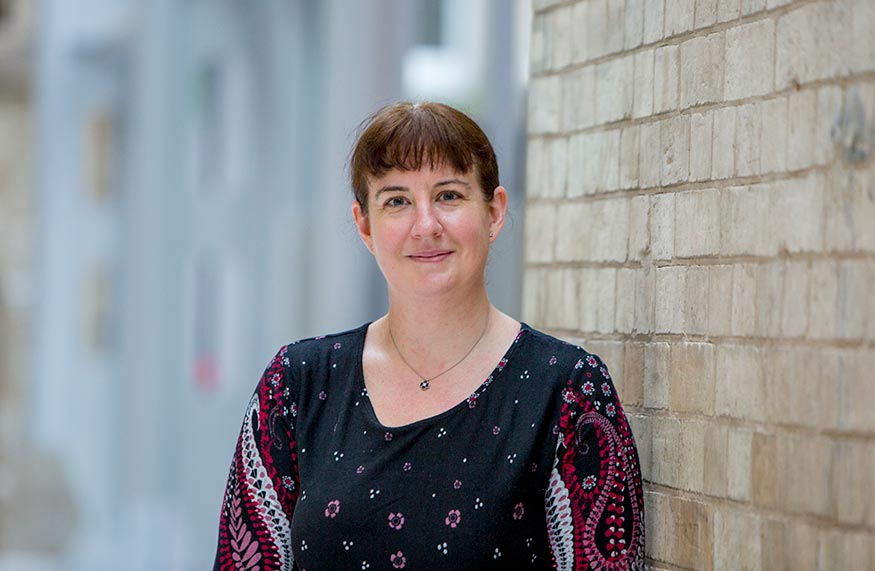
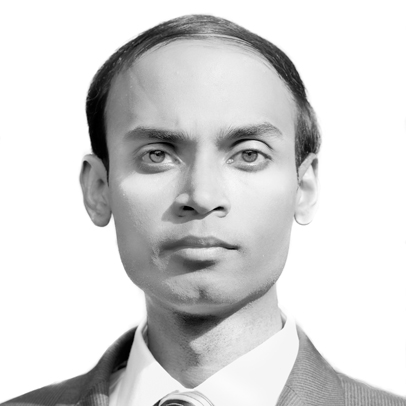
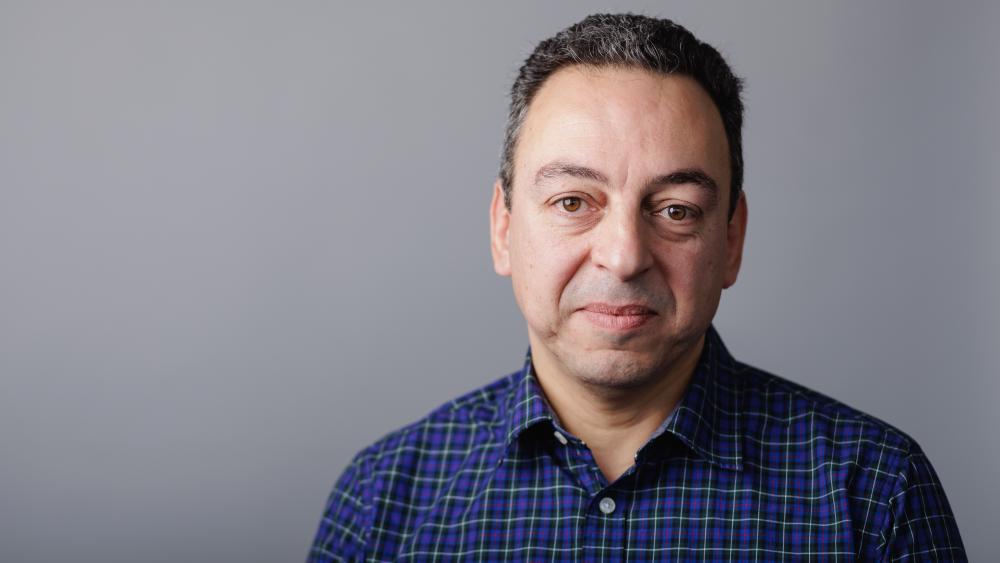
René Macías-Morales is a Senior Lecturer in Operating Department Practice at the University of Derby, affiliated with the College of Health, Psychology and Social Care. No additional details regarding research interests, publications, or contact information are available in the provided text.
Malcolm Schofield is a Senior Lecturer in Psychology at the College of Health, Psychology and Social Care. His research spans multiple psychology subfields including clinical, social, cognitive, health, and environmental psychology, with significant contributions to scale development and validation methodologies. Dr. Schofield maintains an active research profile focused on psychological assessment and belief systems. His primary research investigates personality traits (e.g., Dark Triad/Tetrad, narcissism), cognitive processes, and their intersection with supernatural beliefs, health behaviors, and social phenomena. Specific interests include sensory processing sensitivity, transliminality, anomalous experiences, and the psychological impact of health crises like COVID-19. He also develops assessment tools for pain management, conservation behavior, and caregiver quality of life. Publication analysis reveals Schofield's methodological expertise in psychometrics, longitudinal analysis, and cluster modeling. Recent works demonstrate strong emphasis on scale validation across diverse contexts—from paranormal beliefs to clinical pain management—reflecting his commitment to evidence-based psychological assessment. Research consistently integrates cognitive, personality, and health psychology frameworks.
Dr. Robyn Mooney is a Lecturer in Forensic Psychology at the University of Derby's College of Health, Psychology and Social Care. Her research examines psychological traits and social dynamics, with particular focus on Dark Triad characteristics (narcissism, Machiavellianism, psychopathy) and their impact on interpersonal relationships and attitudes toward violence. Research interests center on forensic psychology applications including: Psychological profiling of criminal behavior Impact of personality disorders on social cognition Media influences on gender-based violence perceptions Conspiracy belief systems and relational dynamics Her publications demonstrate consistent investigation into how personality pathologies manifest in social contexts, with recent work exploring connections between antisocial traits and intimate partner violence attitudes. The research spans educational, clinical, and forensic contexts with methodological diversity across experimental and survey-based approaches. No awards or student advisement information is currently documented. Professional service includes academic research dissemination through peer-reviewed journals in psychological and criminal justice fields.
Elaine Conway is a Senior Lecturer in Accounting at the University of Derby's College of Business, Law and Social Sciences. Her research focuses on corporate social responsibility (CSR), sustainability, business ethics, and financial reporting practices. She explores topics such as integrated reporting, ethical judgment in business students, and the impact of CSR on organizational performance and risk. Her work also addresses challenges in the circular economy, technology adoption in accounting, and environmental management strategies for SMEs. Dr. Conway has contributed to peer-reviewed journals and edited volumes, emphasizing the intersection of accounting, ethics, and sustainability. Her publications span disciplines including accounting, psychology, and environmental studies. Key themes include the relationship between CSR and financial outcomes, the role of motivation and mental health in business education, and the quantitative impacts of integrated reporting. Her research often bridges theoretical frameworks with practical implications for businesses and policymakers. Notable contributions include studies on prudence in accounting standards, the validation of academic motivation scales, and analyses of ESG ratings. Her work highlights the evolving landscape of accountancy beyond traditional financial metrics, emphasizing ethical, environmental, and social dimensions. Conway's research has garnered significant attention, with over 3,112 total views of her outputs and 3,276 downloads, reflecting the relevance of her interdisciplinary approach.
Kristy Sanderson is a Professor in Applied Health Research at the School of Health Sciences, University of East Anglia. She is a member of the Norwich Institute for Healthy Aging and Lifespan Health, and leads the Health Promotion group. Her work focuses on public health approaches to mental health, particularly workplace wellbeing, sleep, and fatigue in high-risk occupations. As a psychiatric epidemiologist and registered psychologist, she addresses national priorities in workforce health through projects on mental resilience, suicide prevention, and carer support. Education: Ph.D. in Psychiatric Epidemiology, University of New South Wales (2001) B.Sc. in Psychology (Hons), University of New South Wales (1993) Her research spans public mental health, occupational wellbeing, mindfulness interventions, and psychiatric epidemiology. Key interests include strategies to improve mental resilience in emergency responders, fatigue management in healthcare, and support systems for learners and carers. Current projects explore sleep quality in health staff, ambulance worker mental health, and PhD student wellbeing. Publications focus on mental health interventions, occupational wellbeing, and pandemic impacts, with trends showing strong emphasis on qualitative/quantitative methods in public health, epidemiology, and healthcare systems. Recent work highlights interdisciplinary approaches to workforce sustainability and mental health promotion. Awards and fellowships: Fellow of the Royal Society for Public Health ARC Future Fellowship She has supervised 18 PhD students and secured over AU$9.8M in grants, including continuous NHMRC funding (2003-2019). As Theme Lead for NIHR ARC East of England, she directs workforce wellbeing initiatives and collaborates across medicine, nursing, psychology, and sociology. Her team develops evidence-based interventions for health systems and high-risk occupations.
Dr Laura Kilby is a Professor and Head of the Centre for Culture, Media & Society at Sheffield Hallam University. She holds academic leadership roles in the College of Social Sciences and Arts, including membership in the Centre for Behavioural Science and Applied Psychology. Her research focuses on Critical Social Psychology, examining power dynamics, discourse, and marginalized identities in contexts of peace/conflict, gender, social deprivation, and policy intersections. She coordinates the Psychology, Psychiatry and Neuroscience Unit of Assessment for REF and teaches advanced courses in qualitative methods, critical psychology, and social psychology. Education: BSc, PhD (details of institutions not specified) Professional Affiliations: Chartered Psychologist (CPsychol), Advanced Fellow of the British Psychological Society (AFBPsS), Fellow of the Higher Education Academy (FHEA) Her research spans two key areas: (1) identity construction and oppression through discursive analysis of media and public discourse, and (2) applied behavioral science and research methods. Notable work includes studies on homelessness, citizenship, and media representations of marginalized groups. She actively contributes to policy-related initiatives through her roles in diversity taskforces and editorial boards. Supervising five postgraduate students, she mentors research on migration narratives, fatherhood transitions, protest discourse, and behavior change interventions. Her recent publications explore topics ranging from gender representation in media to first-time fathers' mental health post-work return.
Dr. Andrew Morrison is an academic at Sheffield Hallam University , serving as Associate Head within the Sheffield Institute of Education (SIOE) under the College of Social Sciences and Arts . With a PhD and formal qualifications including a BA (Hons), MPA, and professional diplomas, he is a Senior Lecturer whose work bridges teaching, research, and administration. Teaches BA (Hons) Education with Psychology and Counselling . Member of the Social and Economic Research Institute and Higher Education Research Group (HERG) at SHU. Active in BERA (British Educational Research Association), BSA (British Sociological Association), and ESRC peer-review processes. His research interests focus on the social justice implications of marketised higher education , graduate employment inequalities , and unpaid internships , analyzed through critical realism , morphogenetic analysis , and theoretical frameworks from E.P. Thompson , Raymond Williams , and Milton Friedman . He explores how social class , race , and gender mediate educational and occupational outcomes, often critiquing neoliberal policies. Recent work includes a theory of litter picking and a monograph on ‘experience’ in social theory . His publications span Philosophy and Theory in Higher Education , Journal of Critical Realism , and Cultural Studies - Critical Methodologies , addressing topics like graduate income inequality , unpaid internships , and responsibilisation in education policy . Collaborations include book chapters in Graduate Careers in Context and Theory and Method in Higher Education Research . Scientific awards include Fellow of the Higher Education Academy (FHEA) , Fellow of the Academy of Humanities and Engineering (FAHE) , and ESRC Peer-review Rapporteur . Supervision includes doctoral students Christine O'Connor (2024), Sandra Holmes (2017), and Ciaran Doran (2016). Service involves peer reviewing for multiple journals and participating in HERG, BERA, and BSA.
Sascha Füllbrunn is an Associate Professor of Finance at Radboud University in Nijmegen, Netherlands, affiliated with the Nijmegen School of Management , Institute for Management Research , and Chair in Finance . His work spans experimental finance, behavioral economics, and sustainable finance, with a focus on decision-making under responsibility, market regulations, and ESG measurement. Education : Implied PhD (unspecified field) and academic appointments since at least 2015. Research : Combines experimental methods with finance topics like trust dynamics, preference stability, and digital transformation's role in sustainability. Publications : 15+ peer-reviewed articles in journals such as Journal of Economic Behavior & Organization , Economics Letters , and PLOS ONE , with recent emphasis on sustainable finance. Awards : Fritz Thyssen Foundation grant for conferences, leadership roles in academic societies. Students : Supervises PhD candidates including Charlotte Borsboom, Michel Rötter, and Constantina Markou. Projects : Coordinated the Healthy Brain Study, designed courses on Societal Challenges in Economics and Sustainable Finance.
Dr Xavier Aldana Reyes is a Reader in English Literature and Film at Manchester Metropolitan University, leading the Manchester Centre for Gothic Studies and serving as co-president of the International Gothic Association. His work spans modern and contemporary Gothic literature and cinema, focusing on corporeal representation, affect theory, transnational genres, and trauma mediation. With five monographs and numerous edited collections, his research has been featured in academic journals and media outlets worldwide. He holds a PhD from Lancaster University and has held roles as Impact Coordinator and Academic Coordinator. His teaching includes MA modules on Twentieth-Century Gothic and Post-Millennial Gothic, alongside undergraduate courses on film theory and world cinema. Reyes has supervised dozens of PhD students and examined over 20 international theses. His research impact includes contributions to the Research Excellence Framework 2021 and collaborations with institutions like the BFI and BBC. Notable awards include the British Academy Small Grant and AHRC New Generation Thinkers shortlist. Beyond academia, he edits the Horror Studies book series and contributes to film commentaries for distributors like Arrow Video and Severin Films. Key research interests include body horror, digital Gothic, and the intersection of horror with queer studies. His recent projects explore metamorphic corporeality and the cultural role of Gothic in mediating trauma. He frequently lectures globally and appears in media discussions on horror and Gothic culture.
Gregory Norminton is a Senior Lecturer in Creative Writing at Manchester Metropolitan University, specializing in teaching BA joint honours and MA novel routes. Born in 1976, he studied English at Oxford University and trained as an actor at LAMDA. His research interests include ecological writing, speculative fiction, and literary translation. He has published novels like Serious Things and The Devil's Highway , short story collections such as The Lost Art of Losing , and radio adaptations. Norminton’s work has been recognized through fellowships and residencies including the Hawthornden Fellowship and Bellagio Center residency. His academic roles emphasize collaborative creative processes, encouraging students through close reading and disciplined writing practices. Norminton’s creative projects extend to playwriting, screenwriting, and international literary collaborations, including contributions to The Book of Tehran anthology. He maintains an active presence in literary festivals and serves as a judge for prestigious awards like the Edge Hill Short Story Prize. Awards and recognitions highlight his contributions to contemporary literature, with works blending historical, fantastical, and speculative elements. His current projects include a forthcoming fifth novel exploring familiar themes with fresh perspectives.
Robbie Sutton is a Professor of Social Psychology at the University of Kent’s School of Psychology. He serves as Director of Graduate Studies (Research), Postgraduate Progression Monitoring Lead, and member of the Undergraduate Outreach Team. His research focuses on justice, inequality, conspiracy theories, and gender dynamics. Sutton is a Fellow of both the Society of Experimental Social Psychology and the Association for Psychological Science. He has led major grants, including studies on conspiracy theories and animal sentience, and has advised numerous PhD candidates. His work explores topics like just-world beliefs, immanent justice reasoning, and environmental psychology. Sutton’s recent articles address conspiracy theories, gender stereotypes, and pandemic psychology, emphasizing cross-cultural and longitudinal analyses. He has received funding from the Leverhulme Trust and ESRC/CREST, and organizes events like the Kent Workshop on Linguistic Bias.
Lucy Betts is a Professor in Social Developmental Psychology at the School of Social Sciences, Nottingham Trent University. She contributes to undergraduate and postgraduate psychology education, focusing on social development and social psychology modules. Lucy leads the bullying and aggressive behaviour research group and supervises numerous PhD candidates. Her research emphasizes cyberbullying, face-to-face bullying, and street harassment, alongside exploring peer relationships and school adjustment. Lucy is a Chartered Psychologist, Associate Fellow of the British Psychological Society, and editorial board member for Small Group Research and British Journal of Education Technology . She actively collaborates internationally on projects like Prochild (2019-2021) and TKCOM (2017-2020), aimed at enhancing teacher competencies in child welfare and educational technology. Her research spans cyberbullying dynamics, bystander intervention, and the psychological impacts of online risks. She has engaged with organizations such as the Anti-Bullying Alliance, Digital Poverty Alliance, and Nottingham City Council to address bullying and digital inclusion. Lucy’s work bridges academia and practice, influencing policy and educational strategies globally. Key collaborations include partnerships with universities in Turkey, Spain, Portugal, China, and the UK, emphasizing cross-cultural studies and teacher training. Her external roles include external examining for PhDs and postgraduate courses, peer reviewing for major journals, and advisory roles in anti-bullying initiatives.
Dr. Suman Lodh is a full-time Associate Professor in Finance at the Kingston Business School, Kingston University London. His research focuses on corporate finance, financial reporting, and sustainability, with a particular emphasis on climate change, biodiversity, digital currency, and SME finance. He holds a PhD in Applied Economics from the University of Bergamo, Italy, and has taught courses in Financial Econometrics, Corporate Finance, and Financial Statement Analysis. His funded projects include initiatives supported by the National Science Foundation (USA), UK Research and Innovation (UKRI), and the UK Department for Business, Energy & Industrial Strategy (BEIS). His work has been featured in outlets like the BBC Asian Network and CFA Digest. Dr. Lodh serves as Treasurer and Executive Trustee of the British Accounting and Finance Association (BAFA), and holds editorial roles in journals such as the Journal of Applied Accounting Research and International Journal of Financial Studies . Key research interests include corporate accountability toward environmental challenges, green economy recovery, and accessibility of finance for SMEs. He has contributed to policy-oriented reports on SME financing for biodiversity (SME FinBio) and post-pandemic corporate risk management strategies. His teaching expertise combines academic rigor with real-world relevance, emphasizing sustainable development and innovative financial practices. He actively engages in knowledge exchange initiatives, bridging academia and industry through research dissemination and advisory roles.
Professor Ayman Shihadeh is Professor of the Intellectual History of the Islamic World at SOAS University of London, where he also serves as Head of the School of History, Religions and Philosophies. He is affiliated with both the Department of History and the Department of Religions and Philosophies, contributing to SOAS's distinctive interdisciplinary approach to the study of global intellectual traditions. His educational background includes a first-class BA (Hons) from SOAS, followed by postgraduate studies at the University of Oxford where he completed his DPhil in 2002. Before returning to SOAS in 2008, he held teaching positions at the Universities of Edinburgh, Exeter and Glasgow. His academic excellence was recognized through a Senior Humanities Research Fellowship at New York University Abu Dhabi (2019-2021). Professor Shihadeh's research focuses on Medieval Arabic intellectual history , particularly the intersection of Islamic theology (kalam) and philosophy . His work explores the Avicennan philosophical tradition and its evolution through figures like Fakhr al-Din al-Razi and Sharaf al-Din al-Mas'udi. His scholarship spans metaphysics, epistemology, ethics, anthropology , and the dialectical practices that shaped medieval Islamic intellectual culture. He approaches these subjects through rigorous textual analysis combined with historical contextualization, revealing the complex intellectual environments in which these ideas developed, were transmitted, and contested. His extensive publication record demonstrates consistent engagement with primary sources from the 10th through 13th centuries. The trajectory of his work shows a deepening exploration of the philosophical-theological interface in Islamic thought, with particular attention to how medieval scholars navigated the relationship between rational inquiry and religious tradition. His research has increasingly incorporated comparative dimensions, examining how different schools of thought engaged with similar philosophical problems. Editor-in-Chief of the Bulletin of the School of Oriental and African Studies Editor-in-Chief of the Islamic Translation Series (Brill) Editor of the Philosophy and Theology section of the Encyclopaedia of Islam (Brill) Member of the History Sub-panel in the Research Excellence Framework (REF 2021) Former chair of the British Association for Islamic Studies (2012-2019) Professor Shihadeh has supervised numerous PhD students working on diverse aspects of Islamic intellectual history, including doctoral research on Sa'd al-Din al-Taftazani, Abū l-Barakāt al-Baghdādī, and various dimensions of Ash'ari and Avicennan thought. His editorial work and service on advisory boards for journals like Global Intellectual History, Oriens, and Islamicate Intellectual History demonstrate his commitment to advancing the field through institutional support and scholarly community building.
Alice Rudge is a Lecturer in Anthropology at SOAS University of London, working at the intersection of environmental anthropology, linguistic anthropology, and science and technology studies. Since 2014, she has conducted ethnographic fieldwork with Batek people in Malaysia, examining how ecological and social changes transform everyday lives and ethical frameworks. Her research investigates conflicting notions of living well during environmental breakdown. Rudge focuses on alterity, ethics, Indigenous justice, plantation agriculture, and sustainable scientific practice. Her 2023 book 'Sensing Others' documents Batek ethical lives at the edge of rainforests threatened by palm oil plantations. Current research examines new forms of precarity generated by plantation agriculture and critiques evolutionary narratives in popular culture. She received a British Museum Endangered Material Knowledge Programme Grant to document Batek weaving and ethnobotanical knowledge, resulting in a co-published zine 'Batek Material Culture' (2023). Rudge supervises doctoral research on climate impacts on seasons in Japan and teaches in the MA Anthropology of Global Futures and Sustainability program.