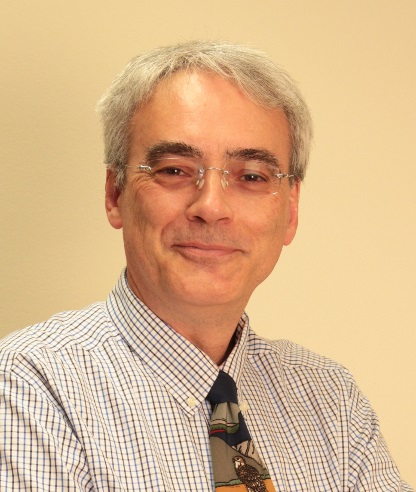
Klaus Schäfers is a Professor at the University of Münster , leading the Schäfers Group: Technology & Medical Physics at the European Institute for Molecular Imaging (EIMI) . His research focuses on advancing medical imaging techniques, particularly PET and MRI , with an emphasis on motion correction, image reconstruction, and hybrid imaging systems. Research Focus : Motion correction in PET/MRI, dispersion modeling, development of dynamic phantoms, and application of computer vision to biomedical imaging. Notable Contributions : Pioneering motion correction methods using Microsoft Kinect and radar sensors, creating extracorporeal circulation systems for arterial input function measurements, and developing high-resolution PET detectors. Scientific Awards : Holds a US Patent US-20140357980 for motion correction techniques in emission tomography. Publications (2014–2025) highlight innovations in PET and MRI integration, motion compensation algorithms, and phantom design for preclinical studies. His work bridges medical physics , computer vision , and biomedical engineering , aiming to enhance diagnostic accuracy through technical refinements.
Prof. Achim Stahl serves as University Professor and Chair at RWTH Aachen University, where he directs JARA-FAME (Jülich Aachen Research Alliance - Fundamental Forces and Particle Physics) and leads the 3rd Physics Institute B with approximately 70 scientists, engineers, and administrators. His research spans multiple domains of particle physics and experimental physics with significant contributions to major international collaborations including CMS at CERN, JUNO, Double Chooz, and the Einstein Telescope project. PhD in Physics from University of Heidelberg (1993), thesis: 'Installation, optimization and analysis of the ALEPH event trigger and investigation of muonic decays of tau leptons' Diploma in Physics from University of Tübingen (1988) with optimal mark 1.0 Habilitation with book 'Physics with tau leptons' published in Springer Tracts in Modern Physics Prof. Stahl's research spans multiple frontiers of particle physics. His primary interests include neutrino physics (mass hierarchy and CP-violation with experiments like JUNO, T2K, and Double Chooz), gravitational wave detection with the Einstein Telescope project, CP-violation studies through electric dipole moment searches, CMS experiment data analysis with tau leptons, and medical physics applications including radiation therapy and GEANT4 simulations. He has extensive hardware experience in detector development, including trigger systems, PMT readout, calorimeters, and position sensors. His recent publications demonstrate expertise across diverse areas of particle physics, with significant contributions to Higgs boson physics, neutrino oscillations, CP violation studies, and detector development. A substantial portion of his work focuses on the CMS experiment at CERN and the JUNO neutrino experiment, reflecting his leadership in these major international collaborations. His publications show equal strength in theoretical analysis and experimental hardware development, particularly in trigger electronics and precision measurement systems. While specific awards aren't detailed in the available information, Prof. Stahl has achieved an h-index of 120, reflecting significant impact in his field. His leadership roles include membership on the executive board of JUNO and serving as speaker of the DFG research unit FOR 2319 'Bestimmung der Massenhierarchie mit dem JUNO-Experiment'. Prof. Stahl has supervised numerous students throughout his career, including 20 theses that led to 11 OPAL papers during his time at the University of Bonn. He coordinates national activities on the Einstein Telescope and is deeply involved in multiple neutrino projects. His research is supported by significant grants enabling participation in international collaborations and hardware development for major experiments. His team has developed innovative detector technologies including integrated PMT readout systems and trigger electronics for neutrino experiments. As director of the 3rd Physics Institute B at RWTH Aachen, Prof. Stahl leads a substantial research group focused on fundamental physics questions. He is a founding member and current director of the JARA section FAME, which focuses on CP-violation and the matter-antimatter asymmetry in the universe. His team is actively developing technologies for the Einstein Telescope project, contributing to the JUNO neutrino experiment, conducting research with the CMS experiment at CERN, and applying particle physics techniques to medical applications.
Christopher M Perfetti serves as an Associate Professor in the Department of Nuclear Engineering at the University of New Mexico, holding leadership roles including Chair of the National Alpha Nu Sigma Honor Society, Chair of the ANS Trinity Local Section, Treasurer of the American Nuclear Society's Reactor Physics Division, and Benchmarks Committee Chair in the Mathematics and Computation Division. His educational background includes: Ph.D. in Nuclear Engineering and Radiological Sciences from the University of Michigan (2012) M.S. in Nuclear and Radiological Engineering from the University of Florida (2008) B.S. in Nuclear and Radiological Engineering from the University of Florida (2007) Dr. Perfetti's research focuses on computational nuclear engineering methodologies, with emphasis on Sensitivity and Uncertainty Analysis, Radiation Transport, Monte Carlo simulations, Criticality Safety, and Reactor Physics. His work develops advanced algorithms for nuclear systems analysis with applications in reactor design, radiation shielding, and radioisotope production, while integrating cybersecurity considerations for nuclear infrastructure. He leads the Perfetti Research Group, which conducts projects including sensitivity/uncertainty analysis code development and nuclear data evaluation. Prior to UNM, he developed the CE TSUNAMI-3D code at Oak Ridge National Laboratory and served as Sensitivity/Uncertainty Analysis Method Team Lead for the SCALE Code Package.
Angelo Melino is a Professor of Economics at the University of Toronto, holding a Ph.D. from Harvard University (1983) and a B.A. from the University of Toronto (1977). He has been affiliated with the University of Toronto since 1981, becoming a full professor in 1991. His research focuses on Econometrics , Macroeconomics , and Financial Economics , with notable contributions to asset pricing, monetary policy, and labor economics. He has held leadership roles, including Associate Chair of the Department of Economics and Director of the MFE program. Research Contributions: Melino’s work spans theoretical and empirical analyses of economic policy, including inflation targeting, business cycle costs, and electricity market dynamics. His methodologies in duration analysis and term structure modeling are widely cited. Notable publications include influential papers on foreign currency options pricing and the equity premium puzzle. Awards: He is a Fellow of the C.D. Howe Institute, a Senior Fellow at the Rimini Centre for Economic Analysis, and recipient of the University of St. Michael’s College Medal in Economics (1977). Professional Activities: Melino has served as a Visiting Professor at Harvard University and the University of California, San Diego. He contributed to policy advisory roles, including Special Adviser to the Bank of Canada, and authored widely adopted textbooks on macroeconomics tailored to Canadian contexts.
Dr. David Kofke is a SUNY Distinguished Professor in the Department of Chemical and Biological Engineering at the School of Engineering and Applied Sciences, University at Buffalo . He holds the Walter E. Schmid Chair and has been a faculty member since 1989. His research focuses on molecular simulation, free-energy calculations, and the development of object-oriented software for education. Education PhD in Chemical Engineering, University of Pennsylvania (1988) BS in Chemical Engineering, Carnegie-Mellon University (1983) Dr. Kofke’s research interests span statistical physics , molecular modeling , and software engineering , with a focus on virial coefficients, crystal-phase calculations, and simulation method development. His work bridges theoretical and applied chemistry, emphasizing computational efficiency and accuracy. The 15 most recent articles highlight his expertise in virial equations of state , molecular simulation methods , and thermophysical data analysis . Topics include quantum fluids, polymer thermodynamics, and machine learning integration, reflecting his commitment to advancing computational chemistry through interdisciplinary approaches. Scientific Awards Presidential Young Investigator (1990) SUNY Chancellor’s Excellence in Teaching (1994) John M. Prausnitz Award (2012) Jacob F. Schoellkopf Medal (2007) Himmelblau Award (2012) AIChE Fellow (2014) AAAS Fellow (2015) Dr. Kofke has served as Associate Editor of the Journal of Chemical & Engineering Data since 2016 and led CACHE as President (2010-2012). His software development includes the Etomica simulation framework and the pyHMA post-processor for anharmonic properties.
Wayne Enright is a Professor of Computer Science at the University of Toronto, specializing in numerical analysis and scientific computing. His research focuses on numerical methods for ordinary differential equations (ODEs), integro-differential equations (IDEs), and delay differential equations (DDEs), with an emphasis on reliability, error analysis, and software development. He has held leadership roles, including Chair of the Department of Computer Science (1993–1998) and President of the Canadian Applied and Industrial Mathematics Society (CAIMS). Enright’s contributions include advancements in numerical software like MUSN and pioneering work on defect control and sensitivity analysis. He has received the IFIP Silver Core Award and contributed to international conferences and editorial boards. His work bridges theoretical foundations with practical applications in computational biology, engineering, and stochastic modeling. Education: BSc in Mathematics (1968, University of British Columbia) MSc in Mathematics (1969, University of Toronto) PhD in Computer Science (1972, University of Toronto) Research Interests: Enright’s work centers on developing robust numerical methods for solving ODEs, IDEs, and DDEs. He emphasizes reliable error estimation, algorithm efficiency, and software implementation. Key areas include: - Superconvergent interpolants for collocation methods - Sensitivity analysis for delay differential equations - Contouring of PDE solutions on unstructured meshes - Stochastic models in biochemical kinetics Publications: Over 150 peer-reviewed articles, including seminal works on numerical methods for differential equations and computational tools. Recent trends focus on enhancing algorithm reliability, adaptive time-stepping, and exploiting problem structure for efficiency. Awards & Recognition: IFIP Silver Core Award Past President, CAIMS Executive Member, IFIP WG2.5 on Numerical Software Editorial Board Member, ACM Transactions on Mathematical Software Grants & Collaborations: Extensive funding from NSERC and international collaborations. Leads projects integrating numerical methods with real-world applications in computational science and engineering. Labs & Teams: Head of the Numerical Analysis and Scientific Computing Group at the University of Toronto, fostering interdisciplinary research in computational mathematics and software development.
Dr. Emmeke Aarts is an Associate Professor in Statistics at Utrecht University's Department of Methodology and Statistics, within the Faculty of Social and Behavioural Sciences. She serves as Director of Education for the department and coordinates several academic programs including the Research Master Methodology and Statistics. Her research focuses on developing novel statistical methods for intensive longitudinal data, particularly multilevel hidden Markov models and real-time prediction algorithms in healthcare. Key areas include personalized latent dynamics and cardiovascular disease monitoring. She has received a 2024 fellowship for her work on depression dynamics in emerging adults. A资深的统计学家 and educator, she supervises PhD students and contributes to interdisciplinary collaborations with medical institutions like UMC Utrecht. Education: Research Master in Methodology and Statistics (cum laude, Utrecht University) and a PhD in interdisciplinary statistics and neuroscience (VU University Amsterdam). Postdoctoral roles included positions at the Max Planck Institute and TNO. Research Themes: Applied Data Science, Multilevel Analysis, Machine Learning, and Hidden Markov Models. Her work bridges methodological innovation with practical applications in mental health and cardiology. Current projects include Health-Holland grant-funded collaborations on heart failure prediction and real-time deterioration monitoring. Teaching: Coordinates courses such as 'Introduction to Multilevel Modelling' and leads summer schools on structural equation modeling. Supervises over 10 graduate students and provides statistical consultation for biomedical and social science projects. Grants & Awards: 2024 Fellowship for personalized depression dynamics research; Health-Holland grants for heart failure machine learning projects. Extensive record of interdisciplinary funding and academic service roles in education committees. Labs/Teams: Active in the Utrecht Platform for Applied Data Science and collaborates with UMC Utrecht Cardiology Department. Leads methodological development for multilevel HMM applications in behavioral and biomedical data.
Jörgen Blomvall is an Associate Professor at Linköping University's Department of Management and Engineering (IEI). His research focuses on optimal financial decision-making, accurate financial measurement, and stochastic optimization models applied to financial markets. He develops methods to enhance measurement accuracy for quantities like forward rates, default intensities, and local volatilities, which are critical for equity, interest, credit, and derivative markets. Blomvall's work integrates stochastic programming and dynamic programming to address portfolio optimization, risk management, and transaction cost reduction. He is affiliated with the Operations Management and Finance research group, exploring resource optimization in manufacturing and service industries. His key research areas include financial engineering, stochastic programming, and quantitative risk management. Recent work emphasizes improving dividend estimation from intraday quotes, reducing transaction costs in hedging strategies, and analyzing stage complexity in stochastic programming for portfolio choice. Blomvall's methodologies have advanced the modeling of systematic risks and optimal investment decisions under real-world market constraints. Blomvall has contributed extensively to the development of optimization-based frameworks for performance attribution and yield curve estimation. His articles frequently address practical applications of stochastic models in financial markets, balancing theoretical rigor with computational feasibility. Despite his prolific output, no specific academic awards or student advisees are documented in the provided texts. He is active in the Production Economics (PEK) research group at Linköping University.
Dr. Simão Marques is a Senior Lecturer in the School of Mechanical Engineering Sciences at the University of Surrey. His expertise lies in computational methods for aerodynamic and aeroelastic analysis, with a focus on high-fidelity simulation and multidisciplinary optimization. He holds a PhD and BEng (Hons) in Aeronautical Engineering. Research interests include advanced CFD development, aeroelastic instability prediction, and automated CAD parameterization for optimal design. Key projects involve the ONEheart initiative (funded by the UK ATI) and collaborations with Airbus, DLR, and Queen’s University Belfast. His work emphasizes reduced-order modeling techniques (e.g., POD-DEIM, DEIM) to accelerate aerodynamic and aeroelastic simulations. Recent studies address nonlinear fluid-structure interactions, uncertainty quantification, and efficient sensitivity-driven design frameworks. Notable collaborations include industry partnerships focused on CAD-based optimization and aeroelastic analysis. His research aims to reduce design cycles and enhance aircraft performance through innovative computational methods.
Dr. Silvia Pani is a Senior Lecturer in Applied Radiation Physics at the University of Surrey, part of the School of Mathematics and Physics. She holds a Laurea in Physics from the University of Trieste (1996) and a PhD in Physics (2001). Her career includes postdoctoral work on synchrotron beamlines, a Marie Curie Fellowship at University College London (2004), and roles at Queen Mary University of London and Barts NHS Trust. She joined Surrey's Physics Department in 2008 and became Senior Lecturer in 2017. Roles: Programme Director (MSc Medical Physics), Radiation Protection Supervisor Education: Postgraduate Certificate in Academic Practice (2010) Research focuses on X-ray imaging techniques for medical and security applications, including breast imaging, quantitative spectroscopic methods, and adaptation of synchrotron techniques to laboratory settings. Key collaborations involve institutions like Rutherford Appleton Labs, University of Manchester, and the Home Office. Publications emphasize hyperspectral detectors, scatter-free imaging, and CT optimization. Her work combines detector development with clinical applications, aiming to improve diagnostic accuracy while reducing radiation dose.
Shuang Zhao is an Associate Professor of Computer Science at UC Irvine, co-directing the Interactive Graphics & Visualization Lab (iGravi). He holds a PhD from Cornell University (2014) and a postdoc at MIT. His research focuses on physics-based computer graphics, scientific computing, and inverse rendering, with applications in material science, biomedicine, and robotics. Zhao's NSF CAREER Award (2023) supports his work on Physics-Based Differentiable and Inverse Rendering, enabling automated 3D reconstruction and medical imaging advancements. Education: Ph.D., Computer Science, Cornell University (2014); Postdoc at MIT. Research areas: Inverse rendering, differentiable rendering, Monte Carlo methods, and light transport modeling. Notable projects include Meta's digital twin creation for the Metaverse, non-line-of-sight imaging, and medical imaging applications. His lab develops algorithms for efficient inverse solutions and collaborates with industry (Meta, Nvidia, Adobe). Teaching includes advanced graphics courses like CS 114 and ICS 162. Awards include ACM programming contest championships and Best Paper recognitions. Students supervised include Cheng Zhang (Facebook Fellow), Kai Yan, and Zahra Montazeri. Hobbies include photography and Japanese anime/video games.
Professor Gary W. Slater is a Full Professor in the Department of Physics at the University of Ottawa's Faculty of Science. His research focuses on polymer dynamics, theoretical biophysics, and computational modeling of macromolecules. He leads studies on polymer behavior in confined environments, micro/nano-fluidic systems, and drug release mechanisms. His work includes developing methods to analyze biological macromolecules like DNA and proteins, and investigating diffusion in porous systems. Education: Not explicitly listed in the provided text. Affiliations: Department of Physics, University of Ottawa. His research interests span polymer physics, computer simulations, microfluidics, and electrophoresis. He explores phenomena such as anomalous diffusion, nanopore translocation, and drug delivery systems. His recent articles highlight advancements in diffusion modeling, nanopore technology, and polymer dynamics in confined spaces. While no scientific awards are mentioned, his contributions to theoretical and computational biophysics are evident through his extensive publication record. He has advised no students listed here, and no grants or labs are explicitly detailed in the provided information.
Yue Zhao is a Researcher at the Department of Computational Mathematics, Science and Engineering (CMSE) within the College of Engineering and College of Natural Science at Michigan State University. Their work focuses on computational methods for molecular dynamics, kinetic theory, and numerical analysis. Key research interests include developing algorithms for efficient simulation of particle systems, variance reduction techniques, and scalable computational approaches for complex physical systems. Zhao's contributions span data-driven modeling, random batch methods, and energy-stable numerical schemes. Recent research trends reflect a strong emphasis on advancing computational tools for molecular dynamics, particularly in handling Coulomb interactions, improving algorithm scalability, and integrating machine learning for kinetic operator modeling. Their publications highlight innovations in both theoretical framework development and practical implementation for high-performance computing environments. No scientific awards or grants are explicitly mentioned in the provided information. Advising roles or student supervision details are not available. Zhao’s affiliation with the interdisciplinary CMSE program underscores a focus on bridging computational mathematics with engineering and natural science applications.
Mrinal Dasgupta is a Professor of Particle Physics, specializing in theoretical aspects of Quantum Chromodynamics (QCD) and jet physics. He leads research in parton showers, jet substructure, and high-energy collider phenomenology. His work focuses on precision calculations for jet observables, collinear dynamics, and the development of Monte Carlo frameworks like PanScales. Education: BA, MA, PhD (Cambridge University). Research areas include parton dynamics, non-global logarithms, and QCD resummation techniques. He contributes to event generator development and has organized workshops on parton showers and jet physics. Recent research emphasizes logarithmic accuracy in parton showers, fragmentation functions, and analytical methods for jet substructure. He has supervised 13 research projects and actively participates in international collaborations for high-energy physics experiments.
Kevin Chern is a researcher in the Department of Statistics at the University of British Columbia’s Faculty of Science. His work bridges quantum computing, Bayesian statistics, and computational biology. Key research interests include quantum simulation optimization, probabilistic programming frameworks (e.g., Blang), and bioinformatics applications such as spatial proteomics and cancer phylogenetics. His recent publications (2019–2025) focus on advancing quantum annealing calibration, Bayesian clustering methods for spatial data, and scalable inference of phylogenetic trees from single-cell genomic data. He has contributed to foundational work in quantum supremacy and probabilistic modeling of combinatorial spaces. While no explicit awards or grants are listed here, his involvement with the Applied Statistics and Data Science Group (ASDa) and participation in seminar series suggest active engagement with interdisciplinary research and education initiatives.