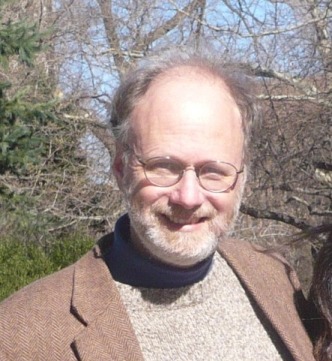
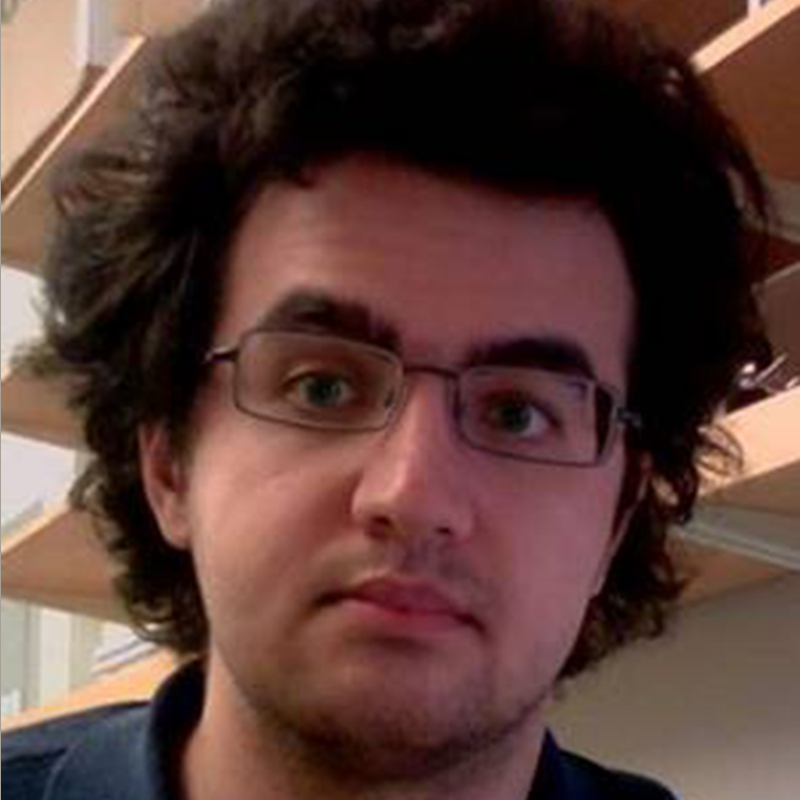
Howard Elman is a Professor in the Department of Computer Science at the University of Maryland, with affiliations to the Institute for Advanced Computer Studies (UMIACS) and as an Affiliate Professor in the Department of Mathematics. His research spans numerical analysis, computational fluid dynamics, and uncertainty quantification, focusing on iterative solvers for partial differential equations. Education: PhD in Computer Science, Yale University (1982); BA in Mathematics, Columbia University (1975); Stuyvesant High School (1971) Elman's research integrates Scientific Computing with Numerical Linear Algebra , Computational Fluid Dynamics , and Uncertainty Quantification . His work addresses Stochastic Galerkin Methods , Reduced-Order Modeling , and Low-Rank Approximations for PDEs with random data. Recent publications emphasize Surrogate Models and Deep Learning in Bayesian inverse problems. His scientific awards include SIAM Fellowship (2009) and roles as Associate Editor for journals like Mathematics of Computation and SIAM Journal on Scientific Computing . He served as SIAM Editor-in-Chief (1998-2004) and Vice President for Publications. Contact: helman@umd.edu | Office: 4210 Iribe Center | Courses: AMSC/CMSC 460 Computational Methods
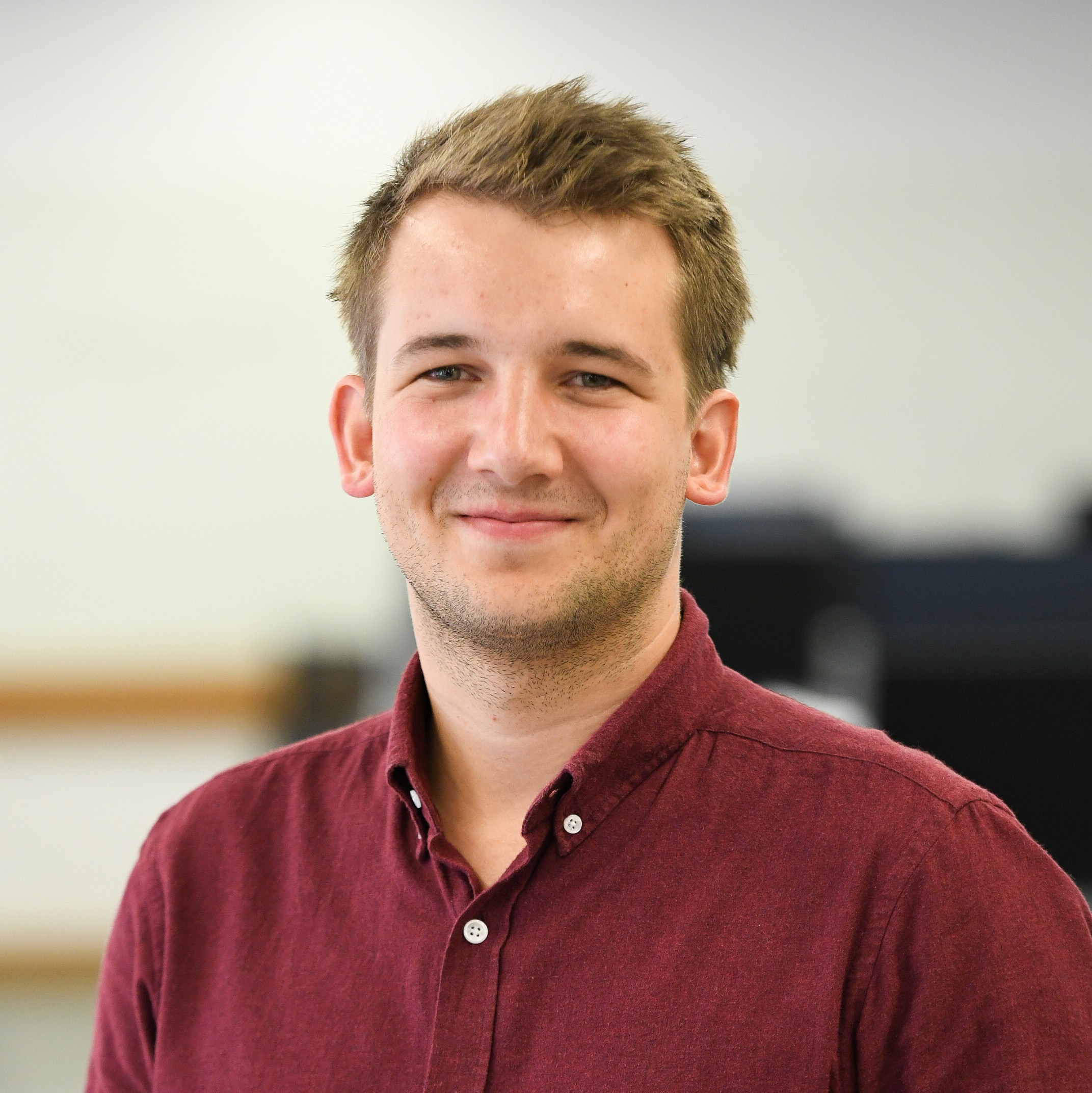
François-Xavier Briol is an Associate Professor in the Department of Statistical Science at University College London (UCL). He co-leads the Fundamentals of Statistical Machine Learning research group and holds roles including theme lead for Computational Statistics and Machine Learning (CSML), co-director of the UCL CDT in Data-Intensive Science, and ELLIS scholar. His research focuses on merging scientific models with data through robust statistical and machine learning methods, emphasizing computational efficiency and model misspecification robustness. Education: BSc/MMORSE from the University of Warwick, PhD from the joint Warwick-Oxford CDT in Statistics. Postdoctoral roles at Imperial College London (Mathematics) and University of Cambridge (Engineering), followed by a Group Leader position at The Alan Turing Institute (2020–2023). Research interests include probabilistic numerical methods, Bayesian inference for intractable models, Stein’s method, and kernel-based approaches. His work has been recognized via awards like the AISTATS Best Paper Award and Blackwell-Rosenbluth Award, with funding from EPSRC and Amazon. Advising: Supervised PhD students in areas like Bayesian quadrature, robust inference, and Gaussian processes. Current students focus on topics such as Bayesian filtering and sensitivity analysis. Grants include EPSRC funding and an Amazon Research Award. Labs/Teams: Active in UCL’s ELLIS unit, CSML, and Turing Institute collaborations. Editorships include SIAM/ASA Journal on Uncertainty Quantification and Bayesian Analysis.
Freddy Bouchet is a Directeur de Recherche at CNRS and a Professeur attaché at École Normale Supérieure de Paris (ENS-PSL). His work bridges mathematical physics, climate science, data science, and statistical mechanics , focusing on turbulent flows, climate extremes, and large deviation theory . He will lead the Laboratoire de Météorologie Dynamique (LMD) starting 2025. Research Themes : Statistical mechanics of geophysical flows (Jupiter's jets, ocean currents). Large deviation theory for rare events in turbulence and climate. Non-equilibrium phase transitions in atmospheric/oceanic systems. Ensemble inequivalence in systems with long-range interactions. Scientific Awards : Three Physicists Prize Collaborations : Tapio Schneider, Antoine Venaille, J. Laurie, O. Zaboronski, B. Dubrulle, A. Venaille. Labs & Teams : Climate and Statistical Mechanics group at ENS de Lyon Future director of Laboratoire de Météorologie Dynamique (LMD/IPSL) Publications span climate dynamics, turbulence, statistical mechanics, and large deviation theory , with applications to Jupiter's atmosphere, ocean vortices, and non-equilibrium systems . His work often challenges paradigms like Tsallis non-extensive statistics.
R. Edwin García is a Professor at the School of Materials Engineering at Purdue University, where he has been faculty since 2005. He holds appointments in the Materials Engineering department within Purdue's College of Engineering, specifically in the School of Materials Engineering located in the Neil Armstrong Hall of Engineering at Purdue's West Lafayette campus. His educational background includes: B.S. in Physics from the National University of Mexico (1996) M.S. in Materials Science and Engineering from Massachusetts Institute of Technology (2000) Ph.D. in Materials Science and Engineering with a minor in Applied Mathematics from Massachusetts Institute of Technology (2003) Professor García's research focuses on the design of materials and devices through the development of a fundamental understanding of the solid state physics of individual phases, their short and long range interactions, and associated microstructural properties and time evolution. His current research emphasizes establishing relationships between material properties and resultant performance and degradation in electrochemical systems. He integrates computational approaches ranging from kinetic Monte Carlo, phase field and level set methods, to finite elements, finite volumes, and symbolic computing. His work particularly addresses microstructure design, crystallographic texture, and grain boundary science and engineering to control the topology of underlying phases and establish practical relations between processing, microstructure, and material properties. His recent publications demonstrate a strong focus on lithium-ion battery technology, ferroelectric materials, and computational modeling of material behaviors. The research trends show increasing integration of machine learning with traditional computational methods, exploration of novel sintering techniques like flash sintering, and deeper investigation into the fundamental mechanisms of material degradation in energy storage systems. His work spans multiple length scales from atomistic to continuum modeling, reflecting a comprehensive approach to materials design and analysis. Professor García teaches several courses including MSE 230 (Structure and Properties of Materials), MSE 350 (Thermodynamics of Materials), MSE 597G (Modeling and Simulation of Materials), MSE 597I (Introduction to Computational Materials), and MSE 597N (Physical Properties of Crystals). He mentors graduate students in areas related to computational materials science, battery technology, and microstructural evolution. His research group, the Laboratory of Computational Microstructures, focuses on developing home-grown analytical theories and algorithms to resolve relevant time and length scales in materials systems. The group's work has significant implications for portable power sources, including rechargeable batteries and fuel cells, as well as for ferroelectric ceramic applications.
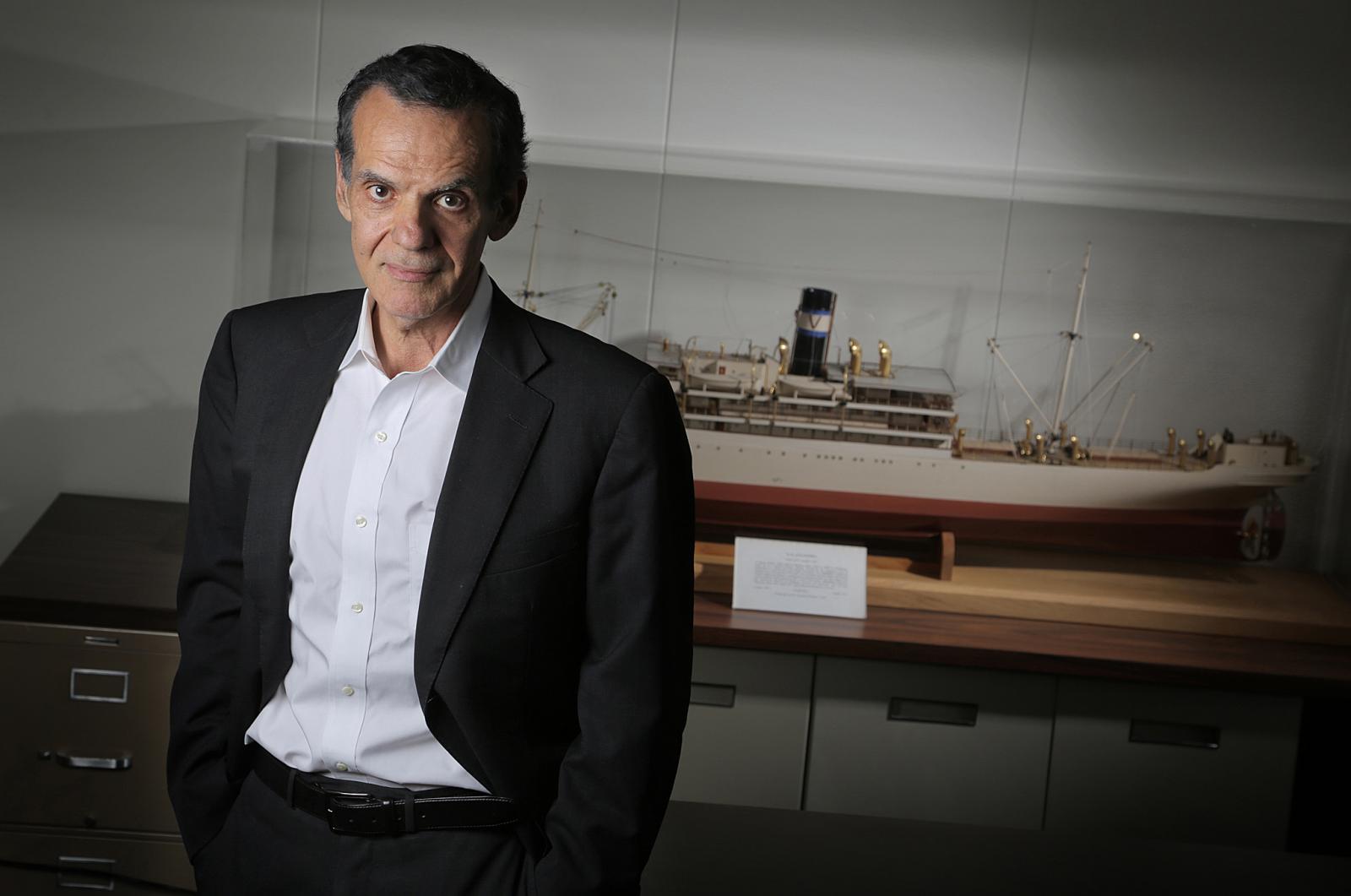
Professor Paul D. Sclavounos is a faculty member in the Department of Mechanical Engineering at the Massachusetts Institute of Technology (MIT). He earned his B.Sc. from the National Technical University of Athens in 1977 and Ph.D. from MIT in 1981. Research Interests : Marine hydrodynamics, stochastic control, offshore wind/wave/tidal/solar energy, machine learning applications, magnetohydrodynamic propulsion systems. Notable Contributions : Development of computational tools like SWAN and SML software suites; analysis of nonlinear wave dynamics; integration of AI/ML in marine hydrodynamics. Scientific Recognition : First Prize in National Mathematics Competition (1972), Georg Weinblum Memorial Lecturer (2010-2011), Best Paper Award at OMAE 2019, AEOLOS Scientific Award (2024). Leadership : Director of the Laboratory for Ship and Platform Flows since 1985; advisory roles for US Navy, US Department of Energy, and Det Norske Veritas (DNV). Teaching : Courses in Hydrodynamics (2.016), Advanced Fluid Mechanics (2.25), and Naval Architecture (2.701).
Leslie Ann Goldberg is a Senior Research Fellow at St Edmund Hall and Professor of Computer Science at the University of Oxford. She currently serves as Head of the Department of Computer Science (on sabbatical 2025-26) and focuses on foundational problems in Algorithms and Complexity Theory , particularly randomised algorithms for network communication, machine learning, and statistical physics models. Her research includes solving Aldous' 1987 conjecture on backoff protocol instability (with John Lapinskas), developing rigorous mathematical analysis frameworks for algorithmic efficiency, and advancing approximate counting techniques via Markov Chain Monte Carlo methods (with Andreas Galanis and collaborators). Key projects involve graph homomorphisms , Moran process dynamics , and #BIS complexity class analysis. Recent publications (2023-2024) span topics like Sybil defense mechanisms, low-temperature sampling on random graphs, and parameterised subgraph counting modulo 2. Her work demonstrates cross-disciplinary impact in computational biology, statistical physics, and database theory. Scientific Awards include Best Paper Prizes at ICALP 2016, ICALP 2010, and IPEC 2017. She supervises PhD student Paulina Smolarova and collaborates extensively with researchers in Oxford and beyond.
Michael U. Gutmann is a Senior Lecturer in Machine Learning at the School of Informatics, University of Edinburgh, and a member of the Institute for Adaptive and Neural Computation. His research lies at the intersection of machine learning, statistics, and scientific applications, with a focus on developing inference methods for complex and implicit models. Education: PhD in Computational Neuroscience, University of Tokyo MSc in Engineering and Applied Mathematics, Swiss Federal Institute of Technology (ETH) Zurich MSc, Ecole Centrale Paris His primary research interests include Bayesian inference, likelihood-free inference, optimal experimental design, unsupervised learning, and applications in computational biology and neuroscience. He is best known for introducing Noise-Contrastive Estimation (NCE), a foundational technique for training unnormalized statistical models. His recent work spans variational inference, density ratio estimation, flow models for missing data, and AI-driven experimental design in behavioral and biological sciences. His publications, including in NeurIPS , ICML , JMLR , and eLife , demonstrate a strong emphasis on methodological innovation for scientific discovery. He has contributed to open-source tools such as ELFI (Engine for Likelihood-Free Inference) and developed practical implementations of robust inference algorithms. Scientific Awards: No specific awards listed in the provided texts. Michael Gutmann actively supervises students and collaborates with leading researchers in machine learning and computational biology. He has secured research funding from EPSRC and BBSRC for projects in generative modeling and infectious disease epidemiology. He teaches advanced courses such as Probabilistic Modelling and Reasoning and Data Mining, reflecting his deep engagement with both theoretical and applied aspects of machine learning. Labs and Research Groups: Institute for Adaptive and Neural Computation (ANC), University of Edinburgh Former affiliations with Department of Mathematics and Statistics and Department of Computer Science at the University of Helsinki and Aalto University
Gustavo Valverde Mora is a Lecturer at ETH Zurich's Power Systems Laboratory in the Department of Information Technology and Electrical Engineering. His research focuses on distributed energy resources, smart grid technologies, and power system control, with expertise in behind-the-meter DER integration and hosting capacity analysis. His recent work addresses key challenges in renewable energy integration, including voltage control coordination between transmission and distribution networks, data-driven local control schemes for active distribution grids, and unsupervised load disaggregation techniques using smart meter data. He has developed novel methods for DER modeling, GIS-based system analysis, and distribution network planning. Recognized with multiple awards including the 2022 Costa Rican National Technology Award, he actively contributes to IEEE Task Forces on DER integration. His research demonstrates strong emphasis on practical grid applications, combining theoretical power systems knowledge with advanced data analytics. Dr. Valverde teaches Power System Analysis (227-0526-00L) and maintains collaborations with utilities worldwide on renewable integration challenges.
Dr. Christopher M. Wolverton is a Professor of Materials Science and Engineering at Northwestern University , where he leads the Wolverton Research Group . His work focuses on computational materials science with applications in energy sustainability , particularly in batteries , hydrogen storage , and thermoelectrics . PhD in Physics from University of California, Berkeley BS in Physics (summa cum laude) from University of Texas, Austin His research leverages first-principles quantum mechanical simulations and machine learning to enable virtual materials synthesis before laboratory testing. The group specializes in hybrid computational methods integrating Density Functional Theory (DFT) , Monte Carlo simulations , and phase-field microstructural models . The article portfolio shows leadership in energy storage materials , with recent work on data-driven nanoparticle facet control , mixed-anion semiconductors , and machine learning-accelerated discovery . Publications span top journals including Nature Energy , Nature Materials , and Science . 2006 Ford Motor Company Technical Achievement Award 2005 Ford Patent & Publication Awards 2003 Ford Environmental/Physical Sciences Recognition As advisor to PhD candidates Zhenpeng Yao , Shiqiang Hao , and Shane Patel , he fosters interdisciplinary research connecting materials informatics with experimental validation . The group maintains active collaborations with Argonne National Lab and MIT/Harvard teams.
Professor Paul Fearnhead is a leading academic in Statistics at Lancaster University 's School of Mathematical Sciences . His research focuses on Bayesian and Computational Statistics , with applications in Anomaly Detection , Continuous-time Markov Processes , and Changepoint Analysis . Department: Mathematics and Statistics Academic Rank: Professor Email: p.fearnhead@lancaster.ac.uk His work bridges theoretical statistics and computational efficiency, notably through pruning techniques for change detection and novel Monte Carlo methods. Current projects include AI Hub initiatives, probabilistic AI foundations, and real-time anomaly detection in streaming data. Research outputs span Bayesian Analysis , Time Series Modeling , and Scalable Statistical Algorithms , with applications in fields like astronomy and epidemiology. Recent publications emphasize simulation-based composite likelihoods and efficient distributed changepoint detection. Scientific contributions include leadership roles in the STOR-i Centre for Doctoral Training and Data Science Institute (DSI) projects such as CoSInES and Statscale. He supervises PhD students including Dylan Bahia, Yuntang Fan, and Ziyang Yang.
Scientia Professor Robert Kohn is a distinguished academic at the University of New South Wales, holding a position in the School of Economics within the UNSW Business School. With a career spanning several decades, Professor Kohn has established himself as a leading expert in statistical methodology and econometric modeling. His research has significantly contributed to Bayesian statistics and computational methods for complex data analysis. Professor Kohn's research focuses on advanced statistical methodologies including Bayesian methodology, variable selection and model averaging, nonparametric regression models, time series modeling, multivariate Gaussian and non-Gaussian regression, and Markov chain Monte Carlo simulation algorithms. His work bridges theoretical statistics with practical applications across economics, finance, and cognitive science. His research demonstrates a consistent trajectory toward developing more efficient computational methods for complex statistical models, with recent work emphasizing variational Bayesian methods, particle filtering techniques, and applications to time series analysis. Analysis of his recent publications (2022-2025) reveals a strong focus on advancing computational statistical methods, particularly in Bayesian inference for complex models. His work shows increasing integration of machine learning techniques with traditional statistical methods, especially in handling high-dimensional data and complex time series structures. Professor Kohn has made significant contributions to variational inference methods, particle-based computational techniques, and applications to financial time series and cognitive modeling. Professor Kohn has maintained an exceptionally productive research career with continuous publication output since the 1970s, demonstrating remarkable longevity and adaptability in his research focus as statistical methodologies have evolved. His work shows strong international collaboration, particularly with researchers in Australia, the United States, and Europe, reflecting his standing in the global statistical community.
Carlo Rovelli is a Professeur de classe exceptionnelle in the Department of Physics at Aix-Marseille University, holding adjunct roles at Western University's Department of Philosophy and a Distinguished Visiting Research Chair at the Perimeter Institute. He founded the quantum gravity group at the Centre de Physique Théorique (CPT) and is an associate member of the Rotman Institute of Philosophy. His research focuses on loop quantum gravity, relational quantum mechanics, and the history/philosophy of science. He authored influential popular science books including Seven Brief Lessons on Physics (41 languages, 1M+ copies sold) and Helgoland: Making Sense of the Quantum Revolution . Rovelli's work bridges theoretical physics with philosophical inquiry, exploring foundational questions in quantum mechanics, spacetime structure, and the interpretation of physical theories. His recent publications address topics like quantum information theory, gauge symmetries, black hole evaporation, and cosmological implications of quantum gravity.
Stephen Roberts is a Professor at the Australian National University (ANU) in the College of Science, Department of Mathematics. He is the lead developer of the ANUGA open-source hydrodynamic modeling software, which simulates dam breaks, floods, and tsunamis for governments and engineers. Roberts has made significant contributions to computational mathematics, particularly in numerical methods for partial differential equations, sparse grid data fitting, and finite element approximations scaling to millions of data points. MSc, Flinders University (1980) PhD, University of California, Berkeley (1985) His research interests include: Computational methods for shallow water wave equations Development of Python-based scientific computing frameworks Global sensitivity analysis and uncertainty quantification Adaptive mesh algorithms for fluid dynamics Recent publications focus on energy-stable numerical schemes, multiscale flood simulation, and convergence analysis in sensitivity methods. Roberts actively collaborates with environmental agencies and has led major computational science education programs at ANU. Stephen serves as Treasurer of the Computational Mathematics Group (ANZIAM) and leads projects in: Parallelization of hydrodynamic models CO2 leak detection via atmospheric measurements Optimization of sparse grid combinations His work combines theoretical advancements with real-world applications in disaster risk reduction and climate policy.
Quoc Thong Le Gia is an Associate Professor in the School of Mathematics & Statistics at the University of New South Wales (UNSW), Sydney. He holds a PhD in Mathematics from Texas A&M University (2003), an MS in Mathematics from Texas A&M University (2000), and a BSc in Mathematics and Computer Science from UNSW (1998). His research focuses on Numerical Analysis , Approximation Theory , Partial Differential Equations , and Stochastic Processes , with particular expertise in problems on spherical domains. His work bridges theoretical mathematics with practical applications in computational science, data science, and machine learning. Le Gia's recent publications demonstrate a strong focus on numerical methods for PDEs on spheres, stochastic analysis, and machine learning applications. His work shows consistent progression from theoretical foundations to practical implementations, with increasing interdisciplinary applications in recent years. L. F. Guseman Prize in Mathematics, Texas A&M University (2003) As a dedicated academic mentor, Le Gia has supervised numerous PhD, Master's, and Honours students across computational mathematics and data science topics. He has secured significant research funding through ARC Discovery Projects including DP220101811 (2022-2024) and DP180100506 (2018-2020). Professionally, he serves as External Associate Editor for Frontiers in Applied Mathematics and Statistics , Secretary for ANZIAM's Computational Mathematics Group, and Co-chair of Mathematics of Computation and Optimisation (AustMS Special Interest Group).
Ioannis Gkioulekas is an Assistant Professor at the Robotics Institute within Carnegie Mellon University's School of Computer Science, with a courtesy appointment in Electrical and Computer Engineering. He leads the Computational Imaging Lab at CMU, focusing on joint hardware-software approaches to develop advanced imaging systems. His research spans computational imaging, computer vision, and graphics, addressing challenges like non-line-of-sight imaging, 3D sensing, and adaptive optics. Research interests include: Computational imaging systems design Non-line-of-sight and single-photon imaging LiDAR, SONAR, and interferometry applications Physics-based and differentiable rendering Probabilistic modeling and Monte Carlo methods Recent publications (2019-2021) demonstrate strong focus on waveguides, light transport simulation, 3D sonar reconstruction, and computational tomography. Common themes include inverse problems, wave-based imaging, and differentiable simulation techniques bridging graphics and sensing. Current advising includes Master's student Neham Jain and affiliates Bakari Hassan, John Liu, Bailey Miller, Sreekar Ranganathan, and Arjun Teh. Past students include PhD graduates Arpit Agarwal and Shumian Xin, and Master's student Shirsendu Halder.