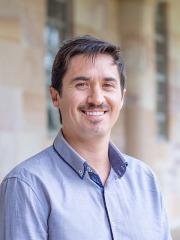
Aarti Singh is Associate Professor of Economics at the University of Sydney, specializing in macroeconomics and monetary policy. She serves as Associate Editor for the Journal of Money, Credit and Banking and the Journal of Economic Dynamics and Control. Her research examines optimal monetary policies in economies with heterogeneous agents, sectoral interdependencies, and incomplete markets. Singh collaborates with central banks globally and has held visiting positions at Cornell, Oxford, and the Federal Reserve Bank of St. Louis. Recent work analyzes how tax progressivity affects consumption insurance and the labor market impacts of monetary shocks. Grants include an ARC DECRA on human capital risk.
Dr. IKM Mokhtarul Wadud is a Senior Lecturer in the Department of Economics at The University of Sydney, Australia. Previously, he held roles as Senior Lecturer at Deakin University, Lecturer at Monash University Malaysia, and Assistant Professor at the University of Rajshahi, Bangladesh. He earned his PhD in Economics from the University of Wollongong in 2001. His research focuses on productivity analysis, macroeconomic policy, energy economics, and applied econometric modeling. Notable contributions include co-authoring the Asia Pacific edition of Introductory Econometrics (Cengage Learning) and publishing in journals like Economic Modelling and Energy Policy . His recent work addresses financial sustainability strategies in higher education during the pandemic and the impact of economic policy uncertainty on property prices in Australia. Dr. Wadud has presented at international conferences and served as a reviewer for multiple journals. His research spans diverse regions, including Australia, Thailand, Malaysia, and Bangladesh, with analyses of oil price volatility, monetary policy effects, and industrial competitiveness.
Professor Will Bateman is a distinguished academic at the Australian National University (ANU) College of Law, where he serves as a Professor and recently completed his term as Associate Dean (Research) from 2021 to 2024. He is also a Chief Investigator for the ANU Grand Challenge project "Humanising Machine Intelligence" and a Fellow at the Gradient Institute, a leading ethical AI research organization based in Sydney. Professor Bateman's educational background is impressive, having earned a PhD and LLM (Hons) from the University of Cambridge and a BA/LLB (Hons) from the Australian National University. Prior to his academic career, he worked in appellate litigation, commercial disputes, and banking as a solicitor at Herbert Smith Freehills, and served as an associate to Justice Stephen Gageler AC of the High Court of Australia and Justice Steven Rares of the Federal Court of Australia. Professor Bateman's research spans two major interdisciplinary domains that sit at the intersection of law with finance and technology. His work on financial regulation focuses on the legal aspects of central banking, sovereign debt markets, digital currencies, and sustainable investing. He has provided expert evidence to the UK Parliament's House of Lords Inquiry into Quantitative Easing, and has collaborated with major financial institutions including the Federal Reserve Bank of New York and the Bank of England. His research on artificial intelligence examines regulatory frameworks for AI in the public sector, with collaborations including the Minderoo Foundation and the Gradient Institute. His recent publications demonstrate a remarkable breadth across legal theory, financial regulation, and AI governance. The articles reveal a consistent theme of examining how traditional legal frameworks adapt to new financial technologies and monetary policy challenges. His work bridges theoretical legal scholarship with practical policy implications, as evidenced by his numerous government consultations and collaborations with central banks worldwide. 2020 Yorke Prize by the University of Cambridge for his work on public finance and constitutionalism Top 10 all-time most downloaded SSRN paper on central banking ("Central Bank Money: Liability, Asset, or Equity of the Nation?") Professor Bateman actively supervises research students, currently mentoring Benjamin Ettinger who is pursuing a PhD on "Legal Method, Cartels and Public Monopolies: A View From the High Court 1908 - 1948." He has secured significant research funding, including projects funded by the Economic and Social Research Council (UK), the German Research Foundation (Deutsche Forschungsgemeinschaft), and The Minderoo Foundation. His "Rebuilding Macroeconomics Initiative: Legal and Economic Conceptions of Money" received £245,000, while the "FA Mann" project was funded with €620,000 (approximately A$1,012,500). He leads the "Humanising Machine Intelligence" project, an ambitious interdisciplinary initiative involving computer scientists, mathematicians, philosophers, sociologists, psychologists, and lawyers aimed at developing democratically legitimate machine intelligence. He also co-led a major project with the University of Western Australia to formulate model legal frameworks for AI regulation in the public sector, funded by The Minderoo Foundation.
Professor Begona Dominguez is a faculty member in the School of Economics at The University of Queensland (UQ), within the Faculty of Business, Economics and Law. She holds a Doctor of Philosophy in Economics from Universitat Autònoma de Barcelona. Her research focuses on Macroeconomics, Public Finance, and Monetary Economics, with emphasis on fiscal policy design, central bank balance sheets, and optimal taxation frameworks. Her key projects include Supporting Entry and Growth of Australian Businesses via Tax and Transfers (2022–2024) and The role of a central bank's balance sheet in shaping the economy (2021–2024) . She is available for PhD supervision and actively contributes to applied macroeconomic analysis, particularly in urban economic advantages and policy evaluation. Publications span topics like fiscal sustainability, inflation dynamics under central bank policies, and the implications of constitutional constraints on taxation. Her work bridges theoretical models (e.g., Ramsey frameworks) with empirical applications in tax policy and public debt management. Professor Dominguez maintains affiliations with the Centre for Applied Macroeconomic Analysis (ANU) and has reviewed prominent texts such as John Taylor's Reform of the International Monetary System . She is based in Room 507, Colin Clark Building at UQ.
Jakob Madsen is a Professor of Economics at the UWA Business School, The University of Western Australia, since January 2019. He previously held the Xiaokai Yang Distinguished Professorship at Monash University (2011–2019) and has held professorial roles at institutions including the University of Copenhagen and Brunel University. Madsen is a Fellow of the Australian Academy of Social Sciences and was an ARC Professorial Fellow (2011–2015). His research focuses on macroeconomics, economic growth, inequality, and applied econometrics, with over 140 publications in top journals. Education: PhD in Economics from the Australian National University (1992), Cand. Oecon (MEc) from Aarhus University (1983). Prior to academia, he worked in Denmark’s financial sector as Deputy Chief Economist at the Bank of Jutland. Research Interests: Madsen’s work examines long-run macroeconomic trends, including unified growth theory, inequality dynamics, the historical drivers of economic development, and the interplay between finance and growth. Recent projects explore aging societies, the impact of plagues on medieval markets, and the role of education in economic transitions. Grants & Awards: He has secured over AUD 2.3 million in ARC grants, including current projects on income inequality and capital shares. His awards include the Georgescu-Roegen Prize (2001) for work on the Great Depression and the Dean’s Award for Teaching Excellence (2009). Collaborations: Engages with global institutions like Aix-Marseille Université and the University of Bologna. Active in UN Sustainable Development Goals related to education and economic inequality.
Tracy Xiao Liu is a Professor at the Department of Economics, School of Economics and Management, Tsinghua University. Her research focuses on behavioral market design and the intersection of economics and computer science (Econ-CS), utilizing experimental methods to explore decision-making mechanisms, incentive structures, and behavioral spillovers. Her publications span journals such as Management Science , Games and Economic Behavior , and Journal of Economic Behavior & Organization . Key themes include behavioral economics, game theory, public goods, and experimental studies on market design, incentive contracts, and social preferences. Recent work examines AI-driven economic rationality (GPT models), energy policy impacts, and virtual red packet dynamics in online groups. Tracy collaborates with scholars across institutions, including her husband Baoping Liu (Peking University, harmonic analysis). Her experimental research bridges microeconomic theory with real-world applications in education, pensions, and crowdsourcing platforms.
Christina Nikitopoulos Sklibosios is an Associate Professor in the Finance Discipline Group at the University of Technology Sydney (UTS) Business School. She specializes in energy finance, renewable energy economics, sustainable finance, and commodity markets. Her research focuses on analyzing price dynamics and volatility in energy markets, particularly addressing challenges posed by renewable energy integration, green bond markets, and climate transition risks. She has held leadership roles including Finance PhD Program Coordinator (2015–2023) and currently serves on the UTS Business School's Faculty Board and HDR Director (acting). Education: Doctoral and academic background in finance and energy economics (details not explicitly provided in texts). Her research projects include modeling electricity prices in Australia’s National Electricity Market (NEM), assessing renewable energy impacts on grid stability, and evaluating green bond premiums. Key grants include ARC grants on energy market volatility and climate risk (2010–2017), and recent awards such as the UTS Strategic Research Accelerator grant (2024–2025) for net-zero decision-making tools. Research interests span energy economics, sustainable finance mechanisms, and commodity market dynamics. She collaborates with international organizations like CEMA, IAEE, and AFFECT, and contributes to policy discussions on energy transition and financial market reforms.
Isaac Gross is a Senior Lecturer in the Department of Economics at Monash University, Faculty of Business and Economics. He holds a PhD and is actively involved in research, teaching, and policy advisory roles. His work bridges academic theory and real-world economic policy, particularly in macroeconomic and monetary domains. His research interests center on macroeconomics , monetary policy , DSGE modeling , and commodity price dynamics . He employs advanced quantitative methods to analyze policy effectiveness and economic stability, with a regional focus on Australia and global commodity markets. The recent articles highlight a consistent focus on nonlinear modeling of macroeconomic systems, optimal policy design , and structural analysis of monetary and resource sectors . His work combines theoretical rigor with empirical validation, often using large-scale models like MARTIN for policy simulation. Scientific Awards: Best Paper at the Melbourne Institute Macroeconomic Policy Meeting (2018) Dean's Citations for Outstanding Contribution to Student Learning (2021) Advising and Grants: Isaac Gross served as the Primary Chief Investigator on the 2022 research project Estimating Optimal Policy Rules for Australian Monetary Policy with MARTIN . While formal student advising is not listed, his Dean’s Citation underscores significant contributions to student learning. He has also contributed to educational initiatives such as continuing education in macroeconometrics. Labs, Teams, and Collaborations: He collaborates with prominent economists including Andrew Leigh and J. Hansen. His work involves external engagement with key institutions such as the Reserve Bank of Australia and the Standing Committee on Economics, indicating integration into national policy networks.
Associate Professor Anton Didenko is a leading academic at UNSW Sydney's School of Private & Commercial Law, specializing in FinTech regulation, banking law, and central bank digital currencies (CBDC). He holds law degrees from Russia and the UK, including an MJur and DPhil from the University of Oxford. His research focuses on CBDC design, regulatory sandboxes, open banking frameworks, and cybersecurity in finance. University Affiliation: UNSW Sydney Key Academic Roles: Author of Banking Law in Australia (11th ed, 2024) and lead author of Customer Data Sharing Frameworks (2024) Global Engagement: Adviser to G20, Asian Development Bank, and UN agencies Research Interests: - CBDC policy and design implications - Regulatory frameworks for FinTech innovation - Cybersecurity in financial systems - Transnational commercial law and secured transactions - Open data and customer consent mechanisms Recent Articles: Focus on CBDC adoption in Pacific economies, weaponization of digital currencies in geopolitical conflicts, and comparative analysis of blockchain liabilities. His work bridges legal, technological, and policy dimensions of financial innovation. Awards : Australian Academic of the Year in Digital Finance (2023) Advising & Grants: - No listed advisees - Collaborations include Asian Development Bank-funded Pacific CBDC studies - Co-authored policy reports for UN Capital Development Fund and CPA Australia Labs/Teams: - Editor-in-Chief of the Cape Town Convention Journal - Co-leader of UNSW's FinTech regulation research initiatives
Dr. Jorge Miranda-Pinto is a Senior Lecturer at the School of Economics within the Faculty of Business, Economics and Law at the University of Queensland. He is also a Research Associate at the ANU Centre for Applied Macroeconomic Analysis (CAMA) and an Affiliate of the Centre for Efficiency and Productivity Analysis. His research focuses on applied macroeconomics, international economics, and macroeconomic theory, with an emphasis on business cycle fluctuations, production networks, fiscal policy transmission, and sectoral shifts. He holds a PhD in Economics from the University of Virginia (2017). Educations: PhD in Economics (University of Virginia, 2017) His research explores the role of firm and household heterogeneity in shaping macroeconomic volatility and the effects of fiscal stimulus. Recent work includes analyzing commodity price shocks, service trade impacts, and monetary policy transmission mechanisms. He has contributed to projects such as the ARC-funded study on unobserved networks in macroeconomic fluctuations (2022–2025). Publications highlight interdisciplinary approaches to understanding economic dynamics, including articles on production networks, business cycle asymmetry, and trade credit effects. His work bridges theoretical models with empirical applications, addressing global economic challenges. Grants: ARC Discovery Project (2022–2025) Miranda-Pinto collaborates with institutions like the IMF and Federal Reserve Bank of Cleveland, reflecting his engagement with policy-relevant research. He is available for academic supervision and media commentary on macroeconomic topics.
Dr. Bernard Njindan Iyke is a Lecturer in Finance at La Trobe University, specializing in climate and energy finance, corporate risk management, and international economics/finance. He holds an ORCID identifier (0000-0002-9217-1856) and has extensive experience as a consultant for central banks and international organizations. His recent research includes leading the Australian Government-funded 'Quantum Enhanced Optimisation for Energy Efficient Data Centres' project. He actively supervises postgraduate research students focusing on Sustainable Development Goals 13 (Climate Action) and 7 (Affordable and Clean Energy). Dr. Iyke's research interests span climate finance, energy security, geopolitical risk analysis, and macroeconomic policy interactions. His work frequently explores emerging markets, particularly in Asia and Africa, with notable contributions on financial stability, currency dynamics, and pandemic economic impacts. He has presented at institutions like the University of Oxford and the Asian Development Bank Institute. His recent publications analyze topics such as financial cycle synchronization in emerging economies, energy investment under climate risks, and the interplay between monetary policy and asset prices in ASEAN countries. While no explicit awards are listed, his high citation counts (e.g., over 90 citations for his 2024 energy security paper) reflect significant academic impact. He teaches courses on commercial lending and bank strategy, integrating real-world financial technology and regulatory challenges. Dr. Iyke has secured government grants totaling millions AUD, notably the 2024 Quantum Optimisation project. He advises on policy matters related to energy transition and financial resilience, maintaining active collaboration with central banks and multilateral institutions. His research agenda emphasizes bridging theoretical economics with practical policy solutions for sustainable development.
Eliza Wu is Professor of Finance and Banking at the University of Sydney Business School, where she also serves as Associate Dean (Research Education). With a PhD in Finance from UNSW, her research examines international financial market dynamics, banking regulation impacts, and information flows in capital markets. Professor Wu maintains professional connections with the Reserve Bank of Australia and Bank for International Settlements, influencing financial policy decisions. Educational background includes a joint honours degree in Economics and Econometrics with a PhD in Finance from UNSW. Research focuses on three interconnected areas: Behavioral dynamics and risk transmission in global financial markets The role of information intermediaries (credit rating agencies, equity analysts) Financial intermediation and regulatory impacts on bank lending Recent publications demonstrate strong focus on financial market integration, sovereign credit risk contagion, and regulatory reforms. Corporate finance research examines acquisition performance, board governance reforms, and CSR integration in M&A. Empirical methodologies include time-series econometrics, panel regressions, and natural experiment designs. Honors include international best paper prizes and competitive research grants. Current PhD students investigate empirical corporate finance topics under Professor Wu's supervision. Professional service includes associate editor roles for Journal of Financial Stability and International Review of Financial Analysis.
Dr Gonzalo Castex Hernandez is a Senior Lecturer in the Department of Economics at the University of New South Wales (UNSW). He holds a Ph.D. in Economics from the University of Rochester. His research focuses on Macroeconomics, Labour Economics, and the Economics of Education, with particular emphasis on topics such as pension systems, juvenile crime determinants, and the impact of policy measures like minimum wage laws and non-pharmaceutical interventions during pandemics. He has contributed to edited volumes, including Changing Inflation Dynamics, Evolving Monetary Policy , and authored numerous peer-reviewed articles in journals such as Journal of Economic Dynamics and Control and Economic Modelling . His recent work explores nonlinear means-tested pension systems, the evolving relationship between capital and skill complementarity, and cross-country analyses of policy responses to crises like the 2020 pandemic. He maintains an active research agenda bridging theoretical models with empirical evidence, particularly in areas affecting public policy design and labor market dynamics. Dr Castex Hernandez’s academic contributions span multiple subfields, including public finance, development economics, and quantitative social science. He collaborates internationally with institutions such as the Central Bank of Chile and the ANU Crawford School of Public Policy. His ORCID profile ( 0000-0001-7943-8627 ) and personal website ( https://sites.google.com/site/gonzalocastex/ ) provide access to his full body of research.
Joaquin Vespignani is an Associate Professor of Finance at the Tasmanian School of Business and Economics, University of Tasmania. His research focuses on financial economics, critical mineral markets, artificial intelligence in finance, environmental economics, and education quality analysis. He has supervised 9 doctoral students, including completed projects on topics such as financial inclusion, commodity prices, and economic growth drivers. His funded projects include a 2014 grant examining the impact of unconventional monetary policy on commodity prices. Recent research highlights include analyzing geopolitical risks in critical mineral markets and exploring AI's role in mitigating supply chain risks. He has presented at conferences like 'Teaching Matters - Education that makes a difference' in 2024, emphasizing sustainable finance education. Key publications cover critical mineral market fragility, environmental performance in West African economies, and the link between education quality and economic growth. His work often integrates macroeconomic analysis with policy implications for sustainability and global resource management.
Dr. Yanjun Zhang is an Honorary Research Fellow at the School of Electrical Engineering and Computer Science, The University of Queensland. His research focuses on privacy-preserving technologies, federated learning, cybersecurity in IoT systems, and machine learning security. He holds a PhD in Privacy-Preserving Sharing for Genome-Wide Analysis from The University of Queensland (2021). Education: PhD in Information Technology, School of Information Technology and Electrical Engineering, The University of Queensland (2021) Research Interests: Designing secure collaborative machine learning frameworks Defending against adversarial attacks in cyber-physical systems Privacy preservation in distributed genomic and medical data analysis Compliance and ethics in virtual personal assistant applications Key Contributions: Developed privacy-preserving federated learning frameworks (AgrAmplifier, PrivColl) Conducted foundational studies on evasion attacks in IoT systems Created datasets for analyzing malicious browser extensions and Alexa skills Labs/Teams: Active contributor to UQ Cyber initiatives, including the 2021-2022 Seed Funding project on federated deep learning for medical imaging.