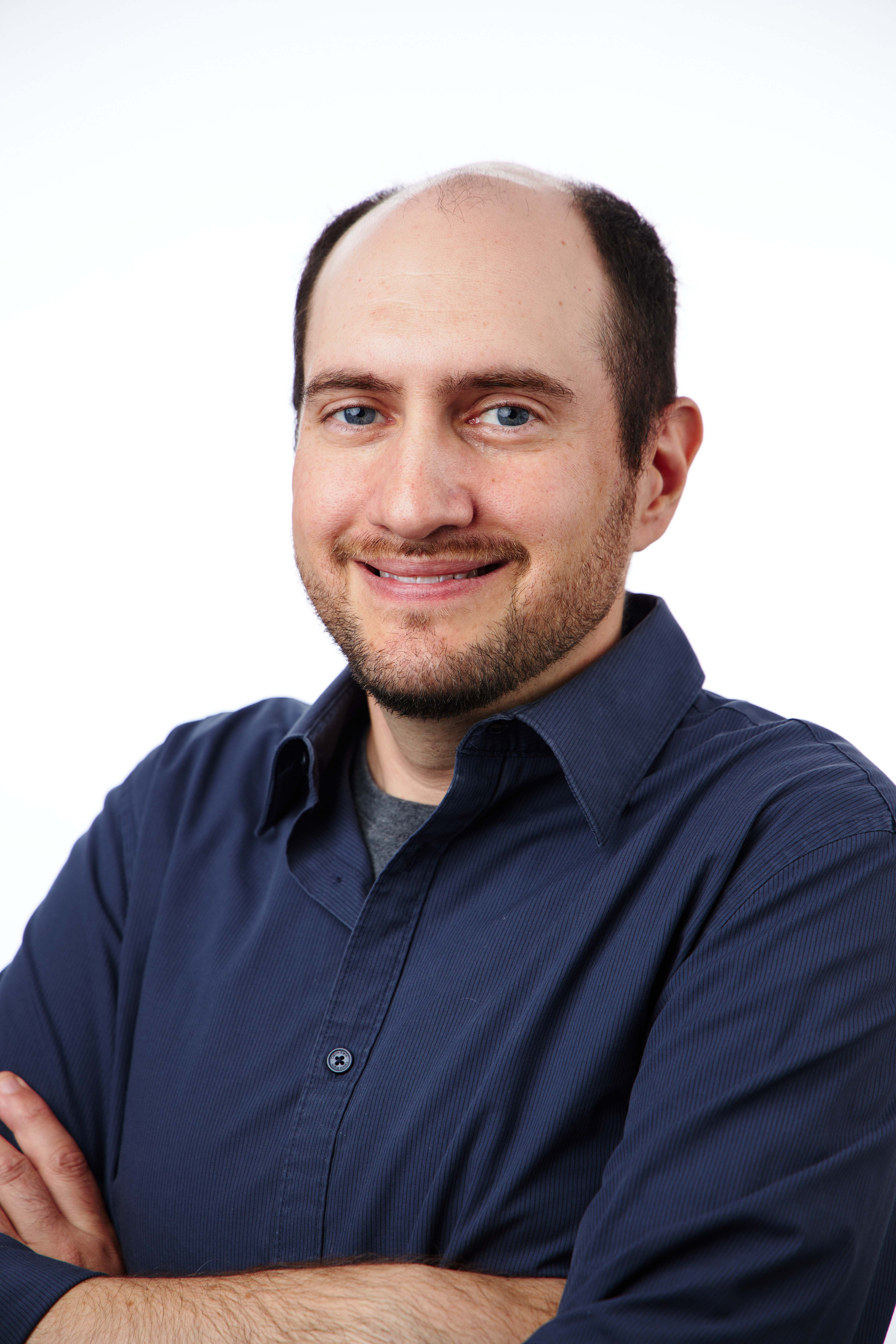
Pengfei Li is a prolific researcher affiliated with multiple academic institutions, including Harbin Medical University, Yale University, Beihang University, Zhejiang University, and others. His work spans interdisciplinary domains such as machine learning, robotics, remote sensing, and biomedical engineering. Research interests focus on Machine learning and deep learning for industrial and medical applications Signal processing and sensor technologies Remote sensing and geospatial data analysis Robotic control systems and exoskeleton design Code search and software engineering optimization His recent publications highlight trends in FPGA-based real-time systems, multimodal machine learning, and AI-driven diagnostics. While awards and student advising details are absent in the provided data, his contributions to IEEE journals and conferences underscore his expertise in algorithm design and applied informatics.
Dr. Christoph Lerche is a researcher at the Institute of Neuroscience and Medicine (INM) , specifically in the Physics of Medical Imaging (INM-4) department at Forschungszentrum Jülich GmbH . His research focuses on advanced medical imaging technologies, particularly positron emission tomography (PET) and hybrid imaging systems like PET-MRI. Key areas include improving PET detector design, developing novel reconstruction algorithms, and applying these techniques to neurodegenerative diseases (e.g., Alzheimer’s) and oncology (e.g., glioma diagnosis). His work emphasizes interdisciplinary collaborations, such as optimizing BrainPET insert compatibility with ultra-high field (UHF) MRI systems and analyzing sleep-related effects on synaptic density. He contributes to clinical applications, such as distinguishing glioma relapse from treatment effects using FET PET radiomics, and advancing multimodal imaging (e.g., simultaneous PET/MR/EEG). Notable projects include enhancing dead-time correction for accurate BrainPET quantification, designing dipole antenna arrays for hybrid systems, and developing photon-counting CT-based PET attenuation maps. His innovations aim to bridge gaps between imaging hardware, data processing, and clinical neuroscience.
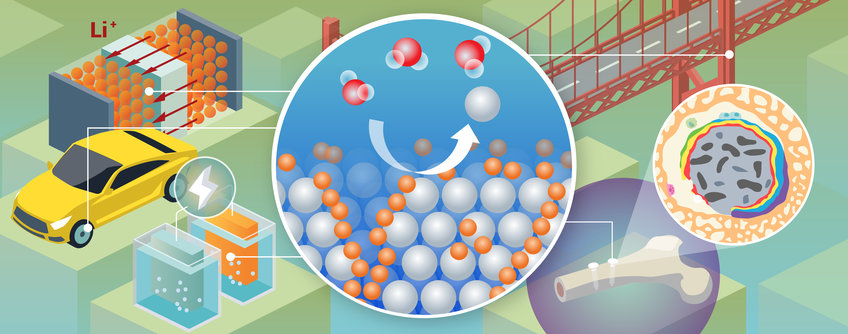
Dr. Tim M. Schwarz is a Research Fellow and Group Leader at the Max Planck Institute for Sustainable Materials, where he leads the 'Interfacial Processes/Reactions at the Atomic Scale' research group. He holds a Walter-Benjamin position funded by the German Research Foundation (DFG). His work focuses on understanding corrosion mechanisms at liquid-solid interfaces using advanced techniques like cryo-atom probe tomography. Key areas include magnesium alloys for bioresorbable implants, battery materials, and infrastructure steel durability. He has been awarded the Walter Benjamin Prize (2024), Otto Hahn Medal (2025), and Erwin Müller Prize for his contributions to materials characterization. Education: Ph.D. in Materials Science, RWTH Aachen University (2021–2024) M.Sc. in Materials Science, University of Stuttgart (2018–2021) B.Sc. in Materials Science, University of Stuttgart (2013–2018) Research Interests: His group investigates interfacial reactions in structural, energy, and functional materials, with a focus on corrosion processes, alloy design, and sustainable materials. Recent studies include magnesium alloy degradation, bioresorbable implants, and cryo-atom probe tomography for liquid-solid interface analysis. Grants & Collaborations: His DFG-funded research group collaborates with ETH Zurich on iron corrosion and infrastructure materials. Projects aim to develop corrosion-resistant materials and improve atom probe methodologies for biological and engineering applications. Awards: Walter Benjamin Prize (2024) Otto Hahn Medal (2025) Erwin Müller Prize Outstanding Paper Award 2024
Konstantinos Alexopoulos is an Assistant Research Professor in the Department of Chemical Engineering at Pennsylvania State University, with a dual affiliation to the ALICE experiment at CERN. He leads research in heterogeneous catalysis, focusing on single-atom catalysts, reaction mechanisms, and materials design. His work bridges computational modeling (microkinetic simulations, DFT calculations) with experimental catalysis for energy conversion and chemical synthesis. Key affiliations include the Materials Research Institute and the Institute for CyberScience at Penn State. Notable contributions include developing programmable thermochemical synthesis protocols and advancing understanding of Cu³⁺ oxidation states in alkaline systems. His 2022 Nature paper introduced programmable heating/quenching strategies for efficient synthesis, while 2024 publications address Ni-CeO₂ catalyst stability and zeolite-catalyzed beta-scission reactions. He collaborates extensively with the ALICE collaboration on detector systems, contributing to the O₂ data acquisition framework for LHC Run 3. Research emphases span: (1) Single-atom catalyst stability mechanisms (2) Zeolite-catalyzed hydrocarbon transformations (3) Methane-to-ethylene conversion (4) ALICE detector control systems. Current projects involve DOE-funded work on plastic waste conversion technologies and NSF-supported catalysis studies. His lab employs Density Functional Theory (DFT), microkinetic modeling, and in-situ spectroscopy to study reaction networks. Recent work highlights include identifying hydride-mediated C-H bond activation on TiO₂ and optimizing ALD-coated catalysts for methane reforming.
Nicolae-Viorel Buchete is an Associate Professor of Theoretical & Computational Nano-Bio Physics at University College Dublin's School of Physics within the College of Science. He currently serves as Vice Principal for Graduate Studies for the College of Science and Director of the UCD MSc in Computational Physics Programme. His academic journey includes postgraduate degrees from Boston University (USA) and institutions in the EU (Al. I. Cuza University of Iasi, Romania, and the University of Patras, Greece), with a PhD from Boston University and research fellowships at the National Institutes of Health. His educational background includes: PhD from Boston University Research Fellowships at National Institutes of Health (Bethesda, MD, USA) Postgraduate degrees from Boston University, Al. I. Cuza University of Iasi (Romania), and University of Patras (Greece) Buchete's research focuses on theoretical and computational approaches to understanding biomolecular systems. His work spans theoretical and computational biological physics, chemical physics, and nanoscience , with specific emphasis on statistical mechanics and molecular dynamics of biomolecular systems, systems biology, structural bioinformatics, and multiscale modeling of biomolecules and complex fluids. His group employs advanced computational techniques including Markov State Models, Milestoning, and replica exchange molecular dynamics to study protein conformational dynamics, amyloid formation, and molecular mechanisms relevant to diseases like cancer and Alzheimer's. His research output reveals a progression from fundamental biophysics toward increasingly translational applications. Early work focused on protein conformational dynamics, while more recent publications demonstrate expansion into nanomedicine applications, computational toxicology of nanomaterials, and physics-based modeling frameworks for drug delivery systems. A significant portion of his research involves studying conformational transitions in proteins relevant to cancer (such as K-Ras4B and Abl kinase) and neurodegenerative diseases (particularly amyloid systems), with growing emphasis on computational approaches to nanosafety and sustainability. His scientific contributions have been recognized with numerous awards: Certificate of Appreciation from the American Chemical Society Publications Division (2012) Top 20 JCP Reviewer for 2010 from the American Institute of Physics NIH Fellows Award for Research Excellence (FARE) in 2006 and 2007 ACS Chemical Computing Group Excellence Award (2003) Multiple teaching and research awards from Boston University including the Outstanding Teaching Fellow Award (1998) and Feldman Award (2001) Buchete has mentored numerous graduate students through their MSc and PhD research, with students successfully defending theses on computational physics and biomolecular modeling topics. His teaching philosophy emphasizes "research-oriented teaching," integrating research experiences into undergraduate and taught Master's level education. He has secured research funding including the UCD OBRSS Research Support Scheme (2016-2023) and has directed multiple educational programs including the UCD International Pre-Masters Programme (2013-2022) and served as School Head of Teaching and Learning (2021-2022). His research group is affiliated with the UCD Complex & Adaptive Systems Laboratory (CASL), where they develop and apply advanced computational methods to study complex biomolecular systems. The group has organized multiple CECAM workshops on biomolecular modeling and simulations, demonstrating leadership in the computational biophysics community. They collaborate extensively across disciplines, working with experimentalists to validate computational findings and address challenging problems in biophysics and nanomedicine.
Prof. Dr. Armin Iske is a Full Professor of Numerical Approximation at the University of Hamburg's Department of Mathematics, within the Faculty of Mathematics, Computer Science and Natural Sciences. He holds a PhD from the University of Göttingen (1994) and habilitation from TU Munich (2002). His research focuses on numerical approximation, kernel-based methods, computational fluid dynamics, and medical imaging. He has held academic positions globally, including visiting roles at ANU (Australia) and the University of Leicester (UK). Research interests include scattered data approximation, adaptive particle methods for flow simulation, and high-dimensional data analysis. He has authored 118+ publications, including works on kernel interpolation, medical imaging reconstruction, and machine learning applications. He serves on editorial boards for journals like Advances in Computational Mathematics and Sampling Theory . His contributions span interdisciplinary projects, such as SFB/TRR 181 on energy transfer in atmosphere and ocean, and collaborations in nanotechnology for brain interfaces. His work bridges theoretical mathematics with practical applications in engineering and biosciences.
Dr. Jun Wu is an Assistant Professor in the School of Molecular Sciences and School of Earth and Space Exploration at Arizona State University (ASU). His research focuses on mineralogy, crystallography, and high-pressure geoscience using transmission electron microscopy (TEM). He developed the HPTEM (high-pressure TEM) technique, enabling in-situ analysis of Earth's interior under extreme conditions. Dr. Wu collaborates on the Keck Foundation-funded project exploring Earth’s water origins and investigates nano-material synthesis and deep earthquakes. He holds a Ph.D. in Mineralogy from Johns Hopkins University and postdoctoral training under Prof. Peter Buseck at ASU. Education : Ph.D., Mineralogy, Johns Hopkins University. Research Interests : Dr. Wu’s work bridges geoscience and materials science through advanced TEM applications. His HPTEM technique uses carbon nanostructures to simulate Earth’s high-pressure environments, advancing understanding of planetary formation and deep Earth processes. He also explores nanomaterials synthesis and unresolved geological phenomena like deep earthquakes. Grants : Active funding from the Keck Foundation for origins-of-water research. Collaborative projects integrate experimental and computational approaches in Earth sciences. Labs/Teams : Engaged in cross-disciplinary teams at ASU’s School of Molecular Sciences and Earth and Space Exploration, leveraging cutting-edge microscopy facilities for high-pressure experiments.
Zbig Wasilewski is a Professor and Research Chair in Nanotechnology at the University of Waterloo, cross-appointed to the Departments of Electrical and Computer Engineering and Physics and Astronomy. He leads the Molecular Beam Epitaxy (MBE) Research Group, renowned for groundbreaking work in quantum structures, THz quantum cascade lasers, and self-assembled nanostructures. His laboratory pioneered the In-flush method for quantum dot systems and achieved record operating temperatures for GaAs/AlGaAs THz lasers. Education: Doctorate in Physics (Polish Academy of Sciences, 1986), Master and Bachelor of Science in Physics from University of Warsaw (1979, 1978). Research Interests: Molecular Beam Epitaxy (MBE) and nanofabrication Quantum optics, nano-photonics, and quantum computing Quantum cascade lasers and photonic devices 2D electron gas systems and semiconductor heterostructures Awards: Fellow of the IEEE (2022) Lifetime title of Professor of Physics from Poland's President (2012) Teaching focuses on nanotechnology fundamentals and applications, including courses like NANO 701-702, NE 102-471, and NE 345. He actively supervises graduate students and leads a lab with over 500 publications and 16,000 citations. Labs & Teams: MBE Research Group at University of Waterloo, collaborating globally on quantum device innovation.
Corentin Cadiou is a Research Fellow at Lund University's Department of Physics, specializing in Astrophysics. He holds dual positions as a Postdoctoral Fellow in both the Astrophysics division and the eSSENCE: The e-Science Collaboration initiative. His research focuses on computational astrophysics and cosmology, with particular expertise in dark matter, galaxy formation, and cosmic structure evolution. His primary research interests include: Dark matter physics and cosmic web dynamics High-resolution cosmological simulations Galaxy formation and evolution mechanisms Star formation processes in various environments Computational methods in astrophysics Large-scale structure of the universe He employs advanced simulation techniques to study galaxy-scale phenomena and cosmic evolution. Cadiou's recent publications demonstrate a strong focus on developing and optimizing astrophysical simulation codes, analyzing cosmic structures like filaments and dark matter halos, and investigating galaxy formation processes across cosmic time. His work frequently combines theoretical modeling with high-performance computing approaches to address fundamental questions in cosmology. He is currently engaged in the project: eSSENCE@LU 11:4 - Galaxy formation in the exascale era (2025-2026), where he serves as a researcher developing next-generation galaxy formation simulations.
Guowei Wei is a MSU Research Foundation Professor in the Department of Mathematics and the Department of Biochemistry & Molecular Biology at Michigan State University. He holds a dual appointment in the BioMolecular Science Gateway and is affiliated with the Wei Lab. His research focuses on integrating topological data analysis, machine learning, and computational methods to address complex problems in biochemistry, biophysics, and materials science. Dr. Wei’s work spans multiple disciplines, including topological machine learning for protein-ligand interactions, persistent homology applications in molecular flexibility analysis, and AI-driven drug discovery. He develops novel algorithms combining algebraic topology with deep learning to model biological systems and material properties. His recent contributions include advancements in predicting protein binding affinities, analyzing viral mutations, and optimizing drug candidates for opioid use disorder and addiction treatments. He teaches advanced graduate courses (MTH 890/990) and maintains an active research lab. His methodologies bridge mathematical theory with practical applications in computational biology and healthcare, leveraging tools like the Poisson-Boltzmann equation and transformer networks for molecular analysis. Dr. Wei’s work emphasizes interdisciplinary approaches to solve challenges in drug design, pathogen evolution, and systems biology. Key contributions include topological deep learning frameworks for biomedical data, persistent Laplacian techniques for scarcely labeled data classification, and AI models for predicting mutation impacts on protein function. His research has significant implications for personalized medicine, pandemic preparedness, and understanding complex biological networks.
Shoba Ranganathan is an Honorary Professor in the Department of Applied BioSciences at Macquarie University. Her research focuses on computational biology, bioinformatics, and structural modeling of proteins, with significant contributions to drug design and biological databases. She serves as editor of the Encyclopedia of Bioinformatics and Computational Biology and leads projects on insect olfaction, tumor immunology, and genomic technologies. Her work spans collaborations in Australia, Europe, and Asia-Pacific regions. Research interests include protein structure modeling, GPCR analysis, and applications of AI in genomics. Key projects include biomolecular discovery, mosquito odorant receptor modeling, and immune evasion mechanisms in cancers. She has authored over 270 publications and actively participates in international conferences like InCoB, fostering bioinformatics innovation. Her recent efforts emphasize translational research, integrating computational tools with clinical proteomics for cancer diagnostics and drug development. Projects like 'Biomolecular Discovery and Design Research Centre' highlight her role in interdisciplinary scientific networks.
Dr. Shengyao Yang is a postdoctoral Research Assistant at the School of Science at RMIT University , Australia. His research focuses on materials science and mechanical engineering, particularly in the machining-induced deformation and damage mechanisms of advanced materials like 6H-silicon carbide (SiC) and potassium dihydrogen phosphate (KDP) crystals. By leveraging molecular dynamics simulations and experimental characterization , he investigates nanoindentation, nanogrinding, and surface integrity optimization. Research Interests : Materials Science, Mechanical Engineering, Molecular Dynamics, Nanoindentation, Surface Processing Campus : City Campus, Australia Publications highlight trends in understanding atomic-scale material removal , anisotropic deformation , and damage-free machining of semiconductors and optical crystals. Contact : shengyao.yang@rmit.edu.au
Professor Stefan Kasapis is a renowned academic in Food Science at RMIT University's School of Science. He holds the rank of Professor and has over 30 years of industry collaboration, focusing on developing novel food formulations. His research emphasizes structural, nutritional, and bioactive functionality of materials, particularly plant/marine polysaccharides, proteins, and bioactive compounds. Academic Roles: He has served as Assistant Dean of Research, Head of the Department of Food Sciences, and Coordinator of the Graduate Programme in Food Sciences. At RMIT, he coordinates advanced food technology courses at undergraduate and postgraduate levels, including BP199 (Bachelor of Science) and MC237 (Master of Food Science and Technology). Research Interests: His work explores conformation-structure-function relationships in food systems, including plant proteins, phenolics, dietary fiber, and delivery systems for bioactives. He leads a research group of 12 PhD students and two postdoctoral researchers, funded by ARC Linkage, Australia Awards, and FFW CRC. Awards & Recognition: He has received the RMIT Award for Research Excellence (2016), Royal Society of Chemistry Medal (1998), and a runner-up prize at the Institute of Food Science and Technology Annual Conference (1994). Labs & Industry: His lab focuses on techno-bio functionality of food materials, utilizing RMIT’s City and Bundoora facilities. He holds multiple patents for food innovations, including bioactive delivery systems and improved food formulations.
Dr. Jianhu Shen is a Lecturer in the School of Engineering at RMIT University, specializing in civil, materials, and mechanical engineering. His research focuses on structural design under dynamic loads, microstructural material design, auxetic materials, and numerical simulations. He is actively involved in supervising Masters and PhD students in areas like soil-structure interaction, fiber-reinforced composites, and fatigue optimization. Research Interests: Civil Engineering Materials Engineering Manufacturing Engineering Nanotechnology Condensed Matter Physics Auxetic Structures and Materials Recent Work Highlights: His publications span topics like dynamic levelling systems in agriculture, nanoscale friction analysis, and optimization of structures for minimum weight and fatigue resistance. He collaborates on projects involving graphene, carbon nanotubes, and metamaterials, emphasizing practical applications in construction and energy absorption. Labs/Teams: Collaborates on advanced materials and structural design projects within RMIT's School of Engineering.
Samuel Isaacson is a Professor at Boston University's Department of Mathematics and Statistics, specializing in numerical analysis, mathematical biology, and mathematical physics. His research focuses on developing and analyzing numerical methods for stochastic reaction-diffusion models in cellular biology, with applications to cell signaling, T cell activation, and antibody-antigen interactions. He emphasizes rigorous coarse-grained modeling, unstructured mesh methods, and parameter inference from experimental data. Recent work includes advancements in reactive Langevin dynamics models, mean-field limits of particle systems, and molecular mechanisms underlying antibody efficacy. His interdisciplinary approach combines computational modeling, experimental collaboration, and mathematical theory to address biophysical questions. Notable contributions include the Catalyst software for reaction network modeling and studies on spatial effects in genetic circuits and chromatin structure. Isaacson's grants and collaborations span computational methods for stochastic systems, parameter estimation in biochemical networks, and the influence of cellular geometry on signaling. His lab focuses on bridging microscopic particle-level models with macroscopic biological observations, with applications in immunology and synthetic biology. Current projects explore the role of molecular 'reach' in antibody-virus interactions and the development of efficient simulation tools for complex biological systems.