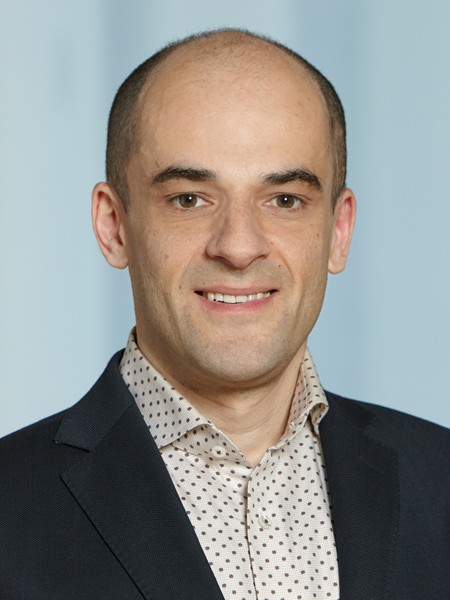
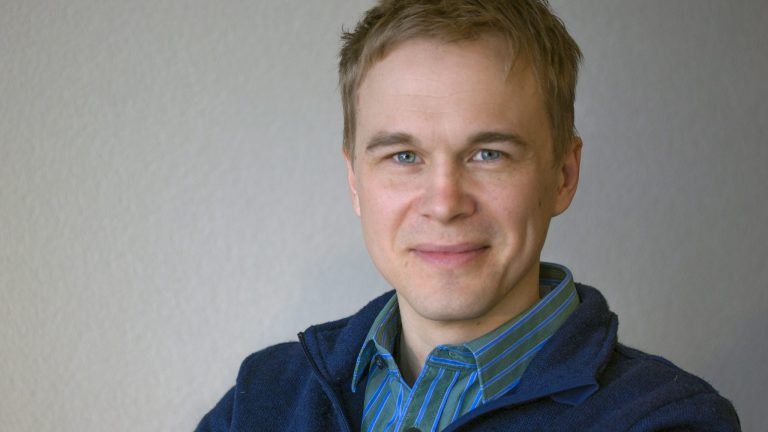
Dr. Tommaso Marcato is a Lecturer at the Department of Chemistry and Applied Biosciences, ETH Zürich. He earned his MSc in Chemical and Bioengineering from ETH Zürich after completing his BSc in Chemical Engineering at Politecnico di Milano, Italy. His research focuses on perovskite light-emitting diodes (PeLEDs), emission anisotropy, and light-outcoupling efficiency, with a particular emphasis on transition dipole moment orientation and nanocrystal self-assembly. His publications span topics such as Stabilization of CsPbI₃ nanoplatelets via metal iodide doping Molecular orientation engineering in OLEDs Ultraflexible self-powered optoelectronics Electroluminescent metasurfaces using perovskite nanocrystals His work aims to overcome photon trapping in devices by manipulating emitter orientation and exploring quantum confinement effects. Dr. Marcato's recent articles (2019–2025) demonstrate expertise in Hybrid perovskite systems Quantum dot applications Photonic device architecture Surface passivation techniques . He is part of the Shih group at ETH Zurich and has received funding from ETH-33 18-2 for his research on graphene-templated molecular alignment in LEDs.
Swiss Federal Institute of Technology in LausanneSwitzerland
Pierre Vandergheynst is a Full Professor at the Swiss Federal Institute of Technology Lausanne (EPFL) in the Department of Electrical Engineering, with a courtesy appointment in Computer and Communication Sciences. He serves as EPFL’s Vice-Provost for Education since 2015 and leads the Signal Processing Laboratory 2 (LTS2). His research spans harmonic analysis, sparse approximations, mathematical data processing, and applications in signal/image processing, computer vision, machine learning, and graph-based data analysis. PhD in Mathematical Physics (1998), Université catholique de Louvain Postdoctoral Researcher at EPFL (1998-2001) Assistant Professor at EPFL (2002-2007) His research explores geometry/symmetry in high-dimensional data, redundant dictionaries for dimensionality reduction, and computational harmonic analysis on manifolds. Recent work focuses on protein structure modeling, geometric deep learning, and graph-based signal processing. Key article trends include graph neural networks for protein analysis, geometric deep learning in neuroscience, and structured knowledge priors in neural models. His 2023-2025 publications emphasize interpretable AI, long-range dependencies in graphs, and molecular representation learning. Scientific Awards: IEEE Signal Processing Magazine Best Paper Award (2023) Signal Processing Society Best Paper Award (2022) Apple ARTS Award (2007) De Boelpaepe Prize, Royal Academy of Sciences of Belgium (2009-2010) He has supervised over 30 PhD theses and contributed to foundational work in graph signal processing, compressive sensing, and geometric deep learning. His lab develops tools for data science on non-Euclidean structures, with applications in medicine, astronomy, and wireless systems.
Prof. Dr. Malte Oppermann is a full Professor at the University of Basel , leading the Ultrafast Chiral Dynamics Laboratory within the Department of Chemistry. His group specializes in developing cutting-edge time-resolved spectroscopic techniques to probe molecular transformations on femtosecond to microsecond timescales, focusing on chirality and structural dynamics in complex systems. Research Focus: Ultrafast Chiral Spectroscopy : Using circularly polarized laser pulses to resolve structural changes in chiral systems. Molecular Motors & Protein Dynamics : Capturing conformational changes in synthetic motors and proteins in native environments. Photoactive Materials : Investigating light-energy conversion mechanisms in chiral photochemical systems. His research bridges physics and chemistry, employing state-of-the-art laser technology and collaborating internationally across synthesis, spectroscopy, and theory. Publications & Impact: Prof. Oppermann’s work (2011–2025) spans ultrafast spectroscopy , chiral dynamics , nanomaterials , and biomolecular photophysics . Key themes include spin-crossover dynamics, DNA photodamage, and plasmonic nanoparticles, with techniques like transient X-ray absorption and deep-UV circular dichroism. Team & Opportunities: The group actively recruits MSc/PhD students and postdocs in physics, chemistry, and materials science. Interested candidates are encouraged to contact Prof. Oppermann directly.
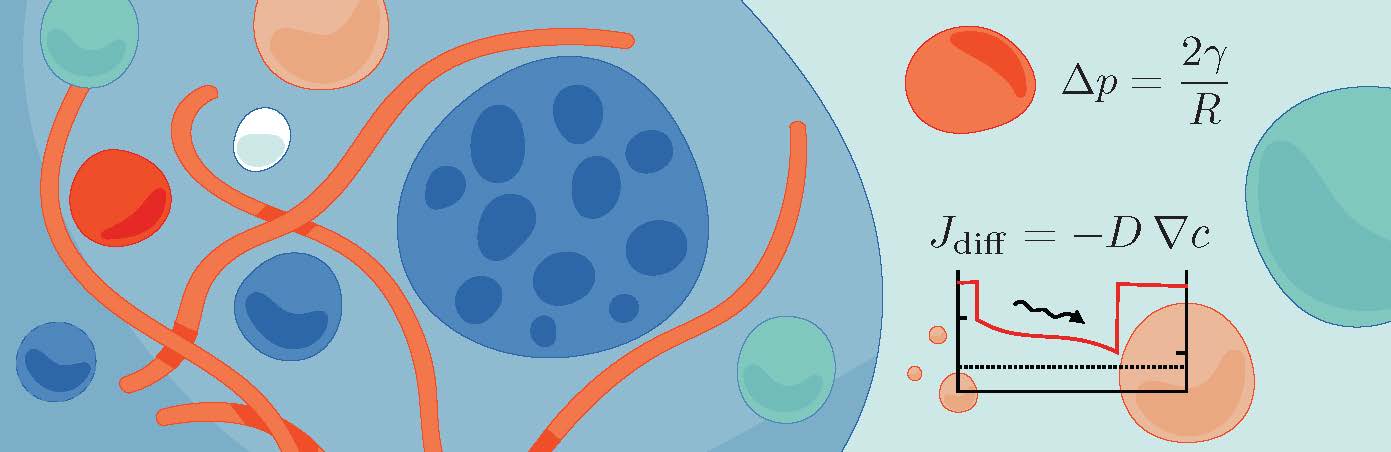
Thomas Michaels is an Assistant Professor at the Department of Biology, ETH Zürich, leading the Michaels Group . His research focuses on theoretical models of biomolecular condensates and protein aggregation in biological systems. Research Themes : Protein aggregation, liquid-liquid phase separation, membrane biophysics, and the role of condensates in neurodegenerative diseases like Alzheimer’s and Parkinson’s. Collaborative Approach : Integrates theoretical physics, control theory, and computational biology with experimental validation to design therapeutic strategies. Recent Publications highlight his work on amyloid formation mechanisms, lipid interactions, and phase-separated compartments as biochemical reactors. His group trains PhD students in systems biology and biocondensate physics.
Swiss Federal Institute of Technology in LausanneSwitzerland
Jean-Philippe Brantut is an Associate Professor at École Polytechnique Fédérale de Lausanne (EPFL), affiliated with the School of Basic Sciences (SB), the Institute of Physics (IPHYS), and the School of Physics (SPH-ENS). He leads the Laboratory for Quantum Gases (LQG), a research group focused on quantum simulation with ultracold atomic systems. He also serves as a PhD program committee member for the Doctoral Program in Physics at EPFL. Research Interests: His work lies at the intersection of quantum optics, atomic physics, and condensed matter physics. He investigates strongly correlated fermionic systems, cavity quantum electrodynamics, mesoscopic physics, and quantum transport. His group pioneers the integration of Fermi gases with high-finesse optical cavities to simulate quantum devices and explore novel quantum matter. Recent Research Trends: His recent publications, appearing in Nature , Science , and Nature Physics , demonstrate a strong focus on engineering quantum many-body systems using photon-mediated interactions. Key themes include the realization of random spin models, observation of density-wave ordering, and the investigation of universal pair polaritons in strongly interacting Fermi gases. His earlier work laid foundations in quantum thermoelectricity and quantized transport in neutral matter. Scientific Awards: Latsis University Prize (2023) Physics Teaching Award at EPFL (2023) ERC Consolidator Grant (2022): Driven and Dissipative Quantum Simulators ERC Starting Grant (2016): Devices, engines and circuits: quantum engineering with cold atoms Fondation Sandoz Chair (2016) SNSF Ambizione Fellowship (2013) Advising and Grants: Brantut actively supervises multiple PhD students, including current students Gaia Bolognini, Tabea Bühler, Ekaterina Fedotova, Francesca Orsi, and Zeyang Xue, and has advised several successful graduates such as Victor Helson, Kevin Roux, Nick Sauerwein, and Timo Zwettler. His research is supported by major grants, most notably two European Research Council (ERC) grants, underscoring the significance and innovation of his work in quantum simulation and quantum engineering. Laboratories and Teams: He leads the Laboratory for Quantum Gases (LQG) at EPFL, which operates two main experimental setups: the Fermi gas experiment and the microscope experiment. The team includes post-doctoral researchers, PhD students, and visiting scientists, fostering a collaborative environment for advancing quantum science with ultracold atoms.
Prof. Knut Drescher is an Associate Professor at the Biozentrum, University of Basel , leading a research group focused on bacterial biofilms , swarming , and microbial multicellularity . Previously, he served as a Professor of Biophysics and Max Planck Research Group Leader at Philipps-Universität Marburg (2015-2021) and conducted postdoctoral research at Princeton University. Research Interests: Physical and biological mechanisms of biofilm formation Cell-cell interactions in microbial communities Antibiotic resistance in biofilms Hydrodynamics of bacterial swarms Evolution of cooperation in multispecies biofilms Development of bioimaging software (BiofilmQ, BacStalk) Scientific Awards: 2023: SNSF Consolidator Grant 2019: Heinz Maier-Leibnitz Prize (DFG), VAAM Research Prize, IUPAP Young Scientist Prize 2016: ERC Starting Grant Advising & Grants: Advises PhD and Master's students in microbiology, biophysics, and bioinformatics Secured major grants from ERC , HFSP , and DFG
Dr. Lukas Frey is a Researcher at ETH Zurich, affiliated with the Chair of Physical Chemistry and the Institute of Molecular Physical Sciences (IMPS). His work focuses on biophysical studies of membrane proteins, lipid dynamics, and protein aggregation mechanisms. Key research areas include structural biology of ion channels, NMR spectroscopy of membrane proteins in nanodiscs, and the role of lipid environments in modulating protein dynamics. Frey employs advanced techniques like mass photometry and solid-state NMR to investigate molecular mechanisms in biological systems. His recent studies address amyloid fibril formation, pH-dependent α-synuclein polymorphism, and cholesterol-mediated modulation of membrane protein behavior. Based at the HCI F 228 facility in Zurich, Frey collaborates on projects involving lipid bilayer environments, ion channel function, and the structural basis of protein aggregation. His email is lukas.frey@phys.chem.ethz.ch, and he holds an ORCID identifier 0000-0002-1052-1104. Research contributions span from fundamental biophysical insights to methodological advancements in membrane protein analysis.
Swiss Federal Institute of Technology in LausanneSwitzerland
Kumar Varoon Agrawal is an Associate Professor at École Polytechnique Fédérale de Lausanne (EPFL), holding the Gaznat Chair for Advanced Separations. He is affiliated with the School of Basic Sciences (SB), the Institute of Chemical Sciences and Engineering (ISIC), and the Laboratory of Advanced Separations (LAS) in Sion, Switzerland. Additionally, he contributes to the Swiss Doctoral School in Chemical and Bioengineering (SCGC) and serves as Vice President of the Confédération des Chimistes et des Génie Chimique (CCE). Research Focus: Material Chemistry & Engineering at the Ångström scale for high-performance inorganic and hybrid membranes, emphasizing energy-efficient molecular separations. Teaching: Courses include Fundamentals of separation processes , Diffusion and mass transfer , and Chemical engineering product design . Scientific Contributions: His 15 most recent publications (2025-2020) span topics like graphene pore engineering , 2D material synthesis , carbon capture , and gas separation membranes , with keywords such as Nanotechnology , Materials Science , and Molecular Transport . Subfields include Atomic-Scale Pores , Membrane Stability , and Industrial Scalability . Students and Collaborations: He advises 10 current PhD students and has mentored 9 past PhD candidates in areas like graphene membranes , ion separation , and MOF films . He is an Academic Referent for the EPFL Carbon Team and a committee member for the EDCH Doctoral Program in Chemistry and Chemical Engineering.
Eugene Demler is a Full Professor at the Department of Physics, ETH Zurich. Previously, he held academic positions at Harvard University from 1998 to 2021, including Assistant Professor (2001-2004), Associate Professor (unspecified dates), and Full Professor (2005-2021). His work bridges theoretical condensed matter physics, atomic and molecular physics, quantum optics, and quantum simulations. Education: MSc in Physics, Moscow Institute of Physics and Technology (1993) Diploma work, Lebedev Physics Institute (1992-1993) PhD in Theoretical Physics, Stanford University (1998), supervised by S.C. Zhang Demler's research focuses on strongly correlated quantum systems, spintronics, quantum sensing, and photo-induced phase transitions. His recent publications explore topics such as quantum polarons, Josephson plasmons, magnon dynamics, and terahertz spectroscopy in superconductors. He has pioneered hybrid quantum-classical methods for electron-phonon systems and cavity-mediated quantum materials. His Google Scholar articles (2023-2025) span theoretical and experimental domains, with keywords including Quantum Physics , Condensed Matter Physics , and Quantum Optics . Subfields include Quantum Control , Superconductivity , Spin Waves , Quantum Sensing , Non-Equilibrium Dynamics , and Quantum Simulation . Scientific Awards: Hamburg Prize for Theoretical Physics (2021) Simons Investigator (2021) Moore Distinguished Scholar (2020) Hanna Visiting Scholar (2019) Highly Cited Researcher (2017-2020) Senior Fellow at ETH Zurich's Institute for Theoretical Studies (2015) Simons Fellowship (2015) Distinguished Scholar at Max Planck Institute of Quantum Optics (2015) Thomson Reuters Highly Cited Researcher (2014) Siemens Research Award (2006) Johannes Gutenberg Lecture Award (2006) NSF Career Award (2002) Sloan Fellowship (2002) Demler teaches courses such as Statistical Physics and Strongly Correlated Systems in Atomic and Condensed Matter Physics . His work integrates theoretical modeling with experimental collaborations, particularly in quantum optics and condensed matter systems.
Swiss Federal Institute of Technology in LausanneSwitzerland
Brian W. Pogue, Ph.D., is the Robert A. Pritzker Chair in Biomedical Engineering at Dartmouth College's Thayer School of Engineering, with a joint appointment as an Honorary Fellow in Medical Physics at the University of Wisconsin-Madison. His academic background includes a Ph.D. in Medical/Nuclear Physics from McMaster University and a Research Fellowship at Harvard Medical School's Wellman Center for Photomedicine. He has led significant administrative roles, including Dean of Graduate Studies at Dartmouth (2008–2012) and Chair of Medical Physics at Wisconsin (2022–2025). Research Focus : Dr. Pogue pioneers Optics in Medicine , specializing in cancer imaging, photodynamic therapy, and surgical guidance. His work integrates fluorescence imaging, radiation therapy monitoring, and molecular diagnostics to improve cancer treatment precision. Key innovations include Cherenkov imaging for radiotherapy dosimetry and hypoxia-sensitive probes for tumor resection. Publication Trends : Recent articles (2023–2025) emphasize real-time surgical guidance, hypoxia quantification, and multimodal imaging systems. Dominant themes include fluorescence tomography, radiation dosimetry, and low-cost diagnostic devices, reflecting a translational focus from preclinical validation to clinical applications. Awards & Honors : Fellow, Optica (formerly OSA) Fellow, American Institute for Medical and Biological Engineering (AIMBE) Fellow, American Association of Physicists in Medicine (AAPM) Fellow, SPIE (International Society for Optics and Photonics) Funding & Innovation : Continuously funded by the NIH since 2001 ($52M+ total), Dr. Pogue founded three startups: DoseOptics LLC (radiotherapy dose imaging) and Hypoxia Surgical LLC (tissue hypoxia cameras), bridging academic research to clinical tools.
Daniel Razansky is a Full Professor at the Department of Information Technology and Electrical Engineering, ETH Zurich, leading the Professorship for Biomedical Imaging. His research spans engineering, physics, biology, and medicine, focusing on developing advanced in vivo imaging tools like optoacoustic tomography and ultrasound neuromodulation. His recent work emphasizes multi-scale functional and molecular imaging , with applications in neuroscience , Alzheimer’s disease , and stroke diagnostics . Collaborations include National Tsing Hua University and the EU Horizon consortium SWEEPICS. Current projects target hybrid imaging systems (e.g., MRI-MSOT) and image-guided neuromodulation. Scientific awards include the IPPA James Smith Prize for his contributions. His lab has secured significant grants, including a $2.5M NIH award and SNSF funding. He mentors PhD students like Quanyu Zhou and Eva Remlova, who have received accolades for their research. The Razansky Lab at ETH Zurich’s Preclinical Imaging Center explores medical microrobotics , dynamic fluid flow imaging , and neuroimaging techniques , aiming to bridge engineering with clinical applications.
Dr. Igor V. Pivkin is a Full Professor at the Institute of Computing within the Faculty of Informatics at the Università della Svizzera italiana (USI) in Lugano, Switzerland. His academic journey includes degrees from Novosibirsk State University (B.Sc./M.Sc. Mathematics), Brown University (M.Sc. Computer Science and Ph.D. Applied Mathematics), and postdoctoral research at MIT's Department of Materials Science and Engineering. His research focuses on multiscale/multiphysics modeling , numerical methods , and large-scale simulations of biological and physical systems. Key areas include biophysics, cellular/molecular biomechanics, stochastic modeling, and coarse-grained molecular simulations. He leverages high-performance computing (HPC) and particle-based methods to address complex biological phenomena. His work spans diverse applications, from understanding cellular mechanosensitivity and biofilm engineering to modeling cancer cell behavior and red blood cell dynamics in the spleen. His contributions bridge computational science, biotechnology, and biomedical research. He has published extensively in top-tier journals, with recent work advancing automated biofilm analysis, deep learning for microbial classification, and systems biology approaches to metal bioleaching. His lab collaborates on interdisciplinary projects, emphasizing computational innovation for real-world biological challenges.
Swiss Federal Institute of Technology in LausanneSwitzerland
Professor Kevin Sivula is a Full Professor of Chemical Engineering at École Polytechnique Fédérale de Lausanne (EPFL), where he leads the Laboratory of Molecular Engineering of Optoelectronic Nanomaterials (LIMNO) and serves as Director of the Institute of Chemical Sciences and Engineering (ISIC). He teaches courses on Transport Phenomena, Chemical Engineering Practicals, Product design, and solar energy conversion systems. His research focuses on photoelectrochemical solar energy conversion, particularly developing novel nanomaterials for renewable energy applications. Professor Sivula's work bridges chemical engineering, materials science, and renewable energy technologies with emphasis on solar water splitting and hydrogen production. His research group explores organic semiconductors, transition metal dichalcogenides, perovskite materials, and metal oxide photoelectrodes for solar fuel generation. Professor Sivula's recent publications (2023-2025) demonstrate his leadership in advancing perovskite solar cell technology, developing novel photoelectrochemical systems for hydrogen production, and engineering semiconductor interfaces for improved energy conversion efficiency. His work spans fundamental materials characterization to device engineering, with particular emphasis on stability and scalability of solar fuel production systems. As an academic leader, Professor Sivula has supervised numerous PhD students whose research spans organic semiconductor nanoparticles for solar hydrogen production, perovskite materials engineering, photoelectrochemical CO 2 reduction, and nanomaterials for energy conversion. His research has been supported by various grants focused on advancing sustainable energy technologies.
Swiss Federal Institute of Technology in LausanneSwitzerland
Li Tang is an Associate Professor with tenure at École polytechnique fédérale de Lausanne (EPFL), affiliated with the Institute of Bioengineering (IBI) and the Institute of Materials Science and Engineering (IMX) within the School of Engineering (STI). She leads the Laboratory of Biomaterials for Immunoengineering, focusing on developing innovative strategies at the intersection of immunology, materials science, and cancer therapy. Her work bridges fundamental research and clinical translation, with multiple ongoing clinical trials based on CAR-T cell therapies developed in her lab. B.S. in Chemistry, Peking University (2003–2007) Ph.D. in Materials Science and Engineering, University of Illinois at Urbana-Champaign (2007–2012) Postdoctoral Fellow, MIT (2013–2016) Her research lies at the forefront of immunoengineering, integrating chemical, metabolic, and mechanical approaches to modulate immune responses. Key areas include cancer immunotherapy, immune metabolism, mechano-immunology, and biomaterials. She investigates how physical and biochemical cues can reprogram T cells, overcome exhaustion, and enhance tumor targeting. Her work emphasizes multidimensional immunity-disease interactions, aiming to develop safer and more effective therapies for cancer and autoimmune diseases. The recent publications highlight a strong trend in engineering immune cells (especially CAR-T) for enhanced durability and function, using advanced biomaterials and metabolic reprogramming. There is a clear focus on overcoming challenges in solid tumors, modulating the tumor microenvironment, and translating findings into clinical applications. The use of nanoparticle delivery, single-cell analysis, and biomechanical cues are recurring themes across her work. Notable scientific awards include: Friedrich Miescher Award (2025) ERC Starting Grant (2018) MIT TR35 Innovators Under 35 (China Region, 2020) Nano Research Young Innovator Award (2018) Biomaterials Science Emerging Investigator (2019) Materials Horizons Emerging Investigator (2020) Li Tang actively mentors PhD students across multiple doctoral programs (EDBB, EDMS, EDMX) and has advised numerous graduates who have gone on to prestigious postdoctoral and faculty positions. She is involved in significant research grants, including an Innosuisse project with Novochizol SA, and her lab is supported by competitive funding. She teaches core courses such as Immunoengineering and Next-Generation Biomaterials, shaping the next generation of scientists. Her lab fosters interdisciplinary collaboration and innovation, with active projects in chemical, metabolic, and mechanical immunoengineering, as well as CAR-T cell development. She is the Principal Investigator of the Tang Lab, which includes postdoctoral fellows, PhD students, and technical staff. The lab is actively recruiting and has a strong publication and clinical translation record. Tang Lab is also involved in multiple MA/BA training projects and promotes student engagement in cutting-edge research. The lab’s discoveries are being translated into clinical trials, reflecting a strong commitment to translational science.
Christoph Bostedt holds dual appointments as a Professor of Physical Chemistry at the Ecole Polytechnique Fédérale de Lausanne (EPFL) and as Head of the Laboratory for Synchrotron Radiation and Femtochemistry (LSF) at the Paul Scherrer Institut (PSI). He leads strategic operations for the LSF, managing five research groups and overseeing four beamlines at the Swiss Light Source and the Alvra Endstation at SwissFEL. His research focuses on ultrafast x-ray science, including single-shot imaging, non-linear x-ray spectroscopy, and femtosecond pump-probe techniques. He collaborates globally on initiatives like the Athos project, aiming to advance ultrafast x-ray technologies. Bostedt has over 150 publications and is a Fellow of the American Physical Society, recipient of the Röntgen Prize. Education: Ph.D. from the University of Hamburg with research at Lawrence Livermore and Berkeley National Laboratories. Prior roles include leadership at Argonne National Laboratory and SLAC National Accelerator Laboratory. Research Interests: Single-particle imaging and coherent diffraction X-ray free-electron laser applications Ultrafast dynamics in nanoparticles and molecular systems Non-linear x-ray spectroscopy Time-resolved x-ray pump-probe methods Awards: Fellow of the American Physical Society Röntgen Prize (University of Giessen) Labs & Projects: Spearheads the Athos beamline project at SwissFEL, developing the Maloja endstation for ultrafast x-ray studies. Oversees the Laboratory for Femtochemistry and collaborates on advanced imaging techniques for nanoscale science.