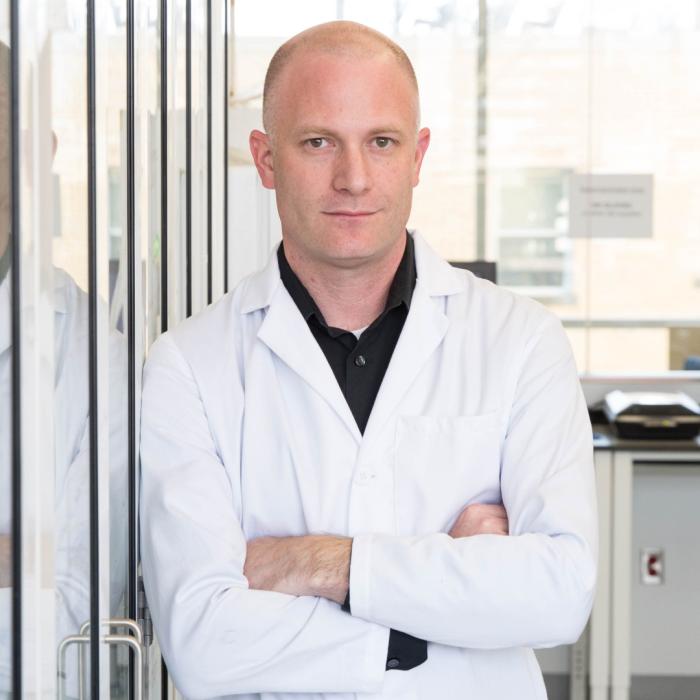
George Perry is a Professor of Anthropology at Pennsylvania State University, with research intersections in Biology, Evolutionary Medicine, and Genomics. He is affiliated with the Huck Institutes' Center for Infectious Disease Dynamics, Ecology, Molecular Cellular and Integrative Biosciences, and Bioinformatics and Genomics programs. Perry directs the Anthropological Genomics Lab , focusing on paleogenomics and evolutionary adaptation. Research areas: anthropological genomics, parasite evolution, human body size transitions, and evolutionary medicine Key collaborations: international teams in Madagascar, Europe, and Africa Leadership: Bioinformatics and Genomics Chair (2019–2023) His 2025–2022 publications span evolutionary responses to invasive species, human migration health impacts, chemosensory gene adaptation, and primate genomic diversity. Notable methodological contributions include ancient DNA recovery and comparative paleogenomics. Perry advises graduate students like Vanessa Garcia and Annette Mercedes, with grants including NIH support for Cuban health disparity studies. Scientific leadership includes tenure-line promotions (2023) and NASA Space Grant collaborations.
David Serre is a Professor in the Department of Microbiology and Immunology at the University of Maryland School of Medicine, with an additional appointment at the Institute for Genome Sciences. His research focuses on developing genomic approaches to study eukaryotic pathogens, particularly Plasmodium vivax, the leading cause of malaria outside Africa. His laboratory investigates parasite responses to antimalarial drugs, host immune responses, and mosquito vector biology using genomic and transcriptomic techniques. Education 1997–2000: Engineering degree in Chemistry, École Nationale Supérieure de Chimie, Montpellier, France 2000–2004: PhD in Biology, Max Planck Institute for Evolutionary Anthropology, Leipzig, Germany 2004–2007: Postdoctoral fellowship, McGill University and Genome Quebec Innovation Centre, Montreal, Canada Research Focus Dr. Serre’s work integrates genomics to study Plasmodium vivax’s drug resistance, relapse mechanisms, and interactions with hosts and vectors. Key areas include: Genomic assays to characterize parasite drug responses Transcriptomic analysis of host immune responses Genomic studies of Anopheles mosquitoes as malaria vectors Recent Trends in Publications Recent work highlights genomic and transcriptomic approaches to dissect Plasmodium vivax biology, including: Single-cell RNA sequencing to resolve transcript isoforms and stage-specific expression Analysis of relapse dynamics and drug resistance mechanisms Microbiome studies in mosquitoes and environmental contexts Grants & Advising No explicit grants or advisee names are listed in the provided text. Collaborators include institutions like the Max Planck Institute, McGill University, and the Institute for Genome Sciences. Labs & Teams His lab is affiliated with the University of Maryland School of Medicine and the Institute for Genome Sciences, focusing on genomic and molecular approaches to infectious diseases.
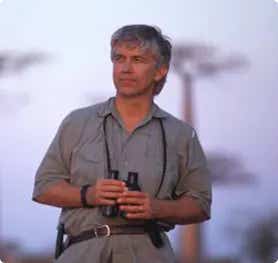
Russell Mittermeier is an Adjunct Professor at the State University of New York at Stony Brook and Chief Conservation Officer at Re:wild. He holds a Ph.D. and M.A. in Biological Anthropology from Harvard University and a B.A. from Dartmouth College (Summa Cum Laude, Phi Beta Kappa). His career spans over 45 years in biodiversity conservation, with fieldwork in 30+ countries, focusing on Amazonia, Atlantic Forest, and Madagascar. Education : Ph.D. and M.A. in Biological Anthropology (Harvard), B.A. (Dartmouth) Mittermeier's research centers on primate and herpetofauna conservation, species discovery (18 new species described), and linking biodiversity to climate change mitigation. He has authored 35 books and over 650 publications, advocating for conservation corridors and partnerships with indigenous communities. His 2015–2019 publications demonstrate interdisciplinary work across primatology, herpetology, and conservation policy, with a focus on tropical ecosystems. Recent studies include taxonomic revisions of titi monkeys, cactus extinction risks, and Amazon turtle hotspots. Scientific Awards : TIME Magazine Hero for the Planet Honorary Doctorate from SUNY Stony Brook Lifetime Honorary IUCN Member Mittermeier collaborates with global institutions like IUCN, Conservation International, and the Margot Marsh Biodiversity Foundation, emphasizing fieldwork, scientific rigor, and community engagement to protect Earth's most vulnerable ecosystems.
California Institute of Technology (Caltech)United States
Ketika Garg is a Postdoctoral Scholar Research Associate in the Division of the Humanities and Social Sciences at the California Institute of Technology (Caltech), with an office in the Broad Center for Biological Sciences. Her research focuses on the interplay between individual and social decisions, using experimental and computational methods to explore how social environments influence decision-making and collective behavior. She investigates contexts ranging from traditional foraging paradigms to modern social media landscapes, developing innovative experimental frameworks to study these dynamics. Her research interests span computational neuroscience, social media analysis, and collective behavior, with a particular emphasis on understanding exploration-exploitation trade-offs in both natural and digital environments. She has contributed to studies on hunter-gatherer foraging networks, online toxicity dynamics, and the evolution of search strategies in collective foraging systems. Her work bridges disciplines such as psychology, ecology, and computer science to address fundamental questions in decision-making and social interaction. Dr. Garg’s publications reflect her interdisciplinary approach, covering topics like synergy in collective problem-solving, the roots of online toxicity, and the application of Lévy walks in virtual foraging experiments. While no formal awards or grants are explicitly listed in the provided materials, her research trajectory demonstrates a commitment to advancing methodologies in computational social science. Contact: kgarg@caltech.edu Office: Broad Center for Biological Sciences (96) Phone: 626-395-1755
Chet C. Sherwood is a Professor of Anthropology at George Washington University (GW) and a core faculty member of the Center for the Advanced Study of Human Paleobiology (CASHP). He also directs the National Chimpanzee Brain Resource and is affiliated with the GW Mind-Brain Institute. His research focuses on evolutionary neuroscience, particularly brain evolution in primates and other mammals, emphasizing how brain structure relates to behavior, development, and genetics. Education: Ph.D. (2003), M.A. (1998, 1996), and B.A. (1995) from Columbia University, with an additional M.A. from New York University (1996). Teaches courses such as ANTH 1001: Biological Anthropology and ANTH 3413: Evolution of the Human Brain. Research interests include comparative neuroanatomy of the cerebral cortex, human brain evolution relative to other primates, and the molecular and cellular mechanisms underlying cognitive evolution. He explores how brain differences across species correlate with ecological and behavioral traits, leveraging neuroimaging, transcriptomics, and fossil reconstruction techniques. Recent work investigates aging-related brain changes in primates and elephants. Notable achievements include membership in the National Academy of Sciences (2021) and the AAAS Fellowship (2022). His lab’s studies on chimpanzee brain plasticity and the genetic basis of primate cognition have advanced understanding of human uniqueness and shared evolutionary traits. Chet’s interdisciplinary collaborations span paleontology, genomics, and neuroscience, with a focus on bridging evolutionary and medical insights. His leadership in the National Chimpanzee Brain Resource underscores his commitment to advancing comparative neurobiology through resource development and ethical research practices.
State University of New York at BuffaloUnited States
Derek J. Taylor is a Professor in the Department of Biological Sciences at the University at Buffalo (College of Arts and Sciences), specializing in evolutionary biology and molecular evolution. His research focuses on the evolutionary genetics of aquatic invertebrates, particularly cladocerans (e.g., Daphnia species), and integrates molecular, genomic, and phylogenetic approaches to study speciation, hybridization, species introductions, and paleovirology. He leads the Taylor Lab, which explores topics such as viral evolution in insects and microbats, and the evolutionary history of freshwater crustaceans. Education: PhD in Biology from the University of Guelph, followed by postdoctoral research at the University of Michigan. Research Interests: Molecular evolution of species complexes, host-virus coevolution, phylogeography, and the evolutionary maintenance of viral genes in host genomes. His work bridges genetics, ecology, and systematics to address questions in evolutionary biology. Key contributions include studies on filovirus evolution in bats, the phylogenetics of Daphnia species, and the origins of biodiversity in Holarctic freshwater ecosystems. His lab’s findings have been published in journals like Zoological Journal of the Linnean Society , Virus Evolution , and Ecography . Contact: Hochstetter Hall H530, Buffalo, NY | Office Hours: Thursdays 2:00–4:00 PM.
University of California, Los AngelesUnited States
Li Min is an Associate Professor at the University of California, Los Angeles (UCLA), affiliated with the Department of Anthropology. His research focuses on Chinese prehistoric and Bronze Age archaeology, emphasizing state formation, social memory, and climatic responses. He also studies maritime archaeology of the Asiatic Trade in the Early Modern Era, using ceramic analysis to trace global trade impacts. Li teaches graduate seminars in archaeology theories and undergraduate courses on Chinese civilizations, collaborating across Anthropology, Asian Languages and Cultures, and the Interdepartmental Program of Archaeology. He co-directs the Wen-Si River Basin archaeological project with Chinese institutions. His 2018 book, Social Memory and State Formation in Early China , is a key contribution to the field. His education includes a Ph.D. from the University of Michigan (2008). Research interests further encompass landscape archaeology, integrating ceramics analysis with remote sensing and historical records. Subfield expertise includes social archaeology, material culture studies, and historical anthropology. Recent publications (2023–2025) concentrate on neuro-oncology imaging innovations, including MRI techniques for glioma characterization, adaptive clinical trials (e.g., GBM AGILE), and biomarker development. These studies highlight advanced applications of AI in medical imaging and molecular targeting therapies for brain tumors. Despite no listed awards, his work on imaging biomarkers and tumor response assessment has advanced clinical neuro-oncology standards. He advises on interdisciplinary collaborations, such as the Wen-Si project, and participates in global clinical trials for glioblastoma therapies.
Dr. Jane Anderson is an Associate Professor of Anthropology and Museum Studies at New York University (NYU), with a Global Fellowship at the Engelberg Center for Innovation Law and Policy. She holds a Ph.D. in Law from the University of New South Wales (2004). Her research focuses on Indigenous knowledge sovereignty, intellectual property law, and decolonizing cultural heritage frameworks. She co-founded Local Contexts (2010), a non-profit advancing Indigenous governance of cultural heritage through TK/BC Labels, and co-directs ENRICH, an initiative promoting Indigenous data sovereignty. Anderson’s work includes digital repatriation projects with the Penobscot Nation and Passamaquoddy Tribe, emphasizing Indigenous protocols for cultural materials. Key achievements include a $2.5M Mellon Foundation grant (2023) and the Guardians of Culture and Lifeways Award (2023). Education: Ph.D. (Law, UNSW 2004); BA Honors (Sydney 1998); BA (Cultural Studies/Philosophy, Sydney 1997) Research interests span colonial governance, Indigenous data ethics, museum decolonization, and biocultural labeling. Notable projects include the Local Contexts Hub, TK Labels integration into institutional systems, and the IEEE P2890 Working Group on Indigenous data provenance. Anderson advises the Wabanaki Advisory Board on cultural heritage initiatives at Katahdin Woods and Waters National Monument. Grants: Mellon Foundation (2023, 2021); Luce Foundation (2022); NSF (2021); Minderoo Foundation (2020); NEH/NEA grants (2020-2011). Awards include the Merit Award (2013) and multiple fellowships (Rockefeller, Duke University, etc.). Labs/Teams: Co-Director of Local Contexts; ENRICH Co-Director; Board Member of the Abbe Museum (Maine).
Steven B. Smith is the Alfred Cowles Professor of Political Science at Yale University, where he has taught since 1984. His academic career includes leadership roles such as Director of Graduate Studies in Political Science, Director of the Special Program in the Humanities, and Acting Chair of Judaic Studies. Research focuses on the history of political philosophy Special attention to the ancients vs. moderns, religion and politics, and theories of representative government The 14 listed publications span 2014-2025 and include topics in pathology, oncology, and medical diagnostics, though their relevance to Smith's political science expertise remains unclear. His teaching includes the acclaimed course Introduction to Political Philosophy , and he has received awards such as the Lex Hixon '63 Prize for Teaching Excellence (2009). Ralph Waldo Emerson Prize from Phi Beta Kappa Lex Hixon '63 Prize for Teaching Excellence (2009)
Paul Scherz is the Our Lady of Guadalupe Professor of Theology at the University of Notre Dame, holding appointments in the Department of Theology within the College of Arts and Letters. His interdisciplinary work bridges theology, science, medicine, and technology, focusing on virtue ethics—particularly Stoic ethics—in moral theology. Dr. Scherz earned a BA in molecular and cell biology from UC Berkeley (2001), a PhD in genetics from Harvard (2005), and completed a postdoctoral fellowship at UCSF. He later obtained an MTS and PhD in moral theology from Notre Dame (2010, 2014). Prior to his current role, he taught at the Catholic University of America and the University of Virginia. His research interests include bioethics (genetic technologies, end-of-life ethics), technology ethics (AI governance, algorithmic risk), and the historical influence of Stoic philosophy on Christian ethics. Notable publications include The Ethics of Precision Medicine (2024) and Tomorrow’s Troubles (2022), exploring risk ethics and algorithmic governance. He co-edits the Encountering Artificial Intelligence series with the Holy See’s Dicastery for Culture. Current projects address AI ethics, particularly virtue ethics frameworks for military AI and the anthropological implications of algorithmic systems. He critiques depersonalization in healthcare AI and advocates for ethical integration of scientific advancements with moral prudence. His work examines intersections between science and theology, including Laudato Si’-inspired ecological ethics and the moral formation of scientists in big data contexts. He has contributed to debates on CRISPR technology, brain death criteria, and the commodification of human tissue in vaccine development.
University of Massachusetts Chan Medical SchoolUnited States
Dr. Athma A Pai is an Associate Professor at UMass Chan Medical School, holding primary appointments in the RNA Therapeutics Institute and the T.H. Chan School of Medicine. She maintains extensive secondary appointments across multiple departments including Genomics and Computational Biology, Systems Biology, and several graduate programs at the Morningside Graduate School of Biomedical Sciences, reflecting the highly interdisciplinary nature of her work. Education: BS in Biochemistry/Anthropology from University of Pennsylvania PhD in Human Genetics from University of Chicago Postdoctoral training in RNA Genomics from MIT Dr. Pai's research program centers on RNA biology with particular emphasis on RNA processing, splicing mechanisms, and the regulation of gene expression. Her work investigates how environmental factors influence RNA processing through biochemical, molecular, and genetic mechanisms. She employs cutting-edge genomic and transcriptomic approaches to study alternative polyadenylation, mRNA transcript initiation and termination, and the spatial organization of RNA processing events within cells. Her research has significant implications for understanding fundamental gene regulation mechanisms and their roles in disease processes. Analysis of Dr. Pai's recent publications reveals a strong focus on developing high-resolution profiling methods for understanding transcriptional and translational regulation. Her work increasingly integrates computational approaches with experimental biology to investigate how RNA processing events are coordinated across the transcriptome. A notable trend is her exploration of how RNA processing contributes to inflammatory responses and cellular defense mechanisms, with implications for therapeutic development. Dr. Pai actively mentors students through multiple graduate programs at UMass Chan Medical School, including Biochemistry and Molecular Biotechnology, Biophysical Chemical and Computational Biology, Interdisciplinary Graduate Program, MD/PhD Program, RNA Therapeutics and Biology Program, and Systems Computational and Quantitative Biology. She maintains an active laboratory (Pai Lab) that welcomes postdoctoral researchers interested in RNA biology. Her laboratory website provides additional information about ongoing research projects and opportunities for collaboration and training, and she maintains a professional presence through her Twitter account (@athmapai).
University of California, Los AngelesUnited States
Soraya de Chadarevian serves as Professor in the Department of History and the Institute for Society and Genetics at the University of California, Los Angeles, where she bridges historical scholarship with contemporary bioscience through rigorous analysis of material practices and cultural contexts in the life sciences. Her academic trajectory spans over three decades with significant contributions to understanding molecular biology's development and human heredity's evolution from the nineteenth century to present. Her educational foundation includes a PhD in Philosophy from the University of Konstanz, Germany, and an Advanced degree (Diplom) in Biology from the University of Freiburg, Germany, providing unique interdisciplinary perspective. These qualifications enabled her dual expertise in scientific practice and philosophical inquiry that defines her scholarly approach. De Chadarevian's research centers on the intricate relationship between scientific practice and cultural context in the life sciences, with particular emphasis on visual and material dimensions of molecular biology and chromosome research. She examines how laboratory techniques, archival practices, and data systems shape biological knowledge, exploring themes like the microscope's role in heredity studies, genetic evidence in historical narratives, and pandemic responses. Her work reveals how scientific concepts like the double helix or human genome emerge through complex negotiations between technical possibilities, institutional frameworks, and societal concerns. Analysis of her recent publications shows a decisive shift toward contemporary scientific challenges including pandemic responses, data-intensive biology, and ethical dimensions of genetic research. While maintaining deep historical perspective, her scholarship increasingly engages with urgent present-day issues such as biobanking, forensic genetics, and the societal implications of genomic databases, demonstrating how historical understanding informs current scientific controversies. Her scientific recognition includes: National Science Foundation Scholar Award (2015-2021) Walther Rathenau Program Fellowship Max Planck Institute for History of Science Fellowship Fellowship at La Villette Fellowship at École des Hautes Études en Sciences Sociales Hamburg Institute for Social Research Fellowship Churchill College Cambridge Fellowship Institute for Advanced Studies in the Humanities Fellowship Research funding has been consistently secured through competitive grants, most notably the six-year NSF award supporting her chromosome history project. She actively mentors students through UCLA's graduate programs in History and the Institute for Society and Genetics, teaching specialized courses on genetics and society while supervising research on science-society intersections. Her collaborative approach extends to co-editing special journal issues and organizing international research networks. Through sustained engagement with institutions like the Max Planck Society and Cambridge University, de Chadarevian maintains active participation in global scholarly communities. Her current work involves interdisciplinary teams examining data practices in contemporary biology and historical dimensions of pandemic responses, positioning her at the forefront of science studies' engagement with pressing societal challenges.
Kathleen Hall is an Associate Professor of Education and Anthropology at the University of Pennsylvania , with secondary appointments in the Department of Anthropology and affiliations in Sociology, Folklore, Social Policy, South Asia Studies, Urban Studies, and Asian American Studies. She received the Michael Katz Excellence in Teaching Award (2001) and the Provost’s Award for Distinguished Ph.D. Teaching and Mentoring (2009). Fulbright Fellow Spencer Dissertation Fellow National Academy of Education Postdoctoral Fellow Her research spans immigration , citizenship , racial and class inequality , public sector policy , anti-terrorism law , and global citizenship education . She authored Lives in Translation: Sikh Youth as British Citizens (Oxford University Press, 2002). Recent publications focus on misinformation dynamics , vaccine hesitancy , media polarization , and public trust in science . She investigates how conspiracy theories and partisan media consumption influence health behaviors, political perceptions, and scientific acceptance. Scientific awards include: Michael Katz Award (2001) Provost’s Award (2009) Fulbright Fellowship Spencer Fellowships Dr. Hall mentors graduate students and advises on projects related to social stratification and science communication . She has contributed to initiatives like the Spencer Advanced Studies Institute Fellowship and the Urban Studies Program .
University of Illinois Urbana-ChampaignUnited States
Ripan S. Malhi is a Professor in the Department of Anthropology at the University of Illinois at Urbana-Champaign, with additional affiliations in Evolution, Ecology, and Behavior; American Indian Studies Program; and the Carl R. Woese Institute for Genomic Biology. His research integrates molecular anthropology and genomics to study human and animal evolutionary history. Primary Affiliation : Department of Anthropology, College of Liberal Arts & Sciences Collaborative Roles : Carl R. Woese Institute for Genomic Biology, American Indian Studies Program Malhi's work focuses on ancient DNA analysis, mutualistic human-animal relationships, and Indigenous population genomics. Recent studies include genomic investigations of historic lion populations, Pleistocene human-canid interactions in Alaska, and genetic continuity in the Blackfoot Confederacy. His lab employs interdisciplinary approaches combining archaeology, biology, and Indigenous community partnerships. Recent publications highlight collaborations with colleagues in genomics, ecology, and archaeology. Key themes include biomarker analysis, colonial-era biodiversity impacts, and prehistoric human migration patterns. The Malhi Molecular Anthropology Laboratory serves as a hub for these investigations. Contact: Department of Anthropology, 607 S. Mathews Ave., Urbana, IL 61801 | Phone: 217-265-0721 | Email: malhi@illinois.edu
Xinyi Liu is a Professor of Archaeology and Associate Chair of the Department of Anthropology at Washington University in St. Louis. She holds a PhD from the University of Cambridge. Her research focuses on plant domestication, agricultural origins, and prehistoric food globalization, with a particular emphasis on millet and the prehistory of China. She leads fieldwork projects across the Tibetan Plateau, Hexi Corridor, Inner Mongolia, Central Asia, and Eastern Europe. Her work bridges archaeology with environmental science, using stable isotope analyses, archaeobotanical methods, and geospatial modeling. She is affiliated with the Laboratory for the Analysis of Early Food-Webs (LAEF), which examines nutrition-ecology interactions in diverse environments including the Tibetan Plateau and the Lower Yangtze region. Dr. Liu serves on editorial boards for journals like Environmental Archaeology and Archaeological Research in Asia and chairs the International Work Group for Paleoethnobotany. Her recent studies highlight millet's ecological significance and its role in achieving modern food security. Her publications (2020-2024) analyze prehistoric crop management strategies, animal domestication genetics, and the socio-environmental impacts of early food globalization. These works emphasize East Asian contributions to global prehistory and the interplay between ancient culinary practices and biodiversity. Dr. Liu's lab collaborates internationally, combining bioarchaeological data with modern ecological insights to address contemporary sustainability challenges. She has advised numerous graduate students and contributes to courses on environmental archaeology, bio-molecular approaches, and culinary globalization's deep history.