University of California , Santa Barbara (UCSB)United States
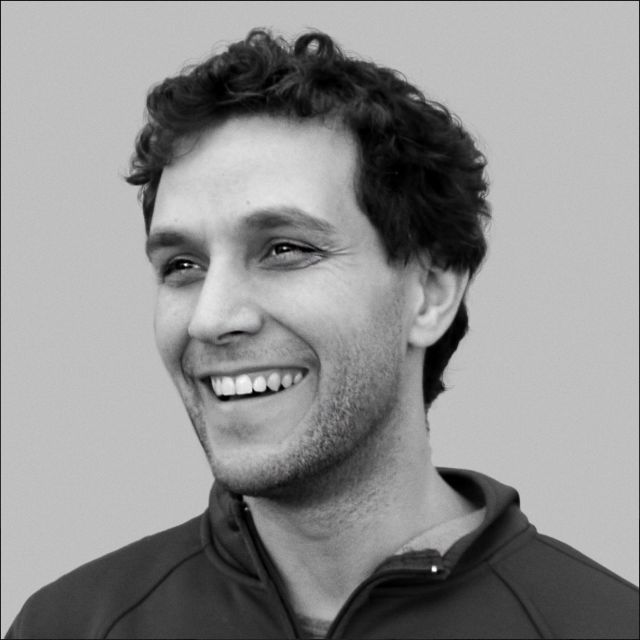
Andrea Young is a Professor in the Department of Physics at the University of California Santa Barbara (UCSB), where they lead the Young Lab. The lab investigates quantum materials through nanofabrication and electronic measurement techniques. Affiliation: University of California Santa Barbara (Department of Physics) Research Interests: Andrea Young's work focuses on the interplay of symmetry, topology, and correlations in low-dimensional systems, particularly exploring superconductivity, magnetism, and fractionalization in graphene and van der Waals heterostructures . They utilize cryogenic measurements and heterostructure engineering to probe thermodynamic properties of these materials. Publication Trends: Recent articles emphasize twisted bilayer/trilayer graphene , moiré superlattices , and fractional quantum Hall effects , with keywords spanning condensed matter physics, quantum materials, and nanofabrication. Scientific Awards: Moore Foundation grant (2020) NSF fellowship (2020) CAREER award (2017) Advising: Andrea Young has advised PhD students such as Dr. Haoxin Zhou (2021) and Dr. Marec Serlin (2021). Their lab also supports research fellows like James Ehrets, who received an NSF fellowship in 2020. Labs & Teams: The Young Lab at UCSB specializes in creating van der Waals heterostructures and developing techniques like picosecond transport and nanoscale interferometry to study fragile electronic states.
University of Illinois Urbana-ChampaignUnited States
Ali Yazdani is an Adjunct Professor at the University of Illinois Urbana-Champaign's Grainger College of Engineering, Department of Physics, and Director of the Princeton Center for Complex Materials at Princeton University. His research focuses on quantum condensed matter physics, leveraging scanning tunneling microscopy (STM) and spectroscopy to explore novel quantum phases in materials such as graphene, twisted bilayer graphene, and topological insulators. Key achievements include the first direct observation of Hofstadter's fractal energy spectrum in quantum materials (2025), studies on Majorana fermions in atomic chains, and investigations into strongly correlated Chern insulators. His work bridges theoretical predictions with experimental validation, emphasizing quantum materials' topological and correlated properties. Affiliations: Princeton University, Department of Physics; University of Illinois Urbana-Champaign, Grainger College of Engineering. Research Themes: Quantum fractals, topological insulators, superconductivity, Majorana fermions, moiré materials. Research Summary: Dr. Yazdani’s lab employs advanced STM techniques to visualize electronic wavefunctions and study correlated phases. Notable projects include: - Visualization of Hofstadter’s butterfly in twisted bilayer graphene. - Discovery of valley skyrmions in graphene quantum Hall ferromagnets. - Unconventional superconductivity in magic-angle graphene. - Development of methods to detect Majorana zero modes. Labs/Teams: Yazdani Lab at Princeton University focuses on quantum materials and topological phases, collaborating with theorists and experimentalists globally.
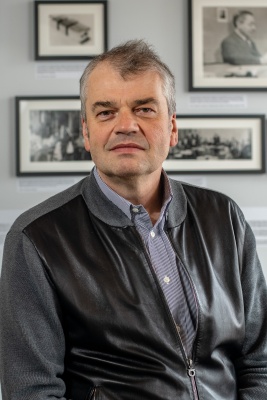
Changxi Zheng is an Associate Professor in the Department of Computer Science at Columbia University's School of Engineering and Applied Science (SEAS). He directs Columbia's Computer Graphics Group (C2G2) within the Columbia Vision and Graphics Center (CVGC). After receiving his PhD from Cornell University, he joined the faculty of Computer Science Department at Columbia, where he has established himself as a leading researcher in computer graphics and scientific computing. Dr. Zheng's research spans multiple areas of applied computer science with a particular focus on computer graphics and scientific computing. His work centers around developing numerical models for simulating physical phenomena involving complex motions such as fluids, bubbles, and thin rods, along with their resulting acoustic waves. Leveraging computational insights from these models, he devises methods for improving tangible object creation, enabling novel human-computer interactions, and developing software tools for acoustic and photonic devices. His research has attracted significant public interest and media coverage, including projects like FontCode, AirCode, and Computational Metallophone Design. His recent publications reveal a strong interdisciplinary approach, bridging computer graphics, physics simulation, machine learning, and hardware design. His work demonstrates consistent innovation in computational methods for simulating physical phenomena and applying these techniques to practical problems in 3D printing, acoustic modeling, and interactive systems. The breadth of his research spans from fundamental physics-based simulations to practical applications in industry. Columbia SEAS Dean's Fellow (for advised students) NSF Graduate Research Fellow (for Ruilin Xu) Snap Research Fellow (for Rundi Wu) CKGSB Fellow (for Yun Fei) Adobe Research Fellow (for Gabriel Cirio) Marie Sklodowska-Curie Individual Fellow (for Rundi Wu) Best Paper Award at ACM International Conference on Multimedia (ACMMM), 2019 Dr. Zheng actively mentors a diverse group of students, including current PhD candidates and postdoctoral researchers. His research group has received support from various sources that enable their innovative work in computational graphics and physics-based simulation. He has supervised numerous successful students who have gone on to positions at leading technology companies including Adobe, Tencent, Facebook, and academic institutions. As director of Columbia's Computer Graphics Group (C2G2) within the Columbia Vision and Graphics Center (CVGC), Dr. Zheng leads a vibrant research team focused on advancing the state of the art in computer graphics, physics-based simulation, and their applications. The group maintains strong collaborations with industry partners and academic institutions worldwide, fostering an environment of innovation and practical application of theoretical concepts.
Dmitri N. Basov is the Higgins Professor of Physics at Columbia University, with a joint appointment as Professor of Physics at the University of California, San Diego. His research focuses on quantum materials, utilizing nano-optical techniques to investigate electronic phenomena and polaritonic systems. He leads the Basov Group at Columbia and has pioneered methods for imaging quantum materials at nanoscale resolutions. PhD in Physics, Lebedev Physics Institute (1991) Professor, Columbia University (2016–present) Professor, UC San Diego (2001–present) Postdoctoral Research, McMaster University (1992–1996) His work spans plasmonics , terahertz spectroscopy , and van der Waals heterostructures , with recent emphasis on polariton dynamics, superconductivity modulation, and moiré-driven electronic states. He employs cutting-edge tools like quantum scanning near-field optical microscopy (q-SNOM) and resonant inelastic X-ray scattering. Besides leading major grants such as the Gordon and Betty Moore Investigator award and Vannevar Bush Fellowship, Basov has received accolades like the National Academy of Sciences membership (2020), Ken Button Prize (2019), and Frank Isakson Prize (2012). His team explores novel quantum phases in 2D and topological materials.
Prof. Alexander Holleitner leads the Chair of Nanotechnology and Nanomaterials at the Department of Physics, Technical University of Munich , under the Walter Schottky Institute. His research focuses on ultrafast optoelectronics, quantum optoelectronics, and excitonic systems in nanoscale circuits. Research Directions : Ultrafast optoelectronics, quantum optoelectronics, excitonic systems, THz time-domain spectroscopy, and nanofabrication of mixed organic/inorganic systems. Publications : Recent work spans hyperbolic polaritons, interlayer excitons, graphene nano-gap dynamics, and defect engineering in 2D materials. Collaborations include interdisciplinary projects with groups studying semiconductor heterostructures and quantum technologies. His lab welcomes students and researchers interested in experimental physics, quantum electronics, and nanofabrication.
Yuan Cao is an Assistant Professor of Electrical Engineering and Computer Science at the University of California, Berkeley, since July 2024. He completed his BSc in Applied Physics at the University of Science and Technology of China (2014), followed by an MS (2016) and PhD (2020) in Electrical Engineering at MIT. Before joining Berkeley, he was a Junior Fellow at Harvard University (2021–2024). His research focuses on the electrical properties of low-dimensional materials and their applications via nanotechnology, including MEMS. Notable achievements include pioneering work on twisted graphene superconductivity, recognized as a Nature’s 10 highlight (2018) and Physics Breakthrough of the Year . He has received awards such as the Sackler Prize in Physics (2020), McMillan Award (2021), and NSF CAREER Award (2025). His research integrates experimental physics, nanofabrication, and low-temperature transport to explore novel quantum phenomena in 2D materials. Recent breakthroughs include the MEGA2D platform, an on-chip MEMS system enabling precise manipulation of 2D materials. Collaborations with Prof. Nguyen secured a $1M DARPA NIMBUS contract, and his NSF CAREER award funds studies on reconfigurable graphene superlattices. Education: PhD, Electrical Engineering, MIT (2020) MS, Electrical Engineering, MIT (2016) BSc, Applied Physics, USTC (2014) Awards: NSF CAREER Award (2025) Sackler Prize in Physics (2020) McMillan Award (2021) TIME 100 Next (2019) Grants & Funding: $1M DARPA NIMBUS Program Contract (2023) $810K NSF CAREER Award (2025) Prof. Cao’s lab actively recruits motivated graduate students and postdocs with expertise in 2D materials, MEMS, nanofabrication, or low-temperature physics. The lab is part of UC Berkeley’s College of Engineering, fostering interdisciplinary research at the forefront of quantum and nanoscale systems.
David Goldhaber-Gordon is a Professor in the Department of Physics at Stanford University, specializing in nanoscale electron behavior and quantum effects. His research spans nanofabrication, materials growth, low-temperature measurements, and scanning probe techniques, focusing on materials like graphene, carbon nanotubes, and topological insulators. Harvard AB in Physics (1994) Harvard AM in History of Science (1994) MIT PhD in Physics (1999) His work explores electron organization and flow in nanoscale systems, emphasizing quantum effects and interactions. Research areas include twisted bilayer graphene, helical trilayer platforms, and topological insulator applications for quantum devices and energy technologies. Recent publications focus on strain effects in twisted graphene, moiré superlattice engineering, and quantum anomalous Hall integration. Themes include topological phases, correlated insulators, and metrology advancements. Co-founder and Director, Center for Probing the Nanoscale (NSF Center) Junior Fellow, Harvard Society of Fellows He teaches advanced physics labs, independent research, and dissertation courses at Stanford. His group collaborates with materials scientists, engineers, and chemists to develop novel electronic applications.
Jiwoong Park is Professor of Chemistry and Chair of the Department of Chemistry at the University of Chicago, and simultaneously Professor of Molecular Engineering in the Pritzker School of Molecular Engineering. His interdisciplinary research group, the Park Group, is jointly affiliated with the James Franck Institute and the Materials Research Science and Engineering Center (MRSEC) at UChicago, and operates from the Gordon Center for Integrative Science. Education & Training Ph.D., University of California, Berkeley (2003) B.S., Seoul National University (1996) Junior Fellow, Rowland Institute, Harvard University (2003–2006) Assistant → Associate Professor, Department of Chemistry and Chemical Biology, Cornell University (2006–2016) Research Interests Park’s research centers on the science and technology of precisely engineered nanomaterials, particularly atomically-thin two-dimensional (2D) crystals and van der Waals solids. Spanning chemistry, physics, materials science and electrical engineering, his group develops novel synthetic, imaging and characterization techniques to uncover new physical phenomena and translate them into scalable device technologies. Key thrusts include growth of wafer-scale molecular crystals, optical and transport spectroscopy of 2D semiconductors, mechanical behavior of polycrystalline nanomembranes, and integration of these materials into photonic, electronic and energy-harvesting devices. Scientific Awards Elected Fellow of the American Physical Society (2022) – “for the development of synthetic, imaging, and characterization techniques of atomically thin materials and the discovery of novel properties of van der Waals solids.” Clarivate Highly Cited Researcher (2023) – recognition for multiple papers ranking in the global top 1% by citations in Materials Science and Chemistry. Group & Collaborations The Park Group is an interdisciplinary team of postdocs, graduate researchers and undergraduates housed in the Gordon Center for Integrative Science. The group actively collaborates with colleagues across the Department of Chemistry, Department of Physics, and the Pritzker School of Molecular Engineering, leveraging shared facilities at the James Franck Institute and MRSEC to push the frontiers of 2D material science.
Massachusetts Institute of TechnologyUnited States
Nuh Gedik is the Donner Professor of Physics at MIT, leading the Gedik Research Group. His work focuses on quantum materials, employing advanced optical and electron spectroscopies. He joined MIT in 2008 as an Assistant Professor, earned his B.S. from Bogazici University (1998), and Ph.D. from UC Berkeley (2004) before postdoctoral work at Caltech. His awards include NSF CAREER, DOE Early Career, Sloan Fellowship, and APS Fellow recognition. Research interests include ultrafast dynamics in topological insulators, charge density waves, and light-induced phenomena. Key techniques include time-resolved ARPES, ultrafast electron diffraction, and terahertz spectroscopy. His group explores hidden orders in quantum materials and develops novel measurement tools. Recent work includes metastable magnetization control in FePS₃ and Floquet-Bloch states in graphene. Affiliated with the MIT Center for Quantum Engineering and Institute for Soldier Nanotechnologies.
Michael Knap is an Associate Professor of Collective Quantum Dynamics at the Technical University of Munich (TUM), within the Department of Physics at the TUM School of Natural Sciences. His research group focuses on condensed matter theory, quantum many-body systems, and quantum simulation. Knap holds office in room 5101.01.037 at James-Franck-Str. 1, 85748 Garching b. München, and can be reached at michael.knap@ph.tum.de or +49 (89) 289 - 53777. Prof. Knap's research delves into the rich physics of quantum many-body systems, particularly exploring non-equilibrium dynamics and transport phenomena in ultracold quantum gases, interacting light-matter systems, and correlated quantum materials. His work spans multiple subfields including topological phases of matter, quantum simulation with trapped ions, fracton physics, and quantum computation. He develops novel numerical approaches based on quantum information theory and utilizes artificial intelligence and machine learning to tackle challenging problems in condensed matter physics. His group's research connects fundamental theoretical questions with experimental implementations in quantum simulators. The analysis of Prof. Knap's recent publications (2023-2025) reveals a strong focus on topological quantum matter, quantum simulation, and emergent phenomena in constrained quantum systems. His work frequently bridges condensed matter theory with quantum information science, as evidenced by publications on fracton hydrodynamics, higher-form symmetries, and quantum error correction. There's a clear progression toward increasingly complex quantum systems and connections to experimental implementations on quantum processors. His research shows significant interdisciplinary reach, connecting condensed matter physics with quantum computing and quantum information theory. ERC Consolidator Grant (2025) ERC Starting Grant (2019) Supervisory Award, TUM Department of Physics (2018) Promotio sub auspiciis Praesidentis rei publicae, Austria (2013) Prof. Knap has established a robust research program supported by prestigious European Research Council grants. His group actively collaborates with both theoretical and experimental groups worldwide, particularly in the quantum simulation community. He has supervised numerous students through Master's Seminars on Collective Quantum Dynamics covering topics like quantum simulation with trapped ions and theoretical quantum computation. His research has received significant attention, with several publications featured as Editors' suggestions and Research Highlights in leading journals. The Collective Quantum Dynamics group maintains strong connections with experimental quantum simulation efforts, particularly in the areas of ultracold atoms and trapped ion systems. Knap's theoretical work often provides frameworks for interpreting experimental results in quantum simulators, creating a productive feedback loop between theory and experiment. His group participates in collaborative research networks focused on advancing quantum simulation capabilities and understanding fundamental aspects of quantum many-body physics.
Prof. Dr. Andreas Hirsch is a Professor in the Department of Chemistry and Pharmacy at Friedrich-Alexander University Erlangen-Nürnberg (FAU) . His research focuses on organic chemistry , graphene functionalization , carbon nanomaterials , and molecular solar thermal systems , with significant contributions to 2D material engineering and supramolecular chemistry . Chair of Organic Chemistry II (FAU Erlangen-Nürnberg) ResearchGate: Profile Google Scholar: Profile His work spans graphene patterning via laser writing , black phosphorus stabilization using perylenediimides , and covalent functionalization of 2D materials like MoS 2 and carbon nanotubes . Recent studies include non-covalent passivation of BP nanosheets and electroswitchable catalysis for solar thermal energy storage . His scientific awards include the Second Place Poster Award (2023) and Robert C. Haddon Research Award (2021) . Collaborative projects highlight smart nanoparticle systems for radiation therapy and environmental remediation applications.
Yong Chen is a Professor of Electrical and Computer Engineering and Physics at Purdue University. His research spans quantum physics, nanotechnology, and materials science, focusing on advanced 2D materials, topological insulators, and quantum transport phenomena. Condensed Matter Physics Quantum Computing Nanotechnology Materials Science Photonics Spintronics Recent publications highlight his work on van der Waals heterostructures, Bose-Einstein condensates, Raman spectroscopy applications, and quantum interference effects. His studies often intersect with machine learning, energy storage, and synthetic magnetic field engineering of quantum systems. Yong Chen's email address is yongchen@purdue.edu , and further information can be accessed at his Purdue University profile .
Prof. Atac Imamoglu is a Full Professor at the Department of Physics and Deputy Head of the Institute for Quantum Electronics at ETH Zurich since 2002. His research focuses on quantum optics, condensed matter physics, and semiconductor systems, with notable contributions to exciton-polaritons, quantum Hall effects, and cavity quantum electrodynamics. He holds a Ph.D. from Stanford University (1991) and has been recognized with prestigious awards including Fellowships from the American Physical Society and Optical Society of America. Education: 1991 Ph.D., Stanford University 1987 M.S., Stanford University 1985 B.S., Middle East Technical University Research interests span quantum electronic systems, with emphasis on moiré heterostructures, excitonic interactions, and topological phenomena. Recent work explores Wigner crystals, Feshbach resonances in semiconductor bilayers, and optically tunable quantum confinement. Over 2300 citations highlight his impact in Physical Review Letters , Nature series journals, and specialized optics/physics journals. Awards: Member of Turkish National Academy of Sciences (2002) Wolfgang Paul Award (Alexander von Humboldt Foundation) TÜBİTAK Science Award (2001) Leadership roles include organizing workshops on quantum information and nonlinear optics, and editorial roles at Journal of Quantum Information and Optical Physics B . Active in theoretical/experimental collaborations, his lab develops novel quantum sensing techniques and explores cavity-enhanced phase transitions in 2D materials.
Victor M. Yakovenko is a Professor of Physics at the University of Maryland, College Park, and a Fellow of the American Physical Society. His research spans econophysics, condensed matter theory, and theoretical physics, with a focus on income/wealth distribution, entropy in economics, and quantum materials. He holds a Ph.D. in Theoretical Physics from the Landau Institute for Theoretical Physics (1987) and joined UMD in 1993, becoming a Full Professor in 2004. Notable awards include the Packard Fellowship and Sloan Research Fellowship. Research interests include applications of statistical physics to economic systems, dynamics of population growth, CO₂ emissions, and optical control of magnetism. He leads the Condensed Matter Theory group and is affiliated with the Joint Quantum Institute (JQI). Recent talks address econophysics, population trends, and interdisciplinary collaborations. Publications span econophysics models, energy inequality analysis, and topological materials. Grants include an Institute for New Economic Thinking (INET) project on income distribution. His work bridges physics and socioeconomic systems, with media coverage in New Scientist , Science , and public policy discussions.
Salvador Barraza-Lopez is a Professor of Physics at the University of Arkansas' College of Arts & Sciences. A theoretical physicist specializing in 2D materials, he developed discrete differential geometry approaches for strain effects in graphene and pioneered 2D ferroelectric research. As a DOE Early Career Awardee (2016) and MonArk NSF Quantum Foundry co-founder, he leads interdisciplinary collaborations across physics, materials science, and mathematics. PhD in Physics from University of Illinois-Urbana Champaign (2006) Postdoctoral work at Virginia Tech and Georgia Tech Established theory of structural transformations in 2D ferroelectrics His research spans quantum phase transitions in 2D systems, strain engineering, and topological materials. Three major review articles in Reports on Progress in Physics (2017, 2023) and Reviews of Modern Physics (2021) synthesize his work on mechanical, electronic, and optical properties of strained 2D materials. Recent publications focus on winding Berry dipoles in strained graphene, size-dependent ferroelectric transitions in homobilayers, and symmetry-breaking effects in moiré superlattices. Collaborations with Kai Chang (Beijing) and Stuart Parkin (MPI-Halle) demonstrate international impact. Awards: DOE Early Career Award (2016) Outstanding Mentor Recognition (2013) Young Investigator of the Year (2013) Mentored 2 NSF Graduate Fellows (Erin Farmer, Joseph Roll) and 3 Goldwater Scholars. Current group includes 2 undergraduates, 3 PhD students, and 2 postdocs. His theoretical frameworks enabled experimental collaborations with DOE labs and Max Planck Institute, securing $0.5M for Arkansas supercomputer upgrades (2024).