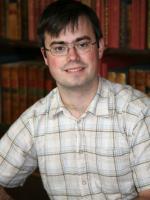
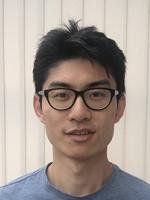
Ana Peon Nieto is a Permanent Labor Teacher (Lecturer) at the Department of Mathematics, Faculty of Mathematics, Universidad Santiago de Compostela. She is affiliated with the Galician Mathematical Research and Technology Center (CITMAga) and her research focuses on algebraic geometry, differential geometry, and mathematical physics, particularly in areas related to Higgs bundles and moduli spaces. Educational Background: PhD in Mathematics, Universidad Autónoma de Madrid (2013), thesis titled "Higgs bundles, real forms and the Hitchin fibration" supervised by Dr. Oscar García Prada and Dr. Luis Alvarez Consul.
Prof. Dr. Charles Vial is a Professor at the Faculty of Mathematics of Bielefeld University. He actively contributes to the Collaborative Research Center TRR 358, leading subprojects C01 (Hyper-Kähler Varieties and Moduli Spaces), C07 (Derived Splinters and Full Exceptional Collections), and C08 (Cohomological Structures of Hyper-Kähler Varieties). His work bridges algebraic geometry, motives, and representation theory. Research Interests include algebraic cycles, Chow motives, hyper-Kähler varieties, K3 surfaces, derived categories, and cohomological structures. He investigates the interplay between geometric objects and their algebraic representations, particularly focusing on filtrations, splinter properties, and universal domains. Scientific Contributions are evident in his recent publications (2025–2019), which explore diagonal decompositions, Fourier-Mukai equivalences, birational motives, and cohomological conjectures. His work spans topics like the generalized Franchetta conjecture, zero-cycle analysis, and motivic Torelli theorems, often collaborating with researchers such as Jeffrey Achter, Lie Fu, and Sebastian Casalaina-Martin. Projects involve international collaborations under the TRR 358 initiative, aiming to resolve conjectures related to derived splinters, exceptional collections, and hyper-Kähler moduli spaces. His research is funded by the German Research Foundation .
Mr. Carl Mazzanti is a researcher affiliated with the Faculty of Mathematics at Bielefeld University . His contact details include the email address cmazzanti@math.uni-bielefeld.de and office location UHG V3-238. He is associated with the SFB / Transregio 358 "Integral Structures in Geometry and Representation Theory" and is a member of the Bielefeld Graduate School in Theoretical Sciences . No detailed research profile, publications, or scientific awards have been provided in the available data.
Kai Fu is a postdoctoral researcher at the Max Planck Institute for Mathematics in the Sciences in Leipzig, working in the Geometry, Groups, and Dynamics group led by Anna Wienhard since 2025. He earned his PhD from the Institut de Mathématiques de Bordeaux under co-advisors Vincent Delecroix and Elise Goujard in the Geometry group. His research centers on real two-dimensional manifolds (surfaces) and moduli spaces, with specialized focus on holomorphic/meromorphic Abelian differentials and flat cone surfaces. He applies combinatorial techniques including Delaunay triangulations to analyze saddle connections, cylinder counting problems, and moduli space compactifications, bridging differential geometry, topology, and computational methods. He operates within the Geometry, Groups, and Dynamics research framework at the Max Planck Institute for Mathematics in the Sciences.
Qiongling Li is a Research Fellow at the Chern Institute of Mathematics, Nankai University, Tianjin, China, with a distinguished academic background spanning top-tier institutions globally. Her career trajectory reflects deep specialization in geometric mathematics and theoretical frameworks. Her formal education includes: Bachelor's degree from Nankai University (2006-2010) PhD from Rice University under Mike Wolf (awarded December 2014) Research expertise centers on advanced mathematical structures, particularly Moduli Spaces and Quantum Geometry, informed by postdoctoral work at MSRI and QGM-Aarhus University. Her interdisciplinary approach bridges pure mathematics with theoretical physics applications, emphasizing geometric analysis and topological methods in contemporary mathematical research. Professional appointments comprise a postdoctoral fellowship at MSRI (Berkeley, spring 2015) and a joint postdoctoral position at Caltech and QGM-Aarhus University (August 2015-July 2018), establishing her collaborative network across leading mathematical research hubs. Contact details: qiongling.li@gmail.com qiongling.li@nankai.edu.cn
Dominic Bunnett is a Researcher at Technische Universität Berlin, associated with the Nonlinear Algebra research group at the Max Planck Institute for Mathematics in the Sciences (MPI MiS) in Leipzig. Following his 2019 PhD from Freie Universität Berlin under Victoria Hoskins, he conducted collaborative research at the University of Oxford with Frances Kirwan before joining TU Berlin to work under Michael Joswig and collaborate with Bernd Sturmfels. His academic background includes: PhD in Mathematics, Freie Universität Berlin (2019), supervised by Victoria Hoskins Visiting Researcher position at University of Oxford (2019) with Frances Kirwan Bunnett's research centers on Algebraic Geometry with deep specialization in Moduli Theory, investigating moduli spaces of algebraic varieties and objects including sheaves, quiver representations, and holomorphic triples. He focuses on computing topological invariants of these spaces using cutting-edge computational techniques and mathematical software, with current projects spanning tropical plane curves, derived categories, and hypersurfaces in weighted projective spaces. His work bridges theoretical algebraic geometry with practical computational implementation. Scientific Awards: No awards, fellowships, or medals mentioned in source materials. Advising and Grants: No information regarding student supervision, grant funding, or research projects beyond described computational work was provided in the text. Bunnett maintains active involvement in mathematics development initiatives in Zimbabwe and Tanzania, advocating for research capacity building in these regions. Outside academia, he pursues interests as an avid reader and musician. His primary research environment is the Nonlinear Algebra group at MPI MiS, which provides a collaborative framework connecting algebraic theory, geometric structures, and computational optimization techniques under directors Bernd Sturmfels and Michael Joswig.
Clément Dupont is an Associate Professor at the University of Montpellier, affiliated with the Institut Montpelliérain Alexander Grothendieck (IMAG), a leading mathematics research institute in France. His work bridges pure mathematics and theoretical physics through deep investigations of algebraic structures. His research focuses on Algebraic Geometry , Number Theory , and Mathematical Physics , particularly exploring motives, periods, regulators , and their connections to quantum field theory amplitudes . He investigates multiple zeta values , mixed Hodge theory , and combinatorial Hopf algebras within the framework of hyperplane arrangements and operadic structures . His recent work demonstrates how motivic methods provide rigorous foundations for physical computations in string theory. Analysis of his publication record reveals a consistent trajectory from foundational work on hyperplane arrangements and motivic coactions toward cutting-edge applications in superstring amplitude calculations and regularized integrals . His collaborations with Francis Brown and others have established critical connections between abstract motivic theory and concrete physical phenomena. Dupont actively contributes to the mathematical community through survey articles and expository work, including an introduction to mixed Tate motives and translations of advanced topics for broader audiences. His academic service includes participation in the Séminaire Bourbaki and organization of specialized conferences. His research is conducted within the IMAG institute, which provides a collaborative environment for interdisciplinary work at the intersection of geometry, topology, and mathematical physics. Current projects focus on logarithmic structures in quantum field theory and operadic formulations of geometric phenomena.
Samantha Fairchild is a tenured Assistant Professor at the Technical University of Eindhoven in the Netherlands, where she is a member of the Discrete Algebra and Geometry research group. Her academic journey includes a PhD in Mathematics from the University of Washington (2021) under Jayadev Athreya, followed by positions as a W2 Research Group Leader and postdoc at the Max Planck Institute for Mathematics in the Sciences. Her educational background shows a strong foundation in mathematical research with progression from doctoral studies to independent research leadership. She has established herself at the intersection of multiple mathematical disciplines through her postdoctoral and faculty positions. Dr. Fairchild's research focuses on analyzing discrete sets arising from geometry, particularly through the study of translation surfaces. Her work bridges dynamical systems with algebraic geometry, exploring how geometric structures can inform algebraic properties. She has developed a growing interest in the interactions between dynamical systems and machine learning, seeking novel applications for theoretical mathematics. Her research methodology emphasizes visual approaches and collaborative problem-solving, as reflected in her statement that 'Counting, pictures, dynamical systems, and collaborations make research fun!' Analysis of her publication record reveals a consistent trajectory in geometric dynamics with increasing interdisciplinary connections. Her early work focused on fundamental properties of translation surfaces and lattice orbits, while recent publications demonstrate expansion into algebraic geometry applications and computational aspects. The progression shows growing sophistication in connecting discrete geometry with broader mathematical frameworks, particularly through collaborations with researchers in nonlinear algebra. Dr. Fairchild is actively involved in mentoring undergraduate researchers, as evidenced by her participation in multiple REU (Research Experiences for Undergraduates) programs at institutions including Cornell and Penn State. Her teaching philosophy emphasizes problem-solving skills development through active learning techniques, incorporating worksheets and group work to foster student independence. She maintains productive research collaborations across multiple institutions, as shown by her diverse publication co-authorships. As a member of the Discrete Algebra and Geometry group at TU Eindhoven, she contributes to a vibrant research environment focused on the intersection of algebraic structures and geometric configurations. Her current work exploring connections between translation surfaces and algebraic curves represents a cutting-edge direction in modern geometric research.
Prof. Dr. Eva Viehmann is a mathematician specializing in arithmetic geometry, with a focus on Shimura varieties, the Langlands program, and moduli spaces. She has been a Professor at the University of Muenster since 2022, following a prior professorship at the Technical University of Munich (2012–2022). Her work intersects algebraic geometry and number theory, particularly through affine Deligne-Lusztig varieties and Newton stratifications. Education: Diploma in Mathematics (2003), Doctorate (2005), and Habilitation (2010) at the University of Bonn. Her research explores the geometry of moduli spaces of shtukas, local Shimura varieties, and the interplay between these structures and automorphic representations. She has received prestigious awards including the Gottfried Wilhelm Leibniz-Prize 2024, ERC Starting Grant (2011–2016), and ERC Consolidator Grant (2018–2024). She was a member of the Junge Akademie (2011–2016) and the National Academy of Sciences Leopoldina. Prof. Viehmann's publications highlight her contributions to the Langlands program, Newton stratifications in loop groups, and connected components of affine Deligne-Lusztig varieties in mixed characteristic. Her work bridges abstract theory with concrete geometric structures in arithmetic contexts. Scientific Awards: ERC Starting Grant (2011–2016) ERC Consolidator Grant (2018–2024) Gottfried Wilhelm Leibniz-Prize (2024) Member of Junge Akademie (2011–2016) Member of the National Academy of Sciences Leopoldina She has also served as an invited sectional speaker at the International Congress of Mathematicians (ICM) 2018 in Rio de Janeiro.
Dr. Edward Mazenc is a Research Fellow in Theoretical Physics at ETH Zürich, affiliated with the group of Prof. Matthias Gaberdiel. His work focuses on gauge/string duality, spacetime emergence, and the AdS/CFT correspondence. Previously, he was a Kadanoff Fellow at the University of Chicago and completed his PhD at Stanford under Prof. Sean Hartnoll. His research bridges quantum information theory, random matrix theory, and topological string models. Education: PhD in Theoretical Physics, Stanford University (2017) Masters in Mathematics, University of Cambridge (Maths Tripos) Undergraduate Physics, Massachusetts Institute of Technology (MIT) Research interests include deriving exact equivalences between matrix integrals and topological strings, exploring connections between random matrices and moduli space geometry, and extending these results to full AdS/CFT frameworks. His recent work with Prof. Rajesh Gopakumar established foundational results in the simplest gauge/string duality. Key contributions span theoretical cosmology (de Sitter microstates), quantum gravity deformations, and interdisciplinary applications like N95 mask decontamination using thermal methods.
Professor Tom Fisher holds a position as Professor in Number Theory at the Department of Pure Mathematics and Mathematical Statistics (DPMMS) at the University of Cambridge. His academic profile shows continuous research activity with publications extending to 2025, demonstrating his active engagement in the field. His primary research interests include: Arithmetical Algebraic Geometry Computational Number Theory Elliptic Curve Descent Calculations Construction of explicit elements in the Tate-Shafarevich group Professor Fisher's work focuses on developing computational methods for studying elliptic curves and their arithmetic properties. His research has particularly emphasized descent calculations, which are fundamental techniques for understanding the rational points on elliptic curves. His publications reveal a strong emphasis on explicit constructions and algorithms for computing various invariants in arithmetic geometry. Analysis of his recent publications (2021-2025) shows consistent contributions to several key areas: elliptic curve descent methods, Jacobian varieties of genus 2 curves, Cassels-Tate pairings, and density results in arithmetic statistics. His work often bridges theoretical number theory with practical computational approaches. Professor Fisher has maintained significant collaborative relationships throughout his career, frequently working with leading mathematicians including Manjul Bhargava, John Cremona, and Michael Stoll on projects related to elliptic curves and their arithmetic properties. These collaborations have resulted in numerous joint publications across top mathematics journals. His research has practical applications in cryptography and theoretical significance for understanding the deep structure of elliptic curves and their rational points. The consistent output of high-quality research demonstrates his standing as an active contributor to modern number theory.
Rong Zhou is an Associate Professor at the University of Cambridge, affiliated with the Faculty of Mathematics and the Department of Pure Mathematics and Mathematical Statistics. His research focuses on arithmetic geometry, representation theory, and the geometry of Shimura varieties, with particular emphasis on their moduli spaces, integral models, and connections to Galois representations. His recent publications (2025-2023) explore topics such as the basic locus of GSpin Shimura varieties, smooth loci of affine Schubert varieties, and motivic cohomology of quaternionic Shimura varieties. These works intersect algebraic geometry, number theory, and automorphic forms, addressing foundational questions about moduli spaces, l-adic cohomology, and level raising phenomena. Rong Zhou can be contacted at rz240@dpmms.cam.ac.uk (Room E1.04, Telephone: 01223 764270). His personal homepage is available at https://www.dpmms.cam.ac.uk/~rz240 .
Sjoerd Beentjes is a researcher at the University of Edinburgh's School of Mathematics, with a background in algebraic geometry and a current focus on biomedical data science. He holds a PhD from the University of Edinburgh (2022) and a joint Master's degree in Mathematics and Physics from the University of Amsterdam (2018). His career includes international collaborations and postdoctoral research in Glasgow and Bonn. Beentjes' research bridges pure mathematics and biomedicine, particularly analyzing large datasets like the UK Biobank to study genetic associations with diseases. He collaborates across disciplines with the School of Informatics and the Institute of Genetics and Cancer, mentoring two PhD students in this area. His teaching includes a Master’s course on biomedical data science using R programming. His academic journey began with a passion for solving mathematical problems, leading to a shift from pure algebraic geometry (e.g., Calabi-Yau threefolds) to applied research in genetics and cancer biology. He advocates for cross-disciplinary collaboration as critical to modern scientific progress. Outside academia, Beentjes pursues music, playing piano and drums, though spatial constraints temporarily halted his drumming in Edinburgh.
Dr David Jordan is a Professor in the School of Mathematics at the University of Edinburgh, specializing in topological field theory and quantum algebra. His research bridges mathematics and physics, focusing on categorical symmetries in quantum systems. He collaborates globally, notably as a Principal Investigator in the Simons Collaboration on Global Categorical Symmetries, exploring symmetries in quantum field theories. Despite shifting from physics to mathematics early in his academic journey, he maintains close ties with physicists to formalize quantum mechanical anomalies mathematically. His research interests emphasize quantum groups, algebraic geometry, and representation theory, with a focus on structures like skein modules, character varieties, and braided tensor categories. Teaching highlights include foundational courses like Proofs and Problem Solving, emphasizing mathematical rigor and critical thinking for undergraduates. He advocates for students to embrace the challenge of university-level mathematics, stressing perseverance over innate ability. Dr Jordan’s work is highly collaborative, with most publications co-authored to foster open scientific dialogue. He has contributed to advancements in categorical symmetries, quantum cluster characters, and geometric Langlands duality, reflecting a commitment to interdisciplinary innovation in modern mathematics.
Pavel Safronov is a Lecturer in the School of Mathematics at the University of Edinburgh, where he has been since 2020. His academic journey began with a physics undergraduate degree at St. Petersburg University, followed by a master’s in physics at the University of Texas, where he transitioned to mathematics. His research focuses on mathematical physics, algebraic geometry, and category theory, particularly topological quantum field theories and shifted Poisson structures. He balances teaching and research, emphasizing interactive learning and student engagement. Education: BSc in Physics (St. Petersburg University), MSc in Physics (University of Texas). His postdoctoral work included positions at the University of Oxford, Max Planck Institute for Mathematics (Bonn), and institutions in Geneva and Zurich before settling in Edinburgh. Research interests span topological quantum field theories, symplectic geometry, and categorical structures. Recent work explores deformation quantization, coisotropic correspondences, and cohomological Hall algebras. His articles often bridge abstract algebraic geometry with physics concepts like supersymmetric twists and BV quantization. Teaching philosophy emphasizes face-to-face interaction to assess student understanding, advising students to engage actively with faculty and resources. Outside academia, he practices classical piano and enjoys hiking and cycling in Scotland, activities he finds rejuvenating for his research.