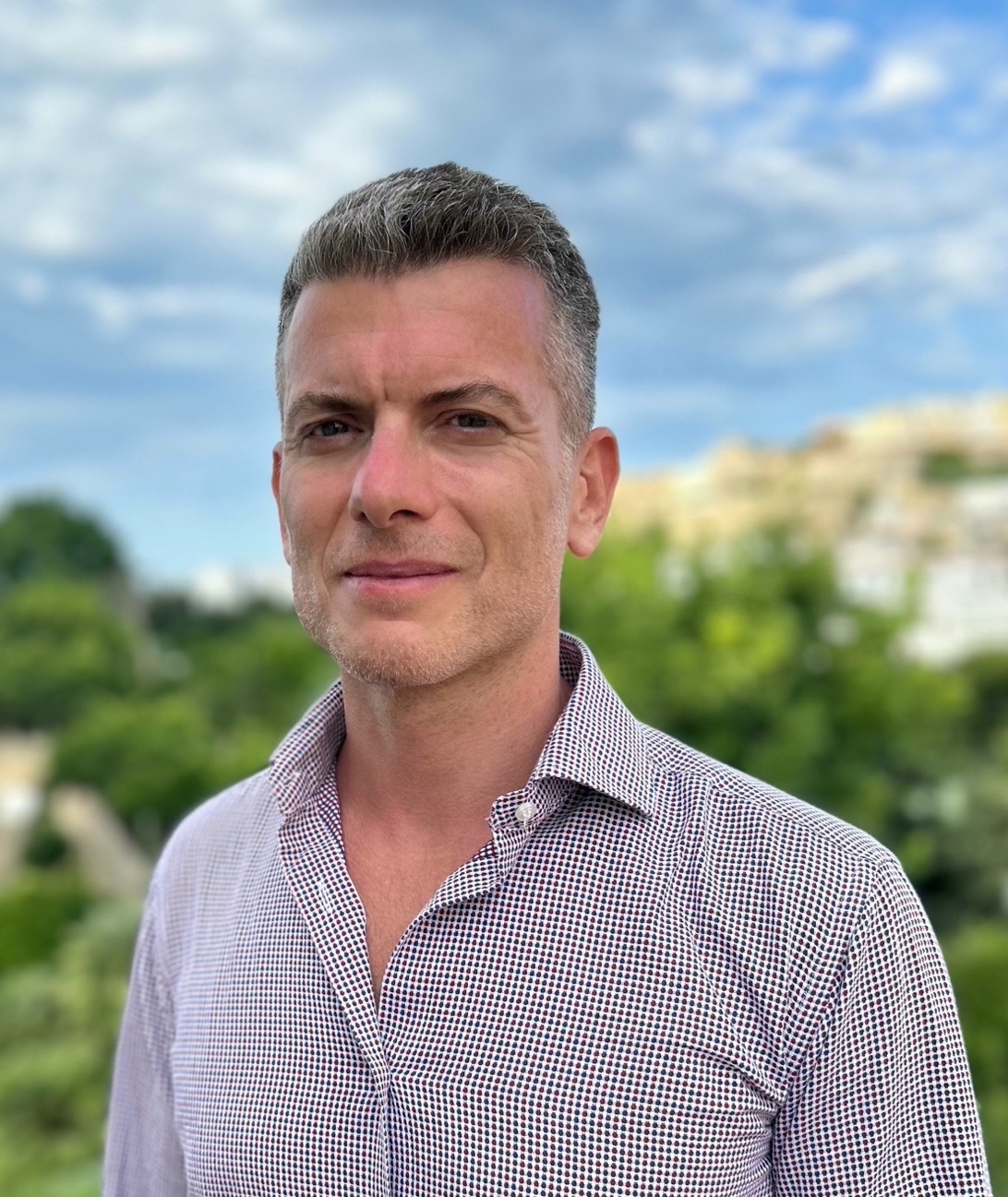
Roberto Albano is an external lecturer and teaching assistant at the Interuniversity Department of Regional and Urban Studies and Planning (DIST) within Politecnico di Torino's College of Architecture and Design . He has been actively involved in teaching urban planning modules across multiple degree programs since 2019, including courses like Urban Design Workshop B and Heritage Redevelopment and Enhancement Project . Teaching Roles : Course Lecturer for Heritage-focused Urban Planning (2020–2024), Collaborator for Urbanism modules in Heritage programs (2022–2024). Research Focus : Multidisciplinary approaches to urban design, heritage conservation, and spatial planning. His work emphasizes collaborative teaching frameworks and integrating design innovation into territorial strategies. Publications : Contributed to edited volumes on urban design pedagogy and regional development trends, notably co-editing Pieces of the City (2021) and analyzing design industry evolution in Piedmont (2018).
Riccardo Raheli is a Full Professor at the University of Parma , Department of Engineering and Architecture, with a career spanning over three decades in Information and Communication Technologies (ICT). He has served as Chair of the Councils for Telecommunications and Communication Engineering programs, and as representative of the University of Parma in CNIT and its Members' Assembly. Education: Laurea in Electronic Engineering (University of Pisa, 1983), M.Sc. in Electrical and Computer Engineering (University of Massachusetts, 1986), Postgraduate Diploma (Scuola Superiore Sant'Anna, 1987) Key Roles: President of Degree Councils (2002-2018), CNIT Committee Member (2000-2005), Editorial Board member for IEEE Transactions, Springer and MDPI journals His research bridges telecommunications , digital signal processing , and healthcare applications , producing extensive international publications and industrial patents. He has co-authored monographs including Detection Algorithms for Wireless Communications (Wiley, 2004) and LDPC Coded Modulations (Springer, 2009). Recent article trends show interdisciplinary work in automotive stress monitoring (IoT/Matlab-based systems), video processing for healthcare (neonatal seizures, respiratory monitoring), and acoustic field control (microphone virtualization, personal sound zones). His work spans machine learning applications in automotive systems, stochastic acoustic modeling , and power-line communications . Scientific Leadership : Co-Chair for IEEE conferences (ICC 2010, GLOBECOM 2011, ISPLC 2020) Editorial roles in 7+ international journals Grants & Collaborations : Led industrial patents in communications systems Coordinated CNIT Technical Reports series (2025) He teaches Wireless Communications and Digital Signals Laboratory , emphasizing Matlab/Simulink proficiency. His laboratory sessions focus on practical implementation of signal processing algorithms, requiring full software installation on personal devices.
Luca Vitagliano is a Full Professor of Geometry at the Department of Mathematics, University of Salerno. His research focuses on Differential Geometry and Mathematical Physics, with specializations in Poisson Geometry, Lie Algebroids/Groupoids, Differentiable Stacks, and Geometric Methods for PDEs. He has advised four PhD students, including Antonio Maglio (2025) and Pier Paolo La Pastina (2020). He teaches courses such as Geometry II, Homology and Cohomology, and Higher Geometry. His recent articles explore shifted contact structures, Nijenhuis integrations, and deformation cohomology. Education: Not explicitly stated in text Research Groups: Geometry Group at University of Salerno Affiliations: INdAM Intensive Period on Poisson Geometry, Poisson 2024 Conference His work bridges pure mathematics (homological methods, stack theory) with applications in mathematical physics, emphasizing geometric structures like Jacobi manifolds and coisotropic submanifolds. He actively participates in international conferences and publishes with collaborators globally.
Gianluca Setti is a Full Professor at the Department of Electronics and Telecommunications (DET) at Polytechnic University of Turin, where he has been serving since 2017. He previously held positions at the University of Ferrara from 1997 to 2017. His institutional roles include being the Contact Person for the Research Quality Evaluation process, Member of the Interdepartmental Center SmartData@PoliTO - Big Data and Data Science Laboratory, and Member of the University Quality Assurance Committee. He serves as Editor-in-Chief of the Proceedings of the IEEE, the first non-US editor to hold this position. Dr. Setti's research spans multiple interdisciplinary fields including machine learning, artificial intelligence, big data analytics, Internet of Things, biomedical signal processing, power electronics, and electromagnetic compatibility. His work bridges theoretical foundations with practical applications, particularly focusing on compressed sensing, neural networks, and circuit design for specialized applications. His research has significant implications for healthcare, sustainable infrastructure, and next-generation electronics. His publication record reveals a consistent trajectory from foundational work in chaotic systems and neural networks to contemporary applications in AI, IoT, and edge computing. The most recent publications demonstrate his focus on anomaly detection at the edge, neural oracles for biosignal processing, and power electronics innovations. His work shows strong integration between theoretical signal processing and practical circuit implementation. 1998 Caianiello prize (best Italian Ph.D. thesis on Neural Networks) IEEE Fellow (2006) IEEE Circuits and Systems Society Distinguished Lecturer (2004, 2015) 2004 IEEE CAS Society Darlington Award 2013 IEEE CAS Society Meritorious Service Award 2013 IEEE CAS Society Guillemin-Cauer Award 2019 IEEE Transactions on Biomedical Circuits and Systems best paper award Multiple best paper awards at major conferences including ECCTD2005, EMCZurich2005, ISCAS2011, PRIME2019, and EMCCOMPO2019 Dr. Setti has supervised numerous PhD students across various research domains including electromagnetic compatibility, signal and power integrity, communication networks, mechatronics and robotics. His research is supported by significant funding including national PRIN projects, EU-funded JTI-ECSEL initiatives, and commercial contracts. He leads the VLSILAB Group at DET, focusing on circuit architectures, embedded systems, and AI applications. His current projects include DECORI (anomaly detection), StorAIge (embedded storage for AI), PROGRESSUS (energy infrastructure), CONNECT (smart grid), and CONVERGENCE (wearable healthcare applications).
Enrico Gregorio serves as an Associate Professor in the Department of Computer Science at the University of Verona, Italy. His academic specialization is in Algebra (MATH-02/A), with research focused on representation theory of algebras. Based at Ca' Vignal 2, Floor 2, Room 16, he teaches across multiple degree programs including Mathematics, Computer Science, Bioinformatics, and Primary Teacher Education. His office hours are Tuesdays from 2:00 PM to 3:00 PM. Dr. Gregorio's scholarly work centers on advanced algebraic structures and their applications: Representation theory of algebras Tilting and cotilting theory Module categories and derived categories Category theory applications Finite and infinite dimensional algebras Cluster categories His research trajectory shows consistent focus on algebraic structures over two decades, from early work on module category equivalences to recent projects involving LaTeX formalism for academic writing. Many of his research initiatives have been supported through national funding mechanisms including PRIN grants. Dr. Gregorio actively contributes to academic governance as a member of the Computer Science Teaching Committee, Mathematics and Data Science Teaching Committee, and the Computer Science Department Council. He also participates in third mission activities including public engagement events and continuing education programs.
Marcella Menegale is an Associate Professor in the Department of Comparative Linguistic and Cultural Studies at Ca' Foscari University of Venice. She is affiliated with the Research Institute for Digital and Cultural Heritage. Her teaching responsibilities include courses on instructional design for language education, theories of language education, and multilingualism, across various degree programs such as Master’s in Languages and Civilizations, and Language Sciences. Her research focuses on multilingual education frameworks (CLIL, intercomprehension), learner autonomy, digital tools in language learning, and well-being in educational contexts. She has contributed to EU-funded projects like DigLit (combating social inequalities via digital tools) and EVAL-IC (evaluating intercomprehension skills). She has also served as an expert evaluator for the European Commission’s Horizon 2020 and ANVUR’s research evaluations. Key research areas include CLIL methodology, learner autonomy development, and the integration of technology in language pedagogy. She collaborates with international teams on projects like Transition from Secondary School CLIL to University EMI (funded by the British Council). Her work bridges theory and practice, addressing challenges in second-language teaching and digital-age curricula.
Sergio Agnoli is Associate Professor of General Psychology at the Department of Life Sciences, University of Trieste. He serves as Director of the Dynamics of Creativity Lab (DoC Lab) and Co-Coordinator of the Doctoral Course in Neuroscience and Cognitive Sciences. Academic Affiliation: University of Trieste Research Institutions: Marconi Institute for Creativity (Senior Scientist) Editorial Roles: Associate Editor of Journal of Creative Behavior and Possibility Studies & Society His research focuses on the cognitive, emotional, and neurophysiological substrates of creative thinking . Key methodologies include EEG for temporal brain dynamics, eye-tracking for attentional mechanisms, and neurofeedback/tDCS for causal brain-behavior investigations. Current projects examine contextual inspiration, creative frustration dynamics, and multidimensional creativity models. Recent publications highlight advancements in: Neurophysiological prediction of creative originality via EEG alpha power Emotional intelligence in creative resilience Contextual modulation of idea generation Theoretical frameworks integrating cognitive-emotional factors Eye-tracking analysis of attentional filtering in creativity Awarded the Gabriele Di Stefano Prize (Italian Psychology Association) and featured on NeuroImage cover (Vol. 207). Active in international societies including ISSCI, SfNC, and PSN. Current research involves European FP7 and Italian PRIN projects, with interdisciplinary collaborations across neuroscience, psychology, and education. The DoC Lab maintains partnerships with institutions in Bologna, Graz, Penn State, London, Padua, and Georgetown.
Roberto Garello is a Tenured Associate Professor at the Department of Electronics and Telecommunications (DET) of Politecnico di Torino . He specializes in Communication Systems , Satellite Networks , and Channel Coding , with a focus on 5G/6G Technologies and Non-Terrestrial Networks . His work aligns with the School of Master’s Programmes and Lifelong Learning . Research Interests: Satellite communications systems, Direct-to-Satellite IoT constellations, Mega-constellation services in space, and physical layer advancements for 5G/6G. Teaching: Offers courses like Information Theory for Data Science , Communication and Network Systems , and Space Exploration and Resources , while supervising Applied Signal Processing Laboratory . Projects: Leads initiatives such as DitDSSS (satellite localization), RESTART (future telecommunications), and TESL@ (ICT energy efficiency). Scientific Awards: Received Best Paper Awards at CTRQ 2010 and COCORA 2013. Students: Supervises PhD candidates including Alessandro Compagnoni, Agbotiname Lucky Imoize, and Riccardo Tuninato, focusing on topics like Wireless Communication, Machine Learning, and Non-Terrestrial Networks. Publications: His recent work explores OTFS vs. OFDM, spectrum sensing algorithms, MIMO with cylindrical arrays, and 5G NTN synchronization, reflecting trends in satellite IoT and machine learning integration.
Marco Ghislieri is an Assistant Professor at the Department of Electronics and Telecommunications (DET) of Politecnico di Torino, Italy. He is a member of the Interdepartmental Center PolitoBIOMed Lab and teaches in the Biomedical Engineering program, including courses like Neuroengineering and Design of Programmable Biomedical Devices . His research spans Artificial Intelligence, Biomedical Signal Processing, Neuroscience, and Rehabilitation Engineering . PhD in Bioengineering and Medical-Surgical Sciences (2017-2021) at Politecnico di Torino Thesis: Muscle Synergy Assessment during Cyclic and Non-Cyclic Movements His research focuses on muscle synergy analysis in Parkinson’s Disease (PD) patients post- Deep Brain Stimulation (DBS) , AI-driven gait analysis for fall prevention, and wearable sensor applications for stress-cognitive decline monitoring. He leads the S-CoDe and OMNIA-PARK projects, and contributes to PRIN as a team member. Recent publications highlight advancements in machine learning for intraoperative DBS targeting , statistical gait analysis , and neurorehabilitation tools . He serves as Associate Editor for Scientific Reports and Applied Bionics and Biomechanics , and Guest Editor for Frontiers in Neural Circuits . Awards include the Carlo J. De Luca Award (2022) , GNB Doctoral Award (2022) , and the Best Poster Award at M. Grattarola Summer School (2022) . He supervises Fabrizio Sciscenti (PhD candidate) and collaborates on neuroengineering and biomedical device design courses. His work addresses Goal 3 (Good Health) and Goal 4 (Quality Education) of the UN SDGs.
Lorenzo Bruno Prataviera is a Tenure Track Researcher (Ricercatore) in the Department of Management at the University of Verona since October 2024. Previously, he served as Senior Lecturer in Logistics and Supply Chain Management at Cranfield School of Management (until September 2024), where he also acted as Deputy Director of the Master's program in Logistics and Supply Chain Management. He holds a PhD in Management Engineering from Politecnico di Milano (2020) and was a Visiting PhD Scholar at Lund University’s Department of Logistics in Sweden. His research focuses on global supply chain design, sustainability, resilience, and the interplay between logistics and legal/tax frameworks. He has published in top-tier journals like Journal of Business Logistics (ABS 3), Supply Chain Management: An International Journal (ABS 3), and Business Strategy and the Environment (ABS 3). He leads the SHIELD project (2024–present), exploring digital advancements for sustainable and human-centric logistics. His work emphasizes circular economy principles, resilience strategies, and supply chain finance. He has also earned the Fellow of the Higher Education Academy (FHEA) qualification in 2023, reflecting his commitment to educational excellence. Teaching: He teaches modules on supply chain design, logistics strategy, and qualitative research methods at the University of Verona’s Master’s programs in Supply Chain Management and Marketing/Corporate Communication. Third Mission: Engaged in public engagement and professional training programs, including initiatives related to supply chain sustainability and resilience. Research Groups: Part of the Logistics and Supply Chain Management group, which investigates innovative strategies for sustainability, circular economy, and resilience through interdisciplinary approaches. His research bridges academic theory and industry practice, addressing challenges such as tax optimization in global networks, post-pandemic resilience, and green logistics adoption. He collaborates with international institutions and maintains a strong focus on real-world applications of supply chain solutions.
Igor Simone Stievano is a Full Professor at the Polytechnic University of Turin , affiliated with the Department of Electronics and Telecommunications (DET) and the Interdepartmental Center Ec-L - Energy Center Lab . He holds a PhD in Electrical Engineering and has supervised numerous students in disciplines spanning electromagnetic compatibility, machine learning, and multi-energy networks. His research interests include: Modeling and simulation of integrated circuits Machine learning for signal integrity Multi-energy network resilience Stochastic analysis of electrical systems Electromagnetic compatibility Key projects include the EU-funded SHIMMER initiative on hydrogen injection in gas networks and commercial contracts for high-speed I/O macromodeling. He serves as a chair and committee member at major conferences like the IEEE Workshop on Signal and Power Integrity. Scientific recognitions : IEEE Senior Member Recipient of the 2013 Futuro in Ricerca grant Editorial Board member of ENERGIES (2020-) Stievano actively participates in PhD college evaluations for Mathematical Sciences and Metrology programs at Politecnico di Torino, while teaching courses in Electrical Engineering and Digital Technologies across biomedical, computer, and media engineering curricula.
Ambra Ferrari is a Research Fellow at the Interdepartmental Center for Mind/Brain Sciences (CIMEC) within the University of Trento. Her work focuses on cognitive development, multisensory perception, and neuroimaging techniques. She teaches courses such as Cognitive neuroscience of infant development and contributes to the Cognitive Neuroscience program in the Department of Psychology and Cognitive Sciences. Her research integrates methodologies from neuroscience and psychology to study infant cognition, social development, and sensory integration. She develops computational tools like the WTools MATLAB toolbox for analyzing infant neural data. Ferrari's work bridges developmental psychology, psycholinguistics, and sensory neuroscience, emphasizing how prior expectations guide perception during communication. In teaching, she employs journal clubs and seminars to foster critical analysis of empirical studies and contemporary theories in cognitive development. Her courses aim to equip students with skills to evaluate experimental research and understand neurobiological foundations of cognition. Her laboratory (CIMEC) focuses on adaptive behavior, cross-modal plasticity, and embodied communication. Current projects explore statistical learning mechanisms, attention modulation in multisensory perception, and the role of gesture-prosody interactions in language comprehension.
Giuseppe PAGNONI is an Associate Professor at the Department of Biomedical, Metabolic and Neurosciences of Università di Modena e Reggio Emilia . His research spans neuroscience , computational modeling , meditation , and brain network analysis . He teaches courses such as Neural Systems Modeling for Bioengineering students and Human Physiology and Pathophysiology in Medicine programs, with a focus on predictive coding , default mode network , and emotional valence processing . Pagnoni has contributed to ENIGMA-Meditation , a global initiative exploring meditation's neuroscientific basis, and developed sparse Bayesian models for analyzing brain network individual differences. His work on Alzheimer's disease investigates anosognosia mechanisms through resting-state fMRI, while other studies examine ghrelin's role in obesity-related reward processing and oxytocin's effects on social anxiety . He employs dynamic causal modeling and predictive processing frameworks to study cognitive effort, mind wandering, and neuromorphic learning. His methodological expertise includes functional MRI , independent component analysis , and computational simulations .
Bengt Patrik Martin Wahlberg is an Associate Professor in the Department of Mathematical Sciences (DISMA) at Politecnico di Torino. His contact information includes phone number +39 0110907531 and email patrik.wahlberg@polito.it. His research interests focus on several advanced areas of mathematical analysis: Harmonic analysis Microlocal analysis Time-frequency analysis Partial differential equations Phase space analysis and applications to quantum mechanics Wahlberg is a member of the Analysis and Quantum Theory Group (also referred to as Quantum Analysis and Theories) within DISMA. His research primarily involves microlocal analysis, harmonic analysis, time-frequency analysis, and linear partial differential equations, with applications to quantum mechanics. His recent publications demonstrate a consistent focus on wave front sets, Gabor analysis, and the propagation of singularities in various mathematical contexts. The research shows strong connections between harmonic analysis, time-frequency methods, and partial differential equations, particularly Schrödinger equations. Wahlberg teaches Mathematical Analysis I for the Automotive Engineering program from academic year 2021/22 through 2025/26, Mathematical Methods for Engineering for Computer Engineering (2020/21), and Gabor Frames and Modulation Spaces for the PhD program in Mathematical Sciences (2025/26). He is also a member of the College of Civil and Building Engineering and the College of Mathematical Engineering.
Giorgia Cona is an Associate Professor at the Department of General Psychology, University of Padova. Her research focuses on cognitive psychology, neuropsychology, and neuroimaging, with particular emphasis on prospective memory, aging-related cognitive changes, and neural mechanisms underlying temporal and spatial cognition. She investigates the effects of neurodegenerative diseases, sensory modalities, and environmental factors on cognitive processes. Her work integrates behavioral experiments with advanced neuroimaging techniques like MEG and EEG. Her research interests include the architecture of cognitive dimensions using network analysis, the impact of indirect trauma and media exposure, and the application of virtual reality in cognitive rehabilitation. She has explored the effects of transcranial stimulation (tACS/tRNS) on neural activity and cognitive performance. Her studies often address gender differences in decision-making and the interplay between emotion and cognition. Key research themes include: prospective memory mechanisms, neural correlates of temporal and spatial processing, cognitive changes in aging/Parkinson’s disease, and the role of cortical gradients in cognitive functions. She has also contributed to methodological advancements like the PECANS statement for cognitive/neuropsychological research quality. Giorgia Cona collaborates on interdisciplinary projects including Brainhack initiatives promoting open neuroscience practices. Her work frequently examines pandemic-related cognitive impacts and mental health vulnerability factors, as seen in studies on 2020 lockdown effects and 2023 Turkey earthquake trauma exposure.