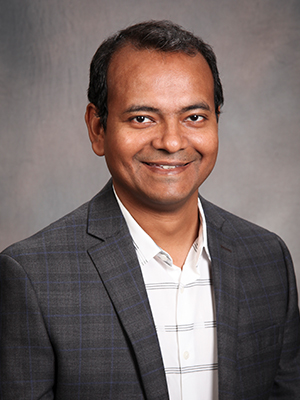
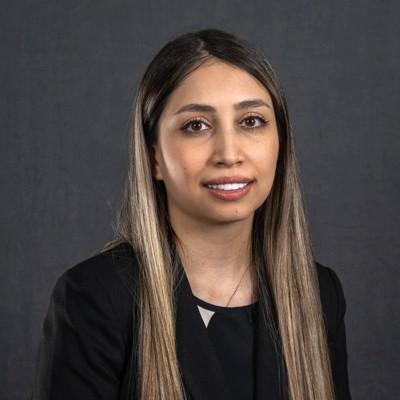
John Serences is a Professor in the Department of Psychology at the University of California, San Diego (UCSD). He leads the Perception and Cognition Lab, which participates in the Neuroscience Graduate Program. His research focuses on how behavioral goals and attention influence perception, memory, and decision-making, employing techniques like psychophysics, computational modeling, EEG, and fMRI. Key projects explore serial dependence, neural adaptation in visual cortex, and the interplay between sensory processing and mnemonic storage. Recent work highlights mechanisms reconciling repulsive neuronal adaptation with attractive behavioral biases. Affiliations: Department of Psychology, UCSD; Neuroscience Graduate Program. Research Themes: Visual perception, working memory, decision-making, neuroimaging. His lab investigates neural dynamics underlying cognitive processes, with particular emphasis on how attentional modulations and stimulus history shape neural representations. Notable contributions include studies on adaptive sensory coding and the role of top-down signals in perceptual stability.
Stephen W. Keckler is an Adjunct Professor at the Department of Computer Science , The University of Texas at Austin , and serves as Vice President of Architecture Research at NVIDIA . He is an ACM Fellow , IEEE Fellow , and Sloan Foundation Research Fellow . Education: BS in Electrical Engineering, Stanford University (1990) SM in Computer Science, Massachusetts Institute of Technology (1992) PhD in Computer Science, MIT (1998) Research Interests focus on computer architecture for deep learning , GPU computing , and energy-efficient systems . His work explores memory compression , network-on-chip designs , and heterogeneous computing . Publication Trends highlight advancements in deep learning accelerators , GPU memory systems , and energy-efficient architectures . Notable themes include sparsity exploitation , multi-chip modules , and fault-tolerant GPU pipelines . Scientific Recognition : ACM Fellow IEEE Fellow Sloan Foundation Research Fellow Best Paper Awards at ASPLOS 2009 and ISPASS 2011 Laboratory Affiliations : Computer Architecture and Technology Laboratory (CART) TRIPS Project (Tera-Op Reliable Intelligently adaptive Processing System) NVIDIA Research
Chen Ran, PhD, is an Assistant Professor in the Department of Neuroscience at Scripps Research in San Diego. His laboratory focuses on understanding how the brain processes internal sensory signals from visceral organs, such as hunger, satiety, nausea, and visceral pain. Using advanced techniques like in vivo two-photon calcium imaging, optogenetics, and circuit tracing, his team maps the functional architecture of brainstem circuits responsible for interoceptive processing. Key contributions include the discovery of a 'visceral homunculus' in the brainstem and the development of novel calcium indicators for high-resolution neuronal activity tracking. Education : PhD in Biology, Stanford University (2017) Bachelor of Science in Biology, Peking University (2011) Research Interests : Dr. Ran’s work integrates experimental and analytical approaches to decode how visceral stimuli are transduced into conscious sensations. Current projects investigate the coding logic of mechanical, chemical, and thermal signals from internal organs, with implications for developing therapies for obesity, diabetes, visceral pain, and eating disorders. The lab employs cutting-edge tools to visualize and manipulate neural circuits in awake behaving mice, linking circuit-level activity to physiological states. Awards & Honors : NARSAD Young Investigator Award (2022) NIH K01 Career Development Award (2023) Simons Collaboration on the Global Brain Award (2022) Harvard Brain Science Initiative Award (2021) Grants & Funding : Supported by NIH, Simons Foundation, and private philanthropy, his research bridges basic science and translational medicine. Current grants focus on brainstem circuit mapping and developing therapeutic targets for interoceptive disorders. Labs & Affiliations : Dr. Ran leads an interdisciplinary team at Scripps Research’s Neuroscience Department, collaborating with engineers, geneticists, and clinicians to advance interoceptive neuroscience.
Kamal Sen is an Associate Professor in the Department of Biomedical Engineering at Boston University, serving as Director of the Natural Sounds and Neural Coding Laboratory and Director of Admissions and Recruitment for Master’s Programs. He holds a PhD and MA in Physics from Brandeis University and a BA in Physics from Bates College. His research focuses on understanding how neurons encode natural sounds, particularly in the auditory cortex. Key areas include neural coding efficiency, hierarchical auditory processing, and the role of learning in shaping receptive fields. He developed the BOSSA algorithm to address sound segregation challenges in noisy environments, with applications for hearing aid technology. Sen’s work integrates electrophysiological techniques with theoretical approaches from signal processing, information theory, and systems theory. His lab explores neural discrimination of behaviorally relevant sounds and models cortical processing dynamics using computational frameworks. Recent studies investigate parvalbumin neuron contributions to temporal coding and cortical noise reduction in complex auditory scenes. His publications span neural circuit modeling, fNIRS applications in BCI, and biomimetic algorithms for auditory scene analysis. Research highlights include exploring schizophrenia-related gene effects on neural circuits and developing 3D neurosphere models for Parkinson’s disease.
David Blaauw is the Kensall D. Wise Collegiate Professor of Electrical Engineering and Computer Science (EECS) at the University of Michigan. His research focuses on ultra-low-power analog/mixed-signal circuits, mm-scale sensors, neural networks, and biomedical applications. He leads the Blaauw Lab, which has pioneered innovations like the Michigan Micro Mote (M^3) and neural recording probes. His work emphasizes real-world deployability, with applications in environmental monitoring (e.g., monarch butterflies), medical devices, and robotics. Education: B.S. in Physics and Computer Science, Duke University (1986) Ph.D. in Computer Science, University of Illinois Urbana-Champaign (1991) Research Interests: Blaauw’s lab explores ultra-low-power computing, mm-scale systems, RF communication, in-memory computing, and genomics acceleration. Key projects include: Millimeter-scale computers (e.g., 0.04mm³ temperature sensors) Wireless neural interfaces for brain-machine communication Energy-efficient accelerators for edge AI and genomics Micro-robotics with sensing/actuation/computation Awards: IEEE Fellow 2016 SIA-SRC Faculty Award Motorola Innovation Award Best Paper Awards at ISSCC, ISCA, and RFIC Advising & Impact: Over 600 publications, 65 patents, and 4 startup companies spun from his lab. Current research includes genome sequencing accelerators (GenAx) and neural recording dust for brain mapping. He directs the Michigan Integrated Circuits Lab and chairs major conferences like ISSCC and DAC. Labs/Teams: Blaauw Lab (University of Michigan) Michigan Integrated Circuits Lab (MICAL)
Jason Dahlstrom is an Adjunct Assistant Professor of Engineering at Dartmouth College's Thayer School of Engineering and Owner of Web Sensing LLC. His research focuses on embedded systems security, computer architecture optimization, and engineering education innovations. He holds a BS in computer engineering (University of New Hampshire, 2006), MS in biomedical engineering (Dartmouth, 2008), and PhD in embedded system security (Dartmouth, 2015). His work emphasizes cybersecurity for critical infrastructure, particularly in vehicle systems and military communication networks. Key contributions include real-time binary analysis frameworks, FPGA-integrated security monitors, and tactical network interface controllers. He has authored patents related to data security appliances and distributed sensing systems. Recent publications explore vehicle system hardening, cross-domain container security, and hardware-assisted monitoring. His research bridges theoretical computer architecture with practical embedded system implementations, addressing modern threats in connected devices and defense applications.
Anant Sahai is the Qualcomm Chair Professor in the Department of Electrical Engineering and Computer Sciences (EECS) at the University of California, Berkeley. He holds affiliations with the Berkeley Artificial Intelligence Research Lab (BAIR), Berkeley Laboratory for Information and System Sciences (BLISS), and the Berkeley Wireless Research Center (BWRC). His academic journey includes a BS from UC Berkeley (1994), and MS (1996) and PhD (2001) degrees from MIT. He previously worked at Enuvis, Inc., focusing on adaptive software radio techniques for low-SNR GPS environments. Research interests span machine learning, wireless communication, information theory, signal processing, and decentralized control, with a focus on intersections between these fields. Key areas include spectrum sharing, ultra-reliable low-latency wireless protocols, and the foundations of overparameterized machine learning. Recent work explores in-context learning in modern AI models. He has received awards such as the IEEE ComSoc Leonard G. Abraham Prize (2012) and teaching/mentorship accolades at Berkeley. He advises UC Berkeley’s Eta Kappa Nu chapter and coordinates machine learning efforts for NSF’s SpectrumX. Current teaching includes CS 182/282A on deep neural networks. His lab focuses on theoretical and applied challenges in communication systems, AI, and control theory. Awards: IEEE ComSoc Leonard G. Abraham Prize (2012), Teaching Excellence Awards (2015–2017) Grants: NSF Center for Spectrum Innovation (SpectrumX), multiple collaborative projects in wireless and AI Labs/Teams: BLISS, BAIR, BWRC
Ross Thyer is an Assistant Professor in the Department of Chemical and Biomolecular Engineering at Rice University. He holds a BSc (Hons) from the University of Western Australia and a PhD from the Harry Perkins Institute of Medical Research under Drs. Rackham and Filipovska. His postdoctoral training at the University of Texas at Austin with Prof. Andrew Ellington focused on engineered biosynthesis pathways and non-canonical amino acids. He co-founded GRO Biosciences, a Boston-based biotech startup, and leads the Thyer Lab at Rice. His research bridges synthetic biology, protein engineering, and molecular programming to address global challenges. Key areas include expanding genetic codes for therapeutics, engineering biosynthetic pathways via genetic circuitry, and developing microbial systems for environmental bioremediation. Core technologies include deep learning for protein design, modular DNA assembly, and high-throughput selections. The lab also develops tools like MutCompute for enzyme engineering and domesticates non-model bacteria for bioproduction. His work emphasizes technology innovation, with recent advances in selenocysteine incorporation, L-DOPA sensing systems, and actinobacteria toolkits. The Thyer Lab actively collaborates on biocatalyst development and translational applications in healthcare and industry.
Robert M. Weikle, II is a Professor in the Charles L. Brown Department of Electrical and Computer Engineering at the University of Virginia, with a courtesy appointment in the Department of Physics. He earned his B.S. from Rice University (1986), M.S. (1987), and Ph.D. (1992) in Electrical Engineering from Caltech, followed by postdoctoral work at Chalmers University of Technology (1992). His research focuses on millimeter-wave and terahertz electronics , applied electromagnetics, integrated antennas, low-noise sensors, and heterogeneous integration of compound semiconductors. His work bridges electronics and photonics for spectrum access, with applications in astronomy, spectroscopy, and metrology. He has published extensively on micromachined silicon substrates, superconducting materials, and emerging technologies. Scientific Awards: IEEE Microwave Prize (1993) David A. Harrison III Award (1999) University of Virginia All-University Outstanding Teaching Award (2000) Edlich-Henderson Innovator of the Year (2016) Fulbright Scholar (2001) As Chief Technology Officer and co-founder of Dominion Microprobes, Inc., he commercializes micromachined wafer probes for high-frequency metrology. His lab, located in E220 Thornton Hall and the Jesse W. Beams Physics Building, has produced 15+ recent publications on submillimeter-wave devices, THz probes, and calibration techniques.
Abdullah Muzahid is an Associate Professor in the Department of Computer Science and Engineering at Texas A&M University (since August 2024), previously serving as an Assistant Professor there since August 2018. Prior, he held an Assistant Professor role at the University of Texas at San Antonio (2012-2018). He earned his Ph.D. from the University of Illinois at Urbana-Champaign (2012), focusing on architectural support for debugging concurrency bugs under Prof. Josep Torrellas. Education: Ph.D., Computer Science, University of Illinois at Urbana-Champaign (2012) M.S., Computer Science, University of Illinois at Urbana-Champaign (2009) B.S., Computer Science and Engineering, Bangladesh University of Engineering and Technology (2005) Research Interests: His work spans Computer Architecture , Systems , and Artificial Intelligence , with focus on multiprocessor architecture, parallel programming, debugging, and applying machine learning to system optimization. Recent projects include cache indexing via entropy estimation, DNN training acceleration, and hardware-software co-design for security. Awards: NSF CAREER Award (2017) Excellence in Research Award (UTSA, 2015 & 2017) W. J. Poppelbaum Award (UIUC, 2012) Intel Ph.D. Fellowship (2011) Grants & Advising: He leads NSF-funded projects on robust deep learning and stream processing systems. Advised 5 PhD graduates and currently mentors 4 PhD students. Served on program committees for ISCA, HPCA, MICRO, and as NSF panelist. Labs/Teams: Active in Texas A&M’s Computer Architecture group, collaborating on machine programming, hardware security, and AI-driven systems optimization.
Christopher G. Brinton is the Elmore Associate Professor of Electrical and Computer Engineering at Purdue University, where he leads the ION research lab. He is affiliated with the Department of Electrical and Computer Engineering in the College of Engineering at Purdue University's West Lafayette campus. Dr. Brinton received his PhD from Princeton University, where he was previously the Associate Director of the EDGE Lab and a Lecturer of Electrical Engineering. His research focuses on the intersection of networking, communications, and machine learning, with particular emphasis on Fog computing systems, the Internet of Things (IoT), NextG Wireless, and social learning networks. His research integrates foundational techniques including convex and non-convex optimization, machine learning, and signal processing to address challenges in networked intelligent systems. The ION lab under his leadership develops both theoretical frameworks and practical implementations for next-generation networking solutions, with strong industry collaborations including Qualcomm, Nokia, Intel, Cisco, Dell, and Ericsson. Recent publications reveal a strong trend toward federated learning, decentralized algorithms, and edge intelligence, with significant contributions to model partitioning, communication-efficient learning, and robust network architectures. His work increasingly bridges traditional communication theory with modern machine learning techniques to solve emerging challenges in distributed networked systems. NSF CAREER Award ONR Young Investigator Program (YIP) Award DARPA Young Faculty Award (YFA) AFOSR Young Investigator Program (YIP) Award Intel Rising Star Faculty Award (RSA) Dr. Brinton teaches several courses including ECE 647: Performance Modeling of Computer Communication Networks, ECE 301: Signals and Systems, and ECE 547: Introduction to Computer Communication Networks. He has co-authored the book 'The Power of Networks: Six Principles That Connect Our Lives' and taught three Massive Open Online Courses (MOOCs) with over 400,000 cumulative students. While not currently actively recruiting students, he remains open to connecting with highly motivated individuals. Dr. Brinton leads the ION (Intelligent Optimization and Networking) research lab, which focuses on creating theoretical foundations and practical implementations for next-generation networked systems. The lab has recently published significant work on 6G taxonomy in collaboration with major industry partners and continues to push boundaries in distributed learning and network optimization.
Arya Mazumdar is a tenured Professor of Data Science and Computer Science at the Halıcıoğlu Data Science Institute (HDSI) , part of the School of Computing, Information and Data Sciences at the University of California San Diego (UCSD). He also holds affiliations with the Computer Science and Engineering and Electrical and Computer Engineering departments at UCSD. Previously, he was an Assistant and Associate Professor at the University of Massachusetts Amherst (2015–2021), and held a postdoctoral position at MIT (2011–2012). He is an IEEE Distinguished Lecturer (2023–2024) and recipient of the NSF CAREER Award (2015–2020). Education : PhD in 2011 from the University of Maryland, College Park (advisor: Alexander Barg) Postdoctoral scholar at MIT (2011–2012, advisor: Greg Wornell) Internships at IBM Almaden (2010) and HP Labs (2008) Research Interests : Focus on algorithmic and statistical aspects of machine learning, error-correcting codes, optimization, signal processing, and distributed systems. Key areas include clustering algorithms, compressed sensing, federated learning, and information-theoretic foundations of data science. He has contributed to theoretical guarantees for learning mixtures, distributed optimization, and robust coding schemes. Recent Articles Trends : Recent work emphasizes distributed optimization (e.g., vqSGD, Byzantine-resilient algorithms), sparse recovery in high-dimensional models, and theoretical foundations of learning (e.g., support recovery, parameter estimation). His research bridges information theory and machine learning, with applications in storage systems and large-scale data processing. Awards & Roles : 2020 EURASIP JASP Best Paper Award Co-PI and co-leader of the NSF AI Institute for Learning-Enabled Optimization at Scale Editorships: IEEE Transactions on Information Theory and Foundations and Trends in Communications Grants & Labs : Leads the EnCORE Institute as UCSD Site Lead, focusing on theoretical perspectives of large language models and computational-statistical gaps. Active in organizing workshops on topics like LLMs, clustering, and distributed optimization. His research is funded by NSF and industry collaborations. Teaching : Courses include Algorithms for Data Science , Probability and Statistics for Data Science , and Coding Theory , emphasizing foundational theory and scalable methods.
Kimia Zamiri Azar serves as an Assistant Professor in the Department of Electrical and Computer Engineering at the University of Central Florida, focusing on hardware security and verification methodologies. Her research bridges theoretical formal methods with practical security implementations in semiconductor design and testing. Her educational background includes: Ph.D. in Electrical and Computer Engineering, George Mason University (2021) Postdoctoral Research, University of Florida Dr. Azar's research spans hardware security with emphasis on system-level verification, VLSI design-for-trust, and advanced IC testing. She pioneers techniques in logic locking, secure heterogeneous integration, and IC supply chain security, developing frameworks for authenticated encryption in Systems-in-Package and runtime security monitoring. Her work integrates formal verification with innovative testing methodologies to address hardware trust challenges across the semiconductor lifecycle. Analysis of her recent publications reveals two dominant trends: (1) Application of large language models (LLMs) to hardware design tasks including high-level synthesis code generation and RTL optimization, and (2) Advancement of secure heterogeneous integration techniques for System-in-Package architectures with focus on counterfeit prevention and split-test security protocols. These directions address critical gaps in hardware trustworthiness amid increasingly complex semiconductor supply chains. Her scientific contributions have earned significant recognition: Best Paper Award at ICCAD 2019 Best Paper Award at ISVLSI 2020 Best Paper Award at ICCAD 2020 Best Paper Award at IEEE DCAS 2020 Best Paper Award at HOST 2022 Best Paper Award at DATE 2023 Dr. Azar secures substantial research funding from premier agencies including NSF, SRC, DARPA, AFRL, DoD (NG), and Microsemi. Her grants support projects spanning hardware security validation frameworks, secure heterogeneous integration, and AI-augmented verification methodologies. She actively mentors students in her research group, guiding publications in top venues like IEEE D&T, IEEE TC, and DAC while fostering industry-academic collaborations. Her work directly impacts semiconductor security standards through patented innovations and open-source verification tools. As an active IEEE and ACM member, she contributes to community advancement through conference organization (HOST, DATE), journal editorial roles, and workshop leadership on hardware security standards. Her research group collaborates with semiconductor industry leaders to translate theoretical security frameworks into practical design-for-trust methodologies for next-generation integrated circuits.
Henrik von Coler is an Assistant Professor at Georgia Institute of Technology's School of Music within the College of Design. His work bridges engineering, electronic music, and empirical research, focusing on spatial audio systems, live electronics, and human-computer interaction in musical contexts. He joined Georgia Tech in 2023 after serving as director of the TU Studio for Electronic Music at Technische Universität Berlin from 2015 to 2023, where he founded the Electronic Orchestra Charlottenburg (EOC) to explore live electronic ensembles in multichannel environments. His research emphasizes the integration of sound, space, and HCI to enhance compositional and performative expressiveness. Notable projects include immersive audio installations, virtual instrument design, and AI-assisted composition. Coler has performed globally on immersive audio systems and curated international concerts. His technical contributions span spatial sound synthesis algorithms, networked music systems, and real-time signal processing tools. Key areas of exploration include volumetric music performances in metaverse environments, hybrid spatial interaction via ARCube, and statistical models for spectral synthesis. He has developed open-source systems like Orchestra (for metaverse performances) and SPRAWL (for ensemble interaction). Coler’s work often combines empirical research with artistic practice, aiming to redefine the boundaries of live electronic music through technological innovation. His academic output spans over 30 peer-reviewed articles since 2011, with recent focus on metaverse applications, AI-human collaboration, and immersive audio design. While no formal awards are listed, his leadership roles and project outcomes highlight significant contributions to music technology and spatial audio engineering.
Rachel Devorah Wood Rome is an Assistant Professor in the Electronic Production and Design (EPD) department at Berklee College of Music, where she teaches creative coding, live coding, and music technology. Her work bridges electronic music, improvisation, and critical theory, with a focus on sonic cyberfeminism, archival practices, and the social meanings of sound and space. Ph.D. in Music Composition and Computer Technologies, University of Virginia (2018) M.L.I.S., San José State University (2017) M.A. in Music Composition, Mills College (2013) B.Mus. in Horn Performance, CUNY Queens College (2007) Her research explores superhuman prolongation, opaque complexity, and the re-signification of archaic tools in sonic media. She values machines for their patience and memory, and her creative practice emphasizes critical agency in technology design and use. She performs under the name 'mehetabel' when using archival materials in improvised electronic music. The most recent publications and performances reflect a deep engagement with AI and music, live coding, feminist media theory, and spatialized sound. Her works often involve real-time data processing, generative systems, and collaborative improvisation, situating sound within broader social, political, and technological contexts. Ruth Anderson Installation Prize (IAWM) New Music USA Grant Fellowships from MIT OpenDocLab, Adrian Piper Foundation, Ina GRM, New Museum, and Jefferson Scholars Foundation Residencies at EMS Stockholm, STEIM Amsterdam, MassMoCA, and Cove Park Rome advises emerging artists in electronic music and creative coding, many of whom have gone on to establish their own practices. She is also active in academic service, including curriculum development, faculty governance, and labor organizing as a Councilor for the Berklee Faculty Union. She leads initiatives in DEI, sound design, and coding pedagogy within the EPD department. She has been involved in interdisciplinary collaborations with artists, technologists, and institutions worldwide, presenting work in galleries, festivals, and academic conferences across North America, Europe, and Asia. Her leadership extends to nonprofit arts organizations, where she has served as Executive Director and grantwriter.