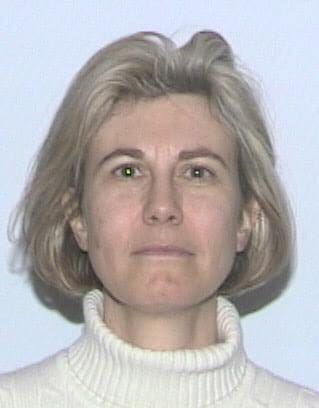
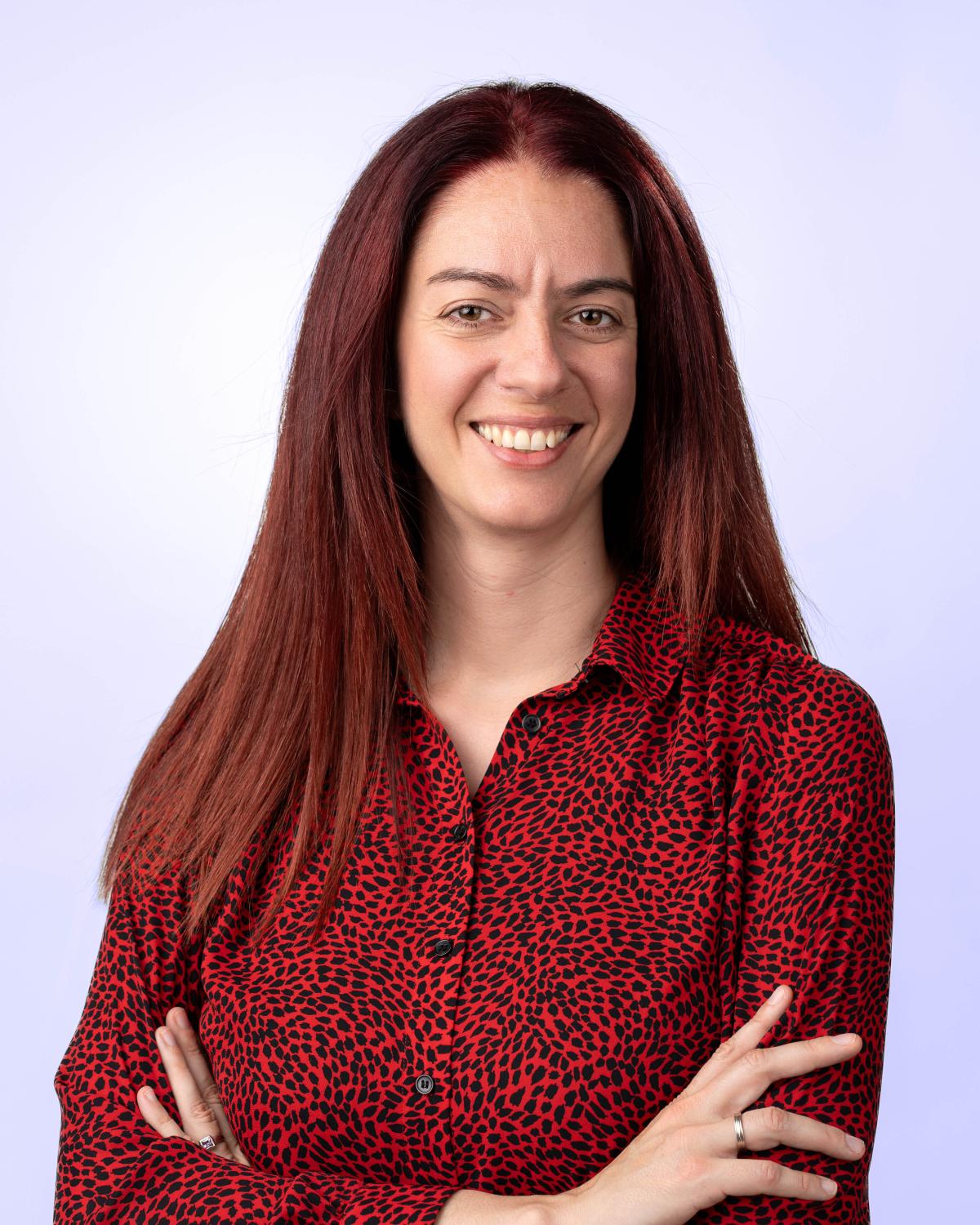
Caterina Consani is a Professor of Mathematics at Johns Hopkins University's Krieger School of Arts & Sciences. She holds a PhD from the University of Chicago (1996) and a Dottore di Ricerca in Matematica from the Universities of Genoa and Turin (1993). Her research focuses on arithmetic geometry, non-commutative geometry, and the development of absolute geometry over the 'absolute point.' She has contributed to foundational work on the BC-system, the Arithmetic Site, and the Scaling Site, linking number theory with geometric frameworks. Education: PhD in Mathematics, University of Chicago (1996); Dottore di Ricerca in Matematica, Universities of Genoa & Turin (1993). Prior to Johns Hopkins, she taught at MIT (1996–1999) and the University of Toronto (1999–2005). Research Interests: Arithmetic geometry, non-commutative geometry, absolute geometry in characteristic one, connections to number theory and the Riemann Hypothesis. Collaborations include work with Alain Connes on adele class spaces and non-commutative algebraic geometry. Awards: Fellow of the American Mathematical Society (2024); 2025 Best Paper AOFA Award (Annals of Functional Analysis). Editorial roles include the Journal of Number Theory and Journal of Noncommutative Geometry. Teaching: Offers advanced courses in algebraic geometry and number theory, including topics like étale cohomology and the yoga of weights in 'Weil II.' Grants: Supported by the Simons Foundation. Organized major conferences such as the JAMI Conference on Riemann-Roch in Characteristic One (2019).
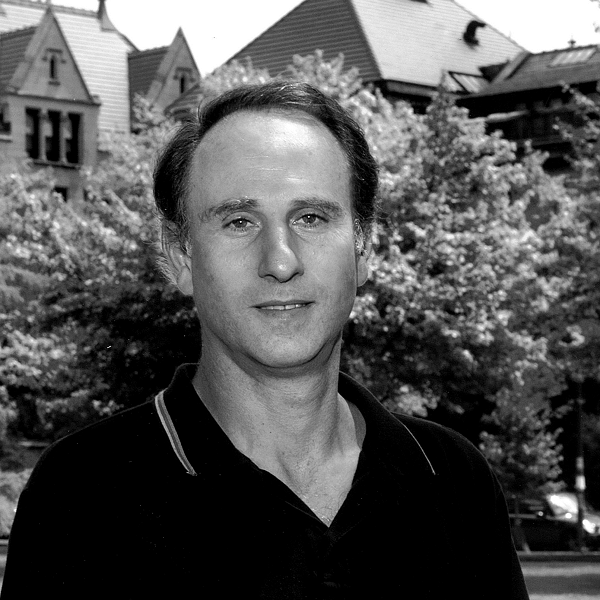
Prof. Peter Scholze is a leading mathematician at the Max Planck Institute for Mathematics in Bonn, specializing in algebraic geometry and arithmetic geometry. He holds the academic rank of Professor and is part of the Arbeitsgruppe Algebraische Geometrie und Darstellungstheorie. His research focuses on foundational questions in algebraic geometry, number theory, and representation theory, particularly through the lens of the Langlands program, p-adic Hodge theory, and perfectoid spaces. Scholze has pioneered geometric approaches to the local Langlands correspondence and introduced revolutionary concepts like prismatic cohomology and condensed mathematics. He actively contributes to academia through advanced courses on topics such as geometrization of the Langlands program, étale cohomology, and condensed mathematics. His work bridges algebraic geometry with representation theory, addressing fundamental problems in arithmetic geometry and p-adic analysis. Scholze’s research outputs include seminal papers on perfectoid spaces, prismatic cohomology, and the geometrization of local Langlands correspondence. He collaborates extensively with leading mathematicians globally, contributing to collaborative research initiatives like the ARGOS seminar and the Habiro ring project. His teaching engagements include advanced lectures on algebraic geometry, representation theory, and p-adic geometry, reflecting his commitment to training the next generation of researchers. Despite no explicitly listed awards in the provided text, Scholze is widely recognized as a Fields Medalist (2018) and a leading figure in modern mathematics.
David Kutasov is a Professor in the Department of Physics at the University of Chicago, affiliated with the Enrico Fermi Institute. His research focuses on string theory and quantum field theory, particularly addressing dynamics of strongly coupled systems, supersymmetry breaking, black hole physics, and cosmological singularities. Kutasov has contributed to understanding the interplay between string theory and field theory, including mechanisms for vacuum selection in early universe scenarios and brane dynamics. His work explores theoretical frameworks such as holography, time-dependent backgrounds, and tachyon condensation, with applications to particle physics and cosmology. Key research directions include analyzing string theory's predictions for nature and applying string-based insights to experimental particle physics and cosmic phenomena. Notable contributions span topics like D-brane interactions, non-supersymmetric vacua, and dualities in Chern-Simons theories. Kutasov's publications often bridge abstract string theory constructs with observable phenomena, emphasizing tools for analyzing string theory's implications in diverse physical contexts. Despite extensive contributions, no specific scientific awards are explicitly listed in the provided materials. His research remains active across multiple frontiers of theoretical physics, maintaining a strong focus on foundational questions in high-energy physics.
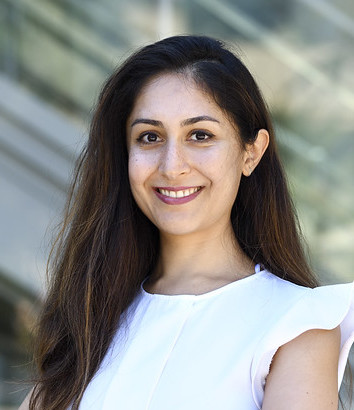
Baharan Mirzasoleiman is an Assistant Professor in the Department of Computer Science at the University of California, Los Angeles (UCLA), where she leads the BigML research group. Prior to joining UCLA, she was a postdoctoral research fellow in Computer Science at Stanford University working with Jure Leskovec. She received her Ph.D. in Computer Science from ETH Zurich advised by Andreas Krause. Her research focuses on addressing sustainability, reliability, and efficiency of machine learning, with particular emphasis on improving big data quality by developing theoretically rigorous methods to select the most beneficial data for efficient and robust learning. Her work spans several critical areas including data efficiency, robustness against label noise and data poisoning, and addressing spurious correlations in machine learning models. She has made significant contributions to understanding how neural networks exploit spurious features that correlate with certain categories during training but fail to generalize to minority groups. Professor Mirzasoleiman's research demonstrates how theoretically grounded approaches can lead to practical improvements in model robustness and efficiency across various applications including medical diagnosis and environmental sensing. Her work has resulted in the development of the SpuCo package, a Python library that provides modular implementations of state-of-the-art methods to address spurious correlations, along with controllable synthetic datasets like SpuCoMNIST and large-scale vision datasets like SpuCoAnimals. She has received numerous prestigious awards including the ETH medal for Outstanding Doctoral Thesis, being selected as a Rising Star in EECS by MIT, an NSF Career Award, a UCLA Hellman Fellows Award, and an Okawa Research Award. Her students have also received multiple fellowships and awards including Amazon Doctoral Student Fellowships and an OpenAI Superalignment Fast Grant. Professor Mirzasoleiman actively contributes to the academic community through invited talks at major conferences including ICML, ICLR, NeurIPS, and KDD, as well as co-organizing workshops on new frontiers in adversarial machine learning and sparsity in neural networks. She has developed educational resources including tutorials on Foundations of Data-efficient Learning presented at ICML 2024.
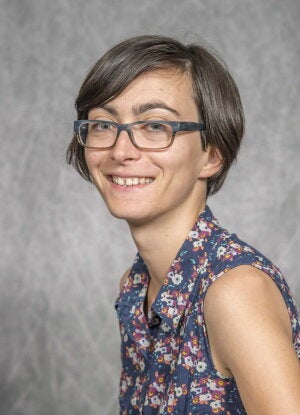
Vesna Stojanoska is an Associate Professor in the Department of Mathematics at the University of Illinois, holding the Norman P. Jones Professorial Scholar title and serving as a Hamstrom Scholar. Her research focuses on stable homotopy theory, chromatic phenomena, and interactions with arithmetic. She earned her PhD in Mathematics from Northwestern University in 2011 and has been recognized with a Fellowship from the Center for Advanced Study (2018-2019). Key research areas include advanced topics in algebraic topology, such as Picard groups, Brauer groups, and topological modular forms. Her work frequently explores connections between homotopy theory and arithmetic structures. Recent contributions include studies on Morava stabilizer groups, determinant spheres, and collaborative efforts through initiatives like the Women in Topology IV workshop. Dr. Stojanoska has advised three graduate students, including Zachary Halladay (expected 2025), Venkata Sai Bavisetty (2024), and Elizabeth Tatum (2022). Her office is located at #307, 805 W Pennsylvania Ave, Urbana, Illinois.
Irina Bobkova is an Associate Professor in the Department of Mathematics at Texas A&M University, affiliated with the College of Arts & Sciences. Her research focuses on algebraic topology, particularly computational aspects of equivariant and chromatic homotopy theory. She has received significant support from the National Science Foundation (NSF) via a CAREER Grant and an RTG Grant. Her research interests include equivariant homotopy theory, chromatic homotopy theory, and the study of stable homotopy groups of spheres. She explores computational methods involving Morava stabilizer groups, Picard groups, and topological modular forms. Her work often involves collaborations with leading mathematicians in the field, such as Agnès Beaudry and Vesna Stojanoska. Bobkova has published extensively in top journals like Mathematische Zeitschrift , Journal of Topology , and Algebraic & Geometric Topology . Her recent work includes groundbreaking contributions to K(2)-local homotopy theory, duality resolutions, and the cohomology of Morava stabilizer groups. She co-organizes the South Central Topology Conference, fostering regional collaboration in topology. Her grants and awards reflect her leadership in advancing algebraic topology. She actively engages in academic service, including organizing workshops and mentoring early-career researchers. Despite no listed formal advisees, her collaborative approach shapes the field’s future directions.
Jungsang Kim is the Schiciano Family Distinguished Professor of Electrical and Computer Engineering and Professor of Physics at Duke University. He serves as Associate Director of the Duke Quantum Center and leads the Multifunctional Integrated Systems Technology group. Quantum Computing with Trapped Ions Quantum Information Science Photonic Device Development Quantum Communication Networks His research focuses on scalable quantum information processors using trapped atomic ions and advanced photonic technologies. Key innovations include microfabricated ion traps, optical MEMS, and cryogenic systems for quantum integration. Recent publications highlight trapped ion quantum simulation, high-fidelity gate design, and photonic error mitigation. His group develops practical quantum hardware and co-founded IonQ, the first publicly traded pure-play quantum computing company. Fellow, American Physics Society (2021) Stansell Family Distinguished Research Award (2016) Fellow, National Academy of Inventors Fellow, Optica (formerly OSA) Kim's work bridges quantum physics and engineering, with over 80 patents and leadership in Duke's quantum computing initiatives. He recently stepped down as IonQ's CTO while maintaining active research and strategic roles at Duke.
Ekaterina Shutova is an Associate Professor at the Institute for Logic, Language and Computation (ILLC) within the Faculty of Science at the University of Amsterdam. She concurrently holds a Visiting Associate Professor position in the Computer Science Department at Stanford University. She leads the Amsterdam Natural Language Understanding Lab and heads the NLP & Digital Humanities research unit at ILLC. An ELLIS Scholar, she earned her PhD from the University of Cambridge Computer Laboratory and Pembroke College. Her research has been funded by ERC, Innovate UK, British Academy, Leverhulme Trust, Google, Meta, and Deloitte. Her research spans natural language processing and machine learning, with core interests in: Few-shot learning for NLP Multilingual and cross-lingual systems Joint modeling of language and vision Cognitive processing and semantic representation Figurative language interpretation Computational social science applications Her recent publications (2024-2025) predominantly focus on multimodal learning, cultural alignment in AI, metaphor processing, and evaluation methodologies for language models. These works reflect a trend toward integrating cognitive science with multilingual systems and ethical considerations. Awards & Fellowships: ERC Consolidator Grant (2025) ELLIS Scholar Outstanding Paper Award at ACL 2023 Finalist for Outstanding Certification by TMLR Runner-up Best Paper Award at NAACL-HLT 2016 Research Leadership: She directs the Amsterdam Natural Language Understanding Lab, supervising 8 PhD students, 1 MSc student, and 34 alumni. Her projects include an ERC-funded initiative on globally accessible language technology and an AI Democratization grant for hate speech detection.
Christoph Keplinger serves as Managing Director of the Max Planck Institute for Intelligent Systems (MPI-IS) in Stuttgart, Germany, leading the Robotic Materials Department since 2020 and assuming overall institute leadership in 2023. He holds dual academic appointments as Honorary Professor at the University of Stuttgart and Eminent Visiting Professor of Soft Robotics at the University of Colorado Boulder, establishing him as a pivotal figure in bridging fundamental materials science with advanced robotics. His interdisciplinary approach integrates physics, chemistry, and engineering to pioneer breakthroughs in soft robotic systems. Keplinger's academic foundation includes a PhD in Soft Matter Physics from Johannes Kepler University Linz, Austria, followed by postdoctoral research at Harvard University focusing on mechanics and chemistry of soft materials. This unique background enabled his transition into robotics innovation, particularly in electrohydraulic actuation systems. His research program centers on three synergistic pillars: (I) soft robotics development through novel actuator technologies like HASEL artificial muscles; (II) energy capture mechanisms using soft materials; and (III) functional polymers engineered for robotic applications. This work produces transformative hardware that mimics biological functionality, with significant implications for human-robot interaction, medical devices, and sustainable robotics systems. His group employs cutting-edge materials synthesis and characterization techniques to create lifelike robotic components. Analysis of recent publications reveals dominant trends in wearable haptic interfaces, electrohydraulic actuation systems, and tremor-suppression technologies. The research consistently leverages HASEL (Hydraulically Amplified Self-healing Electrostatic) technology to achieve muscle-like performance in soft actuators, with applications spanning from fingertip haptic feedback to underwater manipulation systems. This trajectory demonstrates a clear progression from fundamental material properties toward practical implementations in medical rehabilitation and human augmentation. His exceptional contributions have earned prestigious recognition: 2017 Packard Fellowship for Science and Engineering, awarded for high-impact interdisciplinary research 2021 Alexander von Humboldt Professorship (declined to remain at MPI-IS), Germany's most valuable international research award 2013 EAPromising European Researcher Award from the European Scientific Network for Artificial Muscles As principal investigator, Keplinger leads a dynamic interdisciplinary research group while securing competitive funding for frontier projects. His entrepreneurial vision materialized in 2018 through co-founding Artimus Robotics, where he serves as Chief Science Officer to commercialize HASEL technology. This dual commitment to academic research and industry translation exemplifies his dedication to real-world impact, particularly in creating biodegradable and sustainable soft robotic solutions. The Robotic Materials Department operates state-of-the-art facilities for materials fabrication, robotic integration, and haptic interface development. The team maintains strong collaborations across MPI-IS departments and external institutions including the University of Colorado Boulder, fostering innovation in sustainable robotics through initiatives like biodegradable electrohydraulic actuators. Current projects focus on wearable tremor suppression systems, electrohydraulic locomotion platforms, and energy-autonomous soft robots that address critical challenges in medical rehabilitation and human augmentation.
David John Procter is a Professor of Organic Chemistry and Head of the Department of Chemistry at the University of Manchester. His career includes academic roles at the University of Glasgow (Lecturer, Senior Lecturer) and a Readership at the University of Manchester, where he became a Professor in 2008. His research focuses on developing new synthetic methods, catalysis, and materials chemistry, with applications in drug discovery, biocatalysis, and organic electronics. Education: BSc Chemistry (University of Leeds, 1992), PhD (1995, supervised by Prof. Christopher Rayner). Postdoctoral work: Florida State University (Prof. Robert Holton, Taxol analog synthesis). Research interests include samarium diiodide-mediated reactions, metal-free coupling processes, and sustainable synthesis methods. He leads projects funded by EPSRC, Industry (30 grants), and international collaborations. Awards include the EPSRC Established Career Fellowship (2015–2020), Bader Prize (2014), and Young Heterocyclic Chemist Award (2015). Key contributions: Total synthesis of natural products (e.g., pleuromutilin), development of copper-catalyzed multicomponent couplings, and innovative methods for organic materials. His work aligns with UN Sustainable Development Goals related to affordable and clean energy and responsible consumption. Collaborations span academic and industrial partnerships in chemistry, physics, and biology. He supervises 60+ students and contributes to the Organic Materials Innovation Centre (OMIC). His group’s research is detailed at proctergroupresearch.com .
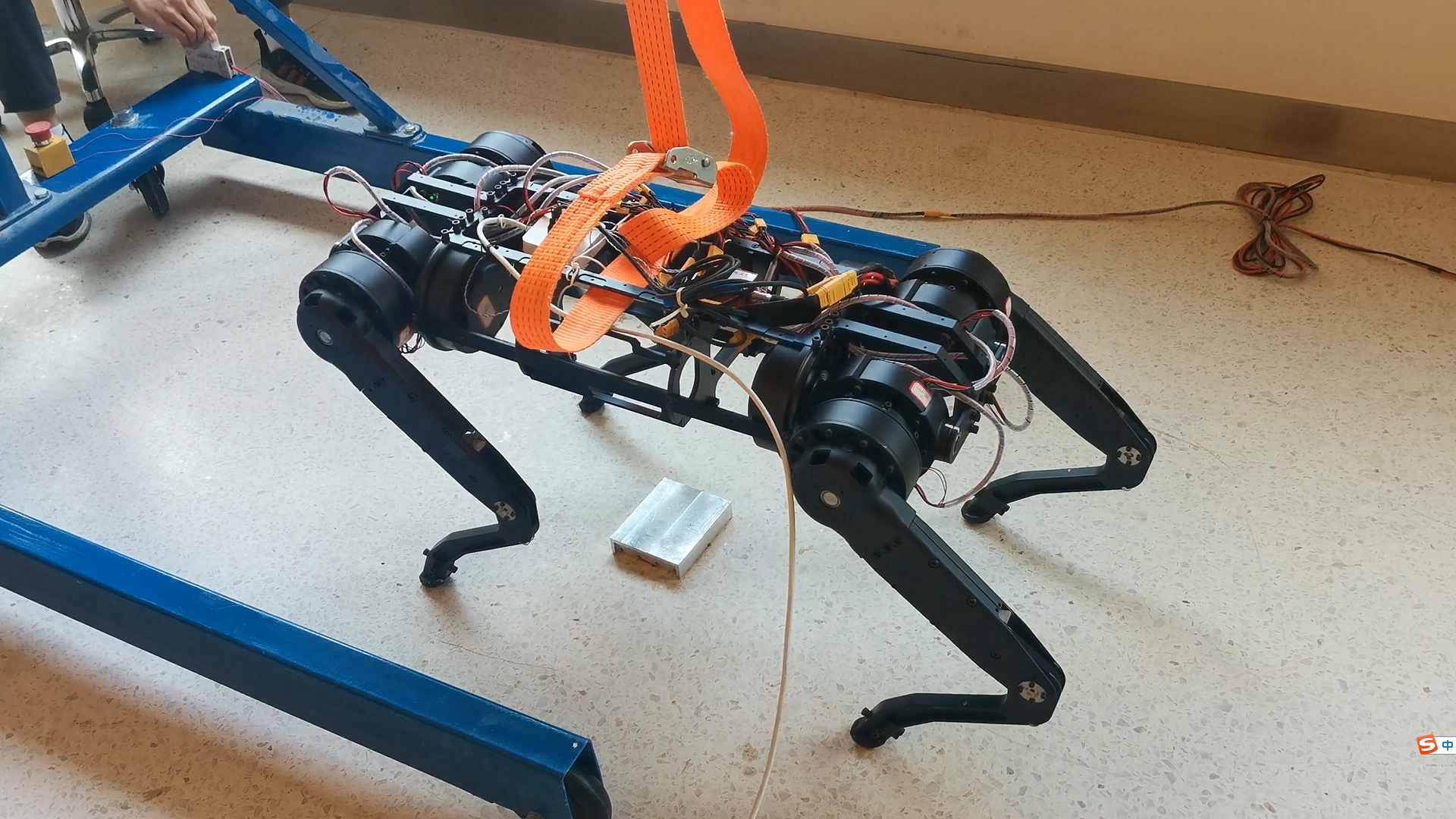
Wei Zhang is a tenured Professor at the Southern University of Science and Technology (SUSTech) , Shenzhen, China, and a Senior Member of IEEE. He serves as Associate Editor for IEEE Transactions on Control System Technology and leads the CLEAR Lab (Control & Learning for Robotics and Autonomy) within the School of Automation and Intelligent Manufacturing (AiM). His career spans institutions including the University of California, Berkeley (postdoc), and The Ohio State University (Assistant/Associate Professor). Education: PhD in Electrical Engineering from Purdue University (2009), MS in Electrical and Computer Engineering from University of Kentucky (2005), BS in Automation from University of Science and Technology of China (2003) Research Interests focus on integrating control theory, optimization, and machine learning to develop intelligent systems. Key areas include: Legged Robots: Dynamic locomotion control, bio-inspired gait design, and push recovery mechanisms Autonomous Systems: Real-time motion planning, obstacle avoidance, and safe navigation in adversarial environments Smart Grids: Distributed control for energy systems and transactive energy optimization Machine Learning: Reinforcement learning for robotics, Q-learning convergence analysis, and hybrid control-learning frameworks Publication Trends highlight interdisciplinary work at the intersection of robotics and control systems. His recent 2024 papers address: Whole-body control for wheeled-quadrupedal robots Geometric object pose refinement in computer vision Task-space Riccati feedback for underactuated systems Teacher-student reinforcement learning architectures Scientific Awards include: 2016 : NSF CAREER Award 2015 : Lumley Research Award (Ohio State University) 2013 : AFOSR Summer Faculty Fellowship 2018 : National Distinguished Expert (Young, China) 2019 : International Underwater Robot Competition 2nd Prize (team advisor) Academic Leadership involves editorial roles at IEEE Transactions on Control System Technology and IEEE Transactions on Power Systems. His lab provides state-of-the-art robotics platforms including quadruped robots, Kuka manipulators, and UAVs for algorithm validation. Research collaborators span The Ohio State University , UC Berkeley , CMU , and The University of Hong Kong .
Lina Bertling Tjernberg is a Professor at the Department of Electrical Engineering, KTH Royal Institute of Technology, and Deputy Head of the School of Electrical Engineering and Computer Science (EECS) with responsibility for research conditions and impact. She served as Director of KTH's Energy Platform during 2018-2024 and holds memberships in IVA (Swedish Royal Academy of Engineering Sciences) and the IEEE Power & Energy Society. Research Focus: Applying mathematics (statistics, optimization, life cycle assessment) to enhance reliability and predictive maintenance in electric power systems, with emphasis on future electricity grids integrating microgrids, battery storage, HVDC, nuclear/pumped/hydro/wind/solar power, hydrogen, and electrified transport. Collaborations: Engaged with Comillas Pontifical University (Madrid), Addis Ababa University, Norwegian University of Science and Technology (NTNU), and IEA Wind. Key Research Trends: Recent articles highlight advancements in microgrid control (2025), SMR nuclear energy integration (2025), AI-driven asset management (2024), hydrogen sector coupling (2024), and renewable forecasting techniques (2024). Awards: 2021 Power Woman of the Year 2022 Energy Power List (Sweden’s top 20 energy influencers) Leadership Roles: Swedish Electromobility Center (SEC) board Chair of Swedish Electrical Standards (SEK Svensk Elstandard) Member, IEEE PES ISGT Europe steering committee
Dr. Harwin de Vries is an Associate Professor at the Department of Technology and Operations Management, Rotterdam School of Management (RSM), Erasmus University Rotterdam. His research focuses on health and humanitarian logistics, particularly disaster relief logistics and improving access to essential medicines in low- and middle-income countries (LMICs). He explores the role of data analytics and new operational models in healthcare systems, such as mobile health service delivery. Before joining RSM, he worked at INSEAD as a postdoctoral researcher and manager of the INSEAD Humanitarian Research Group. He holds a PhD in Operations Research from Erasmus University. Education: PhD in Operations Research, Erasmus University Rotterdam His research interests include optimizing supply chain decisions in humanitarian contexts, with over 20 collaborations with health organizations. He teaches courses on Health & Humanitarian Logistics, Business Analytics, and Spreadsheet Modelling across BSc, MSc, and EMBA programs. Dr. de Vries has received notable awards including the 2021 ERIM Award for Young Researcher and a 2022 NWO VENI Grant. His work has been published in leading journals like Production and Operations Management and Manufacturing & Service Operations Management, and has been transformed into teaching cases. Grants: NWO VENI Grant (2022) He serves on the board of the POMS College of Humanitarian Operations & Crisis Management, actively contributing to academic and practical solutions in humanitarian logistics.
Magda Posani is an Assistant Professor in the Department of Civil Engineering at Aalto University, focusing on building physics, hygrothermal behavior of materials, and environmental sustainability. Her research explores the use of bio-based insulation, thermally massive stone and earth walls, and additive manufacturing techniques to enhance indoor comfort and address climate change challenges in Nordic regions. Integrated Master's Degree in 'Building Engineering and Architecture' from the University of Bologna (Italy) Ph.D. in Civil Engineering from the National Laboratory for Civil Engineering (LNEC) and the University of Porto (FEUP, Portugal) Postdoctoral Research at ETH Zürich (Switzerland) Her research integrates vernacular solutions with modern technology, such as combining additive manufacturing with super-hygroscopic materials to develop components for passive humidity regulation. She addresses critical issues like occupant comfort, health risks from improper humidity, and climate change impacts on traditional constructions. The articles highlight her work on low-carbon materials, 3D-printed building components, and strategies for enhancing hygrothermal performance in both modern and historic structures. Key themes include moisture buffering, thermal insulation compatibility, and climate-resilient renovation.
Prof. Eleni Chatzi is a Full Professor and Chair of Structural Mechanics at ETH Zurich's Department of Civil, Environmental and Geomatic Engineering. She holds a PhD from Columbia University (2010) and has held roles from Assistant to Full Professor at ETH since 2010. Her research focuses on intelligent structural monitoring and data-driven asset management, emphasizing nonlinear dynamics and sensor integration. Affiliations : Institute of Structural Engineering, European Academy of Wind Energy (EAWE President), Swiss Community for Computational Methods (SWICCOMAS Chair) Research interests include Structural Health Monitoring (SHM), system identification, and advanced simulation tools. She pioneered work on data-driven diagnostics and self-aware infrastructure, supported by grants like the ERC Starting Grant (2015). Awards include the 2020 Walter L. Huber Prize and 2024 SHM Person of the Year Award. Her work spans wind energy infrastructure, metamaterials for vibration control, and AI-driven structural analytics. Over 600 publications and 200k+ citations highlight her impact. She teaches computational science and structural dynamics in ETH's programs and collaborates globally on sustainable infrastructure projects.