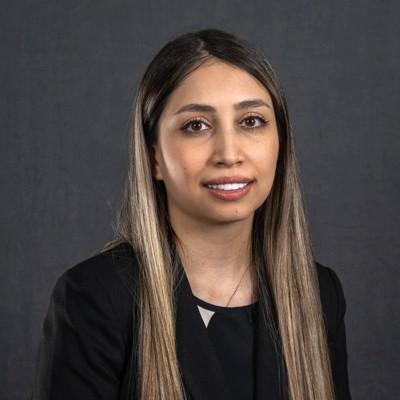
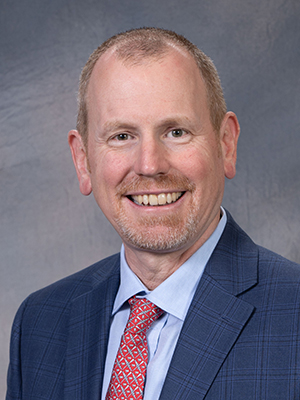
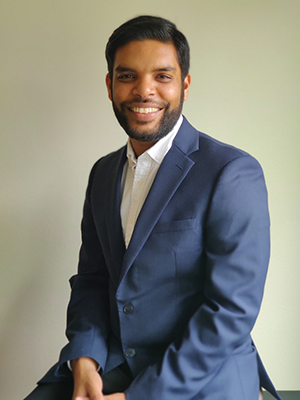
John Byabazaire is a Research Fellow at the School of Computer Science, University College Dublin (UCD). He holds a PhD in Computer Science from UCD (2024), following a BSc (Gulu University, 2013) and MSc (Waterford Institute of Technology, 2018). His research focuses on IoT systems for data collection, remote sensing, AI-driven end-to-end system management, and fog analytics. He has held academic roles including Assistant Lecturer at Gulu University (2018–2019) and teaching roles at UCD since 2019, including Occasional Lecturer and Senior Teaching Assistant. His research spans smart agriculture, data quality in IoT, and education technology. Notable contributions include frameworks for yield mapping in precision agriculture, trust-based data validation in IoT, and machine learning approaches for livestock health monitoring. He has secured grants like the National ICT Initiatives Support Program (Uganda Government, 2019–2020). Teaching includes courses on cloud computing, web development, and distributed systems. His articles emphasize IoT data quality, agricultural analytics, and educational technology innovation. He actively promotes technology adoption in African education and agriculture sectors through collaborative projects.
Kimia Zamiri Azar serves as an Assistant Professor in the Department of Electrical and Computer Engineering at the University of Central Florida, focusing on hardware security and verification methodologies. Her research bridges theoretical formal methods with practical security implementations in semiconductor design and testing. Her educational background includes: Ph.D. in Electrical and Computer Engineering, George Mason University (2021) Postdoctoral Research, University of Florida Dr. Azar's research spans hardware security with emphasis on system-level verification, VLSI design-for-trust, and advanced IC testing. She pioneers techniques in logic locking, secure heterogeneous integration, and IC supply chain security, developing frameworks for authenticated encryption in Systems-in-Package and runtime security monitoring. Her work integrates formal verification with innovative testing methodologies to address hardware trust challenges across the semiconductor lifecycle. Analysis of her recent publications reveals two dominant trends: (1) Application of large language models (LLMs) to hardware design tasks including high-level synthesis code generation and RTL optimization, and (2) Advancement of secure heterogeneous integration techniques for System-in-Package architectures with focus on counterfeit prevention and split-test security protocols. These directions address critical gaps in hardware trustworthiness amid increasingly complex semiconductor supply chains. Her scientific contributions have earned significant recognition: Best Paper Award at ICCAD 2019 Best Paper Award at ISVLSI 2020 Best Paper Award at ICCAD 2020 Best Paper Award at IEEE DCAS 2020 Best Paper Award at HOST 2022 Best Paper Award at DATE 2023 Dr. Azar secures substantial research funding from premier agencies including NSF, SRC, DARPA, AFRL, DoD (NG), and Microsemi. Her grants support projects spanning hardware security validation frameworks, secure heterogeneous integration, and AI-augmented verification methodologies. She actively mentors students in her research group, guiding publications in top venues like IEEE D&T, IEEE TC, and DAC while fostering industry-academic collaborations. Her work directly impacts semiconductor security standards through patented innovations and open-source verification tools. As an active IEEE and ACM member, she contributes to community advancement through conference organization (HOST, DATE), journal editorial roles, and workshop leadership on hardware security standards. Her research group collaborates with semiconductor industry leaders to translate theoretical security frameworks into practical design-for-trust methodologies for next-generation integrated circuits.
Markus König is a Professor of Informatics in Civil Engineering at Ruhr University Bochum, where he has been researching and teaching since October 2009. His work focuses on Building Information Modeling (BIM), digital construction technologies, and civil engineering informatics, with significant contributions to the development and implementation of digital methods in German construction industry. Dr. König earned his degree in civil engineering with a focus on applied computer science at Leibniz University Hannover, where he also completed his doctorate on cooperative building planning at the Institute for Building Informatics. He subsequently held a junior professorship for Theoretical Methods of Project Management at Bauhaus University Weimar before joining Ruhr University Bochum. His research spans multiple cutting-edge areas including Building Information Modeling (BIM), construction process simulation, tunneling informatics, infrastructure asset management, and the application of artificial intelligence and computer vision in civil engineering. As chair of the Building Informatics Working Group from 2012-2016, he played a key role in developing the first national BIM curriculum for German universities and serves as editor of the book 'Building Information Modeling: Technological Foundations and Industrial Practice.' Analysis of his recent publications reveals a strong trend toward semantic technologies, digital twins, automated compliance checking, and the integration of AI in construction processes. His work increasingly focuses on information containers, ontology development, and the application of large language models to infrastructure data, reflecting the evolving landscape of digital construction. Dr. König's significant contributions to digital construction have been recognized with prestigious awards: Lower Saxony-Bremen Construction Industry Award (2017) for 'services in the development and introduction of digital construction in Germany' Konrad Zuse Medal (2020) While specific details about his advising and grant activities aren't explicitly mentioned in the provided text, his extensive publication record with numerous co-authors suggests active supervision of doctoral students and research staff. His involvement in multiple collaborative research projects is evident from his publication history. At Ruhr University Bochum, Professor König leads a research group focused on civil engineering informatics, with particular emphasis on BIM, digital construction technologies, and their application across the building lifecycle. His team appears to work at the intersection of computer science and civil engineering, developing innovative solutions for construction process optimization, infrastructure management, and digital transformation of the AEC industry.
Felix Gomez Marmol is an Associate Professor at the University of Murcia's Faculty of Informatics, Department of Information and Communication Engineering. His research focuses on cybersecurity, artificial intelligence, network security, and IoT security. He holds a PhD in Computer Science from the University of Murcia (2010), supervised by Dr. Gregorio Martínez Pérez. Key research interests include adaptive intrusion detection systems, dark web analysis, and AI-driven cybersecurity frameworks. He leads the Intelligent Systems and Telematics research group and previously contributed to the Sistemas Inteligentes group. His work emphasizes practical applications such as the SCORPION Cyber Range platform for cybersecurity training and gamification. Recent projects involve detecting hate networks on social media, optimizing malware defense using transfer learning, and developing SIEM systems for IoT environments. His contributions span technical papers on cybersecurity education, ethical hacking fundamentals, and blockchain-based security solutions. Prof. Gomez Marmol has collaborated on initiatives like the COBRA framework for simulating advanced persistent threats (APTs) and the COnVIDa dashboard for pandemic-related data analysis. His research bridges theoretical advancements with real-world cybersecurity challenges.
Dr. Joshua M. Pearce is a Professor at Western University, holding appointments in the Department of Electrical & Computer Engineering and the Ivey Business School. He is the John M. Thompson Chair in Information Technology and Innovation at the Thompson Centre for Engineering Leadership & Innovation and a Fellow of the Canadian Academy of Engineering. His research focuses on open-source appropriate technology for sustainability and poverty reduction, spanning solar photovoltaics, 3D printing, distributed recycling, and policy analysis. Ph.D. in Materials Engineering from Pennsylvania State University Former Richard Witte Professor at Michigan Tech Editor-in-Chief of HardwareX Author of multiple open-source sustainability books His work integrates engineering, economics, and policy to solve global sustainability challenges. Recent projects include agrivoltaic systems, open-source medical devices, and climate-resilient food production frameworks. He leads the Free Appropriate Sustainability Technology (FAST) research group, which has produced over 200 open-access publications cited in top-tier journals like Renewable and Sustainable Energy Reviews (IF=16.3) and HardwareX (IF=2). Dr. Pearce's scientific contributions include: Fulbright-Aalto University Distinguished Chair Top 0.06% most cited scientist (Elsevier metrics) Leading open-source hardware certification frameworks Developing low-cost scientific instruments His research team includes cross-disciplinary collaborators from Mechanical Engineering, Environmental Science, and Policy Studies. The FAST group emphasizes practical open-source solutions for energy, water, and food security in both developed and low-resource contexts.
Daniel A. McAdams is the Robert H. Fletcher Professor in Mechanical Engineering at Texas A&M University and serves as the NSF Program Director of Convergent Activities. His research develops design theory and methodology with focus on functional modeling, bio-inspired design, and technology evolution. Educational Background: PhD in Mechanical Engineering from University of Texas at Austin MS in Mechanical Engineering from California Institute of Technology BS in Mechanical Engineering from University of Texas at Austin His research investigates innovation in concept synthesis through computational methods, bio-inspired design approaches, and technology evolution applied to product development. Current projects include function-sharing principles in biological systems, digital twin architectures, and patent mining for technology forecasting. Recent publications explore applications of speculative fiction in design ideation, graph-theoretic approaches for digital twins, and automated assessment in engineering education, demonstrating cross-disciplinary innovation across design science. Awards and Honors: ASME Design Theory and Methodology Award Distinguished Achievement Award for Student Relations Multiple Faculty Fellow awards Design Studies Best Paper Award Outstanding Faculty Mentor Award He leads the Product Synthesis Engineering Lab, advancing design methodologies for complex engineered systems through computational approaches and biological analogies.
Jeyavijayan 'JV' Rajendran is an Associate Professor in the Department of Electrical and Computer Engineering at Texas A&M University, part of the College of Engineering. He is an ASCEND Fellow and leads the Secure and Trustworthy Hardware (SETH) Lab. His research focuses on hardware security, computer security, and novel applications of AI in secure hardware design. Education: PhD in Electrical Engineering (NYU 2015), MS in Computer Engineering (NYU Tandon 2010), BE in Electronics and Communication Engineering (Anna University 2008). Research Interests: Hardware Security, Computer Security, Logic Locking, Hardware IP Protection, and Reinforcement Learning for Security. He explores AI-driven approaches to detect vulnerabilities, protect intellectual property, and enhance secure hardware design through fuzzing, obfuscation, and formal verification. Notable Awards: 2022 Office of Naval Research Young Investigator Award, 2021 IEEE CEDA Ernest Kuh Early Career Award, 2017 NSF CAREER Award. Lab and Teams: The SETH Lab focuses on trustworthy hardware design, developing techniques to secure integrated circuits against reverse engineering and IP theft. Current projects include LLM-based hardware code generation, formal approaches for hardware fuzzing, and AI-driven vulnerability detection.
Scott Walbridge is the Chair of the Department of Civil and Environmental Engineering at the University of Waterloo, where he has been actively teaching and researching since 2006. He holds a Doctorate in Civil Engineering from the Swiss Federal Institute of Technology (EPFL), a Master's from the University of Alberta, and a Bachelor's in Civil Engineering from the same institution. His research focuses on enhancing structural safety and durability through fatigue assessment, retrofitting of welded metal structures, modular construction, and life-cycle cost analysis. He chairs the CSA aluminum structures technical subcommittee for bridge design codes (S6) and actively contributes to code development for structural welding and aluminum design. Walbridge has been Program Director for Waterloo’s Architectural Engineering program (2018–2022) and serves on editorial boards for journals like Structural Engineering International and ASCE Journal of Bridge Engineering . Education: PhD, Civil Engineering (Steel Structures), EPFL, Switzerland (2005) MSc, Structural Engineering, University of Alberta (1998) BSc, Civil Engineering, University of Alberta (1996) Research Interests: Fatigue assessment, welded metal structures, modular construction, structural reliability, fracture mechanics, and life-cycle cost analysis. His work bridges theoretical frameworks with practical applications, such as improving fatigue life prediction for aluminum bridge decks and optimizing material selection for corrosion resistance. Professional Engagement: Chair of CSA S6 Aluminum Structures Subcommittee, active member of welding code committees (W59, W59.2), and contributor to national bridge design standards. His leadership in code development ensures alignment with modern material technologies and sustainability goals. Teaching & Advising: Recently taught courses like CIVE 512 (Rehabilitation of Structures) and CIVE 704 (Bridge Design). He is currently accepting graduate students in structural engineering and bridge design.
Alison Greig is the Director of Education for Sustainability (EfS) at Anglia Ruskin University and leads the EfS research theme at the Global Sustainability Institute (GSI) . She is also the Course Leader for the MSc Sustainability and is actively involved in research supervision. PhD in Physical Geography (Landslides, Hurricanes) from the University of Wales Swansea BSc (1st Class Hons) in Geography from the University of Wales Swansea PgCert (Higher Education) from Anglia Ruskin University Her research focuses on education’s role in fostering sustainability , emphasizing pedagogical innovation , interdisciplinary learning , and measuring educational impact . She explores how formal and informal education systems can empower individuals to drive sustainable transformations. Alison’s recent publications highlight trends in curriculum reform , transdisciplinary education , and community-based sustainability research . Her work bridges environmental science , educational theory , and policy analysis . Scientific awards and memberships include: National Teaching Fellow Principal Fellow of the Higher Education Academy Chartered Water and Environmental Manager Chartered Environmentalist Alison supervises postgraduate research students and collaborates with institutions like the Global Sustainability Institute to advance sustainability education initiatives.
Dr. Anja Schmidt is a Postdoctoral Researcher at the Helmholtz Centre for Environmental Research - UFZ , specifically within the Department of Conservation Biology & Social-Ecological Systems. She has been affiliated with UFZ since 2020 and previously worked at the German Centre for Integrative Biodiversity Research (iDiv) and UFZ's Community Ecology Department. Her research focuses on ecosystem processes, particularly decomposition dynamics driven by invertebrates in tropical and agricultural systems, climate change impacts, and biodiversity conservation. PhD in Ecology (UFZ, 2012–2015) Master's in Ecology, Environmental Science, Bioinformatics (University of Giessen, 2008–2011) BSc in Biotechnology, Animal Physiology, Organismic Biology (University of Erlangen/Nuremberg, 2005–2008) Her work explores the interplay between decomposition processes , invertebrate biodiversity , and human-driven environmental changes . She investigates how climate change, land use, and pollution affect soil and aquatic ecosystems, with a focus on multitrophic interactions. Her research integrates experimental platforms like the iDiv Ecotron and UFZ's environmental observatories (TERENO, MOSES) to simulate and monitor real-world conditions. Dr. Schmidt's recent publications highlight her contributions to understanding invertebrate decline and its cascading effects on microbiomes, soil biodiversity assessments, and policy frameworks for conservation. She collaborates extensively with networks such as iDiv, STACCATO, and LEGATO, bridging experimental ecology with societal decision-making through projects like Faktencheck Artenvielfalt . She is associated with experimental infrastructures including: iDiv Ecotron Project (2018–2020) Global Change Experimental Facility (GCEF) TERENO (Terrestrial Environmental Observatories) MOSES (Modular Observation Solutions for Earth Systems) MOBICOS (Mobile Stream Laboratories) River Experiment Leipzig
Peng Gao is a Professor in the Department of Geography and the Environment at Syracuse University, affiliated with the Maxwell School of Citizenship and Public Affairs. His work bridges river geomorphology and urban geospatial analysis, leveraging GIS, remote sensing, and UAV technologies to address environmental and social challenges. Education: Ph.D., Physical Geography, State University of New York at Buffalo (2003) M.S., Physical Geography, Lanzhou University (1993) B.S., Solid Mechanics, Lanzhou University (1990) Professor Gao specializes in river morphodynamics—particularly in the Qinghai-Tibet Plateau—and geospatial applications for urban planning. His research examines braided/meandering river systems, peatland hydrology, and how urban built environments influence social inequities and public health outcomes through spatial analysis. His 2020-2024 publications reveal a dual focus: (1) fluvial processes in high-altitude regions (e.g., neck cutoff dynamics, braided river discharge estimation using Landsat), and (2) urban applications (e.g., green building design, lead poisoning exposure mapping). This reflects a strategic integration of field geomorphology with computational geospatial modeling. Professor Gao actively mentors through SOURCE undergraduate research grants and PhD committees. Current funded projects include peatland mapping in the Andean Altiplano, I-81 Viaduct impact analysis in Syracuse, and studies on urban built environments affecting childhood lead poisoning. His work utilizes UAVs for BVLOS operations and collaborates with Syracuse CoE on urban environmental simulations, emphasizing technical innovation in geospatial data acquisition and analysis.
Efstathios (Stathis) Michaelides is the W.A. "Tex" Moncrief, Jr. Founding Chair of Engineering at Texas Christian University (TCU). He holds a Ph.D. and M.S. in Engineering Science from Brown University (1980, 1979) and a B.A. in Engineering Science and Economics from Oxford University (1977). His research focuses on advanced energy systems, multiphase flow, and renewable energy transitions. Ph.D. , Engineering Science, Brown University, 1980 M.S. , Engineering Science, Brown University, 1979 B.A. , Engineering Science and Economics, Oxford University, England, 1977 Michaelides' work spans energy conversion , geothermal systems , nanofluidics , and particle-fluid dynamics . His recent publications analyze energy storage requirements for renewable transitions, drag force correlations in complex flows, and thermodynamic implications of carbon sequestration. His research trends include decarbonization strategies , nanoparticle-enhanced phase transitions , and smart microfluidic systems . He has also contributed to foundational texts like Particles, Bubbles and Drops (2006) and the Multiphase Flow Handbook (2017).
Huy T Tran is an Assistant Professor in the Department of Aerospace Engineering at the University of Illinois at Urbana-Champaign's College of Engineering, with additional appointments at the Applied Research Institute. His research focuses on the intersection of robotics, artificial intelligence, and multi-agent systems, with applications spanning autonomous navigation, critical infrastructure resilience, and intelligent transportation. Dr. Tran earned his Ph.D. in Aerospace Engineering from Georgia Institute of Technology in 2015, following advanced degrees from Georgia Tech and University of Wisconsin-Madison. His academic journey includes research assistant professor positions before achieving his current assistant professor role in 2021. He previously worked as a Senior Multi-Disciplinary Systems Engineer at The MITRE Corporation and served as a Visiting Scholar at the Air Force Institute of Technology. His research interests encompass Autonomy, Reinforcement Learning, Artificial Intelligence, Machine Learning, Robotics, Multiagent Systems, Intelligent Transportation Systems, and Critical Infrastructure Resilience. As director of the Lab for Intelligent Robots and Agents (LIRA), he leads cutting-edge research in autonomous systems that interact with humans and other robots. His work has evolved from foundational resilience modeling in aerospace systems toward increasingly sophisticated AI applications in multi-robot coordination and explainable decision-making. Dr. Tran's publication record demonstrates a clear trajectory toward explainable AI and human-AI collaboration, with recent work focusing on generating explanations for reinforcement learning policies, coordination in ad hoc teams, and neuro-symbolic approaches to robot policy interpretation. His research bridges theoretical advances with practical applications in air traffic control, field robotics, and critical infrastructure management. Best Paper Award: Theoretical (2016 Complex Adaptive Systems Conference) Selected for oral presentation at IROS 2023 Workshop 27% full paper acceptance rate at AAMAS 2022 44% acceptance rate at ICRA 2020 As an educator, Dr. Tran teaches core aerospace courses including Computational Systems Engineering, Aerospace Numerical Methods, and Reinforcement Learning. He has secured significant research funding from NASA's Transformational Tools and Technologies program, ARL A2I2 program, ONR Science of AI program, and DARPA. His current projects span ad hoc teaming in multi-robot systems, collective autonomous air mobility, hierarchical reinforcement learning, and interpretable AI agents.
Koroush Shirvan is the Atlantic Richfield Career Development Professor in Energy Studies and a tenured faculty member in MIT's Department of Nuclear Science and Engineering within the School of Engineering. Joined in July 2017, he directs the Reactor Technology Course for Utility Executives and leads the Fission Materials in Extreme Environments Lab. His work bridges nuclear engineering with practical industrial applications for decarbonization. His research focuses on reactor design economics, materials testing under irradiation, nuclear safety, and boiling heat transfer. He accelerates innovations in nuclear fuels, small modular reactors, and space propulsion through multi-scale physics integration. Current projects include accident-tolerant fuels, high-temperature materials for microreactors, and AI-driven optimization of reactor systems. His approach combines experimental irradiation testing at MITR with advanced computational modeling. Recent publications reveal strong trends toward economic nuclear deployment via advanced fuel technologies and small modular reactors. AI/ML applications dominate optimization research, particularly for core reload and uncertainty quantification. Materials science under extreme conditions remains central, with growing emphasis on space nuclear applications and horizontal reactor configurations for cost reduction. His scientific recognition includes: Nuclear News 40 under 40 (2024) American Nuclear Society Landis Young Member Engineering Achievement Award (2023) American Nuclear Society Reactor Technology Award (2022) Teaching responsibilities span Sustainable Energy (22.811/081), Graduate Reactor Physics, and Nuclear Design courses. Research grants support experimental programs at MIT Reactor Lab and computational frameworks for reactor-to-repository analysis. He mentors students through senior design projects and graduate research in nuclear fuel cycles. He directs the Fission Materials in Extreme Environments Lab and co-leads MIT's Space Nuclear initiative with AeroAstro. The team conducts irradiation experiments using MITR's high-temperature hydrogen flow capabilities and advanced diagnostics for post-irradiation examination. Current thrusts include nuclear thermal rocket materials testing and fission surface power development for lunar/Mars missions.
Olli Seppänen serves as Associate Professor in Civil Engineering at Aalto University's School of Engineering, specializing in operations management for construction productivity improvement. He coordinates the Vision 2030 consortium—comprising 13 Finnish construction and design firms—to develop industrialized building methods for 2030, while leading multiple Business Finland-funded research initiatives focused on digital construction workflows and real-time monitoring. His research centers on lean construction principles, location-based management systems, and digital transformation through IoT, AI, and robotic vision. Key focus areas include prefabrication optimization, construction logistics, and shifting work off-site to industrialize processes. He aims to solve industry-wide productivity challenges by creating real-time situational awareness and implementing takt production systems for workflow stability. Recent publications (2024-2025) reveal strong emphasis on digital twin frameworks, semantic modeling for quality assurance, and AI applications in risk management. His work bridges theoretical lean construction concepts with practical implementations, particularly in real-time resource tracking, waste reduction in MEP work, and cross-sector learning from high-performing teams. Seppänen has received significant recognition including: School of Engineering doctoral dissertation award (2024) Best paper at IEEE Wireless Sensors Conference (2019) Nordic Conference best paper award for PhD research (2019) DSc dissertation award (2010) As principal investigator, he manages: Vision 2030 consortium projects (2-3 annually; PI for two current projects) iCONS: Real-time resource flow monitoring via indoor positioning RECAP: Deep learning analysis of progress/quality from images/point clouds DiCtion: Integrated data systems for real-time stakeholder situation pictures He actively contributes to the "Performance in Building Design and Construction" research group and leverages the Vision 2030 consortium as a collaborative platform for industry transformation, driving adoption of digitalized, industrialized construction methods through academic-industry partnerships.