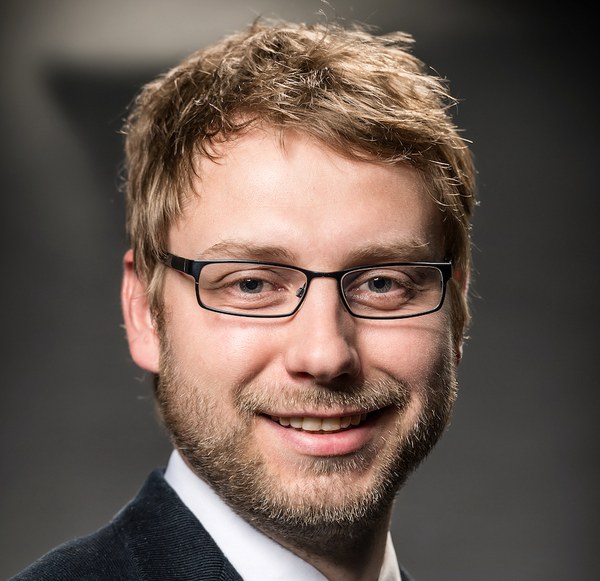
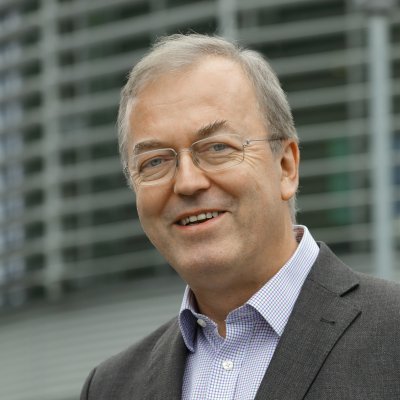
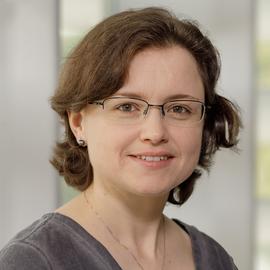
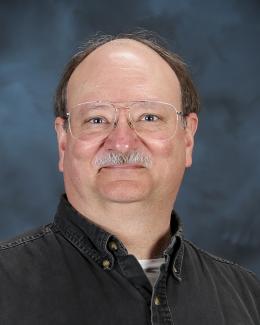
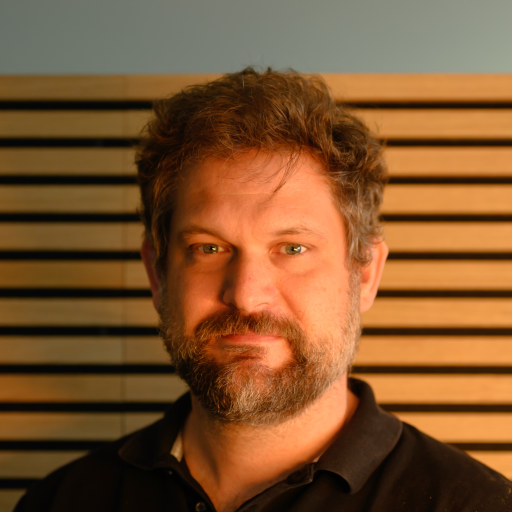
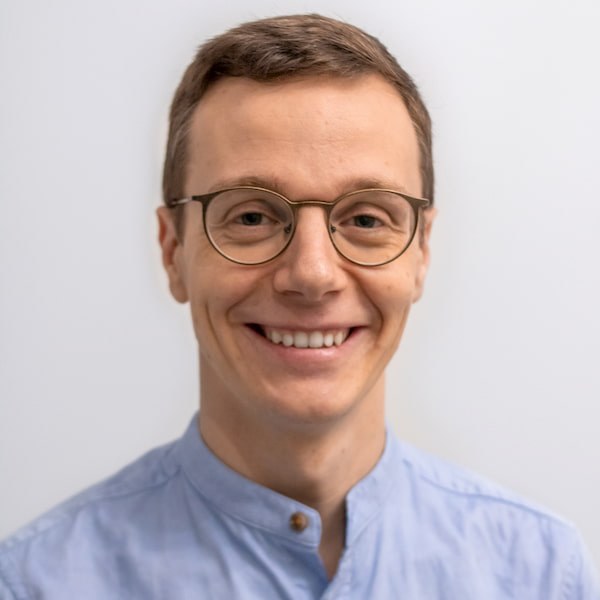
Andreas Lintermann is a postdoctoral researcher and group leader of the Simulation and Data Lab (SDL) Fluids & Solids Engineering at the Jülich Supercomputing Centre (JSC), Forschungszentrum Jülich. His work focuses on integrating artificial intelligence with high-performance computing for fluid and solid mechanics applications. Coordinates European Center of Excellence in Exascale Computing (CoE RAISE) Leads EU-funded projects: EuroCC/EuroCC2, interTwin, SPECTRUM Co-leads EU-project HANAMI, BMBF project StroemunsRaum, and BMWK project nxtAIM Research Interests: His group develops encoder-decoder CNNs for aeroacoustic field prediction, convolutional autoencoders for flow field compression/reconstruction, and physics-informed neural networks for large-scale simulation initialization. Applications include turbulence modeling, shape optimization, and medical imaging. Technical Focus: Specializes in AI-driven multi-physics coupling, heterogeneous hardware acceleration, and super-resolution algorithms for computational fluid dynamics.
Stefan Zellmann is an Associate Professor and Principal Investigator of the DFG Project 'VTV-AMR' at the Institute of Computer Science , University of Cologne. His research focuses on the intersection of large-scale scientific visualization and high-performance computing, particularly in developing real-time rendering algorithms for adaptive mesh refinement (AMR) data. He leads projects such as ExaBrick (AMR rendering framework) and Visionaray (cross-platform ray tracing library). Education & Roles: Completed his PhD in 2014 on 'Interactive High-Performance Volume Rendering'. Currently teaches courses on graphics processor architectures and programming, including Practical Computer Science: Architecture and Programming of Graphics and Coprocessors . Research Interests: Direct volume rendering, physically based rendering, AMR visualization, GPGPU computing, and FPGA programming. His work emphasizes low-latency interaction and efficient algorithms for supercomputers/multi-GPU systems. Awards: Honorable Mention @EGPGV 2020, Best Paper Awards @EGPGV 2018 (for Rapid k-d Tree Construction ), @VDA 2017 (for Ray Clipping ), and @PDCS 2012 (for Distributed Volume Rendering Architecture ). Key Projects: ExaBrick (AMR rendering), Visionaray (ray tracing), Virvo (volume rendering library), and HPSC TerrSys (high-performance computing in terrestrial systems). Grants & Services: Co-Chair of IEEE LDAV 2022 Posters, Program Committee member for IEEE VIS and EGPGV. Regular reviewer for journals/conferences like TVCG and IEEE VR. Labs/Teams: Part of the Center for Data and Simulation Science (CDS), focusing on visualization algorithms for exascale computing and large-scale scientific data.
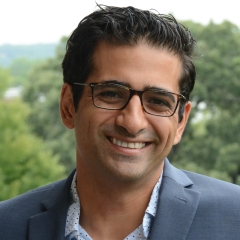
Kerem Çamsarı is an Associate Professor in the Department of Electrical and Computer Engineering at the University of California, Santa Barbara (UCSB). He leads the Orchestrating Physics for Unconventional Computing (OPUS) Lab, focusing on interdisciplinary research that bridges materials science, device engineering, and computational systems. His work emphasizes exploiting novel materials and phenomena to design energy-efficient electronic circuits and architectures, diverging from traditional Moore's Law-driven approaches. Çamsarı holds a PhD and BS from Purdue University and Middle East Technical University, respectively, and completed a postdoc at Purdue. Research Interests : Micro- and nanoscale engineering, photonics, spintronics, probabilistic computing, and unconventional computing systems. His lab develops innovative hardware solutions for combinatorial optimization, probabilistic inference, and quantum-inspired algorithms using stochastic magnets and spintronic devices. Publications : Recent work focuses on Ising machines, probabilistic computing architectures, and spintronics-based hardware. Key themes include scalable connectivity solutions, low-power electronics, and hybrid CMOS-stochastic systems. Awards : Misha Mahowald Prize NSF Early CAREER Award IEEE Magnetics Society Early Career Award Advising & Grants : Active in securing NSF grants for probabilistic computing and neuromorphic systems. Collaborates on hardware-aware machine learning frameworks. Labs & Teams : OPUS Lab explores physics-to-systems integration, emphasizing cross-disciplinary innovation in computing architectures.
Maria Luisa Gil Gómez is a researcher at the Universitat Politècnica de Catalunya (UPC), affiliated with the Department of Computer Architecture and the Barcelona Higher Technical School of Telecommunications Engineering. She holds a PhD in Computer Science and leads research in parallel computing, high-performance computing (HPC), and programming models. Her work focuses on optimizing computational workflows, fault tolerance in distributed systems, and leveraging multi-GPU architectures for scientific simulations. She has contributed to projects like the Programming Models group (PM) at UPC and collaborates with the Barcelona Supercomputing Center (BSC-CNS). Affiliations: UPC Department of Computer Architecture, BSC-CNS, PM Research Group Research Interests: Parallel Programming Models, HPC, GPU Computing, Cellular Automata, Education Technology Her research spans over 147 documented activities, including journal articles, conference presentations, and funded projects. Notable contributions include studies on BCI in music education, distributed algorithms for ARM-based clusters, and the OpenCAL++ framework for parallel cellular automata simulations. She has also explored educational methods integrating creativity and game-based learning in engineering.
Ricardo Javier Principe Rubio is a Researcher at the Universitat Politècnica de Catalunya (UPC), affiliated with the Barcelona East School of Engineering (EEBE) and the Department of Fluid Mechanics. He is a key member of the ANiComp (Numerical Analysis and Scientific Computing) and (MC)² (Computational Mechanics in Continuous Media) research groups. His work bridges high-performance computing, fluid dynamics, and numerical methods, with applications in fusion technology, environmental engineering, and nanomaterials. His research focuses on advanced computational techniques, including finite element methods, uncertainty quantification, and parallel algorithms for large-scale simulations. Recent projects involve anisotropic mesh adaptation, multilevel Monte Carlo methods, and stabilized formulations for multiphase flows. Principe actively contributes to UPC's scientific software ecosystem, notably through the FEMPAR framework for parallel finite element modeling. Awards include the Premi Extraordinari de doctorat 2010 for outstanding doctoral research. He leads/participates in competitive R&D projects funded by Catalan and EU programs, such as EXAscale Quantification of Uncertainties for Technology and Science Simulation (EXAQUAT). Collaborative networks span Barcelona Supercomputing Center and international consortia.
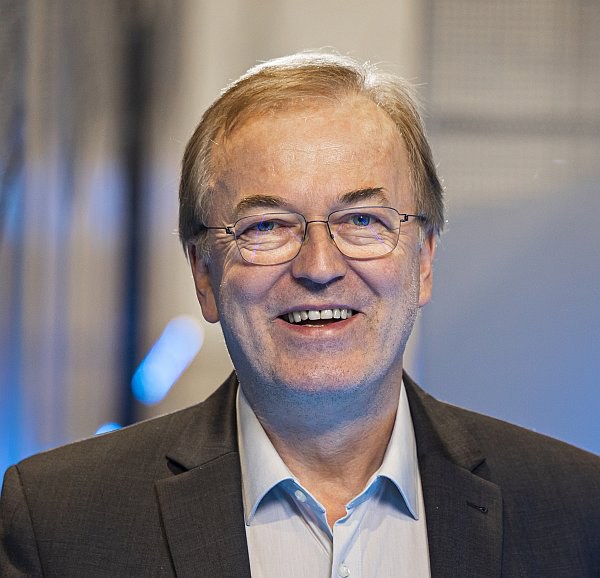
Prof. Dr. Thomas Lippert is a Professor at Goethe University Frankfurt and the Director of the Jülich Supercomputing Centre (JSC) at Forschungszentrum Jülich. He leads efforts in quantum computing integration, high-performance computing (HPC), and modular supercomputing architectures. His work focuses on hybrid quantum-classical systems, supercomputer development (e.g., JUPITER, JUWELS), and enabling computational science across domains like neuroscience, materials science, and earth systems. Research Interests include quantum algorithms, quantum-classical hybrid systems, supercomputing infrastructure, and applications in quantum simulation, optimization, and AI. He spearheads projects like JUNIQ (quantum computing infrastructure) and contributes to Helmholtz Information Program initiatives. He has been instrumental in developing Europe’s first exascale system (JUPITER) and advancing quantum computing integration into HPC environments. Notable contributions include the JUWELS Booster for AI research, the QSolid quantum computing demonstrator, and interdisciplinary collaborations in neuroscience computing. He oversees JSC’s supercomputers (JUWELS, JUSUF) and storage systems, fostering industry-academia partnerships. His team addresses challenges in quantum benchmarking, error mitigation, and large-scale scientific workflows. Lippert collaborates on EU-funded projects (e.g., HPCQS) and national initiatives, driving innovation in supercomputing and quantum technologies. His work emphasizes sustainable digital infrastructure and Germany’s tech sovereignty through advanced computing.
Alexandru Paler serves as an Associate Professor in the Department of Computer Science at Aalto University, Finland, where he leads research in quantum software development. His work focuses on designing compilers and optimization frameworks for quantum circuits, with emphasis on quantum error correction implementation and fault-tolerant quantum computing systems. Based in Espoo at Konemiehentie 2, he maintains active research collaborations through the university's quantum computing initiatives. Dr. Paler's research spans quantum circuit compilation, quantum error correction (particularly surface codes and QLDPC codes), and quantum software optimization. His team develops high-performance quantum compilers for neutral atom architectures and modular superconducting systems, addressing critical challenges in resource estimation and fault tolerance. The Quantum Operating Systems (QUANTUM) research group he contributes to explores scalable quantum software frameworks that bridge theoretical algorithms with practical hardware constraints, with significant work on graph-state compilation and reinforcement learning for circuit optimization. Analysis of his 15 most recent publications (2023-2025) reveals concentrated efforts in quantum compiler design, error correction scalability, and hardware-aware quantum software. Key trends include machine learning applications for decoder optimization, novel approaches to measurement-free error correction, and queuing theory models for fault-tolerant circuit analysis. His work consistently addresses the practical barriers to large-scale quantum computing through compiler innovations and resource-efficient circuit design. Dr. Paler actively participates in the Quantum Operating Systems (QUANTUM) research group within Aalto's Department of Computer Science, focusing on Algorithms and Theoretical Computer Science. This team develops quantum software infrastructure for next-generation quantum hardware, with current projects including Pandora (ultra-large-scale circuit compilation), quantum circuit caching mechanisms, and standardized cell approaches for neutral atom systems. Their research directly supports the transition from theoretical quantum algorithms to executable, error-resilient quantum programs.
Prof. Thomas Lippert is a Professor and Senior Fellow at the Frankfurt Institute for Advanced Studies (FIAS) and holds the chair for Modular Supercomputing and Quantum Computing at Goethe University Frankfurt. He serves as director of the Jülich Supercomputing Centre and holds leadership roles in the John von Neumann Institute for Computing (NIC) and Gauss Centre for Supercomputing (GCS). His research focuses on hybrid quantum-HPC systems, modular supercomputing architectures, and energy-efficient computing. Education: He earned his diploma in Theoretical Physics from the University of Würzburg (1987), followed by PhDs in theoretical physics from Wuppertal University (lattice quantum chromodynamics simulations) and Groningen University (parallel computing with systolic algorithms). Research emphasizes three pillars: energy efficiency, scalable modularity, and AI integration with HPC. Collaborations include Jülich Supercomputing Centre and FIAS. The group recently relocated to Bockenheim campus with a focus on modular datacenter design and non-von-Neumann architectures.
Diomidis Spinellis is a Professor at the Department of Management Science and Technology, Athens University of Economics and Business. He is a leading researcher in software engineering, IT security, and cloud systems engineering, with over 300 publications and 10,000 citations. He has authored award-winning books including Code Reading , Code Quality: The Open Source Perspective , and Effective Debugging: 66 Specific Ways to Debug Software and Systems (2016). As a Senior Member of ACM and IEEE, he served as Editor-in-Chief of IEEE Software (2015–2018) and contributed to open-source tools like CScout, UMLGraph, and dgsh. Award-winning author in software engineering Developer of critical open-source tools Editorial leadership in IEEE Software Contributor to macOS and BSD Unix His research spans code quality, software evolution, security, and developer productivity. Articles highlight Unix modernization, AI-assisted coding, dependency analysis, and incident management. He has served on the IEEE Computer Society Board of Governors and holds degrees from Imperial College London (MEng, PhD). Scientific contributions include open-source datasets (e.g., VulinOSS, Alexandria3k) and innovative tools for software analysis. His work bridges academic research and industrial practice, with case studies on Eclipse, Android APIs, and ING’s incident management.
Estela Suarez is a Professor of High Performance Computing at the University of Bonn's Computer Science Department and holds leadership roles at the Jülich Supercomputing Centre (JSC) in Forschungszentrum Jülich. Her work focuses on advancing modular supercomputing architectures, heterogeneous systems, and application optimization for exascale computing. She currently serves as Chair of the EuroHPC Joint Undertaking's Research and Innovation Advisory Group (RIAG) and leads the Next Generation Architectures and Prototypes research group at JSC. Education includes a PhD in Physics from the University of Geneva (2010) and a Master's in Physics (Astrophysics specialization) from Universidad Complutense de Madrid (2004). She has held senior research positions at JSC since 2010 and has led major EU-funded projects like DEEP, DEEP-ER, and DEEP-SEA. Research interests include HPC system design, hardware-software co-design, and energy-efficient supercomputing architectures. She was awarded the University of Bonn's 2023/2024 teaching award and actively contributes to initiatives like the European Processor Initiative (EPI) and the NUMERIQS consortium. Current projects include optimizing exascale systems for Earth system modeling (IFCES2), AI-driven data analytics (AIDAS), and modular supercomputing software (DEEP-SEA). During her 2024/2025 sabbatical, she is not accepting new students. Her work is published in journals like Geoscientific Model Development and conferences such as ISC and EuroHPC.
Al A Geist II is a Corporate Research Fellow at Oak Ridge National Laboratory (ORNL), serving as Chief Technology Officer of the Leadership Computing Facility, Chief Scientist for the Computer Science and Mathematics Division, and Chief Technology Officer of the DOE Exascale Computing Project. With 35 years of continuous service at ORNL, he leads the ASCR technical Council on Resilience and directs the multi-lab Extreme-Scale Algorithms and Software Institute as Principal Investigator, establishing him as a pivotal figure in national high-performance computing strategy. His research centers on exascale computing resilience, parallel and distributed systems, and numerical linear algebra, with foundational contributions including co-development of the Parallel Virtual Machine (PVM) standard and active involvement in MPI-1/MPI-2 standards. Recent work focuses on fault tolerance mechanisms for extreme-scale systems, heterogeneous computing frameworks, and scientific applications spanning neutron science, biomolecular simulation, and materials science, reflecting a career-long integration of theoretical algorithms with real-world computational infrastructure. Analysis of his publication record reveals consistent innovation in enabling scientific discovery through resilient computing, with recent articles emphasizing cooperative fault management, pre-exascale system deployment, and science gateways for neutron facilities. This trajectory demonstrates evolving expertise from early distributed computing (PVM, MPI) to contemporary exascale challenges, maintaining strong relevance to DOE mission-critical scientific domains while addressing hardware-software resilience gaps. As Principal Investigator for the Extreme-Scale Algorithms and Software Institute and former 20-year leader of ORNL's 25-member Computer Science Research Group, Geist has directed major collaborative projects shaping national computing initiatives. Though student advising details are unmentioned, his development of foundational software standards has broadly influenced the HPC community through widespread adoption of PVM and MPI. His work is operationally embedded within ORNL's Leadership Computing Facility and Spallation Neutron Source, where he develops critical infrastructure like the Neutron Science TeraGrid Gateway. Current leadership roles in the Exascale Computing Project and ASCR Resilience Council position him at the forefront of next-generation computational science infrastructure development.
Professor Stefan Krieg is a distinguished physicist holding dual appointments as a Professor of Physics at the Helmholtz Institute for Radiation and Nuclear Physics of the University of Bonn and as a senior staff member at the Jülich Supercomputing Centre (JSC) at Forschungszentrum Jülich. He currently serves as Head of Division for HPC for Quantum Systems at JSC and leads the Simulation and Data Laboratory for Numerical Quantum Field Theory within the Center for Advanced Simulation and Analytics (CASA), where he also acts as speaker for the "CASA Assembly". Krieg received his PhD in physics from Wuppertal University and completed postdoctoral positions at Forschungszentrum Jülich, Wuppertal University, and MIT before establishing his current leadership roles. Professor Krieg's research program centers on lattice quantum chromodynamics (Lattice QCD) with particular emphasis on nucleon structure calculations, parton distribution functions, and the study of strongly correlated systems. His work spans both theoretical developments and practical computational implementations, with recent publications demonstrating expertise in applying machine learning techniques to address sign problems in quantum simulations. Krieg has made significant contributions to understanding hadron spectroscopy, particularly in exotic states and charmed mesons, while also advancing computational methodologies for high-performance computing systems. His research bridges theoretical physics with practical computing challenges, focusing on efficient software implementations for the Modular Supercomputing Architecture developed at JSC. Analysis of Professor Krieg's publication record reveals a sustained research trajectory focused on fundamental questions in particle and nuclear physics using lattice methods. His work shows increasing integration of machine learning approaches with traditional lattice techniques, particularly evident in recent papers addressing sign problems in quantum simulations. The research spans multiple subfields including hadron spectroscopy, nucleon structure, parton distribution functions, and computational methods for quantum field theories. Krieg frequently collaborates with international research teams, appearing as co-author on numerous multi-institutional projects that leverage high-performance computing resources for fundamental physics investigations. As Head of Division at JSC, Professor Krieg oversees significant research infrastructure and personnel dedicated to quantum systems simulation. His leadership extends to the Center for Advanced Simulation and Analytics where he coordinates the CASA Assembly. While specific grant details aren't provided in the source material, his extensive publication record and leadership positions indicate substantial research funding and collaborative projects. Krieg's work represents a critical intersection of theoretical physics, computational science, and high-performance computing infrastructure development.
Amir Malvandi is an Assistant Professor in the Department of Agricultural and Biological Engineering at the University of Illinois, with affiliations at the Grainger College of Engineering, Center for Digital Agriculture, and Siebel Center for Design. His research focuses on thermal-fluid sciences, nanofluid engineering, and advanced food processing technologies. Research interests span nanofluid dynamics, nanoparticle migration, heat transfer enhancement, ultrasonic drying technologies, and AI-enabled food processing systems. Key application areas include sustainable food preservation, biopolymer processing, and energy-efficient industrial systems. Recent publications demonstrate strong focus on ultrasonic drying optimization, AI integration in food engineering, nanofluid behavior in thermal systems, and sustainable biomaterial processing. Research trends highlight machine learning applications for process optimization and non-destructive quality monitoring. Laboratory and team activities involve interdisciplinary collaborations in digital agriculture, supercomputing applications for agricultural engineering, and human-centered design integration in food systems.
Prof. Gabriele Cavallaro is an Associate Professor at the Faculty of Electrical and Computer Engineering, University of Iceland (since 2024) and concurrently serves as a Visiting Professor at the European Space Agency's Φ-Lab, contributing to the Quantum Computing for Earth Observation (QC4EO) initiative. He leads the Simulation and Data Lab (SDL) at the Jülich Supercomputing Centre (JSC), Forschungszentrum Jülich, Germany, focusing on AI/ML for remote sensing. Previously, he held roles as Deputy Head of the High Productivity Data Processing (HPDP) group (2016–2021), Adjunct Associate Professor at the University of Iceland's Computer Science Department (2022–2024), and Chair/Co-chair of IEEE GRSS technical committees. He earned his B.Sc. and M.Sc. in Telecommunications Engineering from the University of Trento, Italy (2011, 2013), and a Ph.D. in Electrical and Computer Engineering from the University of Iceland (2016). His research emphasizes scalable machine learning algorithms, quantum computing integration, and high-performance computing for remote sensing applications, particularly in geospatial data analysis and earth observation. Prof. Cavallaro has received the IEEE GRSS Third Prize in the Student Paper Competition (2015) . His work bridges academic and industrial collaborations, including leadership in the HDCRS and QUEST TC committees. He has organized workshops and summer schools on disruptive computing architectures and co-edited the IEEE Transactions on Image Processing (TIP) from 2022 to 2024. His roles include advancing modular supercomputing systems like the Juwels Booster and developing tools for distributed neural network training. He is also involved in initiatives such as Sen4map (semantic land-use mapping) and Prithvi (foundation models for geospatial data).
Josva Kleist is an Associate Professor at the Department of Computer Science, Aalborg University, affiliated with The Technical Faculty of IT and Design. He specializes in distributed systems, grid computing, and optical networking, with a focus on energy efficiency, middleware development, and process calculus theories. His research spans distributed computing architectures, including grid middleware (e.g., ARC), optical network optimization, and high-performance computing infrastructure for projects like the LHC. He contributed to the Danish Center for Grid Computing and the Network of Excellence on Embedded Systems Design (2004–2008), focusing on system management and resource allocation. Key research interests include: - Energy-efficient optical networks and survivable routing strategies - Grid middleware interoperability and modular design - Large-scale distributed storage and computational frameworks for scientific experiments - Formal methods for process calculi applied to mobile objects and distributed systems Recent work emphasizes cloud provider connectivity for research networks and traffic-aware elastic optical networks. Media coverage highlights his contributions to supercomputing energy efficiency and climate modeling infrastructure. Notable projects include building distributed Tier-1 computing centers for LHC data storage and analyzing network requirements for high-throughput scientific workflows. His work bridges theoretical foundations with practical implementations in distributed systems.