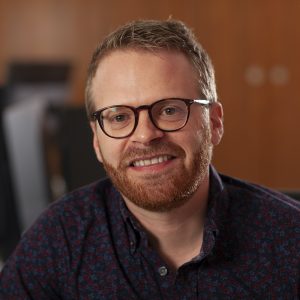
Sebastian Risi is a Professor at the IT University of Copenhagen , where he directs the Creative AI Lab and co-directs the Robotics, Evolution and Art Lab (REAL) . His work bridges computational evolution, deep learning, and collective intelligence for applications in robotics, art, and video game design. His research focuses on self-organizing AI systems that grow or assemble through local interactions, inspired by biological development. Key areas include neuroevolution , neural cellular automata , and generative modeling , with applications in adaptive robotics, game content creation, and damage-resilient AI. Recent publications highlight trends in self-assembling neural architectures (NDPs) and 3D functional machine generation (Minecraft experiments). Awards include ERC Consolidator Grant (2022), Best Paper at FDG’21 , and Google Faculty Award (2019). Scientific Awards : ERC Consolidator Grant (GROW-AI), Best Paper FDG’21, Runner-Up IEEE Games’20, GECCO 2017 Competition Winner, Sapere Aude Grant, Amazon/Google Faculty Awards He advises on projects like GROW-AI (EU-funded), AI-TESTER (game testing), and C2SIM (military systems). Media coverage includes Science , Wired , and Popular Science .
Mostafa Mohammadi is an Assistant Professor at the Department of Health Science and Technology, Aalborg University, affiliated with the Faculty of Medicine and Center for Rehabilitation Robotics. His research focuses on neurorehabilitation robotics, human-computer interaction, and telerehabilitation technologies for individuals with disabilities. Ph.D. in Biomedical Engineering (Aalborg University, 2018-2022) M.Sc. in Biomedical Engineering (Polytechnic University of Milan, 2015-2017) B.Sc. in Mechanical Engineering (Sharif University of Technology, 2011-2015) His work spans exoskeleton design, assistive robotics, and innovative interfaces like tongue-computer interfacing. Recent projects include the eMotivo digital health solution funded by Innovation Fund Denmark and intelligent tendon-driven exoskeletons for severe disabilities. Research outputs (33 total) emphasize adaptive robotics, motor impairment solutions, and wearable technologies. Collaborations span robotics, biomedical engineering, and clinical disciplines. Teaching includes courses in rehabilitation robotics, human-computer interaction, and digital systems for biomedical engineering. Scientific activities align with UN Sustainable Development Goals for quality education and reduced inequalities. Notable contributions include advancements in myoelectric interfaces and neurorehabilitation technologies.
Jonas Fritsch is an Associate Professor at the IT University of Copenhagen, affiliated with the Media, Art & Design School and the Center for Climate IT. He leads the Affective Interaction & Relations (AIR) Lab and serves as Principal Investigator (PI) for major projects like the VELUX-funded TRACE initiative (2023-2027) and the DFF-funded VOCAL project (2022-2025). His research focuses on affective interaction design, particularly in healthcare, emotional design, and the integration of cultural theory into HCI. Research Interests: His work explores affective healthcare design, embodied interaction, and interdisciplinary design methodologies. Recent projects include developing tools for patient-centered care, synthetic voice design frameworks, and affective engagement in extended reality (XR). Notable collaborations span Denmark and international partners, emphasizing human-technology relationships in care practices. Key Projects: TRACE investigates emerging human-technology interactions in care practices, while VOCAL explores novel vocal imaginaries through voice design. He has secured grants totaling over 8.5 million DKK, demonstrating impact in both academic and applied domains. Labs & Teams: As head of the AIR Lab, he fosters collaborative research on affective technologies. Media contributions include public installations like UDREDNING, which engages audiences in diagnostic processes through XR. He actively participates in conferences and review committees, emphasizing interdisciplinary dialogue in design and technology.
Ole Madsen is a Professor at the Department of Materials and Production within The Faculty of Engineering and Science at Aalborg University . His research focuses on Robotics and Automation , particularly in 5G Smart Production , AI for Manufacturing , and Industry 4.0 applications. He also holds a part-time position at Adding Robotics , applying his expertise in robot integration for industrial and healthcare settings. Research Interests : Robotics, Automation, AI, Sensor Systems, Modular Manufacturing, Welding Technology, Digital Twins, Human-Centered Robotics, Industry 4.0 His work spans 35+ years with over 205 publications , emphasizing smart production systems and robot-assisted processes . Key contributions include Swarm Production Architectures , 5G-Enabled Robotics , and Human-Robot Collaboration frameworks. He has supervised 10 PhD students and led major projects like RAU (Robot-Assisted Ultrasound) and GINP: Robotics & AI Innovation Network . Scientific Awards : SCAP2020 Best Presentation Award (2020) Ole's 31 projects include AP2030: Aseptic Factory 2030 (pharma production), AddSmart (robotics R&D), and 5G-Enabled Autonomous Systems . His 127 press/media mentions highlight advancements in robotic welding , industrial metaverse , and swarm production . He maintains an ORCID: 0000-0003-2133-2541 with extensive publication records across Swarm Robotics , Modular Manufacturing , and AI-Driven Production .
Silvia Tolu is an Associate Professor at the Technical University of Denmark's Department of Electrical and Photonics Engineering, specializing in Neurorobotics. She leads the NeuroRobotics Technology Lab (NRT-LAB), focusing on bio-mimetic control architectures for compliant robotic systems. Her research integrates neuroscience, computer science, and biology to develop solutions for assistive robotics and neurodegenerative disease diagnosis. Her research interests span: Neuro-robotics and neuromorphic engineering Bio-inspired control systems and adaptive motor control Machine learning for robotic applications Human-robot compliant interaction Cerebellar control models Publications primarily focus on neurorobotics, bio-inspired control, and human-robot interaction, with recent advances in learning-based control systems for soft robots and aerial manipulation. Awards include the AEG Elektrofonden Research Grant and funding for human-robot interaction safety research. Current projects include LOCOPD (Lundbeck Foundation), AEROTRAIN (EU Marie Curie ITN), and compliant human-robot interaction systems. She supervises multiple PhD students in neurorobotics and maintains international collaborations across Europe and Asia. Laboratory resources include advanced robotic platforms for musculoskeletal and soft robot control.
Lukas Esterle is Associate Professor at Aarhus University's Department of Electrical and Computer Engineering. His research focuses on enabling collaboration among autonomous systems through computational self-awareness, collective learning, and autonomous decision-making. His work draws inspiration from natural systems, psychology, and anthropology to develop resilient distributed systems. Key research areas include: autonomous multi-agent coordination, digital twin architectures, computational trust models, and distributed learning frameworks for robotic systems. His investigations target applications in smart cities, industrial automation, and edge computing environments. Professor Esterle teaches courses in Software Engineering, Computer Games Technologies, and Autonomous Agents & Multi-Agent Systems. He coordinates multiple European research projects including DIAMOND (Developing Personalized Capabilities), FLOCKD (Federated Learning for Collaborative Knowledge), and MARVEL (Multimodal Data Analytics for Smart Cities).
Andres Faina is a Lecturer at the IT University of Copenhagen , specializing in Robotics, Evolution, and Artificial Life Lab . He serves as Academic Director at The Maritime Hub and co-leads the Robotics, Evolution, and Art Lab . Research Focus: Robotics, Morphological Development, Bipedal Walking Key Collaborations: European Commission-funded projects (EVOBLISS, BIG-MAP, MOZART), Novo Nordisk Foundation His work explores growth-based morphological development for robotics, focusing on: Bipedal and quadrupedal locomotion Artificial Neural Network control systems Evolutionary algorithms for fitness landscape shaping Modular and reconfigurable robot design Scientific Awards : Best Paper Award at RIE 2017 Winner of Virtual Creatures Competition at GECCO 2017 Honorable Mention for Technical Achievement at GECCO 2017 Active in project leadership (e.g., Teaming up a quadruped robot with a drone ) and media engagement (14 mentions in press/media), including commentary on robotics entrepreneurship and industry challenges.
Yingguang Chu is an Associate Professor at the Institute of Mechanical and Electrical Engineering, University of Southern Denmark, specializing in Mechatronics. His research focuses on co-simulation systems, digital twins, and marine engineering applications. Research Interests : Digital twin technologies, co-simulation frameworks, marine crane systems, hydraulics, and control algorithms. Projects : Active participant in the ShippingLab II project (2024-2027) on digital twins and human factors in vessel performance. Research Output Trends : Recent work emphasizes physics-inspired neural networks for mobile machinery dynamics, environmental load sensitivity analysis, and Vico-based co-simulation systems for marine operations. Publications frequently address crane path planning, digital twin implementation, and dynamic response optimization. Scientific Awards : IEEE Robotics and Automation Magazine Best Paper Award (2024) Teaching Responsibilities : Supervises master's theses on topics like CFD simulations, membrane valve systems, and fluid mechanics, while teaching mobile hydraulics courses.
Kasper Støy is a Professor in Robotics and Embodied Artificial Intelligence at the IT University of Copenhagen, specializing in distributed control of multi-robot systems and modular robotics. He has published over 95 works and authored the MIT Press book Self-Reconfigurable Robots: An Introduction . As co-founder of Universal Robots, he bridges academic research with industrial applications. M.Sc. in Computer Science & Physics, University of Aarhus (1999) Ph.D. in Computer Systems Engineering, University of Southern Denmark (2003) His research focuses on: Modular Robotics Bio-Inspired Robotics Human-Robot Interaction Embodied Artificial Intelligence Self-Reconfigurable Systems Recent publications address anxiety-reducing pocket robots, tactile comfort systems, and origami-inspired mechanical designs. He has won awards including the 2017 GECCO Virtual Creatures Competition. 2017: GECCO Virtual Creatures Competition Active in academic service, he chaired recruitment committees for Statistics and Machine Learning positions. Collaborations span European Commission projects like MUHMI-MOZART and BIG-MAP.
Jacob Nielsen is an Associate Professor at the SDU Metaverse Lab, affiliated with the Maersk Mc-Kinney Moller Institute at the University of Southern Denmark. His research spans robotics, audiometry, and educational technology, with a focus on user-centered design and accessibility. Current Role: Associate Professor, SDU Metaverse Lab Key Themes: Modular Robotics, Human-Robot Interaction, User-Operated Audiometry His recent work emphasizes democratizing audiometric testing through smartphone applications and self-administered methods, while earlier contributions include educational robotics frameworks for children and rehabilitation systems using industrial robots. Collaborations extend to clinical audiology and STEM engagement projects in Africa. 2024-2025: 5 publications in user-operated audiometry and hearing aid calibration 2017-2020: TEDx talks and youth robotics programs in Denmark Jacob actively contributes to public discourse through 51 media appearances, including discussions on social innovation, robotics in education, and Denmark’s future technologies.
Faheem Ahmad is a Research Fellow at AAU Energy, Aalborg University, specializing in power electronics and industrial heating applications. He holds a PhD in Power Electronics from Aalborg University (2023), an M.Sc. in Energy Engineering (2020), and a B.Sc. in Electrical Engineering (2014) from Delhi Technological University. His research focuses on high-frequency converter topologies, resonant converters, and wide bandgap semiconductors, particularly for industrial heating systems. He has contributed to projects like GreenHeat (2023–2026) and RFheat (2020–2021), addressing energy-efficient RF generators and curing technologies. Education: PhD in Power Electronics, Aalborg University (2021–2023) M.Sc. in Energy Engineering, Aalborg University (2018–2020) B.Sc. in Electrical Engineering, Delhi Technological University (2010–2014) Research Interests: His work emphasizes advancing power electronics for industrial applications, including high-frequency converters and semiconductor integration in dielectric heating systems. He explores RF-based solutions for energy efficiency and modernizing industrial heating processes. Projects: GreenHeat : Developing energy-efficient RF generators for industrial heating (Innovation Fund Denmark, 2023–2026). CoDE : Center for Digitalized Electronics (Poul Due Jensen Foundation, 2021–2026). Transistorization of Industrial Dielectric Heating Plants : PhD project focusing on semiconductor-based heating systems (2021–2023). Impacts: His work on modular power converters has yielded economic impacts through improved industrial heating systems. He has presented at events like the PDJF Grundfos Prize Expo (2022–2023).
Kristian G. Olesen is an Associate Professor in the Department of Computer Science at Aalborg University, affiliated with The Technical Faculty of IT and Design. His work focuses on probabilistic graphical models, medical decision support systems, and Bayesian network applications in healthcare. Research Interests : Olesen specializes in Bayesian networks and their applications in medicine, including temporal reasoning for diagnoses (e.g., Lyme disease), home care delivery optimization, and emergency department patient flow prediction. His methodologies emphasize online updating algorithms and modularization of complex tasks. Professional Activities : He serves on the board of Hugin Expert A/S since 1989 and Folkeuniversitetet i Aalborg from 2018–2022. His projects include collaborations on medical decision support systems and normative systems with Hewlett Packard (1998–2003). Media Engagement : Olesen has been featured in media discussions on AI ethics (e.g., robot regulation in 2016) and institutional achievements, including the recognition of Aalborg University’s computer science institute as world-class in 2017.
Anders Stengaard Sørensen is an Associate Professor at the Maersk Mc-Kinney Moller Institute, University of Southern Denmark (SDU), and is affiliated with the SDU UAS Center. His work integrates robotics, digital electronics, and human-centered design for applications in physical training and rehabilitation. Position: Associate Professor Institution: University of Southern Denmark Research Unit: Maersk Mc-Kinney Moller Institute, SDU UAS Center Email: anss@mmmi.sdu.dk ORCID: https://orcid.org/0000-0003-0184-7281 His research interests include robot technology, modular robotics, sensors, programmable digital electronics, and human-robot interaction, with a focus on welfare and rehabilitation technologies. He explores how behavior-driven development and gesture-based programming can empower non-experts to program collaborative robots for physical training. The recent articles highlight a strong trend in end-user development for robotics, particularly in physical training and rehabilitation contexts. The publications emphasize participatory design, gesture-to-behavior translation, and domain-specific languages to make robot programming accessible. The research bridges computer science, engineering, and healthcare, focusing on usability, accessibility, and practical implementation in real-world training scenarios. Anders Stengaard Sørensen has been actively involved in research projects such as RoboRehab and TRINITY, which focus on robot-assisted rehabilitation and interdisciplinary human-technology integration. He has supervised student projects in robotics and electronics and contributes to teaching in regulation technology and programmable electronics. He also engages in public dissemination through media and professional workshops. TriDisciplinary Contexture for Motion, Technology and Humans - TRINITY (Co-PI) The Effect of Robot-Assisted Versus Standard Training on Motor Function Following Subacute Rehabilitation after Ischemic Stroke – RoboRehab (Co-supervisor) Fleksibel Kraftplatform til elite training (Project manager) MeCaMInD: Method Cards for Movement-based Interaction Design (Project participant) FSSoV: Fodbold som sundheds- og velfærdsinnovator (Project participant) He has participated in workshops, public lectures, and media engagements, promoting robotics in societal and health contexts. His collaborative network spans engineering, sports science, and clinical biomechanics, reflecting the interdisciplinary nature of his work.
Rodrigo Moreno Garcia is an Assistant Professor at the IT University of Copenhagen, specializing in Robotics, Evolutionary Computation, and Systems Engineering. He actively contributes to research in modular robots, human-robot interaction, and automated chemical processes, with affiliations to the Robotics, Evolution, and Art Lab and Robotics, Evolution and Artificial Life Lab. Academic Rank: Assistant Professor Institution: IT University of Copenhagen (ITU) Research Focus: His work spans evolutionary robotics, sensor design for liquid-liquid extraction, AI-driven morphological optimization, and materials acceleration platforms for battery research. Key areas include modular robotics , human-machine interfaces , and self-reconfigurable systems . Recent Publications explore neural cellular automata for classification, constraints in hardware evolution, and sensor innovations for industrial processes. Trends highlight interdisciplinary integration of AI, robotics, and chemical engineering. Awards: Recipient of the Honorable Mention for Technical Achievement at GECCO 2017 for virtual creatures research.
Casper Schou is an Associate Professor at the Department of Materials and Production, Faculty of Engineering and Science, Aalborg University. He leads the AAU Smart Production Lab and AAU 5G Smart Lab, focusing on adaptable material flow technologies, matrix/swarm manufacturing, and skill-based robot programming. Research spans industrial robotics, smart manufacturing, and 5G-enabled autonomous systems Collaborates with WZL Aachen, LEGO, Danfoss, and Novo Nordisk Research Interests: His work bridges theoretical insights with industrial applications, emphasizing modular production topologies, mobile robot assistants, and digital twins. Projects include 5G-enabled autonomous mobile robots and swarm production systems for kitting. Article Trends: Recent publications address multi-robot simulation frameworks, digital twin integration, and 5G-enabled automation. Keywords include swarm production, Industry 4.0, and pharmaceutical manufacturing innovations. Scientific Awards: Finalist for Otto Mønsted Foundation's MADE Award (2020) Network and Labs: Coordinates EU and national projects, maintains labs for smart production, and collaborates with international institutions like University of California and Seoul National University.