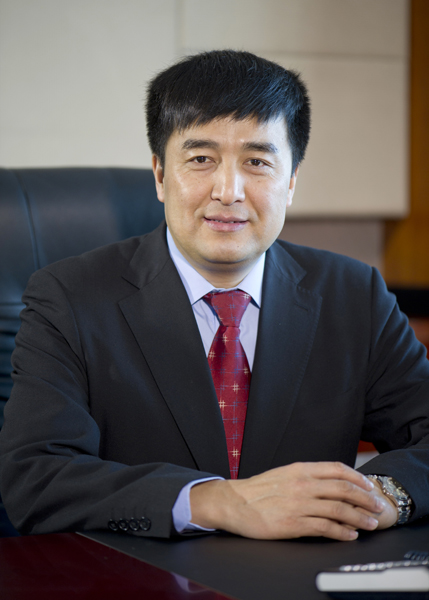
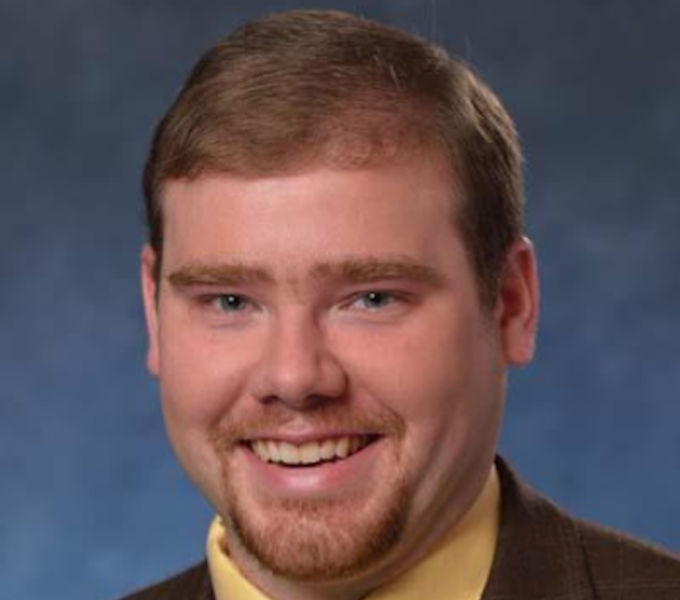
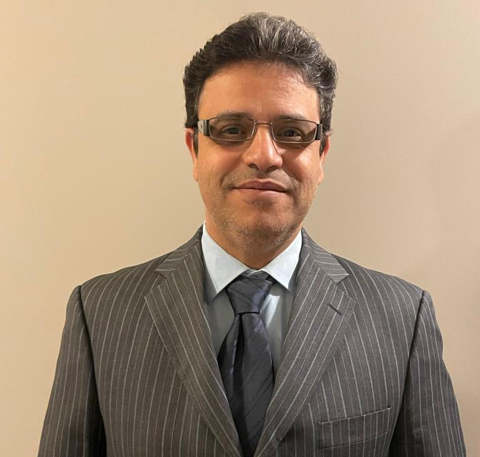
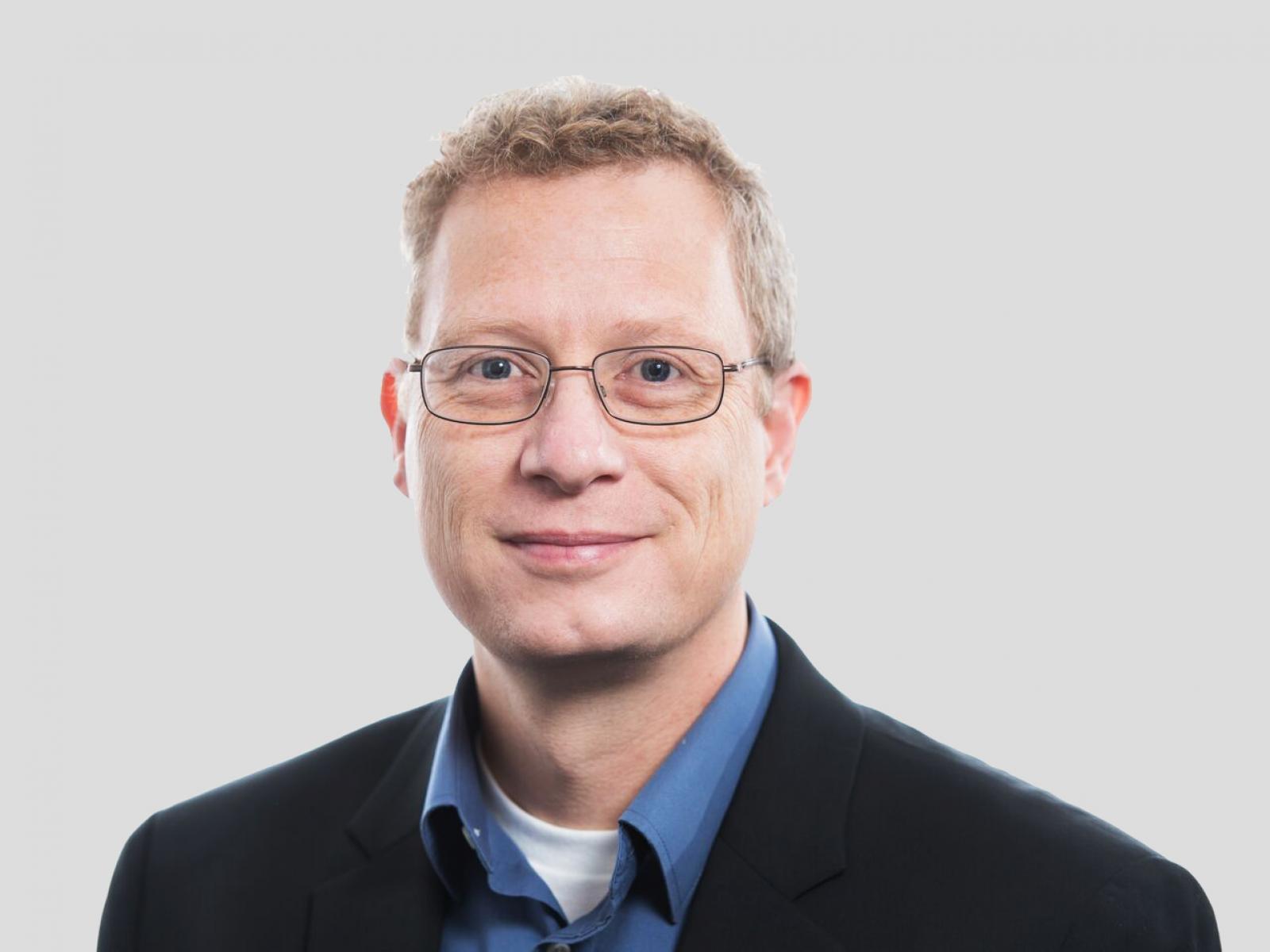
Frede Blaabjerg is a Professor at Aalborg University (AAU Energy) , affiliated with the Faculty of Engineering and Science . Since 1998, he has pioneered power electronics research in applications such as wind turbines , photovoltaic (PV) systems , reliability engineering , and Power-2-X technologies. Education : PhD in Electrical Engineering (1995, Aalborg University) Honorary Degrees : Honoris Causa at University Politehnica Timisoara (2017) and Tallinn Technical University (2018) His research focuses on power electronics control , system optimization , and reliability for renewable energy and electric mobility . Recent work includes grid-forming converters , virtual synchronous generators , and smart EV charging systems. Key publication trends span 15+ years , with over 3,733 peer-reviewed articles and 900+ journal papers in power electronics , renewables , and energy storage . Notable book series: Control of Power Electronic Converters and Systems (4 volumes, Elsevier). Scientific Awards : 46 IEEE Prize Paper Awards 2020 IEEE Edison Medal 2019 Global Energy Prize 2014 IEEE William E. Newell Power Electronics Award Leadership Roles : Editor-in-Chief, IEEE Transactions on Power Electronics (2006–2012) Chairman, Danish Council for Research and Innovation Policy (2020–) President, IEEE Power Electronics Society (2019–2020)
Professor Grahame Holmes is an Honorary Professor in the School of Engineering at RMIT University, Australia. His expertise spans electrical energy conversion, smart energy systems, renewable energy integration, power electronics, and grid infrastructure. He focuses on advancing technologies for sustainable energy storage, grid stability, and high-efficiency power conversion. Research Interests : Electrical and Electronic Engineering, Communications Technologies, Power Electronics, Renewable Energy Systems, and Grid Integration Solutions. His work emphasizes practical applications such as hydrogen energy storage systems, grid-interactive inverters, and modular multilevel converters. Recent Contributions : Prof. Holmes has published extensively on topics like advanced PWM techniques, resonant current controllers, and DC transformer designs. His research bridges theoretical advancements with real-world implementations, addressing challenges in smart grid stability and high-frequency power conversion. Advising & Grants : Supervised projects include 'Hydrogen Energy Storage System for Nanogrid' (2015) and 'Synchronised Control of Grid-Interactive Inverters' (2015). While specific grant details are not listed, his work aligns with major themes in sustainable energy research. Labs & Collaborations : Engages in collaborative research through RMIT's facilities, focusing on hardware-software co-simulation frameworks and FPGA-based real-time systems.
Liangzhong Yao is a Professor and Director of the Smart Grid Research Institute at Wuhan University, China. He holds dual roles as Fellow of IEEE and IET, and has served in leadership positions such as Vice President of China Electric Power Research Institute (CEPRI) and Chair of IEC TC122. His expertise spans renewable energy grid integration, HVDC systems, smart grid technologies, and energy storage. Yao has led over 25 years of R&D projects with combined funding exceeding GBP 20 million and RMB 90 million, resulting in applied technologies in wind farms and HVDC grids. He has been awarded over 10 national and international accolades, including the IEC 1906 Standard Award and China Science and Technology Innovation Awards. Research focuses include AC-DC hybrid systems, distributed energy resource integration, and high-renewable energy grid operation. He has authored/co-authored 350+ publications, 60+ patents, and 4 books. Yao currently supervises 8 PhD and 10 Master's students, and serves on editorial boards of journals like CSEE Journal of Power Energy & Systems. His leadership roles in global standards bodies like IEC and CIGRE further highlight his contributions to advancing electrical engineering standards and practices.
Dr Brandon M Grainger is an Eaton Faculty Fellow and Associate Professor of Electrical and Computer Engineering at the University of Pittsburgh’s Swanson School of Engineering, where he also directs the Electric Power Technologies Laboratory, serves as Associate Director of the Energy GRID Institute, and co-directs Pitt AMPED. A key architect of Pitt’s electric power program since 2008, he focuses on advanced power conversion, high-voltage electronics, wide-band-gap semiconductors, and aerospace power systems. Education PhD, Electrical Engineering (Power Conversion), University of Pittsburgh, 2014 MS, Electrical Engineering, University of Pittsburgh, 2011 BS, Mechanical Engineering & Minor in Electrical Engineering, University of Pittsburgh, 2007 Executive Education Certificate, Tepper School of Business, Carnegie Mellon University, 2019 Research Focus Dr Grainger’s work lies at the intersection of power electronics, high-voltage engineering, and sustainable energy systems. He specializes in medium- and high-voltage power electronics (HVDC, STATCOM), resonant converters, and ultra-high-power-density designs leveraging SiC and GaN semiconductors. His investigations extend to electric-vehicle traction drives, solid-state transformers, optimized magnetics for aerospace applications, and resilient microgrids. He and his students routinely collaborate with NASA JPL, Johns Hopkins APL, Honeywell Aerospace, and the Naval Research Laboratory, leveraging Pitt’s NSF SHREC center to push the boundaries of power conversion in space and defense systems. Selected Research Themes High-frequency, high-density DC/DC converters for satellite power systems Radiation-tolerant GaN converters and point-of-load power stages Medium-voltage testbed development (13.8 kV, 5 MVA) Rare-earth-free permanent-magnet machine topologies Model-predictive control of multi-phase drives and microgrids Honors & Awards 2024 IEEE Region 2 Outstanding Educator Award 2024 Pitt STRIVE Outstanding DEI Service Award 2019 ESWP Engineer of the Year 2019 ASEE 2nd Place Best Paper Award 2019 SRI Undergraduate Best Mentor Award Richard K. Mellon Endowed Graduate Fellowship National Academies of Science & Engineering Ambassador Senior Member, IEEE Grants & Industry Partnerships Dr Grainger’s research has been continuously funded by federal agencies and industry partners including NASA JPL, Johns Hopkins APL, Honeywell Aerospace, the Naval Research Laboratory, Eaton, and the National Science Foundation through the SHREC Center. These awards support graduate students and post-docs working on next-generation power systems for aerospace, naval, and terrestrial applications. Laboratories & Teams Director, Electric Power Technologies Laboratory (EPTL) Associate Director, Energy GRID Institute Co-Director, Pitt AMPED (Advanced Multimodal Power and Energy Development) Faculty Affiliate, NSF SHREC Center
Dr. Prasanth Venugopal is an Associate Professor specializing in Power Electronics with a focus on advanced energy transfer systems and battery technology. His research spans wireless power transfer, electric vehicle charging, and electrochemical impedance spectroscopy for battery diagnostics. Primary research areas: Wireless Power Transfer (100%), Harmonics (88%), Inductive Power Transfer (87%), Battery Engineering (48%) Recent publications demonstrate expertise in transformerless converter designs, multi-level architectures, and AI-driven battery capacity estimation. He has pioneered meander coil topologies for harmonic mitigation and developed computation-light models for battery aging analysis. His work includes collaborations on Li-ion battery degradation, onboard chargers for electric vehicles, and hybrid power systems for electric aircraft. Despite significant output in IEEE Transactions, no explicit awards or student mentoring data appears in the provided texts.
Thiago Batista Soeiro serves as a Full Professor with exceptional scholarly impact, evidenced by over 200 research publications and an h-index of 27. His work fundamentally advances power electronics applications in transportation and energy systems, particularly through innovations in electric vehicle infrastructure and sustainable power conversion technologies. Despite the absence of explicit institutional affiliation in source materials, his research permeates critical IEEE journals and conferences. Professor Soeiro's research portfolio centers on: Power converter design for electric vehicle charging systems AI-driven battery health estimation using electrochemical impedance spectroscopy Wireless power transfer optimization for automotive applications High-efficiency topologies for more electric aircraft Hydrogen energy system integration Advanced semiconductor utilization in grid-connected systems Analysis of his 2023-2025 publications reveals accelerating innovation in wide-voltage-range converters, predictive battery management, and fault-tolerant power systems. His work increasingly bridges machine learning with power electronics, notably through computation-light AI models for battery diagnostics, while maintaining strong focus on practical implementation challenges in EV charging and aircraft electrification. No scientific awards or honors were documented in the available materials. Similarly, information regarding student supervision, research grants, laboratory facilities, or collaborative teams was not provided in the source texts.
Remus Teodorescu is a Professor at AAU Energy , Aalborg University , specializing in Power Electronics System Integration and Materials . His work bridges Lithium-Ion Batteries , Modular Multilevel Converters , and Smart Battery Systems . Education : Not explicitly mentioned in the text. Research Interests focus on Battery Management Systems , AI-Driven Energy Optimization , and Power Electronics for renewable energy integration. Key projects include Digital Twin for Lithium-Ion Batteries and BMS-DC for Data Centers . Recent Publications (2025) emphasize Finite Set MPC , Gradient Descent Optimization , and AI in Battery Parameter Estimation . His 2024 work explores Physics-Informed Neural Networks and Fault-Tolerant Converters . Scientific Awards : Villum Foundation Grant (313 million kroner, 2021) Named world's best in electrical engineering (2023) Advising includes supervising PhD projects on AI-Accelerated Battery Twins and Data-Driven SOH Estimation . Collaborations span Energy Cluster Denmark and Villum Fonden .
Professor Dragan Jovcic is the Chair in Engineering at the University of Aberdeen's School of Engineering , where he has been a faculty member since 2004 and a full professor since 2012. Concurrently he serves as Director of the Aberdeen HVDC Research Centre , a role he has held since 2015. Education: PhD in Electrical Engineering, University of Auckland, 1999 Diploma Engineer in Control Systems, University of Belgrade, 1993 Postgraduate Certificate in University Teaching, University of Ulster, 2003 Research Interests: Professor Jovcic’s research centres on high-power electronics and HVDC transmission systems , with particular emphasis on the development of DC transmission grids that will enable large-scale integration of offshore wind energy . His work spans DC/DC converters , DC circuit breakers , modular multilevel converters (MMC) , flexible AC transmission systems (FACTS) , and advanced power system modelling and control . The overarching goal is to underpin the transition from fossil-fuel generation to renewable-dominated power systems, especially in the North Sea and European contexts. Publication Trends: Recent publications (2020-2023) reveal a strong focus on DC protection technologies —notably circuit breakers and energy absorbers—and on modelling methodologies for HVDC grids and offshore wind integration. The works address both theoretical advances (phasor and state-space models) and experimental validation (kV-level prototypes), reflecting a balanced portfolio of fundamental research and practical demonstration. Scientific Awards & Recognition: IEEE Fellow (2021) IEEE PES Distinguished Lecturer (since 2015) IET Fellow (2019) and Chartered Engineer (2018) Research Funding & Supervision: With over £5.5 million in external research income, Professor Jovcic is principal investigator or work-package leader on numerous EU Horizon Europe and EPSRC projects. He has supervised 9 PhDs to completion and is currently mentoring 2 PhD students and 2 post-doctoral fellows . Major grants include the €35 million PROMOTioN project on multiterminal DC networks and the €4 million MoWiLife project on wide-bandgap power electronics. Laboratory & Facilities: The Aberdeen HVDC Research Centre hosts a 0.9 kV DC grid demonstrator , 30 kW thyristor- and IGBT-based DC/DC converters , and 5 kV, 2 kA DC circuit breaker test benches , providing a world-class platform for experimental research and student training.
Dushan Boroyevich is a University Distinguished Professor at Virginia Tech's Bradley Department of Electrical and Computer Engineering and serves as Deputy Director of the Center for Power Electronics Systems (CPES). He holds adjunct roles at Tsinghua, Xi'an Jiaotong, Zhejiang, and National Cheng-Kung Universities. His research focuses on power electronics systems, including multi-phase power conversion, electronic power distribution, and modular multilevel converters. He pioneered the geometric modeling approach for high-frequency converters and has led over 200 students in generating 1000+ publications and 20 patents. Education: Dipl. Ing. (University of Belgrade, 1976), M.S. (University of Novi Sad, 1982), Ph.D. (Virginia Tech, 1986). Awards include IEEE Fellow, IEEE William E. Newell Award, and election to the U.S. National Academy of Engineering (2014). His CPES leadership has driven global advancements in power electronics integration and modularization. Research emphasizes high-power density, EMI mitigation, and next-gen SiC-based converters. Recent work includes medium-voltage PEBB designs, common-mode noise reduction, and grid-interface systems. He collaborates closely with industry through CPES's 80+ member consortium. Awards: IEEE Fellowships, Owen Distinguished Service Award, European Power Electronics Association Awards Labs/Teams: CPES, Virginia Tech Power Electronics Research Group Grants/Projects: NSF National Engineering Research Center funding, Industry Consortium projects
Dr. Mohamed Youssef is an Associate Professor in the Department of Electrical, Computer and Software Engineering at Ontario Tech University. He holds a PhD (Electrical and Computer Engineering) from Queen’s University (2005). His primary affiliation is the Faculty of Engineering and Applied Science, with research focusing on propulsion systems, power electronics, railway systems, and renewable energy technologies. Education: PhD, Electrical and Computer Engineering, Queen’s University (2005) MSc, Power Electronics, Concordia University (2001) MSc, Electric Power and Machines, Ain Shams University (1999) BSc, Electric Power and Machines, Ain Shams University (1995) Research Interests: Dr. Youssef’s expertise spans propulsion systems for automotive and hyperloop technologies , power electronics for IoT and renewable energy , railway electromagnetic compatibility , and power system stability . His work emphasizes practical applications in electric vehicles, smart grid integration, and sustainable energy systems. He leads the PEDAL (Power Electronics and Drives Laboratory) at Ontario Tech. Awards and Recognition: Recipient of the NSERC Post-doctorate Scholarship (2006) Best Paper Award at IECON 2004 Award of Merit from Ontario Center of Excellence (2006) Nominated for the Howard Alper Prize (2007) Professional Activities: He serves as a reviewer for IEEE Transactions on Power Electronics , IEEE Transactions on Industrial Electronics , and others. He has held roles as Technical Chair at IEEE SEGE 2015 and Track Chair at IEEE SEGE 2016. Current affiliations include Senior Member of IEEE and Chair of the IEEE Power Electronics Chapter in Toronto. Labs and Teams: He directs the PEDAL Lab , focusing on advanced power electronics and electric vehicle technologies. Collaborations include Bombardier Transportation and Armstrong Pumps.
Massimo Bongiorno is an Assistant Professor in Electrical Engineering at Chalmers University of Technology. He holds a Master’s degree in Electronics Engineering from the University of Palermo (2002) and earned his Licentiate and PhD from Chalmers University. His research focuses on power electronics applications in power systems, particularly grid-forming converter systems, power quality, and renewable energy integration. MSc in Electronics Engineering (University of Palermo, 2002) Licentiate and PhD (Chalmers University of Technology) Research interests include: Power electronics in power systems Grid-forming converter stability Renewable energy integration Modular multilevel converter design Small-signal and large-signal stability analysis Energy storage system applications Recent publications highlight trends in: Converter control strategies for grid stability Dynamic modeling of power electronics systems Applications in offshore wind and hydro microgrids Impedance analysis and resonance mitigation Advanced fault ride-through techniques Multi-terminal HVDC grid control
Kamal Al Haddad is a Lecturer in the Department of Electrical Engineering at École de technologie supérieure (ÉTS). He holds a Doctorate from INTP, Toulouse, and advanced degrees from UQTR. His research focuses on power electronics, renewable energy integration, and smart grid technologies. He leads the GREPCI research group, specializing in Power Electronics and Industrial Control. Education: B.Eng., M.Sc.A. (UQTR), Doctorate (INTP, Toulouse). Research interests span energy conversion, industrial electronics, power quality, and electromagnetic interference. He emphasizes sustainable energy solutions, electric traction systems, and high-efficiency power sources. His work includes developing advanced power electronic converters and grid stability solutions. Recent articles highlight advancements in modular converters for STATCOM, AI-driven fault detection in hydrogenerators, and renewable energy policy frameworks. He has received notable awards, including the 2014 IEEE Eugene Mittelmann Prize and Fellowships from IEEE and other institutions. Supervised over 60 students, including doctoral theses on topics like hydrogenerator diagnostics, EV charging systems, and renewable energy integration. His research also involves real-time simulation of power systems and FPGA-based implementations. Labs/Teams: GREPCI – Power Electronics and Industrial Control Research Group, leading projects on smart grids and energy efficiency.
Professor Kais Atallah is a Professor in Electrical Engineering at the University of Sheffield's School of Electrical and Electronic Engineering, with a secondary role as a Lecturer in Aerospace Engineering. He joined the University in 1989 as a PhD student and became academic staff in 2000. His research focuses on electromechanical energy conversion, magnetic torque systems, and applications in renewable energy, electric vehicles, and aerospace actuation. He is a member of the Centre for Research Into Electrical Energy Storage and Applications (CREESA) and leads the Electrical Machines and Drives Research Group. His research interests include novel drivetrain designs for wind turbines, flywheel systems, and fault-tolerant machine systems for safety-critical aerospace applications. He has advised multiple PhD students and contributed to over 150 publications, with recent work emphasizing magnetic gear design, high-performance ferrite machines, and modular multilevel converters. His articles explore themes like high-efficiency power transmission, magnetic gear optimization for wind turbines, and traction machine control systems. Collaborations include work on subsea ROV propulsion and flywheel energy storage. He oversees research labs focused on advanced electrical machine design and energy storage solutions.
Mahima Gupta is an Assistant Professor in the Department of Electrical & Computer Engineering at the University of Wisconsin-Madison. Her research focuses on power electronics, motor drives, and power converter systems with applications in renewable energy integration and grid infrastructure. Her educational background includes: PhD in Electrical Engineering, University of Wisconsin-Madison (2019) MS in Electrical Engineering, University of Wisconsin-Madison (2015) BE in Electrical Engineering, Birla Institute of Technology & Science, Pilani (2011) Dr. Gupta's research spans multiple areas of power electronics with particular emphasis on Power Electronics Conversion & Control , Modular Multi-level Power Converters , and Motor Drive Systems . Her work addresses critical challenges in the application of Wide Band-gap Semiconductor Devices and mitigating Electromagnetic Interference Issues in modern power electronic circuits. Her research has significant implications for renewable energy integration, electric transportation, and next-generation power grid infrastructure, with a strong focus on efficiency, reliability, and power density optimization. Her recent publications demonstrate a cohesive research trajectory focused on high-performance power conversion systems, with particular attention to modular architectures, fault tolerance mechanisms, and innovative topologies that minimize energy storage requirements while maintaining high performance. Her work spans from fundamental converter designs to application-specific implementations for motor drives, wireless power transfer, and grid integration, showing increasing sophistication and real-world relevance. Dr. Gupta has received several prestigious awards including: Gerald Holdridge Teaching Excellence Award from University of Wisconsin-Madison (2018) Austrian Marshall Plan Scholar for Visiting Scholar position at Technische Universit¨at Graz, Austria (2016) Edward R. Felber Power Fellow from University of Wisconsin-Madison (2016) As a dedicated educator, Dr. Gupta advises graduate students through courses including ECE 699 (Advanced Independent Study), ECE 790 (Master's Research), and ECE 890 (Pre-Dissertator's Research). Her teaching portfolio also includes specialized courses like ECE 512 (Power Electronics Laboratory), demonstrating her commitment to both theoretical and practical aspects of power electronics education. Her research program has attracted significant scholarly attention, as evidenced by her productive publication record in top-tier power electronics conferences and journals.
Kevin Schneider is a Laboratory Fellow at Pacific Northwest National Laboratory (PNNL), a Research Professor at Washington State University (WSU), and an Affiliate Associate Professor at the University of Washington. As manager of PNNL's Office of Electricity Subsector, he leads business development, client relations, and strategic investments in R&D for the grid sector, overseeing portfolios in component design, system modeling, hierarchical controls, secure communications, and energy storage. Dr. Schneider is internationally recognized for his expertise in power system analysis, planning, and operations. His research focuses on improving grid reliability and system flexibility by harnessing advanced grid concepts at the edge of power systems, including microgrids, energy storage, electric vehicles, distributed energy resources, and smart home appliances. At WSU, he is a researcher for the WSU and PNNL Advanced Grid Institute (AGI), implementing layered control architectures to enhance operational flexibility of critical power systems. His work spans multiple disciplines within electrical engineering and power systems, with strong emphasis on practical applications for grid modernization, particularly in grid resilience, microgrid operations, and integration of distributed energy resources. Dr. Schneider is a Fellow of the Institute of Electrical and Electronics Engineers (IEEE), where he has served in multiple technical leadership roles. His scientific contributions have been recognized with significant awards: Presidential Early Career Award for Scientists and Engineers (PCASE), 2019 Fellow of the Institute of Electrical and Electronics Engineers (IEEE) Dr. Schneider earned his B.S. in Physics and M.S. and Ph.D. in Electrical Engineering from the University of Washington. He is a licensed Professional Engineer in Washington State. His research has resulted in numerous patents related to power grid technologies, including several focused on voltage and frequency stability of distribution systems. His work has substantial implications for grid modernization efforts and the development of more resilient power systems in the face of climate change and other challenges.