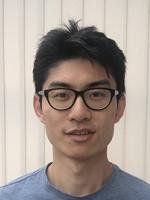
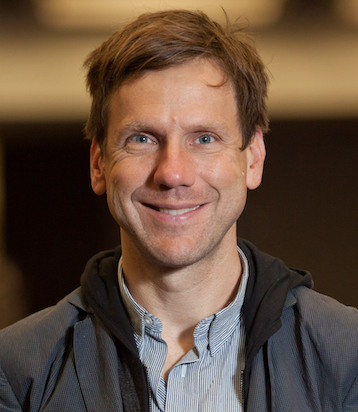
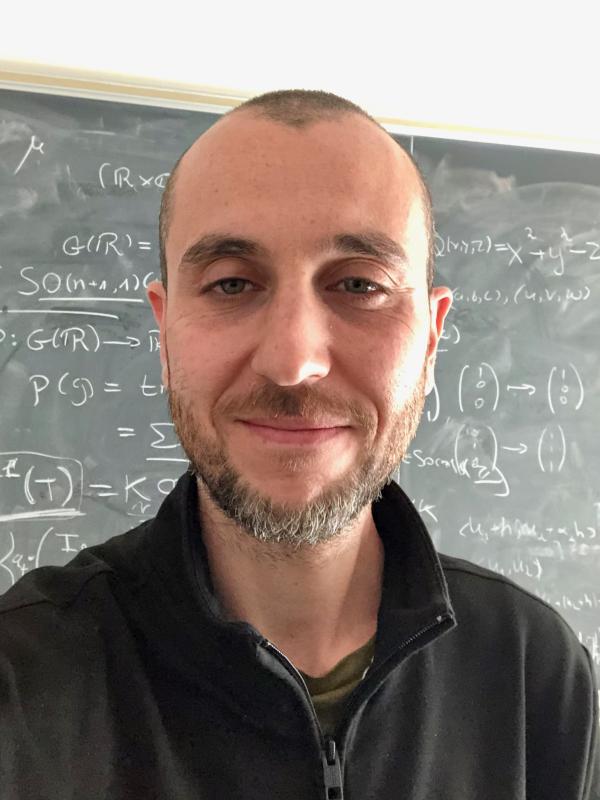
Rong Zhou is an Associate Professor at the University of Cambridge, affiliated with the Faculty of Mathematics and the Department of Pure Mathematics and Mathematical Statistics. His research focuses on arithmetic geometry, representation theory, and the geometry of Shimura varieties, with particular emphasis on their moduli spaces, integral models, and connections to Galois representations. His recent publications (2025-2023) explore topics such as the basic locus of GSpin Shimura varieties, smooth loci of affine Schubert varieties, and motivic cohomology of quaternionic Shimura varieties. These works intersect algebraic geometry, number theory, and automorphic forms, addressing foundational questions about moduli spaces, l-adic cohomology, and level raising phenomena. Rong Zhou can be contacted at rz240@dpmms.cam.ac.uk (Room E1.04, Telephone: 01223 764270). His personal homepage is available at https://www.dpmms.cam.ac.uk/~rz240 .
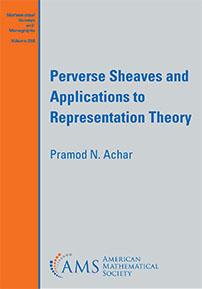
Pramod N. Achar is the Shirley Blue Barton Professor of Mathematics at Louisiana State University (LSU). His research focuses on the geometry and combinatorics of objects arising in representation theory of algebraic groups, with notable contributions to perverse sheaves and modular representation theory. He earned his Ph.D. from MIT under David Vogan in 2001. His work bridges algebraic geometry and representation theory, emphasizing categorical structures and geometric methods. He co-organizes the Southeastern Lie Theory Workshop series and serves on editorial boards for Advances in Mathematics and Representation Theory . Awarded a Fellowship by the American Mathematical Society, Achar has advised over 14 graduate students and mentored postdocs like Linyuan Liu and William Hardesty. His lab focuses on geometric representation theory, with recent projects exploring modular categories and affine flag varieties.
Pavel Safronov is a Lecturer in the School of Mathematics at the University of Edinburgh, where he has been since 2020. His academic journey began with a physics undergraduate degree at St. Petersburg University, followed by a master’s in physics at the University of Texas, where he transitioned to mathematics. His research focuses on mathematical physics, algebraic geometry, and category theory, particularly topological quantum field theories and shifted Poisson structures. He balances teaching and research, emphasizing interactive learning and student engagement. Education: BSc in Physics (St. Petersburg University), MSc in Physics (University of Texas). His postdoctoral work included positions at the University of Oxford, Max Planck Institute for Mathematics (Bonn), and institutions in Geneva and Zurich before settling in Edinburgh. Research interests span topological quantum field theories, symplectic geometry, and categorical structures. Recent work explores deformation quantization, coisotropic correspondences, and cohomological Hall algebras. His articles often bridge abstract algebraic geometry with physics concepts like supersymmetric twists and BV quantization. Teaching philosophy emphasizes face-to-face interaction to assess student understanding, advising students to engage actively with faculty and resources. Outside academia, he practices classical piano and enjoys hiking and cycling in Scotland, activities he finds rejuvenating for his research.
Robert Tichy is a full Professor at the Institute of Analysis and Number Theory, Technische Universität Graz. His research spans number theory, stochastic analysis, and computational mathematics. He has held significant administrative roles including Department Head (1994-2000), Dean of Mathematical and Physical Sciences (2003-2009), and Vice-Dean (2010-2017). Tichy is a Corresponding Member of the Austrian Academy of Sciences and has served on editorial boards for journals like the Journal of Number Theory and The Ramanujan Journal .
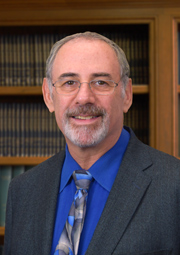
Dr. Daniel J. Felleman is a Professor at The University of Texas Health Science Center at Houston, specializing in the organization, function, and plasticity of the primate cerebral cortex. His research focuses on visual processing mechanisms in cortical areas V2, V4, and posterior inferotemporal cortex, with particular emphasis on color and form discrimination. 713.500.5629 Research Interests: The laboratory employs optical recording of intrinsic cortical signals and neuroanatomical tracers to map functional modules in primate visual cortex. Key findings include the segregation and integration of color and form inputs in V4, and developmental changes in prefrontal cortex following neonatal temporal lobe damage. Neurodevelopmental changes in prefrontal cortex after medial temporal lobe damage 3D computer graphics analysis of cortical circuitry Scientific Contributions: Spanning four decades, his work has established foundational understanding of cortical organization through publications in Nature , Science , and Cerebral Cortex . Recent studies (2014-2024) explore orientation pinwheels in V4 and mutual information analysis in stripe compartments. Technological Innovations: Developed wireless neural interface systems for primate research (2015), enabling unconstrained behavioral studies. Pioneered difference-image techniques to identify activated cortical regions through chromatic and luminance stimulation.
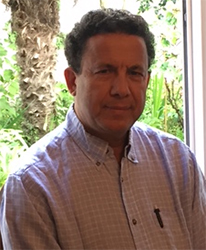
Dr. Ahmed Sebbar is a Professor in the Department of Mathematics at Schmid College of Science and Technology, Chapman University. His academic journey began with a PhD in Mathematics from Bordeaux University (1978-1980), followed by a Master in Pure Mathematics from the same institution (1976-1977), and a Bachelor of Science in Mathematics from Mohamed V University in Rabat, Morocco (1975-1976). PhD in Mathematics, Bordeaux University (1978-1980) Master in Pure Mathematics, Bordeaux University (1976-1977) B.S. in Mathematics, Mohamed V University, Rabat, Morocco (1975-1976) Dr. Sebbar’s research focuses on the geometric theory of functions, complex analysis of planar domains, and their connections to modular forms through uniformization and number theory. His work also explores group actions on hyperbolic spaces, particularly in relation to Frobenius determinants and representation theory. Key areas include Green’s functions, Bergman kernels, infinite-order differential operators, and applications to probability and quantum mechanics. His recent publications highlight trends in complex analysis, modular forms, and their interdisciplinary applications to quantum mechanics and statistical mechanics. Topics span pseudo-differential operators, Bernoulli polynomials, infinite products, and circulant matrices.
Euan Lindsay serves as Professor in the Department of Sustainability and Planning within Aalborg University's Technical Faculty of IT and Design. He maintains dual institutional affiliations through the Aalborg Center for Problem Based Learning in Engineering Science and Sustainability and the AI for the People Institute for Advanced Study in PBL. His work bridges sustainability planning with cutting-edge educational technology applications. Research interests center on Engineering Education and Problem-Based Learning methodologies, with significant recent focus on Generative AI applications in educational contexts. Current projects explore digital twins for feedback systems, large language model implementations for course evaluations, and microcredential frameworks supporting sustainable engineering education. His scholarship demonstrates consistent evolution from traditional engineering pedagogy toward AI-integrated learning ecosystems. Analysis of recent publications reveals three dominant trajectories: (1) Ethical implementation of generative AI in educational feedback systems, (2) Institutional change management for academic innovation, and (3) Microcredential development for sustainable engineering competencies. The Digital Twins project funded by The Villum Foundation represents his most significant current research initiative. Lindsay actively contributes to educational innovation through ongoing projects including the Digital Twins for Abundant Feedback initiative (2024-2025). His publication record shows sustained output with 85+ publications through 2025, demonstrating continuous scholarly engagement. While no formal awards are documented in the source material, his leadership in major research projects indicates significant professional recognition within engineering education circles. As principal investigator on multiple large-scale projects, Lindsay directs research teams developing novel AI applications for educational feedback systems. His work through the Aalborg Center for Problem Based Learning establishes him as a key figure in sustainability-focused engineering education reform, particularly in Scandinavian and European contexts.
David Gruber is a Distinguished Professor of Biology and Environmental Sciences at the City University of New York, with affiliations at Baruch College and the CUNY Graduate Center. He is also the Founder and President of Project CETI, a nonprofit interdisciplinary initiative focused on decoding sperm whale communication using advanced machine learning and robotics. His work bridges marine biology, climate science, animal communication, and bio-inspired technology. Education and Professional Background: Ph.D. in Biology (specific institution not mentioned in text) Postdoctoral training likely in marine molecular biology or biophysics (inferred from research) National Geographic Explorer and Emerging Explorer (2014) Principal Investigator, Project CETI (Audacious Project, 2020) Research Interests: David Gruber's research is deeply interdisciplinary, focusing on the intersection of marine life and technology. He investigates biofluorescence and bioluminescence across diverse species—from corals and eels to sharks and sea turtles—discovering over 200 glowing organisms. His lab explores the molecular basis of these phenomena, identifying novel fluorescent proteins with potential biomedical applications. A major focus is animal communication , particularly in sperm whales, where he applies AI and natural language processing to decode vocalizations. He also studies coral resilience to climate change and deep-sea ecosystems. Recent Research Trends: Gruber’s recent publications reveal a strong shift toward integrating artificial intelligence with marine bioacoustics. His team uses convolutional neural networks to classify sperm whale clicks and identify individuals with high accuracy. There is a growing emphasis on unsupervised machine translation to interpret non-human communication, suggesting a future where interspecies dialogue may be possible. His work increasingly combines soft robotics, genomics, and real-time underwater sensing to enable non-invasive study of fragile deep-sea life. Scientific Awards and Recognition: National Geographic Emerging Explorer (2014) Multiple National Geographic Grants (2010–2020) Audacious Project Funding for Project CETI (2020) Leader in the global movement for ocean conservation and interspecies communication Advising and Grants: As a principal investigator and professor, Gruber mentors students and early-career scientists in marine biology, genomics, and bio-inspired technology. He has secured significant funding from National Geographic and other sources to support deep-sea exploration, coral research, and whale communication studies. His grants emphasize innovation in wildlife technology , including the development of gentle, on-whale sensors and soft robotic samplers. These projects often involve collaboration with engineers, computer scientists, and conservationists, reflecting his commitment to interdisciplinary science. Labs and Teams: Gruber leads a multidisciplinary research group that collaborates with the Harvard Microrobotics Laboratory, the Dominica Sperm Whale Project (led by Shane Gero), and institutions worldwide. His lab develops cutting-edge tools such as the 'shark-eye camera' and soft robotic grippers for delicate marine organisms. Project CETI brings together over 50 scientists from more than 15 institutions, forming one of the largest collaborative efforts in cetacean communication research.
Jeff Campana is an Associate Professor of Art at Kennesaw State University in suburban Atlanta, where he has served since 2012. He also serves as the Ceramics Coordinator and is a nationally exhibiting ceramic artist working in functional pottery and sculptural vessel forms. Education: MFA from Indiana University Bloomington BFA from University of Wisconsin Whitewater, Cum Laude Jeff Campana's research focuses on integrating computer-aided design (CAD) with ceramic production through additive and subtractive technologies like SLA 3D printing and CNC milling. His artistic practice spans modularity, digital fabrication, and innovative surface treatments via soda firing. His work has been featured in over 100 national and regional exhibitions, including the 2017 international exhibition Breaking the Mold at Eutectic Gallery in Portland, Oregon. In 2024, he co-founded Blue Bucket Tools LLC to design and manufacture specialized ceramic tools. Scientific Awards: Windgate Fellowship Jeff Campana has held residencies at The Archie Bray Foundation for the Ceramic Arts, Studio 740, and The Center for Community Ceramics in Seattle. His work is collected nationally, and he has contributed to numerous publications in ceramic art.
Elizabeth Gaston is an Assistant Professor at Northumbria University within the Design Arts and Creative Industries. Her work bridges knit design with interdisciplinary applications across architecture, education policy, and material science. She actively collaborates with institutions like Leeds City Council, Leeds Arts University, and Cox Architecture Australia. PhD in Textile Design (2016) Chartered Fellowship of the Textile Institute (2024) Public Engagement with Research Award (2018) Her research spans three interconnected areas: Individual Colour Innovation: Explores color and light interactions to disrupt pattern perception, focusing on sustainable alternatives for textile coloration through optical mixing and lighting techniques. Collaborative Material Innovation: Applies knit as a flexible, tension-responsive system in architecture, utilizing formability and material properties for shade solutions and structural designs. Multi-agency Societal Innovation: Drives educational policy reform through craft-based workshops, partnering with organizations like the Crafts Council to address creative education gaps in UK schools. Her recent publications emphasize interdisciplinary methodologies, integrating digital technologies with traditional craft practices. Key themes include sustainability, material behavior, and community engagement. Scientific awards highlight her contributions to textile research and education: Chartered Fellowship of the Textile Institute (2024) Public Engagement with Research (2018) Textile Society Professional Development Award (2021)
Ken Fandell is Professor and the Michael G. and C. Jane Wilson Chair in the Arts and Humanities at Harvey Mudd College, within the Department of Humanities, Social Sciences, and the Arts (HSA). He previously served as chair of the photography department at the School of the Art Institute of Chicago, demonstrating extensive leadership and academic experience in art education. His educational background includes a BFA from the School of the Art Institute of Chicago and an MFA from the University of Illinois at Chicago, forming a strong foundation in studio art and critical theory. Fandell’s research and artistic practice span a wide range of media, including photography, video, sculpture, drawing, collage, performance, and text-based works. His interests center on conceptual art, perception, seriality, and the interplay between nature and abstraction. He often works in series, exploring subtle variations in form, color, and context across time and space. His recent artworks—from Drawings 2020–2024 to Palms (2024) and Sunrise Sunset (2025)—demonstrate a sustained engagement with landscape, light, geometry, and materiality, often rooted in California environments. His earlier works like Surface and Already reflect an interest in installation, light, and spatial intervention. The thematic continuity across decades highlights a deep conceptual rigor and artistic consistency. Tiffany Foundation Award Artadia Award Fandell has taught courses such as History of Landscape Photography , Modern and Contemporary Art Practices , Photography , and Undisciplined Art , reflecting his interdisciplinary approach. While no formal students are listed, his role as a former department chair and current endowed chair suggests significant mentorship and academic leadership. There is no mention of specific grants in the text, though award recognition from Artadia—a grant-giving organization—implies past funding support. He has participated in artist residencies in Austria, Ireland, and the United States, contributing to an international artistic presence and collaborative practice. His work has been exhibited nationally and internationally in artist-run galleries and major museums, indicating broad professional engagement.
Paweł Gostomski is an Assistant Professor at the Gdańsk Academy of Fine Arts , affiliated with the Faculty of Sculpture and Intermedia . His creative and academic activities focus on blending traditional sculptural practices (metalwork, ceramics, wood/stone carving) with modern technologies such as 3D printing and CNC milling . This interdisciplinary approach enables him to develop innovative spatial forms that harmonize modernity and tradition. Alumni and current faculty member of Gdańsk Academy of Fine Arts Specializes in material hybridization and digital fabrication Active in international and local art exhibitions Gostomski’s recent works include Portrait in the Sand (2021), the 2022 Portrait of K. Penderecki , and a series of CNC-milled geometric sculptures like Trytyti II (2023). His 2024 diploma thesis Fragment: Emotions towards the material highlights his focus on materiality and emotional expression. Though no awards or grants are explicitly mentioned, his participation in collaborative events (e.g., Double Portrait with Sylwia Jakubowska-Szycik) underscores his engagement with contemporary art practices.
Abbey Bourdon is an Associate Professor in the Department of Mathematics at Wake Forest University, part of the College of Arts and Sciences. Her research lies at the intersection of number theory and arithmetic geometry, with a focus on CM elliptic curves, torsion points, modular curves, and Galois representations. She is supported by the National Science Foundation and actively contributes to the mathematical community through publications and conference presentations. Ph.D., Wesleyan University (2014), advised by Chris Rasmussen Postdoctoral Associate, University of Georgia, working with Pete L. Clark Her research investigates deep structural properties of elliptic curves with complex multiplication, particularly their torsion behavior over number fields of varying degrees. She explores connections between modular curves and isolated rational points, often leveraging computational tools like Magma and PARI/GP. Her work contributes to the classification of exceptional points on modular curves and the understanding of uniform bounds in arithmetic geometry. The most recent articles show a sustained focus on torsion in CM elliptic curves, isolated points on modular curves, and Galois-theoretic implications. Her publications span top journals such as Mathematical Research Letters , Transactions of the AMS , and Mathematics of Computation , reflecting both theoretical depth and computational rigor. Abbey Bourdon has not received or listed any scientific awards in the provided texts. She advises and collaborates with various researchers in the field, though formal graduate students are not explicitly named. Her work is supported by the National Science Foundation, indicating active grant funding. She has presented at prestigious research venues such as the Banff International Research Station (BIRS), including the 2022 workshop on Modern Breakthroughs in Diophantine Problems. She is involved in collaborative research teams, particularly with mathematicians like Pete L. Clark, Paul Pollack, Filip Najman, and others. Her recent preprints suggest ongoing projects in classifying isolated j-invariants and exploring torsion in geometric isogeny classes.
Filipe Santos is an Assistant Professor in the Department of Information Science and Technology at ISCTE – Instituto Universitário de Lisboa. He is also an Associate Researcher at ISTAR-IUL, the Research Center in Information Sciences, Technologies, and Architecture, where he contributes to the Digital Living Spaces research group. His work bridges computer science with architectural and urban design through computational methods. PhD in Computing, Faculty of Sciences – UL (1998) Master's in Applied Mathematics, Higher Technical Institute – UTL (1991) Bachelor's in Computing, Faculty of Sciences – UL (1987) His research focuses on computational design, shape grammars, procedural generation, and multi-agent systems. He explores how algorithmic and AI-driven techniques can be applied to architectural and urban design, particularly in mass customization, modular housing, and sustainable urban development. His work often integrates genetic algorithms and formal design languages to automate and enhance creative processes. The recent publications highlight a consistent trend in applying computer science to design automation. Key themes include shape grammars for generative design, genetic algorithms for layout optimization, and digital tools for sustainable and inclusive urban planning. His work spans formal computing, human-computer interaction, and interdisciplinary design, with applications in virtual environments, residential architecture, and urban morphology. Filipe Santos actively supervises graduate students and has held academic leadership roles, including Director of the Master's in Integrated Decision Support Systems and Coordinator of the 2nd Year in Computer Engineering. His teaching includes core courses such as Algorithms and Data Structures and Theory of Computation . While no scientific awards are listed, his research has been published in reputable venues including GECCO, eCAADe, and IEEE conferences. He is part of the Digital Living Spaces research group at ISTAR-IUL, which focuses on innovative computing applications in living environments, particularly through intelligent systems and digital design tools.
Michael Bersudsky is a Zassenhaus Assistant Professor at the Department of Mathematics, The Ohio State University. His research focuses on Homogeneous Dynamics and Number Theory , with intersections in Ergodic Theory and Spectral Geometry . He holds an office at MW 624, 231 W. 18th Ave, Columbus, OH. His work bridges dynamical systems with number theory, addressing equidistribution problems on homogeneous spaces, limit distributions of lattice actions, and spectral properties of Neumann domains. Recent studies include applications of o-minimal structures to equidistribution and analysis of primitive subgroups in moduli spaces. Research trends reflect a focus on analytic number theory techniques , measure rigidity in dynamical systems, and fractal geometry . Notable themes include Linnik-type problems, sparse point distributions, and Courant-sharp eigenvalue analysis. No scientific awards or grants are explicitly listed, though his publications indicate active collaboration in advanced mathematical research. No current advising roles or laboratory affiliations are specified in available data.