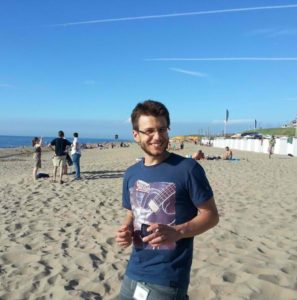
Emilio José Bueno Peña is a full Professor at the Department of Electronics, Universidad de Alcalá, Spain. He leads the GEISER research group (Electronic Engineering Applied to Renewable Energy Systems). His research focuses on power electronics, renewable energy integration, and control systems for distributed generation. He holds a PhD in Electronics from Universidad de Alcalá (2005), supervised by Dr. Francisco Javier Rodríguez Sánchez and Dr. Felipe Espinosa Zapata. His work emphasizes grid-forming converters, smart grid technologies, and thermal modeling of power electronics components using artificial neural networks. Recent contributions include DC/AC interface impedance shaping, mobile charging infrastructure analysis, and adaptive model predictive control for high-efficiency converters. He has published extensively on multilevel converters, virtual synchronous machines, and renewable energy system stability. His research bridges theoretical advancements with practical implementations in railway systems, wind turbines, and solid-state transformers. No scientific awards are listed, but his work has significant industry and academic impact.
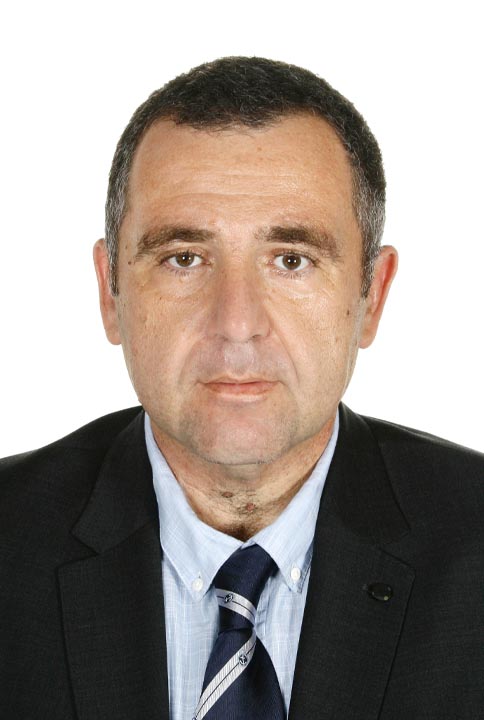
Angelos Koutsianas is an Assistant Professor at the Department of Mathematics of Aristotle University of Thessaloniki, Greece, affiliated with the Section of Algebra, Number Theory and Mathematical Logic within the School of Science . His research focuses on Arithmetic Geometry, Computational Number Theory, Elliptic Curves, and Diophantine Equations, with applications in cryptography and modular forms. Education: PhD in Mathematics (2016), University of Warwick, UK. Doctoral Thesis: Applications of S-unit Equations to the Arithmetic of Elliptic Curves under Prof. John Cremona. Degree in Mathematics (2012), National and Kapodistrian University of Athens, Greece. Diploma in Electrical & Computer Engineering (2009), National Technical University of Athens, Greece. Professional Experience: Assistant Professor, AUTh (Nov 2021–present). Associate Researcher, Blaise Pascal Mathematics Laboratory (2020–2021). Postdoctoral Fellowships: University of British Columbia (2018–2020), University of Piraeus (2017–2018), Universitat Ulm (2016–2017). Research Trends: His work bridges theoretical arithmetic geometry with computational methods, addressing problems in elliptic curves, rational points, and Diophantine equations. Recent publications explore modular methods, conductor/discriminant calculations for Picard curves, and applications of S-unit equations. Grants & Activities: His research is funded by AUTh's Special Account for Research. Co-organizes the 2nd Greek Number Theory Meeting (2024). Active in international collaborations on computational number theory and arithmetic geometry.
Charalambous Chara is a Professor in the Department of Mathematics at Aristotle University of Thessaloniki (AUTH) since 2011. She earned her PhD in Mathematics from the University of Illinois at Urbana-Champaign (1990) and holds a BSc in Mathematics from AUTH (1984). Her research focuses on Commutative Algebra , with emphasis on Toric Ideals, Multigraded Modules, and Betti Numbers. She has held visiting positions at Brandeis University and Columbia University, and worked at the State University of New York at Albany (1990–2004). Her work is supported by grants from the US National Science Foundation (NSF), the Pythagoras program, and the EDBM103 program (NSRF). Her professional roles include serving as Dean of the Faculty of Sciences and Chair of the Department of Mathematics at AUTH. She has organized international/national conferences and workshops, and co-authored six textbooks. Her editorial roles include membership in the Bulletin of the Hellenic Mathematical Society. She has reviewed proposals for the NSF and prestigious journals, contributing to the field's academic rigor. Research highlights include over 30 peer-reviewed articles (>400 citations), with notable works on minimal generating sets of lattice ideals and topological constructions for multigraded modules. Her recent studies explore deformation theory, equivariant Hilbert series, and syzygies of polynomial rings.
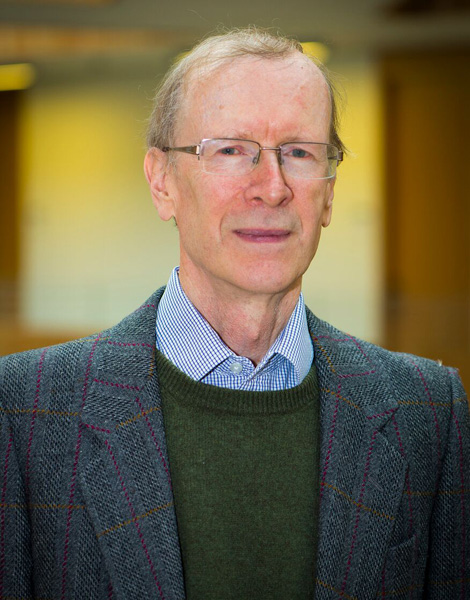
Andrew Wiles is a Royal Society Research Professor at Oxford University, having previously held the Eugene Higgins Professorship at Princeton University. He earned his B.A. in Mathematics from Oxford University (1974) and a Ph.D. from Cambridge University (1978). His research focuses on number theory, elliptic curves, and Galois representations, culminating in his landmark proof of Fermat's Last Theorem. Wiles has held visiting roles at institutions including the Institute for Advanced Study, I.H.E.S. in Paris, and the Isaac Newton Institute. He has served as editor of the Annals of Mathematics and on the Scientific Advisory Board of the Clay Mathematics Institute. Wiles has been honored with numerous awards, including the Abel Prize (2016), a knighthood (2000), and honorary degrees from six universities. His contributions to mathematics have earned him recognition as a Fellow of the Royal Society and foreign membership in prestigious academies worldwide.
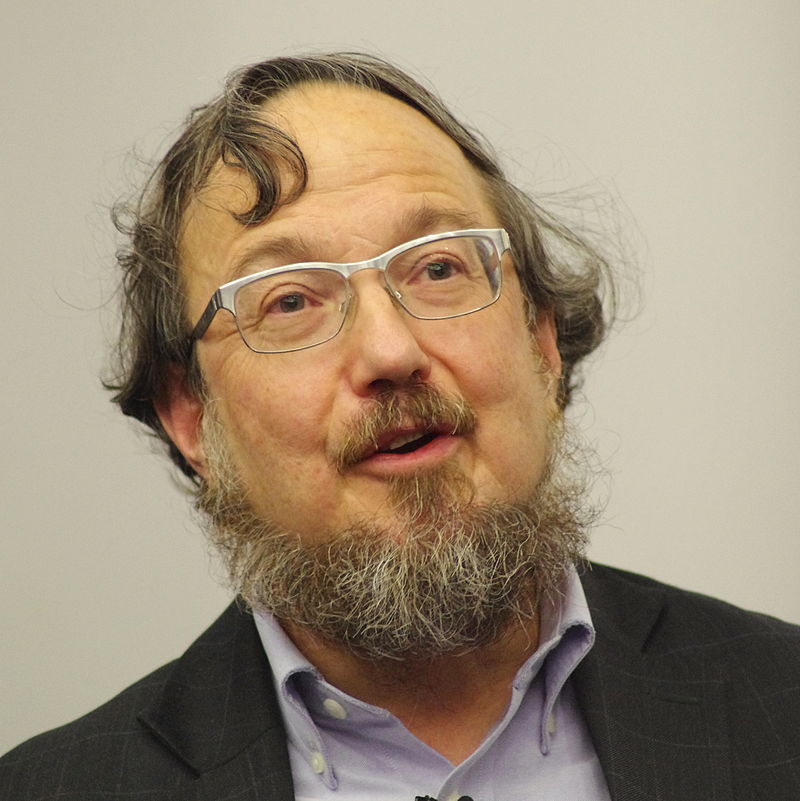
Goran Muić is a Professor at the University of Zagreb's Department of Mathematics, specializing in automorphic forms and representation theory within the Langlands program. He has held positions at institutions including the University of Utah, Humboldt University, and the Erwin Schroedinger Institute. A full member of the Croatian Academy of Sciences and Arts (2018) and Academia Europaea (2016), his research focuses on unitary representations, theta correspondences, and non-commutative harmonic analysis. Fields of Interest: Automorphic Forms, Langlands Program, Theta Correspondences, Non-commutative Harmonic Analysis, Representation Theory, Modular Forms Key Positions: University of Zagreb (2007-present), University of Utah (1997-2000), Humboldt Fellowship (2005-2006) Scientific Awards: Outstanding Instructorship Award (1999), Croatian Mathematical Society Award (2004), Humboldt Fellowship (2005), Croatian Academy Membership (2018) Muić's 46 published papers span p-adic groups, automorphic representations, and discrete series. His recent work (2016) analyzes Fourier coefficients of automorphic forms and integrable discrete series, while earlier publications examine spectral decomposition, theta lifts, and Eisenstein series. He leads the Unitary Representations and Automorphic Forms Seminar and has advised PhD students including N. Grbac and M. Hanzer. Scientific Awards: Outstanding Instructorship Award (University of Utah, 1999) Award of Croatian Mathematical Society (2004) Humboldt Fellowship (2005) Member, Academia Europaea (2016) Full Member, Croatian Academy (2018)
Don Bernard Zagier is a Distinguished Staff Associate at the International Centre for Theoretical Physics (ICTP) since October 2014 and has been the Director of the Max Planck Institute for Mathematics in Bonn since 1995. Previously, he served as a Professor at the Collège de France (2000–2014) and held professorial positions at Utrecht University, Kyushu University, and the University of Maryland. He earned his D.Phil. from Oxford University in 1972 and completed his habilitation in Bonn in 1975. Research Interests: His primary area of research is Number Theory , where he has made groundbreaking contributions. His work spans algebraic number theory, modular forms, and arithmetic geometry, significantly advancing the understanding of L-functions and special values. Awards and Honors: Carus Prize (1984) Frank Nelson Cole Prize (1987) Prix Elie Cartan, Académie des Sciences (1996) Chauvenet Prize of the Mathematical Association of America (2000) Karl Georg Christian von Staudt Prize (2001) Education: D.Phil., Oxford University (1972) Habilitation, Bonn (1975) Positions Held: Distinguished Staff Associate, ICTP (since 2014) Director, Max Planck Institute for Mathematics, Bonn (since 1995) Professor, Collège de France, Paris (2000–2014) Professor, Utrecht University (1990–2001) Professor, Kyushu University, Fukuoka, Japan (1990–1993) Chair Professor of Number Theory, University of Maryland (1979–1990) Scientific Member, Max Planck Institute, Bonn (1984) Apl. Professor, Bonn (1976)
Dr. Daniel Moldt is a Research Associate and Head of the Laboratory for Agent- and Organization-Oriented Systems (LAOS) at the University of Hamburg's Department of Computer Science (Faculty of MIN). His work focuses on Petri nets, agent-oriented systems, formal methods, and software engineering. He contributes to the development of the Renew toolset for Petri net modeling and simulation. Research interests include: Petri net applications in workflow and agent systems, distributed systems, emotion in computing, formal verification, and model-driven engineering. He has led projects like Socionics and contributed to DFG-funded research. Publications span over two decades, emphasizing Petri net theory, agent systems integration, and software architectures. He advises students on thesis projects related to distributed systems and formal methods. Active in academic service, he serves on doctoral committees and participates in international workshops/conferences.
Brian O’Reilly is a Senior Lecturer in Electronic Music at LASALLE College of the Arts, Singapore. His work spans electroacoustic composition, sound installations, and noise music, integrating interdisciplinary approaches that blend acoustic exploration with electronic treatments. He holds advanced degrees from Goldsmiths, University of London (MA Fine Arts), the University of California, Santa Barbara (MA Media Arts and Technology), and a BFA from the School of the Art Institute of Chicago (Sound & Video). Formative studies in sonic art and kinetic sculpture at the School of the Art Institute of Chicago Research in graphic sound synthesis with Iannis Xenakis’ UPIC system in Paris Collaborations with pioneers like Luc Ferrari and Eliane Radigue Contributions to the Point Line Cloud project (Ars Electronica Award of Distinction, 2002) His practice combines visual and sonic experimentation, including the Excavation Index project that treats layered drawings as an 'archive of forms.' Active in experimental media, he co-founded Black Zenith and performs with Game of Patience, blending modular synth, live video, and noise-jazz. Residencies include ZKM (Germany), SH Festival (Shanghai), and Signal Culture (New York). Teaching focuses on electronic music history, composition, and performance Research explores visual music and improvisation-based creative techniques
Angelica Babei is an Assistant Professor in the Department of Mathematics at Howard University. Her research focuses on algebraic number theory with a computational emphasis, exploring orders in semisimple algebras, arithmetic subgroups, and modular forms. She uses Magma, Sage, and Python for computational work. Education & Career: PhD in Mathematics from Dartmouth College (2019), advised by Thomas R. Shemanske. Postdoctoral Fellowships at McMaster University, Dartmouth’s Simons Collaboration, CRM thematic semester 'Cohomology in Arithmetic', and Vanderbilt University. Research Interests: Her work bridges theoretical number theory and computational methods. Key areas include: Computational algebra and algebraic structures. Modular forms and their applications. Algorithmic approaches to zeta functions and orders in algebras. Publications: Her recent work emphasizes zeta functions, Hilbert modular surfaces, and modular form series. Notable collaborations include studies on fusion rings and Eichler orders. Teaching Philosophy: Advocates Federico Ardila’s four axioms, emphasizing equitable access to mathematics and empowering educational experiences. Teaching Experience: Taught courses at McMaster University (e.g., Math 1K03), Vanderbilt (e.g., Methods of ODEs), and Dartmouth College (e.g., Linear Algebra).
Thomas Schroepfer is a Full Professor and Founding Programme Director of Architecture and Sustainable Design at Singapore University of Technology and Design (SUTD). He serves as Director of the Singapore-ETH Centre Future Cities Laboratory (FCL) and Advanced Architecture Laboratory, and is a Senior Fellow at ETH Zurich’s Collegium Helveticum. His leadership roles include Co-director of the SUTD-JTC I3 Centre and Founding Associate Head of the Architecture and Sustainable Design pillar. Education: Doctor of Design, Harvard University (2004) Master of Architecture (Distinction), Harvard University (2000) Bachelor of Architecture, Cooper Union (1995) Diplom-Ingenieur Architektur (Summa Cum Laude), Universität der Künste Berlin (1995) Research Focus: Pioneering work at the intersection of architecture, urban design, and technology. Key themes include high-density sustainable urbanism, computational strategies for ecological design, climate-responsive architecture, and innovative building typologies. His research emphasizes urban resilience, liveability, and environmental performance through advanced technologies and material innovations. Key Contributions: Series Editor of SpringerBriefs in Architectural Design and Technology Recipient of Singapore’s highest design honor (President’s Design Award) Exhibited at Venice Biennale, World Cities Summit, and World Architecture Festival Labs & Collaborations: Leads the Advanced Architecture Laboratory at SUTD, collaborating with institutions like ETH Zurich, MIT, and industry partners on projects such as ‘Ecological Urban Corridors’ and ‘Vertical Cities’ funded by Singapore National Research Foundation and Urban Redevelopment Authority.
Balázs Szendrői is a Universitätsprofessor (Professor) in Algebraic Geometry at the University of Vienna's Faculty of Mathematics, Department of Mathematics. His research focuses on algebraic geometry, representation theory, and their connections to mathematical physics and art. He has organized numerous international workshops and schools, particularly in Eastern Africa, promoting mathematics development through initiatives like the Nairobi Workshops in Algebraic Geometry and the Guild-ARUA Cluster of Research Excellence (CoRE-Math). His collaborations span institutions such as the University of Oxford, AIMS South Africa, and multiple African universities. Education: PhD in Mathematics from the University of Cambridge (1999). His research interests include Calabi-Yau varieties, Hilbert schemes, Donaldson-Thomas invariants, and the interplay between algebraic geometry and art, exemplified by his work on Islamic tilings and mathematical art curation. He has held visiting positions at institutions like the African Institute for Mathematical Sciences (AIMS) and has coordinated interdisciplinary projects in network science and big data. Recent contributions include organizing the 2025 Austria-Uganda workshop on geometry and representation theory, co-authoring papers on algebraic geometry and representation theory, and mentoring over 30 PhD and master's students. He also leads initiatives for mathematics education in Africa through grants such as the EU-funded Uganda-Austria Collaboration in Algebra and Geometry (Africa-Uninet project). Notable collaborations include work with Praise Adeyemo, Lukas Bertsch, Andrew Pollock, and African mathematicians like Geoffrey Mboya. His teaching includes advanced courses on algebraic geometry and group theory at the University of Vienna. His work bridges pure mathematics with interdisciplinary applications, emphasizing global academic partnerships.
Ghanshyamsinh Gohil is an Assistant Professor in the Department of Electrical Engineering at the University of Texas at Dallas (UT Dallas), affiliated with the Erik Jonsson School of Engineering and Computer Science. His research focuses on advanced power electronics systems, including medium-voltage (MV) power conversion, smart grid technologies, and renewable energy integration. He leads the Power Electronics Lab, which develops innovative solutions for electric mobility, grid interface systems, and high-efficiency energy conversion. Research interests include the characterization of silicon carbide (SiC) devices for MV applications, medium-frequency isolated converters, and electromagnetic emission mitigation. His work addresses challenges in extreme fast charging for electric vehicles, microgrid management, and DC grid architectures. The lab also explores multi-objective optimization of power electronics systems and harmonic filter design for high dv/dt converters. Dr. Gohil’s publications span topics such as modular multilevel converters, dual active bridge (DAB) topologies, and distributed control algorithms for microgrids. His research emphasizes practical implementation, with a focus on real-time grid-edge systems and energy management solutions compliant with utility standards. Though no scientific awards are explicitly mentioned, his contributions to power electronics and renewable energy integration reflect a strong academic and applied research profile. Advising and grants details are not provided in the available text, but his lab’s active projects suggest ongoing collaborative efforts in industry and academia. The Power Electronics Lab at UT Dallas serves as a hub for interdisciplinary research, bridging electrical engineering with smart energy systems. Key projects include the design of grid-forming energy routers, MV DC grid interfaces, and intelligent fault current limiters to enhance grid reliability and resilience.
David Boerma is an Assistant Professor in the Department of Biology at Pace University's Dyson College of Arts and Sciences, and a Research Associate in the Department of Mammalogy at the American Museum of Natural History. His interdisciplinary research bridges evolutionary biology, anatomy, and biomechanics, focusing on the evolution of animal movement, particularly bat flight. Research Interests: Dr. Boerma's research investigates how evolutionary forces have shaped the anatomical and mechanical design of animal bodies, especially in relation to locomotion. His work emphasizes bat flight—the only form of powered flight in mammals—using integrative approaches such as micro-CT scanning, high-speed videography, phylogenetic comparative methods, and museum specimen analysis. He explores how morphological integration within the bat wing affects ecological diversification and evolutionary adaptability. Recent Research Trends: His recent publication in Nature highlights how the evolutionary integration of forelimb and hindlimb proportions in bats constrains ecological adaptation compared to birds, suggesting unique evolutionary trade-offs in mammalian flight. This work underscores the importance of morphological modularity and its impact on evolutionary flexibility. Scientific Awards: NSF Postdoctoral Research Fellowship in Biology (2019) Advising and Grants: While specific students are not listed, Dr. Boerma likely mentors undergraduate and graduate researchers through independent study courses and lab-based projects. He has secured competitive funding through the National Science Foundation, supporting postdoctoral research in evolutionary biology. Labs and Teams: Dr. Boerma leads a research lab focused on evolutionary biomechanics and morphology, utilizing resources from Pace University and the American Museum of Natural History. His collaborative work integrates museum collections with advanced imaging and experimental techniques to study vertebrate evolution.
Anthony S. Denzer is Professor of Architectural Engineering and Thomas and Shelley Botts Department Head in Civil Engineering at the University of Wyoming, within the College of Engineering and Physical Sciences. He has been a faculty member since 2005, advancing from Assistant to Associate to Full Professor, and plays a key role in architectural engineering education and research. B.A. in Journalism, University of California, Berkeley, 1991 M.Arch., University of Kansas, 1998 Ph.D. in Architecture (history/theory), University of California, Los Angeles, 2005 Denzer's research bridges architectural history and sustainable design, with a focus on solar architecture, green building theory, and energy-efficient housing. He explores historical precedents such as midcentury solar houses and modernist architects like Gregory Ain, while also investigating contemporary topics like Swedish catalog homes, greenhouse energy systems, and Building Information Modeling (BIM). His interdisciplinary work connects architectural theory with practical engineering solutions for sustainability. His recent publications span architectural history, solar design, greenhouse energy modeling, and digital tools like virtual reality in architecture. Collectively, these works reflect a deep engagement with sustainable building practices across time, emphasizing historical insight, technological innovation, and environmental responsibility. Themes include passive solar design, industrialized housing, energy efficiency, and the social implications of architectural form. Notable awards include the 2020 Outstanding Architectural Engineering Educator Award (AEI), the 2010 Outstanding Undergraduate Teaching Award from the UW College of Engineering, and multiple AIA Technology in Architectural Practice (TAP) recognitions. He also received the 2015 'Top Prof' honor from the University of Wyoming Mortar Board. Denzer advises undergraduate students through senior design studios and study abroad programs, including a summer program in London, Paris, and Barcelona. He has led funded research initiatives on BIM, integrated design, and sustainable construction, often in collaboration with colleagues. His external research website, www.solarhousehistory.com , hosts extensive resources on solar architecture history. He leads research efforts in sustainable building systems, solar design, and architectural history, often integrating digital tools and collaborative pedagogy. His work with the Solar Decathlon and industry partnerships demonstrates a commitment to real-world applications of academic research.
Mateusz Waszak is an assistant at the Department of Design Communication Techniques, Faculty of Interior Design and Scenography at the University of Arts in Poznań. He co-founded the Muszyńska Waszak Design Studio (jmmw.pl) and works on interdisciplinary projects spanning brand image, product design, office and commercial interiors, gardens, and public spaces. His work integrates architectural geometry with material innovation through collaborations with Joanna Muszyńska. Master's Degree in Furniture Design (2015-2017), University of Arts in Poznań Bachelor's Degree in Interior Design (2012-2015), University of Arts in Poznań Engineering Degree in Landscape Architecture (2010-2014), Poznań University of Life Sciences Research focuses on material sustainability and spatial composition, particularly through three-dimensional wall claddings (Lico collection), commercial micro-spaces, and industrial-warehouse hybrids. His deconstructivist-inspired work references Bernard Tschumi and Peter Eisenman, emphasizing form fluidity and material integrity. Scientific awards include: Good Design 2024 Finalist Good Design 2023 1st Prize Wielkopolska Architectural Award Finalist Laur Arting Sustainable Design Award Collaborative design projects cover 30+ Liquider Poland stores across Poland and Germany (2018-2021), corporate office spaces for PromoAgency (1200m² in Kraków), and innovative material implementations in Swiss Krono's WALLDESIGN collections. He also contributes to academic organization through competition supervision and workshop leadership.