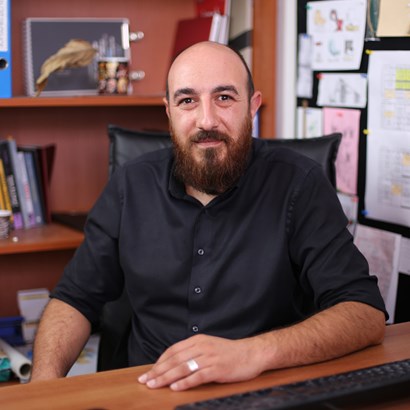
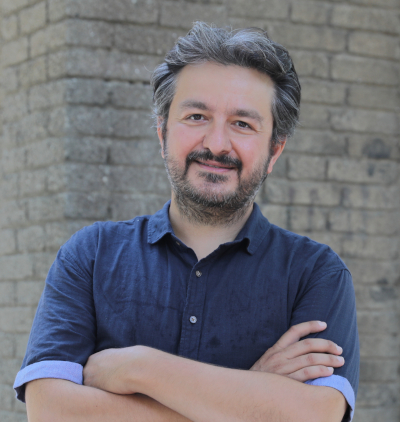
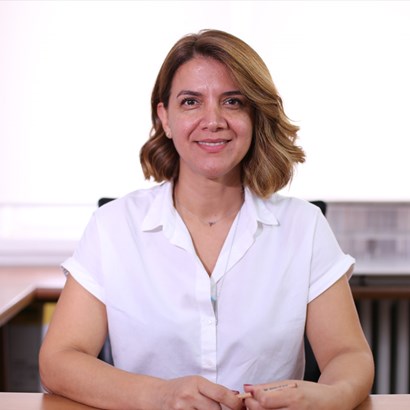
Dr. Emre PINAR is an active Researcher at Çukurova University's Faculty of Architecture, Department of Interior Architecture. His work bridges innovative design with critical safety and sustainability considerations. Faculty Affiliation: Faculty of Architecture, Çukurova University Academic Rank: Researcher Research interests span biomimetic design principles, earthquake-resistant furniture solutions, and the integration of artificial intelligence in interior architecture. His recent work explores: Biomimetic furniture design systems (LOT-US, 2025) Non-structural seismic safety elements (2022) AI collaboration in design workflows (2019) Historical structural analysis of Eastern Black Sea rural buildings (2018) Design methodologies emphasize space optimization in constrained environments and preservation of traditional architectural knowledge through modern analytical frameworks.
Prof. METİN HÜSEM is a Professor at Karadeniz Technical University's Faculty of Engineering, Department of Civil Engineering, specializing in structural and earthquake engineering. With a career spanning over three decades, he has held key roles including Dean (2016–2020) and Department Head (2014–2016, 2023–present). His research integrates experimental and computational methods to advance seismic resilience, materials science, and sustainable construction. Education: Doctorate in Civil Engineering, Karadeniz Technical University (1990–1995) Postgraduate in Civil Engineering, Karadeniz Technical University (1986–1990) Undergraduate in Civil Engineering, Karadeniz Technical University (1982–1986) Research Focus: His work targets earthquake-resistant structures, material innovations (geopolymers, fiber-reinforced concrete), and structural health monitoring. Key areas include: Seismic retrofitting of buildings and heritage structures High-temperature effects on concrete Development of energy-dissipating devices (e.g., patented seismic dampers) Optimization of prefabricated and composite systems Publication Trends: Recent articles emphasize post-earthquake damage assessment, geopolymer materials, and cyclic load behavior of structures. A consistent theme is the translation of field data into practical design improvements, particularly for reinforced concrete and masonry systems in seismic zones. Grants & Advising: He has led 13 funded projects (e.g., TUBITAK-supported studies on masonry walls and seismic dampers) and advised 45+ graduate students. His patents include innovations like modular energy dissipators and interlocked masonry systems. Laboratory & Teams: Manages advanced structural testing facilities, collaborating with national/international researchers on earthquake simulations and material durability experiments.
Emre Ugur is an Associate Professor in the Department of Computer Engineering at Bogazici University, where he serves as the head of the Cognition, Learning and Robotics (CoLoRs) laboratory. His research focuses on bridging the gap between continuous sensorimotor experiences and discrete symbolic representations in robotics. Funded by major international sources including the European Commission's Horizon 2020 program and TUBITAK, his work has significant implications for cognitive robotics and autonomous systems. Education: PhD in Computer Engineering from Middle East Technical University (METU, Turkey) Ugur's research interests center on cognitive and developmental approaches to robotics, with particular emphasis on neuro-symbolic integration, affordance learning, and symbol emergence. His work explores how robots can autonomously develop high-level cognitive capabilities through continuous interaction with their environment, similar to human cognitive development. His approach combines machine learning, cognitive science, and robotics to create systems that can learn, predict, and reason about their actions. His recent publications reveal a strong trajectory toward neuro-symbolic robotics, where he develops methods for extracting discrete symbolic representations from continuous sensorimotor experiences. This work enables robots to perform complex planning and reasoning tasks while maintaining connection to physical reality. There is also significant focus on social robotics, particularly in human-robot interaction, social navigation, and embodied cognition. Scientific Awards: The Young Scientist Award by the Science Academy (BAGEP) The Excellence in Teaching Award by the Faculty of Engineering (2023) As Principal Investigator of major projects including INVERSE (EU Horizon 2025), DEEPPLAN (TUBITAK), and previously DEEPSYM and IMAGINE, Ugur has established a robust research program that bridges theoretical advances with practical applications. He has supervised numerous PhD and Master's students who have made significant contributions to the field. His leadership extends to organizing major workshops at top robotics conferences including IROS, RSS, and ICRA. At the Cognition, Learning and Robotics (CoLoRs) lab, Ugur leads research on cognitive robotics, developmental robotics, and neuro-symbolic AI. The lab explores fundamental questions about how robots can develop understanding of their actions, learn from interaction, and form abstract representations necessary for high-level cognition. Current projects focus on symbolic reasoning, prediction, and planning in robotic systems.
Professor Mehmet Açıkgöz is a distinguished mathematician at Gaziantep University, Faculty of Arts and Sciences, Department of Mathematics. His research spans various areas of mathematical analysis, special functions, and number theory, with a particular focus on q-calculus, p-adic analysis, and special polynomials. His educational background includes: Doctorate in Mathematics from Çukurova University (1991-1997) Master's degree in Mathematics from Çukurova University (1988-1991) Bachelor's degree in Mathematics from Çukurova University (1985-1988) Professor Açıkgöz's research primarily focuses on special polynomials, q-calculus, and p-adic analysis. He has made significant contributions to the study of Bernoulli, Euler, Genocchi, and Frobenius polynomials, often extending these classical concepts through q-analogs and degenerate versions. His work bridges pure mathematical theory with applications in probability, combinatorics, and approximation theory. He frequently collaborates with other prominent mathematicians in the field, particularly Serkan Araci and Ugur Duran. His publication record demonstrates a consistent output of high-quality research, with numerous articles in reputable international journals. His work shows increasing sophistication over time, moving from classical special functions to more complex degenerate and q-analog versions with probabilistic interpretations and applications to other areas of mathematics. Professor Açıkgöz has also contributed to educational materials, including course outlines for Calculus I and II, formula sheets for engineering students, and homework exercises, demonstrating his commitment to teaching alongside his research activities.
Nihan TURAN is an Assistant Professor of Mathematics at Istanbul Beykent University , Faculty of Arts and Sciences, Department of Mathematics. She has been affiliated with the university since at least 2022, initially as a Research Assistant and currently as a faculty member. Research Interests: Her scholarly work spans several advanced areas of pure and applied mathematics. She has made significant contributions to (p,q)-calculus , q-difference equations , and their applications to fixed-point theory . Other areas of expertise include statistical convergence in various metric spaces, particularly cone metric spaces , and the study of theta functions and their modular properties. Publications: Dr. TURAN's research output is prolific and internationally recognized. Her articles have appeared in high-impact journals indexed in SCI-Expanded , Scopus , ESCI , and MathSciNet . A recurring theme in her work is the exploration of difference equations and their analytical solutions, often with applications to operator theory and discrete dynamical systems. Administrative Role: Beyond research, she serves on the Quality Commission Measurement and Evaluation Working Group at Istanbul Beykent University, contributing to institutional quality assurance and academic standards.
Demet Günal Ertaş is a Researcher at Istanbul Technical University's Faculty of Architecture, Department of Industrial Product Design. She holds a PhD in Industrial Product Design. Her academic career includes roles as Vice President of the Department (2013–2016), Lecturer (2011–2018), and Research Assistant (1995–2011). She is a member of TMMOB since 1993. Education: PhD in Industrial Product Design (Istanbul Technical University, 2004–2008) MSc in Industrial Product Design (Istanbul Technical University, 1995–1998) BSc in Architecture (Istanbul Technical University, 1989–1993) Research Interests: Focuses on sustainable design, material innovation, and product structure. Her work explores how materials and manufacturing technologies influence design outcomes, especially in furniture and industrial products. She emphasizes the sociocultural dimensions of material selection and the integration of craftsmanship with modern design practices. Publications: Over 30 publications spanning 20+ years, with recent focus on sustainability, material applications, and industrial design education. Key themes include global warming's impact on design, composite materials, and plastic material education. Professional Contributions: Edited national design congress proceedings, led departmental initiatives, and collaborated internationally. Her research bridges traditional craftsmanship with contemporary design challenges.
Prof. Dr. Yusuf Tansel İç is a Professor in the Industrial Engineering Program at Başkent University, Turkey. His research focuses on manufacturing systems optimization, fuzzy logic applications, and multi-criteria decision-making methodologies. With over 155 publications and extensive collaboration with scholars like Prof. Dr. Mustafa Yurdakul, he contributes to advanced manufacturing technologies and engineering education assessment tools. Fields of Expertise: Financial Engineering, Fuzzy Logic, Computer-Aided Design, Multi-Criteria Decision Making Research Trends in his recent articles (2023-2025) emphasize: Numerical simulations for ballistic impact resistance Fuzzy logic integration in manufacturing process optimization Decision support systems for material selection and facility layout Mechanical modeling of springback minimization in metal forming Applications of neural networks in machining center selection His scientific contributions span 15 years of collaborative studies with institutions across Turkey.
TUĞBA ÖZTÜRK is a Lecturer at Gaziantep University's Naci Topcuoglu Vocational School, Department of Textile, Clothing, Shoes and Leather, where she has taught since 2014. She holds a Proficiency in Arts (2023) from Halic University in Textile and Fashion Design, a Master's (2004) in Garment Industry and Clothing Arts Education from Gazi University, and a Bachelor's (2001) in Clothing Teaching from Gazi University. Her research explores the intersections of art, sustainability, and cultural heritage in fashion. Key interests include: Sustainable fashion practices and biomaterials Art movements (Minimalism, Pop Art, Punk) influencing design Textile innovation and experimental surface treatments Cultural motif applications from historical artifacts Öztürk's publications show strong thematic evolution: recent works (2023-2025) emphasize sustainability and educational research, while earlier outputs (2018-2022) focus on art movement influences and technical processes like draping and weaving. Over 50% of her work addresses ecological or cultural preservation themes. She has led two EU-funded projects: ŞEHRİNİN AYAKKABISINI SEN TASARLA (2022): Designing culturally resonant footwear reflecting Gaziantep heritage AYAKKABI TASARIM VE İMALATI (2021): Shoe design/manufacturing training initiative Öztürk actively curates exhibitions (e.g., Zeugma Defilesi) and participates in international art workshops, with over 50 documented artistic engagements showcasing textile art, mail art, and cultural installations.
Prof. Dr. Ervin Garip is a faculty member at Istanbul Technical University's Department of Interior Architecture within the Faculty of Architecture. His research focuses on spatial psychology, behavioral studies, and interior architecture design. He has held roles such as Department Head (2019–2021) and has been an Associate Professor since 2017. His academic journey includes a Visiting Scholar position at North Carolina State University (2009) and a PhD in Architectural Design from Istanbul Technical University. Education: Bachelor's in Architecture, Istanbul Technical University (1996–2000) Master's in Building Sciences, Istanbul Technical University (Completed 2003) PhD in Architectural Design, Istanbul Technical University (Completed 2010) Research Interests: Earthquake risk reduction in housing interiors Sustainable design methodologies Flexible housing and mass customization Biophilic design principles Urban design strategies and public spaces Notable Projects: Haliç Kıyısı 2. Bölge Mimarlık-Mühendislik Research Project (2020–2022) Deprem Risklerini Azaltmaya Yönelik Tasarım Kriterleri (2021–2023) Awards: Antakya Köprübaşı Urban Design Competition (1st Prize, 2021) Adana Ziyapaşa Urban Design Competition (1st Prize, 2008) Borusan Cultural Center Design Competition (1st Mention, 2002) Grants & Administrative Roles: Directed over 20 research projects, securing grants totaling over ₺3 million. Edited books on interior architecture methodologies and sustainability.
Muhammed Uludag is a Professor of Mathematics at Galatasaray University, specializing in number theory, dynamical systems, and algebraic geometry. His work often intersects with modular group theory, transfer operators, and complex analysis. He is a co-organizer of significant mathematical events like the Journées Arithmétiques 2019 and has contributed to projects such as TEMOG, exploring connections between mapping class groups and Thompson's groups. Research Interests: Dr. Uludag focuses on the modular group, the conumerator function, and the involution 'jimm,' which explores symmetries in Lebesgue's measure and transcendental number theory. His recent work includes studies on dynamical systems related to continued fractions, binary quadratic forms, and Teichmüller theory. He actively collaborates on projects like InfoMod, a computational tool for Gauss' binary quadratic forms. Publications: Over 20 peer-reviewed articles span topics from measure theory to geometric group theory. Notable works include A subtle symmetry of Lebesgue's measure (2017) and Jimm, a fundamental involution (2015), exploring exotic involutions and transcendental conjectures. Awards: Recipient of the Turkish Academy of Sciences Award (2010) for translating Proofs From The Book into Turkish, a seminal text in mathematical exposition. Teaching & Outreach: Teaches advanced courses such as Ergodic Theory and contributes to initiatives like the Istanbul Graduate School of Mathematics. His work bridges pure mathematics with pedagogical innovation, emphasizing conceptual clarity over technicality.
CEM DOĞAN serves as a Professor within the Department of Interior Architecture at the Faculty of Architecture, Mimar Sinan Fine Arts University. His academic profile integrates expertise in interior architecture, ergonomics, and human-centered design across healthcare environments, pandemic-responsive workspaces, and historical urban contexts. Education: Licence in Industrial Product Design (1989-1993), Mimar Sinan Fine Arts University, Faculty of Architecture Master's in Interior Architecture (2004-2005), Mimar Sinan Fine Arts University, Institute of Science Proficiency in Arts in Interior Architecture (2005-2007), Mimar Sinan Fine Arts University, Institute of Science Licence in Biology (2018-2023), Istanbul University, Faculty of Science Doctorate in Interior Architecture (2018-2021), Mimar Sinan Fine Arts University, Institute of Science Professor DOĞAN's research centers on human factors in spatial design, with significant contributions to supportive healthcare environments (2023), circadian lighting in remote work (2021), and palimpsest theory in industrial heritage conservation (2023). His interdisciplinary approach bridges interior architecture with biological sciences to examine how spatial configurations influence physiological responses, productivity, and healing processes. Key investigations include pandemic workspace adaptations, ergonomic stadium seating, and symbolic interpretations of urban silhouettes. His publication trajectory (2005-2023) reveals an evolution from foundational studies on public seating ergonomics toward contemporary challenges: healing spaces, disaster-resilient housing, and universal design in historical districts. A consistent thread is the application of user-centered methodologies across diverse spatial typologies, with recent work emphasizing evidence-based design for post-pandemic and healthcare contexts. Scientific Awards: No awards documented in available sources. Information regarding academic advising, research grants, laboratory facilities, or collaborative teams was not provided in source materials. His dual enrollment in Biology studies during doctoral research indicates cross-disciplinary engagement, though specific institutional partnerships remain unreported.
Ozan Oğuz is an Assistant Professor in the Department of Mathematics at Galatasaray University's College of Sciences, specializing in advanced algebraic structures. His academic journey includes a PhD from the University of Southern California under Prof. Aaron Lauda, followed by postdoctoral work with Susumu Tanabe, Meral Tosun, and Zafeirakis Zafeirakopoulos at Galatasaray University (2018-2022). PhD: University of Southern California (2018) MA: Université de Bordeaux 1 - University of Padova (ALGANT program) Bachelor's: Galatasaray University His research focuses on categorification and representation theory, particularly through diagrammatic algebra approaches to quantum algebras and Heisenberg categories. Recent publications demonstrate consistent innovation in algebraic combinatorics and category theory, with multiple papers exploring the structural properties of twisted Heisenberg categories and their connections to Schur functions. Oğuz actively mentors undergraduate researchers, supervising projects spanning formal theorem verification (Lean), group theory curriculum development, category theory applications in genetics, and quantum knot invariants. His outreach leadership includes founding the İstanbul Mathematics Festival and USC Mathematics Festival, demonstrating strong commitment to mathematical community building. Teaching responsibilities include advanced courses such as Rings and Modules, Representation Theory, and Abstract Algebra, alongside developing innovative materials for Math History courses that examine conceptual evolution in geometry, algebra, and analysis across historical periods.
Assoc. Prof. Dr. Tülay CANBOLAT serves as an Associate Professor in the Department of Interior Architecture at Çukurova University's Faculty of Architecture. She holds the position of Department Head, demonstrating leadership in academic administration. Her research focuses on color psychology in interior design, sustainable furniture design, and the relationship between space and narrative. Primary Affiliation: Çukurova University, Faculty of Architecture, Department of Interior Architecture Academic Rank: Associate Professor Email: tozdemir@cu.edu.tr Research interests include: Emotional and psychological impacts of spatial design Innovative furniture design methodologies Sustainable materials and modular construction Cultural heritage conservation Color harmony and perception in residential spaces Her recent publications (2019-2022) explore color theory, pandemic-induced spatial perception changes, and 3D printing applications in furniture. She has contributed to monument conservation methodologies and analyzed cinematic space design in Wes Anderson films.
Emre Alkan is a Professor at the Department of Mathematics, College of Sciences and Engineering, Koç University. His research focuses on Number Theory, particularly on prime distributions, L-functions, and the Riemann Hypothesis. He has published extensively on topics such as arithmetic progressions, modular forms, and Dirichlet series. Education: PhD in Mathematics, University of Wisconsin (2003) B.A. in Mathematics, Boğaziçi University (1996) Research Trends: His recent work explores quadratic primes, discrepancy in progressions, convexity of zeta functions, and applications of Bombieri–Vinogradov theorems. Studies often blend analytic methods with algebraic structures and special values. Scientific Awards: TÜBİTAK Career Award and Research Grant (2008) TÜBA Outstanding Young Scientists Awards (2008) University of Wisconsin-Madison Excellence in Mathematical Research Award (2003) University of Wisconsin-Madison Excellence in Teaching Award (2002)
Pınar ALPAY serves as an Assistant Professor at the Department of Interior Architecture within the Faculty of Art and Design at Dogus University, Istanbul, holding this position since 2021 after completing her Doctorate at Marmara University in 2024. Her academic journey includes Master's (2020) and Bachelor's (2017) degrees in Interior Architecture from Marmara University's Faculty of Fine Arts, where she graduated with honors following top-ranking performance at Sultanahmet Industrial Vocational High School (2013). Her educational credentials feature: PhD in Interior Architecture, Marmara University, Faculty of Fine Arts (2024) with thesis: Proposal for a micro-scale mobile space model for extraordinary situations Master's in Interior Architecture, Marmara University, Institute of Fine Arts (2020) with thesis: Examination of interior furnishings of yachts in terms of ergonomics, function, form, and material Bachelor's in Interior Architecture, Marmara University, Faculty of Fine Arts (2017) - graduated with honors Vocational High School in Interior Decoration, Sultanahmet Industrial Vocational High School (2013) - first place Dr. ALPAY's research establishes critical intersections between Interior Architecture and human-centered design challenges, with dual specializations in emergency architecture and marine interior ergonomics . Her emergency architecture work pioneers micro-scale mobile solutions for disaster scenarios through rigorous spatial ergonomics frameworks, while her yacht interior research systematically analyzes material-function-form relationships in confined luxury environments. This complementary focus demonstrates exceptional versatility in addressing both life-critical and high-end design contexts through evidence-based methodologies. Her publication trajectory reveals sophisticated methodological evolution from yacht ergonomics (2021) to emergency spatial innovation (2024), establishing a cohesive research identity centered on human-environment interaction in extreme conditions. Both studies employ interdisciplinary approaches combining architectural theory, materials science, and behavioral analysis to solve complex spatial problems across vastly different contexts - from ocean-going vessels to disaster relief zones. Professional recognition includes: First Prize in Sleeping Category, 12th National Home Furniture Design Competition (Turkish Furniture Manufacturers Association) Teaching responsibilities encompass core curriculum development across all undergraduate levels, with documented instruction in design studios (Proje I-IV), foundational courses (Introduction to Interior Architecture), technical skills (Drawing and Expression Techniques), and specialized topics (Istanbul Research, Furniture Design). Artistic engagement is demonstrated through participation in the 2022 international exhibition 'Kadını Anlat' organized by Selcuk University.