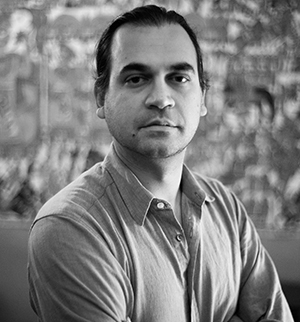
Cassim Shepard is a Distinguished Lecturer at the Spitzer School of Architecture, City College of New York (2022–present). He previously taught at Columbia University GSAPP (2016–2021). His academic work intersects urban planning, architectural theory, and design activism. Shepard is Principal of S/Q Projects (2010–present), a practice focused on urban research and design, and co-founded Urban Omnibus (2008–2014), an online platform for urban discourse. Education: BA (Honors) in Visual and Environmental Studies, Harvard University (2001) MA in Urban Geography, King’s College London (2004) Master of City Planning, Massachusetts Institute of Technology (2007) Research focuses on housing policy, urban informality, and alternative land models. His work explores how marginalized communities shape urban spaces through grassroots initiatives. Key themes include community land trusts, incremental urbanism, and the intersection of design with social justice. Publications highlight critical perspectives on housing theory (John Turner, John Habraken), protest architecture in Mumbai, and the cultural dimensions of urbanism in Istanbul. His book Citymakers (2017) analyzes practical urbanism across global contexts. No scientific awards explicitly listed, though his work has been featured in prominent journals like Places , Public Culture , and Domus . Advising and grants: No formal advisee list provided. Professional practice includes projects like the Gwanju Biennale folly and collaborations with architects like David Adjaye. Maintains S/Q Projects as a platform for urban research and creative practice.
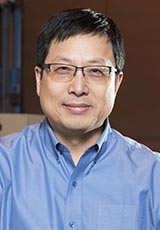
Meng Gong is a Professor and Director at the Wood Science and Technology Centre, University of New Brunswick, specializing in wood engineering and sustainable construction technologies. He obtained his PhD in Wood Engineering from UNB after earning MSc and BSc degrees from Nanjing Forestry University. His current research focuses on engineered wood products, 3D printing applications, and tiny wood house construction. Dr. Gong leads the Advanced Wood Products and Construction research program as New Brunswick Innovation Research Chair. His work bridges wood science and structural engineering, emphasizing sustainable material innovation. Recent publications demonstrate advancements in cross-laminated timber, bamboo composites, and life-cycle assessment of wood products. Honored as Fellow of the International Academy of Wood Science in 2015, he actively contributes to construction standards through the National Research Council of Canada. Dr. Gong has authored over 100 research papers and textbooks including Wood Technology and Fracture and Fatigue in Wood .
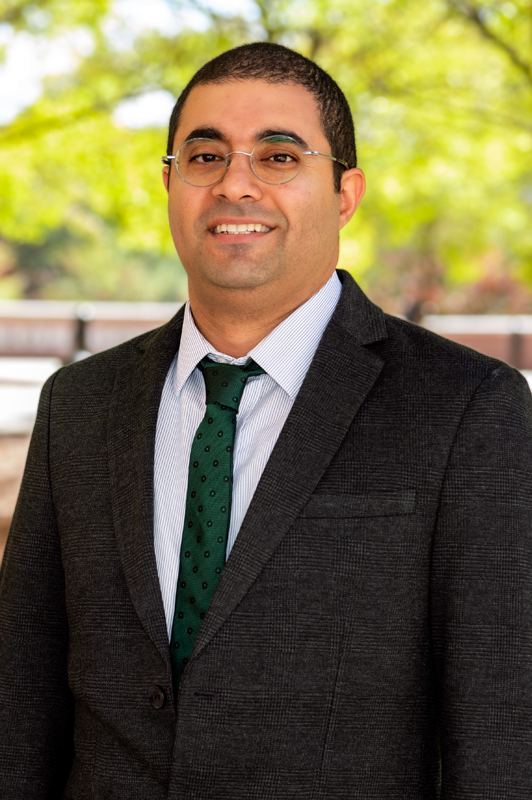
Kadir Sener is an Assistant Professor in the Department of Civil and Environmental Engineering at Auburn University’s Samuel Ginn College of Engineering. His expertise focuses on structural engineering, particularly concrete and steel composites under extreme loads. Ph.D., Structural Engineering, Purdue University B.S., Civil Engineering, Istanbul Technical University Research interests include extreme load analysis , fire resistance , missile impact structures , and additive manufacturing in construction. His work emphasizes sustainable infrastructure and multi-hazard resilience , especially for nuclear facilities. Recent publications address steel-plate composite walls , timber-steel composites , and titanium alloy strengthening in bridges and buildings. Contributions span seismic behavior, thermal loading effects, and innovative connection designs. Scientific Awards : U.S. Nuclear Regulatory Commission $1 million award for advanced nuclear reactor research $237,000 USDA Forest Service Wood Innovations Grant for timber-steel composites Collaborations with institutions like Purdue University and Fuzhou University underpin his research in modular construction and accident thermal loading scenarios.
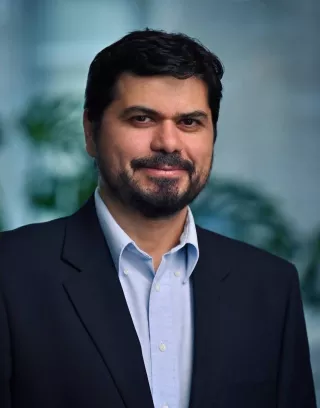
Dr. Mohammad Kamali is an Assistant Professor in the School of Engineering at the University of Northern British Columbia (UNBC). He holds a PhD in civil engineering (construction management) from the University of British Columbia, a MASc from Tarbiat Modares University, and a BASc from Sharif University of Technology, Iran. His research focuses on sustainability in construction, life cycle assessment, modular construction, and energy efficiency in buildings. Education: PhD in Civil Engineering (Construction Management), University of British Columbia MASc, Tarbiat Modares University BASc, Sharif University of Technology, Iran Research Interests: Dr. Kamali explores sustainable practices in the built environment, including green construction methodologies, life cycle sustainability assessment, and decision-making frameworks for energy-efficient building systems. He has led collaborative industrial projects, such as the Wilden Living Lab initiative at UBC, and has extensive teaching experience in civil engineering and sustainable construction. Teaching Experience: Previously instructed at the University of British Columbia and Okanagan College, focusing on civil engineering and sustainable construction curricula. Advising & Grants: Currently supervises students in MASc Civil and Structural Engineering, MSc NRES, and PhD NRES programs. His work integrates academic research with industry partnerships to advance modular and sustainable construction practices.
Federico Rossi is an Associate Professor in Architecture and Digital Manufacturing at London South Bank University's Architecture Digital x Data Research Centre. As the founding director of the Digital Architecture and Robotic Lab (DARLAB), he leads research at the intersection of digital fabrication, robotics, and sustainable construction. His work spans both academic and industry applications, with collaborations including Volkswagen, Astana Energy Expo, Ars Electronica, SCM Group, Veolia, Dyson, and Southwark Council. Rossi graduated from the Architectural Association in London and previously worked with Dame Zaha Hadid focusing on digital manufacturing processes in construction. His expertise has been recognized through significant research funding, including a £400k HEFCE grant for establishing DARLAB in 2013, a KEEP+ grant from EU Horizon 2020 in 2018, and EPSRC UKMSN+ funding in 2021 for the SCRAM project (Sustainable Construction through Robotic Additive Manufacturing). Rossi's research focuses on computational design, Design for Additive Manufacturing, circular manufacturing, and large-scale reinforced polymer structures. His work explores how robotics and automation can overcome traditional constraints in the AEC industry by integrating digital workflows directly with the design process. Recent projects include collaboration with the European Space Agency on 3D printed planetary habitats using recycled polymers, and research on circular cementitious products and modular interlocking bricks in Nigeria and the UK. Analysis of Rossi's publication record reveals a strong trajectory toward sustainable construction solutions using advanced manufacturing techniques. His recent work demonstrates increasing focus on circular economy principles, recycled materials (particularly polymers and glass), and international collaboration (especially between the UK and Nigeria). The integration of machine learning and topology optimization with robotic manufacturing represents an emerging trend in his research. Fellow of the Royal Society of Arts Work exhibited internationally at Salone del Mobile, Wired, Domus, Royal Academy Summer Show, and Italian Trade Agency Recipient of multiple research grants including HEFCE, KEEP+, EPSRC UKMSN+, UK Innovate, and Royal Society funding Rossi serves as an External Examiner for MArch at the University of East London and holds additional responsibilities as Director of DARLAB, Head of Research for the Architecture Division, and Member of the Research and Enterprise Committee. His research grants demonstrate strong industry and government partnerships focused on sustainable construction, circular economy implementation, and advanced manufacturing. Current projects include UK Innovate research for circular cementitious products and Royal Society research on modular interlocking bricks with waste reuse models. As Director of the Digital Architecture and Robotic Lab (DARLAB), Rossi leads a multidisciplinary team exploring robotic manufacturing applications in architecture. The lab serves as a hub for industry collaboration, with partners including Volkswagen, Dyson, and SCM Group. Current research teams are focused on sustainable construction through robotic additive manufacturing, circular economy implementation in building materials, and international projects addressing waste reuse models in both developed and developing contexts.
Timothy Havens is a Professor at Michigan Technological University in the Department of Computer Science within the College of Computing. He holds the William and Gloria Jackson Professorship and serves as Executive Director of both the Great Lakes Research Center and the Institute of Computing and Cybersystems. Dr. Havens also directs the PRIME Lab and has been recognized for both teaching and research excellence, including the 2014-15 Professor of the Year award from IEEE Eta Kappa Nu and Best Paper Awards at FUZZ-IEEE 2012 and IEEE SMC 2011. Dr. Havens received his Ph.D. in Electrical and Computer Engineering from the University of Missouri, Columbia in 2010. Prior to joining Michigan Tech, he was an NSF/CRA Computing Innovation Postdoctoral Fellow at Michigan State University under Dr. Anil Jain. Before his Ph.D. work, he was an Associate Technical Staff member at MIT Lincoln Laboratory. His educational background includes an M.S. in Electrical Engineering (2000) and a B.S. in Electrical Engineering (1999), both from Michigan Technological University. His research focuses on pattern recognition and machine learning, signal processing, and sensor fusion, with specific expertise in fuzzy integrals, Choquet integration, community detection in networks, and heterogeneous data mining. Dr. Havens has made significant contributions to explainable AI, particularly through the application of fuzzy integrals to deep learning systems. His recent publications demonstrate strong activity in developing novel regularization techniques for fuzzy Choquet integrals, efficient algorithms for community detection, and similarity measures for interval data. Dr. Havens' research has been consistently funded by prestigious organizations including DARPA, NSF, US Navy, Office of Naval Research, National Geospatial-Intelligence Agency, Ford Motor Company, MIT Lincoln Laboratory, and numerous other government and industry partners. His current projects include significant grants for radar systems in the Great Lakes, generative modeling of satellite imagery, and algorithms for autonomous robot systems. Scientific Awards: 2014-15 Professor of the Year by IEEE Eta Kappa Nu, Beta Gamma Chapter Best Paper Award at FUZZ-IEEE 2012 Best Paper Award at IEEE SMC 2011 Best Student Paper Award Finalist (2018) IEEE Franklin V. Taylor Memorial Best Paper Award (2011) Dr. Havens has successfully mentored numerous graduate students, many of whom appear as co-authors on his publications. His research grants demonstrate strong leadership in coordinating multi-institutional collaborations with substantial funding. Beyond his academic work, Dr. Havens is also an active musician, playing bass in several bands including MUFJAC, FLOTUS, Defenestra, Skills of Ortega, Psylocubik, Triptych, Wheels of Fire, and Odibil libidO.
Jialei Shen is an Assistant Professor in the Department of Civil, Construction, and Environmental Engineering at the University of Alabama at Birmingham (UAB), with a joint appointment in Environmental Health Sciences in the School of Public Health. His research focuses on air quality, public health, and sustainability in urban and built environments, emphasizing engineering solutions for healthy and sustainable buildings. He holds a PhD in Mechanical and Aerospace Engineering from Syracuse University (2023), an M.E. in Architectural Engineering from Nanjing University, and a B.E. in Mechanical Engineering from Xi'an Jiaotong University. Dr. Shen's research interests include building energy systems, indoor air quality, airborne pathogens, air cleaning technologies, urban environments, and computational fluid dynamics (CFD). He has authored over 20 peer-reviewed publications and contributed to software/website developments. His work emphasizes practical applications, such as optimizing ventilation systems to reduce airborne disease transmission and evaluating air cleaning device performance under realistic conditions. His publications span topics from CFD-based infection risk reduction in offices to urban intersection pollutant dispersion and modular green building design strategies. He currently serves as Youth Editor for the journal Building Simulation , reflecting his active role in advancing building science research. Key research themes include: Indoor-outdoor pollutant interactions and mitigation strategies CFD modeling for ventilation and pathogen control Development of air quality assessment tools (e.g., the ANT plug-in) Urban design impacts on microclimate and air quality Dr. Shen’s interdisciplinary approach bridges engineering, environmental science, and public health to address challenges in creating healthier built environments.
Dr. Henry Liu is an Associate Professor and Postgraduate Programme Director at the University of Canberra's Design & Built Environment School, specializing in Building and Construction Management. Previously a Senior Lecturer at Northumbria University (UK), he holds a PhD from Curtin University (2015) and master's degrees from Deakin University and the University of South Wales. His research focuses on Public-Private Partnerships (PPPs), transport infrastructure resilience, workforce planning, and performance measurement, with a strong emphasis on practical applications in engineering sectors. He has secured over AU$1.09 million in external grants since 2017/18 and serves on editorial boards of leading journals like IEEE Transactions on Engineering Management . Education includes: PhD in Management, Curtin University (2012–2015) Master's in Management, Deakin University (2009–2011) Master's in Management, University of South Wales (2004–2005) Bachelor's in Engineering, South China University of Technology Research interests span decision-making frameworks, infrastructure financing, sustainable transportation policies, and PPP lifecycle evaluation. His work contributes to UN SDGs related to sustainable cities, responsible consumption, and climate action. Notable collaborations include projects on EV charging governance, authoritarian leadership in projects, and PPP sustainability frameworks. Recent articles highlight innovations in digital construction technologies, STIRPAT modeling for environmental sustainability, and cross-national PPP procurement strategies. His editorial roles include Nature’s Humanities and Social Sciences Communications and Frontiers of Engineering Management , reflecting his leadership in academic discourse. Grants and projects include the AU$1.09m in external funding, with active involvement in initiatives like Training and Upskilling for Women in Construction (2023–2024) and the Digital Building and Built Environment Hub (2021–2022). These projects address workforce development and infrastructure resilience in Australia’s construction sector. Professional memberships include the Australian Institute of Building and the Higher Education Academy Fellowship (2018–present). He is also a Visiting Research Fellow at Curtin University and the University of Technology Sydney.
Associate Professor Max Maxwell is affiliated with the University of Canberra's Department of Architecture, Design & Built Environment. His research focuses on computational design, robotic fabrication, and sustainable architectural solutions. He has led projects such as 'Museum Futures: Design and Architecture' (2024-2026) and 'Workplace Plasticity' (2021), exploring net-zero office spaces and material innovation. Maxwell's work bridges technology, craft, and environmental resilience, with a strong emphasis on adaptive design and material behavior. He has been invited to speak on topics like 'Nature's Lab: New Materials in Design' (2023) and participated in exhibitions such as the NGV Architecture Commission (2024). His research interests include robotic fabrication techniques, bioclimatic housing systems, and the integration of computational tools into architectural practice. Notable outputs include studies on climate-resilient housing in Australia (2025) and material metabolism reduction strategies (2024). Maxwell collaborates extensively, co-authoring works with institutions like Supermanoeuvre and presenting at international forums. His projects often address urban challenges, such as retrofitting existing housing and reimagining public spaces through interactive installations. Maxwell's professional activities include organizing conferences, delivering invited lectures, and serving on award panels. He actively supervises PhD students in computational design and robotic fabrication, contributing to the next generation of architectural innovators.
Murat Kristal is Professor of Operations Management and Information Systems at York University's Schulich School of Business, where he founded Canada's first Master of Business Analytics (MBAN) and Master of Management in AI (MMAI) programs. Research integrates operations strategy, supply chain dynamics, and applied analytics, with recent emphasis on healthcare and financial sector efficiency. Publications demonstrate methodological expertise in data envelopment analysis (DEA) and process optimization, particularly examining technological investments in banking and hospital viability. Earlier work established frameworks for mass customization capability and supply chain integration, contributing to contingency-based views of organizational design. As Special Advisor for AI & Business Analytics, Kristal connects industry challenges with analytical solutions. Professional expertise includes translating operational complexity into computational models, evidenced by research on adaptive control systems for supply networks and dynamic staffing approaches.
Elif Surer is an Associate Professor and Associate Director at Middle East Technical University's Graduate School of Informatics, Department of Multimedia Informatics. She leads the Entertainment Computing and Interactive Systems Laboratory (ECISLab) and actively contributes to METU's entrepreneurship initiatives through GIMER (Entrepreneurship Research Center). Her academic leadership extends to international projects including EU Horizon Europe initiatives and collaborations with institutions like Stanford University's University Innovation Fellows program. Dr. Surer's research focuses on the intersection of game technologies, extended reality, and practical applications across diverse domains. Her work spans serious games for CBRNe (Chemical, Biological, Radiological, Nuclear, and Explosive) training, virtual reality applications for mining safety, archaeological visualization, and educational technology. She has developed frameworks for heterotopias as discursive playgrounds, modular serious game development for virtual laboratories, and advanced techniques in persona building for game design. Her interdisciplinary approach bridges computer science with fields like archaeology, healthcare, and occupational safety, creating innovative solutions that address real-world challenges through immersive technologies. Her publication record demonstrates consistent contributions to top journals including IEEE Transactions on Games, Virtual Reality, and JMIR Serious Games. Recent work shows increasing focus on biological network visualization in XR environments, advanced testing frameworks for deep learning systems, and sophisticated persona modeling techniques that go beyond traditional approaches. Her research trajectory reflects growing integration of AI with immersive technologies, particularly in specialized training applications and scientific visualization. METU Performance Awards (2020, 2021) Best Poster award at METU Graduate School of Informatics Open Research Day TÜBİTAK Above-Threshold-Awards Featured in Researchers Active in Technical Games Research list Dr. Surer actively supervises numerous graduate students across multiple projects, with recent completions including theses on clickbait detection, VR for mining safety, and adaptive serious games for children with learning difficulties. She leads significant research funding including EU Horizon Europe projects like eNOTICE-2 (focused on CBRNe training), the MR4MS project for mine safety, and the Quantum Flagship project QuTE4E. Her laboratory environment fosters collaboration between computer science, architecture, and other disciplines, creating opportunities for students to engage in cutting-edge research with practical applications. As director of ECISLab, she maintains strong connections with industry partners including METU Teknokent, and actively participates in entrepreneurship initiatives through METU GIMER. Her work with the University Innovation Fellows program demonstrates commitment to developing entrepreneurial skills among students, while her research on virtual reality applications continues to expand into new domains including healthcare, archaeology, and emergency response training.
Maxwell Fordjour Antwi Afari is a Lecturer in Civil Engineering at Aston University's College of Engineering and Physical Sciences, specializing in Construction Informatics and Digital Technologies. He holds a Ph.D. in Construction Information Technology from The Hong Kong Polytechnic University and has extensive experience as a Postdoctoral Research Fellow and Research Associate there. His research focuses on construction ergonomics, wearable sensor technologies, and workplace safety, with a strong emphasis on using BIM, IoT, and AI to enhance construction processes. Education: Ph.D., Construction Information Technology, Hong Kong Polytechnic University (2019) MPhil, Building Technology, Kwame Nkrumah University of Science and Technology (2015) BSc, Construction Technology and Management, Kwame Nkrumah University of Science and Technology (2012) Research Interests: His work addresses physical and mental fatigue in construction workers, biomechanical risk assessment, and the integration of digital tools like BIM and wearable sensors to improve safety and efficiency. He also explores technology transfer in the construction industry and sustainable practices. Recent Trends in Articles: Recent studies focus on automated fatigue monitoring via wearable devices, machine learning for safety risk prediction, and the application of AI and AR in construction design and management. His work bridges biomedical engineering with construction safety, emphasizing real-world implementation of innovative technologies. Awards: 2021 Aston Achievement Award (Best Newcomer), OSH Best Project Scholarship (2017/2018), and Gibrine Adam Promising Young Scholar Award (2017). Professional Roles: Senior Fellow at the Higher Education Academy, member of the Hong Kong Ergonomics Society, and associate member of the American Society of Civil Engineers. Advising & Grants: Supervises PhD students in digital twin platforms for risk assessment and leads projects funded by EPS scholarships. Collaborates on research into prefabrication, modular construction, and industry 4.0 technologies. Labs/Teams: Involved in the Smart and Sustainable Manufacturing group at Aston University, focusing on data-driven construction safety and digital innovation.
Dr. Andreas Hein is Associate Professor and Chief Scientist at the Interdisciplinary Centre for Security, Reliability and Trust (SnT), University of Luxembourg, specializing in future space systems. Research spans interstellar mission design, autonomous transportation, and sustainable space exploration as Executive Director of the Initiative for Interstellar Studies. Key interests include disruptive space architectures, complex systems engineering, and long-duration space projects. Recipient of the Willy Messerschmitt Award and Exemplary Systems Engineering Doctoral Dissertation Award for space systems innovation. Recent publications focus on pico-satellite technologies (POQUITO mission), space nuclear propulsion, distributed satellite systems, AI governance frameworks, and orbital debris mitigation strategies. Authored 70+ peer-reviewed articles advancing space systems engineering methodologies.
Mark Dallas is an Associate Professor of Political Science at Union College (on leave until December 2025). He specializes in global value chains, high-tech sectors, and China's political economy. His research explores power dynamics in global production networks, East Asian regionalism, and national security implications of technological dependencies. Education: B.A. from Princeton University, M.A. and Ph.D. from University of California, Berkeley. Research interests focus on how technological advancements and global supply chains reshape economic and political landscapes. His work analyzes China's strategic industrial policies, semiconductor autonomy efforts, and the governance of telecommunications standards. He frequently engages with policy debates on global value chain inequities and pandemic-related supply chain vulnerabilities. Notable publications examine topics like consensus-building in standard-setting organizations, power dynamics across global production networks, and the interplay between multinational enterprises and state institutions. His 2020 paper on China's semiconductor ambitions highlights critical national security dimensions. Received the Council on Foreign Relations International Affairs Fellowship, reflecting recognition for his expertise in U.S.-China trade relations and global supply chain geopolitics. His congressional testimony (2023) underscored his role as a leading analyst on critical infrastructure dependencies. Teaching focuses on Asian development, contemporary Chinese politics, and the socio-political impacts of emerging technologies. Office located in Lippman Hall 211; contact via dallasm@union.edu.
Salman Azhar is Hunt Professor and Graduate Programs Chair at Auburn University's McWhorter School of Building Science. His research advances BIM, VR/AR, and sustainable construction technologies. Research focuses on reality capture for construction, BIM-based sustainability assessment, and emerging technologies in AEC. He developed frameworks for carbon emission tracking through building lifecycles and modular construction optimization. Publications demonstrate leadership in construction digitization, with early foundational work on BIM adoption evolving into specialized applications in sustainability, prefabrication, and field operations. Recent reviews establish global research trends in reality capture and carbon management. As Graduate Programs Chair, he leads MS and PhD programs. International collaborations include projects in Kazakhstan, UAE, and Turkey. Laboratory activities integrate VR systems for construction education and jobsite applications.