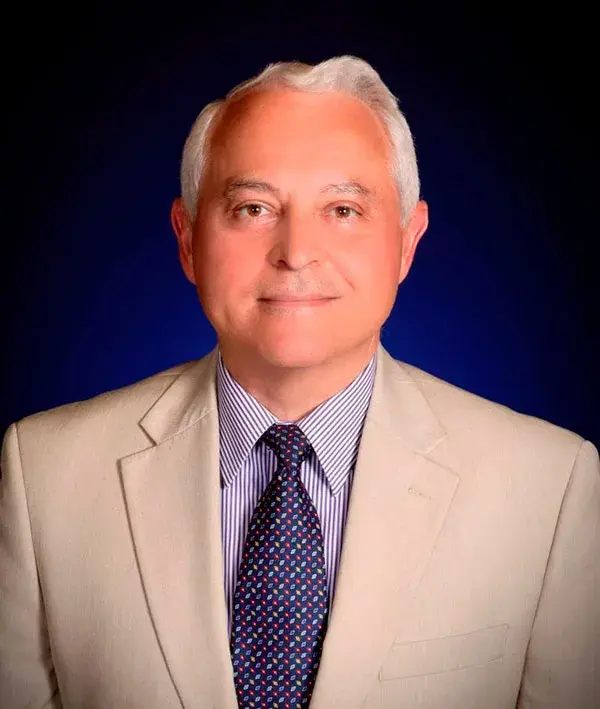
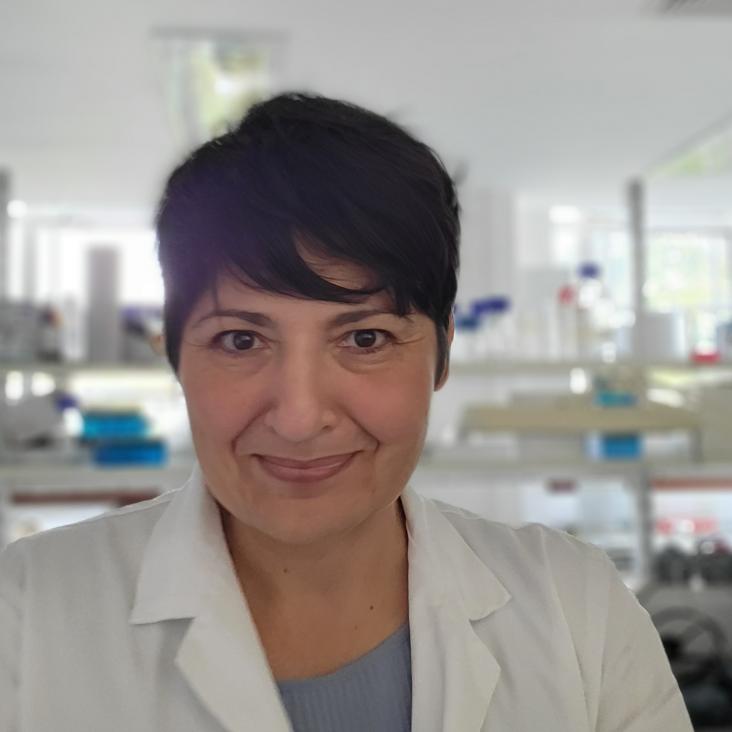
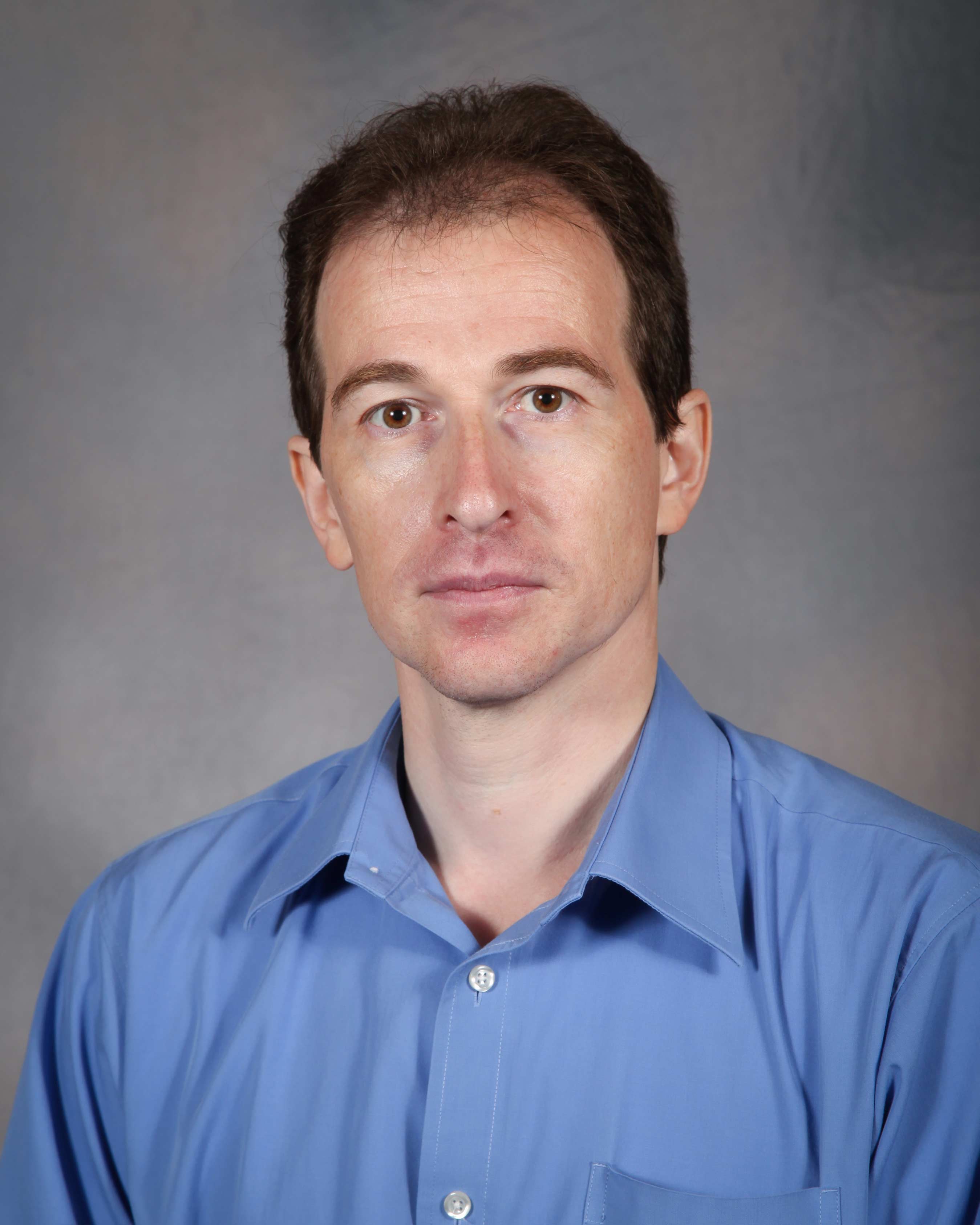
Dan M. Ionel, Professor and inaugural L. Stanley Pigman Chair in Power at the University of Kentucky (UK), directs the Power and Energy Institute Kentucky (PEIK). He is affiliated with the SPARK Laboratory in the Department of Electrical and Computer Engineering, focusing on renewable energy, electric machines, and smart grids. Alternative and Renewable Energy Technologies Electric Machines and Power Electronic Drives Electromagnetic Devices Electric Power Systems Energy Storage Smart Grids and Buildings His research integrates machine learning with electromagnetic design for applications like electric vehicles and aircraft propulsion. Recent work includes axial flux permanent magnet machines with Halbach arrays and cryogenic thermal management systems. Scientific awards include IEEE Fellowship. Research is sponsored by NSF, DOE, NASA, and industry partners like ANSYS, EPRI, and Regal Rexnord. Collaborations span national labs (NREL, ORNL), utilities (LG&E, TVA), and aerospace entities.
Nickolai Zeldovich is the Joan and Irwin M. Jacobs Professor of Electrical Engineering and Computer Science at MIT, and a member of the Computer Science and Artificial Intelligence Laboratory (CSAIL). He received his PhD from Stanford University in 2008 and focuses on building practical secure systems, including encrypted databases, undefined behavior detection tools, formally verified file systems, and cryptocurrency protocols. His work spans both theoretical and applied aspects of computer security and distributed systems. Research interests include: Secure system design Distributed consensus mechanisms Formal verification of software/hardware Cryptographic protocols Privacy-preserving web technologies Publications & Verification Tools Recent work focuses on modular verification of complex systems, including: Shipwright (2025): Byzantine-fault-tolerant distributed system verification PoWER (2025): Crash consistency verification framework K2 Architecture (2023): Trustworthy hardware security modules Grove (2023): Separation-logic-based verification library Tiptoe (2023): Private web search protocols Major Awards Best paper award, ACM SOSP (2011, 2015, 2017) Sloan Research Fellowship (2010) NSF CAREER award (2011) MIT Jamieson Award for Teaching (2024) Active in multiple startup ventures including Algorand (cryptocurrency), MokaFive (virtualization), and PreVeil (end-to-end encryption).
Samuel Leder is a doctoral researcher at the Institute of Computational Design and Construction (ICD) under the Cluster of Excellence IntCDC at the University of Stuttgart. His work focuses on the integration of robotics and architectural design, particularly in developing distributed robotic systems for timber construction. He has been actively involved in research projects such as RP 19-1 – Robotic Kinematic System for Parallel Construction and RP 19-2 – Co-Design for Distributed Cooperative Multi-Robot Systems . Additionally, he serves on the Equal Opportunity Commission at ICD. Bachelor of Design in Architecture (summa cum laude), Washington University in St. Louis Bachelor of Applied Science in Systems Science and Engineering (magna cum laude), Washington University in St. Louis MSc in Architecture via the Integrative Technologies and Architectural Design Research (ITECH) program, University of Stuttgart Samuel’s research explores the synergies between agent-based modeling , robotic systems , and architectural design . His work aims to create minimal robotic machines capable of constructing complex spatial assemblies, particularly with timber structures . He investigates the co-design of robots and the structures they build, emphasizing modular systems and kinematic behaviors . Recent publications highlight advancements in digital twins , adaptive assembly , and human-robot collaboration for timber construction. The 15 most recent articles reveal trends in collective robotic construction , agent-based modeling , and material-robot interaction . These works emphasize timber fabrication , modular systems , and interactive simulation for large-scale construction tasks. Key sub-fields include adaptive assembly , cyber-physical systems , kinematic control , and human-guided robotics . Scientific Awards: German Academic Exchange Service (DAAD) Award for Outstanding Achievement Deutschlandstipendium Samuel’s research is conducted within the ICD at University of Stuttgart , where he collaborates on the Wood Building Systems for Distributed Robotics associated project. His work bridges architecture , robotics , and computational design , aiming to redefine on-site construction methodologies through innovative robotic systems.
Professor Robert G. Leigh holds a position in the Department of Physics at the University of Illinois at Urbana-Champaign, where he has been a faculty member since 1996. His research spans theoretical high energy physics, quantum gravity, and quantum information science, with significant contributions to string theory and its applications. Leigh received his bachelor's degree in theoretical physics from the University of Guelph in 1986 and completed his Ph.D. in theoretical particle physics at the University of Texas at Austin in 1991. Following postdoctoral appointments at the Institute for Particle Physics at the University of California, Santa Cruz and at Rutgers University, he joined the University of Illinois faculty. Professor Leigh's work lies at the heart of current efforts to build a fundamental theory of matter, including quantum gravity effects. His research primarily focuses on using gauge/gravity dualities (or holography) to study the physics of strongly coupled gauge theories and the strong coupling dynamics in condensed matter systems. His most notable contributions include the discovery of D-branes and orientifolds in string theory, the first example of superstring duality, and the derivation of the Dirac-Born-Infeld action describing the dynamics of D-branes. D-branes correspond to non-perturbative states unique to string theory and are analogous to magnetic monopoles in field theory. The study of D-branes is fundamental to modern string theory and its applications to particle physics, mathematics and condensed matter physics. His most recent publications demonstrate a continued focus on quantum entanglement, Chern-Simons theory, and the intersection of quantum information with gravitational physics. His work shows an evolution from fundamental string theory discoveries toward applications in condensed matter physics and quantum information through holographic methods. Fellow, American Physical Society (2007) Arnold O. Beckman Award, UIUC (December 2004) Outstanding Junior Investigator, DOE (1997-2000) Professor Leigh has taught advanced courses including Quantum Mechanics I & II, General Field Theory, Advanced Field Theory, and specialized topics in AdS/QFT Correspondence. His research program has been supported by various grants from the Department of Energy and other funding agencies. He has mentored numerous graduate students and postdoctoral researchers, contributing significantly to the next generation of theoretical physicists. His work continues to bridge multiple areas of theoretical physics, connecting string theory with quantum information science, condensed matter physics, and gravitational physics through the powerful framework of holography and gauge/gravity dualities.
Christian Smith is an Associate Professor and Lecturer at the Department of Robotics, Perception and Learning at Kungliga Tekniska Högskolan (KTH Royal Institute of Technology). His research focuses on robotics and applications in human-centered environments like home environments, small workshops, and healthcare facilities, including the development of new robotic systems for research. Teaching Roles: Course Coordinator/Teacher/Examiner for courses such as Introduction to Robotics (DD2410), Research Project in Robotics (DD2411), and Java Programming for Python Programmers (DD1380) Research Themes: Human-Robot Interaction, Behavior Trees, Exoskeletons, Intent Recognition, and Multimodal Perception Awards: No specific scientific awards mentioned in the provided text His KTH profile highlights work on adaptive robotics systems and formalized control strategies. The research portfolio spans from theoretical studies on behavior tree programming to applied work in assistive technologies and teleoperation systems.
Summary Associate Professor Mehrdad Arashpour is an internationally recognized researcher and educator in construction and civil infrastructure, focusing on automation and information technologies. He leads the ASCII Lab at Monash University's Department of Civil and Environmental Engineering. His academic roles include Head of Construction Engineering and membership in the CIB's Working Commission on Off-site Construction (W121) and Infrastructure Task Group (TG91). Education: Ph.D., RMIT University, Australia M.Sc., Grenoble University, France B.Sc., IU University, Iran Research Interests: Digital twins, computer vision, robotics, BIM integration, sustainable construction, and automation in construction processes. His work contributes to UN Sustainable Development Goals, particularly in sustainable cities and communities. Grants & Awards: Over $6M in grants from ARC, Austroads, and industry partnerships. Recognitions include Editor's Choice Paper (ASCE, 2019) and Outstanding Reviewer (Elsevier, 2016). Teaching: Courses like Risk Management in Engineering Projects and Infrastructure Research Project. Advises on PhD topics in computer vision, robotics, and BIM. Labs & Collaborations: ASCII Lab focuses on smart, sustainable solutions for construction. Collaborates with global researchers and organizations like SPARC Hub and Building 4.0 CRC.
Ankita Raturi is an Assistant Professor in the Department of Agricultural & Biological Engineering at Purdue University, leading the Agricultural Informatics Lab. Her work focuses on human-centered design, information modeling, and software engineering to enhance resilience in food systems. She develops decision support tools for cover cropping, agronomic data services, and soil health technologies. Her research integrates digital agriculture applications across field crops, livestock, and food systems, emphasizing open-source solutions. Key projects include modular decision tools for diversified farming systems and information management frameworks for community food resilience. Publications highlight her expertise in sustainable tech adoption, precision agriculture, and ecosystem impact design. She actively bridges engineering and agriculture through interdisciplinary collaborations. Dr. Raturi's lab explores digital tools for smallholder farmers, pandemic response systems, and ecological wealth restoration through technology. She emphasizes trust-building in tech-mediated research and advocates for nonhuman-centric design in agroecosystems.
Sonia Antoranz Contera is a Full Professor of Biological Physics at the University of Oxford and Associate Head of the Physics Department. Her research bridges physics, nanotechnology, and biology, focusing on the interplay of mechanics, chemistry, and electricity in biological systems. She leads projects on neural interfaces, sustainable architecture inspired by biological principles, and nanomedicine. Notable collaborations include work with Amanda Levete Architects on bioinspired materials and the EU-funded ZEBAI initiative for carbon-neutral buildings. Her book Nano Comes to Life (Princeton University Press) explores nanotechnology's impact on biology and medicine. She also engages in public discourse through columns in El Pais and academic lectures on the history of physics and ethics in science. Education: PhD in Physics (Osaka University), with postdoctoral work across global institutions. Research Interests: Biomechanics of growth, AFM of biological systems, neuromorphic computing, and sustainable materials. Funding: John Fell Fund, Moore Foundation, EU Horizon Programme (ZEBAI), UKRI (BuildAir). Her lab's recent work includes AI-driven cement microstructure synthesis, PDMS mechanical aging studies, and anaesthesia mechanisms linked to neuronal viscoelasticity. She advises on policy and innovation, advocating for ethical, equitable scientific progress.
Professor Michael Ramage is a Senior Lecturer in the Department of Architecture at Cambridge University , where he directs the Centre for Natural Material Innovation . He is also a fellow of Sidney Sussex College and co-founder of Light Earth Designs . His academic background includes architecture studies at MIT and professional experience at Conzett Bronzini Gartmann in Switzerland. His research focuses on low-energy structural materials , natural material innovation , and sustainable housing in developing regions, with particular emphasis on engineered timber and bamboo . The 15 most recent publications highlight trends in modular timber construction , 3D printed earthen materials , and climate action in the building sector . Key subfields include circular economy , resource optimization , structural testing , and behavioral impacts on decarbonization . He has secured research funding from the Leverhulme Trust , Engineering and Physical Sciences Research Council (EPSRC) , Royal Society , and British Academy .
Professor Pavel V. Tsvetkov is a faculty member at Texas A&M University , holding the rank of Professor of Nuclear Engineering and serving as the Director of the Graduate Program in Nuclear Engineering . He is also an Affiliated Faculty member of the Multidisciplinary Engineering program . His office is located in the AIEN M205B building, and he can be contacted at tsvetkov@tamu.edu . Educational Background: Ph.D. in Nuclear Engineering, Texas A&M University (2002) M.S. in Theoretical & Experimental Reactor Physics, Moscow State Engineering Physics Institute (1995) Research Interests: Professor Tsvetkov's research spans a wide range of advanced nuclear engineering topics. His primary focus includes system analysis and optimization methods , complex engineered systems , and symbiotic nuclear energy systems . He is deeply involved in waste minimization and sustainability , particularly through the development of high-temperature gas-cooled reactors (HTGRs) and molten salt reactors (MSRs) . His work also explores direct nuclear energy conversion systems and the integration of AI and deep learning into nuclear reactor control and monitoring systems. Research Trends in Publications: Over the past few years, Professor Tsvetkov has published extensively on the application of machine learning and deep learning in nuclear engineering. His recent works focus on autonomous reactor control , reactor dynamics simulation , and remote monitoring systems using satellite data and AI. He has also contributed to the design and analysis of microreactors for space applications and molten salt reactor dynamics . Scientific Awards: George Armistead, Jr ’23 Faculty Excellence Teaching Award Advising and Grants: As Director of the Graduate Program in Nuclear Engineering, Professor Tsvetkov plays a key role in mentoring and advising graduate students. While specific student names are not listed, his leadership in the program and extensive research output suggest active involvement in student research and training. Labs and Teams: Professor Tsvetkov is associated with the Nuclear Power Engineering group at Texas A&M University, contributing to both academic and applied research in nuclear systems design and safety.
Dr. Christina DiMarino is an Assistant Professor in the Bradley Department of Electrical and Computer Engineering at Virginia Tech and a faculty member in the Center for Power Electronics Systems (CPES). She earned her Ph.D. (2018) and M.S. (2014) in Electrical Engineering from Virginia Tech, and her B.S. from James Madison University (2012). She is based at the Virginia Tech Research Center (VTRC) in Arlington, VA, where she established and manages two CPES laboratories. Her research focuses on power electronics packaging, high-density integration, medium-voltage power modules, and wide-bandgap semiconductors. She holds leadership roles in IEEE PELS, including Vice Chair of Technical Committee 2 and Member-at-Large of the Administrative Committee, and serves on the PCIM Europe Advisory Board. Notable awards include the 2024 IEEE PELS Richard M. Bass Outstanding Young Engineer Award and the 2022 Outstanding New Assistant Professor Award. Her work emphasizes interdisciplinary collaboration and industry partnerships through CPES, addressing challenges in high-power systems, thermal management, and electromagnetic compatibility. Education: Ph.D. & M.S. in Electrical Engineering (Virginia Tech), B.S. in Electrical Engineering (James Madison University) Key Roles: IEEE PELS Leadership, PCIM Europe Advisory Board Member, CPES Lab Director Research Themes: High-Voltage Packaging, SiC Modules, Power Electronics Integration
Dr. Min Liu is a Professor and the Abdallah H. Yabroudi Endowed Professor in Sustainable Civil Infrastructure at Syracuse University, where she directs the Syracuse University Infrastructure Institute. She holds a Ph.D. in Engineering Project Management from UC Berkeley, and prior degrees from National University of Singapore and Xi’an University of Architecture and Technology. Her research focuses on integrating human and engineering aspects in construction planning, with emphasis on Lean Construction, Digital Twin design, and machine learning applications. She has published over 50 articles in top-tier journals and won prestigious awards such as the 2021 ASCE Thomas Fitch Rowland Award. Dr. Liu advises numerous graduate students and postdocs, offering positions in Construction Engineering and Management. Her lab develops innovative approaches for infrastructure project delivery, worker mental health, and bridge preservation strategies. Education: Ph.D. in Engineering Project Management, UC Berkeley (2007) MSCE, Xi’an University of Architecture and Technology (1997) MSc in Building Science, National University of Singapore (2001) BSc in Civil Engineering, Qingdao University of Technology (1994) Research Highlights: Large language models for construction planning reliability Ontology-based knowledge systems for construction methods Lean techniques for worker mental health improvement Socioeconomic analysis of bridge preservation strategies Awards: 2021 ASCE Thomas Fitch Rowland Award Multiple Best Paper Awards (2017-2018) "Thank a Teacher" awards (2011-2018) Her advising record includes notable students like Chuanni He (2023 Chinese Government Award) and Gongfan Chen (2022 Three-Minute Thesis Award). Current opportunities include Ph.D. financial support and postdoc positions. Dr. Liu’s work appears in journals like ASCE Journal of Management in Engineering and Engineering, Construction and Architectural Management.
Karen Stock is an Associate Professor of Business at Walsh University, where she has been since 2010. She holds a Doctor of Management (D.M.) from Case Western Reserve University, a Master of Arts in Management from Walsh University, and a Bachelor of Science from Miami University. Her primary research focuses on experiential learning, cross-cultural management, and ethical leadership, emphasizing practical application in both academic and workplace settings. Dr. Stock teaches courses in sustainability, cross-cultural management, and ethical leadership. She is also a Research Fellow at the Weatherhead School of Management at Case Western Reserve University. Her work explores innovative pedagogical methods, including equine-assisted learning and design thinking, to deepen student engagement and real-world relevance. She frequently presents at conferences such as the Academy of Management and the Management and Organizational Behavior Teaching Conferences. Her publications span journals like OD Practitioner and Journal of Education for Business , focusing on experiential learning metrics, global virtual teams, and sustainable construction practices. She actively contributes to the Experiential Learning Community of Practice, advocating for immersive educational strategies. Dr. Stock’s career combines academia with industry experience in multinational marketing and product development, enriching her teaching with practical insights. She is committed to fostering ethical leadership and sustainable business practices through innovative curricula and collaborative research initiatives.
Dr. Matt Bonney is a Lecturer in Space Engineering at Swansea University, affiliated with the School of Aerospace, Civil, Electrical and Mechanical Engineering. He holds a position in the Department of Aerospace Engineering and is actively involved in postgraduate supervision. His research focuses on digital twin technology, nonlinear structural dynamics, mechanical joint modeling, seismic reliability, and uncertainty quantification, with recent emphasis on digital twin security and thermo-mechanical coupling in assembled structures. Dr. Bonney's expertise spans multi-physics joint modeling and multi-disciplinary development of digital twins, with international collaborations. He teaches modules such as 'Advanced Space Systems' (EG-M334) and 'Aerospace Systems' (EGA220), emphasizing space system design, orbital mechanics, and cyber-physical security. His research highlights include the development of a Python Flask-based digital twin operational platform, contextualization of information in digital twin processes, and experimental studies on frictional interfaces. His work on uncertainty quantification and seismic reliability has applications in nuclear reactor systems and civil engineering structures. Dr. Bonney currently supervises a PhD student focusing on nonlinearities in thermal-mechanical joints. His research outputs include over 30 peer-reviewed publications, with contributions to journals like Mechanical Systems and Signal Processing and Data-Centric Engineering .
Dong-Hyu Kim is a Senior Lecturer in the Department of Management at the University of Glasgow. He holds a PhD in Strategy & Organisation from Yonsei University (South Korea) and has held visiting scholar positions at Hitotsubashi University, KAIST, LSE, Chinese Academy of Sciences, and TU Berlin. His research focuses on standards competition, digital technology policy (AI/IoT/Blockchain), innovation strategies, and East Asian economies. He serves as Associate Editor of Kybernetes and has contributed to over 20 peer-reviewed articles. Education Background: PhD in Strategy & Organisation, Yonsei University (2014) Master’s in Global Economy & Strategy (Highest Honours), Yonsei University (2011) Bachelor of Science in Electronics & Computer Engineering, Hanyang University (2008) Research Interests: Standards governance and platform competition AI/Blockchain policy frameworks Technological catch-up strategies in emerging economies Systems theory applications in innovation studies Key Publications Trends: Recent work explores AI-human interaction dynamics through Luhmann’s systems theory, China’s NEV innovation systems, and EU-US blockchain standardization geopolitics. Earlier research analyzed IoT patent networks, automotive sector competitiveness, and FTA standardization implications. Awards: Global PhD Fellowship (South Korea’s top scholarship, 2014-2016) IEC-IEEE-KATS Academic Challenge 1st Prize ($20,000, 2018) Academic Leadership: Supervised 4 PhD students on topics like platform ecosystems and EV innovation Received £60k+ in research grants including ESRC IAA funding Edited EURAS proceedings on standardization and open source Labs/Teams: Active contributor to Glasgow’s Strategy & Technology Management research cluster, collaborating internationally across Asia-Europe tech policy networks.