Amit Sen is a Professor of Economics at Xavier University, with expertise in econometrics, applied statistics, and time series analysis. He co-directs the Center for International Business and oversees international study programs for the MBA and B.S.B.A. in International Business. His research focuses on methodological challenges in unit root testing and structural breaks in time series data. Educational Background: Ph.D. in Economics & Statistics (co-major) from North Carolina State University, M.E. in Economics, and B.A. (Honours) in Mathematics. Sen’s research has been published in leading journals such as the Journal of Business and Economic Statistics, The Econometrics Journal, and Computational Statistics & Data Analysis. His work emphasizes statistical inference in non-stationary time series and economic applications like income convergence and unemployment disparities. He teaches econometrics, time series analysis, and international business courses across undergraduate, M.S., and MBA programs. Sen also contributes to the Philosophy, Politics & the Public Honors program and the Modern Languages & International Economics B.A. program at Xavier. His recent publications (2018-2003) explore unit root methodologies, innovation variance breaks, and economic empirics, reflecting a consistent focus on advancing econometric techniques for real-world data analysis. No scientific awards are mentioned in the provided text.
Dr Hao Dong serves as Senior Lecturer in Management at the University of Southampton Business School, where he directs the Strategy & Collaboration for the Advanced Project Management Research Centre (APROM). His academic work bridges socioeconomics and business studies to explore how responsible management practices can advance sustainability. Dong holds leadership roles including SBS' PhD Liaison Officer, Web Champion, and member of the Ethics, Responsibility and Sustainability Committee. Hao Dong's research spans several interconnected domains focused on modern management challenges. His primary interests include Agile project management methodologies, digital transformation and AI integration in business processes, and cultural entrepreneurship with emphasis on supply chain dynamics. He also explores co-operative business models and Austrian economics principles, applying these frameworks to address contemporary organizational challenges. His work demonstrates how project management intersects with sustainability, digital innovation, and economic resilience across various sectors including public administration, healthcare, and agriculture. Dong's recent publications reveal a strong focus on the intersection of digital transformation and project management, with increasing attention to sustainability applications. His work examines how Agile methodologies adapt to digital environments, how open government data creates value, and how supply chains can achieve greater resilience. His research shows a clear trajectory toward integrating traditional project management frameworks with emerging digital technologies while maintaining focus on human-centered approaches and sustainable outcomes. Hao Dong has received numerous professional recognitions including Top 10% SSRN Author (2021), multiple Blackboard and VLE Awards nominations and shortlists (2022-2024), The Vice-Chancellor's Awards nominations across multiple years, and recognition for supervising the Southampton Business School Best Dissertation (2022). His professional affiliations include British Academy of Management (BAM), Association for Project Management (APM), Mises Institute, UK Society for Co-operative Studies (UKSCS), and Institute of Directors (IoD). As a supervisor, Dong currently guides four PhD students working on Business Studies & Management topics, including research on digital transformation, supply chain risk, and project management. His research portfolio includes significant funding from diverse sources including the ESRC Impact Acceleration Account, APM (Association for Project Management), and various internal university grants. His current projects span digital transformation in public and private sector project management, international co-operatives in the post-pandemic era, and supply chain sustainability in the Global South. Dong leads the Advanced Project Management Research Centre (APROM) as Director of Strategy & Collaboration, fostering interdisciplinary research that connects academic theory with practical project management applications. His work bridges academic research with industry practice through collaborations with professional bodies like APM and through his policy and consulting advisory roles.
Prof. Dr. Dr. h.c. Gudrun Kiesmüller serves as Full Professor holding the Chair for Operations Management at TUM School of Management, Technical University of Munich, based at Campus Heilbronn since July 2019. She concurrently holds the position of Hedda Andersson Guest Professor at Lund University's Department of Industrial Management & Logistics since January 2021. Previously, she held professorial positions at Otto-von-Guericke-University Magdeburg (2013-2019), Christian-Albrechts-University zu Kiel (2010-2013), and Technical University Eindhoven (2002-2009). Her research program focuses on Operations Management with particular emphasis on the implications of digitization in Industry 4.0, especially in after-sales services. She develops analytical methods to optimize processes across manufacturing and supply chains. Her work spans three interconnected domains: stochastic manufacturing systems design (examining buffer sizing and spare parts planning), safety stock optimization under uncertain demand and supply conditions, and maintenance-reliability integration. She investigates how digitization transforms traditional operations, with growing emphasis on AI applications for supply chain optimization and inventory planning. Prof. Kiesmüller's extensive publication record reveals consistent contributions to operations research methodology with practical business applications. Her work demonstrates increasing integration of data-driven approaches, particularly in the most recent publications which explore AI applications for supply chain optimization. The research shows progression from theoretical inventory models toward more complex, integrated systems that consider multiple uncertainties simultaneously, reflecting the growing complexity of modern supply chains. Her professional recognition includes: 2022 Service Award from the International Society for Inventory Research Multiple Outstanding Reviewer Awards from OR Spectrum (2017, 2020) EURO Best Paper Award (2014) for influential review on lateral transshipments Multiple teaching awards recognizing excellence in both bachelor and master level instruction At TUM, Prof. Kiesmüller teaches a comprehensive curriculum in Operations Management, emphasizing both theoretical foundations and practical applications. Her courses equip students with skills to analyze supply chain planning problems, apply quantitative models, and solve complex operational challenges. She maintains an active research group investigating how digitization transforms operations management practices, particularly in after-sales service contexts where Industry 4.0 technologies enable new optimization possibilities.
Oliver Janz is Professor of Modern History at the Department of History and Cultural Studies at Free University of Berlin, where he has been teaching since 2007. He previously served as Dean of the Department from 2017-2021 and has held visiting professorships at institutions including the German Historical Institute in Rome, University of Bern, and University of Trient. His academic leadership extends to editorial roles for multiple book series and journals focusing on modern Italian history, transnational history, and World War I studies. Doctorate (1991): Freie Universität Berlin - History of Protestant clergy in Prussia 1850-1914 (summa cum laude) Magister Artium (1985): Freie Universität Berlin - History Studies (1978-1985): History, Philosophy and Sociology at University of Heidelberg, Bielefeld, and Freie Universität Berlin Professor Janz specializes in several interconnected research areas that examine European history through transnational and comparative lenses. His primary focus is on the history of World War I, particularly examining commemoration practices, the cult of fallen soldiers, and the war's transnational dimensions. He has extensively researched the history of the European bourgeoisie, nation and nationalism in Europe, and the intersection of family, gender, and political identity. His work on Italian history spans from the Risorgimento through the Fascist period, with particular attention to religious and cultural dimensions of political movements. Janz is a leading scholar in transnational history methodology, exploring how historical phenomena transcend national boundaries and how comparative approaches can illuminate shared European experiences. Janz's scholarly output demonstrates a consistent focus on memory, commemoration, and the cultural dimensions of warfare, particularly World War I. His work reveals how societies process collective trauma through rituals, monuments, and narratives that intertwine religious, familial, and national identities. The international encyclopedia project 1914-1918-online represents a significant contribution to digital humanities, creating a global platform for understanding the war's multifaceted impacts. His research increasingly examines the digital representation of historical memory, bridging traditional scholarship with contemporary digital culture. Research fellowship from the DFG (2000-2004): "The Cult of the Fallen: Soldiers in Italy during the First World War" DAAD Fellowship (1996): "Exchange of Young Scholars between Italy and Germany" Fellow of the FAZIT-Stiftung (1990) Maison des Sciences de l'Homme Fellowship (1985) Fellowship Grant from the "Studienstiftung des Deutschen Volkes" (1979-1985) Professor Janz has supervised numerous master's students at Freie Universität Berlin, with thesis topics spanning European history from the 19th century to the contemporary period. His students have examined subjects including war commemoration, gender history, colonial encounters, and political movements across Europe. As editor of the "1914-1918-online" International Encyclopedia of the First World War, he has coordinated significant international research funding. His leadership extends to multiple research projects including Collaborative EuropeaN Digital/Archival Infrastructure (CENDARI), Making War, Mapping Europe, and studies on German Soldiers and the Ottoman Empire. Janz leads the research team focused on World War I studies at the Friedrich-Meinecke-Institut, which includes multiple researchers working on the 1914-1918-online encyclopedia project. His team collaborates with international partners across Europe and beyond, creating a network of scholars dedicated to transnational approaches to war history. The research group maintains strong connections with institutions including the German Historical Institute in Rome and participates in the Berlin Program for Advanced German and European Studies.
Ulrike Schaper is an Associate Professor (Juniorprofessorin) of Modern History at the Free University of Berlin's Friedrich Meinecke Institute within the Department of History and Cultural Studies. She joined the faculty in 2013 and was reappointed in October 2016 following a positive evaluation of her performance. Prior to this position, she conducted research and taught at the Collaborative Research Centre Governance in Areas of Limited Statehood, the Department of Law, and the Department of Theater Studies at Freie Universität Berlin. In 2014, she was a Visiting Scholar at Cambridge University. Her research focuses on the global history of late nineteenth and twentieth century Germany, with particular emphasis on colonial history, gender history, and the history of sexuality. She has extensively worked on German colonial history, colonial knowledge, and colonial law, receiving her PhD in 2010 with a study on the colonial legal order in the German colony of Cameroon. Her current research examines West German sex tourism between approximately 1965 and 1995 to investigate intersections of globalization, sexual liberalization, and commodification in West Germany's relationship with the "Third World." This project connects her interests in gender history, the history of sexuality, colonial othering, and processes of exotization within post-World War II history. Professor Schaper's scholarly output demonstrates consistent engagement with themes of colonialism, gender, and legal history. Her publications reveal a trajectory from foundational work on German colonial legal structures in Cameroon to increasingly sophisticated analyses of postcolonial legacies, sexual politics, and global power dynamics. Recent works show her expanding focus to include contemporary issues of monument politics, public space decolonization, and the ongoing impacts of colonial history in modern European identity formation. Her interdisciplinary approach bridges historical methodology with insights from gender studies, postcolonial theory, and cultural anthropology. She has been involved in significant research projects including "The Laws of Social Cohesion" funded by the Berlin University Alliance, and "Toppling Statues: Public Spaces, Colonial Heritage, and Identities in Europe" with UNA Europa Seed Funding. Her collaborative work "The Archaeology of German Colonial heritages in Ghana" has been completed. She has organized numerous conferences and workshops on topics ranging from intimacy and mobility to German and Italian colonialism, demonstrating her leadership in the field. Professor Schaper actively supervises graduate students and teaches courses on theory, method, and history of history, as well as Global History MA Colloquia. Her teaching for the Winter Semester 2024/25 includes seminars and colloquia focusing on foundational historical methodology and advanced global history topics. She continues to be an active contributor to academic discourse through her publications, conference presentations, and collaborative research initiatives that bridge historical scholarship with contemporary social issues.
Magnus Rodell is a Lecturer in the history of ideas at Södertörn University, Department of History and Contemporary Studies. He has taught courses ranging from early Christian philosophy to contemporary cultural theory, including roles at the international Master's program EuroCulture (2002-2009) and the Teacher Training Program with intercultural focus. Education: PhD in History of Ideas from Uppsala University (2002) Research Focus: Monumental culture, collective memory, material culture, nation-building, and border studies through historical and contemporary lenses Notable Contributions: Analysis of spatial turn in cultural studies, media's role in commemorative practices, and border-making processes His work bridges historical analysis with modern cultural representations, particularly examining how physical monuments and media interact in shaping national identity and memory.
Heidi Ottevaere is a Professor at the Faculty of Engineering of the Vrije Universiteit Brussel (VUB) since October 1, 2009. She serves as the head of the Instrumentation and Metrology platform at the Photonics Innovation Center and leads the 'biophotonics' research unit of the Brussels Photonics Team (B-PHOT), which is chaired by Prof. Hugo Thienpont. Her work focuses on the design, fabrication, and characterization of photonic components and systems for diverse applications in medical diagnostics, environmental monitoring, and industrial processes. Dr. Ottevaere earned her Electrotechnical Engineering degree with majors in Photonics from Vrije Universiteit Brussel in 1997 and completed her PhD in Applied Sciences at the same institution in 2003. Her doctoral research focused on 'Refractive microlenses and micro-optical structures for multi-parameter sensing: a touch of micro-photonics.' Professor Ottevaere's research spans multiple cutting-edge areas of photonics with particular emphasis on biophotonics, micro-optics, and optical metrology . Her work bridges fundamental science with practical applications, developing novel photonic components and systems that address real-world challenges. She has pioneered research in miniaturized optical systems for medical diagnostics, environmental monitoring, and industrial applications. Her current research focuses on advancing lab-on-a-chip technologies, microfluidic optical sensors, and novel optical fiber systems for biomedical applications. She has developed microminiaturized, integrated plastic detection units for absorbance and laser-induced fluorescence measurements in microfluidic channels, enabling portable, robust, and disposable diagnostic systems. Her recent publications demonstrate a strong trend toward integrated optical sensing systems with applications in medical diagnostics and environmental monitoring. There's a clear progression from fundamental optical component design to complete system integration, with increasing emphasis on artificial intelligence for data analysis and computational imaging techniques. Her work bridges photonics with biomedical engineering, materials science, and data science, reflecting the interdisciplinary nature of modern photonics research. Dr. Ottevaere has been recognized with several prestigious awards: Best Application award (2008) Educational award - Bronze (2019) MOC09 Contribution Award Winners (2009) As an educator and mentor, Professor Ottevaere has promoted 9 PhD students and supervised numerous master's theses. She has secured substantial research funding from diverse sources including the Fund for Scientific Research Flanders (FWO), the Institute for the Promotion of Innovation by Science and Technology in Flanders (IWT), and multiple European Framework Programs. Her current portfolio includes projects on miniaturized biosensors for drinking water screening, precision manufacturing, and photonics education initiatives in Uzbekistan. She has coordinated multiple strategic research and networking projects with regional, national, and international funding bodies. Professor Ottevaere leads the biophotonics research unit within the Brussels Photonics Team (B-PHOT), one of Europe's leading photonics research groups. Her team includes researchers working on optical metrology, micro-optics fabrication, and biophotonic applications. She collaborates extensively with industry partners including Melexis, Umicore, and Anteryon, as well as academic institutions across Europe through various EU-funded projects. She has been instrumental in developing the interuniversity engineering curriculum 'Master in Photonics' which received the EC Erasmus Mundus quality label in 2006, and continues to be the driving force behind photonics education at VUB.
Prof. Dr. Jochen Menges is a Professor at the University of Zurich , holding the Chair of Human Resource Management and Leadership within the Department of Business Administration under the Faculty of Business, Economics and Informatics . He serves as Director of the Center for Leadership in the Future of Work and contributes to the DSI Community Work. Research Interests: His work bridges leadership studies , emotional intelligence , mindfulness practices , and digital transformation in work environments. Key areas include charismatic leadership attribution , AI-human collaboration , emotion regulation , and future of work dynamics . Recent Publications: Menges explores how anthropomorphic AI affects workplace emotions, develops VR-based organizational simulations , and investigates the role of awe in leadership perception . His 2024 guest editorial on human-centered future of work emphasizes balancing technological and human needs. Emerging Insights: Studies on emotional responses to AI , mindfulness interventions , and gender dynamics in emotional intelligence demonstrate his focus on emotional and psychological dimensions of modern work. His populist support research connects negative affect with global political trends.
Egor Kostylev serves as an Associate Professor in the Department of Informatics within the Faculty of Mathematics and Natural Sciences at the University of Oslo. His research focuses on the theoretical foundations connecting symbolic and sub-symbolic artificial intelligence, particularly examining relationships between formal logic systems and machine learning approaches. His educational background includes an MSc (Specialist, 2005) and PhD (Candidate, 2009) from Lomonosov Moscow State University under Prof. Vladimir A. Zakharov. He subsequently held research positions at the University of Edinburgh (2010-2013) and the University of Oxford (2013-2020) before joining the University of Oslo in 2020. Kostylev's research interests center on bridging symbolic AI formalisms with sub-symbolic approaches. He investigates connections between various logics (Description Logics, Temporal Logics, Datalog), query languages (SPARQL, Regular Path Queries, OTTR), and machine learning formalisms (Graph Neural Networks, Markov Logic Networks). His work addresses critical challenges in Explainable, Trustworthy, and Green AI through theoretical foundations that connect different AI paradigms. His publication record demonstrates consistent high-impact contributions in theoretical computer science and AI, with numerous publications in top venues including AAAI, LICS, Journal of the ACM, and ICLR. His recent work shows a clear trajectory toward unifying logical reasoning with neural network approaches, particularly through graph neural networks and their connections to logical formalisms. The research spans theoretical foundations of knowledge representation, temporal reasoning in knowledge bases, and the logical expressiveness of modern neural architectures. As a research leader, Kostylev supervises multiple PhD students including Shuwen (Aurora) Liu, Maximilian Pflüger, Roxana Pop, Dongzhuoran Zhou, and Erik Snilsberg. He serves as a Research Theme Leader for the Integreat SFF: Norwegian Centre for Knowledge-driven Machine Learning. His teaching responsibilities include IN3020/4020 Database Systems courses. He leads the Data and Knowledge Management (DKM) research group at the University of Oslo, which focuses on foundational aspects of knowledge representation, database theory, and the intersection with modern machine learning techniques. The group actively collaborates with international researchers and contributes to advancing theoretical understanding of how symbolic and neural approaches to AI can complement each other.
Name: Alexander Katsaitis Position: Associate Professor, Docent Affiliation: Department of Political Science, Stockholm University Email: a.katsaitis@statsvet.su.se ORCID: 0000-0002-9427-6328 Education: PhD, University College London (October 2016) Research Focus: Alexander Katsaitis's research centers on the intersection of policymaker-organized interest interactions, decision-making procedures, and transnational partisan linkages. His work aims to enhance government policymaking through evidence-based recommendations in governance, transparency, and accountability. He has explored regulatory modernization in lobbying, gender representation in EU lobbying, and the evolving nature of EU business lobbying. Publications Trends: Katsaitis has published extensively on EU governance, business-government relations, and transparency mechanisms. His work includes a monograph on "Business Lobbying in the EU" (2021) and co-edited the "Handbook on Lobbying & Public Policy" (2024). Recent articles focus on political financing tracking, lobbying ethics, and institutional dynamics in the European Parliament. Previous Appointments: Before joining Stockholm University, Katsaitis held fellowships at the London School of Economics, European University Institute, and University of Oslo.
Mirka Benes serves as Associate Professor in the Landscape Architecture Program at the University of Texas at Austin since 2006, specializing in the history of landscape architecture, architecture, and art with teaching spanning Mediterranean antiquity, Islamic gardens, seventeenth-century France, and contemporary landscape architecture. Her academic credentials include: Ph.D., Yale University M.Phil., Yale University B.A., Princeton University, summa cum laude Professor Benes' research centers on early modern Italy and France, particularly Rome and Paris, examining urban development, villa gardens, vernacular landscapes, design processes, and social-emotional experiences of landscapes. Her work critically explores relationships between elite and vernacular cultures and connections between garden design and landscape painting. Renaissance Architectural and Landscape History History of Landscape Architecture, Antiquity to the Present Italian Renaissance and Baroque architecture (Rome focus) Landscape Representation, Painting, and Cartography Historiography and Methodologies Her publications reveal consistent methodological rigor across temporal and geographical contexts, bridging historical analysis with contemporary theoretical frameworks. Recent works demonstrate evolution from foundational studies of Italian/French gardens toward broader cultural histories and interdisciplinary explorations of health in Renaissance garden design. No scientific awards are documented in available sources. Information regarding graduate students, research grants, laboratory affiliations, or collaborative teams is not specified in current records.
Rebecca Wittmann is an Associate Professor of History in the Department of Historical Studies at the University of Toronto Mississauga. Her research focuses on the Holocaust and postwar Germany, trials of Nazi perpetrators and terrorists, and German legal history. Her educational background includes: PhD in History, University of Toronto (specializing in Modern Europe, Germany, and the Holocaust) Professor Wittmann's research centers on the Holocaust and its aftermath in postwar Germany, with particular emphasis on the trials of Nazi perpetrators and terrorists. She examines how the German legal system confronted the crimes of the Nazi regime and the challenges of prosecuting individuals within a bureaucratic machinery of destruction. Her work also explores the role of survivor testimony and the construction of historical narratives in legal settings. Professor Wittmann's scholarly output demonstrates a consistent focus on the intersection of law and history in the context of Nazi crimes and their aftermath. Her articles, published in leading journals such as German History and Central European History , analyze the complexities of the Frankfurt Auschwitz Trial and other postwar trials, exploring themes of legal accountability, historical memory, and the challenges of narrating the Holocaust within judicial frameworks. Her research also extends to comparative studies of terrorism trials and the process of Vergangenheitsbewältigung (coming to terms with the past) in divided Germany. Her contributions to the field have been recognized with several prestigious awards, including: Fraenkel Prize in Contemporary History for her book Beyond Justice: The Auschwitz Trial Fellowship from the Alexander von Humboldt Foundation Fellowship from the Social Sciences and Humanities Research Council of Canada (SSHRC) Fellowship from the United States Holocaust Memorial Museum Fellowship from the DAAD (German Academic Exchange Service) Professor Wittmann has received significant research support through fellowships from major institutions, as listed above. While the text does not enumerate her current graduate students, as an Associate Professor in the Department of Historical Studies, she is actively involved in supervising graduate research in her areas of expertise.
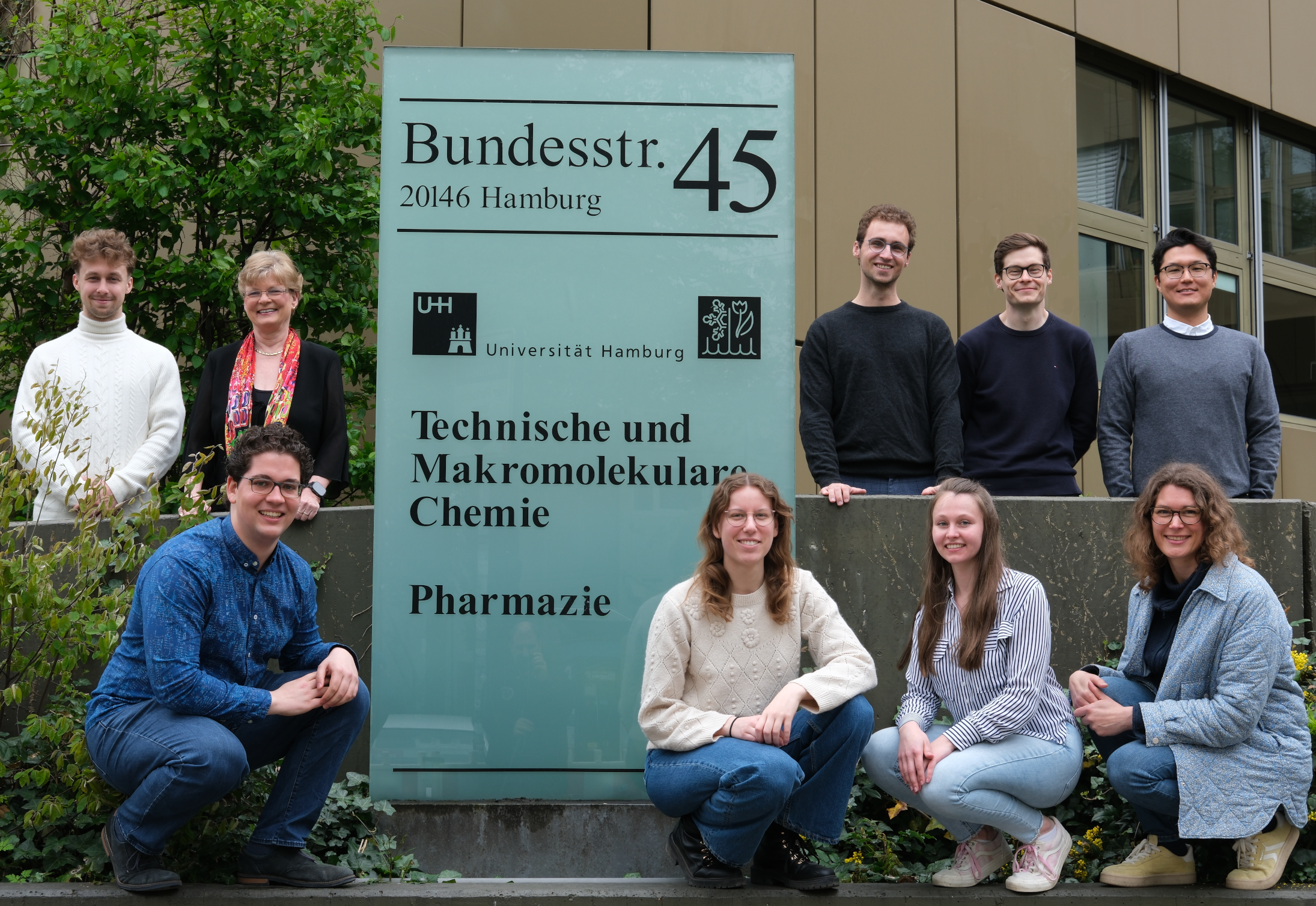
Professor Claudia S. Leopold serves as Professor and Head of the Institute of Pharmacy within the Department of Chemistry at the University of Hamburg's MIN Faculty. With over 35 years of academic experience, she leads the Pharmaceutical Technology Department and maintains an active research program focused on advanced pharmaceutical manufacturing processes and drug delivery systems. Her educational background includes a pharmacy degree from Heinrich-Heine-University Düsseldorf (1981-1985), followed by pharmacist certification in 1987. She completed her doctoral research in 1992 on skin penetration enhancement, conducted postdoctoral research at Stanford Research Institute and UC San Francisco, and achieved her habilitation in pharmaceutical technology in 1999. Her academic progression includes professorial positions at Leipzig University (2000-2005) before joining the University of Hamburg in 2005. Prof. Leopold's research program centers on pharmaceutical technology innovations, particularly in tablet formulation and manufacturing processes. Her laboratory investigates optimization of process flows during tableting, use of co-processed excipients, characterization of dustiness within containment systems, control of drug release through polymer interactions, and improving water solubility of active ingredients through co-amorphization techniques. Her work bridges fundamental pharmaceutical science with practical manufacturing applications, addressing critical challenges in modern pharmaceutical production. Her recent publications (2022-2025) demonstrate a strong focus on continuous manufacturing technologies, co-amorphous drug systems, and advanced process analytical techniques. These works reveal trends toward real-time monitoring of pharmaceutical processes, spatial analysis of powder behavior, and sophisticated approaches to enhancing drug solubility and stability. Her research group has made significant contributions to understanding powder flow dynamics, tablet coating mechanics, and the application of novel spectroscopic methods in pharmaceutical manufacturing. Habilitations-Förderpreis der Deutschen Pharmazeutischen Gesellschaft (1997) Ehrendoktorwürde (Dr. h.c.) (2020) Prof. Leopold has supervised over 25 doctoral students throughout her career, with recent dissertations focusing on powder characteristics, co-amorphous systems, continuous manufacturing optimization, and advanced tablet technologies. Her laboratory maintains strong industry connections through contract research in formulation development, tableting process optimization, drug release measurements, and expert consultation on pharmaceutical-technological issues. The research group operates specialized equipment for pharmaceutical technology studies and collaborates with international partners in continuous manufacturing and drug delivery research. The Leopold research group (AG Leopold) operates within the Institute of Pharmacy at the University of Hamburg, maintaining a comprehensive suite of equipment for pharmaceutical technology research. The team includes multiple scientific associates, research assistants, technical staff, and visiting scientists working collaboratively on various aspects of pharmaceutical development and manufacturing. The laboratory environment supports both fundamental research and applied contract work for industry partners, with particular expertise in tableting processes, drug delivery systems, and analytical method development for pharmaceutical applications.
Dr. Shatarupa Thakurta Roy is an Associate Professor in the Department of Humanities and Social Sciences at the Indian Institute of Technology Kanpur (IIT Kanpur). She teaches courses in Art Appreciation, Design Theory, Visual Communication, and History of Art, and collaborates with IIT Kanpur's Design Programme. She holds a Ph.D. in Design from IIT Guwahati (2014), an M.F.A. (1999), and a B.F.A. (1997) from Kala Bhavana, Visva Bharati Santiniketan. Her research explores Visual Culture , Indian Folk and Minor Art , Graphic Design , and Design Theory , with fieldwork focusing on narrative folk paintings across Eastern India. She emphasizes cultural sustainability, visual storytelling, and interdisciplinary design methodologies. Her publications (2011–2022) span art theory, data visualization, HCI, and cultural preservation, reflecting trends in cross-disciplinary innovation , social impact design , and digital heritage conservation . She frequently integrates cognitive psychology, new materialism, and postcolonial perspectives. Awards & Honors: Best Paper Award, NaCoMM 2011 National Scholarship Scheme, Government of India (1997–1998) Mentorship Award for 'Toycathon 2021' (designing educational board game 'CheMystery') Advising & Grants: She has supervised 15+ Ph.D. and 35+ M.Des. theses. Funded projects include an MHRD grant (2016) for assistive interfaces for dyslexic children and a Doordarshan collaboration (2022) on sustainable farming documentaries. Administration: She has served as Warden, DPGC Convener, and lab in-charge at IIT Kanpur. She also edits academic journals and chairs conferences on art and design.
Prof. Michael Vogel is a Professor at the Institute for Condensed Matter Physics at Darmstadt University of Technology (Technische Universität Darmstadt), where he leads the Molecular Dynamics in Condensed Matter research group. His work focuses on understanding the microscopic structure and dynamics of condensed matter systems and relating these to macroscopic properties. Research Interests Prof. Vogel's research spans several key areas in condensed matter physics and physical chemistry. His group investigates the structure and dynamics of condensed matter—from simple liquids and soft matter to crystalline and amorphous solids. Specific research focuses include: Water Anomalies: Exploring the fundamental understanding of water's anomalies, particularly testing the hypothesis of a transition between two liquid phases in supercooled water. Ion Transport: Studying microscopic mechanisms of ion movement in energy materials, with applications to lithium-ion batteries and fuel cells. Glass Transition: Investigating cooperative and heterogeneous motion processes during the glass transition to contribute to fundamental understanding. Protein Dynamics: Examining the interplay between protein and solvent dynamics, particularly in biological function. Ionic Liquids: Analyzing structural and dynamic heterogeneities in ionic liquids and their relationship to macroscopic properties. Liquids at Interfaces: Understanding how interfaces alter the properties of liquids, especially water, when confined in nanoscopic geometries. Research Methodology Prof. Vogel's group combines modern experimental techniques, particularly nuclear magnetic resonance (NMR) spectroscopy, with computational approaches like molecular dynamics simulations. This dual approach allows for comprehensive characterization of both local molecular motions and long-range transport properties. Their work often involves analyzing systems under confinement, at interfaces, or in supercooled states to reveal fundamental mechanisms that govern material behavior. Scientific Contributions Prof. Vogel has made significant contributions to understanding: The role of dynamic heterogeneities in glass-forming systems Mechanisms of ion transport in solid-state electrolytes The behavior of water in confined geometries and at interfaces The coupling between protein and solvent dynamics Structural and dynamic properties of ionic liquids Research Team and Facilities Prof. Vogel leads an active research group at TU Darmstadt with access to advanced NMR facilities and computational resources. His team regularly publishes in high-impact journals across physics, chemistry, and materials science. The group collaborates with other research institutions and participates in interdisciplinary projects such as the DFG Research Group 1583 on "Hydrogen-bonding liquids in the presence of internal interfaces of different hydroaffinity."