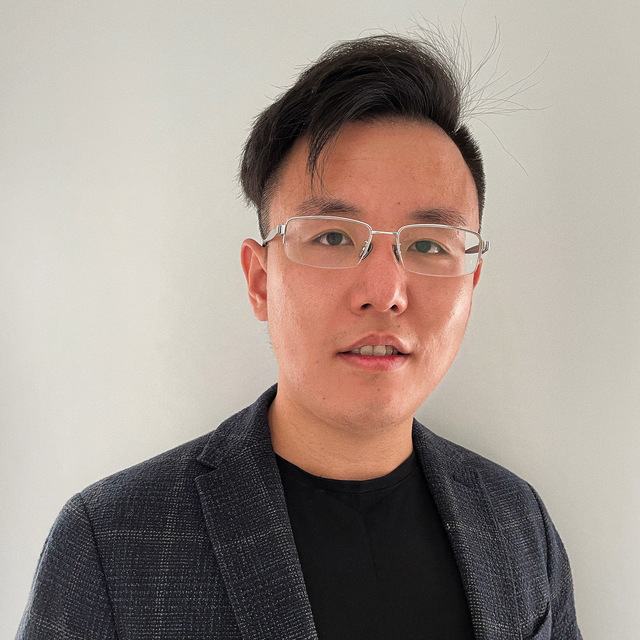
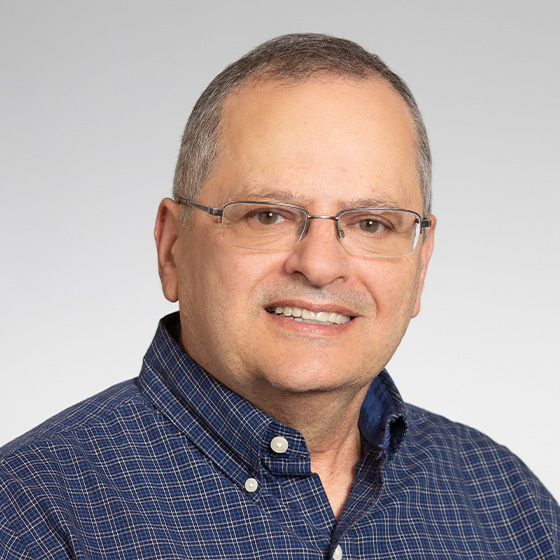
Di Zhu is an Assistant Professor of Geographic Information Science at the University of Minnesota's Department of Geography, Environment and Society. He directs the Geospatial Data Intelligence (GeoDI) Lab, focusing on GeoAI and social sensing to analyze human-environment interactions in urban systems, public health, and socioeconomic dynamics. His educational background includes a PhD in Cartology and GIScience from Peking University, complemented by a BSc in GIS and a BA in Economics from the same institution. Key research interests include spatial regression models, human mobility patterns, and GeoAI applications. He has collaborated on projects funded by NIH, NSF, and other agencies, exploring topics like spatiotemporal data imputation, urban flow analysis, and pandemic spatial dynamics. His work bridges traditional GIScience with modern machine learning techniques, emphasizing actionable insights from big geospatial data. Teaching focuses on advanced GIS, numerical spatial analysis, and urban sensing. He actively mentors students through the University of Minnesota's Master of GIS program and serves on academic boards including CPGIS. Current projects include analyzing Twin Cities mobility networks and developing intelligent spatial prediction frameworks.
Adonis Yatchew is a Professor in the Department of Economics at the University of Toronto , where he has held multiple roles including Vice President for Publications at the International Association for Energy Economics and Editor-in-Chief Emeritus of The Energy Journal (2006-2023). His research bridges econometric methodology with critical energy and environmental policy challenges. Ph.D., Harvard University (1980) M.A., University of Toronto (1975) B.A., University of Toronto (1974) Yatchew's research focuses on Econometrics and Energy Economics , particularly nonparametric regression techniques , energy market regulation , and carbon policy frameworks . His work on scalability in energy industries and empirical analysis of electricity distribution productivity has shaped modern regulatory approaches. Recent publications reveal a strong focus on energy transition dynamics , with technical contributions to nonparametric estimation and carbon pricing mechanisms . Notable works include analyses of Alberta's electricity futures market and Ontario's feed-in-tariff programs. Outstanding Contributions to the Profession , International Association for Energy Economics (2018) Senior Fellow , US Association for Energy Economics (2014) Teaching Award , University of Toronto (1987) As a teacher, Yatchew offers courses on Energy and the Environment and Energy and Regulation , exploring geopolitical impacts on energy markets and optimal government intervention strategies. His econometrics courses cover advanced topics like bootstrap inference and nonparametric methods.
Badi H. Baltagi is a Distinguished Professor of Economics and Senior Research Associate at the Center for Policy Research, Maxwell School of Citizenship and Public Affairs, Syracuse University. He previously served as the George Summey, Jr. Professor of Liberal Arts at Texas A&M University (1993–2005) and has held visiting positions at the University of Arizona and the University of California, San Diego. He currently holds a part-time chair position in Economics at the University of Leicester, United Kingdom. Ph.D. in Economics, University of Pennsylvania, 1979 Baltagi’s research focuses on econometrics, particularly panel data, spatial econometrics, health econometrics, and theoretical econometrics. His work has significantly advanced methodologies in fixed and random effects models, spatial dependence, and network effects in panel data. He is renowned for his authoritative textbooks, including Econometric Analysis of Panel Data and Econometrics , which are standard references in graduate econometrics courses worldwide. His recent publications (2021–2025) demonstrate a strong trend toward integrating spatial and network structures into panel data models, with applications in health, labor, and international trade. He frequently publishes in top journals such as Journal of Econometrics , Econometric Reviews , and Economics Letters , emphasizing robust estimation, specification testing, and dynamic modeling. Kuwait Prize for Economics and Social Sciences (2018) Distinguished Achievement Award in Research, Texas A&M University (2002) Multa and Plura Scripsit Awards, Econometric Theory Distinguished Authors Award, Journal of Applied Econometrics Fellow, Journal of Econometrics Fellow, Econometric Reviews Fellow, International Association for Applied Econometrics Fellow, Spatial Econometrics Association Fellow, Society for Economic Measurement Research Fellow, IZA (since 2002) Research Fellow, CESifo (since 2003) Global Labor Organization (GLO) Fellow Lifetime Fellow, Economic Research Forum (MENA region) Baltagi has held major editorial roles, including co-editor of Economics Letters (2011–present), former editor of Empirical Economics (1999–2018), and replication editor for Journal of Applied Econometrics (2003–2018). He is the series editor for Contributions to Economic Analysis (Emerald Publishing) and Advanced Studies in Theoretical and Applied Econometrics (Springer). He has advised numerous Ph.D. students and collaborates extensively with researchers globally, particularly in spatial and health econometrics. He is actively involved in organizing and presenting at major conferences such as the International Panel Data Conference and the International Association of Applied Econometrics. Baltagi is a founding member and former director of the International Association for Applied Econometrics and serves on the board of directors and advisory boards of the Spatial Econometrics Association and the Journal of Spatial Econometrics , respectively. His leadership in establishing and promoting specialized econometric fields underscores his influence in shaping modern econometric research.
Gee Y. Lee is an Associate Professor with Tenure in the Department of Statistics and Probability and the Department of Mathematics at Michigan State University. Lee holds a PhD from the University of Wisconsin-Madison and is an Associate of the Society of Actuaries (ASA). Their research focuses on applying advanced statistical and machine learning methods to solve complex problems in actuarial science and insurance. Dr. Lee's educational background includes: PhD from the University of Wisconsin-Madison Associate (ASA) designation from the Society of Actuaries Dr. Lee's research spans several critical areas in modern actuarial science. Their primary focus includes insurance loss modeling for rate-making and loss reserving applications, optimization of multivariate insurance coverage, and dependence modeling. A significant portion of their recent work applies machine learning methods, particularly deep neural networks, to traditional actuarial problems. They are also pioneering research in analyzing unstructured data for insurance applications, which represents an emerging frontier in the field. Their work bridges theoretical statistical methods with practical insurance industry needs. Dr. Lee's publication record demonstrates a clear evolution from traditional actuarial methods toward more sophisticated and interdisciplinary approaches. Early work focused on fundamental aspects of insurance pricing and modeling, while more recent publications incorporate machine learning techniques, natural language processing, and advanced optimization methods. A notable trend is the increasing integration of unstructured data analysis into actuarial science, reflecting broader industry shifts. Their research consistently addresses both theoretical advancements and practical applications in insurance risk assessment and management. While specific awards aren't detailed in the available information, Dr. Lee's recognition includes: Associate (ASA) designation from the Society of Actuaries Michigan State University recognized by the Society of Actuaries as granting MS and PhD degrees focused on actuarial science (as of 2023) Dr. Lee actively mentors students at multiple levels, supervising undergraduate research through REU programs, directed studies (STT 490, MTH 490, MTH 491B), and graduate research for MS and PhD candidates. They have advised numerous students who have presented at UURAF (Undergraduate Research Assistant Fellowship) conferences. For graduate students, Dr. Lee supports research leading to MS degrees in Statistics, Applied Statistics, and Industrial Mathematics with actuarial science focus, as well as PhD dissertations in Statistics. Beyond direct student supervision, Dr. Lee has organized significant academic events including the Simon Conference for Young Researchers in Risk Management and Insurance (2019, 2023) and contributed to other workshops, demonstrating leadership in the actuarial research community. While specific lab names aren't mentioned, Dr. Lee appears to lead a research group focused on actuarial science and insurance analytics at Michigan State University. Their collaborative work with researchers like Scott Manski, Taps Maiti, Peng Shi, and others suggests an active research team working at the intersection of statistics, machine learning, and actuarial applications. The research group seems particularly focused on bridging traditional actuarial methods with modern data science techniques.
Jane-Ling Wang is a Distinguished Professor in the Department of Statistics at the University of California, Davis. Her research focuses on advancing statistical methodologies for functional and longitudinal data analysis, deep learning applications, and survival analysis. She holds a Ph.D. from UC Berkeley and has contributed extensively to interdisciplinary fields including neuroscience, biostatistics, and machine learning. Wang has received numerous accolades, including being elected an Academician at Academia Sinica (2022), recipient of the Humboldt Research Award (2020), and the ICSA Distinguished Achievement Award (2018). Her work bridges theory and practice, addressing challenges in data sparsity, dynamic systems modeling, and high-dimensional statistical inference. Her recent publications emphasize innovative techniques such as SAND (Transformer-based data imputation) and adaptive basis layers for functional data analysis. These contributions underscore her expertise in integrating modern computational tools with classical statistical frameworks.
Michael W. Trosset is a Professor of Statistics at Indiana University in Bloomington, IN. He holds a Ph.D. in Statistics from the University of California at Berkeley and has previously worked at the Arizona Media Arts Center and the College of William & Mary. Educational background includes Princeton High School, Rice University (B.A. in Mathematics), and UC Berkeley (Ph.D. in Statistics). Research Interests: Statistical inference, numerical optimization, manifold learning, high-dimensional data analysis, and stochastic simulation. His work bridges classical statistical theory with modern computational methods, focusing on dimensionality reduction, network analysis, and algorithmic validation. Publication Trends: Recent articles emphasize geometric approaches to statistical computing, including continuous multidimensional scaling, latent structure inference in random graphs, and rehabilitating manifold learning techniques like Isomap. His work often integrates theoretical rigor with practical implementation. Academic Contributions: He has developed courses in statistical computing, multivariate analysis, and statistical learning, emphasizing both theoretical foundations and real-world applications in text mining, microarray analysis, and network inference.
Aaron J Molstad is an Assistant Professor in the Department of Statistics at the University of Minnesota – Twin Cities, within the College of Science and Engineering. His research lies at the intersection of statistical methodology and genomic data science, with a focus on developing rigorous and scalable methods for modern high-dimensional datasets. His research interests include high-dimensional statistics, covariance and precision matrix estimation, regression modeling with structured responses, variable selection, and integrative analysis of omics data. He develops methods tailored for compositional data, multivariate responses, and ancestry-specific genetic association studies, contributing to both theoretical statistics and public health applications. The recent publications and funded projects highlight a strong trend in developing objective, reliable, and heterogeneous-aware statistical frameworks for genomics and biomedicine. His work emphasizes methodological innovation with direct applicability to complex biological data, particularly in diverse populations and multi-omics integration. Awarded grants from the National Science Foundation and the National Institutes of Health demonstrate recognition of his research’s significance and impact. These include projects on inference from omics data, new regression models for categorical responses, and integrative genomics in African American populations. Objective and reliable methods for inference from modern omics data (NSF, 2024–2027) Collaborative Research: New Regression Models for Multiple Categorical Responses (NSF, 2024–2025) Integrative Genomics into Genetic Association Studies of Blood Pressure and Stroke in African Americans (NIH/Fred Hutchinson, 2023–2024) Dr. Molstad advises and collaborates on major genomic studies involving protein expression, blood pressure, stroke, and ancestry-specific effects. While specific PhD students are not listed, his role as Principal Investigator on multiple grants indicates mentorship of graduate researchers and postdoctoral scholars. He is also active in the broader statistical community, with publications in top-tier journals such as Biometrika , Biometrics , and Genome Biology .
Rong Chen is a Distinguished Professor and Chair of the Department of Statistics at Rutgers University, within the School of Arts and Sciences. With a Ph.D. from Carnegie Mellon University, Professor Chen has established himself as a leading researcher in statistical time series analysis, Monte Carlo methods, and their applications across various fields. Professor Chen's research focuses on: Nonlinear and Multivariate Time Series Analysis Monte Carlo Methods, Statistical Computing and Bayesian Analysis Statistical Applications in Science, Engineering and Business His research trajectory has evolved significantly over the years, beginning with foundational work on nonlinear time series and moving toward more complex high-dimensional tensor time series analysis. Recent publications show a strong emphasis on matrix and tensor factor models for high-dimensional time series, reflecting the growing importance of analyzing complex structured data in modern applications. His work bridges theoretical statistical innovation with practical problem-solving across finance, engineering, and computational biology. Professor Chen has been recognized for his contributions to the field with prestigious fellowships: ASA Fellow (American Statistical Association) IMS Fellow (Institute of Mathematical Statistics) As Chair of the Department of Statistics, Professor Chen oversees academic programs including the Master in Financial Statistics and Risk Management (FSRM) and the Master in Data Science (Statistics Track) programs. His leadership extends to guiding research directions in the department and fostering collaborations across disciplines. Professor Chen has secured numerous research grants supporting work in time series analysis, statistical computing, and applications in finance, engineering, and bioinformatics. Professor Chen's research group maintains active collaborations with researchers in finance, engineering, and computational biology, applying statistical innovations to real-world problems including financial time series analysis, protein folding studies, HIV infection dynamics modeling, wind power forecasting, and nuclear material detection systems.
Seung Yeoun Lee is a Professor in the Department of Mathematics and Statistics at Sejong University, where he has been faculty since 1993. His research focuses on applying advanced statistical methodologies to biomedical problems, particularly in cancer research and survival analysis. He serves as Vice President of the Korean Statistical Society and previously served as President of the International Biometric Society Korean Region from 2016-2017. Education: Ph.D. in Statistics, University of Michigan (1990) M.S. in Statistics, Seoul National University (1986) B.S. in Statistics, Seoul National University (1984) Professor Lee's research primarily centers on survival analysis methodologies and their applications in biomedical research, with a particular emphasis on gene-gene interactions and clinical trial statistics. He has pioneered innovative approaches including the Cox model based unified MDR method for gene-gene interaction analysis for survival phenotypes. His work bridges mathematical statistics with practical medical applications, particularly in pancreatic cancer diagnostics and prognostics. The fingerprint analysis of his work shows strong connections to Dimensionality Reduction (94%), Pancreas Cancer research (89%), and Gene Interaction studies (64%). His recent publications demonstrate a clear trend toward interdisciplinary research combining traditional biostatistical methods with modern machine learning approaches. Many papers focus on survival prediction models, dimensionality reduction techniques, and applications to pancreatic cancer research. His work consistently involves international collaborations across statistics, oncology, and computational biology fields, reflecting the highly interdisciplinary nature of modern biomedical research. Professor Lee has made substantial contributions to biostatistical methodology with an h-index of 22, reflecting the impact of his 89 research publications. His work contributes to UN Sustainable Development Goals related to good health and well-being through advanced statistical approaches to medical research. His research group focuses on developing and applying advanced statistical methods to solve complex biomedical problems, with particular emphasis on cancer research and survival analysis. The interdisciplinary nature of his work suggests extensive collaborations with medical researchers, oncologists, and computational biologists across multiple institutions.
Stanislav Anatolyev serves as Full Professor of Economics at the New Economic School (NES) since 2009 and holds an Associate Professor position at CERGE-EI in Prague. Affiliated with NES since 2000, he teaches advanced econometrics courses including Econometrics 3, Applied Time Series Econometrics, and Selected Chapters in Econometrics. Education PhD in Economics, University of Wisconsin-Madison (2000) MSc in Economics, New Economic School (1995) Specialist Diploma in Applied Mathematics, Moscow Institute of Physics and Technology (1992) Research Focus : Professor Anatolyev's work centers on econometric theory with expertise in method of moments, time series modeling, and high-dimensional data analysis. His contributions span theoretical developments in factor models, volatility estimation, and instrumental variables methods, alongside practical applications in financial econometrics and portfolio optimization. He maintains active research collaborations across international institutions. Publication Trends : Recent work demonstrates increasing emphasis on ultra-high-dimensional econometrics, with significant contributions to copula-based portfolio allocation, many-instrument regressions, and financial market belief updating mechanisms. His publications bridge theoretical rigor with empirical applications, frequently appearing in top econometrics journals including Journal of Econometrics and Econometric Theory. Awards Econometric Theory Multa Scripsit Award (2022) for exceptional scholarly output Academic Leadership : As founding Editor-in-Chief of the Russian-language journal Quantile since 2006, he has fostered econometric research dissemination in Eastern Europe. His co-authored textbook Methods for Estimation and Inference in Modern Econometrics serves as a key reference in graduate econometrics education. Professional Activities : Regularly presents at international conferences and serves as referee for leading econometrics journals, maintaining active engagement with the global econometrics community through seminar presentations and collaborative research projects.
John Hughes, PhD, is an Associate Professor and Chair of the Department of Biostatistics and Health Data Science at Lehigh University's College of Health. With nearly 30 years of experience in higher education, he has held positions at institutions including Frostburg State University, the University of Minnesota, and Pennsylvania State University. His methodological research focuses on statistical models for dependent data, Bayesian methods, and spatial and spatiotemporal analysis. He has developed numerous software packages for R and Perl, including copCAR , ngspatial , and krippendorffsalpha . Dr. Hughes' interdisciplinary work spans environmental health, bioimaging, vaccine hesitancy, and spatial epidemiology of HPV-related cancers. He has consulted for organizations such as the Courage Kenny Research Center and Temple University. His education includes a PhD in Statistics from Penn State University and an MS in Applied Computer Science from Frostburg State University. His research emphasizes statistical computing and the application of advanced models to health data. Recent work includes methodologies for agreement coefficients, environmental noise measurement, and spatial analysis of vaccination refusal patterns. Dr. Hughes teaches courses in biostatistics, data science, and programming, reflecting his dual role as a teacher-scholar. Professional contributions include software development, collaborative research projects, and academic leadership. His work bridges computational innovation and real-world health challenges, positioning him as a key figure in modern biostatistical research.
Adam J Rothman is a Professor in the Department of Statistics at the University of Minnesota, Twin Cities campus, specializing in high-dimensional statistical methodologies. His research focuses on covariance estimation, multivariate analysis, and developing innovative regression frameworks for complex data structures. His primary research interests include High-Dimensional Statistics, Covariance Estimation, Multivariate Analysis, and Statistical Machine Learning. Rothman develops penalized likelihood methods and shrinkage estimators to address challenges in matrix-valued predictors, categorical responses, and large covariance matrices, with applications spanning scientific domains requiring scalable high-dimensional analysis. Rothman's recent publications (2019-2024) demonstrate consistent innovation in high-dimensional regression and classification. Key trends include covariance matrix regularization, sufficient dimension reduction techniques, and likelihood-based approaches for categorical multivariate responses. His work emphasizes computational efficiency and theoretical guarantees for datasets where variables exceed sample sizes. He has secured major National Science Foundation funding as Principal Investigator for two projects: Sufficient Dimension Reduction of High-Dimensional Data (2011-2015) and New methods for multivariate analysis in high dimensions (2015-2021). These grants supported foundational work in dimension reduction and covariance estimation, advancing methodologies for modern statistical challenges.
Vicky Fasen-Hartmann is a Professor at the Karlsruhe Institute of Technology (KIT) within the Department of Mathematics, specifically affiliated with the Institute of Stochastics. She has held her W3 Professor position since October 2012, with two periods of parental leave (August 2016-August 2017 and October 2018-October 2019). Prior to her current position, she held postdoctoral research positions at ETH Zurich (RiskLab), TU Munich, Université Pierre et Marie Curie, and Cornell University. Her educational background includes: Habilitation (2010) in Heavy Tails in Finance, Insurance and Telecommunication from TU Munich Ph.D. (2004) in Extremes of Lévy Driven Moving Average Processes with Applications in Finance from TU Munich Diploma in Mathematics (2002) from Karlsruhe Institute of Technology Professor Fasen-Hartmann's research spans multiple areas of theoretical and applied statistics with a focus on extreme value theory, heavy-tailed distributions, and their applications in finance and risk management. Her work bridges theoretical probability with practical financial applications, particularly in modeling rare events and systemic risks. She has made significant contributions to the understanding of Lévy processes, continuous-time ARMA models, and multivariate extremes. Her research combines rigorous mathematical theory with practical applications in financial mathematics, insurance, and telecommunications networks. The trends in her recent publications (2020-2025) show a clear evolution toward high-dimensional extreme value theory, financial network risk contagion, and advanced modeling of continuous-time processes. Her work increasingly addresses the challenges of modern financial systems, including systemic risk measurement, high-dimensional dependency structures, and the statistical properties of extreme events in complex systems. She has developed innovative methodologies for analyzing multivariate extremes, risk contagion, and continuous-time state space models. Professor Fasen-Hartmann has served in significant editorial roles including Associate Editor for the Scandinavian Journal of Statistics since 2014, Managing Editor of Lévy Matters (2008-2014), and Editor of Bernoulli News (2009-2011). She has also been active in academic service through committee work, including the Steering Committee of the Probability and Statistics Group in Germany (2014-2016) and the Examination Board of the Department of Mathematics at KIT (since 2017). She has supervised numerous doctoral and master's students, with current PhD candidates including Lucas Butsch (since 2021) and previously Lea Schenk, Celeste Mayer, Markus Scholz, and Sebastian Kimmig. Her teaching portfolio includes advanced courses in Time Series Analysis, Continuous Time Finance, Extreme Value Theory, and Asymptotic Stochastics. She regularly organizes workshops and conferences on specialized topics in probability and statistics, demonstrating her leadership in the academic community.
Christoph Baier is a Research Fellow at the Austrian Archaeological Institute in Athens (ÖAI), part of the Austrian Academy of Sciences (OeAW). Since 2017, he has held a postdoctoral position under the OeAW's Post-DocTrack program. His research focuses on Hellenistic and Roman residential architecture, ancient urban planning, and architectural ornamentation. He has conducted excavations and architectural studies across Austria, Italy, Syria, Turkey, and Greece, with notable projects in Ephesos, Carnuntum, and Lousoi. Education: Magister degrees in Classical Archaeology, Ancient History, and Pre/Early History from the University of Vienna; M.Sc. in Monument Preservation from TU Berlin; doctoral degree from BTU Cottbus-Senftenberg. Professional roles include scientific staff positions at excavations and academic institutions, including the Department of Architectural History at BTU Cottbus-Senftenberg (2014-2015) and the ÖAI Athens branch (2016). Research interests emphasize the interplay between monumental architecture and urban development, particularly in Hellenistic/Roman contexts. His work combines field excavations with advanced analytical methods (e.g., multivariate analysis of ornamentation). Recent projects investigate Ephesos's palatial structures and Lousoi's Hellenistic urban layout. Publications span 20+ articles in journals like Jahreshefte des Österreichischen Archäologischen Institutes and conference proceedings. He co-edited the 2023 volume Ein anderes Griechenland , celebrating the ÖAI's 125 years of research in Greece. Active in international collaborations, he contributes to the Historical Archaeology in the Mediterranean series. Baier's research bridges archaeological practice with theoretical analysis, addressing questions of urban hierarchy, architectural memory, and cultural heritage preservation. His work often integrates multidisciplinary approaches to reconstruct ancient building techniques and urban dynamics.
Lucy Gao is an Assistant Professor in the Department of Statistics at the University of British Columbia (UBC). Her research focuses on statistical inference, machine learning, and bioinformatics, with particular emphasis on clustering methods, high-dimensional data analysis, and optimal design theory. She holds a faculty position within UBC’s Faculty of Science and is affiliated with the Vancouver Campus. Her work spans theoretical developments in statistical methodologies and applications to biological data, such as single-cell RNA sequencing analysis. She has contributed to areas like selective inference for hierarchical clustering and algorithmic optimization for complex systems. Her email is lucy.gao@stat.ubc.ca, and she maintains a website at https://www.lucylgao.com/ . Recent publications highlight her expertise in data thinning techniques, latent variable modeling, and multiview network analysis. She has explored topics ranging from negative binomial count splitting in genomics to bilevel optimization algorithms. Her research bridges statistical theory and practical computational challenges in modern data science. No scientific awards or advising records are explicitly listed in the provided materials. Her academic contributions are primarily through peer-reviewed articles and methodological innovations.