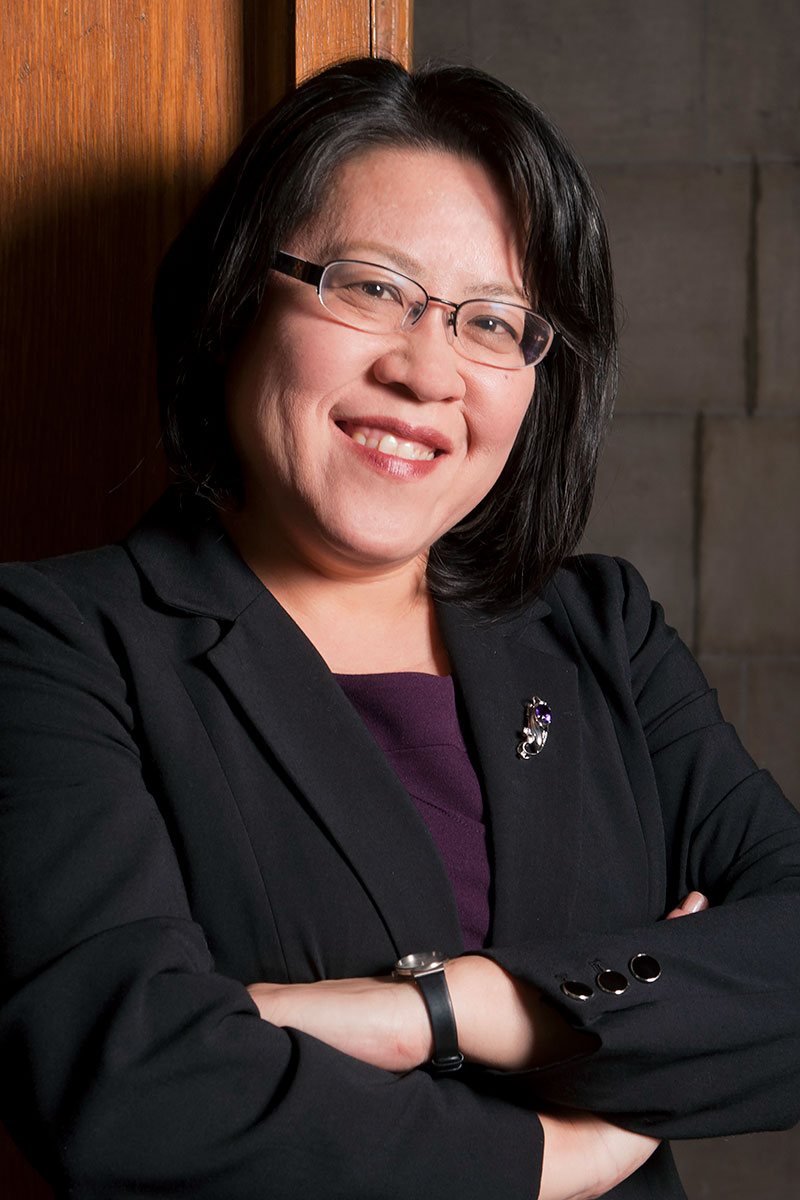
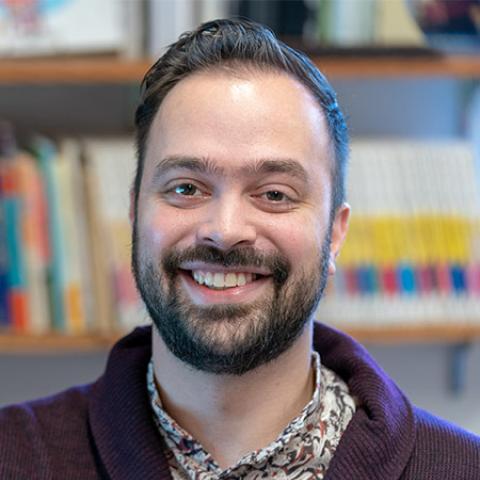
Sophie Volpp is a Professor in the Department of East Asian Languages and Cultures and Comparative Literature at the University of California, Berkeley. Her research focuses on Chinese literature from the 16th to 19th centuries, with particular emphasis on theatricality, material culture, and literary objects. She is the author of *Worldly Stage: Theatricality in Seventeenth-Century China* (2011) and *The Substance of Fiction: Literary Objects in China, 1550-1775* (2022). Her current projects include a book on the National Peiping Library’s preservation efforts during the Sino-Japanese War and an analysis of referents in *The Story of the Stone*. Her scholarly work bridges literary analysis and cultural history, examining themes such as gender, power, and spectacle in late-imperial China. She has translated works by pre-modern women poets and dramatists, contributing to gender-centric scholarship in East Asian studies. Her publications span journal articles and edited volumes, addressing topics like Qing-era theatrical design, material circulation in classical novels, and cross-cultural influences in literary production. Her research has been published in venues such as *Harvard Journal of Asiatic Studies* and *Journal of Asian Studies*.
Lindsay Turner is an Associate Professor in the Department of English at Case Western Reserve University. A poet, critic, and translator, her work bridges creative writing, translation theory, and interdisciplinary research. Her prior role as Assistant Professor at the University of Denver’s Department of English and Literary Arts underscores her commitment to literary education. AB in English, Harvard College Masters in cinema studies, Université Paris III Sorbonne-Nouvelle MFA in poetry, New York University PhD in English, University of Virginia Turner’s research spans creative writing , transnational poetry , and gender studies , with a focus on the intersections of literature and labor. Her recent work examines gendered domestic and reproductive labor through poetic forms. Key trends in her publications include experimental translation , queer theory , and postcolonial philosophy . National Translation Awards Best Translated Book Awards French American Foundation recognition She has received grants such as the WPR Creative Grant from Harvard’s Woodberry Poetry Room and multiple French Voices Grants . Her translations have been praised by The New Yorker and The New York Times for their intellectual rigor and stylistic innovation.
Hiromi Tsuchiya Dollase is an Associate Professor of Chinese and Japanese at Vassar College since 2003. Her research focuses on Japanese women’s literature, girls’ magazine culture, and manga, with a particular interest in integrating popular media into language education. She teaches courses such as 'Japanese Popular Culture and Literature' and 'The Gothic and the Supernatural in Japanese Literature.' Dr. Dollase holds a PhD in comparative literature (Japanese and American) from Purdue University (2003), an MA from Illinois State University, and a BA/MA from Baika Women’s College. She authored *Age of Shojo: The Emergence, Evolution and Power of Japanese Girls’ Magazine Fiction* (2019) and has contributed to numerous edited volumes and refereed journals. Her work spans topics like child abuse depictions in manga, sex education in historical fiction, and queer reinterpretations of classic narratives. She co-edited *Women’s Voices in Manga* (2024) and *Manga!: Visual Pop-Culture in ARTS Education* (2020). Her research bridges literary analysis with cultural studies, emphasizing the intersection of gender, media, and education. Dr. Dollase has been featured in media discussions about Japanese literary icons like Nobuko Yoshiya. She actively contributes to interdisciplinary programs in Asian Studies, Media Studies, and Women’s, Feminist, and Queer Studies at Vassar.
Rutgers, The State University of New JerseyUnited States
Nick Kapur is an Associate Professor in the Department of History at Rutgers University–Camden, within the School of Arts and Sciences. He specializes in modern Japan and East Asia, with a focus on transnational perspectives, US-Japan relations, environmental history, gender, and cultural studies including literature and film. His educational background includes a Ph.D. from Harvard University (2011), an M.A. from Stanford University (2003), and a B.A. from Stanford University (2002). Kapur's research examines the intersections of political economy, culture, and international relations in modern Japan, particularly in the postwar era. His acclaimed book, Japan at the Crossroads: Conflict and Compromise after Anpo (2018), analyzes the 1960 protests and their lasting impact on Japanese society and US-Japan relations. He has also published extensively on the Japanese student movement, environmental policy, and Meiji centennial celebrations. His recent and forthcoming articles reflect a sustained engagement with Cold War Japan, dissent, nationalism, and transnational history. Kapur is known for innovative teaching methods, including historical simulations on Pearl Harbor and samurai-era Japan. He is the founder of the Modern Japan History Association and has contributed significantly to digital humanities through projects like the Digital Archive of Japan’s 2011 Disasters and the development of educational apps. His publications from the past decade show a consistent focus on political protest, cultural memory, and international relations in 20th-century Japan. His scholarly contributions include numerous peer-reviewed articles, book chapters, translations, and book reviews in leading journals such as Diplomatic History , The Journal of Asian Studies , and The Asia-Pacific Journal . Kapur advises graduate students and teaches courses on Japanese, Chinese, and Korean history, World War II, and environmental history. He has played a leadership role in promoting Japanese studies globally and continues to be an active researcher with works forthcoming in 2025. His current projects include digital applications for historical education.
Miryam Sas is a Professor of Comparative Literature at the University of California, Berkeley. Her work bridges Japanese literature, film, theater, and avant-garde arts with critical theory. She specializes in 20th-century cultural movements, postwar Japanese experimental arts, and media theory. Her research includes studies on surrealism, intermedia, and post-Holocaust representation, with notable works like Feeling Media: Potentiality and the Afterlife of Art (2022) and Experimental Arts in Postwar Japan (2010). Her research interests span Japanese modernism, intermedia art, feminist film analysis, and photographic theory. She has curated exhibitions for institutions such as MoMA, the Getty Museum, and the Mori Art Museum, contributing essays on postwar avant-gardes and Japanese photography. Recent projects include translations of modernist poets Sagawa Chika and Ema Shōko, and collaborative archival work on Finding Zbaraż . Prof. Sas has been awarded the UC President’s Research Fellowship for her media theory work. Her teaching focuses on critical theory, Japanese cinema, and media studies, offering courses on infrastructural aesthetics and transnational Asian media. She actively participates in interdisciplinary dialogues through lectures and radio programs like France Culture’s La Fabrique de l’Histoire .
Takashi Miura is an Associate Professor at the University of Arizona specializing in Japanese religions from the early modern to modern periods. His work explores millenarian movements, Shinto practices, and Buddhist visual culture. He holds degrees from the University of Hawai'i at Mānoa (B.A./M.A.) and Princeton University (Ph.D.). Dr. Miura's research examines religious innovations like the rise of 'yonaoshi' renewal gods and deified peasants. His 2019 monograph Agents of World Renewal analyzes apocalyptic concepts in Japanese history. Current projects include a study on early modern peasant deification and its societal impacts. He teaches courses on Buddhism and Japanese religious practices, including EAS 160A1 and JPN 220. His publications span academic journals and edited volumes, addressing topics from Meiji-era polemics to post-war new religions. His work frequently bridges textual analysis with visual and material culture studies.
David Armitage is the Lloyd C. Blankfein Professor of History at Harvard University, where he serves as Chair of the Committee on Degrees in Social Studies and teaches intellectual history and international history. He also holds affiliations with the Harvard Department of Government, Harvard Law School, and is an Honorary Professor at the University of Sydney and Queen's University Belfast. Previously, he chaired Harvard's Department of History (2012-14, 2015-16) and taught at Columbia University for eleven years before joining Harvard in 2004. Armitage was born in Britain and educated at the University of Cambridge and Princeton University. His academic journey includes: Undergraduate studies at University of Cambridge PhD at Princeton University Teaching position at Columbia University (1993-2004) Professorship at Harvard University (2004-present) Honorary positions at University of Sydney, Queen's University Belfast, and St Catharine's College, Cambridge Professor Armitage specializes in intellectual history, international history, and global history, with particular expertise in the history of political thought, empires, and international law. His scholarly approach emphasizes the longue durée perspective, seeking to understand historical phenomena across extended time periods rather than narrow chronological frames. He has been a leading voice in advocating for historians to engage with "big history" that spans centuries, arguing that contemporary challenges like climate change and economic inequality require historical understanding that transcends the short-term thinking prevalent in modern politics and policy. His extensive publication record demonstrates consistent engagement with foundational texts and concepts in political theory, declarations of independence, civil wars, and oceanic history. Armitage's work shows a clear trajectory toward increasingly global and interdisciplinary approaches, connecting intellectual history with legal, political, and environmental frameworks. His scholarship bridges early modern and contemporary history, examining how historical concepts continue to shape modern international relations and political thought. Armitage's significant contributions to historical scholarship have been recognized with prestigious awards: Caird Medal from the National Maritime Museum (2006) for "conspicuously important work ... of a nature that involves communicating with the public" Walter Channing Cabot Fellow from Harvard (2008) for "achievements and scholarly eminence in the fields of literature, history or art" LittD from Cambridge University (2015), the university's highest degree, for "distinction by some original contribution to the advancement of science or of learning" As an advisor and mentor, Armitage has guided numerous graduate students through doctoral programs at Harvard and previously at Columbia. His scholarly leadership extends to co-editing two major book series with Cambridge University Press ( Ideas in Context and Cambridge Oceanic Histories ), serving on the Steering Committee of the Center for Early Modern Political Thought at the Folger Shakespeare Library, and contributing to various academic organizations. His work has attracted significant research funding supporting his global historical investigations. Professor Armitage is deeply involved in collaborative scholarly initiatives, particularly through his work with the Harvard Academy for International and Area Studies, where he serves as a Senior Scholar. His research often involves interdisciplinary teams examining oceanic histories, international law, and global political thought. He has been instrumental in developing the "Cambridge Oceanic Histories" series, which brings together scholars from multiple disciplines to explore the historical significance of oceans as connective spaces rather than barriers.
Jisoo M. Kim is the Korea Foundation Associate Professor of History, International Affairs, and East Asian Languages and Literatures at George Washington University. She holds leadership roles as Founding Director of the GW Institute for Korean Studies (2017–present) and Founding Co-Director of the East Asia National Resource Center (2018–present). She also serves as Editor-in-Chief of the Journal of Korean Studies . Her work focuses on gender, sexuality, law, emotions, and affect in Korean history, with expertise in legal culture, forensic medicine, and rights-claiming in East Asia. Dr. Kim earned her M.A., M.Phil., and Ph.D. in East Asian Languages and Cultures from Columbia University. She teaches courses such as Gender, Power, and Sexuality in East Asia and History of Korea , emphasizing intersectional approaches to Asian studies. Her research explores legal performance, emotional dimensions of justice, and the role of women’s voices in historical legal contexts. Notable works include The Emotions of Justice: Gender, Status, and Legal Performance in Chosŏn Korea (2016), awarded the 2017 James B. Palais Prize, and co-edited volumes like The Great East Asian War and the Birth of the Korean Nation (2016). Her publications span legal history, comparative frameworks between Korea and Europe, and the evolution of legal systems under colonialism. Current projects include Criminalizing Intimacy: Marriage, Concubinage, and Adultery Law in Korea, 1469–2015 . Kim’s academic contributions bridge historical analysis with contemporary debates on law, gender, and identity, supported by leadership in interdisciplinary research centers and scholarly journals.
Justin McDaniel is the Edmund J. and Louise W. Kahn Endowed Professor of the Humanities at the University of Pennsylvania's Department of Religious Studies. His research focuses on Lao, Thai, Pali, and Sanskrit literature, Buddhist rituals, manuscript studies, and Southeast Asian history. He has authored multiple award-winning books and published over 100 articles and reviews. Education includes a BA from Boston College (1993), MTS from Harvard Divinity School (1998), MA and PhD in Sanskrit and Indian Studies from Harvard University (2001, 2003). His research explores intersections between Buddhism, material culture, and social history. Recent work includes studies on Siamese manuscripts and Thai Buddhist art. He has held grants from NEH, Mellon, Rockefeller, and others. Awarded teaching excellence at multiple institutions, McDaniel’s innovative courses like Existential Despair and Living Deliberately have been featured in national media. He serves as co-editor for Buddhism Compass and Journal of Lao Studies . Publications include Cosmologies and Biologies (2024), Wayward Distractions (2023), and Architects of Buddhist Leisure (2015), supported by NEH and Kyoto University. Forthcoming projects address Thai manuscripts and Buddhist biographies.
Melissa McCormick, Andrew W. Mellon Professor of Japanese Art and Culture at Harvard University, holds a Ph.D. in Japanese Art History from Princeton University (2000) and a B.A. in art history and Japanese from the University of Michigan (1990). She has taught at Columbia University as the Atsumi Assistant Professor of Japanese Art (2000-05) and at Harvard since 2005, where she was promoted to Professor with tenure in 2009. She has held visiting professorships at the University of Zurich and Universidade Estadual de Campinas, Brazil. Education : University of Michigan (B.A.), Princeton University (Ph.D.), Gakushūin University (1996-98) Affiliations : Harvard Art Museums, Metropolitan Museum of Art, NHK Documentaries, Getty Foundation Her research explores the interplay of text and image in Japanese art, focusing on emaki (narrative scrolls), The Tale of Genji , and Buddhist themes. Her 2018 monograph The Tale of Genji: A Visual Companion and 2009 book Tosa Mitsunobu and the Small Scroll in Medieval Japan established new frameworks for analyzing scroll format and narrative. Current projects examine Buddhist nun-artist Ōtagaki Rengetsu and bridal manuscript traditions. Selected articles highlight her work on Hakubyō (ink-line painting), medieval Genji genealogies, and the poetics of chigo (novice) tales. She has contributed to exhibitions at the Metropolitan Museum of Art and Dartmouth College’s Hood Museum. Scientific Awards : Mellon Fellowship in the Humanities (1990) At Harvard, McCormick teaches courses ranging from introductory surveys ( Arts of Japan ) to advanced seminars on gender, tea culture, and museum research. She co-curated the 2019 Tale of Genji exhibition at the Met, which received critical acclaim, and developed an edX course with over 20,000 enrollments. Her consultancy work extends to opera and dance companies, including Japan Society and Asia Society of Texas.
David Der-Wei Wang serves as Edward C. Henderson Professor of Chinese Literature and Comparative Literature at Harvard University, holding dual appointments in the Department of East Asian Languages and Civilizations. He directs the CCK Foundation Inter-University Center for Sinological Studies and holds prestigious Academician positions at both Academia Sinica and the American Academy of Arts and Sciences. His distinguished career includes prior faculty roles at National Taiwan University (1982-1986) and Columbia University (1990-2004), with continuous Harvard affiliation since 1986. His academic credentials include: B.A. in Foreign Languages and Literature, National Taiwan University M.A. in Comparative Literature, University of Wisconsin-Madison (1978) Ph.D. in Comparative Literature, University of Wisconsin-Madison (1982) Wang's research pioneers interdisciplinary approaches to Modern and Contemporary Chinese/Sinophone Literature, Late Qing fiction, and colonial Taiwanese studies. His work critically examines historical trauma , cultural identity formation , and transnational literary networks , particularly through the lens of political upheaval and diasporic experiences. Special attention is given to mid-20th century Chinese intellectuals navigating ideological crises, with methodologies blending comparative literary theory and historical analysis. His eight major publications (1997-2020) reveal consistent thematic evolution toward global frameworks for Chinese literary studies. Early works like Fin-de-Siècle Splendor established foundations in Late Qing modernities, while later volumes including A New Literary History of Modern China and Why Fiction Matters expand into transnational Sinophone networks and contemporary sociopolitical relevance. The corpus demonstrates increasing emphasis on diasporic perspectives and decolonizing methodologies across Chinese literary historiography. Wang's scholarly recognition includes: Academician, Academia Sinica Academician, American Academy of Arts and Sciences Changjiang Scholar Award (2008) Humanitas Visiting Professorship at CRASSH, Cambridge (2013-14) As Director of the CCK Foundation Inter-University Center for Sinological Studies, Wang coordinates international research initiatives connecting North American and Taiwanese institutions. This leadership role facilitates collaborative projects in digital humanities and comparative Sinology, supporting emerging scholars through cross-institutional fellowships and academic exchanges focused on reimagining Chinese studies through global perspectives.
William H. Nienhauser, Jr. is the Halls-Bascom Professor of Classical Chinese Literature in the Department of Asian Languages and Cultures at the University of Wisconsin–Madison, College of Letters and Science. He is a leading authority on early Chinese literature, historiography, and poetry, with a particular focus on Sima Qian’s Shiji and the poetry of Du Fu. He has held visiting and research positions in China, Japan, Germany, and Taiwan, and remains academically active, including a 2018 appointment as Visiting Professor at Nankai University. His research interests include early traditional Chinese fiction, historiography, chuanqi and zhiguai tales, and the application of modern Western critical theories to Chinese literary texts. He is deeply engaged in the translation and annotation of classical works, especially the Shiji , often in collaboration with graduate students. His scholarship bridges philology, literary theory, and historical contextualization, contributing significantly to the global understanding of pre-modern Chinese literature. Nienhauser’s publications reveal a sustained focus on textual analysis, narrative structure, and the interplay between history and literature. His work spans from early Shijing poetry to Tang dynasty fiction, with a strong emphasis on Sima Qian’s historiographical methods and legacy. He has also contributed foundational reference works and critical editions, shaping the field of Chinese literary studies. His scientific awards reflect the international recognition of his scholarship: Woodrow Wilson Fellowship ACLS Fellowship NEH Fellowship Fulbright-Hayes Fellowship Japan Foundation Fellowship German Research Foundation Fellowship Alexander von Humboldt Foundation Fellowship Humboldt Foundation Lifetime Achievement Award (2003) Nienhauser has advised numerous graduate students in collaborative research projects, particularly on the Shiji and Du Fu. He has secured major fellowships and grants from prestigious organizations including the NEH, ACLS, Fulbright-Hayes, and the Humboldt Foundation, enabling extended research and translation work. His editorial roles, especially as a founding editor of Chinese Literature: Essays, Articles, Reviews (CLEAR), have been instrumental in advancing the field. While no formal lab or research center is mentioned, Nienhauser leads a major international collaborative translation project on the Shiji , involving scholars and students across institutions. His seminars and graduate courses foster a close-knit research community focused on classical Chinese texts.
Atsuko Ueda is Professor of East Asian Studies at Princeton University, specializing in modern Japanese literature and culture. Her expertise spans literary historiography, Meiji-era linguistic reforms, and postwar literary criticism related to war responsibility. She maintains an office in 214 Jones Hall and is currently on leave for the 2025-2026 academic year. Education: Ph.D. in Comparative Literature, University of Michigan M.A. in Comparative Literature, University of Michigan B.A. in Comparative Literature and Japanese (High Honors and High Distinction), University of Michigan Research Focus: Professor Ueda's scholarship critically examines intersections of language, nation, and race in Japanese intellectual history. Her work analyzes how linguistic standardization during the Meiji period constructed national identity while embedding racial hierarchies, and how postwar critics grappled with literature's relationship to wartime responsibility. She emphasizes that race is indispensable for understanding Japanese imperialism and nationalism. Publication Trends: Her research demonstrates consistent engagement with Japan's modern intellectual transformations, moving from early work on postwar literary politics to foundational studies of Meiji linguistic engineering. Recent publications reveal growing emphasis on race as a critical category in Japanese historical discourse, challenging conventional narratives of language reform and national identity formation. Academic Engagement: While specific advising details are not provided, Professor Ueda actively contributes to graduate education in East Asian Studies through course instruction and research supervision. Her editorial work on critical Japanese texts and co-edited volumes demonstrates significant scholarly leadership in the field.
Andrew Campana is an Assistant Professor of Asian Studies at Cornell University's College of Arts and Sciences, specializing in modern and contemporary Japanese literature and media. His research explores the possibilities and limitations of expression during media transitions, with particular focus on poetry, digital media, and disability studies. His academic journey includes a Ph.D. in East Asian Languages and Civilizations from Harvard University and an Honors B.A. in East Asian Studies from the University of Toronto. Campana's first book, Expanding Verse: Japanese Poetry at the Edge of Media , published by the University of California Press in 2024 as an open access work, examines Japanese poetic practice from the 1920s to the present as poets engaged with evolving media technologies including film, tape recording, television, and the internet. As a researcher, Campana's work bridges literary studies, media studies, game studies, and disability studies, with current projects exploring how poetry became a key site of digital experimentation in Japan. His research methodology combines traditional literary analysis with hands-on creative practice, informed by his experiences at MIT's Trope Tank laboratory. His scholarly interests span Japanese media history, disability representation in literature and gaming, digital poetics, and gender studies. His research has received significant media attention, including features in the Cornell Chronicle ('Poets in Japan Experiment at the Edge of Media' and 'Japanese Poets Open New Ways of Thinking About Media'), The Statesman, and interviews on NPR's Academic Minute and the Curiosity Daily podcast discussing his work on gaming and accessibility. As an educator, Campana teaches courses including 'Introduction to Japan,' 'Japanese Poetry,' and 'The Glitch: Errors, Disability, and the Edges of Digital Media' (ASIAN 4703/6703), guiding students through interdisciplinary explorations of Japanese literature, media, and digital culture. His teaching reflects his commitment to understanding media transitions through both theoretical and practical lenses.
Steven Lee is an Associate Professor at the University of California, Berkeley, affiliated with the Department of Slavic Languages and Literatures. He is a leading scholar in comparative ethnic studies, Soviet/post-Soviet studies, and 20th-21st century American literature, with a focus on transnational intellectual networks and revolutionary cultural movements. His work bridges Asian American, African American, and Slavic literary traditions while exploring intersections between global communism and cultural production. Lee’s research interests include the far left and far right ideologies in Northeast Asia during WWII, their influence on Asian American literature, and the role of manifestos as lived experiences. His current book project examines ideological imprints on Asian Anglophone writing. He is also affiliated with the Asian American Research Center, the Center for Korean Studies, and the Center for Race and Gender at Berkeley. His seminal work, The Ethnic Avant-Garde: Minority Cultures and World Revolution (2015), won the MLA’s Scaglione Prize, and he co-edited the award-winning Comintern Aesthetics (2020). Recent publications explore topics like Viktor Tsoi’s cultural impact, the Popular Front in Asian American writing, and transnational revolutionary manifestos. Lee’s research integrates methodologies from postcolonial theory, comparative literature, and political history. His sabbatical in AY 2024-25 focuses on finalizing his current manuscript while continuing to advise students through scheduled appointments.