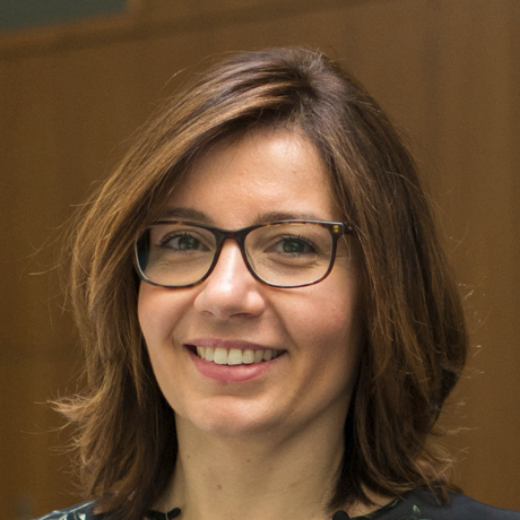
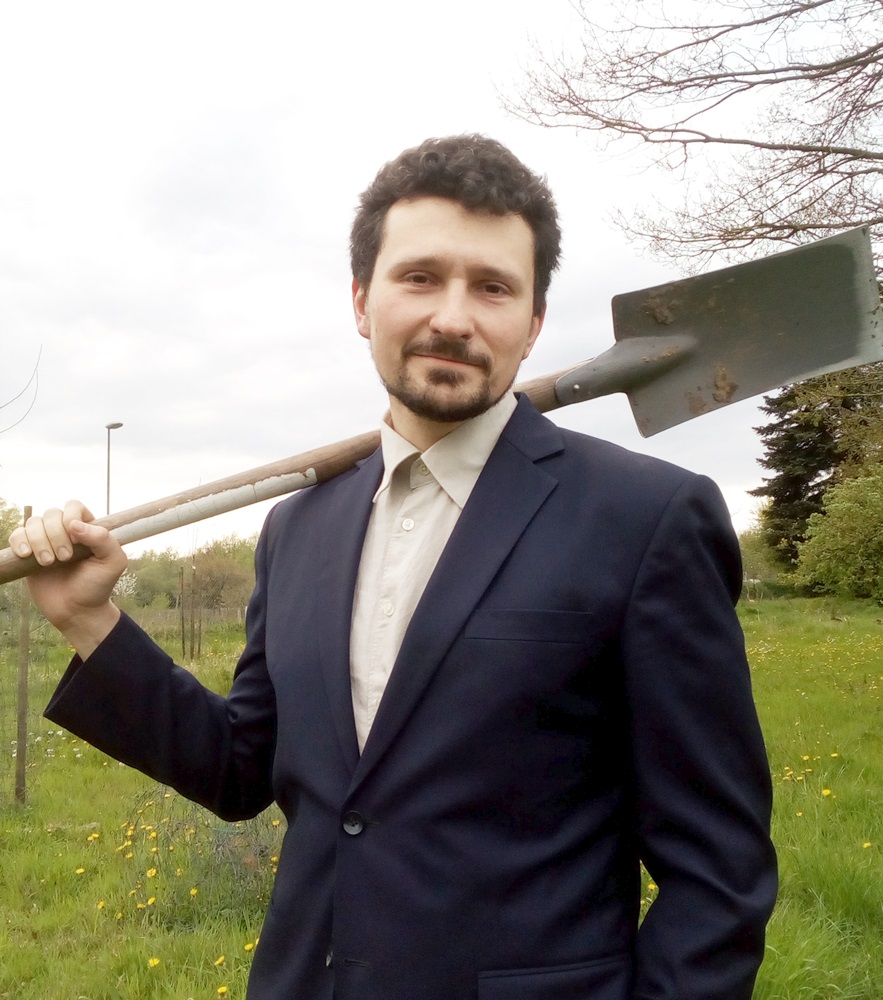
Dr. Manuela Geranio is a Full Professor of Finance at the Department of Management, University of Bergamo , where she serves as Director of the Master of Science in Management, Innovation and Finance . She also holds an Adjunct Professor role at Bocconi University . Her professional affiliations include board membership at Banca di Asti , the Euribor Oversight Committee , and the ESMA Financial Stability Working Group . PhD in Business Administration (Finance) and CEMS MIM from Bocconi University Research focuses on securities markets , IPOs , financial technology , home bias in international investments , and exchange industry evolution Her 10 most recent publications (2010-2022) span topics from AI in market infrastructures to historical financial systems , with methodological expertise in stochastic frontier analysis and GARCH modeling . She teaches Asset Management , Risk Management , and Private Banking courses.
Egidio Dansero is a Full Professor in the Department of Cultures, Politics and Society at the University of Turin, where he also serves as Vice Rector for Sustainability and Development Cooperation and Director of the School of Legal, Political and Economic-Social Sciences at Campus Luigi Einaudi (2022-2024). His academic work bridges political and economic geography with practical applications in urban development and sustainability initiatives. Dansero's research centers on urban food systems, territorial development, and sustainability transitions. He leads the Italian Network on Local Policies of Food (Rete italiana politiche locali del cibo), the Atlas of Turin Food System (www.atlantedelcibo.it), and the PRIN 'Emplacing Food' project. His work examines how cities can transform food systems through innovative governance approaches, with particular focus on Alternative Food Networks, urban-rural linkages, and food sovereignty. He also investigates the territorial impacts of mega-events like the Olympics, industrial heritage regeneration, and green economy transitions. Analysis of Dansero's recent publications reveals a strong emphasis on urban food policy implementation across diverse contexts, from Italian cities like Turin and Milan to African urban centers. His work consistently applies geographical perspectives to sustainability challenges, particularly examining spatial dimensions of food systems, territorial governance, and urban resilience. A notable trend is his increasing focus on participatory approaches, including VGI (Volunteered Geographic Information) systems and crowdmapping for community engagement in urban planning. Dansero actively leads multiple research initiatives including 'Empowering cities as agents of food system transformation' and 'Circular Business Models for Sustainable Urban Food Systems.' His work with the RUS (Rete delle Università per lo Sviluppo Sostenibile) demonstrates commitment to connecting academic research with practical sustainability transitions in urban contexts. He coordinates the Atlas of Turin Food System and directs several collaborative projects involving the University of Turin, the University of Gastronomic Sciences, and international partners. His approach emphasizes transdisciplinary collaboration, bringing together academic researchers, policymakers, and community stakeholders to address complex urban sustainability challenges, particularly in the food domain.
Marcella Lucchetta is an Associate Professor in the Department of Economics at Ca' Foscari University of Venice, affiliated with the Research Institute for Complexity. Her research examines monetary policy, banking stability, and emerging green finance frameworks. Research focuses on: Green monetary policy implementation Banking regulation and financial stability Systemic risk measurement Climate finance integration Macroprudential policy design Her recent work addresses critical intersections between sustainability goals and financial stability, developing new frameworks like the Dynamic Regenerative Wealth Index and analyzing trade-offs in green banking regulation. She maintains active research on crisis resolution mechanisms including bad bank effectiveness. Current projects demonstrate progressive integration of climate risk considerations into macrofinancial analysis and central banking operations, positioning her work at the forefront of sustainable finance research.
Michael Nippa is a tenured full professor at the Free University of Bozen-Bolzano's Faculty of Economics and Management. He previously held the Chair of Management, Leadership, and Human Resources at Technische Universität Bergakademie Freiberg (until 2014). His research focuses on strategic management, international business, sustainability, leadership, and innovation management. He co-founded and currently serves as Managing Director of a management consulting firm. Key research interests include corporate governance, international joint ventures, digital transformation leadership, and climate neutrality strategies. He teaches courses like Advanced Strategic Management and Introduction to Management in both German and English. His work bridges academic research with practical business challenges, emphasizing interdisciplinary approaches to organizational efficiency and innovation. Recent publications highlight trends in sustainable materials engineering for green electronics, digital transformation leadership competencies, and climate strategy adoption barriers. His articles frequently address societal acceptance of energy policies and the behavioral dimensions of organizational restructuring. While no formal awards are listed, his extensive publication record and consulting expertise demonstrate significant contributions to business strategy and management practice. He actively engages in advising firms on reorganization strategies and virtual R&D team management.
Pier Luigi Marchini is a Full Professor in Accounting at the Department of Economic and Business Sciences, University of Parma. He also serves as Visiting Professor at Seton Hill University (USA) and holds the presidency of the Economic and Management Course at his home institution. PhD and graduate from University of Parma Member of Italian Academy of Business Economics and Management (AIDEA), Italian Academy of Accounting History (SISR), and Italian Society of Accounting and Business Economics Educators (SIDREA) His research spans financial accounting, corporate governance, and sustainability reporting with specific focus on earnings management , related party transactions , and corruption prevention . Recent work explores big data applications in accounting and governance of football industry entities . Marchini teaches Enterprise Governance and Sustainability , Fraud Management , and International Accounting at both undergraduate and graduate levels. His work appears in journals such as Journal of Corporate Governance and International Journal of Accounting .
Giuliana Martina is a Full Professor at the Department of Economics , Ca' Foscari University of Venice . She has held this position since 2019 after serving as an Associate Professor from 2015 to 2019. Her work spans multiple roles, including Member of the Participation Commission , President of the Paritetica Docenti-Studenti Commission , and Member of the Ethics Committee since 2016. Education : Graduated summa cum laude in Economics and Banking Sciences from the University of Lecce (1991) PhD in Banking Legislation and Law from the University of Siena (1997) State exam qualification as Chartered Accountant (1992) Research Interests : Martina's work focuses on Commercial Law ( IUS/04 ), Economic Law ( IUS/05 ), and Insurance Law . Key research themes include bank mergers , corporate governance , insurance company regulation , European banking directives , and third-pillar pension products . Her work often examines legal frameworks for financial markets and cooperative law . Recent Projects include PRIN grants on Italy's financial legal alignment with the EU's Capital Markets Union (2022), bank crisis management rules (2023), and the Uni4Justice project with the Ministry of Justice (2022). She has also contributed to regional initiatives on IoT and e-commerce legal frameworks. Scientific Awards : Semestral scholarship from the Italian Institute of Cooperative Studies 'Luigi Luzzatti' (1997) Notable Contributions include editorial board memberships for journals like Giurisprudenza Commerciale , Banca, Borsa, Titoli di Credito , and Ricerche Giuridiche . She has supervised PhD and master's theses on topics like bank governance and third-pillar pensions .
Giorgia Marini is an Assistant Professor of Public Economics at the Department of Legal and Economic Studies (DSGE) at Sapienza University of Rome. She holds National Scientific Qualifications for Associate Professor positions in both Public Economics (valid 2025-2037) and Economic Policy (valid 2025-2037). Dr. Marini earned her PhD in Economics from the University of Rome Tor Vergata in 2005, following an MSc in Econometrics and Economics from the same institution in 2001 and a BA in Economics from Sapienza University of Rome in 2000. Her academic journey includes research positions at the Centre for Health Economics at the University of York and visiting scholar positions at Stanford University and Imperial College London. Her extensive research focuses on health economics, policy impact evaluation, performance measurement, digital health, hospital mergers, and migration economics. Recent work examines institutional impacts on health status, hospital merger effects, environmental crime consequences, and the economic dimensions of migration in Italy. Her publications appear in leading journals including Health Economics, European Journal of Health Economics, and International Journal of Computational Economics and Econometrics. Dr. Marini has secured multiple research grants, including a €224,338 PRIN 2022 grant on migration and religion. She serves on the Executive Council of the Italian Association of Health Economics (AIES) and co-founded the Economics of Digital Health Technology Special Interest Group within the International Health Economics Association. She actively supervises PhD, Master's, and undergraduate students, with numerous BA students listed from 2014-2024. Her teaching includes undergraduate courses in Regulatory Impact Analysis, Public Policy Analysis, and Public Economics. Dr. Marini also serves on various university committees including the Departmental Board and Faculty Board.
Laura Pellegrini is an Assistant Professor in Financial Intermediaries at the Department of Management, University of Bergamo. She teaches Investments, Sustainable Finance and Financial Markets and Instruments at the University of Bergamo, and also teaches Corporate Restructuring at Catholic University in Milan. She is a Research Fellow of the Center on Economic, Social and Cooperation Dynamics (CESC) at the University of Bergamo and for the Center for Applied Economics Studies (CSEA) at Catholic University in Milan. Her academic credentials include a BA in Economics of Institutions and Financial Markets from Milan Catholic University and a PhD in Economic Policy from Piacenza Catholic University. In 2017, she obtained National Qualification as Associate Professor of Banking and Finance. Dr. Pellegrini's research spans critical intersections of finance, governance, and sustainability. Her work investigates how ownership structures interact with systemic risk in financial sectors, how ESG metrics influence corporate valuation and market performance, and how political connections affect corporate governance across different institutional contexts. She examines these relationships through both theoretical frameworks and empirical analyses of European and global financial systems, with particular attention to Italian business environments. BA Economics of Institutions and Financial Markets, Milan Catholic University PhD in Economic Policy, Piacenza Catholic University National Qualification as Associate Professor of Banking and Finance (2017) Her publication record shows a strategic evolution from traditional corporate finance topics toward sustainability-focused research, while maintaining rigorous methodological approaches. Recent works demonstrate increasing attention to how environmental, social, and governance factors impact financial decision-making and market outcomes across different industry sectors. Dr. Pellegrini serves on the Editorial Board of the Universal Journal of Accounting and Finance and referees for numerous international journals including Journal of International Financial Management & Accounting, Journal of Infrastructure, Policy and Development, and Eurasian Business Review. She actively participates in international research collaborations and contributes to academic discourse through her editorial and peer review activities.
Mario Pianta serves as Full Professor of Economic Policy at the Scuola Normale Superiore's Department of Political and Social Sciences in Florence. He holds leadership positions as President of the Carlo Azeglio Ciampi Institute for Advanced Studies and the Italian Economic Society (1000 members), while co-editing Structural Change and Economic Dynamics (Elsevier). His research spans inequality dynamics , innovation-driven structural change , globalization impacts , and war-peace economics . Recent work examines inflation mechanisms, political consequences of economic disparity, and territorial dimensions of nationalist movements. Pianta's scholarship integrates macroeconomic analysis with institutional perspectives, emphasizing policy responses to contemporary crises. Analysis of his 15 most recent publications reveals strong focus on Economic inequality (42% of works) Structural transformation (31%) Policy responses to globalization (27%) with increasing attention to geopolitical fragmentation since 2020. Pianta has conducted major research collaborations with the European Commission, OECD, ILO, UNRISD, UNIDO, MIUR, Bank of Italy, and Tuscany Region. His advisory work includes EU framework programs and national scientific qualification committees. As doctoral supervisor for twenty theses across multiple universities, he maintains active research leadership through the Carlo Azeglio Ciampi Institute, focusing on interdisciplinary economic policy analysis.
Guido Orzes is an Associate Professor in Management Engineering at the Faculty of Engineering, Free University of Bozen (Italy). He also maintains affiliations as an Honorary Research Fellow at the University of Exeter Business School (UK) and previously served as a Visiting Scholar at the Worcester Polytechnic Institute (USA). His academic work focuses on the intersection of global operations, sustainability, and supply chain management. Dr. Orzes teaches several core engineering management courses including Economics and Management for Bachelor programs in Electronics and Cyber-Physical Systems Engineering, Electronic and Information Engineering, and Industrial and Mechanical Engineering, as well as Management Control and Business Planning and Process and Technology Management for Master's programs in Industrial Mechanical Engineering. His research centers on international sourcing strategies and their social and environmental implications. Key areas include offshoring and reshoring strategies, social and environmental sustainability in global operations, and the organizational design of global sourcing functions including International Purchasing Offices. His work examines how companies can balance operational efficiency with ethical considerations in complex global supply chains. Analysis of his publication record from 2014-2024 reveals a consistent research trajectory evolving from foundational work on International Purchasing Offices toward broader sustainability implications of global operations and more recently examining the environmental impacts of digital technologies in Industry 4.0 contexts. His research spans both manufacturing and service sectors with particular attention to China as a key sourcing destination. Dr. Orzes has published extensively in top-tier operations management journals including the International Journal of Operations and Production Management, International Journal of Production Economics, International Business Review, and Journal of Purchasing and Supply Management, demonstrating both theoretical rigor and practical relevance in addressing contemporary global supply chain challenges.
Federico Frattini serves as an Associate Professor in the Department of Economics and Management at the University of Ferrara. His academic affiliation spans multiple degree programs including L-18/33 (Economics) and L-5 (Philosophy and Contemporary Society), with office hours conducted at Via Voltapaletto 11 in Ferrara and the Notorious Cinema on Via Darsena 73. His research focuses on Economic Development , Industrial Economics , and Regional Innovation Systems , with particular expertise in Chinese economic transformation, agglomeration economies, and territorial competitiveness. His work examines industrial clusters, income distribution effects, and Industry 4.0 impacts on mature manufacturing systems like the Emilian model. Analysis of his 15 most recent publications reveals consistent interdisciplinary engagement across Chinese economic development, regional innovation spaces, and restructuring of traditional industries. His research demonstrates strong methodological diversity combining empirical analysis of regional disparities with policy-oriented studies of industrial clusters. Scientific Awards No awards or fellowships documented in available materials Professor Frattini maintains structured student engagement through semester-specific office hours, accommodating working students, athletes, and Erasmus participants via email requests. His advising approach emphasizes study methods, class content discussion, and academic project development, though formal student lists aren't published. Current research appears supported through departmental university resources rather than externally documented grants. His work demonstrates deep integration with regional economic ecosystems, particularly in Emilia-Romagna's manufacturing valleys and Chinese prefectural development models, though no dedicated labs or research teams are explicitly mentioned.
Silvia Vernizzi is an Associate Professor of Business Administration at the University of Verona's Department of Management. She holds a PhD in Business Economics (2009) and has extensive experience in teaching and research. Her research focuses on strategic management, performance measurement, sustainability, and business networks. She has contributed to numerous national and international publications and actively participates in academic committees and professional development programs. Education: PhD in Business Economics, University of Verona (2009) Research Interests: Business strategy and strategic control Sustainability reporting and stakeholder engagement Network contracts and collaborative strategies Sustainable business models Recent Research Themes: Her recent work addresses strategic agility in uncertain environments, sustainability integration in business models, and performance measurement frameworks. She explores how firms adapt strategies to global challenges like climate change and digital transformation through collaborative networks and innovative business practices. Teaching & Professional Roles: Teaches courses on strategic management, cost analysis, and performance control across bachelor's, master's, and PhD programs Serves on academic committees including the Department of Management's governing council and PhD programs Advances professional development programs in project management and corporate governance Projects & Collaborations: SMARTLAND: Regional innovation network in Veneto Sustainable Business Models research initiative Studies on inter-firm networks and strategic execution in Italian firms Labs & Centers: She contributes to the LOOP Research Center, focusing on circular economy and sustainability in management practices.
Damiano Montani serves as Associate Professor at the Department of Business Sciences, University of Bergamo, where he teaches courses in General and Applied Accounting, Risk Assessment and Auditing, and Business Valuation within the Master's program in Business Economics, Administrative Direction and Profession. Montani's research program centers on trust mechanisms within business contexts, examining how trust operates in auditing practices, governance structures, and financial transactions. His scholarly work bridges theoretical frameworks with practical applications in business valuation and risk management, with significant contributions to understanding purpose trusts for monitoring crowdfunding activities, family firm governance through trust structures, and systematic literature reviews of trust applications in business research. His expertise extends to accounting harmonization, startup valuation methodologies, and ethical considerations in financial reporting through tools like the Quantitative Discretion Index. Analysis of Montani's publication history reveals a clear trajectory from foundational work on accounting principles toward specialized studies on trust systems and their applications in contemporary business challenges. His recent publications increasingly address emerging areas including crowdfunding regulation, innovative valuation approaches for startups, and sophisticated mechanisms for ensuring ethical financial reporting practices. The interdisciplinary nature of his work connects business economics with legal frameworks, particularly regarding trust structures and their business applications. Professionally, Montani maintains significant engagement beyond academia as a member of various boards of directors and statutory auditors. He has founded the DBS Group (headed by DBS S.p.A.), a consultancy organization specializing in wealth protection for businesses and families, asset protection strategies, establishment and management of trusts, and advisory services for corporate extraordinary transactions. This entrepreneurial venture demonstrates the practical application of his academic research in real-world business contexts.
Claudia Curi is a Professor at the Faculty of Economics and Business Administration, Free University of Bozen-Bolzano, Italy. Her research focuses on corporate finance, financial intermediaries, and fintech, with a strong emphasis on bank efficiency, financial regulation, and productivity analysis. She has published extensively in top-tier journals and has contributed to both theoretical and empirical studies in banking and financial systems. Her research interests include Corporate Finance , Financial Intermediaries , Fintech , Bank Efficiency , and Productivity Analysis . She employs advanced econometric and non-parametric techniques such as Data Envelopment Analysis (DEA) to evaluate financial institutions' performance across different regulatory and macroeconomic environments. The recent publications show a consistent trend in analyzing the impact of managerial characteristics, regulatory frameworks, and institutional settings on bank performance and efficiency. Her work often involves cross-border banking dynamics, particularly in European financial centers like Luxembourg. Scientific Awards: No awards explicitly mentioned in the provided text. Advising and Grants: Claudia Curi has received research funding from the Luxembourg Fonds National de la Recherche (PERFILUX project) and has collaborated with international scholars. While no formal students are listed, her co-authorship with researchers from institutions like the University of Malaga and the University of Queensland indicates active academic mentoring and collaboration. Labs and Teams: She has been involved in research projects related to financial efficiency and productivity, particularly in collaboration with the Central Bank of Luxembourg and other European institutions.
Vadim Zaytsev is an Associate Professor of Software Evolution at the University of Twente, specializing in software analysis, modelling, and restructuring since 2004. He has previously worked as a Chief Science Officer, developing compilers and analyzing migration projects, and his past affiliations include institutions in the Netherlands, Belgium, Germany, and Russia. His work bridges academia and industry, focusing on industrially relevant research, teaching, and prototype software development. Research Interests: Software evolution and structure elicitation Domain-specific languages (DSL) and cyber-physical systems (CPS) Automated program repair using large language models Modernity signatures in programming languages (PHP, Python, C#, Rust) Educational software assessment (Apollo++ tool, BabyCobol) Grammarware and code transformation (CFG to VPG converter) Recent Article Trends: His 2025 work explores large language models for automated program repair (SAC, GPCE), while earlier studies (2024) focus on DSL-based CPS modelling, learning-by-doing assessment pipelines, and modernity signatures in programming languages. His research often involves collaboration with students and interdisciplinary groups like HMI at UTwente. Teaching and Practice: He supervises students in research projects, teaches the MSc course Software Evolution , and contributes to curriculum re-accreditation efforts. His practice includes open-source tools (GPL-licensed CFG to VPG converter) and conference leadership roles (Program Co-Chair for SLE 2025 and ICT.OPEN 2025).