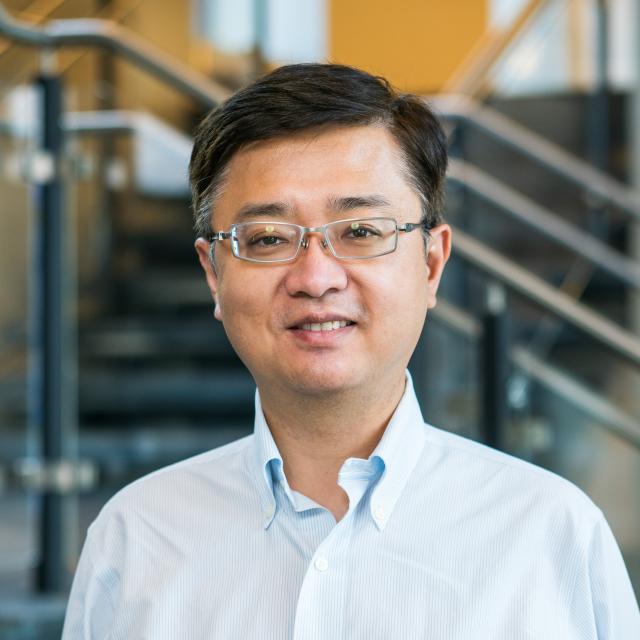
Shaukat Ali serves as Research Professor and Head of the Department of Engineering Complex Software Systems at Simula Research Laboratory, concurrently holding the title of Chief Research Scientist. His academic leadership drives innovation at the critical nexus of quantum computing, artificial intelligence, and software engineering, with concentrated expertise in verification, validation, and testing methodologies for complex systems including cyber-physical infrastructures and autonomous robotics. His primary research domains encompass: Verification and Validation Search-Based Software Engineering Autonomous Driving Systems Cyber-Physical Systems Engineering Digital Twin Technologies Quantum Software Engineering Analysis of recent publications (2024-2025) reveals a decisive trend toward quantum-AI convergence in software engineering, particularly through quantum software testing frameworks and AI foundation models applied to cyber-physical systems. His work systematically addresses noise mitigation in quantum hardware, uncertainty quantification in adaptive robotics, and novel testing paradigms using vision-language models for industrial robotics—demonstrating both theoretical rigor and industrial applicability. As department head, Ali spearheads strategic research directions in complex software systems, fostering cross-disciplinary collaboration while actively shaping quantum software engineering through workshops like QAI2024 and Q-SANER 2024. His invited presentations at venues including JYU Quantum Electronics and EU-Korea Quantum Forums underscore his influence in defining emerging research landscapes.
Edward K. CHAN is Professor of American Studies in Waseda University's School of Culture, Media and Society and Department of Transcultural Studies, where he has served since 2018 after holding academic positions at Aichi University, Nagoya University, and Kennesaw State University. His career demonstrates sustained transnational engagement with American cultural production through Japanese institutional frameworks. His educational trajectory includes a PhD in English from the University of Rochester (2004), MA in English from California State University, Fullerton (1993), and BA in English from the University of California, Riverside (1989). CHAN's research interrogates the racialized foundations of utopian thought, particularly examining how white nationalist movements construct utopian visions through neoliberal frameworks. His scholarship spans American literature, film studies, and transnational cultural consumption, with special focus on science fiction, dystopian narratives, and the intersection of race with family ideology. This work reveals consistent patterns in how racial hierarchies are naturalized through cultural production across historical periods. His publication trajectory demonstrates deepening engagement with white power ideology, evolving from foundational work on 1970s utopian subjectivity to contemporary analyses of neoliberal whiteness. The 2023 monograph 'White Power and American Neoliberal Culture' represents a culmination of this research arc, systematically documenting the convergence of economic restructuring and racialized utopianism in 21st-century America. His scientific recognition includes: University College Distinguished Research & Creative Activity Award (2010, Kennesaw State University) Eugenio Battisti Award for Best Article in Utopian Studies for 2006 (2007, Society for Utopian Studies) As President of the Society for Utopian Studies (2024-present), he mentors emerging scholars through international symposia like the 2024 'Utopia/Dystopia, Race, Nation' event funded by Waseda University grants. His teaching portfolio encompasses comprehensive undergraduate and graduate instruction in American literature, film studies, and postcolonial theory, with 2025 syllabi showing active course development. He currently leads the 'Racial Utopianism and Cultural Representation' research project, fostering international collaborations between Japanese and global scholars while supervising graduate research in transcultural studies through Waseda's Department of Transcultural Studies.
Manos Kapritsos is an Associate Professor in the Department of Computer Science and Engineering at the University of Michigan's College of Engineering. He leads the GLaDOS research group focusing on reliability of distributed systems through formal verification and fault-tolerant replication techniques. His research spans: Formal verification of concurrent and distributed systems Fault-tolerant replication protocols beyond client-server models Automation of verification processes for complex systems Performance verification including latency properties Reliable cryptographic code implementation Analysis of his publications reveals strong emphasis on: developing automated verification tools (Armada, Vale, IronFleet), creating novel replication protocols (Aegean), verifying performance characteristics (Performal), and improving specification reliability (IronSpec). His work consistently bridges theoretical formal methods with practical systems implementation. Awards and honors include: Jay Lepreau Best Paper Award at OSDI 2025 Jon R. and Beverly S. Holt Award for Excellence in Teaching (2022) NSF CAREER Award (2021) Distinguished Paper Award at PLDI 2020 Google Faculty Award (2017) Distinguished Paper Award at USENIX Security 2017 Grant support includes NSF FMitF grants (2020, 2023), NSF Large grant (2021), DARPA grant (2020), and Google Faculty Award (2017). He advises PhD students through the GLaDOS group, focusing on distributed systems verification. He directs the GLaDOS lab at University of Michigan, developing verification frameworks and reliable distributed systems. Current projects include automated proof generation (Basilisk) and efficient communication protocols (Scrooge).
Kirk Heilbrun is a Professor at Drexel University's Department of Psychological and Brain Sciences. He has served as department head from 1999-2012 and 2014-2016, and previously held roles as a staff psychologist and chief psychologist at forensic institutions. He directs the Reentry Project, providing pro bono assessment and treatment services for justice-involved individuals. PhD in Clinical Psychology from the University of Texas at Austin His research focuses on forensic mental health assessment, violence risk assessment, and interventions to reduce reoffending. He explores ethical, racial, and pandemic-related challenges in forensic psychology. Recent publications address trauma-informed collateral interviewing, race-conscious assessment, competence restoration models, and pandemic policy responses. These works intersect forensic psychology, legal policy, and public health. Fellow of the American Psychological Association (six divisions) Board Certified in Clinical Psychology Board Certified in Forensic Psychology He leads the Drexel Forensic Assessment Clinic, which evaluates juvenile commitment, competence to stand trial, and workplace disability cases, and the Reentry Project, which supports pro bono services for justice-involved individuals.
Nikolaos Koutsouleris serves as a Research Professor leading the Precision Psychiatry team at the Max Planck Institute of Psychiatry in Munich, Germany. He directs the KOUTSOULERIS LAB, which focuses on developing advanced machine learning methodologies for clinical psychiatry applications. His work bridges computational neuroscience, clinical psychology, and precision medicine approaches to transform psychiatric diagnosis and treatment. Dr. Koutsouleris's research program centers on precision psychiatry, with particular emphasis on multimodal data integration for predicting psychiatric outcomes. His laboratory develops sophisticated machine learning workflows that combine neuroimaging, clinical assessments, genetic information, and biomarker data to create personalized prediction models. This approach enables more accurate identification of individuals at risk for psychosis and other psychiatric disorders, facilitating earlier intervention and tailored treatment strategies. Analysis of Dr. Koutsouleris's publication record reveals a consistent trajectory toward increasingly sophisticated applications of artificial intelligence in psychiatry. His recent work demonstrates a shift from single-modality prediction to complex multimodal frameworks that capture the heterogeneous nature of psychiatric conditions. Key themes include addressing methodological challenges in clinical prediction generalizability, exploring neurobiological underpinnings of mental illness through advanced analytics, and translating computational findings into clinically actionable tools. As leader of the KOUTSOULERIS LAB at the Max Planck Institute of Psychiatry, Dr. Koutsouleris oversees a multidisciplinary research environment that brings together computational scientists, clinicians, neuroscientists, and data analysts. His team collaborates extensively with international consortia to validate prediction models across diverse populations, ensuring robustness and clinical applicability of their findings. The laboratory serves as a nexus for innovation in computational psychiatry, driving methodological advances while maintaining strong connections to clinical practice.
Magnus Westerlund is a Senior Lecturer in Information Technology and Director of the Laboratory for Trustworthy AI at Arcada University of Applied Sciences in Helsinki, Finland. His industry background spans telecom and information management, and he holds a doctoral degree in Information Systems from Åbo Akademi University. He actively contributes to the Z-Inspection® network, focusing on ethical AI implementation and governance. Westerlund’s research emphasizes trustworthy AI, cybersecurity, and distributed systems. Key areas include AI regulatory compliance (e.g., EU AI Act), healthcare AI applications, blockchain security, and IoT edge solutions. His work bridges academia and industry, such as the Valohai-CSC collaboration for machine learning infrastructure in Finnish academia. His publications highlight practical AI assessment methods, ethical AI integration, and decentralized technologies. Notable contributions include frameworks for sustainable AI development, privacy-preserving autonomous systems, and smart contract-based IoT security protocols. Westerlund also explores educational innovations, such as integrating large language models (LLMs) into coding education. His research consistently addresses real-world challenges like pandemic-era healthcare AI, edge computing for IoT, and cybersecurity in autonomous systems.
Ju Lu serves as an Assistant Professor at Lehigh University with office location in Iacocca Hall (room 0111), contactable via phone (610.758-3687) and email (jul724@lehigh.edu). Her academic position reflects active engagement in neuroscience research and education within the university's life sciences framework. Education Background: Ph.D. in Neurobiology from Harvard University (2008) B.Eng. in Microelectronics from Tsinghua University (2002) Research Focus: Dr. Lu's work pioneers investigations into neural circuit dynamics and synaptic plasticity mechanisms using advanced optical imaging technologies. Her research spans: Cortical circuit reorganization during motor skill acquisition across species Stress-induced synaptic alterations mediated by microglia in prefrontal circuits Therapeutic applications of psychedelic compounds for neural circuit restoration Development of three-photon microscopy for deep-brain imaging Genetically-encoded neurotransmitter sensors for in vivo studies This multidisciplinary approach bridges molecular neuroscience, systems-level circuit analysis, and translational mental health applications. Publication Trends: Analysis of Dr. Lu's 15 most recent publications (2016-2023) reveals an evolving trajectory from foundational studies on dendritic spine plasticity toward translational neuroscience. Early work emphasized optical imaging methodology and basic plasticity mechanisms, while her 2021-2023 publications increasingly focus on stress-related circuit disruptions and psychedelic therapeutics. A consistent thread involves combining high-resolution in vivo imaging with behavioral models to establish causal links between neural circuit dynamics and cognitive functions. Honors and Awards: No scientific awards or fellowships were documented in the provided materials. Mentorship and Funding: While specific student mentees and grant funding details are not specified in the source text, her extensive collaborative publication record indicates active supervision of research personnel and successful acquisition of research support. Research Infrastructure: Her methodological expertise in advanced microscopy suggests utilization of specialized imaging facilities, though no dedicated laboratory or research team is explicitly identified in the available documentation.
Courtney N. Reed is a Lecturer in Digital Technologies at Loughborough University London, where she joined in November 2023. She maintains a dual role as a visiting research fellow at the Max Planck Institute for Informatics. Her academic journey includes a BMus in Electronic Production and Design from Berklee College of Music (2016), followed by an MSc (2018) and PhD (2023) in Computer Science from Queen Mary University of London. Prior to her current position, she completed postdoctoral research at both the Max Planck Institute for Informatics and King's College London. Bachelor of Music: Electronic Production and Design, Berklee College of Music (2016) Master of Science: Computer Science, Queen Mary University of London (2018) Doctor of Philosophy: Computer Science, Queen Mary University of London (2023) Dr. Reed's research explores the entangled relationships between humans, bodies, instruments, and technology in music interaction, with particular focus on vocal electromyography (VoxEMG) and the vocalist-voice relationship. Her work incorporates feminist and post-human theories to examine sociopolitical contexts within arts technology, aiming to design for creativity while acknowledging individual, messy bodies in artistic practice. She has developed an open-source platform for vocal electromyography to investigate how biosignal feedback changes understanding and perception of the body in vocal performance. Her interdisciplinary approach bridges music technology, human-computer interaction, and embodied interaction studies. Analysis of Dr. Reed's recent publications (2023-2025) reveals a strong thematic focus on embodied interaction in music technology, with particular emphasis on vocal performance, biosignal feedback, and the philosophical underpinnings of digital instrument design. Her work consistently integrates theoretical frameworks like Karen Barad's agential realism with practical applications in digital musical instruments. Key trends include the exploration of ambiguity in data representation, the sociocultural dimensions of timbre in instrument design, and the development of novel methodologies for understanding embodied musical experiences through micro-phenomenology and ethnographic approaches. ACM SIGCHI Outstanding Dissertation Award (2024) for her thesis 'Imagining & Sensing: Understanding and Extending the Vocalist-Voice Relationship Through Biosignal Feedback' Best Newcomer Award at Loughborough University London's Community Awards Celebration (2024) Dr. Reed actively contributes to the academic community through conference organization and leadership roles. She serves as Member-at-Large on the NIME Board, previously chaired papers for NIME 2024, and co-organized the IBM SkillsBuild Sprint at Loughborough London. She has also chaired sessions at the ACM TEI Conference and co-chaired the Student Design Competition. Her collaborative work spans multiple institutions and includes significant contributions to interdisciplinary projects that bridge music, technology, and human experience. She has been instrumental in developing the senSInt research group and the RaveNET wearable network project. Dr. Reed leads the senSInt research group which focuses on sensorimotor interaction in music and performance contexts. The group develops innovative technologies including the VoxEMG platform for vocal electromyography, the Bones anti-corset for vocal performance, and the RaveNET network of wearable biosensing nodes. These projects explore the intersection of biosignals, embodied interaction, and musical expression, creating novel frameworks for understanding how technology mediates human creativity and performance. The group frequently collaborates with musicians, technologists, and theorists to develop and test these systems in real-world performance contexts.
Kenneth BENOIT is the Dean and Full-time Professor of Computational Social Science at the School of Social Sciences, Singapore Management University (SMU). Previously, he served as Director of the Data Science Institute at the London School of Economics (LSE) from 2020 to 2024. He holds a PhD in Government from Harvard University, specializing in statistical methodology. His research focuses on computational methods for analyzing textual data, particularly political texts and social media. Key areas include text-as-data techniques, natural language processing, and the application of large language models in social sciences. He has pioneered methods combining machine learning with crowd-sourced coding to improve the accuracy of political text analysis. Ken’s work emphasizes the analysis of big data, electoral systems, and comparative party competition, with notable contributions to the European Parliament and policy positioning studies. His expertise extends to software development, including R packages like quanteda and spacyr , which are widely used in text analysis. His articles and publications span methodological innovations, policy analysis, and interdisciplinary applications. Notable projects include scaling political party positions and examining the role of AI in public policy. He is actively involved in academic leadership, having served on editorial boards and organized collaborative research initiatives like the CIVICA research hackathon. Beyond SMU, he maintains professional profiles on LinkedIn and GitHub , reflecting his commitment to open-source tools and scholarly collaboration.
Hiroyuki Toyama is a Researcher at the Department of Education , Faculty of Educational Sciences , University of Helsinki. His work focuses on educational leadership, workplace well-being, and job crafting mechanisms. He has conducted extensive research on school principals' stress, burnout prevention, and the application of psychological needs theories in education and organizational contexts. Key research interests include: Job crafting strategies among educators Work-family conflict dynamics in leadership roles Psychological needs satisfaction in educational settings Development of well-being measurement tools (e.g., School Day Wellbeing Model) Recent projects involve analyzing stress profiles during the pandemic, cross-cultural comparisons of off-job crafting practices, and validation of burnout assessment tools. He has secured grants from the Research Council of Finland and other institutions for projects like Resilient School and Education and TeensGoGreen . His publications emphasize practical interventions to improve educator resilience and student engagement through innovative crafting frameworks.
John Byabazaire is a Research Fellow at the School of Computer Science, University College Dublin (UCD). He holds a PhD in Computer Science from UCD (2024), following a BSc (Gulu University, 2013) and MSc (Waterford Institute of Technology, 2018). His research focuses on IoT systems for data collection, remote sensing, AI-driven end-to-end system management, and fog analytics. He has held academic roles including Assistant Lecturer at Gulu University (2018–2019) and teaching roles at UCD since 2019, including Occasional Lecturer and Senior Teaching Assistant. His research spans smart agriculture, data quality in IoT, and education technology. Notable contributions include frameworks for yield mapping in precision agriculture, trust-based data validation in IoT, and machine learning approaches for livestock health monitoring. He has secured grants like the National ICT Initiatives Support Program (Uganda Government, 2019–2020). Teaching includes courses on cloud computing, web development, and distributed systems. His articles emphasize IoT data quality, agricultural analytics, and educational technology innovation. He actively promotes technology adoption in African education and agriculture sectors through collaborative projects.
Roles and Affiliations: Doina Olaru is a Professor in the Department of Management and Organisations at the University of Western Australia (UWA) Business School. She is affiliated with the Planning and Transport Research Centre and holds a visiting position at the University of Burgos, Spain. Her work focuses on transport planning, urban sustainability, and data-driven decision making. Education: PhD in Transport Engineering (University Politehnica of Bucharest, 2000). Prior industry experience includes roles as a railway engineer and Postdoctoral Research Scientist at CSIRO. Research Interests: Urban transport systems, travel behavior modeling, accessibility analysis, environmental impacts of transport, and applications of artificial intelligence. She emphasizes sustainable solutions integrating land-use and transport policies. Grants and Collaborations: Principal investigator on 31 grants, including ARC Linkage Projects and industry partnerships with iMOVE CRC. Collaborates with institutions like the University of Oxford, University of Leeds, and University of Sydney. Awards: Multiple teaching awards (UWA Business School) and recognition for contributions to transport research, including the Dennis Moore Australian Computer Society Orator honor. Teaching: Courses include Data Analysis and Decision Making, and Quantitative Data Analysis. Over 10 teaching excellence nominations. Current Projects: Focus areas include smart transport technologies, roundabout modeling via drone analytics, and hybrid work impacts on transport demand.
Eivind Rudjord Hillesund is an Associate Professor in the Department of Mathematical Sciences at the University of Agder. He holds qualifications in teaching mathematics and physics from the University of Oslo's lektorprogrammet and defended his doctoral thesis in January 2021 on engineering students' use of learning resources in mathematics courses. His teaching focuses on statistics courses within GLU programs and assignments in EVU courses at UiA since 2019. Research Interests: Resource use and decision-making in undergraduate mathematics education Educational strategies for engineering students Development of tools for tracking student resource utilization Publications include studies on resource systems analysis, didactical purposes of resources, and data collection methodologies. His work emphasizes improving understanding of how students interact with learning materials in STEM fields.
Professor Thierry Langer is a Full Professor of Pharmaceutical Chemistry at the University of Vienna’s Faculty of Life Sciences (Department of Pharmaceutical Sciences). He leads research in computational drug design, with a focus on pharmacophore modeling, 3D-QSAR analysis, and AI-driven molecular design. His work bridges theoretical and experimental chemistry, addressing targets like viral proteases (e.g., SARS-CoV-2), GABA receptors, and dopamine transporters. Research interests include: Pharmacophore-guided drug discovery for anti-viral and CNS therapies Development of next-generation computational tools (e.g., PharmacoMatch, QPhAR) Protein-ligand interaction modeling using neural networks and graph-based algorithms Recent studies focus on: Inhibitors for herpesvirus nuclear egress complexes, AI-optimized antivirals, and dopamine transporter inhibitors for cognitive enhancement. His lab collaborates on projects like the NeuroDeRisk initiative to de-risk neurotoxic compounds. Publications emphasize drug repurposing, metabolic pathway analysis, and scalable synthesis methods for promising drug candidates.
Wagdi George Habashi is a Professor and NSERC-Industrial Research Chair at McGill University's Faculty of Engineering, Department of Mechanical Engineering. He leads the Computational Fluid Dynamics (CFD) Lab, focusing on aerodynamics, fluid mechanics, and icing-related simulations. His research emphasizes in-flight icing prediction, computational wind engineering, and CFD-driven optimization of aircraft and jet engine systems. Education: Ph.D., Cornell University M.Eng., McGill University B.Eng., McGill University Research Interests: Habashi's work bridges analytical and computational methods to address multi-physics/multi-scale engineering challenges. Key areas include in-flight ice crystal ingestion in jet engines, ice surface roughness modeling, supercooled droplet dynamics, and CFD-based risk management for icing. His team develops tools like FENSAP-ICE for real-time aero-icing simulations and explores mesh adaptation, parallel computing, and reduced-order modeling. Labs/Teams: Computational Fluid Dynamics Lab (CFD Lab).