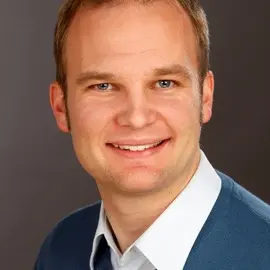
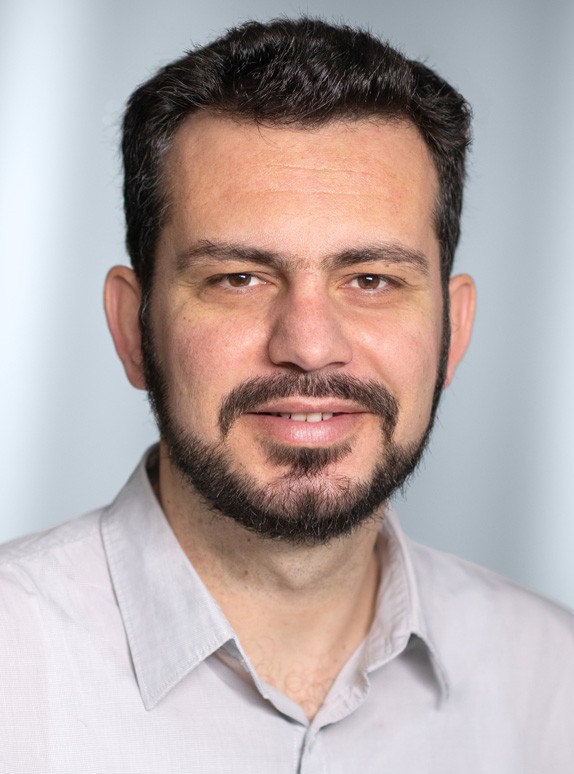
Philip Treleaven is a Professor at the Department of Computer Science , University College London (UCL). His work bridges Artificial Intelligence , Blockchain Technology , and Financial Computing , with a focus on DeFi , Tokenization , and Algorithm Auditing . He leads research on AI governance , privacy-preserving data , and financial market automation . Key Research Areas AI Ethics & Governance Decentralized Finance (DeFi) Tokenization & Web3 Cybersecurity & Emerging Threats Notable Collaborations Adriano Koshiyama Jeremy Barnett Rem Sadykhov Lukasz Szpruch Nick Firoozye Giles Pavey Recent Publications "Data Assets: Tokenization and Valuation" (2023) "DeTEcT: Dynamic and Probabilistic Parameters Extension" (2024) "Optimising Large Language Models" (2025) His research drives cross-disciplinary innovation , impacting finance , law , and data governance through applied machine learning and blockchain solutions . Current projects include DeTEcT (Decentralized Token Economy Theory) and Federated Computing Infrastructure .
Jérôme Henri Kämpf is a Lecturer at École Polytechnique Fédérale de Lausanne (EPFL), affiliated with the School of Engineering (STI), Institute of Electrical Engineering (IEM), and the Laboratory of Intelligent Systems (LIDIAP). He also serves as a Senior Research Scientist in Energy Informatics at the Idiap Research Institute. His academic career spans roles at EPFL’s LESO-PB laboratory, including PhD student, post-doc, and team leader in sustainable urban development and urban systems simulation, followed by a professorship in Building Energy Efficiency at HEIA-FR (HES-SO Fribourg) from 2016 to 2018. PhD in On the Modelling and Optimisation of Urban Energy Fluxes, EPFL, 2009 Master in Pedagogics, Haute Ecole Pédagogique Lausanne, 2005 Master in Computer Science, University of Lausanne, 2003 Master in Physics, University of Lausanne, 2001 His research focuses on urban physics, modeling, simulation, and optimization of urban energy systems, daylighting, thermal comfort, and sustainable urban design. He has made significant contributions to urban energy simulation tools such as CitySim, BTDF-based daylight modeling, and real-time photometric systems. His work bridges computer science, physics, and building engineering to develop data-driven solutions for urban sustainability. The 15 most recent publications highlight a consistent focus on urban energy modeling, daylight simulation, and thermal comfort. Key themes include the integration of HDR sky monitoring for daylight control, urban greening for cooling, and parametric interfaces for urban simulation. His research employs advanced computational methods, including evolutionary algorithms and wavelet transforms, applied to building and urban-scale energy performance. He has advised several PhD students, including Chantal Basurto Dávila, Silvia Coccolo, Diane Perez, and Yujie Wu. While no formal scientific awards are listed, his extensive publication record in high-impact journals and conferences reflects strong scholarly recognition. He has been involved in significant research grants and collaborative projects related to urban sustainability, energy informatics, and climate-responsive design. Kämpf is associated with key research teams including the LESO-PB laboratory at EPFL and the Idiap Research Institute. His work in the Urban Systems Simulation team and contributions to the CitySim platform demonstrate leadership in integrating simulation tools into architectural and urban design workflows.
Prof. Dr. Michael Felux is full Professor and team leader of the Aviation Infrastructure group at the ZHAW School of Engineering , Zurich University of Applied Sciences. He also co-founded and co-owns the Estonian consultancy Navaid OÜ , providing GNSS/CNS expertise while ensuring non-conflict with his academic role. Education Dr.-Ing. in Mechanical Engineering, TU München (2012 – 2018) Dipl.-Tech. Math. in Mathematics, TU München (2003 – 2009) CAS Hochschuldidaktik (Higher-Education Didactics), PHZH (2021) Research Focus Michael Felux’s research centres on safe, secure and efficient aviation communication, navigation and surveillance (CNS) . He investigates GNSS-based augmentation systems (GBAS, SBAS) for precision approach and landing, develops real-time interference detection & localization techniques to counteract jamming and spoofing, and explores high-integrity navigation solutions for unmanned aerial vehicles (UAVs). Additional interests include environmental optimisation of flight procedures and multi-constellation, multi-frequency signal processing . Across more than 50 peer-reviewed publications since 2015, his work consistently targets the intersection of technical robustness and operational feasibility . Recent papers map GNSS disruption events across European airspace, quantify fuel-burn reductions enabled by GBAS-guided continuous-descent approaches, and introduce cost-efficient machine-learning frameworks for real-time localisation of malicious radio-frequency interference. Scientific Awards & Recognition (no specific awards listed in supplied material) Research Funding & Projects Spoofer Localization – Swiss project leader, ongoing EGNSS DFMC for GBAS based operations – EU project leader, ongoing Making I-CNS A Reality – integrated CNS technology, project leader, ongoing High Integrity Satellite Navigation for UAV using Galileo HAS – project leader, ongoing LINA – Shared large-scale infrastructure for safe testing of autonomous systems, team member, ongoing Collision avoidance system for manned & unmanned aircraft via SDR – completed Emission Reduction using Satellite Navigation for Approach Guidance – completed Laboratory & Team As head of the Aviation Infrastructure team at ZHAW, Prof. Felux directs a multidisciplinary group developing next-generation CNS technologies. The team operates dedicated GNSS/GBAS testbeds, flight-trial aircraft, and spectrum-monitoring networks to validate concepts from simulation through to real-world deployment.
Dr. Anastasios Kouvelas is a Lecturer at ETH Zurich, where he serves as head of the Road Traffic Engineering research group at the Institute of Transport Planning and Systems (IVT), Department of Civil, Environmental and Geomatic Engineering. He has held this position since August 2018, succeeding Dr. Monica Menendez who moved to New York University in Abu Dhabi. Prior to joining ETH Zurich, he was a research associate at the Urban Transport Systems Laboratory (LUTS) at EPFL (2014-2018) and a postdoctoral fellow at Partners for Advanced Transportation Technology (PATH) at the University of California, Berkeley (2012-2014). Dr. Kouvelas' research focuses on modeling, simulation, optimization and traffic flow control. His work aims to develop real-time solutions based on control theory and operations research methods. The Road Traffic Engineering group develops algorithmic solutions that are components of intelligent transportation systems used in traffic control centers. Recent technological advances in autonomous vehicles have expanded their research topics as the industry seeks efficient operational solutions for autonomous mobility. They are particularly interested in extending their work to the design of advanced management strategies for urban networks that utilize connected vehicles to improve traffic operations and develop network-wide control strategies that minimize environmental impacts. His recent publications (2023-2025) demonstrate strong focus on traffic prediction using deep learning techniques, bike lane allocation impacts on urban networks, transit network resilience against disruptions, vehicle trajectory extraction from aerial recordings, and traffic control for mixed traffic systems with connected and autonomous vehicles. His work bridges theoretical developments in control theory with practical traffic engineering challenges. Scientific Awards No specific scientific awards were mentioned in the provided information. Advising and Grants Dr. Kouvelas supervises PhD and Master's students in traffic engineering and intelligent transportation systems. His research is supported by various grants including a grant from the Hong Kong Research Grant Council (Grant No. GRF 11216323) for research on traffic speed prediction. Laboratories and Teams Dr. Kouvelas leads the multidisciplinary Road Traffic Engineering research group at IVT, which consists of researchers with backgrounds in civil engineering, electrical engineering, mechanical engineering, computer science, control, and operations research. The group's work spans multiple areas including traffic flow theory, traffic operations, connected and automated vehicles, and intelligent transportation systems.