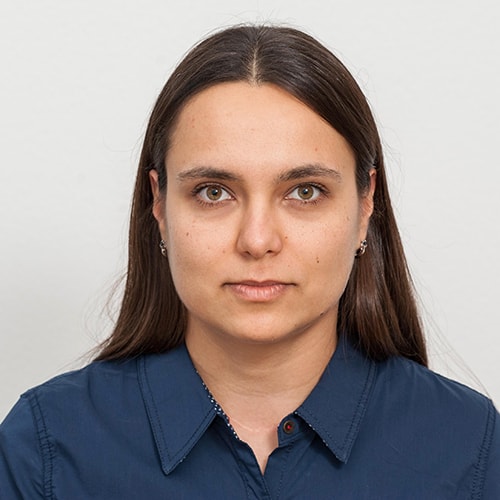
Peter Brodersen is a Professor at the Department of Biology, University of Copenhagen , specializing in Bioinformatics and RNA Biology . His research focuses on RNA modification (m6A), YTHDF proteins, and small RNA pathways in plants. Recent research trends from his group include: (1) molecular mechanisms of ARGONAUTE-small RNA interactions, (2) m6A-YTHDF regulatory systems in plant development, and (3) RNAi-independent roles of DICER-LIKE proteins in antiviral defense. Collaborations span Denmark and international institutions. Publications highlight cross-disciplinary work bridging computational biology and experimental plant genetics. Key subfields include RNA structure, epigenetic regulation, and antiviral immunity.
Anders Damgaard is an Associate Professor and Head of BSc studies at the Department of Environmental and Resource Engineering (DTU Sustain), Technical University of Denmark. His research focuses on environmental assessment methodologies, particularly Life Cycle Assessment (LCA), and their application to waste management systems, resource recovery, and policy development. He leads the development of LCA models like EASEWASTE/EASETECH and collaborates with institutions such as the Danish EPA and Nordic Council of Ministers. Key research areas include carbon footprints of waste treatment, textile waste composition, and additive impacts in plastics recycling. Education: Not explicitly stated in provided texts. Research Interests: Waste management optimization, circular economy frameworks, sustainable technologies, and policy-driven environmental assessments. His recent publications address topics such as carbon footprints of sewage sludge treatments, Nordic textile waste composition, and challenges in plastic additive inclusion in LCA studies. He supervises PhD students in projects involving lifecycle modeling, construction waste recycling, and consumer practices in circular economies. As part of DTU Sustain, he contributes to interdisciplinary teams advancing sustainable resource management and policy solutions.
Olga Saukh is an Associate Professor at the Institute of Technical Informatics, Graz University of Technology (TU Graz), and a Faculty member at the Complexity Science Hub Vienna (CSH). She leads the Embedded Learning and Sensing Systems research group, which operates across both institutions, focusing on the design and deployment of efficient AI-based systems on edge and mobile platforms. Her work bridges deep learning and embedded systems, with applications in environmental monitoring, precision agriculture, and digital health. Ph.D. in Computer Science, University of Bonn (2009) Habilitation in Embedded Systems, TU Graz (2020) Postdoctoral Training, ETH Zurich (2010–2016) B.Sc. in Applied Mathematics, Taras Shevchenko National University of Kyiv (2002) M.Sc. in Applied Computer Science, University of Freiburg (2004) Her research centers on efficient machine learning, particularly model optimization, neural network pruning, and contrastive learning for resource-constrained devices. She is deeply engaged in solving real-world challenges in IoT, sensor networks, and cyber-physical systems. Her work emphasizes data privacy, sustainability, and practical deployment of AI at the edge. The 15 most recent publications highlight a strong trend in efficient deep learning, including model compression, pruning, and transfer learning, applied to diverse domains such as environmental sensing (air quality, pollution tracking), digital agriculture (cattle farming), and embedded AI (sensor calibration, on-demand sensing). Her work frequently appears in top-tier venues like NeurIPS, ICLR, and IEEE/ACM IPSN, reflecting her leadership at the intersection of machine learning and embedded systems. Scientific awards include: CONET Ph.D. Academic Award (2010) Multiple Best Paper Awards at IEEE PerCom, ACM/IEEE IPSN, IEEE ICPADS, IEEE SECON, and UrbCom Spotlight and Oral presentations at ICML and CoLLAs workshops Ph.D. scholarship from IPVS, University of Stuttgart (2004–2005) Prizes in Ukrainian national mathematics competitions (1996–1998) Olga Saukh actively serves on program committees of leading international conferences in machine learning and embedded systems. She has advised multiple students and leads a collaborative research group spanning TU Graz and CSH Vienna. Her group develops practical AI systems for real-world deployment, with a focus on sustainability and privacy. She co-organizes the public EfficientML reading group and has secured recognition through numerous grants and awards. Her future work continues to explore the theoretical and practical challenges of deploying efficient, trustworthy AI in mobile and embedded environments. Her research group, Embedded Learning and Sensing Systems, operates jointly between TU Graz and CSH Vienna, fostering interdisciplinary collaboration across institutions. The team develops AI solutions for edge computing, sensor networks, and cyber-physical systems, with a strong emphasis on environmental sustainability and data privacy. Members work on joint challenges using advanced collaboration tools, reflecting the distributed nature of modern academic research.
Roberta Sinatra is a Professor in Social Data Science at the University of Copenhagen, with part-time affiliations at ITU Copenhagen, ISI Foundation (Italy), and CSH (Austria). She co-founded the NERDS Research Group at ITU and co-leads the Pioneer Centre for AI in Copenhagen. Research Interests: Her work spans computational social science, network science, and data science, focusing on fairness in AI, scientific careers, and human mobility. Recent projects include analyzing child protection algorithms and modeling urban bicycle networks. Scientific Awards: ERC Consolidator Grant Villum Young Investigator Grant Complex Systems Society Junior Prize DPG Young Scientist Award for Socio- and Econophysics Sapere Aude: Starting Grant Publications: Her research, often in top-tier venues like Nature and Science , explores interdisciplinary themes, including AI ethics, gender disparities in science, and social network dynamics. Labs & Teams: She leads research initiatives at the Center for Social Data Science (KU) and co-founded the NERDS Research Group at ITU, fostering international collaboration in network science and AI ethics.
Manex Aguirrezabal Zabaleta is an Associate Professor in the Department of Nordic Studies and Linguistics at the University of Copenhagen. He previously held positions as a Postdoc (2017-2019) and Assistant Professor at the same institution. His educational background includes: PhD in Natural Language Processing from the University of the Basque Country (UPV/EHU), conducted at the IXA NLP group. Master's degree in Natural Language Processing from UPV/EHU. Bachelor's degree in Computer Science (5 years) from UPV/EHU. Dr. Aguirrezabal's research focuses on the computational analysis of poetry , particularly stress patterns in English. He explores whether computers can effectively analyze poetic structures, a field with roots in the 1980s but revitalized by modern techniques. Additionally, he investigates language generation , computational morphology and phonology , and finite-state methods . His work bridges traditional linguistic inquiry with cutting-edge natural language processing. Recent publications (2023-2024) demonstrate a diverse engagement with computational linguistics, including poetry generation, multimodal corpus development, clickbait analysis, and fact-checking. His research often employs zero-shot learning and language models, reflecting current trends in AI-driven linguistic analysis. He has contributed to international collaborations such as ParlaMint (multilingual parliamentary corpora) and the GEHM Zoom corpus. While specific grant details are not provided, his active publication record indicates ongoing research support. Dr. Aguirrezabal maintains a strong connection to his Basque heritage, having pursued his early education in the Basque language.
Professor John W. Edmunds is a leading academic in Infectious Disease Modelling at the London School of Hygiene and Tropical Medicine (LSHTM). Holding a Professor position since 2013 and serving as Dean of the Faculty of Epidemiology and Population Health (2013-2019), he combines mathematical, statistical, and economic models to inform public health policy. His part-time role at the Health Protection Agency (HPA) since 2008 underscores his policy advisory contributions. PhD in Infectious Disease Modelling (Imperial College, 1994) MSc in Health Economics (University of York, 1995) BSc in Biology (Imperial College, 1989) His research focuses on understanding disease transmission and optimizing control strategies. He has pioneered methods integrating social contact surveys , participatory surveillance (e.g., Influenzanet), and economic analysis to evaluate vaccines and interventions. Recent work includes SARS-CoV-2 dynamics , Ebola spatial forecasting , and typhoid vaccine prioritization . His 15 most recent publications highlight social contact patterns (Reconnect, CoMix studies), vaccine impact (HPV, typhoid), and real-time outbreak analytics (Ebola, cholera). Key trends include digital epidemiology , behavioral surveillance , and cross-country modeling for global health. Knighthood (2024) for services to epidemiology Weldon Memorial Prize (2022) for biostatistics contributions FMedSci (2018) for medical science excellence OBE (2016) for public service As an educator, he teaches "Modelling and the Dynamics of Infectious Diseases" and co-organizes "Pandemics: Emergence, Spread and Response" . Current grants include National Institute for Health and Care Research projects on post-pandemic surveillance and Bill & Melinda Gates Foundation funding for polio eradication. He leads collaborations with the Centre for Mathematical Modelling of Infectious Diseases , Vaccine Centre , and Health in Humanitarian Crises Centre , while advising UK and WHO committees on zoonotic influenza , variants , and testing programs .
Konstantinos Kalogeropoulos is an Assistant Professor at the Department of Biotechnology and Biomedicine, Technical University of Denmark (DTU), leading research at the Cell Diversity Lab. His work bridges proteomics, computational biology, and snake venom research. Current projects: "The Proteomic Landscape during Influenza Infection" (2022-2025) Supervisor for PhD projects on protease network rewiring in psoriasis and wound exudate degradomics Research interests include: Proteomic analysis of inflammatory diseases Snake venom toxin structure prediction Extracellular matrix biomechanics De novo peptide sequencing algorithms Computational modeling of protease networks Recent article trends demonstrate his work in • Database-free proteomics (InstaNovo/InstaNexus) • Snake venom pathophysiology (V-ToCs clustering) • Inflammatory disease biomarkers (psoriasis, impaired healing) • Extracellular matrix mechanics (fibronectin tension, gut inflammation) Advising: Supervises PhD students Polhaus, C. J. M. and Haack, A. M., focusing on protease networks and wound healing.
Anders Krogh is a Professor at the Department of Computer Science, University of Copenhagen, and also holds a position at the Department of Public Health in the Section for Health Data Science and AI. He serves as the head of the Center for Health Data Science (HeaDS) in the Faculty of Health and Medical Sciences. Previously, he was affiliated with the Department of Biology at the University of Copenhagen until 2020. Dr. Krogh earned his PhD in theoretical physics but transitioned into machine learning and bioinformatics during his doctoral studies. His research spans both theoretical foundations and practical applications in these fields. He is particularly renowned for his pioneering work on hidden Markov models for biological sequences, which has had significant impact in computational biology. In recent years, Krogh's research has focused on deep generative models applied to gene expression data and other biomedical applications. His work bridges computer science with healthcare, developing AI-driven approaches for precision medicine, cancer diagnostics, and analysis of complex biological systems. His current research integrates machine learning with quantum computing applications in biomolecular modeling. Analysis of his recent publications reveals a strong trend toward applying artificial intelligence to healthcare challenges, particularly in rare diseases, cancer diagnostics, and personalized medicine. His work increasingly incorporates federated learning approaches to address privacy concerns while enabling collaborative research across institutions. There's also a growing emphasis on quantum computing applications in biomolecular modeling and drug discovery. As head of the Center for Health Data Science, Krogh leads interdisciplinary research efforts that bring together computer scientists, medical researchers, and clinicians. His team develops novel computational frameworks like MOSAIC for multimodal analysis of rare cancers and multiDGD for multi-omics data integration. These tools are designed to translate AI innovations into clinical practice while addressing the unique challenges of medical data.
Søren Munch Kristiansen is an Associate Professor in the Department of Geoscience at Aarhus University, Faculty of Natural Sciences. His interdisciplinary research bridges geoscience and archaeology, focusing on the complex interactions between soil, water, and human societies across time. He is actively engaged in transdisciplinary projects involving geoarchaeology, groundwater, and public health. Research Interests: His work centers on how soil and groundwater have shaped human prehistory and continue to influence modern life. Key areas include safe drinking water from a lifelong perspective, geoarchaeological prospection, Viking Age settlements, and the application of geophysical and geochemical methods in archaeological contexts. He is particularly interested in novel, interdisciplinary methodologies. Recent Research Trends: His recent publications reveal a strong focus on integrating geophysical data (e.g., GPR, borehole databases) with archaeological interpretation, especially in 3D urban modeling and landscape change. Themes include Viking Age sites, interglacial deposits, and anthropogenic soil modifications. His work increasingly employs machine learning and large-scale data synthesis. Scientific Awards: No awards mentioned in the provided text. Advising and Grants: While specific students are not listed, he leads and participates in multiple funded research projects, indicating an active supervisory role. His grants span from 2016 to 2024, including projects like TITAN, SAGA, and 'Fingerprinting displaced molecular substances,' highlighting sustained funding and leadership in interdisciplinary geoscience-archaeology research. Labs and Teams: He is involved in collaborative networks such as the Soil Science & Archaeo-geophysics Alliance (SAGA), suggesting leadership in interdisciplinary research teams. His work often involves multi-proxy analyses and international collaborations, particularly in Scandinavian archaeological geophysics.
John Bagterp Jørgensen is a Professor at the Department of Applied Mathematics and Computer Science, Technical University of Denmark (DTU). His research focuses on computational methods for Model Predictive Control (MPC), numerical optimization, and dynamic optimization, with applications in industrial processes, biomedical systems, and sustainable energy. He holds leadership roles in 2-control ApS, a company developing advanced control solutions for industries such as cement production and oil recovery. Education: PhD and M.Sc. in Technical Sciences from DTU (1997–2005 and 1991–1997). Professional experience includes roles as an Assistant Professor at DTU and CTO/CEO at 2-control ApS. Research interests span MPC algorithms, numerical methods for differential equations, and system identification. His work bridges academia and industry, addressing challenges in energy efficiency, vaccine manufacturing, diabetes treatment, and cement production processes. His recent articles emphasize industrial applications of control systems, including cement rotary kiln dynamics, vaccine production optimization, and dual-hormone artificial pancreas development. He has received the Nordic Energy Research Award (1994) and contributed to UN Sustainable Development Goals related to affordable energy and industrial innovation. Advising and grants: Supervises multiple PhD projects on topics like electrification of industrial processes and sustainable SCP production. Collaborates with global institutions on energy and biomedical research. Labs/teams: Leads teams in DTU’s Scientific Computing and Center for Energy Resources Engineering, with active partnerships in industry and academia.
Jesper Rindom Jensen is an Associate Professor in the Department of Electronic Systems at Aalborg University, Denmark, under the Technical Faculty of IT and Design. He is the Head of the Audio Analysis Lab, a leading research group in audio signal processing, since 2023. His work bridges theoretical signal processing and practical applications in artificial intelligence and audio systems. Full Name: Jesper Rindom Jensen Institution: Aalborg University School: The Technical Faculty of IT and Design Department: Department of Electronic Systems Research Lab: Audio Analysis Lab Email: jrj@es.aau.dk Office: Fredrik Bajers Vej 7B, B5-206, 9220 Aalborg Øst, Denmark Education: M.Sc. in Electronic Systems, Aalborg University (cum laude, 2009) Ph.D. in Signal Processing, Aalborg University (2012) Research Interests: Jesper Rindom Jensen's research centers on audio signal processing, with a strong emphasis on artificial intelligence, speech enhancement, noise reduction, beamforming, and multichannel systems. His work applies to diverse domains including robot and drone audition, spatial audio, and active noise control. He develops novel filtering techniques, including variable span linear filters and harmonic beamformers, to improve speech quality and intelligibility in noisy and reverberant environments. Publication Trends: His recent publications (2023–2025) show a strong trend toward integrating deep learning with classical signal processing, particularly in direction-of-arrival estimation, underwater acoustics, and robust multichannel systems. There is a clear focus on real-world applications, including sound zone control, active noise control, and limited-data scenarios using knowledge distillation. His work consistently emphasizes robustness, efficiency, and practical deployment. Scientific Awards and Recognition: AAU Talent for emerging research leaders Recipient of a competitive postdoc grant from the Danish Independent Research Council Advising and Grants: Jesper has supervised multiple PhD and master’s students, including Nørholm, Karimian-Azari, Zhang, and Wang. He has led significant research projects such as 'Sound Processing for Robots and Drones' (2018–2020) and participated in others related to joint audio-visual tracking and speech enhancement. His research has been supported by national funding bodies, reflecting its innovation and impact. Labs and Teams: He is a founding and core member of the Audio Analysis Lab at Aalborg University, which focuses on cutting-edge audio signal processing and AI-driven solutions. The lab fosters interdisciplinary collaboration and has produced numerous publications, datasets, and real-world applications. Jensen’s leadership since 2023 underscores his pivotal role in shaping the lab’s research direction.
Kunihiko Kaneko is a Professor at the Niels Bohr Institute, University of Copenhagen, with a distinguished career in theoretical biophysics and complex systems. He received his PhD and MSc in Physics from the University of Tokyo, and has held leadership roles at the Universal Biology Institute and Center for Complex Systems Biology. PhD Physics, 1984 - University of Tokyo MSc Physics, 1981 - University of Tokyo His research spans five primary areas: Universal Biology, Evolutionary Constraints, Ecosystem Dynamics, Neural Cognition, and Universal Anthropology. He has published extensively on multi-level consistency principles, dimensional reduction in biological systems, and reciprocity between robustness and plasticity across scales. Recent publications show strong focus on microbial ecosystems (2025), evolutionary game theory (2025), neural modular architectures (2024), and dimensional reduction in cellular systems (2024). His work bridges physics and biology through dynamical systems theory applied to diverse phenomena from protocells to human societies.
James A. Evans is the Max Palevsky Professor of Sociology and Data Science at the University of Chicago, where he is a faculty member in the Department of Sociology within the Division of the Social Sciences. He is the director of Knowledge Lab and the Faculty Director of the Masters Program in Computational Social Science . He holds additional affiliations as an External Professor at the Santa Fe Institute , External Faculty at the Complexity Science Hub, Vienna , and Visiting Faculty Researcher at Google . Education: B.A. in Anthropology, Brigham Young University (1994) M.A. in Sociology, Stanford University (1999) Ph.D. in Sociology, Stanford University (2004) His research centers on the collective system of thinking and knowing , exploring how ideas emerge, spread, and evolve through social and technical systems. He investigates innovation, collective intelligence, and the science of science , using large-scale data modeling, machine learning, generative AI, and network analysis to study knowledge creation. His work spans domains including science, technology, law, and religion, with a focus on how AI is reshaping discovery processes. The most recent publications highlight trends in AI and scientific discovery , with a strong emphasis on innovation, knowledge systems, and human-machine intelligence . His research increasingly explores AI as a transformative agent in science , including the concept of 'alien intelligence' and the development of complementary AI to augment human capacity. Projects like the $20M NSF-funded APTO initiative aim to build language models that predict technological outcomes by analyzing historical data. Scientific Recognition and Funding: Research supported by the National Science Foundation (NSF) , National Institutes of Health (NIH) , Air Force Office of Scientific Research (AFOSR) , and philanthropic sources Work published in Nature, Science, PNAS , and leading social science journals Featured in The New York Times, The Economist, The Atlantic, Wired, NPR, BBC, Le Monde , and others James Evans advises on science policy and funding strategies, emphasizing the importance of diversity, interdisciplinary collaboration, and demographic balance in fostering innovation. He critiques current academic incentives and proposes alternative discovery regimes. He leads Knowledge Lab , a collaborative research environment that conducts seminars, grants, and employment opportunities in computational social science and AI.
Tina Eliassi-Rad is Professor and the Inaugural Joseph E. Aoun Chair at Khoury College of Computer Sciences, Northeastern University in Boston. She serves as Core Faculty at the Network Science Institute and holds External Faculty positions at both the Santa Fe Institute and Vermont Complex Systems Institute. Additionally, she maintains Affiliated Faculty status across six Northeastern University institutes including the NULab for Digital Humanities and Computational Social Science, Global Resilience Institute, Cybersecurity and Privacy Institute, Institute for Experiential AI, and Internet Democracy Initiative. Her research spans: Data Mining & Machine Learning Network Science & Complex Systems Artificial Intelligence & Society She leads two major research initiatives: Trustworthy Network Science , which addresses explainability, transparency, stability, and robustness in network science ML algorithms; and Just Machine Learning , which examines broader complex systems where ML operates to understand and mitigate risks. Her work bridges theoretical foundations with societal applications. Dr. Eliassi-Rad's publication record demonstrates consistent focus on applying network science to critical societal challenges. Her recent research examines pandemic mobility patterns and cybersecurity threats using network-based approaches that combine epidemiological modeling with network analysis techniques. She actively mentors doctoral students through her RADLAB research group, currently advising PhD candidates Wan He (Network Science) and David Liu (Computer Science), along with PhD students Zohair Shafi and Samantha Dies (Computer Science). Her research has secured funding from prestigious organizations including the National Science Foundation, Department of Defense, Defense Advanced Research Projects Agency, Army Research Lab, and others. As leader of RADLAB, she directs research at the intersection of data science, network analysis, and societal impact, with particular emphasis on ensuring that technical advances in AI and network science serve societal needs responsibly and equitably.
Christian Igel is a Professor at the Department of Computer Science, University of Copenhagen, and serves as director of the SCIENCE AI Centre . He is also a co-lead of the Pioneer Centre for Artificial Intelligence in Denmark. His academic journey includes a Doctoral degree from Bielefeld University (2002) and a Habilitation degree from Ruhr-University Bochum (2010). Igel is a Juniorprofessor (2002–2010) and has held editorial roles at journals like KI - Künstliche Intelligenz and Artificial Intelligence Journal . Doctoral degree: Faculty of Technology, Bielefeld University, Germany (2002) Habilitation degree: Department of Electrical Engineering and Information Sciences, Ruhr-University Bochum, Germany (2010) His research spans Machine Learning , focusing on Support Vector Machines , Evolution Strategies , Reinforcement Learning , Deep Neural Networks , and PAC-Bayesian Analysis . He applies these methods to Environmental Monitoring , Medical Diagnostics , and Climate Research . Recent publications highlight work on adversarial machine learning , environmentally sustainable AI , and tree resource mapping using deep learning. His scientific awards include being a ELLIS Fellow . Igel’s software tools like Shark , woody , and Multi-Planar UNet are widely used in research and industry. Notable grants and collaborations involve projects with European Lab for Learning and Intelligent Systems (ELLIS) , SCIENCE AI Centre , and international teams in Denmark , Germany , and France . His lab leadership emphasizes open-source frameworks and reproducible research. Editorial Roles: German Journal on Artificial Intelligence , Evolutionary Computation Journal , Artificial Intelligence Journal Software Projects: Shark , woody , Multi-Planar UNet , U-Time Collaborations: SCIENCE AI Centre , Pioneer Centre for Artificial Intelligence , European Lab for Learning and Intelligent Systems