Angela Maria Tomasoni serves as a Part-Time Lecturer in the Department of Naval, Electrical, Electronic and Telecommunications Engineering at the University of Genoa, actively teaching Wildfire Risk Assessment and Management in the Master's program for Engineering for Natural Risk Management during the 2024-2025 academic year. Her research expertise centers on transportation safety and environmental risk mitigation, with core competencies in: GIS-based risk modeling for dangerous goods transportation Big Data analytics for regional risk assessment ICT decision support systems in maritime environments Toxic release modeling in urban coastal zones Mediterranean regional case studies focusing on Liguria and Tuscany Analysis of her 2022-2025 publications reveals consistent methodological evolution from foundational GIS applications toward integrated Big Data and ICT solutions, maintaining strong regional focus on Italian transportation corridors while addressing chemical safety and wildfire management challenges through spatial analysis. Scientific Awards: No awards, fellowships, or medals were documented in the source material. Advising and Grants: The provided documentation contains no information regarding graduate student supervision, research funding, or grant administration activities.
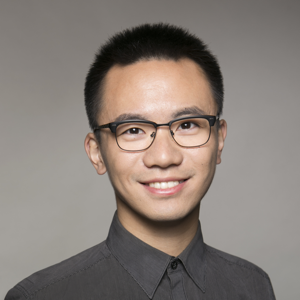
Siqi Wu is an Assistant Professor of Information and Library Science in the Luddy School of Informatics, Computing, and Engineering at Indiana University Bloomington. Previously, they were a postdoc research fellow in the Center for Social Media Responsibility at the University of Michigan School of Information. Dr. Wu is a computational social scientist who collects, models, and analyzes web data at scale, with research focusing on understanding social phenomena through large-scale empirical measurements and designing next-generation sociotechnical systems via data-driven policies and interventions. Dr. Wu's educational background includes: Ph.D. in Computer Science from the Australian National University M.S. in Information Technology from the University of Melbourne B.E. in Electronics Engineering from Tianjin University Dr. Wu's research spans computational social science, large-scale web data analysis, and social media systems. Their work examines YouTube recommendation networks, Twitter data analysis, prevalence estimation techniques, and cross-platform attention dynamics. Recent projects investigate user control over recommendations, harmful content detection, and cross-partisan communication patterns, combining computational methods with social science theories to understand algorithmic influence on online experiences and develop practical interventions. Dr. Wu's publications demonstrate consistent excellence in social media analysis, with particular expertise in measuring attention dynamics across platforms, estimating class prevalence using black box classifiers, and understanding recommendation systems. Their work bridges technical innovation with social science questions, resulting in practical implications for platform design and policy across YouTube, Twitter, and other social media ecosystems. Notable recognitions include: Google PhD Fellowship (2018) ICWSM Best SPC (2022-2024) CSCW 2019 Best Paper Honorable Mention (top 5%) ICWSM 2021 Spotlight Paper selection (top 8) Dr. Wu actively mentors students interested in computational social science, seeking those with strong programming skills, data analysis experience, and passion for understanding social phenomena through computational methods. They serve on program committees for ICWSM, CSCW, and CHI, and their research has practical applications for social media platform design, content moderation policies, and understanding information ecosystems. Dr. Wu has developed several software tools including pyquantifier for prevalence estimation and tools for Twitter and YouTube data collection. Dr. Wu leads research on social media analysis with focus on YouTube and Twitter ecosystems, developing methods to understand recommendation systems, user engagement patterns, and cross-platform dynamics. Their work involves collecting and analyzing large-scale datasets to inform platform design and policy decisions related to algorithmic transparency and user control.
Andrea Giovanni Nuzzolese is a Researcher at the Semantic Technology Laboratory (STLab) of the National Research Council (CNR) in Rome, Italy. He earned his PhD in Computer Science from the University of Bologna in 2014. His core research focuses on Knowledge Extraction , Ontology Design Patterns , Linked Data , and Semantic Web technologies. Education: PhD in Computer Science (2014), University of Bologna Research Focus: Ontology engineering, semantic AI, and knowledge graph applications in cultural heritage and healthcare Projects: EU-funded IKS project, Apache Stanbol developer, and contributions to Italian Cultural Heritage (ArCo) and healthcare (Geriatric Assessment) ontologies His recent publications emphasize hybrid AI for global governance, LLM-driven ontology generation, and semantic infrastructure development. While no formal awards are listed, his work is recognized in international journals and conferences.
Paolo Bocciarelli is affiliated with the University of Rome Tor Vergata , specifically within the Department of Industrial Engineering under the College of Engineering . His work focuses on business process modeling and simulation , leveraging model-driven engineering and distributed simulation to enhance system automation and interoperability. Teaches Service-oriented Software Engineering and other software/systems courses Research emphasizes MSaaS (Modeling and Simulation as a Service) , HLA (High-Level Architecture) , TOSCA , and IoT-aware systems His recent publications (2025–2024) address collaborative business processes in distributed environments, XES extensions for simulation, HLA-based interoperability, and predictive process mining using ebPMN. Earlier works (2023–2019) explore resource modeling, IoT integration, federated MSaaS infrastructures, and microservice-based simulations. He has no listed scientific awards or students in the provided data.
Riccardo Lancellotti is an Associate Professor at the Department of Engineering 'Enzo Ferrari' of the University of Modena and Reggio Emilia, Italy. His primary research focuses on Fog/Edge computing, Cloud IaaS infrastructure management, and scalable resource allocation strategies. He actively contributes to international conferences and journals in computer science and networking. Research Interests: Current: Fog and Edge computing, Virtual elements management in SDN data centers, Cloud monitoring, IaaS optimization Past: Performance evaluation of web clusters, Social network analysis, P2P systems, cooperative caching His work emphasizes energy-efficient algorithms, load balancing in distributed systems, and genetic approaches for service placement. He has received a Best Paper Award for his 2014 publication on adaptive VM clustering techniques. Lancellotti collaborates closely with industry partners, including those involved in smart city infrastructure projects and multimedia processing optimization. Teaching Activity: Reti di calcolatori e lab (Computer Networks) Applicazioni Distribuite e Mobili (Distributed and Mobile Applications) Sistemi e Applicazioni Cloud (Cloud Systems and Applications) Lancellotti has advised on projects involving VM behavior analysis and cloud monitoring, though no formal student names are listed. He participates in significant initiatives like the SAMMClouds project and has a strong focus on open-source software advocacy, as seen in his contributions to Linux Day events. He is part of the Department’s research group exploring cloud and edge computing solutions, with a lab focusing on infrastructure optimization and sustainable computing practices.
Andrea Polini is a Full Professor at the University of Camerino, focusing on interdisciplinary research at the intersection of blockchain technology, business process modeling, IoT systems, and software engineering. His work emphasizes formal methods for ensuring correctness in distributed systems, smart contract security, and model-driven approaches for IoT integration. Research interests include blockchain-based choreography execution, mutation testing strategies for smart contracts (e.g., ReSuMo and SUMO tools), and frameworks for IoT application portability (X-IoT). He also investigates process mining in public administration and humanitarian contexts, such as analyzing collaboration in crisis mapping platforms like the HOT Tasking Manager. Polini’s contributions span over 60 publications since 2014, with a strong focus on practical tools and methodologies (e.g., BProVe for business process verification, FloBP for IoT-enhanced processes). His work bridges theoretical computer science with real-world applications in healthcare, urban mobility (Tangramob framework), and disaster response systems.
Dr. Riccardo Coppola is a post-doctoral researcher at Politecnico di Torino's Department of Control and Computer Engineering. With a PhD in Control and Computer Engineering (2021), his work focuses on automated GUI testing, gamification mechanics in software engineering, and non-functional property evaluation. He actively contributes to conferences like ICSE, ESEM, and A-TEST as organizer, chair, and author. M.Sc. & PhD: Politecnico di Torino Current Role: Researcher Research spans: Automated GUI testing for web & mobile applications Software metrics for gamification effectiveness Non-functional property evaluation (maintainability, accessibility) Integrating gamification mechanics into testing frameworks His publications demonstrate trends in gamification-driven testing tools, visual element identification algorithms, and LLM applications for UML modeling. Conference contributions show interdisciplinary focus bridging gamification, accessibility, and traditional software engineering. Roles include: 2025 Gamify Workshop Organizer & Session Chair 2024 A-TEST Programme Committee 2023 INTUITESTBEDS Organizing Committee
Michele Ciavotta is an Associate Professor at the University of Milano-Bicocca's Department of Computer Science, Systems, and Communication, specializing in AI-driven optimization for complex systems. His research integrates reinforcement learning, graph neural networks, and metaheuristics applied to distributed computing and physical systems like smart mobility and production lines. Research spans cloud/edge computing optimization, industrial production systems, smart city applications, and graph-based learning methods. Recent publications demonstrate focus on decentralized AI systems, geospatial data processing, and hypergraph neural networks for chemical and urban applications. Extensive involvement in European R&D projects addresses challenges in cloud computing infrastructure, Industry 4.0 implementations, and distributed AI solutions.
Alessio Zamboni is an academic researcher and senior software engineer at the University of Trento, where he earned a MSc in Computer Science. He holds roles in the Department of Information Engineering and Computer Science, contributing to the KnowDive research group focusing on Knowledge Management, DevOps, and NLP. His career began at 17 as a full-stack developer, evolving into research roles at Fondazione Bruno Kessler (geographical information systems) and exchange studies in China (Zhejiang and Jilin Universities). Research interests span knowledge graphs, data integration, and software engineering. Notable projects include interoperable electronic health records and university system integration architectures. He has advised EU-funded initiatives in technical education and contributed to multilingual data disambiguation systems. Labs: Active member of the KnowDive Group at University of Trento, collaborating on interdisciplinary projects blending AI, data systems, and educational technology.
Luca De Vico is an Associate Professor in the Department of Biotechnology, Chemistry and Pharmacy at the University of Siena, specializing in computational chemistry with a focus on multiconfigurational methods. His research spans organic chemistry, molecular modeling, and photosynthetic systems, with particular expertise in light-harvesting complexes and exciton theory. Professor De Vico's research interests center on computational chemistry approaches to understanding complex molecular systems, particularly those involved in photosynthesis. His work combines multiconfigurational quantum chemical methods with molecular modeling to investigate light-harvesting systems, chlorophyll derivatives, and molecular aggregates. His expertise in exciton theory and QM/MM methods has led to significant contributions in understanding energy transfer processes in biological and artificial photosynthetic systems. Analysis of his recent publications reveals a strong focus on computational design of photosynthetic systems , with particular emphasis on bacteriochlorophyll models, light-harvesting antenna systems, and multiconfigurational approaches to excitonic coupling. His work bridges fundamental quantum chemistry with practical applications in renewable energy and biomimetic materials. Professor De Vico has made significant contributions to computational chemistry software development, particularly through his involvement with the OpenMolcas project, which provides advanced multiconfigurational quantum chemistry capabilities to the research community. His teaching portfolio includes advanced courses in Emerging Synthetic Methodologies and Multiconfigurational Methods in Computational Chemistry for graduate students in Chemistry, as well as foundational Organic Chemistry courses for Pharmacy and Chemical Sciences students.
Alexander Miguel Monzon is an Associate Professor in the Department of Information Engineering at the University of Padova, Italy, specializing in non-globular proteins including disordered and repetitive proteins. His work has significantly advanced bioinformatics through co-authorship of critical databases like DisProt, RepeatsDB, MobiDB, PED, and FuzDB, which represent the state-of-the-art in structural biology for non-globular proteins. Education: PhD in Basic and Applied Sciences (2018), National University of Quilmes, Argentina MSc in Bioinformatics (2012), National University of Entre Ríos, Argentina His research focuses on protein aggregation, structured tandem repeats, and intrinsic disorder. Recent work explores AI integration in protein research, conformational ensemble modeling, and sustainable computational methods. His publications span structural biology, database development, and machine learning applications. Monzon actively participates in international consortia including COST-action NGP-net, MSCA RISE IDPfun, REFRACT, H2020 Twinning PhasAGE, and serves as main proposer of the COST action ML4NGP. He has contributed to community standards for machine learning reporting in biology via the DOME Registry.
Elisabetta Caterina Giovannini is a fixed-term researcher at the Department of Architecture and Design (DAD), Politecnico di Torino , Italy. She holds a PhD in Architecture (2018, University of Bologna), an MCS in Digital Architecture (2014, IUAV Venice), and a BS in Architecture (2013, University of Bologna). Specializes in digital acquisition, documentation, and analysis of architectural and archaeological heritage . Active in 3D modeling, BIM/H-BIM platforms, virtual reality, augmented reality, and ontologies for heritage management. Her research focuses on digital representation of architecture , with attention to classic treatises, graphical analysis, and IT applications for virtual reconstructions. She has coordinated projects like DE.C.A.I. (AI for heritage decay classification) , Digital Historical Scenic Design , and Phygital Exhibition . Recent projects include HBIM for San Tomè Church and 3D modeling of Priene Theater . Teaching roles: Lecturer for courses on Building Information Modeling , Point Clouds and HBIM , and Architectural Drawing at Politecnico di Torino (2021–2025). Scientific affiliations: Member of CIPA Heritage Documentation , ISPRS , ICOM , and Unione Italiana per il Disegno (2018–2025). She contributes to digital ecosystems for museums, leveraging AI and XR (Extended Reality) to enhance accessibility and inclusivity in cultural heritage projects.
Andrea Giglio is a Lecturer at the Department of Enterprise Engineering, Faculty of Engineering, Università degli Studi di Roma Tor Vergata (Italy). His research spans acoustic engineering, simulation modeling, and software systems, with a focus on sustainable materials, 3D textile technologies, and distributed simulation frameworks. Academic Affiliation: Department of Enterprise Engineering, Università degli Studi di Roma Tor Vergata Email: andrea.giglio@uniroma2.it Research Interests: Andrea Giglio’s work integrates acoustic engineering with simulation modeling and digital fabrication . His publications highlight innovations in: Acoustic Systems : Hybrid noise control materials, sound-responsive 3D spacers, and eco-friendly composites (wood/cork, hybrid bricks). Software Engineering : Model-driven approaches for distributed simulations, BPMN extensions, and cloud-based frameworks like E-MDAV for data-intensive applications. Sustainable Design : Decarbonization of architectural acoustics, patient-specific biomedical devices, and natural oxygen systems in landscape ecology. Publications Trends : His recent articles (2020–2024) emphasize the convergence of acoustic ecology , smart materials , and model-driven systems engineering , with applications in both industrial and healthcare domains.
Stefano Mariani is a Post-Doctoral Researcher (RTD-b) and Adjunct Professor at the University of Modena and Reggio Emilia's Department of Sciences and Methods for Engineering. He leads the Fluidware project (Italian MIUR PRIN 2017), focusing on IoT programming models and autonomous systems. His research spans IoT systems, multi-agent coordination, blockchain applications, and digital twins. He teaches courses on programming fundamentals and emerging IT technologies, including autonomous systems and blockchains. Role: Adjunct Professor for 'Fundamentals of Programming 1' (BSc Management Engineering) and 'Emerging IT Technologies' (PhD Industrial Innovation Engineering) Research Group: Distributed and Pervasive Intelligence Group Key Projects: Fluidware (IoT programming frameworks), C-Box (Web 3.0 competency management) Research interests include agent-based systems, distributed intelligence, and cybersecurity. He actively contributes to coordination technologies and self-organizing systems in IoT and cyber-physical environments. His work bridges theory and application, addressing challenges in autonomous systems and smart environments.
Carmine Gravino is a Full Professor at the Department of Computer Science at the University of Salerno. His research focuses on software engineering, artificial intelligence (AI), and cybersecurity, with notable contributions to requirements engineering, functional size measurement, and AI-driven educational technologies. He leads initiatives in metaverse applications for education (e.g., SENEM) and has pioneered work on blockchain-based security in digital learning environments. His academic journey includes extensive exploration of AI in healthcare (e.g., diabetes prediction models) and cybersecurity methodologies. He actively contributes to international collaborations via Erasmus+ programs, fostering educational exchanges and research partnerships in software engineering and emerging technologies. Gravino’s publications emphasize practical solutions like RECOVER (requirements generation from stakeholder conversations) and Echo (use case quality enhancement via LLMs). His work bridges theoretical advancements with real-world applications, such as green computing optimizations using GPUs and model-driven development frameworks for web applications. He maintains a strong presence in academic service, overseeing teaching, research, and laboratory activities. His research agenda includes advancing explainable AI, ethical guidelines for emotion recognition systems, and fostering innovation in software quality assurance.