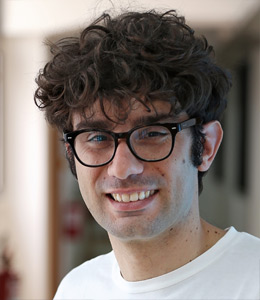
Yashar Deldjoo is an Assistant Professor specializing in artificial intelligence, machine learning, and their applications in healthcare, user modeling, and recommender systems. His research focuses on explainable AI, ethical AI practices, multimodal learning, and brain-computer interfaces. He has contributed to projects like WeBIUM (Wearable Devices and Brain-Computer Interfaces for User Modelling) and ARIEL (emotional support via BCI and LLMs). His work bridges technical advancements with societal impacts, addressing challenges in healthcare diagnostics (e.g., Alzheimer’s disease prediction), environmental sensing (real-time pollution-aware recommendations), and cybersecurity (data poisoning attacks on recommendation systems). He also explores fairness in large language models and the integration of EEG-based emotion recognition systems. Notable contributions include frameworks like BRAINEX (CNN model evaluation for brain age prediction), Ducho (multimodal feature extraction for recommendation systems), and KGUF (knowledge-aware graph-based recommenders). He chairs conferences like RecSys and contributes to industry-relevant standards for trustworthy AI systems. His research emphasizes interdisciplinary collaboration, combining neural networks, ethical considerations, and human-computer interaction. Current projects involve neurorehabilitation tools, quantum security for smart cities, and AI-driven usability testing.
Tullio Salmon Cinotti is an Adjunct Professor at the University of Bologna's Department of Electrical, Electronic, and Information Engineering 'Guglielmo Marconi'. His teaching focuses on logic design and digital systems, including courses like 'Logic Design T' for automation and electronics engineering students. His research spans IoT applications in smart agriculture, structural health monitoring, and energy systems. Key areas include interoperable IoT architectures, semantic integration, wireless sensor networks, and embedded systems. Research interests emphasize IoT toolchain development for condition monitoring, precision irrigation via soil moisture calibration, and drone-based environmental sensing (BEE-DRONES project). He explores semantic-driven agent programming, smart energy grids, and elderly care solutions like the HABITAT project for fall detection and indoor localization. His work integrates RFID, radar, and visual technologies for smart spaces and cultural heritage management. Publications highlight interdisciplinary approaches to electromobility, grid integration, and semantic middleware (e.g., Smart-M3). Teaching materials include course units on sequential networks, combinational logic design, and digital system synthesis. Contact: Email , +39 051 20 9 5421.
Francesca Matrone is a Fixed-term Assistant Professor in the Department of Environment, Land and Infrastructure Engineering (DIATI) at Politecnico di Torino, Italy. Her work bridges geomatics, artificial intelligence, and cultural heritage conservation, with a focus on 3D modeling, GIS, and HBIM integration for urban and historical environments. Her research interests include Geomatics, Cultural Heritage Digitization, AI in Geospatial Analysis, Drone-Based 3D Modeling, Semantic Segmentation of Point Clouds, and Smart Cities . She applies advanced technologies like UAVs, deep learning, and BIM-GIS integration to enhance the documentation, maintenance, and resilience of built heritage. The recent publications highlight a strong trend in using AI and machine learning for semantic segmentation of 3D heritage models, integration of HBIM with GIS using standards like IFC and CityGML, and drone-based photogrammetry for urban and territorial planning. These works reflect a multidisciplinary approach combining computer science, civil engineering, and digital heritage. Francesca Matrone is actively involved in research projects such as: HERITALISE (2025–2028, EU-funded): Digitization and cloud visualization of heritage buildings ACLIMO (2024–2026): Research collaboration with APAM on protected areas COGNITIO-FORT (2025–2026): Scientific Director for a project with Unione Montana Valle Stura She teaches across multiple programs: PhD : GeoAI for advanced urban analyses; Drones for 3D modeling (Main Teacher) Master’s : GIS Modeling for City and Land; Knowledge of Built Heritage under Climate Change Bachelor’s : GeoAI: Artificial Intelligence and Geospatial Data; Topography (Course Collaborator) She is a member of the Teaching Colleges for Civil and Building Engineering and Electronic, Telecommunications and Physics Engineering. She also holds a Learning to Teach (L2T) Open Badge from Politecnico di Torino, demonstrating her commitment to pedagogical excellence. Francesca is a co-inventor of the MAIN10ANCE PLATFORM , a national software patent aimed at enhancing the maintenance and conservation of historical built heritage through integrated HBIM-GIS systems.
Sandro Luigi Fiore is an Associate Professor in the Department of Information Engineering and Computer Science at the University of Trento, Italy. He has held academic positions at the University of Salento and visiting scientist roles at the University of Chicago and Lawrence Livermore National Laboratory. His research integrates data science, big data, and high-performance computing with climate informatics and open science. Education: Ph.D. in Innovative Materials and Technologies, University of Lecce, 2004 Master of Science in Computer Engineering (with honors), University of Lecce, 2001 His research interests span Data Science, Big Data, Scientific Data Management, Artificial Intelligence, and Distributed/Cloud/Parallel Computing , with a strong application focus on Climate Change and Open Science . He develops FAIR-enabled data analytics solutions and contributes to large-scale data infrastructures such as ESGF, EOSC-hub, and INDIGO-DataCloud. His work emphasizes provenance, reproducibility, and interoperability in scientific computing. The articles reflect a consistent trajectory in large-scale scientific data systems , evolving from Grid-DBMS and parallel computing to modern applications in climate informatics, AI, and FAIR data. Key themes include distributed data management, middleware, exascale software, and reproducible workflows in HPC environments. Scientific Awards: Earth System Grid Federation Team Award (2017) UNIDATA Community Equipment Award (2011) Best Student Paper Award, ITCC2003 Fiore has advised on and led multiple national and European projects including EOSC-hub, IS-ENES, and BARRACUDA (RDA-Europe3). He actively supports the adoption of FAIR data principles in scientific repositories, advising on data policies, architecture, provenance, and interoperability. He is a member of the FAIR Champions group and serves on the Advisory Board of FAIRsFAIR. He is involved in key research teams and projects such as the Earth System Grid Federation (ESGF) , Globus Lab (University of Chicago) , and PCMDI/LLNL . His work contributes to climate model intercomparison (CMIP5/6) and the development of next-generation data infrastructure for open science.
Francesco Leotta is a Tenure Track Assistant Professor in the Department of Computer, Control and Management Engineering at Sapienza University of Rome, specializing in ubiquitous computing, human-computer interaction, and digital humanities with applications in smart spaces, smart manufacturing, and cultural heritage. His educational background includes a PhD in Engineering in Computer Science (2014), Master Degree in Computer Science Engineering (2010), and Bachelor Degree in Computer Science Engineering (2006), all with honors from Sapienza University of Rome. He has been qualified to practice as a Computer Science Engineer since 2010. Leotta's research pioneers 'habit mining' for learning human behaviors from unlabeled sensor data, focusing on usability for technicians through readable process models and for end users via accessible interfaces including chatbots and solutions for people with disabilities. His recent work centers on Industry 4.0, developing AI-driven digital twin architectures for industrial automation. Key projects include privately funded Rotalaser Fustella 4.0 and publicly funded initiatives FIRST and ElectroSpindle 4.0. Analysis of his 2024-2025 publications reveals strong interdisciplinary trends bridging business process management with IoT and AI, particularly in smart manufacturing maturity models, digital twin composition, and multimodal human-robot interaction. His work consistently integrates theoretical frameworks with practical industrial applications. Scientific recognition includes: Best Paper Award at IEEE International Conference on Web Services (ICWS 2019) Leotta actively contributes to research groups in Human-Computer Interaction, Data Management, and Semantic Technologies, with current projects focusing on adaptive smart manufacturing systems. His grant portfolio demonstrates successful collaboration between academic research and industrial applications in the manufacturing sector. He maintains active involvement in the computing continuum ecosystem through projects like DataCloud, addressing big data pipelines and dark data utilization in industrial contexts.
Eliana Pastor is a Fixed-term Assistant Professor at the Department of Control and Computer Engineering (DAUIN) , Politecnico di Torino , and a member of the SmartData@PoliTO - Big Data and Data Science Laboratory . She teaches courses including Explainable and Trustworthy AI (Computer Engineering) and Business Intelligence for Big Data (Management Engineering) across academic years 2023-2025. Scientific branch: IINF-05/A - Information Processing Systems (Area 0009 - Industrial and Information Engineering) ERC sectors: Algorithms, Artificial Intelligence, Machine Learning, Software Engineering, Web Systems Her research focuses on Algorithm Fairness , Explainable AI , and Trustworthy AI , with applications in speech processing, computer vision, and ethical AI systems. She leads the commercial research project Root Cause Analysis in Mechatronic Systems via Pattern Recognition and Causal AI (2024-2025) and supervises PhD students Eleonora Poeta (Safe and Trustworthy AI) and Alkis Koudounas (Speech Foundation Models). Recent publications address fairness in speech models, video LLMs for zero-shot summarization, and Kolmogorov-Arnold Networks for language understanding Collaborates with DBDM - Database and Data Mining Group (DAUIN) on AI ethics and data science projects
Luca Mainetti is a Full Professor in the Department of Innovation Engineering at the University of Salento, where he leads the GSA Lab (Graphics and Software Architectures Lab) and founded the Mobile and Multi-Device Applications research group. He has been a key figure in advancing software and web engineering, particularly in model-driven approaches for IoT and service-oriented systems. His research interests include: Software Engineering Web Engineering Model-Driven Engineering for middleware and IoT Service-Oriented Architectures Embedded and mobile applications His recent publications reflect a strong trend toward model-driven development of IoT systems, integration platforms like WoX, and academic entrepreneurship through spin-offs such as VidyaSoft and SofThings. These works emphasize software architecture, automation, and real-world application in domains like FinTech and CRM. Scientific recognitions include: Senior Member of the ACM Member of IEEE Luca Mainetti has supervised over ten doctoral and post-doctoral researchers and coordinated the Doctoral School in Information Engineering from 2012 to 2017. He has held leadership roles including Vice-Director of the Department of Innovation Engineering and Rector’s Representative for the Digital Agenda. He also coordinates the National Technical Committee for Digital University under MIUR, highlighting his influence in national academic ICT policy. He is actively involved in research labs and innovation initiatives, including: GSA Lab – Graphics and Software Architectures Lab (Scientific Director since 2007) IDA Lab – IDentification Automation Lab (Scientific Director, 2008–2016) Spin-off leadership in VidyaSoft and SofThings
Roberto Corizzo is a Research Fellow at the Department of Computer Science, University of Bari, Italy. He holds a Ph.D. and is affiliated with the LACAM Laboratory. His research focuses on big data analytics, data mining, predictive modeling for sensor networks, energy prediction in smart grids, and anomaly detection. He has conducted research internships at INESC TEC (Portugal) under Prof. João Gama and at the American University (Washington D.C.) under Prof. Nathalie Japkowicz. Key research interests include: Big Data Analytics Predictive Modeling for Sensor Networks Energy Prediction in Smart Grids Anomaly Detection in Dynamic Systems His work spans over 15 publications from 2014–2019, addressing challenges in data stream analysis, renewable energy forecasting, and distributed computing. Notable contributions include Spark-GHSOM for large-scale data clustering and DENCAST for multi-target regression. He has organized conference challenges (e.g., ECML/PKDD Discovery Challenges) and contributed to projects like VIPOC for renewable energy prediction. No scientific awards are explicitly listed. He collaborates with academic institutions globally and participates in interdisciplinary projects involving energy systems and semantic services in big data platforms.
Mauro Lo Brutto is an Associate Professor at the University of Palermo, Department of Engineering, specializing in Geomatics. He earned a PhD in Geodetic and Topographic Sciences from the University of Naples Parthenope (2002) and holds an MSc in Geological Sciences (cum laude, 1992). His career includes a Researcher role at the University of Palermo (2003–2020) and leadership of the Geomatics Laboratory. He teaches Topography, Photogrammetry, and 3D Surveying. PhD: Geodetic and Topographic Sciences, University of Naples Parthenope (2002) MSc: Geological Sciences, University of Palermo (1992) Postgraduate Course: GIS and Remote Sensing, FORMEZ Naples (1993) Research spans photogrammetry, laser scanning, GNSS, and Scan-to-BIM methodologies for cultural heritage documentation. Key applications include UAV surveys, virtual archaeology, geospatial positioning, and monitoring of unstable geological sites. His work integrates innovative technologies for heritage preservation and environmental analysis. Recent publications focus on 3D modeling of archaeological sites, geospatial networks, and HBIM (Heritage BIM) applications. Articles address topics like UAV surveying of Arab-Norman churches, thermographic landfill analysis, and flow dynamics around freshwater mussels. Scientific Affiliations Member, SIFET (Italian Society of Photogrammetry and Topography) Member, AUTEC (University Cartography Association) Member, ISPRS (International Society for Photogrammetry) Member, CIPA (Architectural Photogrammetry Committee) He contributes to editorial boards (Applied Sciences, Remote Sensing) and serves as Guest Editor for journals like European Journal of Remote Sensing. His lab at the University of Palermo drives geomatics innovation for cultural heritage.
Sara Comai is an Associate Professor at the Politecnico di Milano , affiliated with the Department of Electronics, Information and Bioengineering . She coordinates the Assistive Technology Group (ATG) and leads the MEP (Maps for Easy Paths) project. Research Focus : Database systems, smart home technologies, indoor localization, and assistive solutions for elderly/dementia patients Recent Trends : 2025-2023 publications highlight Occupancy detection via Wi-Fi/infrared sensors Behavior classification for Alzheimer's patients Wearable/RFID-based health monitoring Human-robot collaboration in agriculture Adaptive machine learning for land use segmentation
Luca Spalazzi is an Associate Professor at the Department of Information Engineering , Università Politecnica delle Marche , Italy. His research spans multiple domains including cybersecurity , blockchain technology , machine learning , and telerehabilitation systems for Parkinson's disease. He applies formal methods to software verification and security analysis, with a focus on real-time systems and distributed architectures . Key research areas: Cybersecurity, Blockchain, Machine Learning, IoT, Formal Verification Recent work: Blockchain-based sustainable supply chains, Zero-Knowledge Proofs, Smartphone health monitoring His publications (2013-2025) demonstrate expertise in malware detection , smart contract verification , and AI-driven health solutions . Articles include BRAIN 2024 workshop organization and RAPIDO system for Parkinson's telerehabilitation.
Marco Mulas is an Associate Professor at the Department of Chemical and Geological Sciences, University of Modena and Reggio Emilia. He teaches courses including Landslide Risk Assessment and Mitigation , Geothematic Surveying and Cartography , and Applied Geology for Civil and Environmental Engineering, focusing on landslide dynamics, geomorphological mapping, and hazard modeling. His research spans landslide monitoring using UAV-RTK/LiDAR, GNSS arrays, InSAR, and Digital Image Correlation. Key projects include the SoLoMon framework for regional landslide monitoring and development of unconventional Micropiles Tripods Shields for earthflow control. He specializes in rainfall-landslide thresholds, groundwater contamination modeling, and multi-temporal displacement analysis. Recent publications (2025-2016) cover topics like high-frequency UAV surveys (Baldiola landslide), effective rainfall impact on flysch landslides, debris flow hazard zonation, and structural analysis of rockfall precursors via sinusoidal wave fitting. His work emphasizes integrating field surveys with advanced geospatial datasets for hazard assessment. Contact: marco.mulas@unimore.it | Office: via G. Campi, 103 - Modena
Angela Maria Tomasoni serves as a Part-Time Lecturer in the Department of Naval, Electrical, Electronic and Telecommunications Engineering at the University of Genoa, actively teaching Wildfire Risk Assessment and Management in the Master's program for Engineering for Natural Risk Management during the 2024-2025 academic year. Her research expertise centers on transportation safety and environmental risk mitigation, with core competencies in: GIS-based risk modeling for dangerous goods transportation Big Data analytics for regional risk assessment ICT decision support systems in maritime environments Toxic release modeling in urban coastal zones Mediterranean regional case studies focusing on Liguria and Tuscany Analysis of her 2022-2025 publications reveals consistent methodological evolution from foundational GIS applications toward integrated Big Data and ICT solutions, maintaining strong regional focus on Italian transportation corridors while addressing chemical safety and wildfire management challenges through spatial analysis. Scientific Awards: No awards, fellowships, or medals were documented in the source material. Advising and Grants: The provided documentation contains no information regarding graduate student supervision, research funding, or grant administration activities.
Siqi Wu is an Assistant Professor of Information and Library Science in the Luddy School of Informatics, Computing, and Engineering at Indiana University Bloomington. Previously, they were a postdoc research fellow in the Center for Social Media Responsibility at the University of Michigan School of Information. Dr. Wu is a computational social scientist who collects, models, and analyzes web data at scale, with research focusing on understanding social phenomena through large-scale empirical measurements and designing next-generation sociotechnical systems via data-driven policies and interventions. Dr. Wu's educational background includes: Ph.D. in Computer Science from the Australian National University M.S. in Information Technology from the University of Melbourne B.E. in Electronics Engineering from Tianjin University Dr. Wu's research spans computational social science, large-scale web data analysis, and social media systems. Their work examines YouTube recommendation networks, Twitter data analysis, prevalence estimation techniques, and cross-platform attention dynamics. Recent projects investigate user control over recommendations, harmful content detection, and cross-partisan communication patterns, combining computational methods with social science theories to understand algorithmic influence on online experiences and develop practical interventions. Dr. Wu's publications demonstrate consistent excellence in social media analysis, with particular expertise in measuring attention dynamics across platforms, estimating class prevalence using black box classifiers, and understanding recommendation systems. Their work bridges technical innovation with social science questions, resulting in practical implications for platform design and policy across YouTube, Twitter, and other social media ecosystems. Notable recognitions include: Google PhD Fellowship (2018) ICWSM Best SPC (2022-2024) CSCW 2019 Best Paper Honorable Mention (top 5%) ICWSM 2021 Spotlight Paper selection (top 8) Dr. Wu actively mentors students interested in computational social science, seeking those with strong programming skills, data analysis experience, and passion for understanding social phenomena through computational methods. They serve on program committees for ICWSM, CSCW, and CHI, and their research has practical applications for social media platform design, content moderation policies, and understanding information ecosystems. Dr. Wu has developed several software tools including pyquantifier for prevalence estimation and tools for Twitter and YouTube data collection. Dr. Wu leads research on social media analysis with focus on YouTube and Twitter ecosystems, developing methods to understand recommendation systems, user engagement patterns, and cross-platform dynamics. Their work involves collecting and analyzing large-scale datasets to inform platform design and policy decisions related to algorithmic transparency and user control.
Andrea Giovanni Nuzzolese is a Researcher at the Semantic Technology Laboratory (STLab) of the National Research Council (CNR) in Rome, Italy. He earned his PhD in Computer Science from the University of Bologna in 2014. His core research focuses on Knowledge Extraction , Ontology Design Patterns , Linked Data , and Semantic Web technologies. Education: PhD in Computer Science (2014), University of Bologna Research Focus: Ontology engineering, semantic AI, and knowledge graph applications in cultural heritage and healthcare Projects: EU-funded IKS project, Apache Stanbol developer, and contributions to Italian Cultural Heritage (ArCo) and healthcare (Geriatric Assessment) ontologies His recent publications emphasize hybrid AI for global governance, LLM-driven ontology generation, and semantic infrastructure development. While no formal awards are listed, his work is recognized in international journals and conferences.