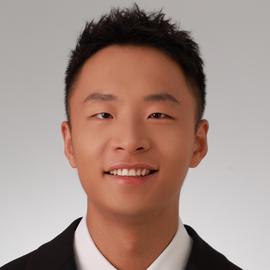
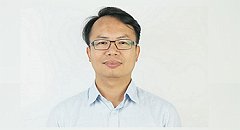
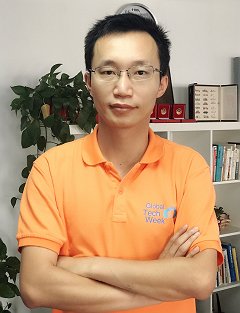
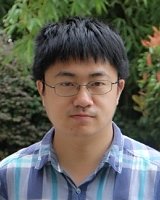
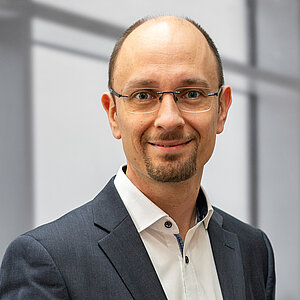
Prof. Dr. Uwe Schlink is a leading Professor at the Institute of Meteorology, University of Leipzig, and Senior Researcher at the Department of Urban & Environmental Sociology, Helmholtz Centre for Environmental Research - UFZ. His work focuses on urban climate research , thermal comfort , urban air quality , and statistical modelling with Bayesian inference. He leads the working group on urban climate and personal exposure, bridging environmental science with societal resilience. Affiliation: University of Leipzig (since 2009) and UFZ (since 2013) Research Themes: Urban heat islands, personal exposure to environmental stressors, statistical climate models, and health impacts of air pollution His research spans environmental health , urban climatology , and resilient city planning , with significant contributions to understanding thermodynamic interactions between urban structures and climate. He has pioneered methods for high-resolution land surface temperature analysis and green infrastructure performance in mitigating heat stress. Recent publications (2023-2025) highlight his work on PM2.5-bound PAH exposure , anthropogenic heat impacts in Beijing, and Asian plateau climate dynamics . Collaborative projects address urban heat stress , green roofs , and health-focused urban planning .
Chao Peng is a Principal Research Scientist at ByteDance where he leads the Software Engineering Lab, focusing on AI agents for software engineering. He holds a part-time position as a Postgraduate Student Mentor at Fudan University's School of Computer Science. His research bridges industry and academia, with significant contributions to software testing, program repair, and LLM applications in software development. Education: PhD in Informatics, 2021, University of Edinburgh, UK MSc in High Performance Computing and Data Science, 2017, University of Edinburgh, UK BEng in Computer Science and Technology, 2016, Xuzhou University of Technology, China Dr. Peng's research interests center on the intersection of artificial intelligence and software engineering. He explores how large language models can transform traditional software development practices, particularly in code generation, testing, and bug fixing. His work on LLM4Code has led to innovative frameworks like CodeVisionary for evaluating code generation capabilities and Trae Agent for software engineering tasks with test-time scaling. He investigates the synergy between machine learning techniques and compiler optimizations to enhance software reliability and developer productivity. His recent publications reveal a strong focus on practical evaluation frameworks for LLMs in real-world software engineering contexts. Rather than theoretical benchmarks, his work emphasizes real-world applicability, as seen in RepoMasterEval which evaluates code completion in actual repository settings. He examines multi-faceted challenges including code generation, bug reproduction, issue resolution, and repository-level question answering, consistently addressing the gap between laboratory evaluations and practical development environments. Scientific Awards: Distinguished Reviewer for FSE'25 Invited to program committees for FSE'26, SANER 2026, ASE 2025, and others School of Informatics Scholarship (fully-funded PhD) Multiple national scholarships during undergraduate studies Honours Spot Bonus at ByteDance Dr. Peng actively mentors postgraduate students at Fudan University while leading research initiatives at ByteDance that foster university collaborations. His laboratory work translates academic research into practical tools for software development, with several frameworks deployed in industrial settings. He serves on multiple conference program committees, contributing to the advancement of software engineering research through rigorous peer review and community building. His Software Engineering Lab at ByteDance operates at the forefront of AI-assisted development, exploring how agent-based systems can automate complex software engineering tasks. The team's work on frameworks like AEGIS for bug reproduction and DialogAgent for code question answering demonstrates their commitment to solving practical challenges faced by developers in real-world settings.
Prof. Dr. Markus Pauly serves as Head of the Institute for Plant Cell Biology and Biotechnology at Heinrich Heine University Düsseldorf since January 2016, leading research at the interface of plant development and metabolism. His work focuses on plant cell wall biosynthesis and its role in structural integrity, defense, and microbial interactions. His research spans plant cell wall biology , metabolomics , and plant-microbe interactions , with specific expertise in xyloglucan and heteromannan synthesis, lignin deposition mechanisms, and metabolic networks of plant microbiota. Key methodologies include biochemical characterization, genetic analysis, and data-driven approaches to understand carbon flow from photosynthesis to cell wall components. Analysis of his 2016-2023 publications reveals a consistent focus on cell wall polysaccharide biosynthesis, with increasing emphasis on plant-fungal symbiosis and immune subversion mechanisms. His work demonstrates how pathogens exploit cell wall enzymes and how specific proteins regulate wall composition during development and stress responses. As institute head, Pauly oversees the Plant Metabolism and Metabolomics Facility and Imaging Platform within CEPLAS (Cluster of Excellence on Plant Sciences). He has mentored PhD students, including one who became a professor, and advises young scientists to 'keep your options open' while maintaining active research engagement through participation in initiatives like CEPLAS and eSports.
Dr. Benjamin Rost is a researcher at the Institute of Neurophysiology within the Faculty of Medicine at Charité - Universitätsmedizin Berlin. He is a core member of Collaborative Research Center SFB 1315 (Project C01), focused on developing molecular tools for memory engram manipulation and investigation. His research centers on optogenetic technology development and neural circuit analysis, with specific expertise in synaptic plasticity mechanisms, calcium signaling control, and neuromuscular junction modeling. Key contributions include engineering calcium-permeable channelrhodopsins (CapChRs) for precise intracellular signaling manipulation, developing bistable opto-GPCRs like PdCO for multiplexed circuit interrogation, and creating self-organizing neuromuscular junction models from human stem cells. His work bridges molecular engineering, electrophysiology, and disease modeling to address fundamental questions in neural communication. Recent publications reveal a clear trajectory toward increasingly sophisticated optogenetic tools with enhanced spatiotemporal precision. His 2022-2025 work demonstrates progression from foundational presynaptic optogenetics (2022) to asymmetric plasticity discovery (2025), with critical intermediate advances in calcium signaling (2022), stem cell-based disease models (2023), and high-throughput screening systems (2024). This evolution highlights his interdisciplinary approach combining biophysics, stem cell biology, and circuit neuroscience. Dr. Rost operates within Prof. Dietmar Schmitz's laboratory at Charité's Institute of Neurophysiology, leveraging SFB 1315 resources for memory engram research. His team employs advanced techniques including patch-clamp electrophysiology, stem cell differentiation protocols, and custom-built optogenetic hardware like the RainbowCap illumination system for microplate-based assays.
Hoa Khanh Dam is Professor and Deputy Head of School (Research) & Head of Postgraduate Studies in the School of Computing and Information Technology at the University of Wollongong, Australia. He serves as Co-Director of the Decision System Lab where he leads research at the intersection of Software Engineering and Artificial Intelligence. His research focuses on developing AI-driven solutions for software quality, cybersecurity, and productivity enhancement. Key interest areas include: AI/IoT autonomous and cyber resilient systems Software Analytics and Mining Software Repositories Large Language Models for software engineering tasks Defect prediction and vulnerability analysis Agile project management optimization Analysis of Dam's 12 publications from 2018-2025 reveals consistent application of machine learning to software engineering challenges. His work shows progressive evolution from traditional ML techniques toward LLM-based frameworks, with major contributions in defect prediction (DeepJIT), vulnerability analysis, microservice recommendation, and agile effort estimation. The research demonstrates strong industry relevance through practical implementations in code review, component prediction, and security systems. Dam co-leads the Decision System Lab at UOW, which develops intelligent decision support systems using AI and data analytics. The lab's work bridges theoretical AI advancements with real-world software engineering applications, particularly in cybersecurity and autonomous systems development.
Zhenyu Chen is a Full Professor and Director of the iSE Laboratory at Nanjing University, specializing in AI-driven software testing methodologies. His research bridges artificial intelligence and software engineering with dual focus areas: leveraging AI to enhance testing processes ( AI for Testing ) and validating AI/ML systems ( Testing for AI ). His research interests center on deep learning framework testing , crowdsourced testing optimization , and Large Language Model applications in verification . Recent work demonstrates innovative approaches to metamorphic testing of neural networks, LLM-based test report analysis, and security hardening of code models against backdoors. Key contributions include the development of mooctest.com and frameworks like DevMuT for mutation testing of deep learning APIs. His publication trajectory reveals evolving focus from crowdsourced testing (2018-2020) to deep learning system validation (2021-2023) and current emphasis on LLM-powered testing solutions. Major venues include ASE, ICSE, and ISSTA where he serves regularly on program committees.
Dr. Torsten Stuehn serves as IT Group Leader at the Max Planck Institute for Polymer Research (MPI-P) in Mainz, Germany, leading scientific software development and HPC infrastructure since joining in 2003. He oversees the ESPResSo++ simulation package and collaborates with the University of Mainz and Max Planck Compute and Data Facility (MPCDF). Education: Diploma in Physics, University of Mainz, 1999 Doctorate in Physics, University of Mainz, 2005 His research focuses on scientific software engineering for exascale computing, developing neural network-based force fields, adaptive resolution methods, and load balancing algorithms to advance molecular simulation capabilities. This work addresses critical challenges in maintaining computational leadership for soft matter physics. Recent publications reveal a clear evolution in ESPResSo++ toward exascale readiness, integrating machine learning with multiscale modeling and parallel computing innovations. The software's progression reflects broader trends in computational physics where AI-driven methods and heterogeneous architecture optimization are becoming indispensable. Stuehn directs MPI-P's computational infrastructure team and contributes to major initiatives including Transregio SFB 146 and the European E-CAM project, driving open-source scientific software development for the global research community.
Dr. Tsvetomir Ivanov serves as Group Leader of the Biocondensate Systems group within the Artificial Cells project at the Max Planck Institute for Polymer Research in Mainz, Germany. He completed his PhD in 2025 under Prof. Katharina Landfester after joining her department in 2020, following dual chemistry degrees from Hamburg University of Technology and Sofia's University of Chemical Technology and Metallurgy. His academic background includes: Double Chemistry Degree: Hamburg University of Technology & University of Chemical Technology and Metallurgy, Sofia (DAAD scholarship) Diploma Thesis: Max Planck Institute for Dynamics of Complex Technical Systems, Magdeburg (Prof. Kai Sundmacher) PhD in Polymer Research: Max Planck Institute for Polymer Research (2020-2025) Ivanov's research integrates organic chemistry, molecular biology, and engineering to develop multicompartmental artificial cell systems. His dual focus encompasses: (1) Engineering adaptive protocells with growth/division capabilities using stimuli-responsive block copolymers and integrated suborganelles, and (2) Constructing peptide-based coacervate systems to model biomolecular condensates for synthetic organelle communication. This work bridges materials science and cellular biology with direct applications in nanomedicine and synthetic cell networks. Analysis of his 2023-2025 publications reveals dominant themes in biomolecular condensates and compartmentalized catalysis, with consistent methodology using peptide-based coacervates and vesicular systems. The research spans synthetic biology, soft matter physics, and nanomedicine, emphasizing bottom-up assembly of functional microreactors for therapeutic applications. As Group Leader, Ivanov directs the Biocondensate Systems team within Prof. Landfester's department, overseeing the Artificial Cells project's development of minimal cell models. His position implies active supervision of junior researchers and management of research funding, though specific grant details remain unreported in the source material.
Gregory Gay is an Associate Professor in the Interaction Design and Software Engineering division within the Department of Computer Science and Engineering at Chalmers University of Technology and the University of Gothenburg, Sweden. His academic profile spans numerous software engineering conferences where he has served as committee member, program chair, and active researcher since at least 2018. Dr. Gay's research focuses on the intersection of software engineering and artificial intelligence, with particular emphasis on: Software Testing and Analysis Search-Based Software Engineering AI for Software Engineering (AI4SE) AI Engineering Automation of development tasks Software Carbon Footprint and sustainability His recent publications demonstrate a strong trend toward applying AI and optimization techniques to software testing challenges, with increasing focus on sustainability aspects of software development. Many studies take an industrial perspective, examining real-world applications in automotive software systems. His work blends theoretical foundations with practical applications, making significant contributions to both academic research and industrial practice in software engineering. Dr. Gay has been actively involved in numerous top software engineering conferences including ASE, ICSE, ESEC/FSE, ISSTA, and ICST, serving on program committees and organizing tracks. His research methodology typically combines optimization, artificial intelligence, and machine learning to help developers deliver complex systems in a safe, secure, and efficient manner.
Dr. Jifeng Xuan is a Professor and Deputy Dean at the School of Computer Science, Wuhan University, China. He founded the CSTAR (Centre of Software Testing, Analysis and Reliability) and holds editorial roles at Empirical Software Engineering and PLOS One . Previously, he was a postdoctoral researcher at INRIA Lille-Nord Europe (France) and earned his PhD from Dalian University of Technology. Research Interests: His work focuses on software testing, debugging, automated program repair, software data analysis, and search-based software engineering. He integrates AI/ML techniques for tasks like log analysis, fuzz testing, and vulnerability detection, with applications in robotics, microservices, and Android development. Publication Trends: Recent articles (2022–2025) emphasize AI-driven software engineering, including LLM-based repair, reinforcement learning for testing, and deep learning surveys. Security (vulnerability logs) and empirical studies on industrial challenges (e.g., C program repair) are recurring themes. Awards & Honors: ACM SIGSOFT Distinguished Paper Award (2025) IEEE TCSE Distinguished Paper Award (2025) CCF NASAC Youth Software Innovation Award (2024) Outstanding Doctoral Dissertation Award, China Computer Federation (2014) Luojia Young Scholar (2015) Student Advising & Labs: Actively recruits PhD and master students for CSTAR Lab. Research areas include automated debugging, testing tools (e.g., Mergebot, FastLog), and AI-generated code assessment. No specific grants listed.
Seung Yeob Shin serves as a Research Scientist at the University of Luxembourg's Interdisciplinary Centre for Security, Reliability and Trust (SnT), where he contributes to the Software Verification and Validation (V&V) Lab under Prof. Lionel Briand. His active participation in major software engineering conferences includes serving on ASE 2025's Research Papers Program Committee and authoring multiple journal-first publications presented at premier venues like ICSE and ESEC/FSE. Shin earned his PhD in 2016 from the Laboratory for Advanced Software Engineering Research (LASER) at the University of Massachusetts Amherst's College of Information and Computer Sciences. His research expertise centers on applying formal methods to complex software systems, with particular emphasis on model-based verification techniques. His current research program bridges theoretical modeling and practical system validation across critical domains. Key focus areas include developing simulation frameworks for software-defined networks, creating model-checking approaches for cyber-physical control loops, and establishing probabilistic methods for real-time system verification. This work consistently targets reliability challenges in safety-critical infrastructure through rigorous engineering methodologies. Recent publications demonstrate a cohesive trajectory in applying formal verification to emerging system paradigms. The 2024 journal-first papers reveal increasing sophistication in handling non-deterministic behaviors across networking, embedded systems, and requirements engineering domains, with notable emphasis on failure induction and probabilistic safety guarantees. No scientific awards were documented in the available materials. While conference contributions indicate significant scholarly engagement, no information regarding student advising or research grants appears in the provided documentation. As a core member of the V&V Lab at SnT, Shin contributes to Luxembourg's national cybersecurity research infrastructure. The lab specializes in developing mathematical frameworks for system validation, with current projects addressing verification challenges in autonomous systems, critical infrastructure, and secure communications protocols through model-driven approaches.
Haipeng Cai serves as an Associate Professor in the Department of Computer Science and Engineering at the University at Buffalo, SUNY. His academic work spans software engineering, program analysis, and software security with particular emphasis on adaptive analysis techniques for mobile and distributed systems. His research interests center on adaptive/data-driven static and dynamic analysis for security applications targeting mobile apps, distributed systems, and multilingual software. Current work focuses on enhancing vulnerability detection, cross-language bug analysis, and automated security tooling through machine learning approaches. His lab produces tools like VinJ for vulnerability data generation and PolyFax for multilingual software characterization. Recent publications reveal strong trends in multilingual system security and AI-enhanced analysis , with 15+ papers since 2022 addressing cross-language vulnerabilities, Android security, and learning-based vulnerability detection. His work bridges theoretical program analysis with practical security applications in real-world software ecosystems. As an active academic contributor, he serves on program committees for major conferences including ASE, ICSE, and FSE, and will deliver a keynote at PROMISE 2025. His leadership includes journal-first paper chair roles and session chair positions at top software engineering venues. Dr. Cai maintains an active research presence through his personal website , GitHub repository ( github.com/chapering ), and academic social media profiles, with consistent contributions to the software engineering research community since 2018.
Sebastian Ott is a Professor in the Faculty of Computer Science at Hof University of Applied Sciences, specializing in Business Information Systems. Based at Campus Hof, Building B, Room B129, he maintains office hours every Tuesday from 13:00 to 14:00 and can be contacted via phone (+49 9281 409 - 4812) or email. His research focuses on Business Information Systems, bridging computer science and business management to develop information systems that optimize organizational processes and decision-making. This interdisciplinary field integrates software engineering, data management, and business process modeling to address real-world enterprise challenges.
Prof. Dr.-Ing. Rainer Keller serves as Vice Dean of the School of Computer Science and Information Technology at Esslingen University of Applied Sciences. He concurrently holds Laboratory Management roles for both the Operating Systems Laboratory and Information Technology Laboratory, coordinates the Applied Computer Science (Master) program, and serves on the Environmental Committee for his school. His academic journey includes a Doctorate in Engineering (with distinction), Research Associate and Group Leader positions at HLRS, University of Stuttgart (leading the 9-member "Applications, Models and Tools" group), PostDoc tenure at Oak Ridge National Laboratory (ORNL), and prior appointments at Stuttgart University of Applied Sciences. Keller's research centers on operating systems, distributed systems, and HPC with specialized expertise in Linux-based parallel programming tools and file I/O optimization. His work bridges theoretical system models with practical performance tuning, particularly in high-performance computing environments where syscall tracing and storage optimization are critical. Recent publications reveal consistent focus on system-level performance analysis, evolving from foundational file I/O profiling (2020) to advanced syscall tracing mechanisms (2022) and forward-looking access optimization frameworks (2025). These works demonstrate applied research in Linux ecosystems with direct relevance to HPC infrastructure. As Program Coordinator for the Applied Computer Science (Master) program and laboratory manager for two key facilities, he oversees academic development and hands-on technical training. His consultation hours (Tuesdays 1-2 PM by appointment) support student engagement in systems research. He actively contributes to national HPC infrastructure as a Member of the State User Committee (LNA) bwHPC, influencing regional high-performance computing strategies while maintaining his laboratory management responsibilities at Esslingen.
Iwan Schie serves as Working Group Leader at the Leibniz Institute of Photonic Technology (Leibniz-IPHT) in Jena, Germany, where he leads the Spectroscopy / Imaging Multimodal Instrumentation research group. His work bridges analytical chemistry, biomedical engineering, and clinical applications with a focus on developing Raman spectroscopy-based diagnostic tools. Dr. Schie maintains an active research program with numerous publications in high-impact journals across multiple disciplines. Dr. Schie's research centers on Raman spectroscopy applications in medical diagnostics and environmental monitoring. His work demonstrates particular expertise in developing multimodal imaging systems that combine Raman spectroscopy with complementary techniques like optical coherence tomography and fluorescence imaging. His research spans both fundamental methodological development and clinical translation, with several studies focusing on cancer diagnostics across multiple organ systems including head and neck, bladder, and colon cancers. The environmental applications of his work include microplastic detection and pollen analysis. Analysis of Dr. Schie's publication record reveals a clear trajectory toward clinical implementation of Raman spectroscopy technologies. His recent work increasingly focuses on regulatory-compliant medical device development, with multiple studies conducted in accordance with European Medical Device Regulation standards. The publications demonstrate progression from ex vivo validation studies to in vivo clinical applications, with particular emphasis on workflow integration within surgical settings. His collaborative approach is evident through extensive co-authorship networks spanning physics, engineering, and clinical medicine. Dr. Schie has made significant contributions to advancing Raman spectroscopy methodology, with publications addressing critical challenges in device stability, spectral analysis, and multimodal integration. His work on establishing clinical workflows represents important steps toward routine clinical adoption of these technologies. The practical impact of his research is demonstrated through development of systems like the invaScope Raman endoscopy platform for bladder tumor diagnosis. As Working Group Leader at Leibniz-IPHT, Dr. Schie oversees research activities in spectroscopy and multimodal imaging instrumentation. His team develops advanced optical systems for biomedical applications with particular focus on real-time tissue characterization during surgical procedures. The research environment supports both fundamental methodological development and applied clinical translation, with strong emphasis on regulatory compliance for medical device development.