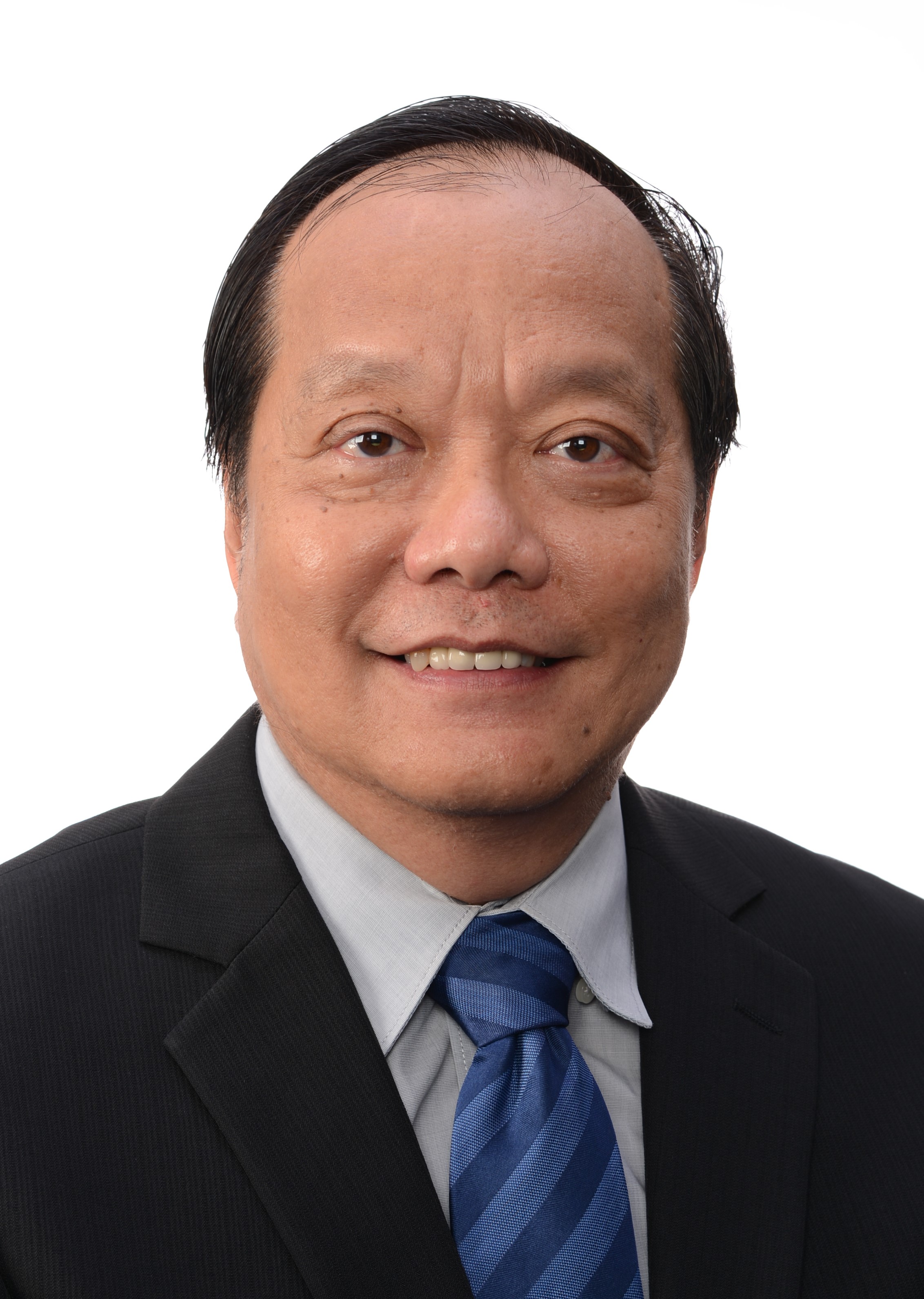
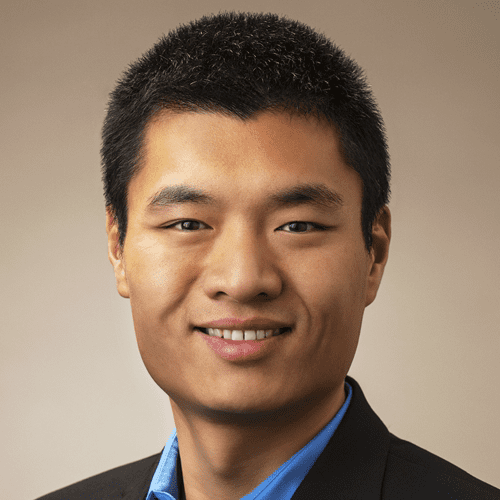
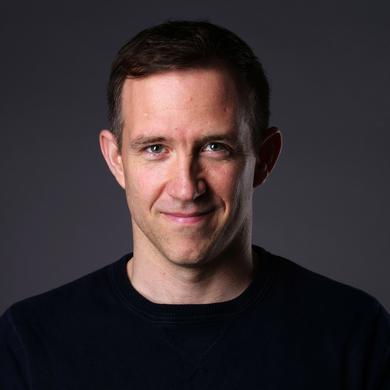
Dr. Mohamed Khalifa is a Visiting Fellow at the Centre for Health Informatics, Australian Institute of Health Innovation, Macquarie University, Sydney. He holds a PhD in Health Innovation from Macquarie University (2020) and an MSc in Health Informatics from the University of Edinburgh (2012). His expertise spans health informatics, AI-driven healthcare solutions, and strategic healthcare management. He has led multidisciplinary teams in developing evidence-based frameworks like GRASP for clinical predictive tools. Affiliations: Visiting Fellow, Macquarie University Director of Studies, College of Health Sciences (Education Centre of Australia) Former Digital Health Officer, Australian Digital Health Agency (2020–2021) His research focuses on AI applications in healthcare, clinical decision support systems, and health analytics. Over 20 years, he has published 60+ peer-reviewed papers and holds an innovation patent (2018). He has received awards including the IMIA Best Paper (2020) and ICIMTH Best Paper (2015). Dr. Khalifa’s work emphasizes improving healthcare efficiency through technology, including projects on predictive tools, emergency room performance, and diabetes management. He is a Fellow of the Australasian Institute of Digital Health and certified in healthcare information systems (CPHIMS).
Dr. Vahid Hosseini is an Associate Professor and Graduate Program Chair in the School of Sustainable Energy Engineering at Simon Fraser University (SFU). His research focuses on sustainable energy systems, urban air pollution, and clean mobility solutions. He holds a Ph.D. in Mechanical Engineering from the University of Alberta (2008), and M.A.Sc. and B.Eng. degrees from Sharif University of Technology (Iran). His academic roles include leadership in graduate academic programs and engineering education. Key research areas include thermo-fluid systems analysis, vehicle emissions reduction, and urban air quality modeling. He is actively involved in projects addressing real-world driving emissions, emission inventory development, and the impact of cold climates on transportation energy consumption and pollution. Notable contributions include studies on retrofit emission control devices for motorcycles, high-emitter vehicle identification, and policy recommendations for emission reduction. His work integrates experimental methods, computational fluid dynamics (CFD), and machine learning to tackle complex environmental challenges. Teaching interests span thermodynamics, fluid mechanics, and air pollution control engineering. Current courses include SEE 325 D100 Mechanical Design and Finite Element Analysis . Research highlights include collaborations on Tehran’s air quality management, particulate matter (PM2.5) source apportionment, and the development of high-resolution emission inventories. He contributes to international conferences and journals, with a focus on practical solutions for sustainable urban transportation systems.
Taskin Padir is a Professor in the Department of Electrical and Computer Engineering at Northeastern University and concurrently serves as an Amazon Scholar. He holds a PhD and MS from Purdue University and a BS from Middle East Technical University. His research focuses on experiential robotics, human-robot teaming, and embodied AI, with leadership roles in the Robotics and Intelligent Vehicles Research Laboratory (RIVeR Lab) and the Institute for Experiential Robotics. Padir has led projects for DARPA, NASA, and industry partners, advancing autonomous systems for extreme environments and human-robot collaboration. Education: PhD, Electrical and Computer Engineering, Purdue University (2004) MS, Electrical and Computer Engineering, Purdue University (1997) BS, Electrical and Electronic Engineering, Middle East Technical University (1993) Research Interests: Shared autonomy and human-in-the-loop robotics Embodied artificial intelligence Human-robot teaming in extreme environments (e.g., space, disaster zones) Collaborative robotics for industrial applications His work bridges robotics, AI, and real-world challenges, with recent projects addressing seafood processing automation, robotic navigation in unstructured terrains, and spectroscopy-based environmental monitoring. Awards: Recipient of the 2024 Faculty Research Team Award, 2023 Impact Award, and 2022 Amazon Scholar distinction. His research has been funded by NSF, DARPA, NASA, and industry collaborators like Amazon Robotics and Intel. Labs: Director of the RIVeR Lab and Institute for Experiential Robotics, fostering interdisciplinary research in autonomous systems and intelligent vehicles. Current projects include CRISP (Co-worker Robots for Seafood Processing) and PROSPECT (robotic spectroscopy tools).
Professor Chin Hoong Chor is a Professor in the Department of Civil Engineering at the National University of Singapore (NUS), affiliated with the Faculty of Engineering. He specializes in transportation systems modeling, safety assessment, and congestion management. As a registered professional engineer and road safety auditor, he has contributed to numerous projects with Singapore’s land authorities and private companies. He holds leadership roles including Vice Chairman of the Chartered Institute of Logistics and Transport and Editorial Board membership for the International Journal of Transport Management. Qualifications include a BEng and MEng from NUS and a PhD in Transportation Engineering from the University of Southampton. His research interests span vehicle detection using image processing, traffic conflict analysis, and public transport optimization. Notable awards include the NUS Faculty Innovative Teaching (Gold) Award (2001/2002) and the UK Institution of Civil Engineers Webb Prize (2003). Education: BEng in Civil Engineering, National University of Singapore MEng in Civil Engineering, National University of Singapore PhD in Transportation Engineering, University of Southampton His research focuses on quantitative safety analysis, traffic flow modeling, and smart city initiatives. Recent work explores maritime collision risk modeling and sentiment analysis for transportation planning. He actively contributes to government committees and has authored over 40 peer-reviewed papers on traffic management and safety. Awards: Faculty Innovative Teaching (Gold) Award, 2001/2002 UK Institution of Civil Engineers Webb Prize 2003 Prof Chin has undertaken traffic impact studies and road safety reviews in Singapore, collaborating with public and private sectors. His work bridges academic research and practical policy implementation, emphasizing sustainable urban mobility solutions.
Fengqi You is the Roxanne E. and Michael J. Zak Professor in Energy Systems Engineering at Cornell University. He holds affiliations with multiple departments and graduate fields, including Chemical Engineering, Computer Science, and Sustainability. His research focuses on systems engineering, artificial intelligence, and their applications in energy systems, digital agriculture, and sustainability. You serves as Chair of Ph.D. Studies in Systems Engineering and leads initiatives like the Cornell AI for Sustainability Initiative (CAISI) and the Cornell Institute for Digital Agriculture (CIDA). Education: B.Eng. from Tsinghua University (2005), Ph.D. from Carnegie Mellon University (2009). Before Cornell, he worked at Argonne National Laboratory and Northwestern University. Research Interests Decarbonization of energy systems (e.g., photovoltaics, battery tech) Material informatics and computer-aided molecular design AI-driven solutions for agriculture and climate resilience Supply chain optimization and smart manufacturing Awards & Recognition Fellow of AAAS, AIChE, and Royal Society of Chemistry Over 25 major awards including NSF CAREER (2016), AIChE Research Excellence (2017), and the 2024 Cecil Award Grants & Leadership Recipient of NSF NRT Award for AI in Sustainability Sciences Amazon Research Award for LCA transparency using LLMs Labs & Initiatives Cornell AI for Science Institute (CUAISci) Cornell Institute for Digital Agriculture (CIDA)
Pablo Durango-Cohen is an Associate Professor of Civil and Environmental Engineering at Northwestern University, located in Evanston, IL. He holds a Ph.D. in Industrial Engineering and Operations Research from UC Berkeley, following an M.S. from the same program and a B.S. in Industrial and Systems Engineering from the University of Southern California. His research focuses on developing and analyzing optimization and econometric models for transportation infrastructure systems, integrating environmental design, life-cycle assessment, and policy analysis to address decarbonization challenges in freight systems. He also explores dynamic segmentation models for nonprofit fundraising strategies. Education: Ph.D. Industrial Engineering and Operations Research, University of California, Berkeley (2006) M.S. Industrial Engineering and Operations Research, University of California, Berkeley B.S. Industrial and Systems Engineering, University of Southern California Research Interests: Prof. Durango-Cohen’s work bridges transportation engineering, environmental science, and operations research. He emphasizes infrastructure management through data-driven frameworks, including statistical process control for condition monitoring and predictive maintenance. His recent projects address decarbonization of freight rail systems, electric vehicle impacts on road infrastructure, and optimal auction designs for road concessions. He also applies mathematical models to analyze donor behavior and fundraising efficiency in universities, aiming to improve nonprofit resource allocation strategies. Awards: NSF Faculty Early CAREER Development Award (2006) Young Author Prize, 2007 World Congress on Transport Research Matthew G. Karlaftis Best Paper Awards (2020–2025) Advising & Grants: He advises current PhD candidates including Jing Yu, Adrian Hernandez, and Callahan Skiles, while mentoring former students across sustainability, infrastructure, and fundraising analytics. His research is supported by agencies like the National Science Foundation, Department of Energy (through ARPA-E), and Department of Transportation. He co-leads the LOCOMOTIVES project with ANL researchers, focusing on decarbonizing rail networks, and founded the Virtual Inter-university Symposium on Infrastructure Management (VISIM) to foster academic collaboration. Labs & Teams: As Principal Investigator (PI) on major initiatives like LOCOMOTIVES and VISIM, he collaborates with multidisciplinary teams at Northwestern and Argonne National Laboratory. His group develops tools such as the Locomotives interactive dashboard and a computational framework for input-output lifecycle assessments, accessible via repositories like CivEnv304 .
Joe Paton is a Professor and Principal Investigator at the Champalimaud Neuroscience Programme, Champalimaud Foundation in Lisbon, Portugal. He leads the Paton Lab which focuses on understanding how animals determine which environmental cues are predictive of behaviorally relevant events, known as the credit assignment problem. His research combines behavioral experiments with neurophysiological recordings in rodents to investigate neural mechanisms of time perception and decision making. Dr. Paton's research interests center on interval timing, temporal processing in the brain, and the neural basis of learning. His work particularly examines how the striatum and dopamine systems contribute to time perception and how animals solve the credit assignment problem through statistical inference in the time domain. His lab employs advanced techniques including optogenetics, neural recordings, and computational modeling to address these questions. Analysis of Dr. Paton's recent publications reveals a strong focus on striatal function in timing processes, with particular attention to how neural populations encode temporal information. His work bridges behavioral neuroscience with computational approaches, demonstrating how timing mechanisms influence decision making and learning processes. The research spans multiple levels from cellular mechanisms to behavioral outputs. Midbrain dopamine neurons control judgment of time (2016) Striatal dynamics explain duration judgments (2015) A Scalable Population Code for Time in the Striatum (2015) The Neural Basis of Timing: Distributed Mechanisms for Diverse Functions (2018) Dr. Paton has mentored numerous PhD students and postdoctoral researchers through the INDP (International Neuroscience Doctoral Program) and supervises a diverse team including research technicians, postdocs, and students. His lab has contributed significantly to understanding the neural basis of time perception and its role in learning and decision making. The Paton Lab also develops experimental tools and frameworks like Bonsai for behavioral neuroscience research.
Barbara Linke is a Professor in the Department of Mechanical and Aerospace Engineering at the University of California Davis, affiliated with the College of Engineering. She leads the Laboratory for Manufacturing and Sustainable Technologies Research (MASTeR) and serves as Principal Investigator at the Advanced Highway Maintenance and Construction Technology (AHMCT) Research Center. Her research focuses on sustainable manufacturing processes, abrasive machining, and smart manufacturing technologies, with applications in aerospace, biomedical, and automotive sectors. Dr. Linke holds a Dr.-Ing. habil. and has been recognized with the UC Davis Chancellor’s Fellow (2021-2022) and the Outstanding Junior Faculty Award from the College of Engineering. She advises the UC Davis Student Chapter of the Society of Manufacturing Engineers (SME) and the Women Machinists’ Club. She collaborates with the Fire Research Group at UC Berkeley and the Wildfires Research Working Group at UC Davis, integrating sustainability into wildfire-related infrastructure projects. Her research interests include energy-efficient manufacturing systems, lifecycle assessments, and the integration of Industry 4.0 technologies. Notable contributions include developing frameworks for sustainable additive and subtractive manufacturing, analyzing residual stresses in aluminum alloys, and advancing mobile 3D printing for disaster response. Her work bridges engineering education with cutting-edge research, emphasizing hands-on projects like the Shigley Hauler design competition. Dr. Linke’s labs and affiliations include the Materials Decarbonization and Sustainability Center and the UC Davis AI Center in Engineering, reflecting her commitment to interdisciplinary innovation. She has authored over 50 peer-reviewed articles, with recent focus on smart manufacturing systems, renewable energy integration in machining, and sustainable biomedical implant production.
Prof. Vera Meyer is a Professor in the Department of Applied and Molecular Microbiology at Technische Universität Berlin’s Faculty III - Process Sciences. Her research focuses on optimizing fungal production systems for bioactive compounds, antifungal agents, and secondary metabolites. She leads projects such as the MY-CO SPACE exhibition, exploring fungal-based materials in architecture and sustainability. Notable contributions include work on Aspergillus niger morphology, pyomelanin synthesis for radiation shielding, and co-authoring over 150 publications. Meyer holds patents on fungal biosynthetic processes and collaborates internationally on interdisciplinary bioeconomy initiatives. Contact: vera.meyer@tu-berlin.de . Education details are not explicitly listed, but her career includes leadership roles in TU Berlin’s biotechnology programs and UniCat collaborations. Research emphasizes systems biology approaches to microbial engineering, combining microbiology, mathematics, and engineering for predictive models of cellular processes. Recent projects include the MY-CO SPACE exhibition at Bundeskunsthalle Bonn (2025-2026), showcasing fungal-based construction materials.
Pengfei Wang is an Assistant Professor in the Department of Civil & Environmental Engineering at Old Dominion University (ODU). He holds a Ph.D. in Geotechnical Engineering and an M.S. in Statistics from UCLA, alongside a B.S. in Transportation Engineering from Tongji University. Prior to ODU, he conducted postdoctoral research at UCLA. His expertise focuses on Geotechnical Engineering , Engineering Seismology , and Applied Statistics , with emphasis on regional geo-hazard modeling, multi-hazards risk assessment, and statistical learning applications. Key research interests include seismic site response analysis, liquefaction susceptibility, and probabilistic risk frameworks for infrastructure resilience. Dr. Wang’s work integrates geospatial analysis and statistical methodologies to address challenges in earthquake engineering. He has developed frameworks for regional landslide and liquefaction risk assessments, particularly in vulnerable regions like California’s Sacramento-San Joaquin Delta. His contributions include advancing HVSR (Horizontal-to-Vertical Spectral Ratio) methodologies and ergodic site response modeling. He maintains active collaborations with institutions globally and contributes to open-source databases for seismic data, promoting transparency and reproducibility in geotechnical research. His educational background in transportation engineering enriches interdisciplinary approaches to civil infrastructure resilience.
Neelakantan R. Krishnaswami is a Professor of Computer Science at the University of Cambridge's Computer Laboratory , and a Fellow of Trinity College . His research focuses on the intersection of program verification, programming language design, and foundational topics like type theory and semantics. His work spans areas such as refinement types, parser design, separation logic for systems software, and the semantics of reactive programming. Notable contributions include the Datafun language for higher-order Datalog and the λert type theory for explicit refinement types. He has also developed foundational frameworks for verifying imperative programs using advanced type systems and logical relations. Key publications include 'Explicit Refinement Types' (ICFP 2023), 'flap: A Deterministic Parser with Fused Lexing' (PLDI 2023), and 'CN: Verifying Systems C Code' (POPL 2023). His work frequently addresses challenges in efficiency, correctness, and modularity for both functional and imperative systems. His awards include Distinguished Paper Awards at PLDI 2019 and POPL 2020. His research integrates theoretical rigor with practical tooling, exemplified by contributions to languages like Coq, Lean, and Haskell.
Jack Puleo is a Professor and Chair in the Department of Civil and Environmental Engineering at the University of Delaware (UD), and a core faculty member of the Center for Applied Coastal Research (CACR). He holds a Ph.D. from the University of Florida, a Master’s from Oregon State University, and a Bachelor’s from Humboldt State University. His research focuses on coastal hydrodynamics, sediment transport, and nature-based solutions for coastal resilience. He has served as Associate Chair and Director of CACR, and was a Fulbright Scholar and Visiting Professor at Plymouth University (2011-2012). Research Interests: Small-scale hydrodynamic processes and sediment transport in coastal zones Remote sensing and sensor networks for coastal monitoring Nature-based solutions for coastal protection Munitions mobility in nearshore environments Climate change impacts on coastal flooding Awards and Honors: NSF CAREER Award (2007) ASCE Teaching Awards University of Delaware Teaching Awards (twice) Chi Epsilon Advising Award ASBPA Robert G. Dean Award German DAAD Scholarship Labs and Collaborations: Core member of the Center for Applied Coastal Research (CACR), collaborating on projects such as UXO mobility studies, coastal flooding modeling, and military infrastructure resilience. Active in interdisciplinary work with the Naval Research Laboratory and joint bases like Langley-Eustis.
Ke Wu is a Professor in the Department of Computer Science and Engineering at the University of Michigan. Their research focuses on the intersection of machine learning, biostatistics, and healthcare technology, with an emphasis on mobile health interventions, causal inference, and Bayesian methods. They lead a small, hands-on research group mentoring PhD students and postdocs. Key interests include developing predictive models for health outcomes, improving treatment effect estimation, and leveraging mobile technology for caregiver support. Their work has addressed critical challenges in clinical decision-making, public health surveillance, and healthcare innovation. Research projects span synthetic data generation for electronic health records, mHealth app development for care partners of traumatic brain injury patients, and algorithmic fairness in reinforcement learning. Ke Wu emphasizes interdisciplinary collaboration and has contributed to global health studies, including analyses of pneumonia etiology in low-resource settings and the PERCH study. Their group's methodologies often integrate wearable sensor data and machine learning to address real-world health challenges. Advising priorities include fostering student independence while maintaining close mentorship, with expectations for consistent research productivity and professional development. Students are encouraged to pursue teaching roles (e.g., GSI positions) and internships aligned with career goals. Funding support for conference participation is available through institutional and external grants. Ke Wu's contributions extend to statistical methodology, including Bayesian latent class models and dynamic risk prediction frameworks. They actively engage in translational research, bridging computational methods with clinical and public health applications, and prioritize open-source software development to advance reproducible research practices.
Claude DELPHA is a Full Professor at Université Paris Saclay, affiliated with CentraleSupélec’s Laboratoire des Signaux et Systèmes (L2S). He holds an IEEE Senior Member status and has been with L2S since 2001. His expertise spans signal processing, fault diagnosis, electrical engineering systems, and machine learning. He leads the Modelling and Estimation team (GME) at L2S and oversees engineering admissions at Polytech Paris Saclay. Education: PhD in Instrumentation & Measurements and Signal Processing from Université de Metz, with a focus on intelligent sensor systems. Graduate degree in Electrical and Signal Processing Engineering. Research Interests: Multidimensional/statistical signal processing, fault diagnosis/prognosis (modeling, detection, estimation), electrical systems (drives, converters, PV), data hiding (watermarking), and pattern recognition (machine/deep learning). Active in energy systems, industry 4.0, and health/biology applications. Professional Roles: Director of GME research team, Polytech admissions lead, member of Polytech’s executive and academic boards, and IUT department council member. Engaged in labs like SYCOMORE and ILOCOS. Publications: Over 200 works since 2015, focusing on fault diagnosis in electrical systems, photovoltaic modules, bearings, and tidal turbines. Key methods include Kullback-Leibler divergence, Jensen-Shannon divergence, Mahalanobis distance, and PCA-based approaches. Awards: Not explicitly listed in provided texts.
Paul-Eric DOSSOU is a Researcher at ICAM’s Grand Paris Sud campus, specializing in Societal and Technological Transitions of Companies. His work focuses on Industry 5.0, decision-aided systems, logistics optimization, and digital twin applications. He leads projects like Plateforme Life, Urban Logistics, and Healthcare 4.0, aiming to enhance SME efficiency through sustainable digital transformation. Expertise includes AI-driven supply chain management, cybersecurity for legacy systems, and robotic solutions for archaeology. He collaborates with industry partners to bridge theoretical research and practical applications, emphasizing human-centric automation and environmental sustainability. Contact: paul-eric.dossou@icam.fr | Mobile: +33 6 17 81 33 43 Research contributions span over 30 peer-reviewed articles since 2003, addressing topics from energy audits in the nautical industry to multi-agent systems in supply chain optimization.