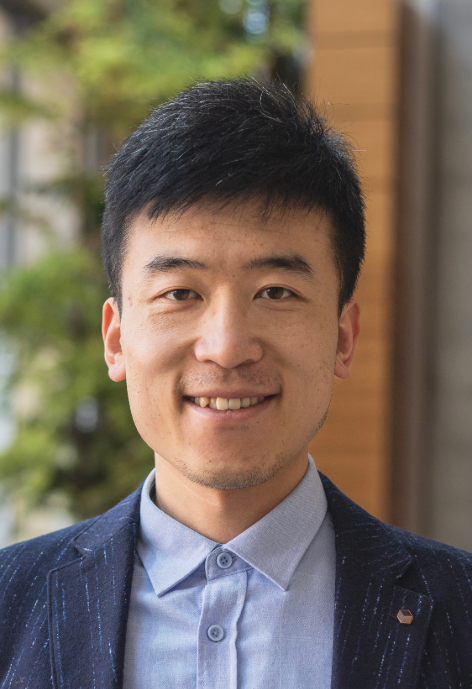
Bo Li is an Assistant Professor in the Department of Statistics at the University of California, Berkeley . His research bridges statistical theory with applications in machine learning, optimization, and autonomous systems. Education: PhD in Statistics (2006), advised by Peter Bickel Email: boliboli@gmail.com Bo Li's research focuses on machine learning , control systems , and energy-efficient optimization . His work addresses challenges in autonomous vehicle navigation, solar panel positioning, and stochastic energy routing problems. Key themes include predictive control frameworks, multi-agent coordination, and uncertainty handling in dynamic systems. Recent publications highlight 2025 and 2024 advancements in model predictive control (MPC) , generalized Nash equilibrium for autonomous racing, and stochastic optimization for energy systems. His work spans vehicle routing , solar energy tracking , and multi-agent control , emphasizing data-driven approaches and real-world validation.
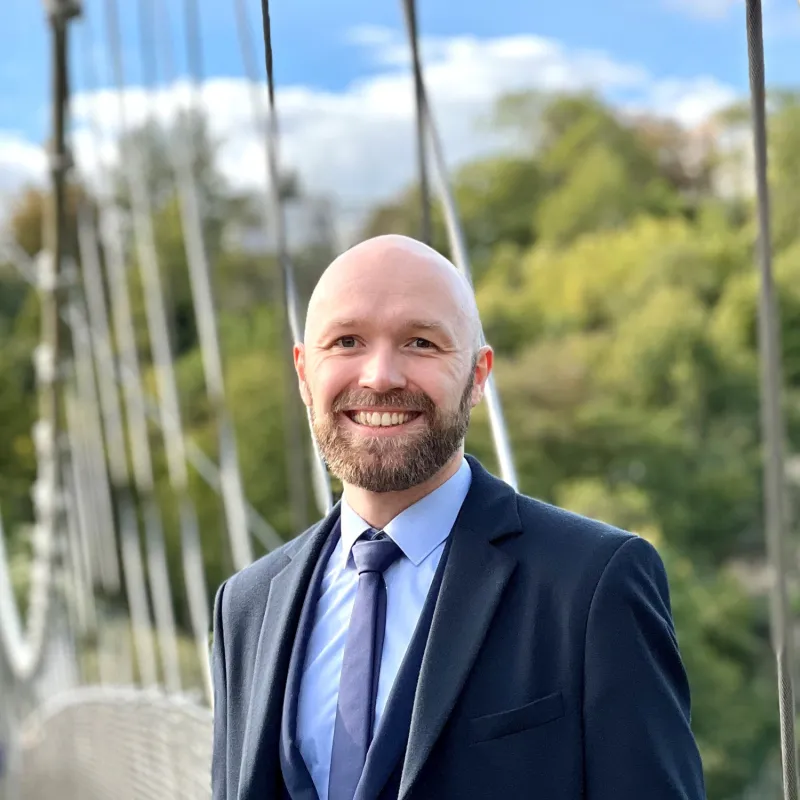
Johan Löfberg is an Associate Professor and Docent at Linköping University's Department of Electrical Engineering (ISY), affiliated with the Automatic Control (RT) division. His research spans the intersection of control theory and optimization , with a focus on developing control-oriented optimization-based algorithms . He is the creator of the MATLAB-based modeling language YALMIP , widely used in academic and industrial applications. Research Interests Dr. Löfberg's work emphasizes practical implementations of theoretical advancements in control systems. His research encompasses: Model Predictive Control (MPC) Stochastic and Robust Optimization Motion Planning for Autonomous Systems Industrial Robotics Applications Signal Processing for Control Control Algorithm Development His recent publications demonstrate applications in crane control, motion planning, and estimation under uncertainty. Collaborations He is affiliated with the Wallenberg Autonomous Systems Program (WASP) and collaborates with various research groups within ISY and ETH Zurich alumni networks.
Dr. Anna Lidfors Lindqvist is a Lecturer at the School of Mechanical and Mechatronic Engineering, University of Technology Sydney (UTS), where she specializes in vehicle dynamics, control systems, and engineering education innovation. She holds a PhD from UTS (2018-2022) focused on vehicle dynamics and solar-electric vehicles, and is fluent in Swedish. Since December 2022, she has served as a full-time lecturer, previously contributing as a Curriculum Developer (2021-2023) where she redesigned engineering programs and integrated sustainable principles into curricula. Her research bridges mechanical engineering and pedagogical innovation, with dual focuses on: Net-zero technologies: Developing stability control systems for solar-electric vehicles, vibration analysis in transportation, and lightweight vehicle dynamics under variable loads Educational reform: Creating AI-integrated project frameworks (PAIIF), implementing formative sprints for feedback, and designing authentic assessment methods like threshold exams Publication analysis reveals consistent themes in vehicle control systems (SMC/MPC applications) and transformative engineering education frameworks, with recent expansion into AI-driven curriculum design. Awards & Honors: Citation for Outstanding Early Career Contribution to Engineering Education (2024) UTS Vice-Chancellor’s Early Career Teaching Award (2023) AAEE Academy Fellowship (2023) IEEE VTS NSW Research Contest prizes (2021) Higher Degree Research Excellence Award (2019) She coordinates the Mechanical Design Fundamentals Studio 1 course using Agile-inspired sprints, supervises Capstone students, and secured the 'UTS Wool Bioharvesting' grant (2024-2027). Previously managed the Australian Technology Network Solar Car team.
Nikola Mišković is a Full Professor at the Department of Control and Computer Engineering, Faculty of Electrical Engineering and Computing, University of Zagreb. His work focuses on marine robotics and autonomous systems. Marine Robotics Autonomous Underwater Vehicles (AUV) Human-Robot Interaction Control Systems Sonar Data Processing His research explores underwater localization, formation control, and sensor integration with applications in aquaculture and environmental monitoring. Projects include EU-funded initiatives like FP7 CADDY , H2020 EXCELLABUST , and subCULTron . Key collaboration networks involve institutions in Croatia, Israel, and EU marine robotics consortia. His work demonstrates strong integration of simulation (Gazebo, LabVIEW) and real-world deployment.
Prof. Jürgen Adamy is a Professor at Technische Universität Darmstadt, leading the Control Methods and Robotics lab since 1998. His research focuses on Control and Systems Theory, Mobile Robotics, Autonomous Systems, and Artificial Intelligence. He previously held engineering roles at Siemens AG (1992–1998) and was a Scientific Assistant at Universität Dortmund (1987–1991). His work integrates theoretical advancements with practical applications in robotics, energy systems, and autonomous vehicles. Research interests span nonlinear control, autonomous navigation, and multi-objective optimization. Notable contributions include PRORETA systems for urban driving safety and UAV path-planning algorithms. Recent articles emphasize remote driving performance, energy management, and bioengineering's role in societal progress. His lab develops technologies for smart grids, human-robot cooperation, and advanced control systems. Collaborations include Siemens and interdisciplinary projects like bio-engineering applications. He has advised numerous projects in robotics and control theory, though specific student names are not listed here.
Prof. Moritz Diehl is a Professor at the University of Freiburg, leading the Systems Control and Optimization Laboratory within the Department of Microsystems Engineering (IMTEK) and affiliated with the Department of Mathematics. Born in Hamburg, Germany, he holds a Ph.D. from Heidelberg University (2001) and previously served as a professor at KU Leuven (2006–2013), where he directed the Optimization in Engineering Center (OPTEC). His research focuses on optimization and control, emphasizing numerical methods for engineering applications, particularly embedded systems and renewable energy. Key areas include model predictive control (MPC), nonlinear optimization, and real-time control systems. Education: He studied physics and mathematics at Heidelberg University and the University of Cambridge (1993–1999), culminating in a Ph.D. in Scientific Computing. His academic journey includes roles at KU Leuven and Freiburg, where he has developed influential tools like the AWEbox framework for airborne wind energy systems and the acados optimization library. Research Interests: His work spans numerical optimal control, MPC algorithms, and their applications in robotics, energy systems, and automotive engineering. Recent advancements include collision-free motion planning, real-time NMPC with convex-concave constraints, and stochastic control methods for mobile robots. He also explores optimization for hybrid systems, leveraging finite elements and switch detection for nonsmooth dynamics. Publications: His 2023–2025 work highlights contributions to MPC stability, energy-efficient control systems, and software tools like LCQPow for quadratic programming. His research bridges theory and practice, addressing challenges in industrial processes, renewable energy integration, and autonomous systems. Labs & Teams: He leads the Systems Control and Optimization Lab, fostering interdisciplinary projects in optimal control, robotics, and sustainable energy. His group collaborates on tools like acados, emphasizing real-time feasibility and scalability for complex systems.
Roles and Affiliations: Distinguished Professor Saeid Nahavandi is the inaugural Associate Deputy Vice-Chancellor (Research) and Chief of Defence Innovation at Swinburne University of Technology. He leads defence innovation and research strategy, with a focus on autonomous systems, robotics, and AI. Previously, he served as Pro Vice-Chancellor (Defence Technologies) at Deakin University and founded its Institute for Intelligent Systems Research and Innovation. Research Focus: Specializes in robotics, haptics, autonomous systems, AI, and advanced modelling/simulation. His work bridges academia and industry, with collaborations spanning Airbus, Boeing, NASA, and NATO. He has secured over $150M in funding and established three tech startups. Key research areas include motion simulation, teleoperation systems, and defence technologies. Articles Overview: Over 1,300 publications span AI, robotics, and control engineering. Recent work emphasizes autonomous navigation reviews, uncertainty-aware AI, and motion cueing algorithms. His research addresses real-world applications like driver distraction detection and robotic ultrasound. Awards and Recognition: Recipient of the 2022 Clunies Ross Entrepreneur of the Year Award, 2021 Australian Space Awards Researcher of the Year, and multiple engineering excellence accolades. A Fellow of ATSE, IEEE, and other leading institutions. Grants & Industry Impact: Led ARC Training Centres for automated vehicles and energy storage. Notable grants include a $15M ARC Training Centre for Automated Vehicles in Rural/Remote Regions (2024–2029). Collaborates globally on defence, aerospace, and smart transportation projects. Labs & Teams: Heads Swinburne’s Defence Innovation Group and collaborates with Harvard University (as an Associate) and the University of Windsor (adjunct professor). Advises governments and industries on technology strategy and innovation.
Aleksandr Malyshev is Professor of Mathematics at the University of Bergen. His research integrates numerical linear algebra, stability theory, optimisation-based control, and image-processing algorithms, yielding a portfolio of more than 60 peer-reviewed articles and conference contributions. Education & affiliations: Professor, Department of Mathematics, University of Bergen, Norway (present) Previous research and teaching engagements in informatics and applied mathematics at the same university Research interests: Malyshev’s core interest is the theoretical and algorithmic analysis of matrix problems arising in stability, control and imaging. He develops numerically reliable tools for assessing the distance to instability of dynamical systems, constructs preconditioners that accelerate optimisation solvers in real-time model predictive control, and designs variational models for 3-D reconstruction and image denoising. His work frequently combines spectral theory of matrix polynomials with practical issues such as high-performance implementation and medical-image quantification. Across the last decade his articles reveal three dominant strands: (i) stability and perturbation of time-delay and periodic systems, (ii) preconditioned iterative solvers for interior-point and MPC formulations, and (iii) variational and learning-based approaches to depth estimation, surface reconstruction and glenoid-bone assessment. These themes are unified by a common mathematical substrate—exploitation of matrix structure to obtain computationally efficient, numerically trustworthy solutions. Scientific awards & recognition: Regular invited speaker at international workshops on numerical linear algebra and control (e.g., SK Godunov conference 2009, IFAC 2018) Funded principal investigator / co-investigator on Research Council of Norway and EU Horizon Europe grants Advising & grants: Malyshev has supervised numerous MSc and PhD candidates in numerical analysis and scientific computing and currently advises graduate researchers on projects ranging from 3-D machine-vision algorithms to Krylov-subspace preconditioning. Recent grant participation includes EU project 101373 (3-D quantification of glenoid bone loss) and the Norwegian Research Council project 262203 on perfusion-flow simulation. Labs & collaboration: He collaborates closely with the Group for Numerical Methods and Applications at UiB, the Visual Computing cluster at the Department of Informatics, and maintains international partnerships with the Universities of Brest, Lübeck, and several US institutions. These joint efforts feed cross-disciplinary projects combining rigorous matrix analysis with real-world applications in biomechanics, process control, and computer vision.
Jan Swevers is a Full Professor at KU Leuven , affiliated with the MECO Research Team . His work focuses on predictive control, sensor-based robotics, and optimal motion planning, with applications in autonomous systems, industrial robotics, and aerospace engineering. Research Interests : Predictive control (Model Predictive Control, Iterative Learning Control), sensor-based robotics (surface following, cable shaping), optimal motion planning (Reeds-Shepp algorithms, time-optimal interception), and constraint handling in robotics. Publications : Recent work explores deformable object dynamics, autonomous surface vessel navigation, and computational efficiency in optimal control. Key trends include integrating predictive control with real-time estimation, simplifying complex environments via constraint reduction, and advancing human-like autonomous driving through imitation learning. Advising : Supervised PhD theses on topics like constraint-based robot programming, motion planning, and predictive control for sensor-based tasks. Labs : Leads the MECO Research Team at KU Leuven, focusing on control systems, robotics, and optimal planning.
Dr. Pei Li is an Assistant Professor in the Department of Civil and Architectural Engineering and Construction Management at the University of Wyoming. Her research focuses on advancing safety and mobility through the development of digital, intelligent transportation systems that can sense traffic, predict future conditions, and make decisions. She bridges transportation engineering with cutting-edge technologies including digital twins, AI, and V2X communication systems. Dr. Li's educational background includes: B.Eng in Logistics Engineering from Tongji University (2015) M.Eng in Communication and Transportation Engineering from Tongji University (2018) M.S. in Smart Cities from University of Central Florida (2020) Ph.D. in Civil Engineering from University of Central Florida (2021) Dr. Li's research spans multiple domains in intelligent transportation systems. Her primary interests include Digital Twins, Artificial Intelligence, Transportation Safety, and Human Factors. She develops models that leverage deep learning, computer vision, and sensor technologies to create innovative solutions for traffic management and crash prevention. Her work often addresses the challenges of real-time decision making in complex transportation environments, with particular emphasis on pedestrian safety, autonomous vehicle systems, and connected infrastructure. Dr. Li's publication record shows a progression from basic vehicle maneuver detection using smartphone sensors to sophisticated digital twin applications and explainable AI for autonomous systems. Her recent work (2024-2025) demonstrates expertise in large language models for transportation, federated digital twin frameworks, and physics-informed trajectory planning. She frequently employs advanced techniques including deep reinforcement learning, attention mechanisms, and natural language processing to address complex transportation safety challenges. Dr. Li maintains an active research presence through multiple platforms including ResearchGate, LinkedIn, GitHub (as PeiLi-Sandman), and Google Scholar. Her GitHub profile shows contributions to self-driving car projects, including implementations of particle filters, MPC controllers, and other autonomous vehicle technologies from the Udacity Self-Driving Car Engineer Nanodegree program. Dr. Li is actively recruiting students for her research group, with opportunities available for those interested in digital twins, artificial intelligence, transportation safety, and human factors research. She appears to be establishing a robust research program at the University of Wyoming focused on intelligent transportation systems, with particular emphasis on making transportation safer through advanced computing technologies.
Uğur Ufuk KÖRPE serves as a full-time Researcher in the Department of Electrical and Electronics Engineering at Ahi Evran University's Faculty of Engineering and Architecture since 2021. His academic foundation includes comprehensive education from Karabük University across all degree levels. Academic Background: PhD in Electrical and Electronics Engineering (2022), Karabük University MSc in Electrical and Electronics Engineering (Thesis, 2020-2022), Karabük University BSc in Electrical and Electronics Engineering (2015-2020), Karabük University Specializing in Electrical Machines and Energy Conversion with emphasis on Control Theory and Applications, Dr. KÖRPE's research focuses on advanced control methodologies for electric motors. His work addresses critical challenges in motor drive systems including parameter variations, magnetic saturation effects, and thermal dependencies through innovative predictive and adaptive control frameworks. Current investigations integrate machine learning techniques with traditional control paradigms to enhance motor performance in electric vehicle applications. Publication analysis reveals concentrated expertise in model predictive control (MPC) variants for permanent magnet and induction machines, with recent work (2021-2025) demonstrating progressive sophistication from basic MPC implementations to reinforcement learning-enhanced adaptive systems. Key thematic developments include unscented Kalman filter integration for real-time parameter estimation and deep reinforcement learning for handling nonlinear motor characteristics. Research Funding: Principal Researcher for ‘Speed Control Implementation in Brushless AC Motors’ (2022-2023), funded by Higher Education Scientific Research Projects Collaborative work primarily occurs with Karabük University researchers including Ozan Gülbudak and Mustafa Gökdað, forming a consistent research team across six publications between 2021-2025. Current investigations focus on robust control solutions for electric vehicle propulsion systems under varying operational conditions.
An Trieu Tran, MD is an Assistant Professor in the Department of Neurology at the University of California, Irvine (UCI) School of Medicine. Their research focuses on dependable control systems, operational technology integration, and time-sensitive networking. Research interests include: Dependable Model Predictive Control (DepMPC) Operational Technology system architectures Time-Sensitive Networking (TSN) applications Replacement Controller (RC) frameworks In 2020, they co-authored a paper exploring fault-tolerant control systems using multi-controller MPC architectures for enhanced operational reliability. This work was published in an IEEE/IEC 60802-compliant context covering industrial automation, automotive, and power/energy systems.
Uroš Kalabić is a Teaching Professor at Singidunum University in Serbia. He holds a doctoral degree in Electrical and Computer Engineering from the University of Michigan (2015), a Master's degree from the same university (2011), and a Bachelor's degree in Electrical and Computer Engineering from the University of Toronto (2010). His research focuses on advanced control systems and their applications in automotive engineering, aerospace, and quantum computing. Doctoral studies: University of Michigan, Electrical and Computer Engineering (2015) Master's studies: University of Michigan, Electrical and Computer Engineering (2011) Undergraduate studies: University of Toronto, Electrical and Computer Engineering (2010) Kalabić's research interests span stochastic model predictive control , quantum optimization , autonomous traffic systems , and nonlinear control on manifolds . His work includes applications in automotive engine control, spacecraft attitude control, quantum search algorithms, and sustainable transportation schemes. He has published in top journals like AUTOMATICA and the Journal of Dynamic Systems, Measurement, and Control, focusing on control theory and its interdisciplinary applications. His publications reveal expertise in stochastic control , reinforcement learning , quantum computing , and transportation optimization . Notable contributions include constraint-separation principles in MPC, reference governors for probabilistic systems, and deep learning-based traffic management frameworks. Currently, no scientific awards or honors are documented in the provided materials. Similarly, there is no mention of student advising roles, laboratory leadership, or active research grants in the available descriptions.
Henrik Ebel is an Assistant Professor (Tenure Track) in Mechanical Engineering at Lappeenranta-Lahti University of Technology (LUT), specifically within the LUT School of Energy Systems. He joined LUT in 2024 after previously working at the University of Stuttgart's Institute of Engineering and Computational Mechanics from 2016 to 2024. Dr. Ebel's research focuses on the intersection of artificial intelligence, machine learning, and mechanical engineering, with particular emphasis on: Distributed cooperative robotics Model predictive control systems Non-holonomic robot control Data-driven approaches to mechanical engineering problems Automation systems development His research aims to bring cooperative robotics from laboratory settings to real-world applications in Finland, focusing on using multiple simple and cost-efficient robots that collaborate to solve problems rather than relying on single complex machines. He believes automation promotes sustainability through better energy conservation, generation, and storage compared to manual processes. His recent publications demonstrate consistent advancement in cooperative robotics, control systems, and machine learning applications in mechanical engineering. As an educator, Dr. Ebel supervises doctoral students and finds fulfillment in seeing them grow and succeed in their research. He values the human aspect of academia and enjoys teaching as a complement to his research work, noting that honing teaching skills helps him explain research better and pass on important future-oriented knowledge.
Sergio Lucia is a Full Professor (W3) for Process Automation Systems at Technische Universität Dortmund within the Department of Biochemical and Chemical Engineering since 2023. He previously served as a W2/W3 Professor (2020-2023) and W1 Assistant Professor at TU Berlin (2017-2020). His research focuses on the intersection of control engineering, numerical optimization, and machine learning, with applications in chemical processes, biotechnology, and energy systems. He leads the Laboratory of Process Automation Systems (Building G2, North Campus) and has held prestigious roles including Vice Chair of IFAC Technical Committee on Optimal Control since 2020. Education: Dr.-Ing. (summa cum laude) in "Robust multi-stage nonlinear model predictive control" (2014) Postdoctoral: Massachusetts Institute of Technology (2016), Otto-von-Guericke University Magdeburg (2015-2017) Alumni: Research Assistant at TU Dortmund (2010-2014), Diploma in Electrical Engineering (2010) His research explores novel methods to bridge theory and applications in control engineering, particularly through model predictive control (MPC) innovations. Recent work emphasizes robustness under uncertainty , Bayesian optimization , deep learning integration , and privacy-preserving federated learning for industrial applications. His 2025 publications address challenges in chemical recycling networks, crystallization processes, and serverless computing triggers. Scientific recognition includes: Teaching award (2023) Best student paper awards (2022, 2021) VAA Dissertation Award (2015) Erasmus Scholarship (2010) M.Sc. Extraordinary Career Award (2011) As a dedicated educator, he refines courses to enhance learning outcomes and mentors PhD students Sarah Braun and Benjamin Karg. His laboratory at TU Dortmund's North Campus is strategically located near the H-Bahn monorail system for accessibility.