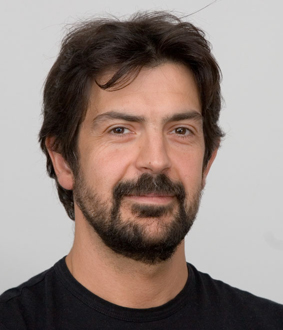
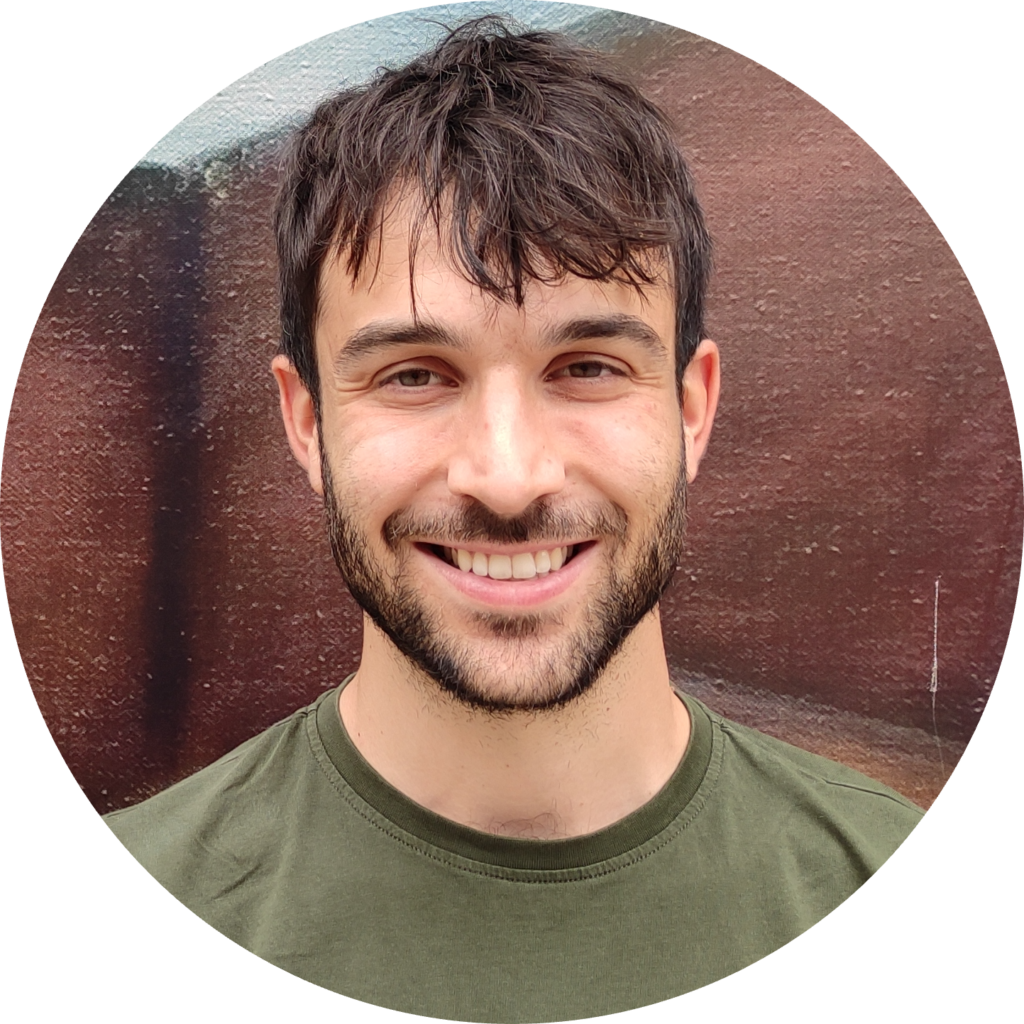
Federico Miretti is an Assistant Professor at the Polytechnic University of Turin, affiliated with the Department of Energy and the interdepartmental center Cars@PoliTo. His research focuses on hybrid and electric vehicles, with emphasis on energy management strategies, battery state estimation, and sustainable transport solutions. PhD in Energetics from Polytechnic University of Turin Research areas include: Optimization-based Energy Management Strategies for hybrid propulsion systems Simulation and digital twinning of hybrid systems Thermal management for electrified vehicles Techno-economic assessment of mobility solutions Recent publications highlight advancements in battery temperature anomaly detection, wireless power transfer feasibility, and control algorithms for energy efficiency. His work aligns with SDGs 7 (Clean Energy) and 9 (Innovation). Teaching roles include: Fluid Machinery (2019-2025) Energy Management in Hybrid/Electric Vehicles (2021-2025) Projects: PRoSIT (2025): Predictive thermal management demonstrator Consulting contract with MIDAC SpA (2025): Battery Digital Twin development EBOAT project (2025-2026): Technical support for Vulkan
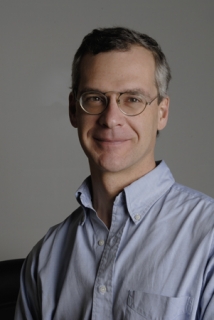
Massimo Canale is a Tenured Associate Professor at the Department of Electronics and Telecommunications (DET) of Politecnico di Torino , and a member of the CARS@PoliTO Interdepartmental Center for Automotive Research and Sustainable Mobility. His academic career spans over two decades, focusing on control systems engineering with applications in automotive technology. Scientific Branch: Systems and Control Engineering (IINF-04/A) ERC Sectors: Automotive Engineering, Control Engineering, Control Theory Dr. Canale's research bridges theoretical advancements in Model Predictive Control (MPC) with practical applications in autonomous vehicles , hybrid/electric propulsion , and active suspension systems . His work integrates reinforcement learning and dynamic programming for optimizing vehicle performance and energy efficiency. Recent publications demonstrate trends in autonomous driving architectures (2024), sliding mode control for highway scenarios (2024), and energy management for sustainable mobility (2023-2024). He has developed patented solutions for semi-active suspension control and autonomous vehicle guidance. Award: IEEE Transactions on Control Systems Technology Outstanding Paper Award (2011) Editorial Roles: Associate Editor, IEEE Open Journal of Control Systems (2022–present) Dr. Canale supervises PhD students like Francesco Cerrito and teaches courses on digital control technologies , automatic control , and reinforcement learning at Politecnico di Torino. His research is funded through competitive grants (e.g., MPC4AVP 2021-2022) and commercial contracts (AD Shuttle 2024).
Elisa Capello is a Full Professor of Flight Mechanics at Politecnico di Torino, Department of Mechanical and Aerospace Engineering (DIMEAS). She serves as Contact person for internationalization of innovation and technology transfer, Member of the Interdepartmental Center PIC4SeR (PoliTO Interdepartmental Center for Service Robotics), and Deputy Coordinator of the Doctoral College in Aerospace Engineering. With over 100 publications, her work spans aerospace engineering, control systems, and robotics. Her research focuses on flexible spacecraft, flight control systems, robotic systems, and unmanned aerial vehicles. She designs guidance, control and navigation systems for aircraft and spacecraft, develops control systems for wind turbines and wind farms, studies flight mechanics of fixed and rotary wing aircraft, tests unmanned aerial systems, and plans mission control for autonomous systems. Her work bridges theoretical control systems with practical aerospace applications, with strong emphasis on experimental validation. Her recent publications demonstrate a strong focus on advanced control techniques for aerospace applications, particularly in UAV control, spacecraft formation flying, and robotic systems. There's a clear trend toward integrating machine learning with traditional control methods, as seen in transformer-based MPC and multimodal learning approaches. Her work spans theoretical development, simulation, and experimental validation across multiple platforms. Member of the Editorial Board of IEEE Control Systems Society (2019-) Member of the Scientific Committee - IEEE Technical Committee Aerospace Control (2016-) International FAI Judge for Helicopter Championship (2009-2015) Professor Capello supervises numerous PhD students working on topics including autonomous aerial vehicles, path planning, risk analysis, spacecraft dynamics, and control. She leads multiple research projects including CREATEFORUAS (2019-2022), Assessment of drag free control systems for L3 gravity wave observatory (2018-2019), and Guidance, Navigation and Control algorithms for in-Orbit servicing (2020-2021). Her international collaborations include institutions in the USA, Japan, and Germany. She is actively involved with the Flight Dynamics, Control and Simulation research group at DIMEAS and the DRAFT (DRones Autonomous Flight Team) at PoliTo, where she mentors students in developing autonomous flight capabilities for various applications.
Alberto Oliveri is an Associate Professor at the University of Genoa in the Department of Naval, Electrical, Electronic and Telecommunications Engineering. He teaches courses including Circuits and Systems, Nonlinear Circuits and Systems, Power Management, and Elements of Electrical Technology for undergraduate and graduate programs in Electronic Engineering, Information Engineering, Industrial Technologies, and Chemical Engineering. His research focuses on advanced topics in power electronics and control systems, with particular emphasis on: Modeling and optimization of magnetic components (inductors) for switch-mode power supplies FPGA implementation of nonlinear model predictive control algorithms Synthetic inertia solutions for renewable energy grid integration Embedded control systems for power converters Advanced modeling of ferrite-core and amorphous-core inductors His recent publications (2022-2025) demonstrate a consistent focus on improving power conversion efficiency through advanced control strategies and hardware implementation. Research themes include predictive control optimization, magnetic component characterization under saturation conditions, renewable energy grid support functions, and embedded algorithm development for real-time power system monitoring.
Cristian Secchi is a Full Professor in the Department of Engineering Sciences and Methods at the University of Modena and Reggio Emilia. His research focuses on robotics, control systems, and human-robot collaboration with an emphasis on safety, automation, and industrial applications. He teaches courses such as Industrial and Collaborative Robotics and Control of Robotic Systems. Research Interests: Design and implementation of control architectures for collaborative robots. Development of safe human-robot interaction frameworks compliant with ISO/TS 15066 standards. Integration of AI (e.g., large language models) into robotic motion planning. Autonomous systems for urban environments and surgical robotics. Publications highlight advancements in: Energy-efficient trajectory planning. Adaptive control strategies for uncertain environments. Multimodal human-robot communication. Diagnosis of mechanical systems via signal analysis. He leads the ARSControl research group and actively contributes to evolving production systems through smart modular technologies. His work bridges theoretical control frameworks with practical industrial and medical applications.
Diego Regruto Tomalino is an active Associate Professor in the Department of Control and Computer Engineering (DAUIN) at Polytechnic University of Turin, Italy, with contact details +39 0110907077 and diego.regruto@polito.it. He holds leadership roles in the IEEE Control Systems Society as Scientific Committee member of the Technical Committee on System Identification and Adaptive Control (2008-present) and served as its President (2013-2015). His work spans academic research, teaching, and international collaboration within control engineering. Education : Laurea in Electronic Engineering, Politecnico di Torino (2000) Ph.D. in Systems Engineering, Politecnico di Torino (2004) Research Interests : System Identification : Specializing in set-membership, sparse, and LPV techniques for nonlinear systems with applications in automotive and biomedical domains. Optimization & Control : Developing convex relaxation methods for model predictive control, robust control algorithms, and electrified vehicle propulsion systems. Control Education : Innovating through remote laboratories and industrial platforms to enhance engineering pedagogy globally. Publication Trends : Recent work (2021-2024) focuses on sparse optimization for cyber-physical security and electrified vehicles, extending set-membership identification to continuous-time systems, and educational frameworks. Dominant fields include control theory, optimization, and automotive applications with increasing emphasis on data-driven methods and sparse computing. Scientific Awards : No specific prizes, medals, or fellowships were documented in the provided texts. Advising and Grants : PhD Supervision : Alice Re (2024-present, sparse optimization for identification), Francesco Ripa (2023-present, electric vehicle propulsion management), Simone Pirrera (2021-2025, dynamical systems learning). Research Projects : Principal investigator for OpThermEV (2021-2022) on thermal management of electric vehicles, plus corporate-funded automotive research initiatives. Labs and Teams : Core member of the SIC (System Identification & Control) research group and LAB 11 at DAUIN. Leads international control education collaborations, notably a remote laboratory partnership between Asian and European institutions.
Leonardo Lanari is an Associate Professor at the Department of Computer, Control and Management Engineering (DIAG) of Sapienza University of Rome. His research focuses on robotics, particularly humanoid motion generation, model predictive control, and nonlinear control systems. He has contributed to advancements in gait stability, underactuated robotics, and remote robotic experiments through the REAL Lab. PhD in Systems Engineering from Sapienza University Visiting Scholar at Rensselaer Polytechnic Institute Research Interests Robotics (humanoid locomotion, flexible manipulators, underactuated systems), control theory (MPC, robust control), and large-scale system control. His work integrates geometric approaches with practical robotic implementations. Recent Article Trends Focus on model predictive control for humanoid stability, stair navigation, and cooperative transportation systems. 2025 studies emphasize feasibility-driven motion planning in complex environments. Scientific Awards 2020 IEEE Robotics and Automation Magazine Best Paper Award Teaching & Grants Teaches Control Systems and Multivariable Feedback Control at Sapienza. Has developed courses on underactuated robots and control problems in robotics. Involved in grants for healthcare AI platforms like CADUCEO and humanoid applications in aircraft manufacturing. Labs & Teams Membro del Robotics Lab at DIAG. Collaborates with international institutions including MIT, Rensselaer Polytechnic Institute, and Airbus on humanoid robotic projects.
Francesco Liberati is an Associate Professor in Automatic Control at Sapienza University of Rome, Department of Computer, Control and Management Engineering (DIAG). His research focuses on cyber-physical systems, model predictive control (MPC), and hybrid MPC-deep learning algorithms with applications to power systems, traffic control, and task scheduling. PhD in Systems Engineering from Sapienza University (2015) Assistant Professor (RTD-B) at Sapienza University (2021-2024) Assistant Professor (RTD-A) at eCampus University (2015-2017) Liberati’s work combines theoretical advancements in control theory with real-world implementations in smart grids and transportation systems. He has pioneered approaches integrating MPC with reinforcement learning for large-scale optimization problems, particularly in electric vehicle (EV) charging and grid reconfiguration. His recent publications emphasize: Stochastic and economic MPC for renewable energy storage Decentralized control algorithms for EV charging Cyber-physical security in microgrids and smart infrastructure Hybrid AI-control solutions for traffic and industrial systems Scientific recognition includes: 2021 Best Paper Award, IEEE World AI IoT Congress (AIIoT) 2021 Networked Systems Best Paper Award He serves as Associate Editor for Advanced Control for Applications (Wiley) and on the Editorial Board of Smart Cities (MDPI). His applied research spans European Commission H2020 projects and collaborations with industry partners in energy and transportation sectors.
Ruggero Carli is an Associate Professor at the Department of Information Engineering, University of Padova. His research focuses on control systems, robotics, and optimization, with emphasis on model-based reinforcement learning, distributed optimization algorithms, and energy systems. His work bridges theoretical advancements with real-world applications, including autonomous robotics, smart grids, and nonlinear control. Key contributions include physics-informed machine learning frameworks, ADMM-based distributed optimization methods, and MPC-driven control solutions for underactuated systems. Research interests include: Model-Based Reinforcement Learning for Robotics Nonlinear Model Predictive Control (NMPC) Distributed Optimization and ADMM Variants Energy Networks and Smart Grids Robot Dynamics and System Identification Recent publications emphasize: Continual learning for driver behavior analysis Physics-informed control for underactuated systems Robust optimization in unreliable networks Autonomous robotic manipulation with large language models His research integrates control theory with modern machine learning techniques, addressing challenges in edge computing, distributed systems, and real-time implementation.
Carlo Novara is a Full Professor at Politecnico di Torino, affiliated with the Department of Electronics and Telecommunications (DET) and the Interdepartmental Center CARS@PoliTO - Center for Automotive Research and Sustainable Mobility. He serves as a member of the College of Computer, Film and Mechatronics Engineering and the College of Mechanical, Aerospace and Automotive Engineering. His research interests span aerospace control systems, autonomous and assisted vehicles, biomedical engineering, design of experiments, energy system control and optimization, model predictive control, modeling and simulation, set membership estimation, statistical analysis, system identification, machine learning, complex networks and systems, prediction and estimation, and quantum optimization. His work focuses on nonlinear and LPV system identification, filtering/estimation, time series prediction, nonlinear control, predictive control, data-driven methods, set membership methods, sparse methods, and nonlinear optimization with applications in automotive, aerospace, biomedical, and energy domains. His recent publications demonstrate strong trends in nonlinear model predictive control, physics-based system identification, and space applications. Many papers focus on computational efficiency for real-time control, with increasing emphasis on quantum optimization techniques and space mission applications like the LISA mission. His work bridges theoretical control methods with practical applications in automotive, aerospace, and energy systems. Professional Recognition: Member of IEEE TC on System Identification and Adaptive Control Member of IFAC TC on Modelling, Identification and Signal Processing Founding member of IEEE-CSS TC on Medical and Healthcare Systems Professor Novara has supervised numerous PhD students including Lucrezia Lovaglio, Giovanni Marinello, Francesco Cerrito, Sabrina Savino, Cesare Donati, and Mattia Boggio. His research has been supported by significant grants including the CNMS - Spoke 2 Sustainable Mobility Center (2022-2025), PRYSTINE ECSEL project (2018-2021), and multiple commercial research contracts with ESA and other aerospace organizations. He leads research in the Automatica research group at DET, focusing on advanced control algorithms for aerospace applications, data-driven control of autonomous vehicles and biomedical systems, quantum optimization for complex system design, and modeling and optimization of networked systems.
Giuseppe FRANZE' is a Full Professor at the Department of Mechanical, Energy and Management Engineering (DIMEG) of the University of Calabria since 2022. He has over 200 publications in archival journals, book chapters, and conference proceedings, with a focus on constrained predictive control, networked control systems, and resilient control for cyber-physical systems. His research includes theoretical and applied projects funded by MIUR/MUR, European Union, and international institutions. IEEE Senior Member (2019) Associate Editor for IEEE/CAA Journal of Automatica Sinica Guest Editor for Special Issue on Resilient Control in Large-Scale Networked Cyber-Physical Systems Organized sessions at CoDIT, ETFA, CASE conferences Collaborations with Carnegie Mellon, Concordia University, Georgia Tech, and others His research spans constrained predictive control, fault-tolerant strategies, obstacle avoidance for autonomous vehicles, and machine learning integration in control systems. Recent articles emphasize resilient control under network attacks, encrypted MPC, and reinforcement learning for multi-agent systems. He received Best Paper and Best Reviewer awards at international conferences. Best Paper - CoDIT’19 Best Reviewer - IEEE ICAS 2021 FRANZE' has taught undergraduate and graduate courses in Automatic Control, Digital Control, and Robotics at the University of Calabria for over 25 years. He has chaired institutional committees, including the Degree Course Council for Automation Engineering and the Research Committee at DIMEG. His scientific partnerships include institutions like Concordia University, Northeastern University, and Université Libre de Bruxelles.
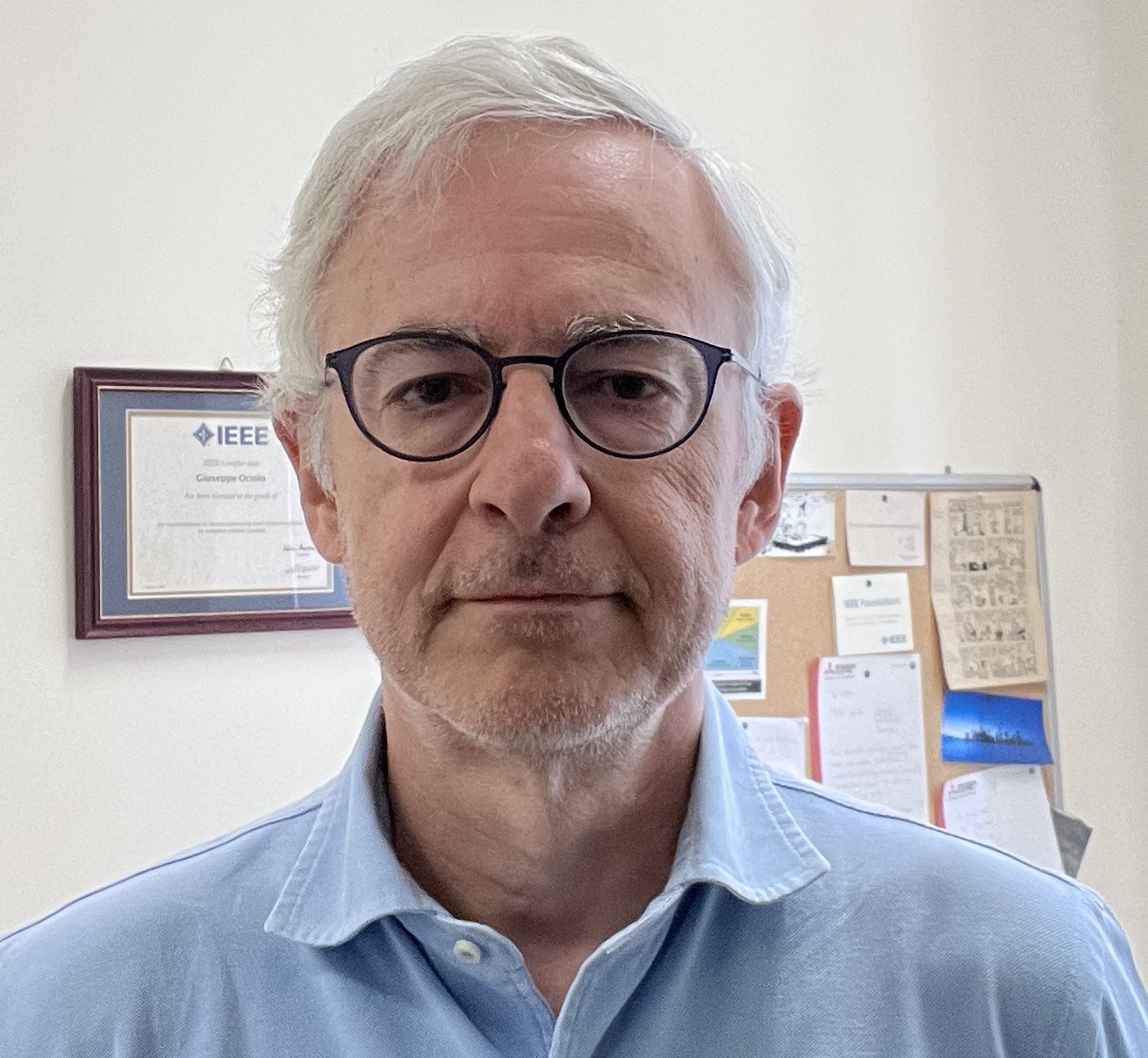
Giuseppe Oriolo is a Full Professor of Automatic Control and Robotics at the Department of Computer, Control and Management Engineering (DIAG) of Sapienza University of Rome, where he has been since 1994. He coordinates the DIAG Robotics Lab and has held teaching positions at the University of Siena, University of Cassino, and Roma Tre. Oriolo was a Visiting Scholar at the University of California, Santa Barbara, and serves on various editorial and program committees, including IEEE Transactions on Robotics and international conferences like ICRA and IROS. Education : Ph.D. in Systems Engineering (1992), Sapienza University of Rome His research focuses on robotics and control theory, particularly in robot control, motion planning, trajectory optimization, redundant robotic systems, control of underactuated systems, sensor-based localization, navigation for mobile robots, humanoid robots, and visual servoing. He has over 230 publications and contributes to advanced robotics frameworks. Recent publications highlight his work on Model Predictive Control (MPC) for humanoids and mobile robots, emphasizing robustness, singularity-free trajectories, and decentralized cooperation. His research addresses dynamic constraints, feasibility, and real-time adaptation in complex environments. Scientific Awards : 2017 IEEE Fellow, 2020 IEEE Robotics and Automation Magazine Best Paper Award, 2016 ANTS Best Paper Award, 2024 Human-Friendly Robotics Best Paper Award Oriolo's teaching includes Control Systems at Sapienza, with past roles in courses like Adaptive Systems, Nonholonomic Control, and Underactuated Robots. He has mentored numerous advisees through publications and lab activities. He leads the DIAG Robotics Lab, fostering innovation in humanoid robots, autonomous systems, and control theory.
Matthias Pezzutto is an Assistant Professor at the Department of Information Engineering, University of Padova. His research focuses on advanced control systems, networked control systems, and wireless communication for control applications. He explores topics such as distributed estimation, epidemic control, and optimization in cyber-physical systems. His work bridges theoretical advancements with practical implementations, including experiments over Wi-Fi and multirotor robotics. Key areas of interest include: Control systems with communication constraints Epidemic modeling and intervention strategies Real-time wireless control architectures His publications emphasize robust control methodologies, such as self-triggered MPC and adaptive transmission protocols, addressing challenges like packet loss and latency. Recent works explore the integration of edge-cloud continuum for control systems and heterogeneous vehicle mission planning. While no specific awards or grants are listed, his research activities are supported by experimental validations and collaborations in industry and academia.
Mirco Rampazzo is an Assistant Professor in the Department of Information Engineering at the University of Padova. His research focuses on advanced control systems, smart grid stability, machine learning applications in energy systems, and fault detection in medical devices like artificial pancreas systems. He leads projects on energy-efficient HVAC systems, real-time optimization of heat pumps, and adversarial robustness in critical infrastructure. His work integrates machine learning with traditional control engineering, addressing challenges in thermal systems (e.g., CO2 heat pumps), grid resilience against cyberattacks, and automation in industrial processes. Key contributions include the GAN-GRID framework for smart grid security and FaultGuard for resilient fault prediction. Rampazzo also explores extremum-seeking control algorithms for optimization in complex systems, such as data center cooling and sludge drying processes. His publications span journals and conferences, emphasizing interdisciplinary approaches to energy, healthcare, and industrial automation. He maintains an active role in editorial and academic activities, including peer review and course development for engineering education. Current research activities include reinforcement learning for anesthesia control and elastic shape analysis for textile quality assessment.
Prof. Silvia Maria Zanoli is a researcher at the Department of Computer, Management and Automation Engineering (DIIGA) within the School of Engineering at Polytechnic University of Marche (UNIVPM). Her work focuses on advanced process control and automation technologies across diverse industrial applications. University: Polytechnic University of Marche Department: Computer, Management and Automation Engineering Email: s.zanoli@univpm.it Her research spans automation engineering, control systems, and machine learning applications in industrial settings, particularly for energy efficiency and predictive maintenance. Key areas include: Model Predictive Control (MPC) for HVAC and hydroelectric systems Deep learning in medical diagnostics Industry 4.0 technologies for process optimization Stochastic modeling and fault detection systems Publications (2023-2025) demonstrate cross-disciplinary expertise in applying control theory to real-world problems like steel production, cement manufacturing, and renewable energy systems. Recent work highlights AI integration in industrial processes and environmental engineering challenges.