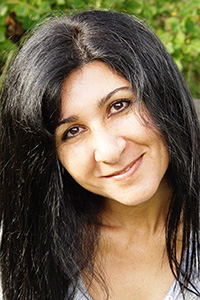
Nasrine Olson is a researcher at the Department of Library and Information Science, University of Borås. She serves as Director of INCLUDE - Center for Inclusion Research and coordinates the Horizon Europe MuseIT project, focusing on inclusive digital heritage technologies. Her work bridges accessibility research, human-centered design, and cultural heritage preservation.
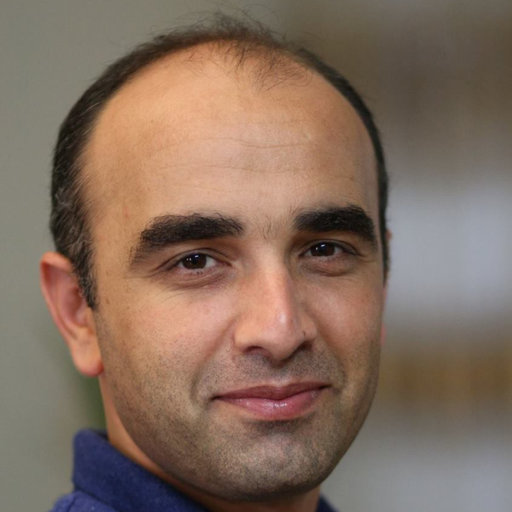
Dr. Enayat Rajabi is an Associate Professor of Data Analytics at the Shannon School of Business , Cape Breton University , Canada. He also serves as an Adjunct Professor at Dalhousie University and is affiliated with Nova Scotia Health as a scientist. His academic journey included a Ph.D. in Information and Knowledge Engineering from the University of Alcalá, Spain, and he has contributed extensively to machine learning and semantic web domains. Education: Ph.D. in Information and Knowledge Engineering, University of Alcalá, Spain (2015) Master of Software Engineering, Ferdowsi University of Mashhad, Iran (2004) Bachelor of Software Engineering, Razi University, Iran (2001) Dr. Rajabi's research focuses on machine learning , knowledge engineering , and semantic web applications in healthcare and smart cities. His work explores explainable AI frameworks, knowledge graph construction, and data-driven solutions for sustainable transportation and clinical decision support systems. His recent publications highlight trends in knowledge graph integration with large language models for healthcare, graph neural networks , and predictive analytics in urban environments. He has secured significant grants, including the NSERC Discovery Grant and Mitacs Research Training Award , to advance these domains. Scientific Contributions: NSERC Discovery Grant (2020-2025) - Semantic Web Analysis over Nova Scotia Open Data ($156,000) New Health Investigator Grant (2022-2024) - Machine Learning for ALC Patients ($97,418) Mitacs Globalink ($4,250) - Graph Neural Networks CBU RISE grants for Explainable Clinical Decision Support Systems and Multi-Label Text Classification Dr. Rajabi has mentored numerous research assistants across projects and maintains active collaborations with institutions in Canada, Spain, and Iran. His technical expertise spans Python, Tableau, Databricks, and PySpark, with teaching responsibilities in Predictive Analytics , Data Visualization , and Quantitative Methods .
Mirka Kans is an Associate Professor in the Department of Mechanical Engineering at Linnaeus University (formerly Växjö University), where she has taught since 2000. Her academic journey includes an MSc in Computer Science (2003), a PhD (2008), and Associate Professorship (2013). She specializes in data and IT requirements for maintenance management, digital transformation in industry, and engineering education development. Education: MSc (2003), PhD (2008), Associate Professor (2013) Research Groups: Smart Industry Group (SIG), Mechanical Engineering Her research spans digital transformation , condition monitoring , and STEM education equity . She leads the HUG project on sustainable gravel road maintenance and has completed initiatives like the Future Industrial Services Management and STEM education projects. She actively applies the CDIO educational framework and focuses on student-centered learning. Mirka’s recent publications emphasize data-driven maintenance (2024), service business models in railways (2023), and cloud-based gravel road systems (2020). Her work integrates interdisciplinary approaches from computer science and mechanical engineering to address industry challenges. She contributes to pedagogical innovation through remote laboratories (2020), flipped classroom STEM education (2021), and interdisciplinary master's programs (2020). Her collaborations with industry and academic partners underscore a commitment to practical, sustainable solutions.
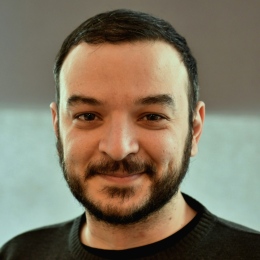
Ehsan Etezadi is a visiting researcher and doctoral student at Chalmers University of Technology, affiliated with the Department of Electrical Engineering (E2) and actively contributing to advancements in Optical Networks . His research focuses on Network Resource Allocation , Deep Reinforcement Learning , and Spectrum Management in Elastic Optical Networks . He has played a pivotal role in the PROTECT project (2021–2024), which addresses resilient and secure networks for critical infrastructures. His recent publications demonstrate expertise in creating AI-driven solutions for spectrum defragmentation, programmable filterless optical network design, and impairment-aware resource allocation in multi-band environments. These works highlight his contributions to WDM Metro Network Optimization , Network Digital Twins , and Transport API Integration . Research Highlights Developing DeepDefrag - a reinforcement learning framework for spectrum defragmentation Advancing Filterless Optical Networks architecture Implementing AI-based Network Control via digital twins Addressing Joint Fragmentation and QoT Challenges
Niklas Fors is an Associate senior lecturer at the Department of Computer Science, Faculty of Engineering, Lund University, and participates in ELLIIT (the Linköping-Lund initiative on IT and mobile communication) as well as the LTH Profile Area on AI and Digitalization. His research pioneers code reuse in data-flow automation languages through the Bloqqi language prototype from his PhD thesis, alongside innovations in reference attribute grammars and software language tooling. Key domains include static program analysis, compiler design, and feature-based programming, with applications spanning cyber-physical systems and educational technology. Recent publications reveal a strong trend toward demand-driven static analysis techniques, efficient fixed-point attribute evaluation, and interactive program analysis exploration via property probes—showcasing practical implementations for Java code analysis and educational settings. His accolades include: Distinguished Artifact Award (2025) Distinguished Artifact Award (2024) Distinguished Paper Award (2024) As co-supervisor for PhD candidates Alfred Åkesson and Idriss Riouak, he leads projects like "Cloud Based Language Tooling," "Cloud Tooling for Large-Scale Cyber-Physical System Model-Based Development," and "Explainable Declarative Programming Analysis," securing funding from ELLIIT and Vinnova. His work integrates with Lund's AI and Digitalization profile area, focusing on scalable language tools for next-generation cyber-physical systems through the ELLIIT initiative.
Marjan Sirjani is a Professor at Mälardalen University, affiliated with the School of Innovation, Design and Engineering, and the Division of Computer Science and Software Engineering. Her research focuses on cybersecurity, formal verification, and cyber-physical systems, with notable contributions to actor-based modeling (e.g., Timed Rebeca) and tools like AFRA for model analysis. She specializes in integrating formal methods into safety-critical systems, including automotive cybersecurity, ROS2 robotics, and blockchain-based IoT systems. Her work emphasizes rigorous analysis of protocols, concurrency, and real-time constraints. Recent projects include the CRYSTAL framework for CPS assurance, Tiny Twins for runtime attack detection, and applying LLMs for automated test generation. She also explores semantic segmentation in construction and compositional analysis of distributed systems. Publications highlight advancements in protocol learning, controller synthesis for safety, and model-driven development. Her research bridges theoretical foundations (e.g., automata theory, temporal logics) with practical applications in autonomous systems, medical device interoperability, and smart mobility. Labs/Teams: Involved in the Rebeca tool development (AFRA) and collaborative projects on CPS security. Grants: Not explicitly listed but implied through project involvement.
Zoe Falomir is an Associate Professor at the Department of Computing Science, Umeå University, Sweden, and a WASP (Wallenberg AI, Autonomous Systems and Software Program) faculty member. Her research focuses on multidisciplinary areas including Spatial Reasoning, Knowledge Representation, Human-Machine Interaction, Machine Learning, Cognitive Systems, and Creative Problem Solving. Her work bridges symbolic and non-symbolic AI approaches to develop robotic systems capable of learning through multi-modal interaction. Key trends in her publications include spatial problem-solving algorithms, educational applications of AI, and cognitive modeling for navigation and user experience analysis. Research Highlights: Integration of symbolic and non-symbolic AI for spatial reasoning Development of educational games for spatial skill assessment Analysis of environmental complexity in route perception Scientific Awards and Recognition: Extraordinary PhD Award in Experimental Sciences and Technology (University Jaume I) City of Castellón Experimental Science Award Marie Curie Fellow Junior Fellow at Hansewissenschaftkolleg Ramon-y-Cajal Postdoc Fellowship With over 40 journal articles and 50+ conference papers, her collaborations span 50+ co-authors, and her Erdős number is 4. She has contributed to 2 books, 5 proceedings books, and 19 book chapters. Her current research involves the Wallenberg AI program, focusing on autonomous systems.
Dr. Alfonso Mateos Caballero is a full Professor in the Department of Artificial Intelligence at the School of Computer Science, Universidad Politécnica de Madrid (UPM), where he leads the Decision Analysis and Statistics Research Group. His career spans extensive contributions to Operations Research, Decision Support Systems, and Data Science, with a focus on complex networks and multicriteria decision-making. He has participated in 58 research projects (23 as Principal Investigator), including European, national, and regional initiatives, as well as collaborations with 27 companies. His scholarly output includes 41 JCR-indexed research papers, 38 book chapters with international publishers, 171 conference proceedings, and six co-authored books on Operations Research and Data Science. His recent work explores financial market dynamics using random matrix theory, pandemic risk mitigation through air transport management, and Parkinson's disease detection via voice waveform analysis. He has supervised five PhD theses and 37 Master's projects, while contributing to software development and evaluating over 25 research proposals.
Peter Mozelius is an Associate Professor at the Department of Educational Sciences (UTV) , Mid Sweden University. With a career spanning institutions like Stockholm University and University of Gävle, his work bridges technology, pedagogy, and lifelong learning. Current roles include Visiting Researcher at the University of Gävle’s Digitalization, Technologies, Media and Learning (DTML) group. Academic Rank: Associate Professor Current Affiliation: Mid Sweden University (Sundsvall Campus) Previous Affiliations: Stockholm University, Royal Institute of Technology (KTH), University of Gävle Research Interests focus on technology-enabled learning , game-based learning , and AI in education , with projects like FAITH (Frontline Application of AI) and SPEDAT (Game-Based Computational Thinking). His work explores lifelong learning , work-integrated development , and ICT4D (Information and Communication Technology for Development). Publications analyze trends such as generative AI in assessment , VR for history education , and inclusive game design . Key projects include developing frameworks for work-integrated professional development (BUFFL) and active learning classrooms (ALC). Teaching includes scientific method , AI in higher education , and design science for educational systems . He leads essay supervision across technology and pedagogy.
Georgios Koutsopoulos is an Associate Senior Lecturer at the Department of Computer and Systems Sciences , Stockholm University , affiliated with the PRECIS Research Group . His work focuses on theories, methods, and tools for organizational and IT solution analysis and design. Research Group: PRECIS – Process, Requirements, Enterprise, Capability, Information Systems Modelling Key Topics: Enterprise Modelling, Business Process Management, Conceptual Modelling Research Interests include: Enterprise Modelling for capability change Business Process Management in dynamic environments Requirements Engineering for hybrid development approaches Conceptual Modelling of organizational potentials Inter-organizational process analysis Methodological frameworks for transformation Publications Trend Analysis reveals a focus on KYKLOS method development, capability meta-model visualization, and integrated frameworks for requirements engineering. His work bridges agile and plan-driven approaches while addressing challenges in healthcare , public sector , and cultural organizations . Collaborations with researchers like Martin Henkel and Janis Stirna have produced impactful studies on: Capability adaptation in digital enterprises State-machine diagram applications AI techniques in requirements elicitation Fractal Enterprise Model extensions
Sebastian Hönel is a postdoctoral researcher at Linnaeus University, affiliated with the Faculty of Technology and the Department of Computer Science and Media Technology. He is an active member of the Data Intensive Software Technologies and Applications (DISTA) research group and currently serves as a co-Principal Investigator in the project "In-line visual inspection using unsupervised learning" focused on manufacturing defect detection using machine learning techniques. Hönel completed his Doctoral Thesis in 2023 titled "Quantifying Process Quality: The Role of Effective Organizational Learning in Software Evolution" and earned his Licentiate Thesis in 2020 on "Efficient Automatic Change Detection in Software Maintenance and Evolutionary Processes," both from Linnaeus University. His educational background demonstrates a strong foundation in software engineering and data analysis. Hönel's research spans software engineering, machine learning, and data science. Initially focusing on applying Machine Learning and Deep Learning to software evolutionary processes and organizational learning, his current work emphasizes unsupervised and zero/few-shot learning techniques for industrial anomaly detection. He has particular expertise in Deep Density Estimation (especially Normalizing Flows) and Representation Learning, with applications in manufacturing quality assessment and software maintenance. His research interests include anomaly detection methodologies, architectural innovations in autoencoders, and methodological considerations for evaluation metrics in machine learning applications. An analysis of his publication record reveals a consistent focus on bridging software engineering with advanced machine learning techniques. His most recent work shows a strategic shift toward industrial applications of unsupervised learning, particularly in manufacturing defect detection, while maintaining his foundational work in software metrics and quality assessment. The publications demonstrate progression from theoretical software metrics to practical applications of deep learning in quality inspection systems. Hönel actively contributes to academic education by teaching (Deep) Machine Learning courses (4DV652, 4DV660, 4DV661) and previously served as a teaching assistant for agile product development courses (1DV508, 4DV611). His role as co-PI on the visual inspection project indicates successful research funding and leadership capabilities. While specific grant details aren't provided in the available information, his position suggests ongoing research support. As part of the DISTA research group, Hönel collaborates extensively with colleagues including Ericsson, Löwe, and Wingkvist on projects that combine software engineering with advanced data analysis techniques. His work environment supports interdisciplinary research at the intersection of computer science, software engineering, and machine learning applications, with particular emphasis on practical implementations in both software development contexts and manufacturing quality control systems.
Fredrik Bengtsson serves as a Lecturer within the Department of Informatics and Media at Uppsala University, Sweden. His academic work focuses on the strategic intersection of information technology and sustainability, particularly examining how digital systems drive sustainable innovation and organizational change across business contexts. Dr. Bengtsson's research interests prominently feature Sustainability and Information Technology , Business Information Systems , and Innovation Management . His investigations span sustainable behavior change through IT interventions, socio-technical integration in environmental initiatives, and visualization frameworks like Actor-Network Theory (ANT-Maps) for complex business landscapes. Key themes include environmental management, corporate sustainability programs, and the social dimensions of open innovation software. Analysis of his publication history (2011-2022) reveals consistent evolution from foundational studies on IT as a sustainability change agent toward nuanced examinations of long-term behavioral impacts and organizational sustainability effects. While predominantly centered on information systems applications, the inclusion of a 2022 materials science paper indicates potential interdisciplinary expansion, though core contributions remain anchored in sustainable IT solutions. No scientific awards or honors are documented in the available records. His scholarly impact manifests primarily through peer-reviewed publications and conference contributions rather than formal recognitions. Based on the provided information, there are no explicit references to doctoral student supervision or research grant leadership. His academic contributions appear concentrated in publication output and collaborative research within Uppsala University's institutional framework. While specific laboratory affiliations aren't mentioned, his collaborative publications with researchers like Ågerfalk, Iveroth, and Eriksson Lundström suggest active participation in Uppsala's sustainability and information systems research networks, likely operating through departmental research groups rather than dedicated physical laboratories.
Welf Löwe is a资深 researcher and faculty member at Linnaeus University's Faculty of Technology, Department of Computer Science and Media Technology, and also teaches at Linköping University's Department of Computer and Information Science. His research focuses on data-intensive technologies, software metrics, design pattern detection, and context-aware systems. He leads the Data Intensive Software Technologies and Applications (DISTA) group and contributes to the Linnaeus University Centre for Data Intensive Sciences and Applications (DISA). He actively collaborates on projects like the Data Intensive Applications (DIA) graduate school and the High-Performance Computing Center (HPCC). His work spans machine learning applications in healthcare, forestry, and industrial automation. Recent research includes feature engineering in medical data, skeleton avatar technology for aging studies, and AI-driven diagnostics. He has authored over 150 peer-reviewed publications and participates in interdisciplinary initiatives such as the iSchool project.
Emma Tegling is a Senior Lecturer (Associate Professor) at the Department of Automatic Control , Lund University , with a Wallenberg AI, Autonomous Systems and Software Program (WASP) professorship. She holds multiple roles including Deputy Head of Department, Project Manager, and Profile Area Member in AI & Digitalization and Natural & Artificial Cognition. Her research focuses on analysis and control of large-scale networked systems , with emphasis on distributed control, power networks, and social/epidemiological networks. Tegling earned her PhD in Electrical Engineering from KTH Royal Institute of Technology (2019) and held postdoctoral positions at MIT IDSS. She has led projects on network controllability, optimization, and societal applications. Notable contributions include scalable control design for vehicular formations and optimal control of linear cost networks. Her work aligns with UN Sustainable Development Goals related to affordable clean energy and industry innovation. Education: PhD in Electrical Engineering, KTH Royal Institute of Technology (2019) M.Sc. and B.Sc. in Engineering Physics, KTH Royal Institute of Technology (2013, 2011) Research Trends: Recent articles emphasize minimax optimal control, compositional design for nonlinear systems, and multipolar opinion dynamics in biased networks. Themes include scalability limits, distributed algorithms, and transients in networked systems. Grants & Projects: Leads WASP-funded projects on learning in networks and dynamic socio-technical systems. Involved in initiatives like the European Control Conference 2024. Supervises PhD students in control systems and network dynamics. Labs & Teams: Active in the Department of Automatic Control research groups focused on network science and AI-driven control solutions, contributing to Lund University's AI and Digitalization profile.
Johan Persson is an Associate Professor and Head of Unit at Linköping University's Department of Management and Engineering (IEI). He leads the Product Realisation (PROD) division, focusing on advancing Computer Aided Product Development (CAD) and optimization techniques. His research emphasizes computationally efficient surrogate models to enhance FEM/CFD analyses and streamline product development processes. Key areas of interest include design automation frameworks, additive manufacturing integration, and multidisciplinary optimization strategies. He teaches courses such as Machine Elements (TMKT39), Design Optimization (TMKT48), and Collaborative Multidisciplinary Optimization (TMKT79). His work bridges academic research and industry applications, with notable contributions to frameworks supporting Additive Manufacturing (AM) and OpenMDAO-based optimization. Research trends in his publications highlight advancements in AM applications, design automation tools, and collaborative optimization methods. Notable projects include a framework for AM design integration and studies on hydraulic pump design using additive techniques. Johan supervises PhD students including Erik Gustafsson and Javier Villena Toro. His research is supported by collaborations with colleagues like Anton Wiberg and Johan Ölvander. The Automation Lab, a key platform for his work, pioneers innovations in CAD automation and digital design processes.