Prof. Dr. Didier Stricker is a leading academic in computer science, serving as Scientific Director at the German Research Center for Artificial Intelligence (DFKI) and Professor at the University of Kaiserslautern-Landau (RPTU). His career spans over two decades, including leadership roles at Fraunhofer IGD and founding the Augmented Vision research unit at DFKI/RPTU, which now includes ~30 researchers. Education: Electrical Engineering (Technical University of Grenoble, Karlsruhe) PhD: Computer Vision-based Calibration and Tracking Methods for Augmented Reality (2002, TU Darmstadt) His research focuses on virtual and augmented reality , computer vision , human-computer interaction , and on-body sensor networks . He leads major EU/national projects like LUMINOUS (Language-Augmented XR) and SHARESPACE (Ethical Hybrid Shared Spaces), with industrial partnerships including Sony, Google, and John Deere. Recent publications emphasize 3D reconstruction , neural network optimization , and XR systems . Key trends include event camera processing , scene flow estimation , and multimodal AI for industrial applications . He holds patents in AR tracking and has received the 2006 Innovation Prize from the German Society of Computer Science. Scientific Awards : Innovation Prize (2006) Best Paper/Demonstration Awards at ISMAR, EUSIPCO, CVPR, and ICRA As a reviewer for journals and conferences in VR/AR and computer vision, he contributes to shaping research standards. His lab ( AG Augmented Vision ) combines academic and industrial collaborations to advance cognitive interfaces and extended reality systems.
Marlene Lutz is a Researcher at the Chair of Data Science in the Economic and Social Sciences within the Business School at the University of Mannheim, Germany. She works under the supervision of Prof. Dr. Strohmaier and has been active in academic research since 2018. Her contact details include room 323 on the 3rd floor at L 15, 1–6, 68161 Mannheim, and her email: marlene.lutz@uni-mannheim.de. Her research focuses on responsible AI, fairness in algorithmic systems, and interpretability in natural language processing. M.Sc. Computer Science, RWTH Aachen University (2018–2021) Foreign Studies, Seoul National University, South Korea (2020) B.Sc. Computer Science, RWTH Aachen University (2014–2018) Her research interests span several critical areas in modern data science, including language model compression for resource efficiency, bias mitigation techniques in NLP systems, and the development of fair algorithmic ranking frameworks. She also specializes in interpretable word embeddings that enhance transparency in language models, aligning with the broader goals of responsible AI and ethical computational methods. Marlene has contributed to publications in both computational social science and health informatics domains. Her 2025 paper on group fairness measures for rankings demonstrates her focus on fairness evaluation metrics, while her 2022 work on clinical guideline visualization showcases interdisciplinary applications of data science. She has taught multiple Master's level courses at the University of Mannheim since 2022, including Text Analytics, Network Science, and Data Science seminars. These courses emphasize practical implementation of computational methods in information systems and social computing contexts.
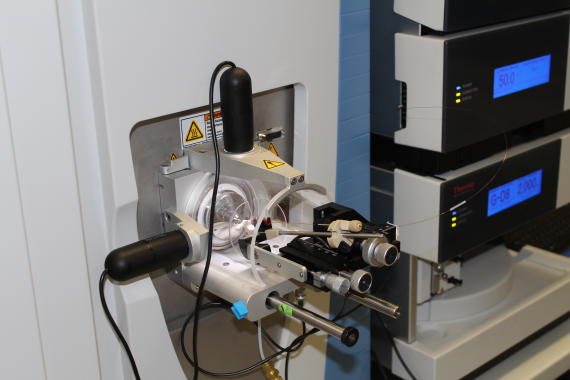
Professor Michael Hippler leads a research group at the Institute of Plant Biology and Biotechnology at the University of Münster, Germany. He also serves as a Special Appointed Professor at Okayama University, Japan, from April 2019 until March 2028 (3 months per year) through the Okayama University RECTOR Program. His research focuses on plant cell responses to environmental stresses and the molecular mechanisms involved in photosynthetic machinery. His primary research interests include adaptation to low iron availability, light-harvesting versus light-dissipation mechanisms, hydrogen metabolism, calcium-dependent protein phosphorylation in plants, photosystem function and regulation, N-glycosylation in algae, and bioinformatics and proteomics. He primarily uses the green alga Chlamydomonas reinhardtii as a model system, combining molecular techniques like reverse genetics and proteomics to study these processes. His recent publications demonstrate a strong focus on N-glycosylation in algae, particularly examining protein modifications and their effects on cellular functions. His work also extensively covers photosystem structure and function, employing techniques like chemical crosslinking, mass spectrometry, single particle electron microscopy, and cryo-electron microscopy. The research has significant implications for understanding photosynthetic regulation and adaptation mechanisms. Professor Hippler leads the Mass Spectrometry-based Proteomics Unit Biology of Plants (MSPUB), which provides large-scale proteomic analyses for research groups at the Institute. The laboratory is equipped with a hybrid linear ion-trap mass spectrometer (Q-Exactive plus-Orbitrap) coupled to an Ultimate Nano liquid chromatography system. He supervises numerous PhD, Master's, and Bachelor's students and has developed several bioinformatics tools including GenomicPeptideFinder (GPF), qTRACE, pyQms, SugarPy, and Crosslinx. His research is funded by various sources including the DFG FOR 5573 "Dynamic Regulation of the Proton Motive Force in Photosynthesis" consortium.
Prof. Dr. Benedikt Wirth is a Professor of Mathematics at the University of Münster, Germany, affiliated with the Institute for Analysis and Numerics within the Department of Mathematics and Computer Science. He is an active researcher and educator specializing in optimization and calculus of variations, with significant contributions to mathematical imaging and shape analysis. His research interests include image processing, scientific computing, numerical analysis, optimization, shape spaces, geodesics in shape space, variational methods, elastic deformation, and optimal transport. Wirth has developed innovative mathematical frameworks for shape analysis, particularly focusing on Riemannian metrics for shape spaces and variational approaches to shape comparison and optimization. His recent publications (2023-2025) demonstrate continued leadership in mathematical optimization, with particular focus on PET reconstruction, dimension reduction techniques, manifold embeddings, and branched transport theory. His work bridges theoretical mathematics with practical applications in medical imaging and computer vision, showing particular strength in connecting geometric analysis with computational methods. CRC 1450 - A05: Targeting immune cell dynamics by longitudinal whole-body imaging and mathematical modelling CRC 1450 - A06: Improving intravital microscopy of inflammatory cell response by active motion compensation EXC 2044 - C1: Evolution and asymptotics EXC 2044 - C2: Multi-scale phenomena and macroscopic structures EXC 2044 - C3: Interacting particle systems and phase transitions EXC 2044 - C4: Geometry-based modelling, approximation, and reduction Prof. Wirth actively supervises numerous bachelor's and master's students, with over 40 theses completed under his guidance since 2015. His teaching portfolio includes courses on inverse problems, numerical methods for partial differential equations, shape spaces, optimization, and optimal transport. He has consistently maintained an active research program while contributing significantly to the education of the next generation of mathematicians.
Dr. Stavros Nousias is a researcher at the Chair of Computing in Civil and Building Engineering at the Technical University of Munich , focusing on applications of Artificial Intelligence in the Built Environment . His work bridges Knowledge Representation and Reasoning , Geometry Processing , and Machine Learning to advance construction informatics and digital twinning. Research Interests: AI for building evacuation prediction, technical drawing segmentation, BIM optimization, and respiratory disease modeling. Publications: 15+ peer-reviewed articles on topics including graph neural networks for construction simulations, pulmonary airflow analysis, and heritage site monitoring. Supervised Theses: Guided projects on AI-based BIM command prediction and robotized construction simulation . Labs: Active in the BIM-Lab and Robotic Fabrication Lab . Teaching: Co-instructor for courses like Artificial Intelligence in Engineering and Computation in Engineering 1 .
Prof. Dr.-Ing. Alberto Moreira is the Director of the Microwaves and Radar Institute at the German Aerospace Center (DLR) and a Full Professor in Microwave Remote Sensing at Karlsruhe Institute of Technology (KIT) . He leads pioneering work in synthetic aperture radar (SAR) systems, including the TanDEM-X and TerraSAR-X missions. Born in São José dos Campos, Brazil B.Sc./M.Sc. in Electrical Engineering (Aeronautical Technological Institute, 1984/1986) Ph.D. (summa cum laude, Technical University of Munich, 1993) Research Focus : Innovative SAR system design (polarimetric interferometry, tomography) Digital beamforming and multi-static radar architectures Global Earth observation through TanDEM-X and Tandem-L missions Quantum annealing applications in SAR processing Planetary radar systems for Venus exploration (EnVision, VERITAS) Scientific Impact : Author/co-author of >500 peer-reviewed publications H-index: 66 (Google Scholar) Holder of >40 patents in radar and antenna technology Awards & Leadership : IEEE Dennis J. Picard Medal (2023) IEEE GRSS Distinguished Achievement Award (2014) President of IEEE GRSS (2010) Founding Chair of IEEE GRSS German Chapter Principal Investigator for Helmholtz Alliance Earth System Dynamics (2012-2018) Collaborations : Works with ETH Zurich, TU Delft, and ESA on missions like Sentinel-1, BIOMASS, Harmony, and VERITAS. His institute develops cutting-edge technologies for spaceborne SAR systems.
Arjun Majumdar is a Researcher in the Department of Computer Science at the University of Tübingen , Germany. He is affiliated with the Tuebingen AI Research building and contributes to cutting-edge research in computer graphics and machine learning. Research Interests Novel View Synthesis for 3D computer graphics Neural Network Pruning and Compression for efficient AI models Generative Probabilistic Modelling and Representation Learning Earthquake Investigation using Visual Cognizance of Multivariate Temporal Data techniques Publications Collaborated on research about earthquake analysis and temporal data visualization using machine learning frameworks.
Daron Acemoglu is a Professor at the Massachusetts Institute of Technology (MIT) , where he conducts research on political economy, economic development, technological change, and inequality . As a leading scholar in institutional economics, he explores how inclusive vs extractive institutions shape national prosperity and stability. His 2023 book Power and Progress examines AI's societal implications, while Why Nations Fail (2012) revolutionized development theory through historical institutional analysis. Research Focus : Macroeconomics, Labor Economics, Technological Displacement Key Theories : Institutional persistence, Directed technical change, Creative destruction dynamics Awarded with the Sveriges Riksbank Prize in Economic Sciences (2024) A.SK Social Science Award (2023) John Bates Clark Medal (2005) His empirical work spans historical and contemporary analyses , connecting medieval institutional development to modern economic outcomes. Recent publications examine AI regulation, automation's labor market impacts , and creative destruction forces . He serves as Faculty Co-Director at MIT's Stone Center on Inequality and contributes to Blueprint Labs .
Dr. Johannes Pfau serves as a Scientific Assistant at the Institute for Information Processing Technology (ITIV) within Karlsruhe Institute of Technology (KIT), working in Prof. Becker's research group. His position combines postdoctoral research in advanced FPGA architectures with teaching responsibilities including System-on-Chip internships and academic advising for specialized engineering tracks. Education: Doctorate (Dissertation) in Electrical Engineering and Information Technology, Karlsruhe Institute of Technology, 2024 Research Interests: Pfau's work centers on reconfigurable computing with three interconnected pillars: (1) Next-generation FPGA architectures using emerging technologies like RFETs that require fundamental toolchain redesigns; (2) Digital beamforming systems for satellite Earth observation that replace analog processing with FPGA-based solutions to enable on-orbit data compression; and (3) High-throughput data acquisition systems for 6G prototyping handling multi-100Gbps streams through RFSoC platforms. His research bridges semiconductor physics, hardware architecture, and practical applications in communications and remote sensing. Publication Trends: Pfau's 15 most recent publications (2021-2024) reveal a strong focus on practical FPGA implementations addressing real-world constraints. His work increasingly integrates power management (7 papers), 6G infrastructure (5 papers), and novel semiconductor technologies (4 papers), with a clear trajectory toward hardware solutions for satellite communications and next-generation wireless systems. The research demonstrates consistent progression from architectural innovations (RFET, V-FPGAs) to applied systems (beamforming, 6G testbeds). Advising and Mentorship: Pfau maintains an active student supervision portfolio with documented guidance of 7+ Bachelor's and Master's theses since 2021. His projects emphasize hands-on hardware development, spanning power management techniques, beamforming filter design, and prosthetic control systems. The academic advising role for specializations 13 and 21 positions him at the intersection of computer science and electrical engineering education. Research Context: As a core member of Prof. Becker's group at ITIV, Pfau contributes to KIT's leadership in reconfigurable systems research. The group maintains strong industry connections through 6G initiatives and satellite technology development, with Pfau's work directly supporting German and European efforts in secure communications infrastructure and Earth observation systems.
Dr. Philipp Grete is a postdoctoral research associate at the Hamburg Observatory (University of Hamburg), previously holding a Marie Skłodowska-Curie Fellowship at the same institution and a postdoctoral position at the Department of Physics & Astronomy, Michigan State University . His interdisciplinary research bridges astrophysics and computational methods , focusing on: Magnetohydrodynamic turbulence in astrophysical systems Performance-portable exascale simulation frameworks (Parthenon, AthenaPK) Cosmic ray transport mechanisms Anisotropic transport processes in weakly collisional plasmas Supercomputer-driven AGN feedback analysis He leads the XMAGNET project using DOE INCITE allocations on exascale systems and recently secured DFG funding for three years. His work has been recognized with the Postdoctoral Excellence in Research Award (MSU), SC23 Best Paper nomination, and CUG23 Best Paper Runner-up award.
Xiang Gao is a Pre-tenure Associate Professor in the School of Software at Beihang University, China. His research focuses on applying program analysis, test generation, and formal methods to improve software quality through automated bug fixing and program synthesis. He has established significant collaborations with Fujitsu Laboratories of America, Microsoft Research, and other leading institutions in the software engineering field, demonstrating strong industry-academia connections. Dr. Gao received his Bachelor's degree in Computer Science (Elite Class) from Shandong University in 2016, followed by a Ph.D. from the School of Computing at the National University of Singapore, where he also served as a Postdoctoral Fellow until December 2021. His educational background spans both Chinese and Singaporean academic institutions, providing him with a global perspective on software engineering research. His primary research interests span multiple cutting-edge areas of software engineering: Program Analysis techniques for detecting and fixing software bugs with formal methods Software Security vulnerabilities with focus on automated repair methods Automated Program Repair systems that generate high-quality patches without overfitting Program Synthesis for creating transformation rules from examples Software Engineering for Artificial Intelligence (SE4AI) to improve AI model reliability and security Mobile Software Engineering with particular attention to UI testing and automation Deep Learning Security including model protection and obfuscation techniques Dr. Gao's recent publication trajectory shows a strategic evolution toward integrating large language models with traditional software engineering approaches, particularly in test generation and program repair. His work on DNN modularization (NeMo, CNNSpliter, SeaM) represents an innovative approach to enhancing model reusability and security in resource-constrained mobile environments, addressing critical challenges in deploying AI on edge devices. His scientific contributions have been recognized with multiple prestigious awards: ACM SIGSOFT Distinguished Paper Award for "ProveNFix: Temporal Property guided Program Repair" at FSE'24 IEEE TCSE Distinguished Paper Award for "Investigating and Detecting Silent Bugs in PyTorch Programs" at SANER'24 ACM SIGSOFT Distinguished Paper Award for "Modularizing while Training: A New Paradigm for Modularizing DNN Models" at ICSE'24 Distinguished Artifact Award for "Automated Patch Backporting in Linux (Experience Paper)" at ISSTA'21 Dr. Gao actively mentors students at various levels, seeking "self-motivated Ph.D, master, undergraduate students and interns with strong programming skills" for his research projects. He serves on numerous program committees for top software engineering conferences including ICSE, ASE, ISSTA, and FSE, demonstrating his growing influence in the academic community. His research has been supported through collaborations with industry partners including Microsoft Research and Fujitsu Laboratories of America, translating theoretical advances into practical applications. His laboratory focuses on several key research projects including Automated Software Vulnerability Repair (with techniques like Fix2Fit, VulnFix, and ExtractFix that address the overfitting problem in program repair), Program Synthesis for Program Transformation (including Semi-supervised synthesis and FixMorph for automated patch backporting in Linux), and Software Engineering for Artificial Intelligence (with projects like CNNSpliter, SeaM, and Sensei that apply software engineering principles to improve AI model usability and robustness). These projects represent cutting-edge work at the intersection of traditional software engineering and modern AI techniques, addressing critical challenges in software reliability and security.
Ding Li is an Assistant Professor in the School of Computer Science at Peking University. He holds a Ph.D. in Computer Science from the University of Southern California (USC) and a B.S. from Peking University. His research focuses on program analysis, energy optimization for mobile applications, and security, with publications in top conferences including ICSE, FSE, and ASE. His research interests span: Program Analysis : Techniques to optimize mobile application energy consumption. System Security : Identifying vulnerabilities in Android apps and WebAssembly binaries. Cloud/Edge Computing : Enhancing serverless computing efficiency and federated learning security. Dr. Li's recent work explores the integration of large language models into pointer analysis and automated optimization of resource inefficiencies. His publications demonstrate a consistent focus on practical system optimizations and security enhancements across mobile, cloud, and machine learning domains. Awards: Viterbi Undergraduate Research Mentoring Award (2014)
Professor Michael Schroeder is a Professor in Bioinformatics at the Biotechnology Center (BIOTEC) and Department of Computing at Technische Universität Dresden. He serves as Director of the Biotechnology Center since 2012, with specific periods as Director (2012-2014, 2019-2021), and Director of the Center for Molecular and Cellular Bioengineering (CMCB) from 2022-2023. He is also CSO of Transinsight.com since 2006 and co-founder of PharmAI GmbH since 2019. His research focuses on developing machine learning algorithms exploiting large protein structure and sequence data to improve diagnosis and treatment of disease. Key areas include: Computational drug repositioning using networks, structures, text, and ontologies Pancreas cancer drug and biomarker prediction through AI analysis of blood samples (90%+ accuracy) Antibiotic resistance analysis in wastewater E. coli through genomic variations Development of novel lead compounds for cancer chemotherapy resistance, autoimmune disease, and Chagas disease Prof. Schroeder's publication record demonstrates consistent application of network analysis, structural bioinformatics, and machine learning to solve biomedical problems, with particular emphasis on pancreatic cancer and drug repositioning. His work bridges computational approaches with experimental validation through collaborations with medical researchers. Notable achievements include: Publication of over 230 scientific papers Hirsch index over 45 on Google Scholar Two granted patents Development of PLIP, a widely used open-source tool for analyzing molecular interactions Co-founding pharmAI GmbH, focusing on structure-based drug-target prediction Prof. Schroeder has supervised over 25 PhD students, with 10 receiving distinctions. Eight former group members have become professors or group leaders. His lab is currently funded by multiple projects including Kiwi, Ebira, and Scads.ai from BMBF, as well as EU and DFG grants. The Schroeder Group maintains extensive collaborations worldwide, including Yves Moreau (Leuven) for autoimmune disease research, Gildardo Rivera Sanchez (Reynosa) for Chagas disease, and Christian Pilarsky (Erlangen) for cancer research, demonstrating his strong international network and interdisciplinary approach.
Karl Mechtler has led the Protein Chemistry Facility at the Research Institute of Molecular Pathology (IMP) in Vienna, Austria since 1989. As Head of Facility, he directs research operations focused on advanced mass spectrometry applications in molecular and cellular biology. His facility provides critical infrastructure for proteomic analysis while conducting innovative research in protein chemistry methodologies. Mechtler's core research interests center on: Developing high-sensitivity mass spectrometry techniques Advancing crosslinking approaches for structural proteomics Optimizing single-cell proteomic workflows Analyzing posttranslational modifications Creating bioinformatic solutions for proteome analysis Improving quantitative accuracy in multiplexed proteomics Recent publications demonstrate his lab's focus on pushing technical boundaries in proteomics, with 2024-2025 research featuring innovations in Orbitrap Astral applications, FAIMS technology for peptide coverage, AI-driven data analysis, and novel crosslinking strategies. These methodological advances enable new biological insights into areas ranging from chromatin dynamics to neurological disorders. His research is supported by active grants including: 'Delineating the crossover control networks in plants' (German Research Foundation, ongoing since 2014) 'SFB F3402-B03: Chromosome dynamics' (Austrian Science Fund FWF) Mechtler leads the Protein Chemistry Facility at IMP, which maintains an active web presence detailing its research focus and capabilities. The lab specializes in developing cutting-edge mass spectrometry solutions for challenging biological questions.
Tales de Vargas Lisboa serves as a Researcher in the Tailored Lightweight Composites Department within the Polymer Materials Engineering Division at Leibniz Institute of Polymer Research Dresden. His work focuses on advanced computational methods for composite material design and analysis. His research spans Numerical and analytical modeling of composite structures Design optimization of Tailored Fiber Placement (TFP) components Nonlinear bending analysis of anisotropic plates Filament winding pattern generation with particular expertise in decomposition methods for solving complex structural mechanics problems. His publication record shows consistent contributions to mechanical engineering journals between 2017-2020, primarily addressing computational challenges in composite material behavior under various loading conditions. Key projects include International ZIM 'AniDo' and DAAD 'PROBRAL' collaborations. Led by Prof. Dr.-Ing. Axel Spickenheuer, the Tailored Lightweight Composites Department develops material-specific adaptations for continuous fiber-reinforced composites in extreme lightweight applications, with Lisboa contributing specialized computational expertise to the Advanced Composite Modeling research group. His technical capabilities bridge theoretical modeling and practical engineering applications, particularly in optimizing fiber paths and structural responses for high-performance composite components.