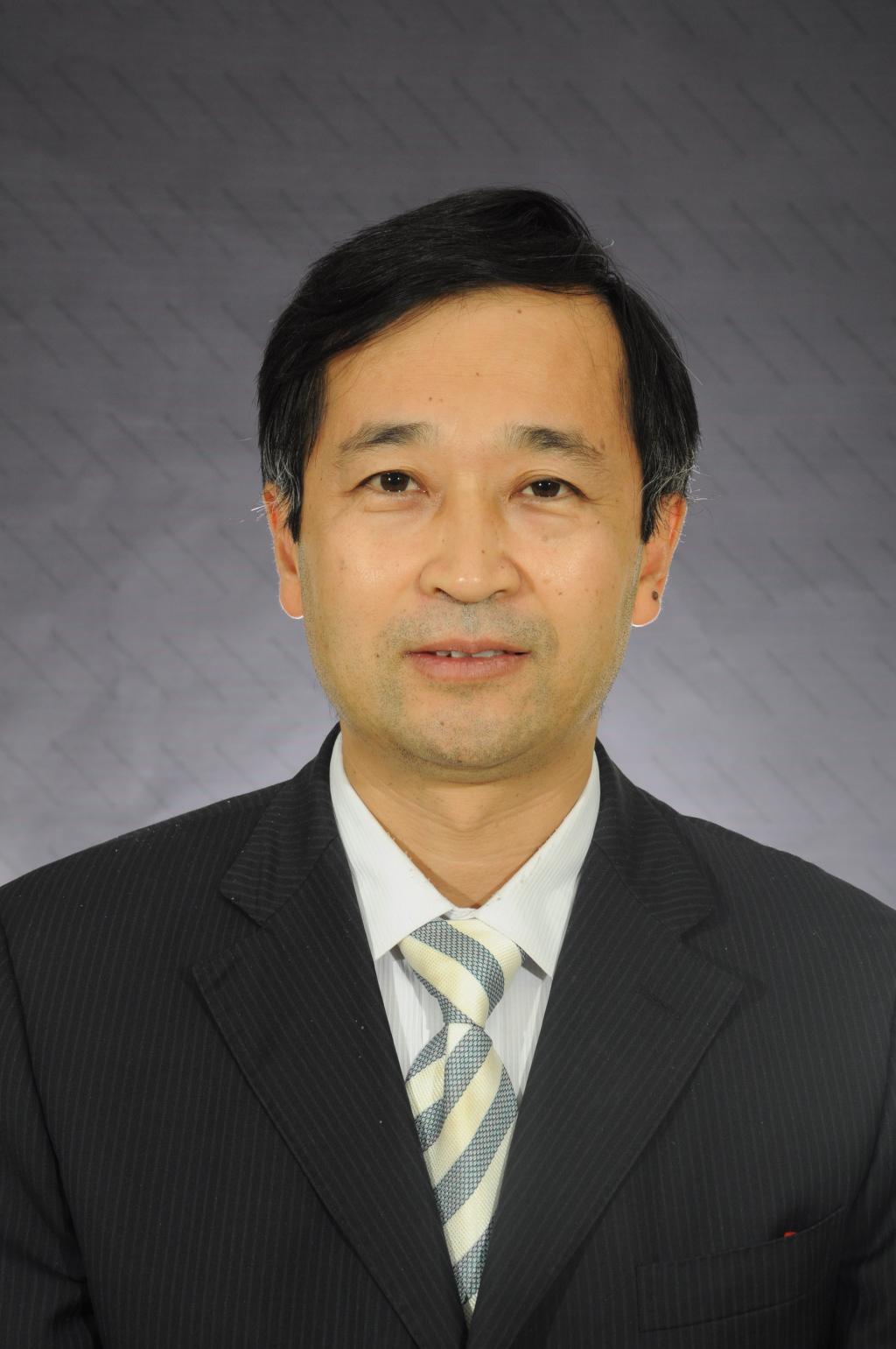
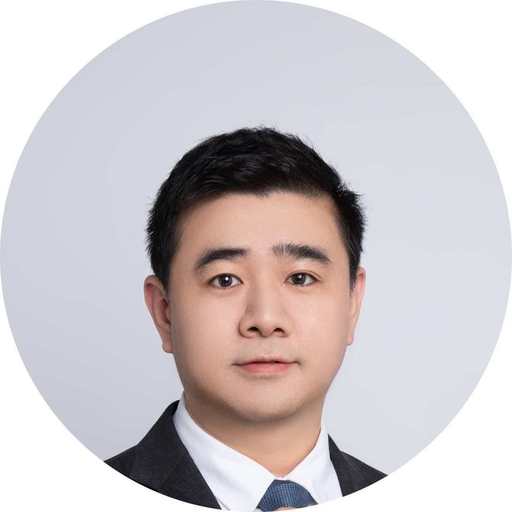
Hetao Hou is a Professor and PhD Tutor at the School of Civil Engineering , Shandong University . With a Doctor of Engineering from Tongji University (2005) and Master/Bachelor degrees from Shandong University, his research focuses on seismic and shock absorption technologies in steel structures, innovative prestressed concrete systems, lightweight energy-saving composite wall panels, and prefabricated construction methods. Key research themes include: Replaceable energy-consuming beam-column joints New buckling-restrained brace designs Precast concrete structural systems Steel-concrete composite components Holds 34 patents in structural engineering, including composite shear walls, precast slab systems, and seismic connection nodes Co-authored 67+ publications in journals like Engineering Structures , Structural Control and Health Monitoring , and Engineering Mechanics with international collaborators His work bridges experimental testing and numerical modeling of composite structures, focusing on seismic resilience and prefabrication technologies. Patents demonstrate practical applications in earthquake-resistant construction systems.
Shiyi Chen is Chair Professor in the Department of Mechanics and Aerospace Engineering at Southern University of Science and Technology (SUSTech) . From January 2015 to November 2020 he served as the founding President of SUSTech. He is an Academician of the Chinese Academy of Sciences, a Fellow of the American Physical Society (1995), the Institute of Physics (UK, 2004) and The World Academy of Sciences (TWAS, 2018). Education B.Sc. in Mechanics, Zhejiang University (1981) M.Sc. in Mechanics, Peking University (1984) Ph.D. in Mechanics, Peking University (1987) Research Interests Professor Chen is internationally recognized for pioneering work in turbulence theory and computational fluid dynamics . His research spans direct numerical simulation of turbulent flows, large-eddy simulation and sub-grid-scale modeling, lattice Boltzmann methods , multi-scale algorithms , and the industrial applications of turbulence in multi-phase flows, combustion, and granular media. He developed the mapping-closure theory for probability density functions in turbulent reacting flows and provided fundamental explanations for the two-dimensional inverse energy cascade. Awards & Honors Academician, Chinese Academy of Sciences (2013) Fellow, American Physical Society (1995) Fellow, Institute of Physics, UK (2004) Fellow, The World Academy of Sciences (TWAS) (2018) Qiu Shi Outstanding Scientist Award (2017) Shenzhen Education Reform Pioneer Award (2019) Leadership & Service Professor Chen has held numerous leadership roles: President, Southern University of Science and Technology (2015–2020) Vice President for Research and Dean of Graduate School, Peking University (2013–2015) Founding Dean, College of Engineering, Peking University (2005–2013) Chair, Department of Mechanical Engineering, Johns Hopkins University (2002–2004) Director, State Key Laboratory of Turbulence and Complex Systems (2011–present) Alonzo G. Decker Jr. Chair in Engineering and Science, Johns Hopkins University Oppenheimer Fellow & Group Leader, Los Alamos National Laboratory (1987–1997) Research Staff Member, IBM TJ Watson Research Center (1994–1999) Laboratory & Research Teams Since 2011 he has directed the State Key Laboratory of Turbulence and Complex Systems , fostering interdisciplinary research in high-Reynolds-number turbulence, multi-scale modeling, and advanced computational techniques. Under his guidance the laboratory collaborates closely with national aerospace and energy industries.
Jiantao Fan is a Research Associate Professor at the College of Science , Southern University of Science and Technology (SUSTech). With expertise in polyelectrolyte membrane research for fuel cells and water electrolysis systems, his work focuses on ion exchange membranes, membrane electrode assembly (MEA) engineering, and alkaline/hydrogen energy systems. He holds affiliations with key organizations including the Shenzhen Hydrogen and Fuel Cell Association (Vice President) and is recognized as a Class-B Shenzhen Peacock Plan talent. Education : PhD (2009-2014) and BSc (2005-2009) from Beijing University of Chemical Technology Postdoctoral : Simon Fraser University (2014-2017) His research explores sterically protected poly(arylimidazolium)s for alkaline stability, 3D MEA architectures , and water-retentive proton exchange membranes . Publications in Nature Energy , Nature Communications , and Energy & Environmental Science highlight advancements in membrane conductivity and durability. Scientific honors include: Core member of Guangdong Innovative and Entrepreneurial Research Team Program Committee member of Sichuan Provincial Key Laboratory Principal Investigator for China's National Key R&D Program His work spans national projects like the 863 Program and 973 Program , addressing challenges in fuel cell longevity and hydrogen energy systems.
Dr. FENG Weiqiang is an Assistant Professor and PhD supervisor at the Department of Ocean Science and Engineering, Southern University of Science and Technology (SUSTech), Shenzhen, China. He received his PhD in Geotechnical Engineering from The Hong Kong Polytechnic University in 2016, after completing a Master's at Zhejiang University and a Bachelor's at Central South University. His research bridges marine geotechnics with advanced computational and sensing technologies. PhD: Geotechnical Engineering, The Hong Kong Polytechnic University (2011–2016) MSc: Geotechnical Engineering, Zhejiang University (2008–2011) BEng: Mining & Geotechnical Engineering, Central South University (2004–2008) Dr. Feng specializes in marine soil consolidation , elasto-viscoplastic constitutive modeling , and fiber optic geotechnical sensors . He pioneered a modified Cam-Clay model incorporating nonlinear loading-unloading and temperature effects , with applications in major projects like Hong Kong International Airport's Third Runway and the Tseung Kwan O reclamation. His fiber Bragg grating effective stress meter , licensed to NanZee Sensing Co., Ltd., represents the first global instrument for direct soil stress measurement. His publications (73 SCI papers, H-index 23) focus on submarine pipeline-soil interaction , robot safety systems , and offshore energy islands . Key trends include multi-physics coupling in geotechnical systems, machine learning integration for damage detection, and advanced sensing techniques for marine environments. 2024: Outstanding College Advisor Award, SUSTech 2023: Dual Outstanding Individual Awards (Student Recruitment & Party Affairs), SUSTech 2020: Shenzhen Municipal Government Category C Overseas High-Level Talent 2016: 'Ringo Yu' Best Doctoral Thesis, Hong Kong Institution of Civil Engineers 2007: National Scholarship, Ministry of Education, China Dr. Feng actively leads 5 research projects (including 1 National NSFC grant and 3 provincial/municipal grants), participates in over 10 national/Hong Kong SAR funded programs, and mentors prospective postdoctoral fellows, PhD, and master's students in geotechnical, mechanical, and environmental disciplines. His team develops intelligent geotechnical systems for offshore applications, including submarine robot safety frameworks and smart energy island infrastructure . Current collaborations span Canadian National Geotechnical Code implementation and Kunlong 500 tracked mining vehicle soil interaction studies.
Li Zeng is an Associate Professor in the Department of Statistics and Data Science at Southern University of Science and Technology (SUSTech) since January 2021, following her Assistant Professor role at the same institution from August 2019 to December 2020. Previously, she was an Eberly Postdoctoral Fellow at Pennsylvania State University under Prof. Runze Li (2017-2019) and a Research Assistant at the University of Washington with Dr. Fang Han (2017). Ph.D. in Statistics and Actuarial Science from the University of Hong Kong (2017), advised by Prof. Jianfeng Yao M.Sc. in Statistics from Renmin University of China (2012) B.Sc. in Mathematical Science from Beijing Normal University (2009) Her research centers on Random Matrix Theory and High Dimensional Statistics , with significant contributions to eigenvalue/singular value distributions in large-dimensional matrices. She extends these theoretical foundations to Time Series Analysis for lagged auto-correlation structures and applies them to Machine Learning problems including neural network optimization and regularization. Her work bridges asymptotic probability theory with practical data science applications, developing robust methods for high-dimensional inference. Analysis of her 15 most recent publications (2016-2025) reveals a dominant focus on high-dimensional statistical theory with increasing machine learning integration. Key trends include asymptotic analysis of covariance/correlation matrices (60% of publications), factor modeling innovations (20%), and deep learning applications (20%). She consistently publishes in top-tier venues including Annals of Statistics (5 papers), Journal of the American Statistical Association , and machine learning conferences (ICML, ECCV), demonstrating exceptional interdisciplinary impact. Excellent Teaching Assistant Award (5 times) from HKU Department of Statistics and Actuarial Science (2012-2017) Dr. Li actively recruits postdoctoral researchers specializing in probability theory and high-dimensional statistics, emphasizing candidates with strong mathematical backgrounds. As a referee for premier journals including Annals of Statistics , JASA , and Journal of the Royal Statistical Society: Series B , she contributes significantly to scholarly review. Her research is institutionally supported through SUSTech faculty positions, with potential external funding inferred from extensive publication output and conference participation. Within SUSTech's Department of Statistics and Data Science (established 2019), Dr. Li contributes to a rapidly expanding research ecosystem focused on high-dimensional data analysis. The department supports multiple research directions including biostatistics and financial statistics, with active graduate programs (M.Phil/Ph.D.) and developing initiatives in data science education. Her teaching portfolio includes undergraduate Statistical Calculation and Software and graduate-level High Dimensional Statistics courses.
Jianfeng Shi is a Professor at the College of Energy Engineering, Zhejiang University. He serves as a Doctoral Supervisor and Deputy Director of the Institute of Process Equipment. His research focuses on non-metallic and composite pressure equipment , advanced testing techniques , and nondestructive safety assessment . Research Interests: Design of extreme-service pressure equipment, structural sensing technologies, and safety evaluation of polymeric pipelines in nuclear and hydrogen energy systems. Article Trends: Recent publications emphasize advanced composite materials non-destructive testing with AI hydrogen transportation safety finite element modeling embedded sensor systems Awards: Zhejiang Province Science and Technology Progress Award (1st prize) China Petroleum and Chemical Industry Federation Technology Invention Award (2× 1st prize) ASME Outstanding Technical Paper Awards
Jianwei Ma is a Professor at the School of Mathematics, Harbin Institute of Technology, leading the Center of Geophysics and the Institute of Artificial Intelligence. His expertise spans exploration geophysics, artificial intelligence, and compressed sensing. Ma holds a Ph.D. in Solid Mechanics from Tsinghua University (2002) and a BS in Engineering Mechanics from Dalian University of Technology (1998). His research focuses on improving seismic exploration through mathematical methods, including sparse transforms, compressed sensing, and deep learning applications. Notable contributions include methodologies for seismic noise reduction, data interpolation, and full waveform inversion. Ma has held visiting positions at institutions like UCLA, UC Los Angeles, and the University of Texas at Austin. He has received prestigious awards such as the NSFC Distinguished Young Scholar (2016) and World's Top 2% Scientists (2020-2024). Ma actively contributes to professional societies, including SEG and IEEE, and has organized international workshops on mathematical geophysics and AI-driven geoscience. His team includes faculty members and over 30 graduate students, reflecting his commitment to training future researchers in geophysics and AI. Collaborations with global leaders in geophysics and mathematics, such as Prof. Stanley Osher (UCLA) and Prof. Gerlind Plonka (University of Goettingen), highlight his interdisciplinary approach. Key publications include advancements in deep learning for geophysical inversion and sparse representation techniques for seismic data processing.
Dr. Alexander Kurganov is a Chair Professor in the Department of Mathematics at Southern University of Science and Technology (SUSTech), China, since 2019. Previously, he served as Professor at SUSTech (2016–2019) and Tulane University (2010–2015, 2004–2010, 2001–2004). He has held visiting positions at Shanghai Jiao Tong University, University of Bordeaux I, Johannes Gutenberg University, Paul Sabatier University, and University of Michigan. PhD in Applied Mathematics, Tel Aviv University, 1998 MS in Mathematics, Moscow State University, 1989 Research Interests: Dr. Kurganov specializes in scientific computing, numerical methods for time-dependent PDEs, finite-volume methods, geophysical fluid dynamics, and nonlinear PDEs. His work focuses on developing robust numerical schemes for complex fluid dynamics problems, including shallow water systems, chemotaxis models, and compressible flows. Publication Trends: His recent publications emphasize high-resolution numerical schemes for hyperbolic conservation laws, shallow water equations, and interdisciplinary applications in environmental modeling, fluid dynamics, and financial mathematics. 2015–2018 NSF Research Grant (PI) 2012–2015 ONR Research Grant (PI) 2011 German Research Foundation (DFG) Grant 1997 The Rosset Prize (Tel Aviv University) Grants & Collaborations: Dr. Kurganov has secured multiple NSF and ONR grants as principal investigator. His collaborations span institutions in the USA, China, France, Germany, and Sweden, with applications in geophysics, biology, and finance.
Jingzhi Li is a Professor and Associate Chair of the Department of Mathematics at Southern University of Science and Technology (SUSTech), where he has been serving since January 2020. Previously, he was an Associate Professor at SUSTech from June 2012 to December 2019. His research focuses on scientific computing, finite element methods, inverse problems in mathematical physics, shape optimization in differential forms, and computational finance. Education: PhD in Applied and Computational Mathematics, Chinese University of Hong Kong, 2009 MS in Computer Science, Wuhan University, 2004 BS in Mathematics, Wuhan University, 2001 Professor Li's research spans multiple areas of computational mathematics with a particular emphasis on inverse problems and their applications. His work combines theoretical analysis with practical numerical methods to solve challenging problems in mathematical physics. He has made significant contributions to the development of globally convergent numerical methods for coefficient inverse problems, finite element methods for high-order PDEs, and optimization techniques using differential forms. His research has applications across various domains including electromagnetic scattering, wave propagation, and computational finance. Analysis of Professor Li's recent publications reveals a strong focus on inverse problems, particularly in the areas of coefficient identification, scattering theory, and phaseless data reconstruction. His work demonstrates consistent innovation in developing convexification methods for solving nonlinear inverse problems with guaranteed global convergence. The research spans multiple mathematical disciplines including partial differential equations, numerical analysis, and optimization theory, with applications in physics, engineering, and medical imaging. Scientific Awards: Career Award, Shenzhen, 2021 Excellent Mentor Award, Shude Residential College, SUSTech, 2020 Dual-excellence Award, Faculty of Science, SUSTech, 2020 Highlight Award, Faculty of Science, SUSTech, 2019 Excellent Research Award, SUSTech, 2016 Excellent Mentor Award, SUSTech, 2016 Peacock Award (Tier B), Shenzhen, 2013 Best Doctoral Dissertation Award, Mathematical Society of Hong Kong, 2011 Shenzhen Excellent Talent Project (Outstanding Young Scientists Project), 2021 National Key Talent Program Youth Project, Mathematics and Science, 2012 Professor Li has demonstrated strong commitment to student mentorship, evidenced by multiple Excellent Mentor Awards from SUSTech. His research has been supported by significant grants including the National Key Talent Program Youth Project and Shenzhen's Peacock Plan. His collaborative work spans multiple institutions, particularly with ETH Zurich and Chinese Academy of Sciences, reflecting a strong international research network. While specific grant details aren't provided in the text, his extensive publication record in top journals suggests substantial research funding. Professor Li's research activities are centered around computational mathematics with particular strength in inverse problems. His work connects theoretical mathematics with practical applications across physics and engineering domains. The consistent publication record in high-impact journals demonstrates an active and productive research program with significant contributions to the field of computational inverse problems.
Kang DUAN is a Professor at the School of Civil Engineering, Shandong University, and a Qilu Young Scholar. His research focuses on energy-related geomechanics, computational modeling of rock behavior, and physical model testing for underground infrastructure. PhD in Geotechnical Engineering, The University of Hong Kong (2016) Master in Geotechnical Engineering, Shandong University (2012) Bachelor in Civil Engineering, Shandong University (2009) His research in energy-related geomechanics examines hydraulic fracturing and underground cavern stability for energy storage. In computational geomechanics , he specializes in Discrete Element Method (DEM) and Computational Fluid Dynamics (CFD) to model rock failure mechanisms. His work on micromechanics of rock failure investigates crack propagation and anisotropic behavior through numerical simulations and experimental testing. The 15 most recent publications showcase his expertise in hydraulic fracturing dynamics, rock creep behavior, and fracture mechanics. Articles from 2019-2020 emphasize numerical modeling of directional drilling instability, multi-joint rock deformation, and stress-induced borehole failure, with applications to energy extraction and underground construction. Outstanding Teaching Assistant Award 2014-2015, The University of Hong Kong Ringo Yu Prize for Best PhD Thesis in Geotechnical Studies 2016, HKIE
Qingrong Xiong is a Professor in the Department of Hydraulic Engineering at the School of Civil Engineering, Shandong University. He holds a PhD in Civil Engineering from the University of Manchester (2012–2015) and received a Master's and Bachelor's in Hydraulic and Hydroelectric Engineering from Wuhan University (2010–2012, 2006–2010). Education: PhD in Civil Engineering, University of Manchester (2012–2015) Master of Hydraulic and Hydroelectric Engineering, Wuhan University (2010–2012) Bachelor of Hydraulic and Hydroelectric Engineering, Wuhan University (2006–2010) His research focuses on Hydrogen Storage , Carbon Capture and Storage , Nuclear Waste Disposal , and Thermal-Hydraulic-Chemical-Mechanical (THCM) Modeling of geomaterials. He specializes in pore network modeling, reactive transport in porous media, and coupled stress-seepage field analysis of underground rocks. Recent publications emphasize 3D mesostructural modeling , reactive diffusion in clays , and numerical simulation of microstructural evolution in nuclear materials. His work combines computational methods (finite element analysis, pore network models) with experimental validation. Scientific Awards President's Doctoral Scholar Award, University of Manchester
Qianqing Zhang is a Professor at the School of Civil Engineering, Shandong University, affiliated with the Geotechnical and Structural Engineering Center. His work focuses on pile foundation mechanics and geotechnical engineering. Research interests include: Analysis of pile-soil interaction under tension/compression Nonlinear settlement prediction models Stability of cofferdams and underground structures Geotechnical risk assessment for karst tunnels Recent publications emphasize computational methods (e.g., Runge-Kutta, hyperbolic models) for pile response prediction, with applications in marine geotechnics and mining environments. Key trends include progressive deformation mechanisms, arching effects in soils, and numerical validation of field observations. He holds 3 software copyrights for pile foundation analysis tools and 10 first-ranked patents for geotechnical engineering devices, including: Grouting reinforcement systems Deformation monitoring equipment Sliding force measurement devices
Dr. Guanhua Chen is an Assistant Professor in the Department of Statistics and Data Science at Southern University of Science and Technology (SUSTech). His research focuses on Natural Language Processing (NLP), Large Language Models (LLMs), and Multimodal AI, with applications in drug discovery and urban planning. He previously earned his Ph.D. from the University of Hong Kong and B.S./M.S. from Tsinghua University, with internships at Microsoft Research Asia and Huawei Noah’s Ark Lab. Education: Ph.D. in Computer Science (University of Hong Kong, 2022), B.S. and M.S. in Computer Science (Tsinghua University, 2012 & 2014) Dr. Chen's research explores LLMs, data synthesis, multimodal systems, and model compression. He leads a lab equipped with 16 RTX 4090 GPUs, 16 L40 GPUs, and 4 A100 GPUs, providing resources for students to experiment with open-source and proprietary LLM APIs. His recent publications highlight innovations in LLM jailbreaking, parameter-efficient tuning (MiLoRA), cross-lingual transfer (mCLIP), and evaluation frameworks for robustness testing. Notably, he was awarded the Microsoft Research Asia StarTrack Scholar in 2025. Key Publications: mCLIP (ACL 2023), ImPart (ACL 2025), MiLoRA (NAACL 2025) Dr. Chen actively seeks motivated PostDoc, PhD, and Master's students. He serves as an Area Chair for ACL and EMNLP and contributes to advancing AI through open-source projects like mCLIP on GitHub.