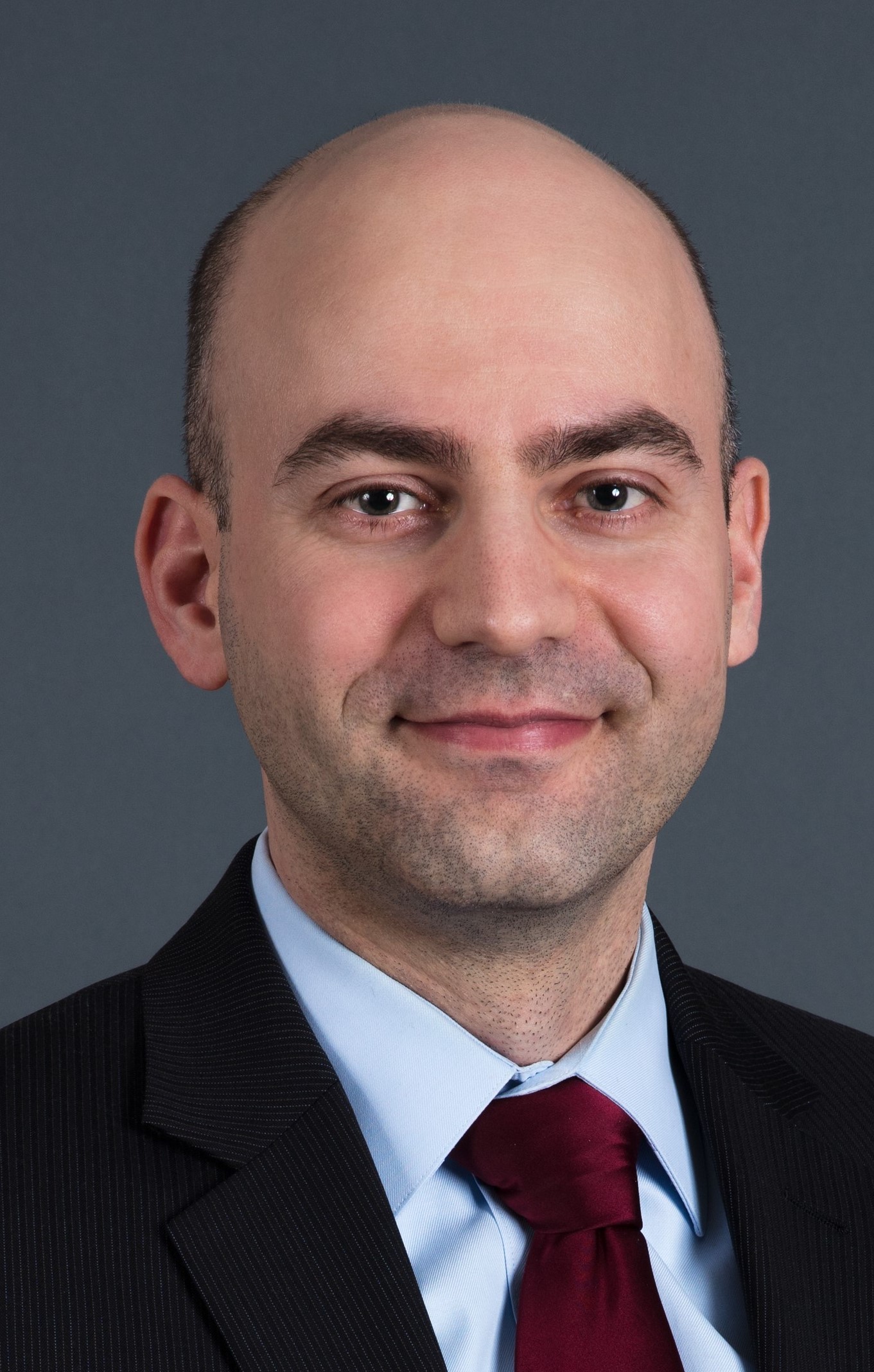
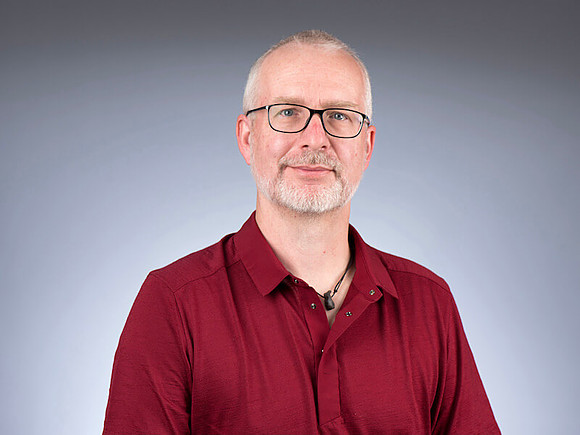
Zoë B. Cullen is an Associate Professor at Harvard Business School within the Entrepreneurial Management Unit . Her research spans Labor Economics , Behavioral Economics , and Digital Economy with a focus on pay transparency , remote work valuation , and labor market discrimination . PhD in Economics, Stanford University (2016) Chief Economist, Southeast Asian Bank (2016-2018) Current NBER Affiliate in Labor Studies Associate Editor, Journal of Political Economy Her research interests include: • Labor market transparency , particularly pay benchmarking and salary negotiations • Digital work transformation , analyzing remote work adoption and peer-to-peer labor platforms • Social interactions in organizations through studies on 'old boys' clubs' and salary taboo norms. Recent working papers show increasing focus on pay transparency policy evaluation (2023-2025), employee valuation of remote work (2025), and equilibrium effects of salary information diffusion. Her journal articles demonstrate interdisciplinary impact across top economics and management journals. Sloan Research Fellowship (2024) NSF Grant for 'What's My Employee Worth?' (2023) ACM Conference Award for pay transparency modeling (2019) She advises pre-doctoral fellows in economics research and contributes to teaching materials including case studies on negotiation coaching and spreadsheet analysis. Her lab work involves field experiments with over 3,100 participants and firm-level survey analysis across thousands of businesses.
Mrinmaya Sachan is an Assistant Professor in the Department of Computer Science at ETH Zürich, specializing in artificial intelligence, educational technology, and natural language processing. His research explores the intersection of AI and pedagogy, focusing on knowledge tracing, uncertainty quantification, and ethical implications of language models. Recent publications highlight his work on improving AI safety, detecting reasoning errors, and enhancing educational tools through machine learning. Key topics include arithmetic reasoning, causal analysis, and vision-language integration for physics problems. His projects often involve benchmarking AI systems in domains like legal reasoning (LEXam), math education (Mathtutorbench), and cognitive modeling of students. Collaborative efforts extend to multilingual dialogue systems, automated grading, and ethical AI frameworks.
Tingyu Yu is a Research Fellow currently based in Zürich, Switzerland. Their work focuses on applying artificial intelligence methodologies to climate science and environmental policy challenges. Key areas of research include automated fact-checking of climate-related claims, integration of AI with expert knowledge in global environmental assessments, and development of conversational AI tools for climate education. Yu's contributions emphasize the ethical application of large language models (LLMs) to address disinformation and democratize access to sustainability data. They have collaborated extensively with interdisciplinary teams on projects such as CHATREPORT and ChatClimate, which aim to bridge gaps between cutting-edge AI and real-world environmental decision-making. Recent publications highlight Yu's expertise in leveraging machine learning for climate communication, environmental policy analysis, and sustainable reporting mechanisms. Their research frequently intersects machine learning, natural language processing, and climate science to create actionable tools for stakeholders in academia, policy, and industry.
Prof. Dr. Alexandre Bovet is an Assistant Professor in Quantitative Network Science at the Department of Mathematical Modeling and Machine Learning (D3ML), Faculty of Science, University of Zurich. He holds a PhD in Physics from EPFL (2015) and completed postdoctoral research at ETH Zurich, City College of New York, Université catholique de Louvain, and the University of Oxford. He is a member of the Swiss Young Academy and the steering committee of the Winter Workshop on Complex Systems. His research focuses on complex systems and network science, particularly modeling social media dynamics, disinformation propagation, and opinion formation. He develops interdisciplinary approaches combining physics, mathematics, and data science to address societal challenges. Key projects include analyzing polarization in social networks, algorithmic curation on platforms like Bluesky, and fact-checking with large language models. Awardees of SNSF and FNRS fellowships, Bovet leads the ClarifAI project (funded by DIZH) to combat disinformation using AI. His work spans conferences such as NetSci, CompleNet, and CCS, with over 50 publications. Collaborations include institutions like UCLouvain, Oxford, and interdisciplinary teams in computational social science. Bovet advises PhD students like Dorian Quelle and contributes to labs like the Digital Society Initiative (DSI) at UZH. His research bridges theory and practice, addressing real-world issues in media, democracy, and technology.
Meysam Alizadeh is a Research Fellow at the Department of Political Science, University of Zurich. His work focuses on digital media governance, social network analysis, and the application of artificial intelligence in political and social contexts. He investigates issues such as platform governance, content moderation, fake news propagation, and the impact of social media on political discourse. Alizadeh has collaborated extensively on projects involving large language models (LLMs) for text annotation, comparing their performance to human workers, and developing methods to detect information operations and hate speech. His research bridges computer science, political science, and data science, addressing both theoretical and applied challenges in digital society. Key areas of investigation include analyzing cryptocurrency market dynamics through social media data, exploring the relationship between Russian information campaigns and hate crimes, and examining conspiracy theory proliferation during the pandemic. He has contributed to methodological advancements in creating national random samples of Twitter users and optimizing LLM-based tools for academic and practical applications. Alizadeh's publications span journals like Political Communication , Scientific Reports , and Proceedings of the National Academy of Sciences , reflecting interdisciplinary collaboration with institutions worldwide. His research often emphasizes the ethical and policy implications of emerging technologies in public communication and governance.
Lorenz Kueng is an Associate Professor in the Department of Economics at the Faculty of Economic Sciences, Università della Svizzera italiana (USI), where he joined in 2019. He is also a Faculty Member of the Swiss Finance Institute (SFI) and a Research Affiliate of the Center for Economic Policy Research (CEPR). His work bridges household finance, public economics, and applied macroeconomics, with strong policy relevance. PhD in Economics, University of California, Berkeley (2012) Bachelor and Master in Economics and Mathematics, University of Fribourg (2005) Diploma in Economics, Swiss National Bank's Study Center Gerzensee (2006) His research centers on household financial decision-making, with a focus on consumer behavior, real estate markets, and the macroeconomic implications of personal financial transaction data. He investigates how households respond to tax changes, income shocks, and fiscal policy, often using novel microdata sources. His work explores inventory management as a form of household investment, the long-term effects of public policies on consumption habits, and the interaction between monetary policy and inequality. The analysis of his recent publications reveals a strong trend toward using high-frequency transaction data to understand household behavior with granular precision. His research spans public economics (taxation, fiscal policy), household finance (consumption, liquidity, wealth), and macroeconomics (inequality, business cycles). A recurring theme is the role of information, expectations, and behavioral factors in shaping economic outcomes. Research Affiliate, Center for Economic Policy Research (CEPR) Faculty Member, Swiss Finance Institute (SFI) Former Assistant Professor, Kellogg School of Management Former Research Economist, Federal Reserve Bank of Chicago Former Faculty Research Fellow, National Bureau of Economic Research (NBER) Prof. Kueng has advised on policy discussions, particularly during the pandemic, co-authoring public letters emphasizing evidence-based responses. His research has been supported through collaborations with leading institutions and has informed both academic and public discourse. He teaches Household Economics and Finance at the bachelor’s and PhD levels, and Corporate Finance at the master’s level. He is actively involved in research networks, regularly presenting and discussing papers at major conferences such as the American Economic Association, NBER, and Swiss Society for Financial Market Research. His work is disseminated not only in top journals but also through policy platforms like VoxEU.
Lonneke van der Plas is an Associate Professor at the Institute of Argumentation, Linguistics and Semiotics within the Faculty of Communication, Culture and Society at Università della Svizzera italiana (USI), and an Adjunct Professor at the Faculty of Informatics, USI, since October 2024. She also serves as the group leader of the Computation, Cognition & Language research group at the Idiap Research Institute in Martigny, a position she has held since February 2021. Her academic background includes: PhD in Humanities Computing, University of Groningen M.Phil in Computer Speech and Language Processing, University of Cambridge Postdoctoral research at the University of Geneva (CLASSiC project) Junior Professor at the University of Stuttgart (IMS, SFB 732) Associate Professor at the University of Malta (2014–2020) Her research interests span Natural Language Processing , Computational Linguistics , Distributional Semantics , Multilingual NLP , Computational Creativity , and Low-Resource Languages . She integrates insights from cognitive science, linguistics, and computer science to model language as a tool for creative thinking and reasoning. Her work includes semantic role labeling, cross-lingual transfer, medical question answering, and lexical innovation. The 15 most recent publications reflect a strong trend in interdisciplinary NLP research, combining linguistic theory with machine learning. Topics include lexical innovation, multilingual financial NLP, skill extraction, multi-modal fact checking, and cognitive modeling. The articles demonstrate expertise in both theoretical and applied NLP, with applications in healthcare, finance, education, and AI ethics. Key subfields include semantic role labeling, cross-lingual transfer, bootstrapping for low-resource languages, and structured knowledge integration. Scientific recognitions include: DSI Fellow, University of Zurich (2019–2020) Erasmus Mundus LCT Visiting Scholar at Shanghai Jiao Tong University and University of Melbourne (2016) Visiting Academic at Macquarie University, Sydney (2007) She has advised multiple PhD students including Stefan Müller, Patrick Ziering, Molly Petersen, Mete Ismayilzada, and Diego Rossini. She currently leads several major funded projects: NCCR Evolving Language (SNSF, PI), C-LING (SNSF, PI), SEM24 (Innosuisse, PI), and FactCheck (Hasler Foundation, co-PI). These grants support postdoctoral researchers, developers, and PhD students, and involve collaborations with institutions like EPFL, EHL, and ARCA24. Her research bridges academia and industry, with applications in HR, finance, and healthcare. Lonneke leads the Computation, Cognition & Language group at Idiap, which conducts highly interdisciplinary research involving collaborations with social scientists, cognitive scientists, linguists, and professionals in health, finance, and business. The group focuses on modeling language as a cognitive and creative tool, using computational methods to explore lexical innovation, diachronic change, and reasoning. Open PhD positions are available in areas such as NLP for cognitive modeling, multilingual NLP, and mental health applications.
Dr. Steffen Eger is a professor at the Technical University of Darmstadt, focusing on Natural Language Processing, Machine Translation, and Computational Linguistics. His work spans both theoretical and applied aspects of NLP, including adversarial robustness, evaluation metrics, and creative text generation. Key Contributions: • Pioneering research in LLM-based evaluation metrics • Development of efficient translation quality frameworks • Analysis of social solidarity in historical discourse • Exploration of poetic creativity through neural models His recent publications demonstrate expertise in: - Human-Aware Translation Evaluation - Summarization of Historical Texts - Adversarial Defense Mechanisms - Explainable AI for Generation Metrics While no explicit awards or student supervision details are provided, his collaborative work appears across major NLP venues like ACL, EMNLP, and COLING. His research frequently intersects with human-centric NLP tasks, emphasizing reproducibility and robustness in system design.
Pedro Gamallo Fernández is a predoctoral researcher at the University of Santiago de Compostela (USC) , affiliated with the research center CiTIUS . He holds an FPI Research Fellowship and focuses on applying deep learning techniques to process mining problems. Education BSc in Computer Engineering, University of Santiago de Compostela (2021) MSc in Artificial Intelligence Research, AEPIA & UIMP (2022) Research Interests include process mining, predictive process monitoring, concept drift detection, contextual embeddings, and generative models. His work explores how deep learning can enhance conformance checking metrics and contextual representation in complex processes. Publication Trends show a focus on improving predictive accuracy through contextual embeddings, benchmarking deep learning models, and detecting gradual drifts in business processes. Key methodologies include autoencoders, synthetic datasets, and conformance metrics. Scientific Awards FPI Research Fellowship Laboratory : Works in Laboratorio P1 at CiTIUS, USC. His research contributes to reproducibility in deep learning and predictive monitoring frameworks like VERONA.
Paul Bürkner is a Full Professor of Computational Statistics at TU Dortmund University , focusing on probabilistic (Bayesian) methods. His research sits at the intersection of statistics and machine learning, with applications across quantitative sciences. Key Roles : Developer of the brms R package, member of the Stan and BayesFlow development teams. Research Pillars : Bayesian inference, uncertainty quantification, amortized workflows, simulation-based inference, and probabilistic programming. His lab advances methods for prior specification, model evaluation, and scalable inference, collaborating on applications from cognitive science to ecology. Recent work emphasizes neural superstatistics and BayesFlow for efficient mixture and multilevel models. Students and researchers are encouraged to reach out for collaboration or thesis opportunities. Key Labs/Teams : BayesFlow Development Team Stan Project ELLIS Network (European Laboratory for Learning and Intelligent Systems)
Jan Milan Deriu is affiliated with the ZHAW School of Engineering, where he is part of the Centre for Artificial Intelligence. He holds the role of Researcher and has been actively involved in multiple research projects, serving as Project Leader and Deputy Project Leader in areas such as dialogue systems evaluation, speech translation, and misinformation analysis. His work spans academic publications in top conferences and journals, focusing on AI-driven solutions in natural language processing and related fields. His research interests are centered around Natural Language Processing (NLP), including dialogue systems, text generation, and sentiment analysis; Artificial Intelligence evaluation methodologies; Speech technology, particularly dialect recognition and speech-to-text systems; Analysis of organized misinformation in social networks; Machine learning applications for data-centric AI development. Deriu has led or co-led several significant projects, including: Unified Model for Evaluation of Text Generation Systems (UniVal) – Deputy Project Leader (ongoing) Holistic Analysis of Organised Misinformation Activity in Social Networks – Project Leader (ongoing) End-to-End Low-Resource Speech Translation for Swiss German Dialects – Deputy Project Leader (completed) Pre-Study on Generation of Hockey News – Deputy Project Leader (completed) Call-E – Virtual Call Agent – Team Member (completed) DeepText: Intelligent Text Analysis with Deep Learning – Deputy Project Leader (completed) He collaborates extensively with international researchers and institutions, contributing to advancements in dialogue systems, speech technology, and AI evaluation frameworks. His publications emphasize practical applications, such as Swiss German dialect processing and misinformation detection in social media.
Pascal Wullschleger serves as Research Associate and Doctoral Student at Lucerne School of Computer Science and Information Technology, Lucerne University of Applied Sciences since 2022, concurrently working as Data Scientist at Jaywalker Digital. His expertise bridges academic research and industry applications in machine learning. His educational background includes: Master of Science in Computer Science, Lucerne University of Applied Sciences Bachelor of Science in Computer Science, Lucerne University of Applied Sciences Wullschleger's research demonstrates deep specialization in Machine Learning and Natural Language Processing , with significant contributions to health informatics and recommender systems . His work spans over 20 projects including STU Recommender Systems , Adverse Event Mining , and AI for All , focusing on practical implementations in healthcare, finance, and consumer domains. Technical competencies encompass Reinforcement Learning, Deep Learning, and Linux-based development environments. Publication trends reveal evolving focus from health record analysis (2022) to explainable public health NLP (2024) and specialized LLM applications for food taxonomy (2025), indicating growing expertise in domain-specific language model adaptation. Key recognition includes: ABIZ Team Achievement for crafting first AI-generated beer recipe While no formal student advising is documented, Wullschleger actively collaborates with industry partners including Prepress Media AG, Eventfrog, and Siemens Building Technologies on revenue management, fake review detection, and financial advisory systems. His projects consistently address real-world optimization challenges through data science. He operates within the ABIZ research ecosystem at HSLU, contributing to cross-disciplinary initiatives like Skin-App for medical eczema grading and PFAS analysis in Medizintechnik, demonstrating commitment to socially impactful AI solutions.
Boi Faltings is a Full Professor of Computer Science and Head of the Artificial Intelligence Laboratory (LIA) at EPFL. He holds a Diploma from ETH Zurich and a Ph.D. from the University of Illinois at Urbana-Champaign. His research focuses on artificial intelligence, multi-agent systems, computational game theory, and privacy-preserving AI. He has co-founded six companies in e-commerce and security, advised numerous enterprises, and published over 300 refereed papers. He has graduated over 40 Ph.D. students, many of whom have won major awards. His academic roles include teaching in Computer Science and Communication Systems, and he advises students across multiple disciplines. He leads research in incentive mechanisms, federated learning, and continual learning. His work on peer prediction and privacy-preserving techniques has been widely recognized. Awards include Fellowships from ECCAI and AAAI. Key research themes include game-theoretic information elicitation, adaptive multi-agent systems, and ethical AI. His lab explores cutting-edge topics like AI-driven pricing for sustainability and federated learning frameworks. His teaching includes advanced machine learning seminars and courses on AI applications.
Dr. Marco Eilers is a **Lecturer** in the **Department of Computer Science** at **ETH Zürich**, Switzerland. His research focuses on formal verification, programming languages, and cybersecurity, with particular expertise in smart contract verification for blockchain systems like Ethereum and Libra’s Move language. He has contributed to tools such as Viper’s symbolic execution backend and frameworks for modular program verification. His work emphasizes practical applications of formal methods to ensure security and correctness in concurrent, distributed, and GPU-based systems. Key research areas include static analysis for information flow security, product program models, and SMT-based type inference for languages like Python. He is affiliated with the Professur für Software Technology at ETH Zürich’s CAB H 89 laboratory. Publications highlight advancements in verifying real-world systems such as internet routers, GPU kernels, and blockchain smart contracts. Though no awards are explicitly listed, his contributions reflect significant impact in formal verification and programming language research. Eilers’ advising and grants are not detailed here, but his involvement in cutting-edge projects like Igloo and modular product programs indicates active collaboration in distributed system verification and secure software development.
Michael Piotrowski is an Associate Professor in the Section of Language and Information Sciences at the University of Lausanne (UNIL), appointed since August 2021. He holds expertise in computational linguistics, digital humanities, and historical text processing. His career includes roles as a software developer, researcher, and academic, with notable contributions to the Leibniz Institute for European History (Mainz) and the DARIAH European infrastructure project. He earned his doctorate in computer science from Otto von Guericke University Magdeburg with a thesis on document-oriented e-learning components. Research interests focus on knowledge representation, formal modeling in humanities, and computational approaches to historical texts. His work bridges computer science and the humanities, emphasizing interdisciplinary innovation. Notable publications include foundational texts like Natural Language Processing for Historical Texts (2012) and contributions to computational historiography, digital humanities institutional frameworks, and uncertainty modeling in historical analysis. Piotrowski has led projects such as managing digitization of Swiss legal sources and developing tools for historical text processing. His academic contributions span e-learning technologies, NLP applications, and computational methods for cultural heritage. He actively participates in international DH initiatives and publishes on methodological challenges in digital humanities.