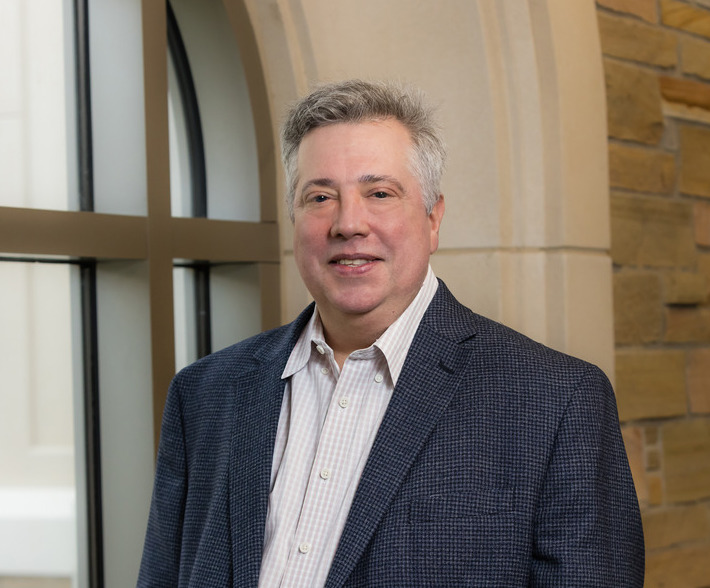
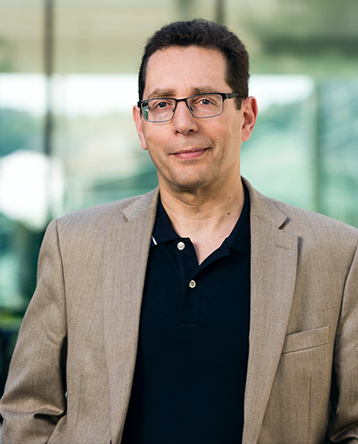
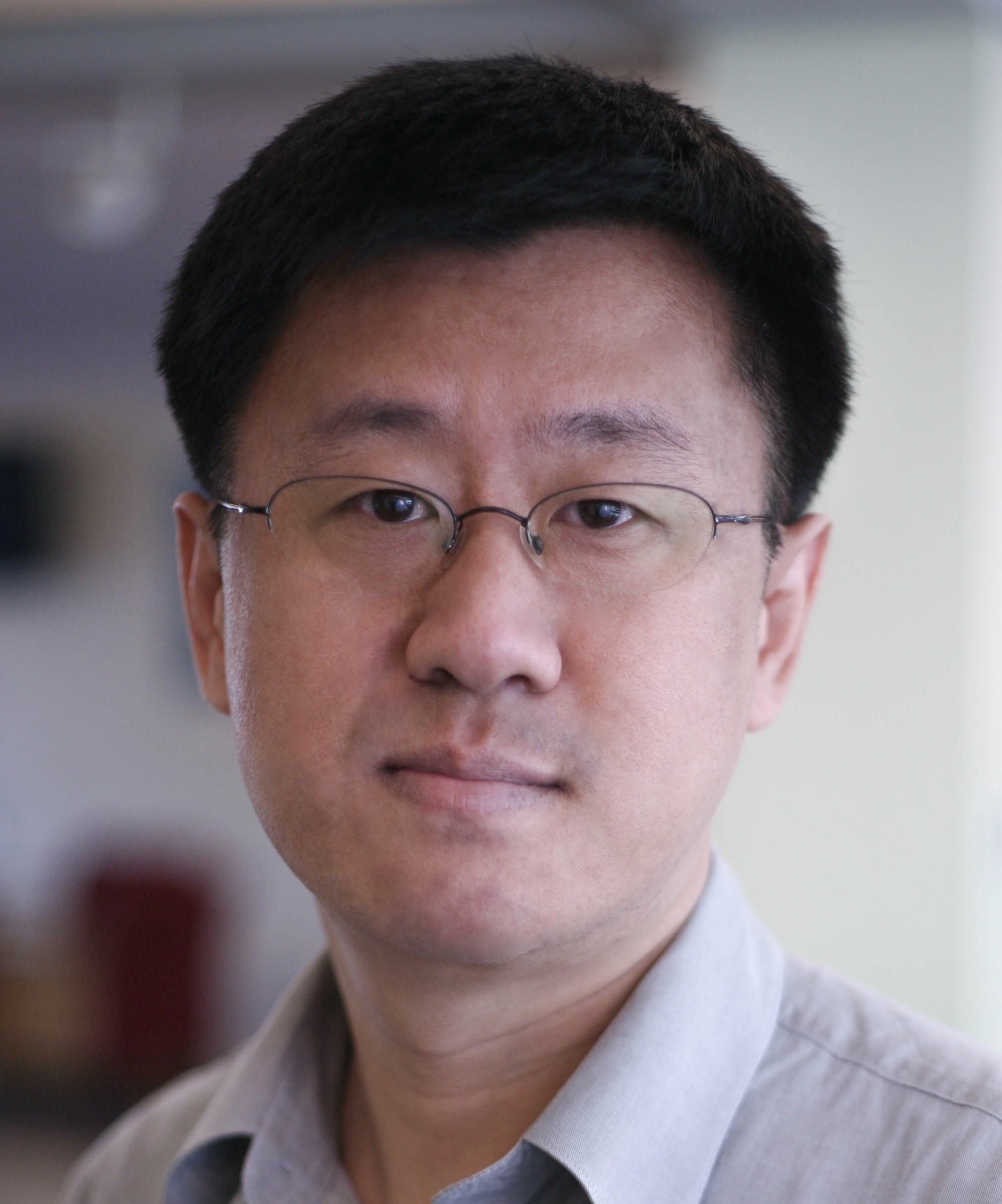
John Hale, Ph.D., is a Professor and Chair of Computer Science at The University of Tulsa's Tandy School of Computer Science, where he holds the Tandy Endowed Chair in Bioinformatics and Computational Biology. He is a founding member of the TU Institute of Bioinformatics and Computational Biology (IBCB) and a faculty research scholar in the Institute for Information Security (iSec). Education: Ph.D., Computer Science, The University of Tulsa (1997) M.S., Computer Science, The University of Tulsa (1992) B.S., Computer Science, The University of Tulsa (1990) Dr. Hale's research spans cybersecurity , bioinformatics , cyber-physical systems , and applied formal methods . His work focuses on neuroinformatics, cyber trust, attack modeling, secure software development, and information privacy. Recent publications highlight trends in large-scale graph analysis for cybersecurity, attack graph generation on high-performance computing clusters, and security frameworks for nuclear reactor control systems. His research also explores hybrid attack graph modeling, reflective deception strategies, and compliance methods for cyber-physical infrastructures. Scientific Awards: 2000 National Science Foundation CAREER Award Dr. Hale has advised numerous research projects and received funding from the U.S. Air Force, Army, NSF, NIH, DARPA, NSA, and NIJ. He has testified before Congress on cybersecurity and holds a patent for anti-piracy technology. His lab work includes developing cyber-physical testbeds and science DMZ security solutions.
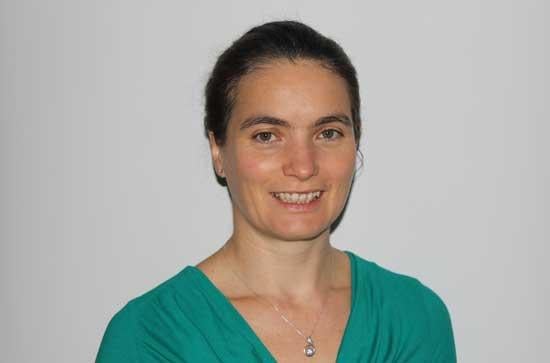
Chang Lou is an Assistant Professor in the Department of Computer Science at the University of Virginia. His research focuses on distributed systems, operating systems, and cloud computing, emphasizing runtime assurance and failure detection. He leads LiftLab, a reading group exploring cutting-edge system research. Education : Ph.D., Computer Science, Johns Hopkins University (2023); B.S., Computer Science, Shanghai Jiao Tong University (2016). Research : Develops techniques to improve system reliability, including silent failure detection, memory leak mitigation, and formal verification. His work has been deployed at Microsoft Azure and recognized with awards like NSDI Best Paper (2020). Teaching : Offers courses like CS4740 (Cloud Computing) and CS6501 (Cloud System Reliability). Awards : NSF CAREER Award (2024), ACM SIGOPS Dissertation Honorable Mention (2023), Google Cloud Grant (2023). Service : Serves on program committees for NSDI, EuroSys, and SOSP. Co-organizes workshops like SIGCOMM Formal Methods x Networks.
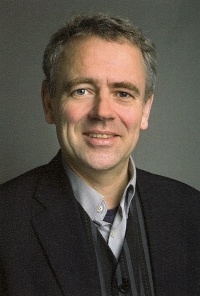
Joseph Sifakis is a CNRS Research Director and founder of Verimag Laboratory in Grenoble, France. He holds the INRIA-Schneider endowed industrial chair since 2008 and has been instrumental in advancing concurrent systems specification and verification. Education: Electrical Engineering (Technical University of Athens), Computer Science (University of Grenoble) Research interests focus on component-based design , real-time systems , and correct-by-construction techniques . He pioneered the development of the BIP framework and contributed to model checking, a cornerstone of industrial system verification. Recent publications emphasize component-based modeling, formal verification, and distributed system design, reflecting his work's impact on embedded systems and critical applications like aerospace and telecommunications. Scientific awards include: Turing Award (2007) CNRS Silver Medal (2001) Test-of-Time Award (2012) Multiple honorary doctorates (2008-2011) Member of prestigious academies Industry collaborations span Airbus, ST Microelectronics, and the European Space Agency, with applications in aeronautics, telecommunications, and industrial software standards. He leads the ARTIST2 Network of Excellence and directs the CARNOT Institute 'Intelligent Software and Systems'.
Rosemary Monahan is a Professor in the Department of Computer Science at Maynooth University and an affiliate of the Hamilton Institute. She holds BSc and MSc degrees from University College Dublin and a PhD from Dublin City University. As Maynooth University's institutional lead for ADAPT (SFI Research Centre for AI-Driven Digital Content Technology), she focuses on advancing software dependability through formal methods and AI integration. Her research interests include safety-critical systems, dependable software, formal verification, and computational thinking education. She co-founded the VerifyThis competition series and leads projects such as MAIVV (Modular AI Verification and Visualisation) funded by SFI, and VALU3S (Verification and Validation of Automated Systems) funded by Horizon 2020. She has secured over €2.5M in EU funding for the Erasmus Mundus programs in dependable software systems. Monahan’s educational contributions include pioneering computational thinking resources (CoCoA and InSPECT projects) and teaching modules on software verification and rigorous software processes. She supervises PhD students in data science and advanced networks and collaborates with institutions like INRIA, Microsoft Research, and Amazon Web Services. Her professional roles include editorships in journals like Science of Computer Programming and leadership in conferences like iFM and FMICS. She actively promotes gender equality in computing through initiatives like INGENIC and TechMate toolkits.
Mingsheng Ying is a Distinguished Professor and Research Director of the Centre for Quantum Computation and Intelligent Systems (QCIS) at the Faculty of Engineering and Information Technology, University of Technology Sydney, Australia. He also holds the position of Cheung Kong Professor at the State Key Laboratory of Intelligent Technology and Systems, Department of Computer Science and Technology, Tsinghua University, Beijing, China. Professor Ying graduated from the Department of Mathematics, Fuzhou Teachers College, Jiangxi, China, in 1981. His primary research interests span quantum computation (particularly quantum programming and model-checking quantum systems), programming theory and formal methods, and the foundations of artificial intelligence (focusing on logic and uncertainty). As an author of the books "Foundations of Quantum Programming" (Elsevier - Morgan Kaufmann 2016) and "Topology in Process Calculus: Approximate Correctness and Infinite Evolution of Concurrent Programs" (Springer-Verlag, 2001), he has published over 100 papers in top international journals and conferences. His recent research publications demonstrate a strong focus on quantum programming languages, verification techniques for quantum systems, and the theoretical foundations of quantum computation. The trend in his work shows increasing emphasis on formal verification methods for quantum systems, particularly model-checking techniques for quantum Markov chains and quantum processes. His research bridges theoretical computer science with quantum information theory, creating frameworks for reliable quantum software development. Editorial Board, Artificial Intelligence, Elsevier, Amsterdam Editorial Board, Fuzzy Sets and Systems, Elsevier, Amsterdam Vice President, International Fuzzy Systems Association (elected in 2005) Program Chair, IFSA 2005, World Congress of International Fuzzy Systems Association Chairman, Chinese Association of Fuzzy Systems and Mathematics Professor Ying has secured significant research funding including multiple Australian Research Council Discovery Projects such as "Model-checking quantum Markov chains: towards verification techniques for quantum cryptographic systems" (2013-2015) and "Process algebra approach to distributed quantum computation and secure quantum communication" (2011-2013). His work has also received funding from the National Natural Science Foundation of China and Tsinghua University. At QCIS, he leads research in quantum software theory and methodology, with applications in quantum cryptography and secure communication.
Carlo Alberto Furia is an Associate Professor and Vice Dean at the Faculty of Informatics, Università della Svizzera italiana (USI). He is affiliated with the Software Institute, where he leads the ATOM research group. His academic journey includes prior roles as an Associate Professor at Chalmers University of Technology and a Senior Researcher at ETH Zurich’s Chair of Software Engineering. PhD in Computer Science, Politecnico di Milano Master of Science in Computer Science, University of Illinois at Chicago Laurea in Computer Science and Engineering, Politecnico di Milano His research centers on formal methods for software engineering, aiming to enhance software correctness, reliability, and quality through rigorous techniques. Key areas include automated program verification, contract-based development, loop invariant inference, and empirical evaluation using Bayesian data analysis. He emphasizes practical applicability and automation in formal methods. His recent publications reflect a strong focus on program analysis at the bytecode level, multilingual software analysis, automated repair of Android security issues, and empirical methodologies. These works span topics such as JVM substitutability, exception behavior in Java bytecode, and information flow security, demonstrating a consistent thread in improving software robustness through formal and automated techniques. He is actively involved in the software engineering research community as an Associate Editor of the Empirical Software Engineering (EMSE) journal and as a Program Committee member for major conferences including FASE, FM, ASE, ICSE, and CauSE. Carlo Furia has advised multiple research projects and supervised student theses. He has led and contributed to funded research initiatives, particularly in program analysis and verification. His group has developed tools such as AutoProof and other software artifacts available through the ATOM software page. He regularly teaches courses such as Software Analysis, Programming Fundamentals, and Software Design & Modeling. He leads the ATOM research group, which focuses on advancing automated techniques for software testing, analysis, and verification. The group develops practical tools and conducts empirical studies to validate research outcomes.
Marcin Jurdzinski is an Associate Professor (Reader) in the Department of Computer Science at the University of Warwick , UK. He has been a faculty member since 2004 and is a core member of the Foundations of Computer Science and Discrete Mathematics and its Applications research groups. University: University of Warwick School: Faculty of Science Department: Department of Computer Science Position: Associate Professor (Reader) Email: Marcin.Jurdzinski@warwick.ac.uk Office: CS2.19 His research lies at the intersection of algorithms, game theory, automata, and logic , with a strong emphasis on formal verification , model checking , and theoretical computer science . He is best known for his foundational work on parity games , including the development of small progress measures and discrete strategy improvement algorithms. The recent publications reveal a consistent focus on computational complexity in games and verification. Key themes include stochastic games, timed automata, bisimilarity, and quantitative analysis . His work often bridges theoretical insights with practical verification challenges, especially in real-time and probabilistic systems. He has supervised several PhD students and hosted postdoctoral researchers such as Laure Daviaud and Alexander Kozachinskiy. He has led EPSRC-funded projects including Solving Parity Games in Theory and Practice and Counter Automata: Verification and Synthesis . PhD Students: Aditya Prakash, Thejaswini K. S., Michail Fasoulakis, John Fearnley, Michal Rutkowski, Ashutosh Trivedi Postdocs: Laure Daviaud, Alexander Kozachinskiy He is actively involved in the academic community, serving on the steering committee of the Highlights of Logic, Games and Automata conference and on program committees for major venues such as CONCUR, ICALP, and LICS. He has also organized workshops including FORMATS and ICALP co-located events.
Ying Cai is an Associate Professor in the Department of Computer Science at Iowa State University, joining in 2003 after earning his Ph.D. in Computer Science from the University of Central Florida (2002). His research focuses on AI, machine learning, data science, cybersecurity, privacy protection, and database systems. He leads projects funded by the Air Force Research Laboratory, including work on authentication data structures for rank-aware queries, requiring U.S. citizenship and expertise in linear algebra/cryptography. Dr. Cai’s work spans cybersecurity (e.g., adversarial example defense, secure secret sharing), spatio-temporal systems (e.g., traffic risk prediction, check-in time modeling), and healthcare AI (e.g., cervical spine diagnosis with transformers). His publications emphasize practical applications of ML in privacy, security, and distributed systems. Professional roles include Associate Editor for Multimedia Tools and Applications (since 2009), Co-chair for COMPSAC TAIN/NCIW symposium (2014–2017), and TPC Chair for Mobilware 2010. His service includes contributions to INFOCOM, ICDCS, and MDM conferences. Current research opportunities exist for graduate students with strong programming/math skills, particularly in cryptography and linear algebra. He emphasizes interdisciplinary work, such as bridging AI with social sciences via large language models.
Nicholas Dias is a postdoctoral researcher at the Department of Political Science, Aarhus University. His work focuses on public opinion, political psychology, and the dynamics of democratic systems. Research examines citizen competence, polarization, and misinformation Teaching includes seminars on American politics and data science Contact: niccdias@ps.au.dk Research Trends: Dias’s publications analyze how citizens engage with democracy, polarization’s impact on governance, and misinformation mitigation. His work challenges assumptions about voter rationality and explores the limits of correcting partisan misperceptions. Collaborations: Co-authored studies with scholars like Y. Lelkes and A. Sippitt, published in journals such as Journal of Politics , PNAS Nexus , and Political Quarterly .
Manfred Droste is a Professor at the Institute of Computer Science of the University of Leipzig, where he leads the Research Group on Automata and Formal Languages. He serves as Director of the Graduate Centre Mathematics, Computer Science and Natural Sciences and is Vice-speaker of the DFG-Research Training Group Quantitative Logics and Automata. His academic career spans decades of research and leadership in theoretical computer science and algebra. Prof. Droste's research focuses on theoretical computer science, particularly automata theory, logic, algebraic models for concurrent systems, and domain theory. In algebra, his interests include model theory, automorphism groups, and ordered algebraic structures. His work bridges theoretical foundations with practical applications in formal language theory and quantitative systems. His extensive publication record demonstrates a consistent focus on weighted automata, formal languages, and their logical characterizations. Over the years, his research has evolved to address increasingly complex quantitative models, with recent work focusing on weighted complexity classes, weighted linear dynamic logic, and decidability boundaries for weighted automata. Prof. Droste has received significant recognition including election to Academia Europaea, an honorary doctorate from Immanuel Kant Baltic Federal University, and fellowship in the Asia-Pacific Artificial Intelligence Association. These honors reflect his substantial contributions to theoretical computer science. He has supervised numerous PhD students including Dietrich Kuske, Paolo Boldi, and Karin Quaas, many of whom have become prominent researchers. His extensive grant portfolio includes multiple DFG projects on weighted automata and international collaborations through DAAD funding. Prof. Droste leads a vibrant research team including Andrea Hesse, Karin Quaas, Erik Paul, and others. He has organized the international workshop series "Weighted Automata: Theory and Applications" since 2002, fostering global collaboration in this specialized field.
Valérie Berthé is a Research Director at CNRS, based at the Institut de Recherche en Informatique Fondamentale (IRIF), Université Paris Cité. Her research lies at the crossroads of theoretical computer science and mathematics, with a focus on symbolic dynamics, combinatorics on words, discrete geometry, and numeration systems. She is a Principal Investigator of the prestigious ERC Synergy project DynAMICs, which unites experts from mathematics and computer science to tackle fundamental problems in dynamical systems and model checking. Research Interests: Her primary research areas include symbolic dynamics, combinatorics on words, discrete geometry, tilings, aperiodic order, continued fractions, and their connections to number theory and automata. She is particularly interested in the algorithmic and arithmetic aspects of dynamical systems, aiming to develop automated verification methods and resolve open conjectures such as the Skolem problem on reachability. Scientific Leadership: She leads a major collaborative research program and is involved in significant national and international projects. Grants & Projects: ERC Synergy Grant: DynAMICs (Model checking seen from a dynamic and arithmetic point of view) ANR PRCI: SymDynAr (2024–2027) ANR Blanc: CODYS (2018) Academic Service: Member, CNRS National Committee, Section 6 Member, Steering Committee of INSMI (Institut national des sciences mathématiques et de leurs interactions) Member, Scientific Council of the Société Mathématique de France (SMF) Advising and Editorial Work: Valérie Berthé has supervised numerous PhD students who have gone on to successful academic careers. She is a co-editor of several influential volumes in her field, including works published by Cambridge University Press and Birkhäuser, covering topics in sequences, automata, number theory, and symbolic dynamics. She is also involved in organizing scientific events and seminars, such as the One World Numeration Seminar, fostering international collaboration in her research community.
Norman Sadeh is a Professor in the School of Computer Science at Carnegie Mellon University (CMU), where he has made significant contributions to cybersecurity, privacy, and AI research. He has co-founded and co-directed several groundbreaking graduate programs at CMU, including the Privacy Engineering Program (2012-present), the Ph.D. Program in Societal Computing (2003-2013), and the MBA track in Technology Strategy and Product Management (2005-2017). Carnegie Mellon University, School of Computer Science Software and Societal Systems Department CyLab Security and Privacy Institute Manufacturing Futures Institute Dr. Sadeh received his Ph.D. in Computer Science at CMU with a major in Artificial Intelligence and a minor in Operations Research. He holds an M.Sc. in computer science from the University of Southern California and a BS/MS degree in electrical engineering and applied physics from the Free University of Brussels (Belgium) as 'Ingénieur Civil Physicien.' Professor Sadeh's research spans cybersecurity, online privacy, Human-AI Interaction, AI governance, mobile computing, the Internet of Things, user-oriented machine learning, and language technologies. He is particularly known for his pioneering work on AI-based privacy enhancing technologies, including privacy assistants, automated privacy compliance tools, and NLP-based privacy solutions. His work has influenced the design of privacy features at major technology companies including Apple, Google, and Facebook/Meta, as well as privacy policies at regulatory agencies like the Federal Trade Commission and the California Office of the Attorney General. Analysis of his recent publications shows a strong focus on practical privacy solutions, particularly in mobile and IoT contexts, with an emphasis on making privacy more usable and understandable for end users. His work bridges technical innovation with policy implications, addressing both the technological and human aspects of privacy protection. 2018 Outstanding Entrepreneur of the Year award from the Pittsburgh Venture Capital Association Test of time award by the AAAI Conference on Web and Social Media (ICWSM) Gartner Group's Magic Quadrant leader in Security Awareness Computer-Based Training for 4 consecutive years Deloitte's Technology Fast 500 recognition for 3 consecutive years Professor Sadeh has advised numerous students, including PhD candidates like Aerin (Shikhun) Zhang, whose dissertation focused on understanding diverse privacy attitudes. His research has been funded through various grants, including NSF SaTC projects, and has resulted in technologies that protect tens of millions of users worldwide. He also founded Wombat Security Technologies, which was acquired by Proofpoint in 2018 and whose technologies are used by over 75% of Fortune 100 companies. Professor Sadeh leads several research initiatives including the Privacy Engineering Program, the Usable Privacy Policy Project, the Personalized Privacy Assistant Project, and CMU's Privacy Infrastructure for the Internet of Things. His Mobile Commerce Lab and E-Supply Chain Management Lab have produced influential research that has been commercialized by major organizations including IBM, Raytheon, Boeing, and the U.S. Army.
Dr. Krishnendu Guha is an Assistant Professor and CONNECT Funded Investigator at the School of Computer Science and Information Technology, University College Cork. His research bridges embedded systems, cybersecurity, and quantum-safe hardware design with AI and bio-inspired strategies. PhD: University of Calcutta (Department of Science and Technology, Government of India) Postdoctoral: University of Florida Past Roles: Research Fellow at Intel India, Visiting Scientist at Indian Statistical Institute, Temporary Assistant Professor at NIT Jamshedpur His research focuses on embedded systems security , real-time security mechanisms , and quantum-safe hardware . He integrates AI (e.g., neural networks) and bio-inspired strategies (e.g., gecko crypsis behavior) into security frameworks for FPGAs and edge platforms. Recent publications highlight trends in blockchain for supply chains , quantum machine learning , secure FPGA architectures , and distributed AI systems . His work addresses energy efficiency, fault detection, and decentralized security in hardware. As a CONNECT Centre member, Dr. Guha contributes to advanced research in reconfigurable systems and cybersecurity. Grants and collaborations span quantum-safe design, cloud FPGA security, and hardware trojan mitigation.
Albert Atserias is a Professor in the Department of Computer Science at the Universitat Politècnica de Catalunya (UPC), affiliated with the Faculty of Informatics of Barcelona (FIB) and the ALBCOM research group (Algorithms, Bioinformatics, Complexity, and Formal Methods). He is also associated with the Institut de Matemàtiques de la UPC-BarcelonaTech. His research is central to theoretical computer science, with a strong emphasis on logic and complexity. Atserias's research interests span Computational Complexity, Logic in Computer Science, Finite Model Theory, Proof Complexity, and Constraint Satisfaction Problems . His work explores the fundamental limits of computation, the expressive power of logical languages over finite structures, and the complexity of proving mathematical statements. He investigates the algebraic and combinatorial properties of proof systems, the limits of efficient algorithms for constraint solving, and the theoretical foundations of databases. His research often bridges logic, algebra, and combinatorics to provide deep insights into computational phenomena. The trends in his recent publications show a sustained focus on the logical and algebraic underpinnings of computational problems. Key themes include the consistency and complexity of database queries , the power and limitations of proof systems (like resolution and sum-of-squares), and the expressive power of homomorphism counts in graph theory. His work on the hardness of automating resolution and the development of circular proof systems are particularly significant contributions to proof complexity. The 2024 PODS Best Paper Award for work on relational consistency underscores the impact and timeliness of his research. Among his notable scientific awards are the prestigious ICREA Acadèmia , the PODS 2024 Best Paper Award , the Premi Extraordinari de Doctorat (Extraordinary Doctoral Prize), and the Kleene Award for Best Student Paper . These accolades reflect both the excellence of his early work and his continued leadership in the field. Atserias has been a principal investigator on numerous competitive research projects, including funding from the European Research Council (ERC) and the Spanish Ministry of Science. He has advised doctoral students, such as Toni Hakoniemi, whose thesis on proof complexity he supervised. His extensive collaborative network includes leading researchers like Phokion Kolaitis, Anuj Dawar, and Victor Dalmau. He has also served on the scientific committees of major conferences, contributing to the academic community. He is a core member of the ALBCOM research group , a leading team at UPC focused on theoretical aspects of computer science, which provides a vibrant environment for research in algorithms, complexity, and formal methods. His work is also connected to the broader Institut de Matemàtiques de la UPC, fostering interdisciplinary collaboration between computer science and mathematics.
Zhendong Su is a full professor in the Department of Computer Science at ETH Zurich since August 2018. Previously, he held a full professorship at UC Davis from 2003 until June 2019. He earned his Ph.D. in Computer Science from UC Berkeley and dual Bachelor’s degrees in Computer Science and Mathematics from UT Austin in 1995. Affiliations: ETH Zurich: Full Professor (since 2018) UC Davis: Full Professor and Chancellor’s Fellow (2003–2019) IEEE Fellow, ACM Fellow, and Member of Academia Europaea His research focuses on programming languages, compilers, software engineering, computer security, and education technologies . Key contributions include compiler validation (e.g., Project Yin-Yang for SMT solvers and DBMS testing), testing tools like SQLancer, and educational innovations such as the Algot visual programming language. Recent work emphasizes secure AI (e.g., CipherSteal for TEE-shielded models) and compiler reliability (e.g., Artemis/Apollo for JIT validation). He has pioneered techniques like metamorphic testing and equivalence modulo inputs (EMI) for compiler validation, uncovering thousands of bugs in GCC/LLVM and SMT solvers. Awards: ICSE MIP Award (2022), ACM SIGSOFT Impact Paper (2018), NSF CAREER Award, and multiple industrial awards. His students have won IEEE TCSE Rising Star and SIGSOFT Impact Paper awards, securing roles at top universities and companies like Google and NVIDIA. Service: Steering committee member of ISSTA and ESEC/FSE, ACM Distinguished Speaker, and Associate Editor for ACM TOSEM. Program chaired ISSTA 2012 and co-chaired FSE 2016. Labs/Teams: Leads research groups on compiler validation, secure AI, and education technologies. Projects include Yin-Yang (SMT testing), SQLancer (DBMS fuzzing), and Algot (visual programming for education).