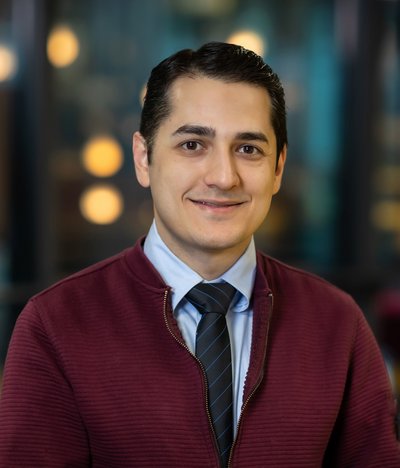
A. Abbasi is a Researcher in the Department of Water Systems Monitoring & Modelling at Delft University of Technology. His work focuses on water systems, groundwater contamination, and health risk assessment. Active in Iranian Water Resource Management Specializes in Geostatistical Modeling and Environmental Restoration Contributions to Rainwater Harvesting and Water Quality Analysis Recent research trends include: Application of Tensor-based Monitoring for inland lakes like Urmia Hybrid Machine Learning-Optimization models for evapotranspiration Health risk assessments of Potentially Toxic Elements in groundwater
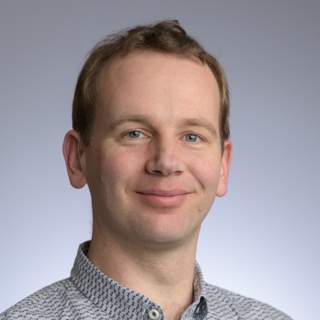
Mojtaba Haghi is a post-doctoral researcher at Eindhoven University of Technology (TU Eindhoven), affiliated with the Department of Electrical Engineering . He is actively involved in the Embedded Control Systems Lab , CompSOC Lab - Predictable & Composable Embedded Systems , and the High Tech Systems Center . His research focuses on co-designing control applications for resource-constrained embedded platforms, particularly targeting multi-core hardware architectures. PhD in Electrical Engineering (2025) from TU Eindhoven MSc in Electrical Engineering from AmirKabir University of Technology His work addresses critical challenges in: Resource utilization optimization in embedded control systems Multi-rate controller design for predictable platforms Hardware/software co-design for industrial applications Parallel computing in model predictive control algorithms Recent publications demonstrate expertise in: Water grid model predictive control frameworks GPU-accelerated optimization algorithms Embedded system performance verification Industrial motion control applications He collaborates with research groups including: EAISI (Eindhoven AI Systems Institute) MedTech Innovation Center
Vincent Groenhuis is a postdoctoral researcher at the Robotics and Mechatronics (EEMCS-EE-RAM) group , University of Twente. He holds a BSc, MSc, and PhD in Computer Science, Embedded Systems, and Medical Robotics respectively, all cum laude. His work focuses on image-guided medical robotics for bladder cancer diagnosis (Next-gen In-Vivo project) and MRI/ultrasound-guided breast biopsy (Sunram/MURAB projects), alongside innovations in pneumatic and electric stepper motors with two patents spun into companies. Education : BSc Computer Science (cum laude), MSc Embedded Systems (cum laude), PhD Medical Robotics (cum laude) Key Collaborations : Hamlyn Surgical Robot Challenge, European Robotic Forum, ICRA, BioRob, IROS His research integrates 3D-printed actuators with MRI safety protocols, enabling compact, reconfigurable systems for endovascular interventions and biopsy procedures. Article trends emphasize sensorless positioning , pneumatic computation , and multi-axis motor design . Awards include Best Video (Sunram 4, Hamlyn 2017) and Best Design (Sunram 3, Hamlyn 2016) . Supervised student projects span ultrasound needle steering , auto-rewind spool holders , and emergency disengagement mechanisms .
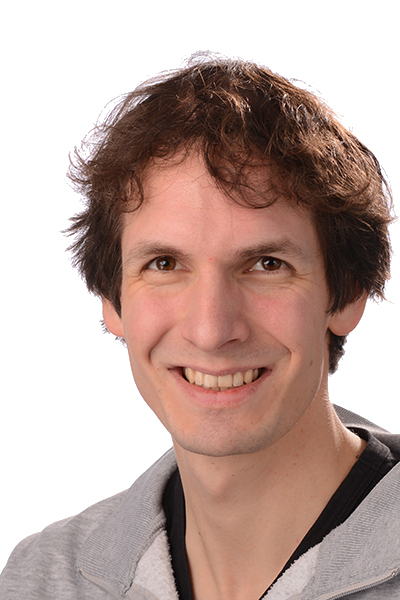
Pirouz Nourian is an Assistant Professor at the Digital Society Institute's Department of Urban and Regional Planning and Geo-Information Management. His research focuses on computational design, urban digital twins, spatial analysis, and geospatial systems, with applications in urban planning, hospital design, and cultural heritage conservation. Key Research Areas: Computational Design, Urban Digital Twins, Geospatial Information Systems, Human-AI Interaction Methodologies: Graph Theory, Network Analysis, Voxelization Algorithms, Ontology Modeling Applications: Participatory Planning, Hospital Space Optimization, Cultural Heritage Mapping, Active Mobility Studies His recent work explores agent-based modeling in urban twins, AI integration with geospatial data, and serious games for spatial design. Publications demonstrate interdisciplinary approaches combining civil engineering, computer science, and urban analytics.
Raian Vargas Maretto is an Assistant Professor in the Department of Earth Observation Science at the University of Twente. With a PhD in Applied Computing (2020) and an MSc in Remote Sensing (2011) from Brazil’s National Institute for Space Research (INPE), he couples deep-learning innovation with large-scale geospatial data to monitor land-use dynamics, urban deprivation and forest loss. Education: PhD Applied Computing, INPE (2020) MSc Remote Sensing, INPE (2011) BSc Computer Science, Federal University of Ouro Preto (2008) His research integrates computer vision, machine-learning and data-mining techniques with multi-sensor satellite imagery to derive actionable geographic information. Core interests encompass remote-sensing image analysis, sensor fusion, pattern recognition, GIS development, land-cover & vegetation mapping, and AI-based environmental monitoring . Across 35 recent outputs, three dominant strands emerge: (i) deep-learning architectures for semantic segmentation of deprived urban areas and Cerrado vegetation; (ii) energy-balance and vegetation-index approaches for crop evapotranspiration estimation; and (iii) space-education analytics that map European curricula to foster a sustainable space workforce. These works increasingly couple open-data philosophies with transparent AI to support SDG targets. Software & Systems: Maretto has contributed to TerraLib, TerraView, TerraME, GeoDMA and the DeepGeo package, championing open-source GIS tools. Field & Policy Engagement: He served as visiting researcher at the Ethiopian Space Science & Geospatial Institute (2022 & 2023) and has given media interviews on AI-powered deforestation monitoring.
Mohamed Irfan Refai is an Assistant Professor specializing in Neuromuscular Robotics . His research bridges robotics and biomechanics, focusing on exoskeletons , machine learning , and human movement analysis . Education : Master's at University of Twente (2015-2017) and Bachelor's at Sri Sivasubramaniya Nadar College of Engineering (2008-2014). Refai's research explores: Neuro-mechanical control of soft exosuits and active exoskeletons Personalized electromyography-driven musculoskeletal models Adaptive assistance strategies for spinal load reduction Real-time biomechanical risk assessment using NIOSH guidelines Integration of wearable sensors and digital human models His publications (2024-2025) span soft robotics , biomechanical modeling , and industrial ergonomics , emphasizing applications in spinal compression analysis and gait kinematics . Scientific Awards ISB 3D Analysis of Human Movement Student Award (2018) Refai actively contributes to academic discourse through invited talks , conference organization , and peer review activities. His work aligns with the SOPHIA research project and involves collaborations across Europe in rehabilitation robotics and industrial assistive technologies .
Barbara Bazzana is an active Researcher specializing in Robotics and Mechatronics with a focus on unmanned aerial systems control. Her work integrates computer vision and machine learning to solve complex navigation challenges in multi-rotor platforms, particularly through novel applications of diffusion models and experimental force modeling. Her core research domains include: Visual servoing for UAV autonomous navigation Denoising diffusion probabilistic models in robotics Multi-rotor aerodynamics and cross-influence effects Real-time propeller force modeling Latent space representations for control systems Analysis of her 2024-2025 publications reveals a strong trend toward merging generative AI with physical UAV control systems. Her work demonstrates how return-conditioned latent diffusion models can enable image-based servoing without explicit state estimation, while her propeller force research provides experimentally validated solutions for multi-rotor instability caused by aerodynamic interference. Both threads emphasize practical implementation in real-world aerial systems rather than purely theoretical exploration.
Nataly Bañol Arias is an Assistant Professor specializing in Power Electronics with extensive research activity in smart grids and electric vehicle (EV) integration. Her work focuses on the technical and operational challenges of modern energy systems, including congestion management in distribution networks, robust optimization for EV charging coordination, and IoT-based energy management solutions for microgrids. Current Research Outputs : 23 total publications (15 most recent shown here) Key Collaborators : J. S. Giraldo, J. C. López, G. Hoogsteen, J. L. Hurink Her research spans Electrical Engineering and Computer Science domains, addressing critical areas such as: Optimization of EV charging strategies Smart grid security and reliability Integration of renewable energy sources Data-driven power flow analysis Microgrid energy management Market mechanisms for energy flexibility Recent publications demonstrate increasing sophistication in handling grid constraints through adaptive algorithms. There is a clear trajectory from foundational work on metaheuristic optimization (2015-2017) to current focus on robust, real-time EV charging coordination and grid security.
R.M. Chotkan is an active researcher affiliated with the Electrical Engineering, Mathematics and Computer Science school. Their work focuses on decentralized systems, blockchain technology, and trust models within distributed infrastructures. Research Interests: Blockchain and distributed consensus algorithms Self-sovereign identity systems Trust and authentication mechanisms in hybrid models Peer-to-peer network cooperation DAOs and web3 disruption Recent Research Trends: Chotkan's publications center on blockchain scalability, decentralized governance, and secure identity frameworks. They explore economic models in distributed systems, hybrid trust architectures, and reputation-based security protocols. Collaborative Networks: Key collaborations include work with researchers like Decouchant, Pouwelse, and Rahli, focusing on distributed infrastructure for decentralized applications.
K. Psarakis is a researcher in the field of Data-Intensive Systems, focusing on cloud computing, stream processing, and distributed dataflows. Their work bridges theoretical and practical challenges in cloud-native applications and scalable systems. Institution: Affiliated with Data-Intensive Systems Research Focus: Cloud transaction management, autoscaling, geospatial data platforms, and fault tolerance Research Trends Recent publications like Styx and CheckMate highlight innovations in transactional stateful functions and checkpointing protocols. Psarakis also contributes to geospatial data federation (e.g., Topio ) and schema matching techniques ( Valentine ). Collaborations Collaborates with researchers such as G. C. Christodoulou, M. Fragkoulis, and A. Katsifodimos on projects involving open-source platforms and cloud-native systems.
Bert van der Wal is a Special Professor in Environmental Technology at Wageningen University & Research , focusing on advanced water treatment solutions. His work addresses critical challenges in potable water production, emphasizing micropollutant removal and environmental sustainability. Research Highlights: Activated carbon filtration, PFAS adsorption, nanofiltration, biofiltration dynamics, and mitigation of membrane scaling. Current Projects: Electrochemical activated carbon regeneration, modeling biological filters for PFAS removal, and enhancing drinking water biological stability. Collaborations: Partnerships with institutions like EBI (European Bioinformatics Institute), researchers such as Dr. Jan E. Dykstra, and industry stakeholders in water technology. Publications span topics from cyanobacterial impacts on reservoirs with floating PV systems to innovative carbon-based and membrane-driven purification methods. His work integrates computational modeling with experimental validation to advance sustainable water solutions. Supervision: Mentors PhD candidates designing next-generation water treatment technologies, ensuring interdisciplinary training in environmental engineering and microbiology.
Dr. Ir. Attila Németh serves as a Lecturer in Modeling Societal Impact at Saxion University of Applied Sciences. He leads the Modeling of Social Impact research group, formerly known as the Value of Probation research group (established in January 2017). His academic journey began with Civil Engineering and Management studies at the University of Twente, followed by a PhD in Water Engineering and Management with his dissertation 'Modelling offshore sand waves.' His educational background includes: Civil Engineering and Management, University of Twente PhD in Water Engineering and Management, University of Twente (2003) Németh's research focuses on maximizing transparency of societal welfare effects of innovations and policies to enable optimal societal decisions. His work spans social cost-benefit analyses (SCBAs), probation services evaluation, societal impact modeling, and coastal morphodynamics. He has developed expertise in translating complex technical analyses into practical policy applications across diverse domains from water management to criminal justice. His publication trends reveal a significant transition from coastal engineering research in the early 2000s to social impact modeling in recent years. The most recent publications (2021-2022) focus on probation services evaluation, societal resilience, and cost-benefit analysis in social domains, while earlier works (2002-2008) concentrated on sand wave dynamics and coastal morphology. This evolution demonstrates his ability to apply quantitative modeling approaches across disciplinary boundaries. Throughout his career, Németh has held multiple significant roles: Postdoctoral researcher and university lecturer at University of Twente Project leader/planning consultant at Witteveen+Bos Team leader in Spatial Development and Construction at Saxion Project manager for academic programs (2011 onwards) Senior researcher at Saxion's Knowledge Center for the Living Environment Associate professor in Community Care & Youth research group (2014) Associate professor in Governance research group (2016 onwards) His research methodology consistently applies quantitative modeling to assess societal impact, whether analyzing sand wave dynamics or probation services effectiveness. Current work focuses on developing frameworks for measuring social return on investment across various policy domains.
Geert Folkertsma is a Researcher at the Faculty of Electrical Engineering, Mathematics and Computer Science of the University of Twente, Netherlands. Based in Room Carré 3413 with contact number +31534894416, he specializes in robotics research and maintains an active academic profile through his university email g.a.folkertsma@utwente.nl. His primary research domains include Robotics , Control Systems , and Dynamic Modelling , with specific expertise in energy-efficient robot control frameworks and Localization and Mapping techniques for autonomous mobile systems. These interests directly support his work with the RaM laboratory, which focuses on advancing robotic autonomy through integrated mechanical and computational solutions. Dr. Folkertsma's professional identity is marked by his Dutch engineering doctorate (dr. ir.) and Chartered Engineer (CEng) designation, reflecting both academic rigor and professional engineering standards in his robotics research.
Dr. Robert Kerwin Billones is an Associate Professor and Graduate Studies Coordinator at De La Salle University in Manila, Philippines. He is affiliated with the Department of Manufacturing Engineering and Management and serves as a faculty researcher under the Center for Engineering and Sustainable Development Research. Dr. Billones leads the Intelligent Systems Laboratory and is actively engaged in research collaboration and partnerships. Dr. Billones earned his Doctor of Philosophy in Electronics and Communications Engineering from De La Salle University. His academic journey demonstrates a strong foundation in engineering principles with a focus on communications and electronic systems. His research interests span multiple cutting-edge domains including artificial intelligence, computer vision, biomedical engineering, cloud computing, data engineering, intelligent transport systems, and smart cities. His work bridges theoretical concepts with practical applications across various industries. He has made significant contributions to machine learning applications in medical diagnostics, transportation systems, agricultural optimization, and sustainable energy solutions. With 112 publications to his name and over 108,0059 reads on ResearchGate, Dr. Billones has established himself as a prominent researcher in his fields of interest. His recent work shows a strong focus on AI ecosystems, digital twinning for smart infrastructure, and optimization of renewable energy systems using linear programming approaches. Dr. Billones has been actively involved in numerous research collaborations, as evidenced by his extensive co-author network across various departments at De La Salle University. His work demonstrates interdisciplinary approaches that connect engineering principles with real-world problem solving.
Stanley Brul is Professor and Director of the College of Life Sciences at the University of Amsterdam's Faculty of Science, where he chairs the Molecular Biology & Microbial Food Safety group at the Swammerdam Institute for Life Sciences. Based at Science Park 904 (Room C3.263), he leads the Gut Microbiome Interaction Lab (Gumi lab) and maintains active research programs in microbial physiology and food safety. His research spans bacterial sporulation/germination mechanisms, antibiotic resistance evolution, and gut microbiome dynamics, with emphasis on molecular physiology of spore-formers (Bacillus, Clostridioides). He employs multi-omics approaches (proteomics, metabolomics), single-cell analysis, and molecular genetics to investigate stress adaptation, host-microbe interactions, and food safety applications. Current projects focus on spore germination receptors, bacterial persisters, and microbiome perturbations in Crohn's disease. Analysis of his 2023-2025 publications reveals consistent themes: molecular dissection of germinant receptors (particularly GerAB), evolutionary dynamics of antibiotic resistance, and integrated omics for gut microbiome disorders. His work bridges fundamental spore physiology with translational applications in food safety and clinical microbiology, featuring quantitative single-cell methods and systems-level modeling of microbial communities. Professor Brul actively mentors PhD students through multiple open projects including spore germinant receptor functioning, bacterial persister analysis related to healthcare resistance, and proteome-metabolome structural analysis of gut-relevant spore formers. He collaborates on large-scale programs investigating microbiome stability, antimicrobial mechanisms, and synthetic microbial communities, with strong emphasis on experimental innovation and interdisciplinary approaches.