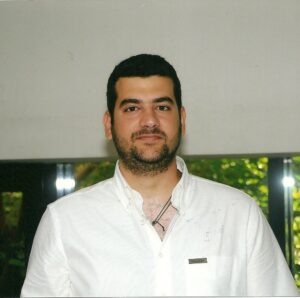
Mamadou Kaba Traore is a Professor at the University of Bordeaux , affiliated with the Production Engineering research group and the MEI team at the Integration, Material to System (IMS) Laboratory. His work focuses on Modeling and Simulation (M&S), Digital Twins , and Multi-Perspective Modeling . Research Interests: Traore's research spans Discrete Event System Specification (DEVS) , HiLLS (High-Level Language for System Specification), Process Mining , and System Inference . He develops frameworks like DMFDT (Data Management Framework for Digital Twin) and contributes to Model-Driven Systems Engineering and Verification & Validation methodologies. Recent Publications: Traore co-authored works on Digital Twin verification, DEVS standardization, and applications of simulation to healthcare and urban systems. His 2023 chapter in the Body of Knowledge for Modeling and Simulation outlines core areas of M&S theory. Earlier studies explore Fuzzy Clustering and Parallel Simulation techniques.
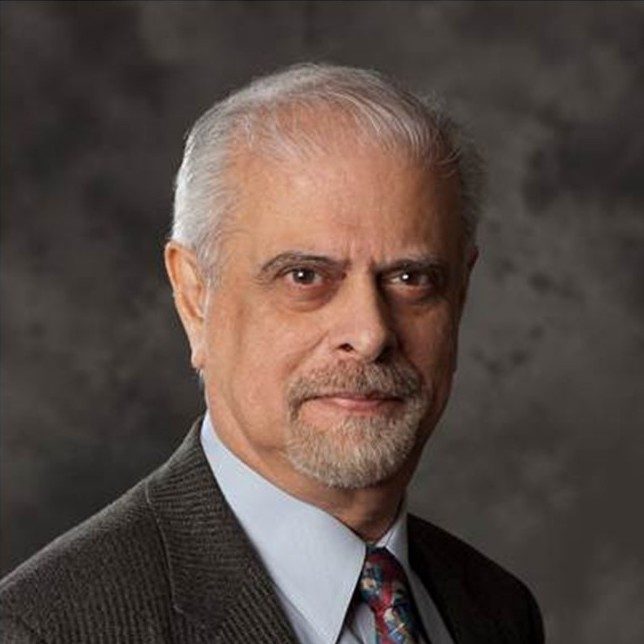
Eugenio Brusa is Full Professor of Mechanical and Aerospace Engineering at the Polytechnic University of Turin (Politecnico di Torino), where he also serves as Director of the Doctoral School (2018-2024) and Scientific Advisor for the strategic partnership with Danieli & C. Officine Meccaniche. Since obtaining his PhD in 1997, he has held academic roles in both Turin and the University of Udine, progressing from researcher to Associate Professor (2002) and then Full Professor (2013). Education PhD, Polytechnic University of Turin (1997) Degree in Aeronautical Engineering (Laurea), Polytechnic University of Turin (year not specified) Research Interests Professor Brusa’s expertise lies at the intersection of mechanical design , mechatronics , and systems engineering . His work encompasses: Structural mechatronics and smart materials, including MEMS-scale systems Rotor dynamics and bearing systems for aerospace, steel, and automotive applications Life-cycle assessment (LCA) and circular design methodologies Model-Based Systems Engineering (MBSE) for sustainable industrial products Digital-twin-driven design and predictive maintenance Recent Publications at a Glance Over the past five years Professor Brusa has co-authored more than 20 peer-reviewed articles and conference papers. The research trajectory shows a clear emphasis on sustainable aviation (fuel-cell aircraft thermal management), energy harvesting (piezoelectric and vibration-based systems), digital twins for ice-prediction and rotor monitoring, and circular-economy-oriented design through LCA integration. These works collectively advance greener industrial products and smarter mechatronic systems. Scientific Awards & Distinctions Premio Nazionale “A. Capocaccia” (1999) – awarded by AIAS (Italian Association for Stress Analysis) Member/Associate Editor, journals Energies (2020-2024) and Proceedings of the IMechE Part C (2020-2022) Scientific-committee roles in INCOSE Italy, ASME Italy Section (President 2014-2015), UNITE! European Alliance, ESCP Business School, and several IEEE/ECCOMAS conferences Doctoral Advising & Research Funding Currently supervising seven PhD candidates in Mechanical Engineering and Materials for Sustainability. Since 2018, as Director of the Doctoral School, he oversaw more than 200 doctoral students across disciplines. Active research contracts include: EU and regional projects on predictive maintenance (PRIME 2021-2022) Industrial contracts with Danieli & C. (2025-2028) on scrap-metal crushing & shearing machinery Ongoing partnerships on oil-film bearings for rolling mills, fatigue-life assessment of hydraulic-turbine shafts, and additive-manufacturing quality control Laboratories & Teams Founder or co-founder of four research laboratories: Mechatronics Laboratory (1993) Testing and Characterization of Rotating Systems Laboratory (1997) Industrial Systems Engineering & Design (ISED) Laboratory (2020) – current leader Ubiquitous and Pervasive Technologies Laboratory, University of Udine (2005)
Kotronis Christos serves as an Assistant Professor in the Department of Informatics and Telematics at Harokopio University, Athens, with his office located at Omirou 9, Tavros (17778). His academic career is deeply rooted at this institution where he completed all his formal education. His educational qualifications include: Undergraduate Degree in Informatics and Telematics (2014) Postgraduate Diploma in Informatics and Telematics, Major: "Computer and Internet Technologies and Applications" (2016) PhD in Informatics and Telematics, Dissertation: "Model-Centric Design of Systems with Awareness of the Provided Quality of Service Based on the Systems Modeling Language (SysML)" (2021) His research focuses on model-centered systems design with strong emphasis on quality of service awareness, systems simulation, and human-centric requirements analysis. He bridges theoretical model-based engineering with practical applications in cyber-physical systems and Internet of Medical Things (IoMT), particularly addressing human concerns in healthcare monitoring and transportation systems. His methodologies heavily utilize SysML extensions for integrating non-functional requirements like cost and human factors. Analysis of his 15 most recent publications (2018-2025) reveals a cohesive research trajectory centered on model-based systems engineering with three dominant themes: (1) Human integration in cyber-physical systems design through multi-view approaches, (2) Quality of service and cost optimization in SysML frameworks, and (3) Real-world implementations in healthcare (ECG monitoring, fall detection) and transportation (railway passenger comfort). His work consistently demonstrates progression from foundational modeling to edge-computing implementations. Scientific Awards: No scientific awards mentioned in source materials Regarding academic supervision, the source materials do not specify current advisees though his PhD research and publications suggest involvement in graduate mentoring. His departmental role includes teaching undergraduate courses in Informatics and Telematics. While no specific research grants are documented, his publication pattern indicates participation in collaborative projects focused on cyber-physical systems and healthcare technology. The absence of explicit lab/team information suggests his work may be conducted within broader departmental frameworks rather than dedicated laboratories.
Azad M. Madni is a Distinguished University Professor of Astronautics, Aerospace, and Mechanical Engineering at the University of Southern California (USC), holding the Northrop Grumman Fred O’Green Chair in Engineering. He serves as Executive Director of USC’s Systems Architecting and Engineering Program and Founding Director of the Distributed Autonomy and Intelligent Systems Laboratory. His affiliations include the Sonny Astani Department of Civil and Environmental Engineering (joint appointment), Keck School of Medicine (courtesy), and Rossier School of Education (courtesy). He also leads the Ph.D. program in Systems Engineering in Astronautics and is a Senior Fellow at the Loker Hydrocarbon Research Institute. Education: Doctoral Degree in Engineering, University of California - Los Angeles Master's Degree in Engineering, University of California - Los Angeles Bachelor's Degree in Engineering, University of California - Los Angeles Research Focus: His work bridges human-AI collaboration via augmented intelligence, transdisciplinary systems engineering, digital twin applications in Model-Based Systems Engineering (MBSE), and autonomous systems. He explores adaptive cyber-physical-human systems, machine learning, and interactive storytelling in virtual worlds. Awards & Honors: 2023 IEEE Simon Ramo Medal 2023 NAE Bernard M. Gordon Prize for Education 2023 AIMBE College of Fellows 2020 Norbert Wiener Research Award 2014 INCOSE Lifetime Achievement Award 2011 INCOSE Pioneer Award Advising & Grants: Principal Investigator on 97 R&D projects totaling $100M+. He advises through USC’s Ginsberg Institute and leads the Ph.D. SE program. His company, Intelligent Systems Technology Inc., develops model-based solutions for global challenges. Labs & Teams: Founder of the Distributed Autonomy Lab and affiliated with USC’s London Digital Twin Research Centre. Collaborates across biomedical, aerospace, and educational domains.
Raghu Chaitanya Munjulury is an Adjunct Associate Professor at Linköping University's Department of Management and Engineering (IEI), specializing in Fluid and Mechatronic Systems (FLUMES). His work focuses on advancing aircraft design methodologies through interdisciplinary approaches in systems engineering, simulation, and knowledge-based frameworks. He holds a formal academic appointment at Linköping University, contributing to both research and education in aerospace systems and multidisciplinary engineering. Research Interests: Conceptual aircraft design optimization Model-based systems engineering (MBSE) Multi-fidelity simulation techniques Integration of artificial intelligence in engineering workflows Knowledge-driven design automation Recent publications highlight innovations in aircraft environmental control systems, ontology-assisted design processes, and interoperability standards for system integration. His work bridges computational methods with practical aerospace applications, emphasizing digital engineering practices. Collaborations include projects on firefighting aircraft systems, hydrogen fuel integration, and unmanned aerial systems. Munjulury's contributions extend to advancing standardization efforts in geometry-physics modeling exchange and virtual reality applications for aircraft cabin design. His research aligns with global trends in sustainable aviation and digital transformation in engineering sectors.
Prof. Andrea D'Ambrogio is an Associate Professor of Software and Systems Engineering at the Department of Enterprise Engineering, University of Roma 'Tor Vergata' (Italy). He previously held roles such as Assistant Professor of Computer Science and Research Associate at the same university, and contributed to projects in Europe and internationally. His research focuses on software/systems performance, model-driven engineering, business process management, and distributed simulation. He has led over 20 international conferences and initiated workshops like CoMetS and Mod4Sim. He currently serves as President of the Society for Modeling & Simulation International (SCS), and is a member of IEEE, ACM, and INCOSE. Research Contributions: Prof. D'Ambrogio has authored over 150 publications in journals and conferences. His work emphasizes simulation engineering processes, MSaaS (Modeling & Simulation as a Service), and the integration of IoT with business processes. Recent studies address distributed simulation interoperability, pandemic impact analysis on healthcare systems, and low-code simulation frameworks. Leadership & Editorial Roles: He has served as General Chair for major events like SpringSim'19 and SummerSim'18. He is an Associate Editor of the SIMULATION journal and editorial board member of IAENG International Journal of Computer Science. His leadership in SCS advances global standards in modeling and simulation practices. Teaching: Teaches courses such as Service-Oriented Software Engineering, Software Systems, and Internet-Based Distributed Simulation. His academic contributions span both theoretical advancements and practical applications in enterprise systems engineering.
Bryan Watson is an Assistant Professor of Systems Engineering in the College of Engineering at Embry-Riddle Aeronautical University, affiliated with the Department of Electrical Engineering and Computer Science. His work bridges systems engineering, resilience, and sustainable design, with applications in manufacturing, energy, and infrastructure systems. B.S. in Systems Engineering, United States Naval Academy (2009) M.S. in Mechanical Engineering Ph.D. in Mechanical Engineering, Georgia Institute of Technology His research focuses on enhancing the resilience of Systems of Systems through biologically inspired design, sustainable development, and distributed demand estimation. He integrates principles from nature to improve reliability, safety, and sustainability in interconnected systems. His interdisciplinary work spans mechanical, electrical, and industrial engineering domains. The recent publications highlight a strong trend in resilience engineering, sustainable systems design, and biologically inspired solutions. Key domains include smart grids, manufacturing networks, aerospace systems, and cyber-physical infrastructures. The research emphasizes modeling, optimization, fault tolerance, and human-centered design, often leveraging systems thinking and model-based approaches. Nuclear Professional Engineer Certification Master Training Specialist Certification (military’s highest instructor accreditation) Naval Achievement Medal (x2) Military Outstanding Volunteer Service Medal Naval Commendation Medal 2024 ERAU College of Engineering Teacher of the Year 2024 ERAU Research Mentor of the Year 2022-2023 ERAU Outstanding Small Teaching Practice Award Bryan Watson is an active mentor and educator, recognized for excellence in teaching and research guidance. He leads student projects in systems engineering and resilience, and his grants support innovation in sustainable and adaptive systems. Though specific grant titles are not listed, his recognition as Research Mentor of the Year underscores his leadership in student development and sponsored research. His work is associated with the Computation and Advancement of Sustainable Systems Lab and the Sustainable Design and Manufacturing Lab during his doctoral studies. At Embry-Riddle, he continues to develop frameworks for resilient, user-safe, and sustainable systems, likely leading a research group focused on systems-of-systems engineering and bio-inspired design.
Matthew Jablonski serves as an Assistant Professor in the Department of Cyber Security Engineering at George Mason University , located at the Mason Square campus in Vernon Smith Hall. He began this role in 2025, after spending the prior year as a Research Assistant Professor within the College of Engineering and Computing . Education: PhD, Information Security and Assurance, George Mason University (2023) MS, Information Security and Assurance, George Mason University BS, Computer Science, Virginia Tech Research Focus: Dr. Jablonski’s research centers on securing complex engineered systems, spanning manufacturing, battery, vehicle, and AI-intensive systems . By integrating formal methods into threat modeling and model-based systems engineering (MBSE) , he aims to close security gaps earlier in the system life-cycle. His work leverages more than 20 years of industry experience in systems engineering, penetration testing, and red teaming, ensuring that theoretical advances translate into practical safeguards. Scientific Awards & Honors: No awards or honors are mentioned in the provided information. Student Advising & Research Funding: No specific advisees or funded projects are listed at this time. Laboratories & Teams: While no dedicated laboratory or team names are disclosed, Dr. Jablonski’s research activities are situated within the Department of Cyber Security Engineering, which is part of the College of Engineering and Computing at George Mason University.
David C. Gross serves as a Teaching Professor in the Department of Industrial & Manufacturing Engineering at Florida State University's Panama City campus, specializing in model-based systems engineering, digital engineering, and human-computer interaction with emphasis on virtual environments and naval/aerospace systems. His industry leadership at Boeing and Lockheed Martin includes roles as Chief Technologist for Modeling & Simulation and Deputy Chief Engineer for simulation labs. Dr. Gross holds a PhD in Systems and Industrial Engineering from the University of Central Florida, an MS in Operations Research from the University of Alabama at Huntsville, and a BS in Computer Science from Auburn University. His research bridges theoretical frameworks with practical applications in power distribution systems for naval vessels, CubeSat-based space situational awareness, and affordance theory in virtual environments. His scholarly output demonstrates consistent innovation in Model-Based Systems Engineering (MBSE) methodologies across defense and aerospace domains. Recent work focuses on functional architecture baselining for power electronic systems, parameter optimization in naval design, and space situational awareness visualization. Cross-cutting themes include semantic interoperability, fidelity measurement, and human factors integration in complex systems engineering. Dr. Gross has been awarded the NASA Faculty Fellowship for his contributions to aerospace research. His industry impact includes leading $1B+ technical innovations and influencing over $3B in business opportunities through systems engineering leadership at major defense contractors. His academic work is deeply informed by two decades of industry experience where he pioneered modeling and simulation standards through organizations like the Simulation Interoperability Standards Organization (SISO). Current research directions include sustainable transportation planning and MBSE applications for emerging energy systems, building on his foundational work in affordance-based virtual environment design.
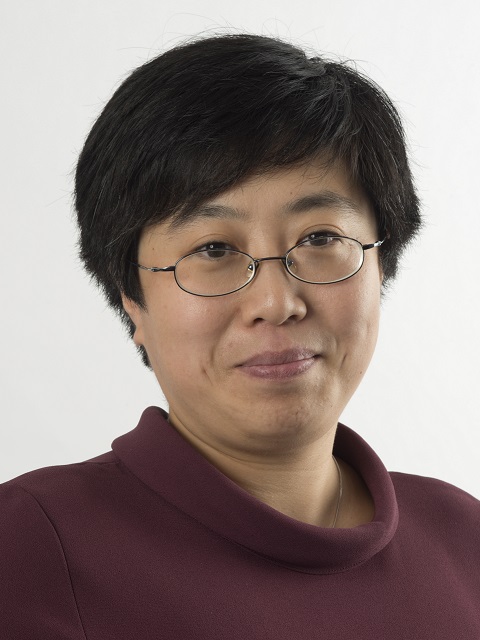
Dr. Lin Guan serves as a Senior Lecturer and International Partnerships Coordinator in the Department of Computer Science at Loughborough University. She joined the institution in 2006 after completing her PhD at the University of Bradford and holding positions as a Research Associate and project manager/software engineer at Simulation Systems Ltd. Her academic credentials include: PhD, University of Bradford, UK Dr. Guan's research centers on performance modeling of heterogeneous computer networks and systems with emphasis on Quality of Service (QoS), Quality of Resilience, and Quality of Experience. She actively investigates edge/fog computing, VANET, SDN, cloud security, mobile computing, wireless sensor networks, and MBSE with QoS attributes, contributing over 100 publications to these fields. Her distinguished recognition includes: British Federation of Women Graduates Foundation Main Grant (2004) Royal Society Industry Fellowship She has secured substantial research funding through two EPSRC/industry CASE awards, an EPSRC/BAE EngD project, two industrial subcontracts, and an EPSRC KTA project. Currently, she leads an EPSRC/Rolls Royce funded 4-year MBSE initiative while serving on the Editorial Board of Elsevier's Journal of Systems and Software (ranked #2 for Software Engineering venues). Dr. Guan is affiliated with the Cyber, Networks and Systems research group within the Department of Computer Science.
Sunil Basnet is a Visiting Professor in the Department of Energy and Mechanical Engineering at Aalto University, affiliated with the Marine and Arctic Technology school. His work focuses on system safety, maritime risk management, and AI applications in safety-critical systems. He holds a Doctor of Technology (2023) and a Diploma in Mechanical Engineering (2018) from Aalto University. Research interests include system dynamics modeling for maritime operations, Bayesian risk modeling, cybersecurity frameworks for autonomous ships, and the ethical integration of AI in human resources. His work contributes to UN Sustainable Development Goals related to industry innovation and infrastructure safety. Recent research trends show a focus on: real-time risk monitoring systems using Bayesian networks, cybersecurity frameworks for remote pilotage, and AI-driven predictive analytics in HR management. Collaborations span international maritime safety projects and bibliometric reviews of autonomous ship research. No awards or grants are explicitly listed, though his doctoral thesis (2023) on formal safety assessment in maritime pilotage highlights significant contributions to the field. Advising activities are not detailed in the provided materials.
Meric Taneri is a Lecturer and Scientific Staff member at the Chair of Aviation Systems, Technical University of Munich. His research focuses on Aircraft Design , with specialized interests in Model-Based Systems Engineering (MBSE), Multi-Disciplinary Analysis and Optimization (MDAO), and Machine Learning (ML). He contributes to the UNICADO project , advancing methodologies in aviation systems engineering. Contact: meric.taneri@tum.de | +49 (89) 289 - 15989
Bernhard Saske serves as a Research Associate at the Chair of Virtual Product Development within Dresden University of Technology, where he has been affiliated since completing his mechanical engineering studies in 2002. Holding a doctorate (Dr.-Ing.) earned in 2008 for research on 'Augmented Reality in Maintenance,' he specializes in virtual and augmented reality applications integrated with product lifecycle management systems. His academic credentials include: Master's degree in Mechanical Engineering from Dresden University of Technology (2002) Doctorate (Dr.-Ing.) from Dresden University of Technology (2008) focusing on Augmented Reality in Maintenance Saske's research centers on digital transformation in engineering workflows, with core expertise in virtual/augmented reality implementation, product lifecycle management (PLM), and model-based systems engineering (MBSE). Recent investigations address generative AI applications in CAD processes, sustainable product development frameworks, and component reuse optimization in industrial plant design. His work consistently bridges theoretical methodologies with practical industry implementation challenges. Analysis of his 2023-2025 publications reveals a strategic shift toward artificial intelligence integration in engineering design, particularly generative models for CAD and computer vision systems. Concurrently, his research maintains strong emphasis on sustainability-driven PLM strategies and MBSE adaptation for circular economy principles, reflecting evolving industry priorities in resource efficiency and digitalization. Scientific Awards: No documented awards, fellowships, or major honors were identified in the source materials. Dr. Saske actively contributes to collaborative research projects within the Chair of Virtual Product Development, frequently co-authoring with Prof. Paetzold-Byhain and interdisciplinary teams. While specific student supervision is unrecorded, his publications indicate mentorship roles in conference papers and journal articles. Project funding appears aligned with German academic-industry partnerships focused on digital engineering solutions, though grant details remain unspecified. As a core member of the Chair of Virtual Product Development, Saske operates within a research ecosystem dedicated to advancing virtual prototyping, digital twin technologies, and immersive maintenance solutions. The chair maintains active industry collaborations to implement VR/AR methodologies in real-world manufacturing and product development contexts across European industrial partners.
Dr. Marcus (M.V. Pereira Pessoa) is an Associate Professor at the University of Twente's Faculty of Engineering Technology, affiliated with the Design, Production and Management (ET-DPM) department and the Systems Engineering & Multidisciplinary Design (ET-DPM-SEMD) Chair. As Head of Educational Innovation at the Center of Expertise in Learning and Teaching (CELT), he drives initiatives to enhance pedagogical methodologies. Expertise Areas: Systems Engineering, Model-Based Systems Engineering (MBSE), Product Design, Computer Science, Earth and Planetary Sciences, Social Sciences. Leadership Role: Head of Educational Innovation at CELT. His research focuses on educational systems engineering , integrating systems engineering principles into educational design and development. This work extends to program management and multidisciplinary design frameworks, with applications across product service systems and engineering education. He contributes to institutional educational support through affiliations with the Centre for Educational Support (CES-CC) and the Horst Complex-based SEMD Chair.
Darshan Sarojini is an Assistant Professor in the Aerospace and Ocean Engineering Department at Virginia Tech (College of Engineering). His research focuses on Multidisciplinary Design, Analysis, and Optimization (MDAO) , Certification-Driven Aircraft Design , and Systems Engineering , with applications in Urban Air Mobility (UAM) and electric vertical takeoff and landing (eVTOL) systems. He leads the Intelligent Design Optimization (IDOpt) Lab , which develops advanced methods for complex engineering systems design. Education: Ph.D. & M.S. in Aerospace Engineering, Georgia Institute of Technology M.S. in Computational Science and Engineering, Georgia Tech B.E. in Mechanical Engineering, B.M.S. College of Engineering, India Research expertise includes integrating Model-Based Systems Engineering (MBSE) with MDAO, high-performance computing (HPC) workflows, and structural optimization under dynamic loads. He has served as Technical Discipline Chair for the AIAA Modeling and Simulation Technologies committee and contributed to NASA ULI projects. Recent work emphasizes large-scale MDO of eVTOL concepts, certification-constrained design, and computational frameworks for aircraft systems. He has mentored students from the ENLACE program and collaborated with industry partners like Archer Aviation and Aurora Flight Sciences. Honors include Best Application Paper Awards at IFToMM 2015 and the 2015 National Conference on Machines and Mechanisms. His lab actively engages in student competitions (e.g., IndySCC) and promotes broader participation in HPC through workshops.